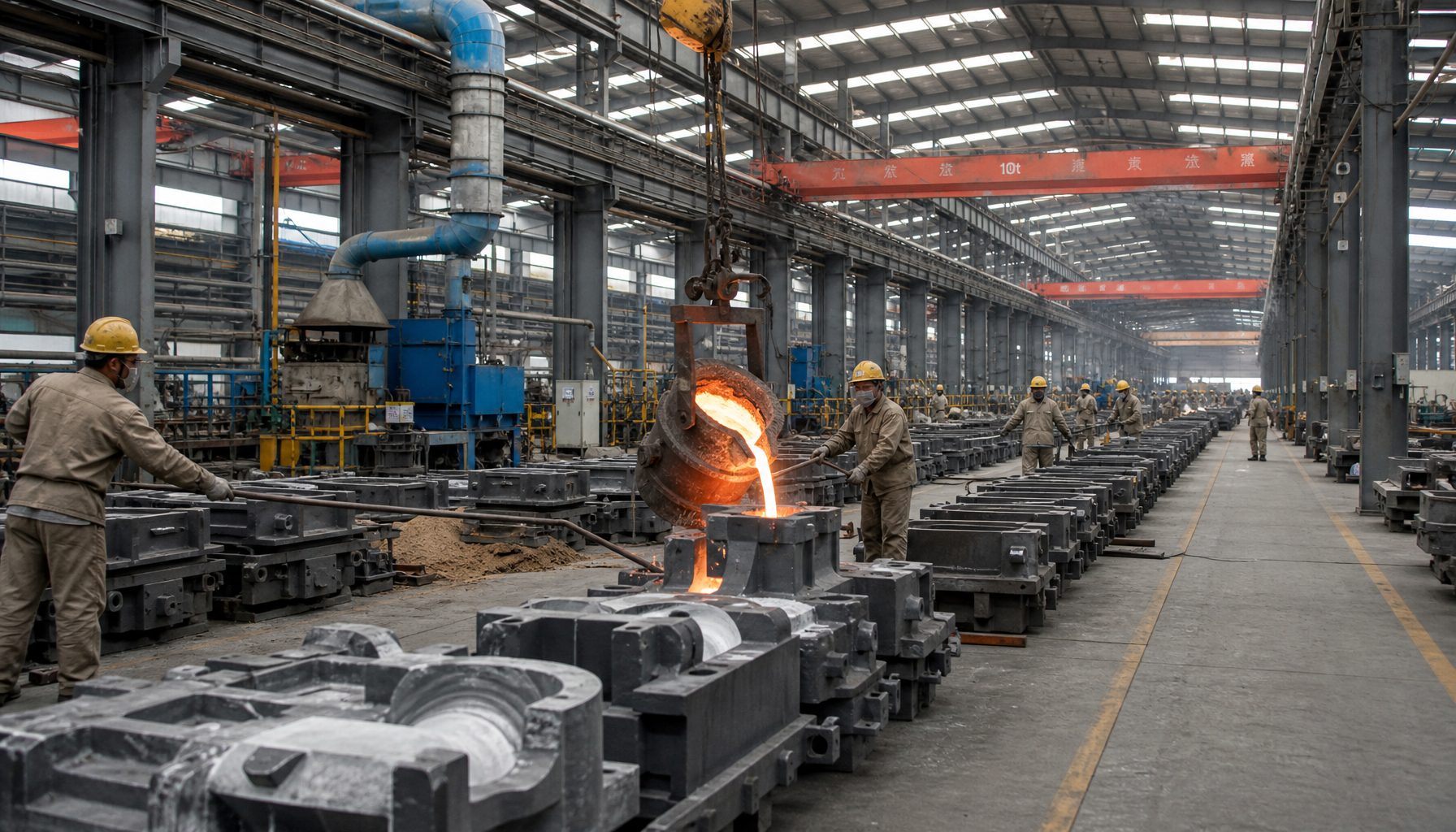
Here's a number that should stop you mid-scroll: China produces roughly 52 million metric tons of castings a year. That's about half of everything cast on Earth. If you're sourcing pump components — casings, impellers, volutes, bearing frames — and you haven't seriously examined the China market in the last 18 months, you're leaving money on the table. Or worse, jumping into a deal with a foundry that has no business casting pump parts for you.
The 2026 market is not the 2016 market. The top-tier foundries have restructured. Environmental permits got real. Production lines got digitized. And the gap between "export-grade" foundries and "domestic-only" shops widened into an expensive chasm. This guide gives you the data to tell them apart before you spend $20,000 on a mold that never produces a shipping-worthy casting.
What you'll actually get from this article: production cost breakdowns per kg, the certification stack that matters (API, ISO, EN 10204), a 7-step physical inspection checklist, and the exact questions to ask a Chinese foundry — with the answers the good ones give vs. the answers the dangerous ones give. Written from the buyer's side, because that's the side that has to explain the 3-month delay to their own CFO. I've had to do that once. Let's avoid it again.
Why "China Foundry" Isn't One Market — It's Three
Ask for "a foundry for pump components China" and you'll get 200 quotes. They are not all created equal. Understanding which tier you're talking to is the single smartest hour you'll spend this quarter.
| Tier | Where they are | Typical export share | What they're selling | Price range (per kg, carbon steel) |
|---|---|---|---|---|
| Tier 1 — Export-driven, certified | Shandong (Zibo, Weifang), Jiangsu (Nantong), Zhejiang | 60-90% export | Engineered castings, full documentation, API/ISO/ASME at scale | $2.40 – $3.80 |
| Tier 2 — Mixed | Hebei, Anhui, inland coastal provinces | 20-60% export | Good quality when pushed, but documentation is a struggle | $1.80 – $2.60 |
| Tier 3 — Domestic-only shops | Everywhere | < 10% export | Harvest/machinery parts; pump casting quality lottery | $1.20 – $1.90 |
Let's be blunt about the price data: that $1.30/kg saving from Tier 3 evaporates on your first failed pressure test. A 4-inch pump casing for a vertical turbine pump doesn't fail politely. It fails at 200 PSI with bad porosity, and you've lost not just the casting, but the machining schedule, the crankshaft alignment, and your customer's deadline.
Here's the other shift in 2026: tier-1 export foundries are pushing back on small orders. Minimum order quantities went up (many won't quote below 2 tons), lead times stretch to 60 days for custom alloy batches, and tooling (mold) costs rose roughly 18-25% over pre-2020 levels as skilled patternmakers age out of the workforce. This is not 2016's buyer's market. You need leverage: proven drawability, good engineering communication, or a willingness to consolidate your order book into one foundry. That last one is your strongest card — more on this later.
What's actually cast versus what's fabricated
Not every "pump component" needs casting. Smart buyers know this. But for the genuinely cast parts, here's the 2026 split:
- Casings & volutes — 70-80% of pump casting volume. Plunge in sand casting or investment casting, depending on pressure class. Hydrocarbon and water applications, virtually always sand cast gold.
- Impellers — ~10-15%. More complex geometry per kg. Often investment cast when they exceed 400mm diameter, because machining a precision volute from a billet is wasteful in metal.
- Bearing frames, seal housings, gland covers — 5-10% by weight, but disproportionate in headache. These are low-drama shapes that Tier 2 shops can absolutely do well. Your best cost-savings move: split these from the casings into a second foundry, as long as both have the same heat treat + UT testing capability.
The Cost Barrel — Where Your Money Goes
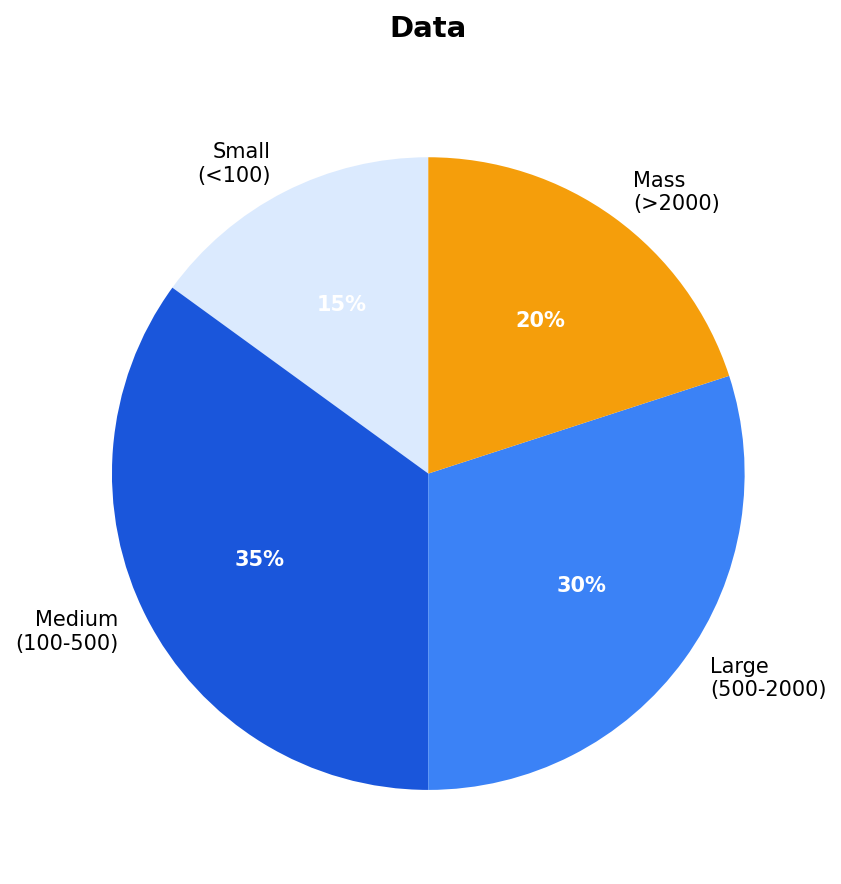
Here's something most importers misunderstand: the metal in a pump casing is only about a third of the price. Ask any foundry for a quote breakdown, and the good ones will give you one. The dangerous ones will tell you it's "confidential." Treat that as a red flag and move on.
A typical carbon steel pump casing (say a 6-inch, 150mm discharge, API 610 axial split style) costs around $2,400-$3,600 per ton finished with basic NDT. That breaks down:
- Alloy / scrap (~25-30%) — carbon steel feedstock in China: $480-$620/ton as of mid-2026. Yes, scrap metallurgy is fine if the foundry knows what's in the mix. How do they know? They'll show you the melt certificate.
- Melting & pouring (~12%) — induction furnace electricity. Chinese industrial electricity tariffs rose 8% again. That's passed through in the quote.
- Molding & tooling (10-15%) — sand, resin, the pattern itself. A single-sided pump casing pattern: $4,500-$12,000 depending on complexity. That's your capex as the buyer. Split across the first order, then you own the pattern.
- Heat treatment (NE, N&T) (~8-10%) — normalization or normalize-and-temper for carbon steel per ASTM A216 WCB.
- NDT & inspection (5-8%) — MPI (magnetic particle), radiography on pressure boundaries if your customer requires. You'll pay for it, but it's the insurance that shifts your failure rate from "whenever" to "once every 400 parts."
- Machining allowances / finish (~5%) — surface grinding at the foundry, often subcontracted.
- Packing, freight, crating (5-7%)
- Foundry margin (8-12%) — and honestly, that's where the tier-1 margin is. They make it home, and the home is profitable. Tier 2 foundries squeeze margin to 5-8%, and you feel it in the quality swings.
"You want hard numbers? A WCB valve body, single piece 3,000 lbs, I'm paying $1.90/kg in China with full radiography. A domestic US foundry quoting me the same part? $4.50/kg. On a 20-part order, the China route prices out at $26,000 delivered vs $54,000 domestic. But I still had a batch fail porosity last summer — because I skipped the third-party inspection step. That's the part nobody budgets for."
The Certification Stack You Actually Need
Here's the uncomfortable truth: every foundry in China will show you an ISO 9001:2015 certificate. That document tells you nothing about pump competence. Aquarium pump companies have ISO 9001 certificates. You need a stack, not a single file.
The "Must Have" List
| Certificate / Standard | What it actually covers | Why it matters for pump castings | Red flag to check |
|---|---|---|---|
| ISO 9001:2015 | QMS / quality management system | Baseline quality processes across document control, NC (non-conformance) tracking | Scope says "metal casting" — does it list pump/valve/flange compatible materials? |
| API Q1 (or at least API 610 alignment) | Oil & gas: quality & reliability management | Pump industry de facto standard. If the foundry works with API pump OEMs, they have better procedures. | Ask for their customer list in API pumps. This isn't a trade secret — any export manager will tell you. |
| EN 10204 3.1 (or 3.2) Material Certification | Material traceability & actual test results | Shows your pump casting was sampled, tested, and heats are traceable to the melted lot | Who actually signs 3.1? A lab tech? Or a metallurgy engineer? Name + title matters. |
| EN / ASTM material specs (A216 WCB, A351 CF8M, A995 duplex grades) | Chemistry & mechanical property limits | A pump casing foundry will be familiar with both EN and ASTM. Not knowing ASTM = tier 2 warning. | Ask: "What's the carbon limit for WCB?" If they hesitate — no hire. |
| Environmental permit / EIA (Environmental Impact Assessment) | Legal per national law — verified during VIE | Consider it a "license to operate." Foundries shut down for weeks or permanently without this. | Not a certificate they volunteer. Third-party QC can verify this in minutes. |
Word from Brian Miller on certification during the 2026 inspection: "I've had a manager tell me about their ASME compliance. Twenty minutes later I asked the floor chemist to sign a material test report. He froze. They had a photocopy of a cert and no actual chemistry data to back it up. One look at the quality lab told the story: no wet chemistry setup, no spectrometer calibrations, nothing. The certificates were rented. There are 'complete certification packages' you can literally buy in a consulting room in Shanghai for $500. So don't — please don't — accept a PDF as proof. A real foundry will let you or your third party sit in the lab while they run a spectrometer."
Does that sound like I'm painting the whole market with one brush? A little. There are plenty of deeply certified foundries in China. But the stakes are high enough that your verification should assume half of the certificate-PDFs you receive aren't what they appear. You don't need to inspect every foundry on your shortlist. You need to inspect the one you plan to hand a mold to.
The one cert that's a hard "no" if missing
In China, foundries are in Shandong and Jiangsu mostly for a reason: industrial policy. Both provinces treat environmental violations as shutdownable offenses. A foundry without a valid EIA permit is an accident waiting to happen — or mid-supply, they get fined ¥2,000,000 and suspended 4 months. I've seen it. The logistics of finding a second source mid-project? You don't want that.
So the rule is: if the environmental permit lapsed within the last 18 months, or if they won't show it, cut them. That's not a "might be fine" situation. That's a fundamental reliability flag.
7-Step Site Inspection Checklist (For When You Visit — and You Should)
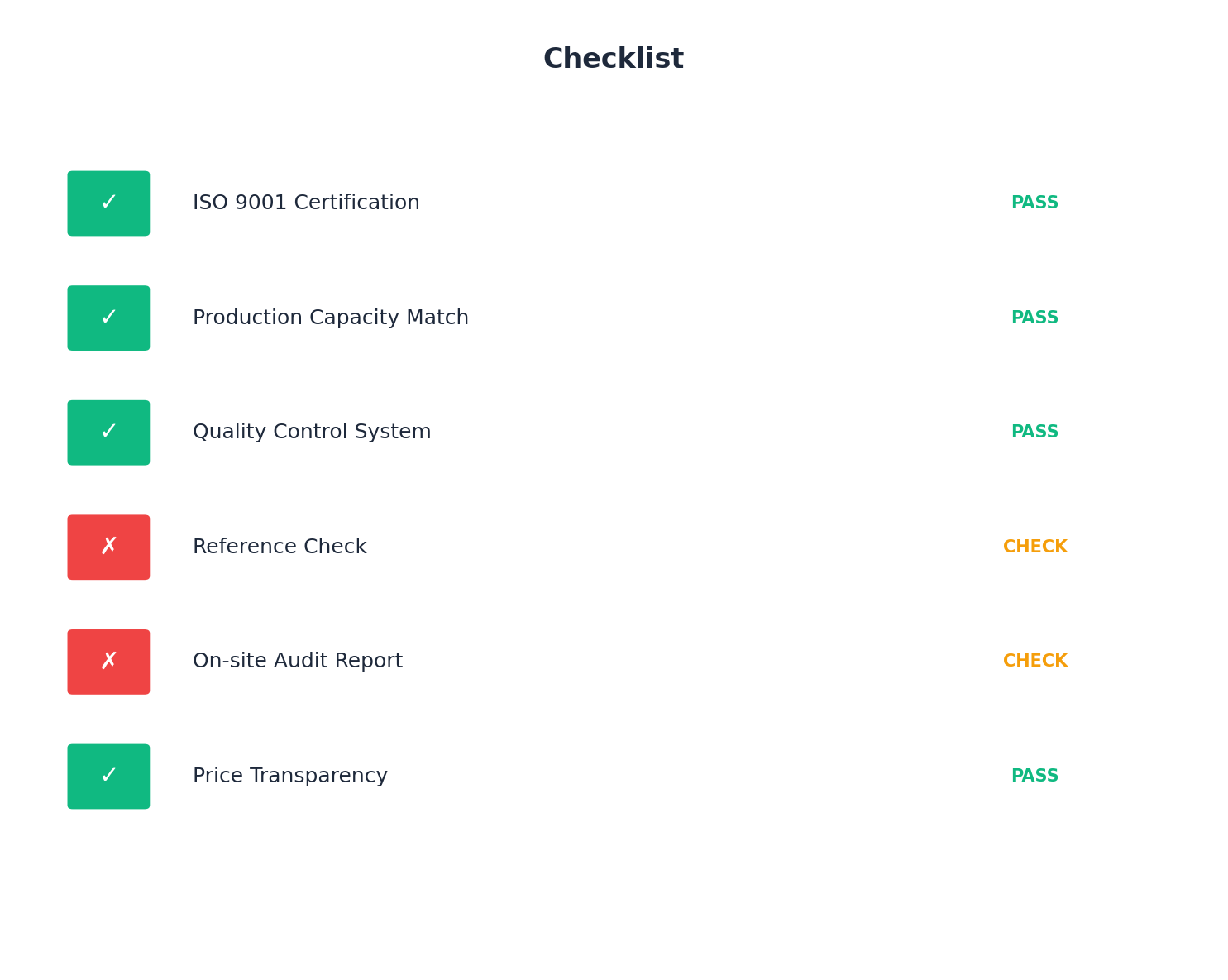
You don't need a travel budget to fly to three Chinese foundries in one week. But if you're about to place more than $50,000 in yearly business, one in-person trip for a first order is worth more than every certificate combined. You're not there to see the product — you're there to see the process.
- Melt shop & spectrometer check. Look for a spark spectrometer on site. If they send all chemistry to a third party, that's a process delay and a process risk. On-site spectrometry combined with regular round-robin to a certified lab is the gold standard. Ask to see a traceability sheet from a recent melt to any finished pump part.
- Mold making condition. Are the sand mullers well-maintained? Are the mold lines clean — not spotless (it's a foundry), but free of excessive spillage that indicates process chaos? Is resin binder age / sand grain distribution checked? This is where the "foundry is dirty but that's normal" trap lives. There's wear-and-tear dirt, and there's process neglect dirt. Learn the difference.
- Heat treatment capability. In-house furnace? Temperature recording charts available? If your pump casing needs N/T (normalize + temper), can they control the ramp down, the hold time, the quench medium? Or are they sending it out and praying? A pump casing is meant to handle internal pressure — skipped heat treat is a life safety issue.
- NDT crew and equipment. MPI benches, UT (ultrasonic) gear, and if radiography is per spec, the RT report comes from an ASNT Level II or III. Ask to see the NDT procedures manual. Watch them demonstrate on a mock-up test piece — make sure they aren't just using a UT gauge to check dimensions.
- Inspection & calibration records. Calipers, micrometers, pressure gauges — all with calibration stickers dated within the last 12 months. A foundry with a cal lab in-house is making a statement. The rest are renting metrology from a supplier every year.
- Flaw handling & rework. When a pump casting fails NDT, what happens? Does it go to repair (welding, X-ray re-check), or does it go to scrap? Legit shops report ~2-4% scrap on pump castings. If that number is zero, they're lying or hiding the data. A "zero scrap" number is a buyer trap. You want to hear about process — not a perfect scorecard.
- Test-then-verify (the "show me" step). Take your own sample batch: e.g., 3 pump casings, standard RT+MPI. Have a local third-party QC in China (paid by you) witness melt chemistry, watch the heat, and snap photos at every point. That's the only way to truly verify the foundry process isn't just a story they tell.
A good foundry welcomes this. They know every buyer who visits seriously is today's competitor's tomorrow's lost customer. The ones who get defensive? That's not a culture thing. It's a signal.
Certification Around the Edges: When API 610 Really Applies
Let's be precise about standards. API (American Petroleum Institute) 610 is a pump design standard, not a casting manufacturing standard. So a foundry cannot be "API 610 certified" — that certification belongs to the pump OEM. What the foundry can hold is API Q1, the quality management standard for oil and gas manufacturing. Know the difference before you start asking for an "API 610 certified foundry," or a supplier will quietly smile and let you buy into confusion.
What the foundry must be capable of, then, is producing castings that pump OEMs can blanket-cover under their API 610 design. That usually includes:
- NPSH and cavitation performance testing done at the foundry? Not usually. But some tier-1 Chinese pump foundries now run impeller performance loops.
- Hydrostatic testing of pump casings (pressure testing) per the OEM's spec. A foundry that has its own pressure testing station is a plus. If they subcontract it to a machining shop, supervision gets fuzzy.
- CSWIP or ASNT NDT personnel, Level II as a minimum.
- PMI (Positive Material Identification) verification for alloys — XRF guns on site to confirm grade before shipping.
"My rule of thumb after 20 years: if a foundry in China lists API Q1 on their letterhead but can't name an active API pump OEM customer they supply, the cert is decoration. Walk into the conference room, look at the trophy shelf. What's their customer base? If they can't name one legitimate pump OEM — no serial numbers, no documentation — then the certificate taught them nothing."
Common Mistakes That Burn Budget (and How to Not Make Them)
Mistake 1: Asking for "best price" with no engineering drawing
If your RFQ to a Chinese foundry is a vague sketch and a "give me your best price," here's what you'll get: a low number that looks juicy, produced with minimum wall thickness assumptions that might pass QC or might be borderline failure waiting on the machining table. Every foundry will give you a "competitive price" — that's not the test. The test is: what assumptions did they make to produce that number? Ask them to spell out the material grade, heat treatment, NDT level, and pressure rating they used for the quote. If those aren't on the quote sheet, you're not comparing apples — you're comparing fruit baskets.
Mistake 2: Treating third-party inspection as optional
On a 12-ton order of pump casings, a third-party inspection at the foundry costs roughly $800-$1,200 including expenses. If it catches one latent defect before it hits your machining center, it's paid for its lifetime many times over. And here's the 2026 detail: quality inspection in China has gotten better, not worse. Third-party labs in China now use digital radiography and drone-linked ultrasonic testing where welding is mechanized. But the pre-shipment check is still where you catch the "everything's fine" claims.
Don't skip it. It costs less than one scrap casting.
Mistake 3: Over-engineering the supply base
If you have 6 foundries all casting one pump family, you're collecting documentation risk more than you're reducing it. A well-managed single-tier base can deliver 30% lower cost than the "aggregator" model because they get volume and schedule stability. The right structure: one main foundry plus one audited backup for each critical component family. The backup is not producing — it's keeping up certifications and tooling so it can jump in within a month.
Pump Casting Costs in China — Real 2026 Benchmarks
Use these as your negotiation floor, not as a target. Your first quote will usually sit above these — that's normal. Your target interval after negotiation? That's where you want to land.
| Material & Grade | Typical range $/kg | What you say to get closer to the low end |
|---|---|---|
| Cast carbon steel (ASTM A216 WCB) | $1.80 – $3.00 | "Full 3.1 material cert, MPI + UT on pressure boundary, standard NDT. This is a frame agreement for 5 families." |
| Stainless steel (ASTM A351 CF8M / CF3M) | $4.20 – $7.50 | "Pre-qualified heat treater, PMI on each heat, cast-to-print tolerances within CT9." |
| Duplex stainless (ASTM A995 4A / 5A) | $7.50 – $12.00 | "No weld-repair porosity; full PREN max verified; intermetallic phase check per spec." |
If you're seeing quotes more than 20% below these ranges, you have a problem. Either the grade is being swapped (WCB instead of LCB for low-temperature), or the spec is being partially ignored (no RT when spec requires it). Your cheapest quote is probably the most expensive mistake you're about to order.
Frequently Asked Questions (from Buyers Like You)
What's the minimum order quantity a serious pump foundry in China will take?
Most tier-1 shops want 1-2 metric tons for a first order, even for a frame agreement. That's roughly 8-20 pump casings depending on size. Lower-start-volume shops are usually tier-2 for a reason — smaller furnaces, less control, less inspection. Ask for "first article in 40 days from P.O. plus 14 days transit" as a baseline, and be surprised (not happily) if they say yes too fast with no R&D mention.
How do I verify a foundry's claims without flying to China?
Use a vetted third-party QC agency: SGS, Bureau Veritas, or an independent with foundry background. A 3.1 inspection covers material check, CMM dimensional verify, pressure testing (if spec), and all welding documents. You can also conduct a video inspection where they show you the melt and the heat treat cycle live. It's not as good as in-person, but it catches 80% of fraud.
Do I need to pay for tooling (patterns/molds) upfront?
Usually, yes. Expect to pay the pattern maker before you approve the final drawing. A single-sided pump casing mold costs $4,500-$12,000. The foundry will often amortize tooling across the first order at zero cost if volume is high, but that typically hides in the per-kg price. For multi-year frame agreements, you can sometimes negotiate tooling as a deposit refunded against the first 3 shipments. Both structures are common. Just don't accept a quote where tooling is "free" without asking what the per-kg penalty is.
What's the typical lead time for 5 metric tons of CF8M pump castings?
From P.O. to delivery at a Chinese port: 70-95 days including machining allowances and full NDT. That assumes foundry capacity doesn't line up with your order week. Add 30-45 days for machining at your final shop. If anyone promises 45 days total for a full NDT'd casting lot, they're telling you a story about a dream.
What happens if a pump casting fails a hydrotest after delivery?
Standard commercial terms: if the failure is due to material or foundry process, the foundry owes you replacement. But the logistics of getting that replacement — including machine hour scheduling — is your problem. Hence the 7-step inspection earlier, plus proper nitrogen blanks on shipment. Better to catch it at the foundry. Also: have a "rocket stock" agreement — you keep one set of tooling at the backup foundry. When the first supply breaks, the backup can start casting within 3 weeks.
Should I work directly with a foundry or through a trading company in China?
Direct, if you can manage the relationship. Trading companies add 5-12% on top and slow down the technical back-and-forth, though they do help bridge the gap in your first year when your Chinese-language capability is nil and you can't spend three weeks visiting foundries. The worst trap: a "foundry" that is actually a trading company with a rented factory tour. Verify the business license (营业执照) and have a third-party QC confirm the factory address before you wire anything.
What payment terms should I expect from a Chinese foundry?
30% deposit with the balance against shipping documents (BL copy) is the most common. A tier-1 foundry might accept a letter of credit at sight for orders above $50,000. If a foundry pushes for 50% or more upfront, ask why — pattern and tooling costs are the only legitimate advances. Production costs should not be financed by your deposit. And wire transfers to "supplier accounts" that don't match the business license name? That's the number-one way importers lose money in this market.
Your Next Three Moves
If you made it this far, you're not a skimmer. Let's give you an action plan that fits in 48 hours.
- Send your shortlist of 3-4 tier-1 pump-capable foundries (Shandong / Jiangsu focus) a single RFQ with complete drawings, your spec stack (material, NDT, pressure classes), and the question: "What's your first-article lead time and do you hold API Q1?" If they haven't answered that question cleanly within 3 days, move them to tier 2.
- Book a third-party inspection for the week you're in China visiting. Visit one foundry, meet the QC manager in person, and run your 7-step checklist. Spend the $1,000. It's the highest-ROI purchase in your entire campaign.
- Set up a "rocket stock" agreement at your backup foundry. Even if you don't place the first order with them, pre-negotiating tooling placement costs $300 to keep your patterns warm and your supply chain lubricated. When the unexpected happens — and it always does — you'll be the one who didn't panic.
China's pump casting foundry market is still the best value on Earth for quality per dollar. It's also a market that will rob you if you walk in thinking the money is already made. Do your homework, verify with feet on the ground, and it stays the supplier that American engineers have trusted for decades. Skip the verification, and the market will kindly show you where the cost of "cheap" hides. Know which side you're on.
Have a specific pump casting you're sourcing? Send me at this form a copy of your RFQ with the drawing for a free supplier list review — the 6 foundries I'd shortlist for pump casings today, and the 2 I'd send you to avoid.
Ready to Source This Casting?
Send us your drawings and requirements - get matched with vetted Chinese foundries that have the right process and material capability for your part.
Get a Free Quote →- ✓ 1,700+ vetted foundries
- ✓ 40+ QA engineers
- ✓ Serving buyers in 22 countries
- ✓ ISO 9001 / IATF 16949 capable
Need a custom pump casting manufacturer in China? Explore vetted options.