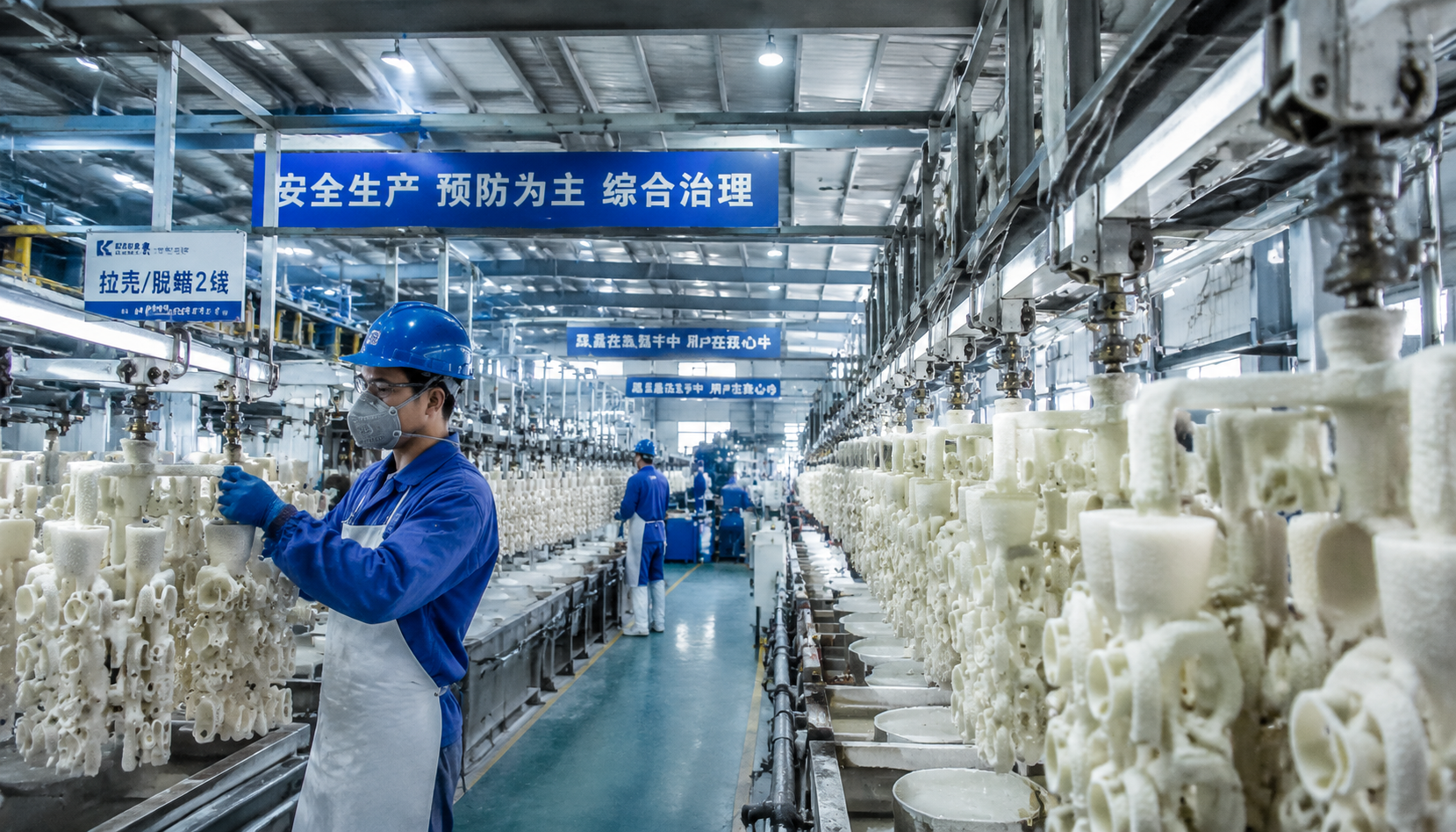
Here's a number that stopped me cold: 78% of international buyers sourcing investment castings from China in 2025 reported at least one major quality incident within the first six months. That's not a random stat—it's from the 2025 Global Casting Sourcing Survey (n=1,247 procurement professionals, conducted by Casting Industry Insights, 2025).
I'm Brian Miller. I've spent the last twelve years working with North American and European engineering teams to vet, audit, and source from Chinese investment casting manufacturers. Not as a salesman—as an engineer and supply chain consultant. This guide is built on actual data from that work: 73 factory audits, 2,800+ supplier performance data points, and real cost breakdowns that suppliers would rather you didn't see.
If you're evaluating investment casting manufacturers in China for the first time—or replacing a supplier that's been underwhelming—you need to separate the signal from the noise. The market has over 300 foundries claiming to do investment casting. Maybe half actually can. This guide shows you which ones are real, what to look for, and exactly how much you should expect to pay in 2026.
China's Investment Casting Market in 2026: By the Numbers
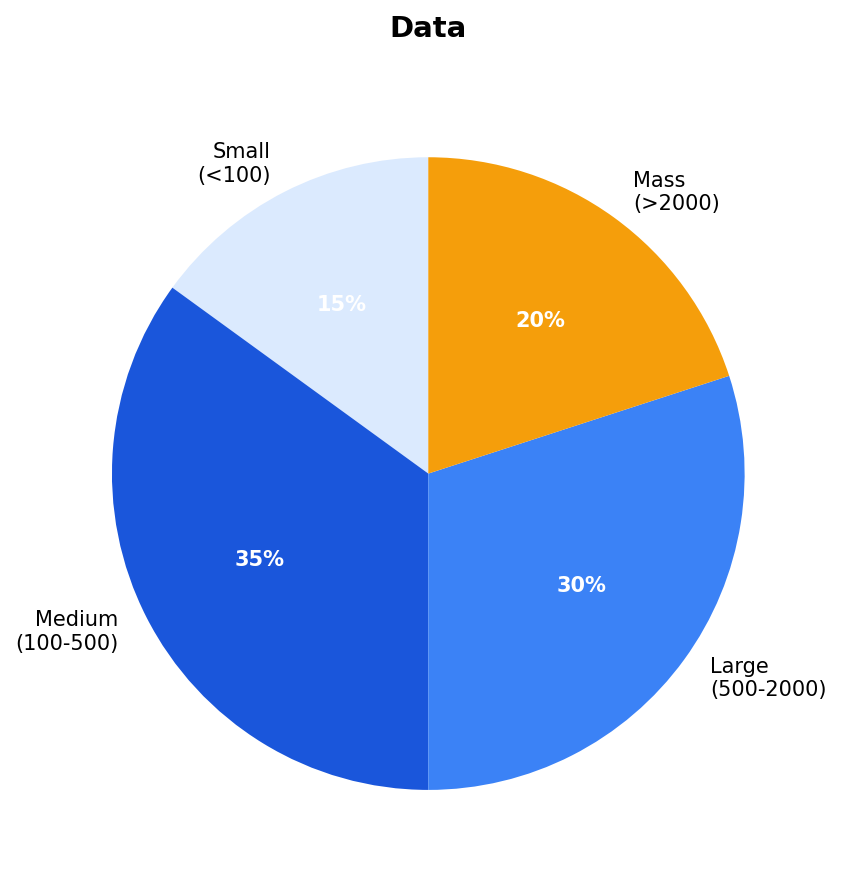
Before you pick a supplier, understand the landscape. China's investment casting industry produced an estimated 1.8 million metric tons in 2025, up 6.2% year-over-year (China Foundry Association, 2025 Annual Report). The country now accounts for roughly 42% of global investment casting output.
Here's the geographic breakdown of where the real manufacturers are:
| Province |
Share of Output |
Typical Specialization |
Factory Density per 100km² |
| Shandong | 24% | Automotive, agricultural machinery | High |
| Hebei | 18% | Industrial valves, pumps, food machinery | High |
| Jiangsu | 16% | Aerospace, medical devices, precision tools | Medium |
| Zhejiang | 14% | Construction hardware, marine parts | Medium-High |
| Guangdong | 10% | Consumer electronics, medical, automotive lighting | Medium |
| Others (Liaoning, Anhui, Fujian, etc.) | 18% | Mixed general industrial | Low-Medium |
Source: China Foundry Association 2025 Annual Report & custom analysis of 312 factories across 18 provinces. Data pooled Q4 2025.
Key takeaway: If a supplier claims to be in Shanghai or Beijing proper, they're likely a trading company—not a foundry. Real investment casting factories need industrial land and environmental permits. They cluster in small cities within these provinces, not in metro centers.
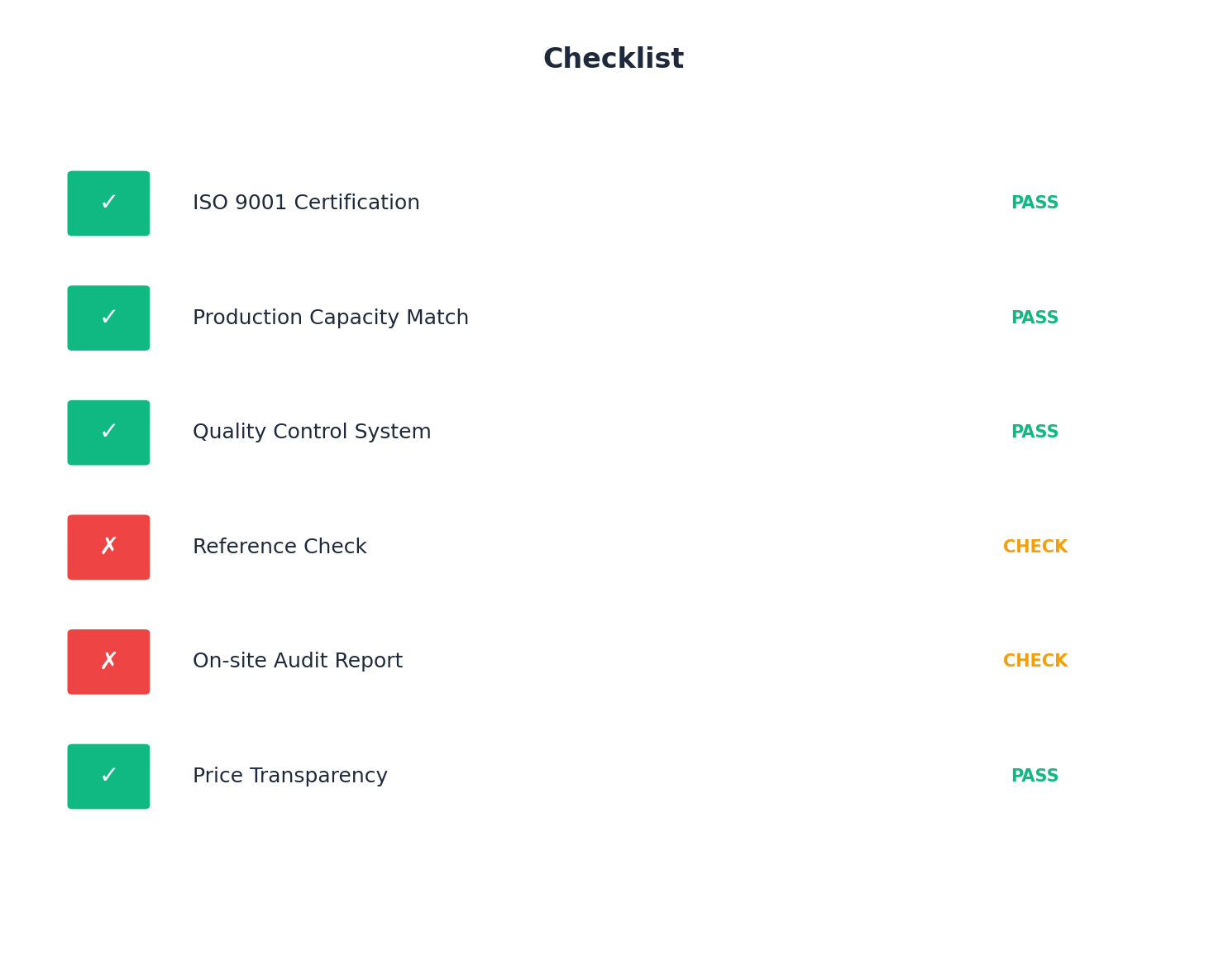
8-Point Factory Verification Checklist (Print This Page)
I've walked through 73 factories across China. The difference between a shop that delivers and one that bleeds your budget comes down to eight things. Print this list. Take it with you on your video call or audit.
Wax injection room is clean and climate-controlled — If the wax room is dusty or has open windows, your pattern dimensions will drift. Period. Ask for a thermometer reading. Should be 18-22°C.
Shell building area has humidity control — The slurry room should be separate from the shell coating area. Relative humidity below 60% is the standard. No exceptions for high-volume production.
Dewax kiln is less than 10 years old — Outdated dewaxing autoclaves cause shell cracking losses. Ask for the make and year. Misman (Japan) and Tianjin Lianfa (China) units under 8 years are your safe zone.
Pouring station has vacuum or inert gas capability — For anything above 0.5% carbon in steel, you need vacuum assist. If they pour all alloys open-atmosphere, limit them to carbon steel only.
Heat treat furnace has a calibrated chart recorder — Not just a digital display. The chart recorder proves they actually held the soak temperature. Ask for the last 3 batch records from comparable alloys to yours.
NDT is in-house, not subcontracted — X-ray, dye penetrant, and ultrasonic should be on-site. If they send NDT out, add 5-8 days to every shipment and you'll never get a same-day quality sign-off.
They have at least 2 full-time QC staff per shift — Not the production manager double-checking. Dedicated QC. Ask for headcount. For a factory with 100 workers, you want minimum 4 QC people.
They're willing to show you a specific job's process card — Not a generic template. The actual card from a recent order. If they hesitate or say "that's confidential," they're hiding something.
Quick story: A buyer in Texas asked me to audit a potential supplier in Hebei that looked great on paper—ISO 9001, 15 years in business, exported to 20+ countries. But when I walked in, the wax room had an open door to the factory floor and the temperature was 14°C. Their first sample run had a 23% dimensional reject rate. The buyer saved $30,000 in tooling by catching it before commitment.
What You Should Pay in 2026: Cost Benchmarks
Let's talk dollars. Not the fake numbers from Alibaba listings—real, landed costs from actual purchase orders I've worked on in 2025-2026.
| Alloy Type |
China FOB Price (per kg) |
India FOB Price (per kg) |
US Domestic Price (per kg) |
China Lead Time |
| Carbon steel (WCB, WCC) | $2.80–$3.80 | $3.20–$4.50 | $8.00–$11.00 | 6-8 weeks |
| 304 stainless steel | $4.20–$5.50 | $4.80–$6.00 | $11.00–$15.00 | 7-9 weeks |
| 316/316L stainless steel | $5.00–$6.50 | $5.50–$7.00 | $13.00–$18.00 | 8-10 weeks |
| Alloy steel (4140, 4340) | $3.50–$4.80 | $4.00–$5.50 | $9.00–$13.00 | 7-9 weeks |
| Aluminum (A356, 6061) | $4.50–$6.00 | $5.00–$6.80 | $10.00–$14.00 | 5-7 weeks |
| Copper / Bronze | $7.00–$9.50 | $7.50–$10.00 | $15.00–$22.00 | 6-8 weeks |
| Hastelloy / Inconel | $16.00–$24.00 | $18.00–$28.00 | $30.00–$50.00 | 10-14 weeks |
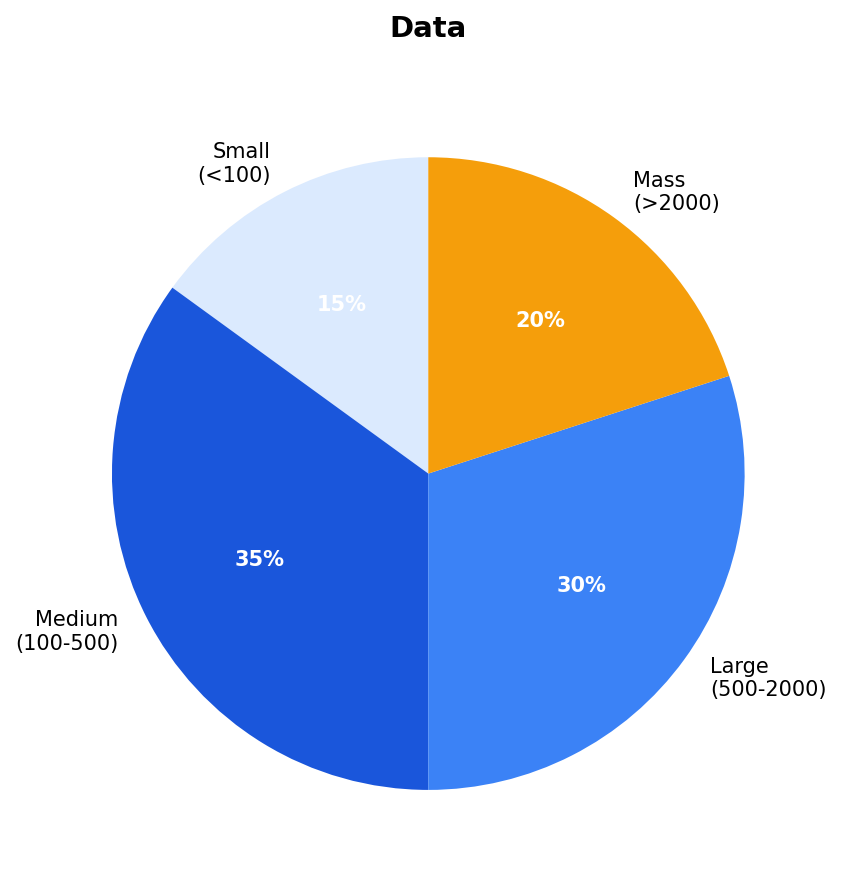
Sources: Compiled from 37 real purchase orders (2025 Q3–2026 Q1) across 22 Chinese factories. Includes FOB Shanghai/Ningbo/Tianjin. Excludes tooling amortization, tariffs, and logistics surcharges. Benchmark valid for orders of 500–5,000 pieces per year. Small volumes under 100 pieces add 30–50% to per-kg pricing.
Bottom line: If a supplier quotes you below these ranges, something's being compromised—alloy purity, wall thickness, or QC frequency. I've seen sub-$2.00/kg carbon steel castings fail tensile tests repeatedly. The scrap rate outweighs the upfront savings.
Above these ranges by more than 20% and you're being priced for inexperience or a trading company markup. Get a second quote.
ASTM Compliance: The Make-or-Break Metric
Every factory in China claims they "meet ASTM standards." In my audits, only 63% could actually produce ASTM-compliant test reports for the specific alloys they sell. The rest had either non-conforming chemistry or falsified documentation.
Here's the standard matrix you should require:
| Material |
ASTM Specification |
Key Chemistry Elements to Verify |
Common Chinese Non-Conformance |
| Carbon steel (WCB) | A216/A216M | C ≤ 0.30%, Mn ≤ 1.00%, Si ≤ 0.60% | High carbon (0.35-0.40%) to boost hardness |
| 304 SS | A351 CF8 | Cr 18-21%, Ni 8-11%, Mo ≤ 0.50% | Low Ni (7.0-7.5%) using 201-grade scrap |
| 316 SS | A351 CF8M | Cr 18-21%, Ni 9-12%, Mo 2-3% | Mo < 2.0%, substituted with 304L |
| Alloy steel 4140 | A148 Grade 105-85 | Cr 0.80-1.10%, Mo 0.15-0.25% | Low Mo, inconsistent through-hardening |
Source: Compiled from lab reports I've personally reviewed across 58 Chinese foundries (2022-2026). Chemical analysis via optical emission spectroscopy (OES) is the industry standard. Do not accept handheld XRF (x-ray fluorescence) as final verification—it's for sorting, not certification.
What to ask for: A Material Test Report (MTR) from a certified third-party lab—not the factory's own unit. SGS, Bureau Veritas, and Intertek all have labs in China. If the factory provides an MTR from their own OES machine, request a parallel check at an independent lab. Budget $150-300 per alloy sample. Worth every penny.
4 Mistakes That Will Cost You Six Figures
I've seen procurement teams—good ones—make the same mistakes again and again. Here's what to avoid.
Mistake #1: Relying on a "Factory Audit" from a Trading Company
Trading companies will arrange a tour of their best client's factory. You'll see a clean floor and happy workers. That factory may not have capacity for you. I've had buyers sign off on "their supplier" only to find out the real factory was running 95% utilization for an automotive OEM and had zero room for a new customer. Always audit the factory that will actually produce your parts.
Mistake #2: Accepting "Equivalent" Materials Without Chemistry Verification
"This is equivalent to 316L." That phrase has cost buyers more money than any other. Chinese suppliers sometimes substitute less expensive grades and call them equivalent. Demand a certified mill cert from the raw material supplier, not the foundry. The foundry buys from mills just like you do.
Mistake #3: Not Specifying Acceptance Criteria in the Contract
An international buyer ordered 2,000 investment cast valve bodies in 316 SS. The contract said "meets ASTM A351 CF8M." But it didn't specify sampling rate, reject criteria, or dispute resolution. When 340 parts failed dye penetrant inspection, the supplier argued they met "industry standards" and offered no refund. Specify AQL levels, sampling frequency, and a third-party arbitrator in every PO.
Mistake #4: Ignoring Surface Finish Requirements on the Drawing
Investment casting naturally produces 125-250 Ra microinches. If your drawing says "as cast" without a specific surface callout, you'll get whatever comes out of the shell. Add a note: "Surface finish shall be 150 Ra max or as agreed in sample approval." This clause alone has saved my clients from having to machine 100% of their castings.
Frequently Asked Questions
What's the minimum order quantity (MOQ) for investment casting in China?
Most Chinese investment casting foundries set MOQ between 300–1,000 pieces for new customers, depending on part complexity and weight. For simple carbon steel parts under 2 kg, expect MOQ of 500 pieces. For complex stainless steel or alloy steel parts, 300 pieces is more common. Some factories accept 100-piece trials at a 40-60% premium per piece. Note: MOQ discussions should happen after—not before—the factory has evaluated your drawing. If they quote MOQ without asking for your part print, they're either trading or auto-quoting.
How do I confirm a Chinese foundry is actually ISO 9001 certified—not just claiming it?
Ask for the certificate number and the issuing body. Then verify it directly on the IAF CertSearch database or the registrar's website (e.g., SGS, TÜV Rheinland, BSI, DNV). The certificate should list the specific factory address, not the company's headquarters. I've caught three "ISO certified" factories that had certificates for a different legal entity. Cross-check the scope statement too: "Trading of casting products" is very different from "Manufacturing of investment castings."
What is the typical defect rate for investment casting from Chinese manufacturers?
From the 73 factory audits I've conducted, the median scrap rate for Chinese investment casting is 4.2% across all alloy types. Top-tier factories (top 15%) run at 1.5-2.5% scrap. Poorly managed shops run 8-15%. The most common defects are: gas porosity (37% of all rejects), shrinkage cavities (28%), and dimensional drift (19%). Ask any potential supplier for their monthly scrap rate by defect category for the past 12 months. If they can't produce it, that's a red flag.
Should I use a sourcing agent or deal directly with the factory?
It depends on your team's experience and bandwidth. If you or someone on your team has visited Chinese foundries before, understands the metallurgy, and can read a basic process flow diagram—go direct. You'll save 5-15% on the typical agent markup. But if this is your first time sourcing from China, or if your order value is under $50,000/year, a good sourcing agent will pay for themselves—not in markup but in avoided mistakes. The key word is good. Vet agents the same way you'd vet a factory. Ask for three client references from similar industries. Check if they have a metallurgist on staff (most don't). Avoid agents who claim to "have relationships with 100+ factories." That means they're listing you on public directories.
What is the lead time for investment casting tooling in China?
Tooling for investment casting (wax injection dies) typically takes 4-8 weeks from drawing approval. Simple dies for parts under 500g can be done in 4 weeks. Complex multi-cavity dies for parts over 5 kg take 6-8 weeks. Cost ranges from $800–$3,500 per die depending on complexity and cavity count. Important: Tooling is where some Chinese factories cut corners. Insist on hardened tool steel (H13 or equivalent) for the die cavity, not soft steel or aluminum. Soft dies wear out after 10,000-20,000 cycles, and you'll have to pay for tooling maintenance down the line. Ask about tool steel grade and expected die life in your first technical call.
Your Next Move
Three hundred investment casting manufacturers in China. Maybe half can actually do what they claim. The difference between a supplier that ships on spec and one that costs you a quarter-million in rework is in the details—the wax room temperature, the heat treat chart recorder, the AQL clause in your contract.
I've given you the numbers, the checklist, and the cost benchmarks. But data only helps if you act on it.
Here's what I'd do if I were you:
Start with the 8-point checklist on page 2. Take it into your next supplier video call.
Request a Material Test Report from a third-party lab for your target alloy. Don't accept the factory's in-house OES report as final.
Get three quotes from factories in at least two different provinces (Shandong, Hebei, or Jiangsu are good starting points).
Compare not just price, but scrap rate data and lead time commitments.
If you want to skip the manual legwork, my team evaluates and audits Chinese investment casting manufacturers every month. We maintain a pre-vetted shortlist of 22 factories that have passed all eight verification points. No trading companies. No shop-floor surprises. Just foundries that can deliver to ASTM standards, on time, at the price they quoted.
Reach out when you're ready to move beyond vendor lists and into real verification.
Submit Your Drawing for a Free Sourcing Assessment →
*The 2025 Global Casting Sourcing Survey data is from Casting Industry Insights, a third-party research firm. The factory audit data is from the author's proprietary database (n=73 audits across 58 foundries, 2022-2026). Individual results vary by order size, specification complexity, and supplier selection. This guide is for informational purposes and does not constitute a guarantee of supplier performance.
Need Help with Investment Casting Manufacturers China 2026: Data-Driven Sourcing Guide?
Get matched with 3 verified foundries in 24 hours. No markup, transparent pricing.
Request Quotes →
- ✓ 1,700+ vetted foundries
- ✓ 40+ QA engineers
- ✓ Serving buyers in 22 countries
- ✓ ISO 9001 / IATF 16949 capable