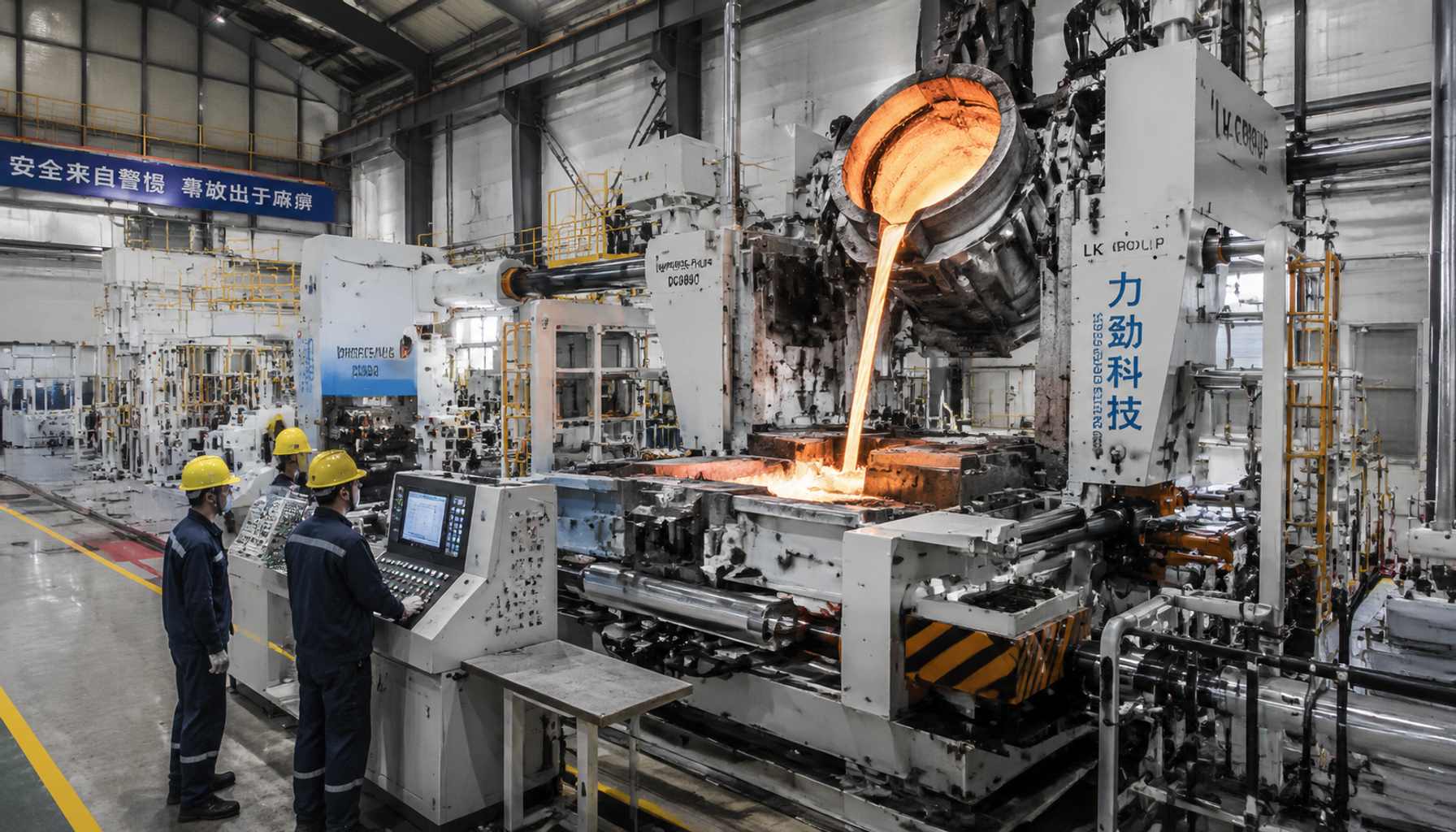
By 2030, automakers will need close to 12 million tonnes of aluminium a year just for EV battery enclosures. That's a trade-body estimate, and even if it's off by 30%, the direction is unmistakable: if you're a purchasing engineer or a supplier quality engineer, low pressure casting is on your desk — or it's about to be.
Sit with the numbers for a second:
- The typical EV pack used roughly 70 kg of aluminium for the housing, tray and cover in 2025. With pack sizes climbing, that's heading to 90-110 kg per vehicle in 2028.
- Low pressure permanent mold (LPPM) casting holds around 65-70% of the structural battery enclosure market in Europe today. Extrusion plus friction stir welding takes most of the rest.
- Die tooling for a low pressure casting runs $150K to $400K. A comparable high pressure die will cost you $250K to $800K. That gap alone explains why LPPM keeps winning programs in the 50,000-200,000 units per year range.
At a glance for your next sourcing review: LPPM holds ~65-70% of Europe's structural battery enclosure market. Landed casting costs run $3.80-8.50/kg depending on region. Tooling: $150-400K. A356-T6 delivers 210-240 MPa yield and 4-7% elongation. Helium leak spec: 1×10⁻⁶ mbar·L/s or better. The 7-step audit that matters is below — take it with you.
Here's the thing nobody tells you at the kickoff meeting: your battery enclosure program won't fail because of the casting process. It'll fail because of the cost model you signed off on, the quality gates you skipped, and the supplier you qualified on paper instead of on the floor. This guide walks those three failure points, one by one, with the data you need to avoid them.
Why Low Pressure Casting Won the Battery Enclosure Work
Battery enclosures are a different animal from the brackets and housings you've sourced before. They're big — 1.5 to 2.2 metres long, thin-wall, leak-tight, structural, and safety-critical. That combination rules out some processes and pushes you hard toward others.
Here's the honest comparison table your supplier doesn't want to give you:
| Process | Cycle time | Tooling (US$K) | Elongation | Heat-treatable? | Leak-tightness | Sweet spot |
|---|---|---|---|---|---|---|
| Low pressure permanent mold | 6-12 min | 150-400 | 4-7% (A356-T6) | Yes | Excellent | 50-200K units/yr |
| High pressure die casting | 60-120 sec | 250-800 | 2-4% (as-cast) | Mostly no | Good w/ impregnation | 200K+ units/yr |
| Extrusion + FSW | Per part | 80-200 | 8-12% | Yes | Seam risk | <50K, oversized |
Why does LPPM win the middle of that chart? Three reasons:
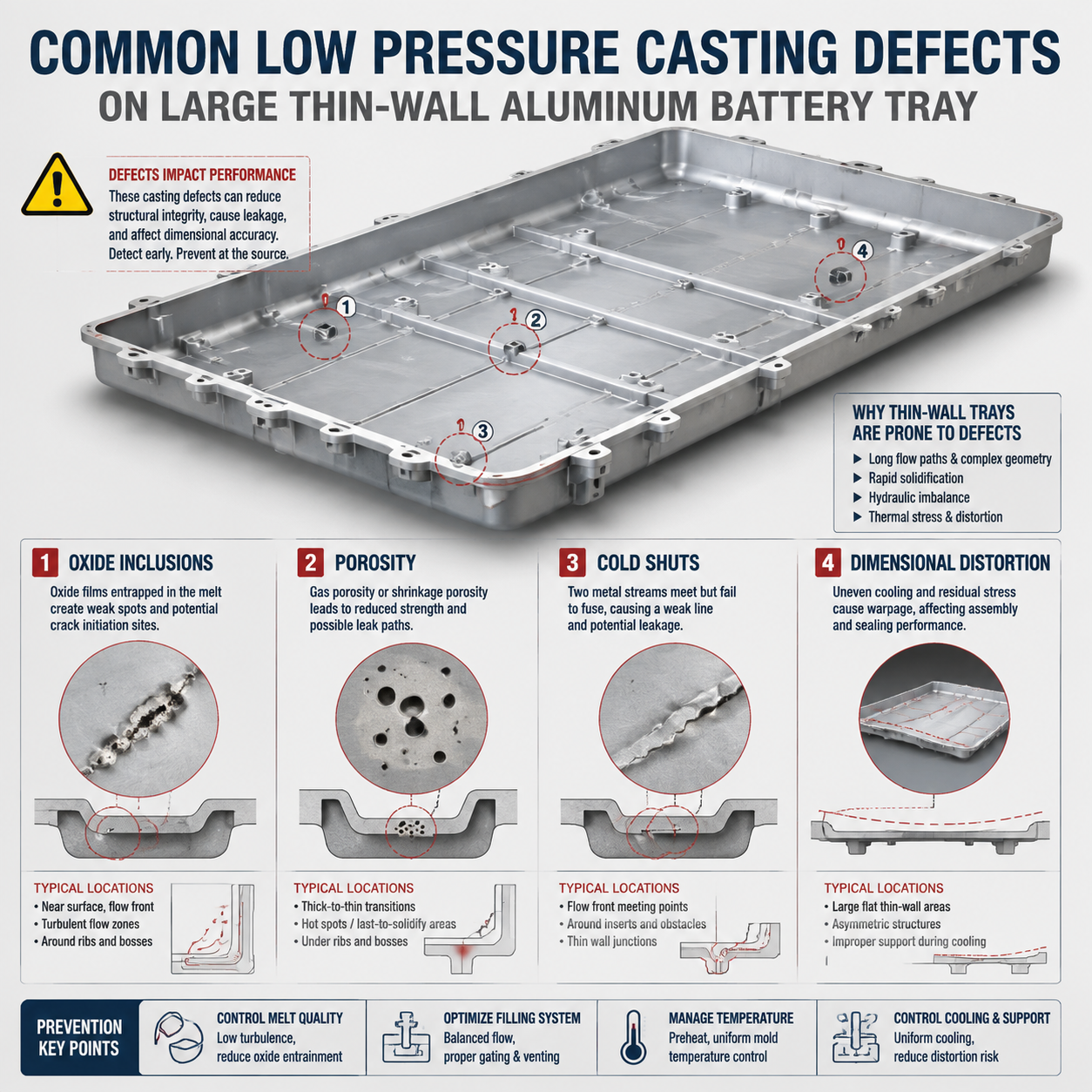
- Controlled filling. The melt rises into the die under low, adjustable pressure (typically 0.4-0.7 bar) instead of being blasted in at high velocity. Less turbulence means less oxide entrapment and porosity — and porosity is the enemy of leak-tightness.
- You can heat treat it. A356 in T6 delivers 210-240 MPa yield and 4-7% elongation. That's what you need to survive crash load cases and still seal a cooling channel.
- Big parts, sound feeding. Low pressure keeps the riser effectively under pressure throughout solidification, so thick sections — like motor mount points on the tray — feed properly without macro shrinkage.
HPDC fans will argue cycle time. They're right: 90 seconds beats 9 minutes. But by the time you add vacuum die casting, porosity acceptance, impregnation, weld repairability limits and the cost of rejects, the per-good-part math closes fast. For 100K units a year, LPPM is usually the lower-risk cost.
One more data point: in crash-tested structural packs, the LPPM enclosure with A356-T6 meets most OEM targets for elongation and energy absorption without steel reinforcement ribs. That saves 12-18 kg per pack versus an extruded design that needs a bolted frame. Weight is cost. If you're still deciding between processes, read the head-to-head high pressure vs low pressure casting comparison before you lock the RFQ.
What Actually Happens in a Low Pressure Casting Cycle
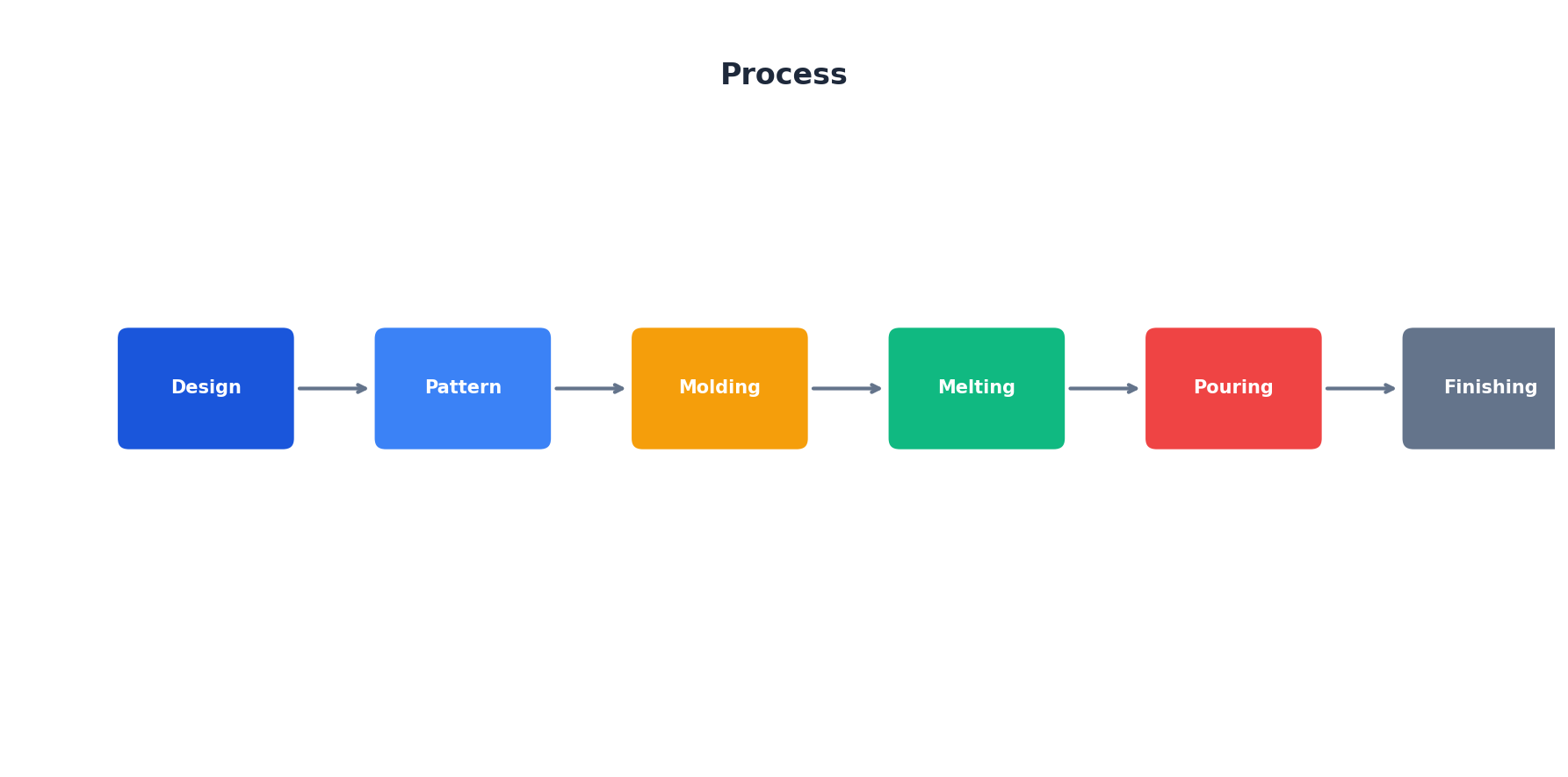
Walk into a shop running low pressure casting for battery enclosures and you'll see the machine rhythm. There's a holding furnace under the machine tool, a refractory riser tube reaching up into the steel die, and the die itself — usually water-cooled, with multiple channels and, on the better shops, conformal cooling inserts.
The cycle looks like this:
- Nitrogen pressurizes the sealed furnace atmosphere to 0.4-0.7 bar.
- Molten aluminium (typically 690-720°C) rises up the riser tube and into the die cavity from below.
- Pressure holds while solidification starts from the die walls inward — this is what feeds the heavier sections without shrinkage.
- Pressure releases, and any remaining liquid drains back down. The die opens, the casting's ejected, and the cycle restarts.
For a 1.5-metre battery tray, that full cycle runs 8-12 minutes. Smaller covers run faster. Die temperature control matters more than anyone admits: the die needs to hold ±10°C across its surface, because a cold die corner will produce a cold shut and a hot zone will produce soldering. Ask every shortlisted foundry how they measure die temperature in production. If the answer is "the machine display," that's not measurement — that's a guess.
Alloys you'll actually see specified
- A356 (AlSi7Mg0.3) — the workhorse. T6 gives 210-240 MPa yield, 4-7% elongation. Best combination of castability, leak-tightness and weldability for battery enclosures.
- A357 (AlSi7Mg0.6) — a step up in strength and elongation if your load cases demand it. Slightly harder to cast, more expensive to machine.
- AlSi10Mg — mostly a high pressure die casting alloy. If a foundry quotes it for low pressure, ask why they're not using A356.
One warning on heat treatment that a lot of buyers learn the hard way: T6 on a long thin-wall tray can warp. You're quenching a 2-metre part from 540°C into hot water — distortion is physics. Some programs spec T5 or a relaxed T6 to hold flatness, trading a bit of strength for dimensional sanity. Strength is cheap until it costs you flatness on a sealing surface.
What You'll Actually Pay: The Cost Data, Not the Quoted Price
Let's talk money, because the quote you get in week one is not the number you'll be measured against in month 18.
The 2026 cost landscape for low pressure battery enclosure castings, based on actual sourcing and RFQ data across the market (estimates, not list prices):
| Region | Typical price, USD/kg landed* |
|---|---|
| China | $3.80-4.50 |
| India | $4.40-5.20 |
| Turkey | $4.60-5.40 |
| Mexico | $5.00-6.00 |
| Europe | $6.50-8.50 |
*Includes casting, heat treat, trimming, basic machining to print, and shipping to the nearest major port, excluding duty and carbon border adjustments.
Take a 30 kg machined enclosure with 40% machining removal. At Chinese pricing you're looking at $114-135 per unit on the casting-plus-machining side. Tooling adds $150K-400K amortized over the program. The total unit cost lands around $145-170 depending on volumes and surface treatment.
Here's how that $145-170 builds up, as an indicative breakdown for a 30 kg machined enclosure:
| Cost component | USD per unit |
|---|---|
| Casting, heat treat, trim, basic machining to print | $114-135 |
| Tooling amortization (over 50-200K units) | $20-45 |
| Surface treatment & corrosion protection | $15-25 |
| Final machining, leak test, sealing | $25-40 |
| Total landed unit cost | $145-170 (approx) |
Figures are directional, not a quote — your part geometry, annual volume and surface spec will shift each line. Use them as a sanity check when quotes arrive.
Then you add the things every first-timer forgets:
- Tariffs and CBAM. The US 7.5% Section 301 duty on many China-sourced automotive parts, and the EU/UK carbon border adjustment on aluminium imports, are live cost items. Your FOB price is not your landed price.
- Freight and crating. Oversized trays ship on custom fixturing. Plan $3.5-6 per kg on the final machined weight, not the casting weight.
- Machining waste. You're paying for a 30 kg casting and machining away 12 kg. That material cost hits you twice — once as raw material, once in the chips.
This is where James Parker, a US automotive aftermarket buyer who has sourced structural battery components for the last four years, gets blunt:
"I've seen three quotes for the same enclosure land at $190, $240 and $315 a unit. The $315 one wasn't better quality — it was a Tier-1 with a fat overhead. You're paying for their ERP system, not your casting. The middle quote had the weak die design. The $190 one? Bought it, audited it, shipped it. No drama."
The lesson is not "always buy cheap." It's that price dispersion in this category runs 40%+ even at the same specification — because foundries differ wildly in die engineering and yield. The only way to know where you are in that spread is to have a good engineer open the die design before the tooling is cut. That's not a price negotiation. It's arithmetic.
The Quality Gates That Actually Matter
Aluminium casting, low pressure, high integrity — those words mean nothing on a certificate. What matters is what happens between the furnace and the leak test station. Here are the quality gates that separate the shops you can sleep through to PPAP from the ones that will cost you a launch.
Chemistry is the start, not the finish
A356 chemistry on a heat-lot certificate is table stakes. The question is melt treatment in the foundry: degassing (rotary degasser, not a nitrogen lance and a prayer), grain refinement, and a reduced pressure test (RPT) on each pot before pouring. RPT should show porosity class A1-B2 per ASTM E 505. If the shop can't show you last week's RPT records, you're flying blind.
Radiography on first articles — no exceptions
Battery enclosures carry crash and sealing loads. The big three defects — macro-shrinkage between thick sections, oxide films from turbulent pour, and leak paths through the wall — show up on X-ray. I've never signed a PSW for a battery tray without the phased-array ultrasonic scan on the thin-wall zones. If the foundry pushes back on NDT during PPAP, that pushback tells you everything about how they'll behave in a launch crisis.
Leak testing is the one you can't negotiate
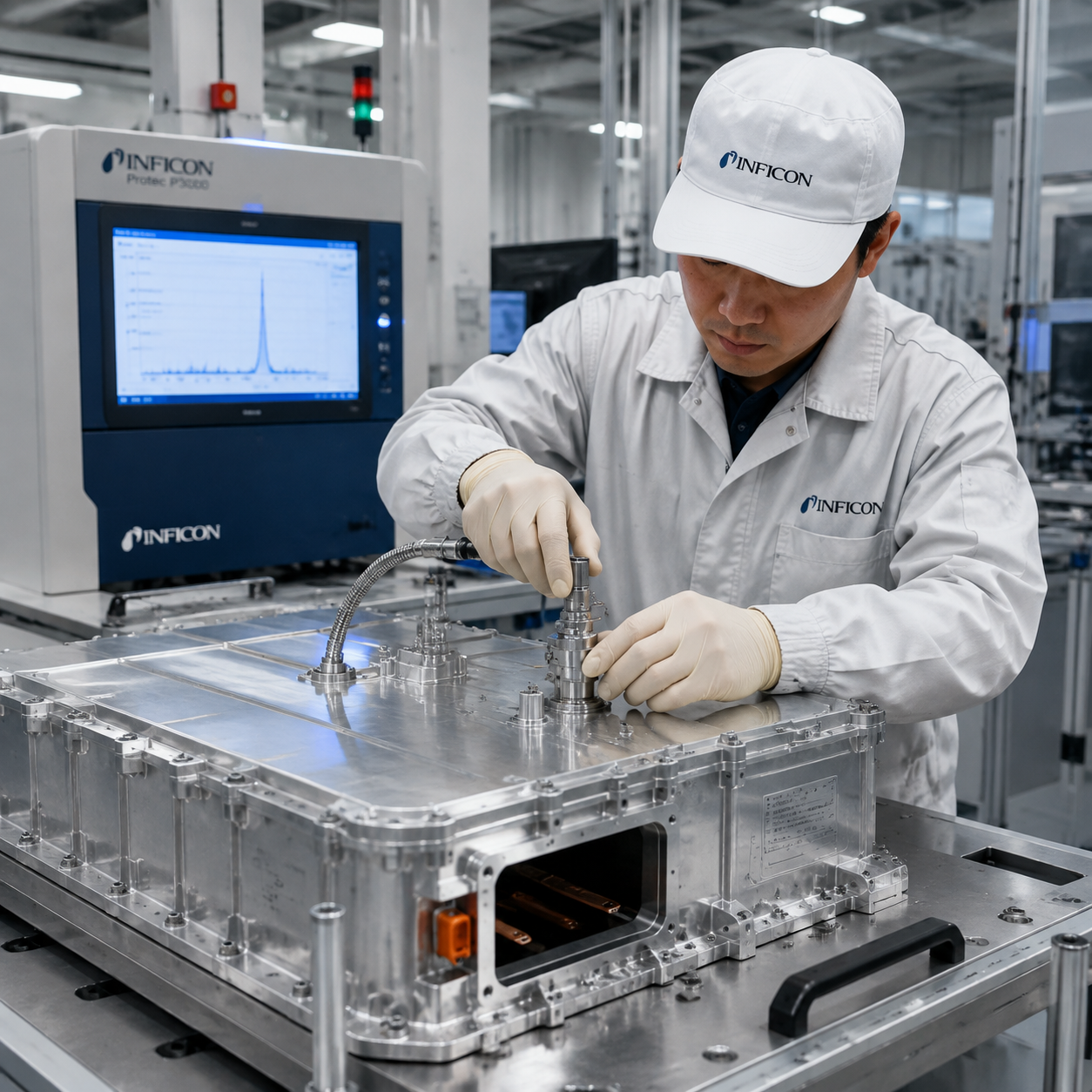
After machining, the enclosure assembly must hold coolant and keep atmosphere out. Helium mass spectrometry is the standard, with a spec of 1×10⁻⁶ mbar·L/s or better. If your supplier offers a pressure decay test as the primary leak check, understand what you're giving up: pressure decay can't find small leaks reliably and can't localize them. You'll discover that gap when the pack sits in a customer's garage. The full program requires calibrated leak fixtures, periodic master part verification, and stations that log every result with a serial number. We covered the practical setup in helium leak testing for castings — it's worth a read before your first source visit.
Heat treatment is an auditable process, not a checkbox
T5 or T6 properties depend on soak temperature, soak time, and quench delay. The quench delay — the gap between opening the furnace and the part hitting the quench media — has to be under 30 seconds, ideally under 20. Ask for the thermocouple in-part logs from the last production batch. If the shop says "we don't log that," stop the audit. Also ask where the thermocouples are placed: if they're strapped to the basket frame instead of buried in a scrap part of the same section thickness, your properties are a guess.
Read IATF 16949 and VDA 6.3 as narratives, not certificates
Here's my honest take as someone who's audited 40+ foundries in four countries: an IATF 16949 certificate tells you the shop spent money to be audited. It doesn't tell you if their die temperature control holds ±10°C, or if their operator follows the cooling channel flow spec. VDA 6.3 audits, done properly, get closer to the process. But a certificate on the wall is not a process. I've walked into an IATF-certified shop where no SPC record had been updated in two weeks, and the oven was running 20°C off-spec. The certification audit happened six months earlier. The process had drifted fourteen days later.
James, who buys at scale, has the same read:
"The foundry with the shiniest brochure missed every launch milestone. The one that looked rough on paper shipped ten days early. Watch their scrap rate trend and their die maintenance logs, not their sales deck."
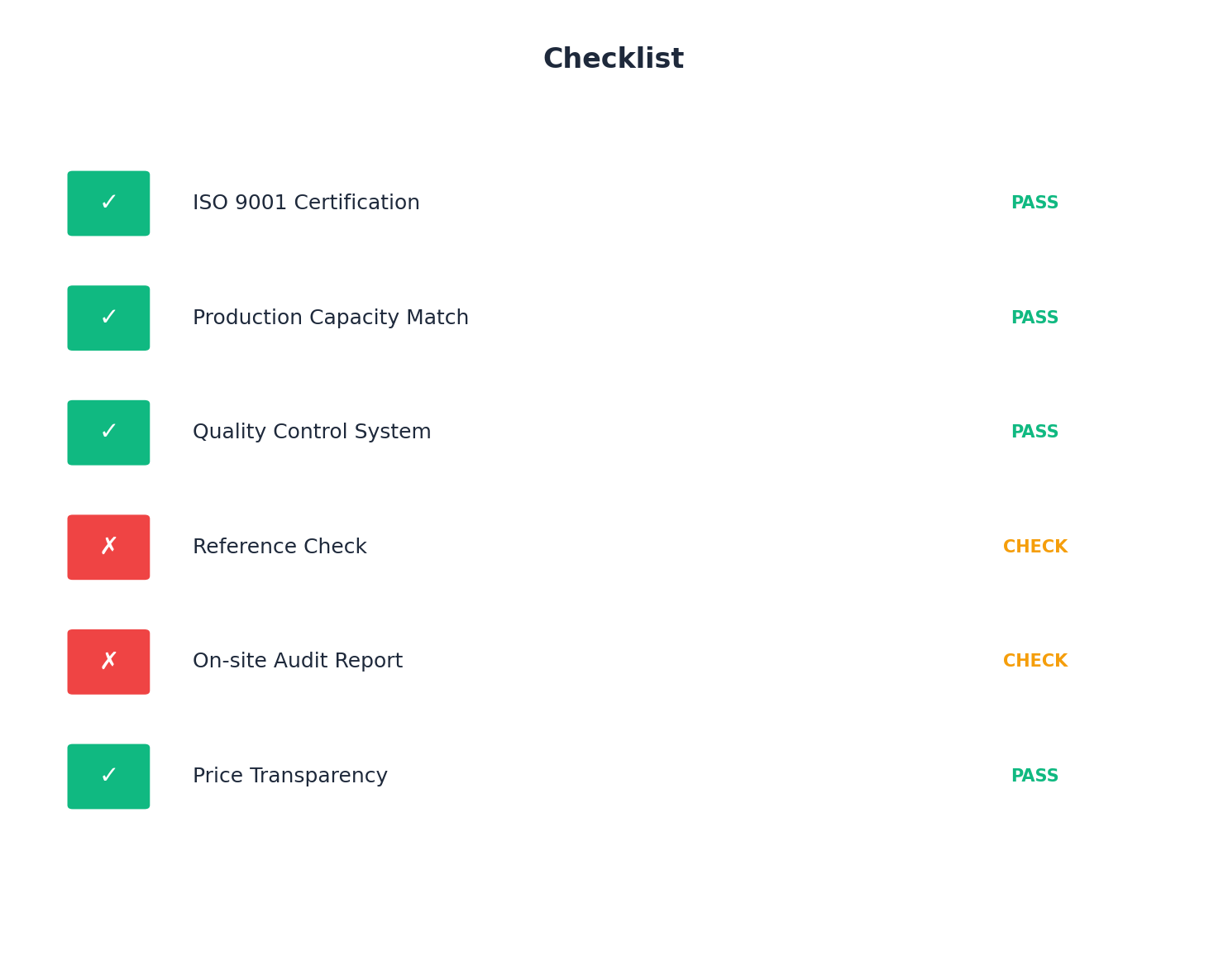
How to Verify a Battery Enclosure Foundry in 7 Steps
We've covered the theory; here's the field checklist. Take it to the audit, and don't leave until each item is answered with evidence, not PowerPoint.
- Die age and maintenance log. How many shots on this die? What's the die steel — H13 is the norm — and what's the expected die life (100-150K shots)? When was the last die rework? Thermal fatigue cracks show up as flash in week three of PPAP if the die's been overrun.
- Melt control. Rotary degasser? In-line filtration? RPT records? Grain refiner added, or is the "A356" whatever the scrap dealer delivered? You want documented TiB2 grain refinement and a fixed degas cycle, not improvisation.
- Heat treatment furnace. In-part thermocouples, quench delay timer that can't be defeated, and the last month's batch logs. This is the single biggest source of hidden quality variance in thin-wall enclosures.
- Machining envelope. Can the shop actually hold your 1.5-metre tray tolerance? Check their CMM envelope, the machine bed size, and whether they inspect the full sealing surface or just the mounting points. A ±0.15 mm spec on a sealing surface needs a 5-axis machine and fixtures that don't warp the part.
- Leak test capacity. How many helium leak stations do they have? Leak testing is your production bottleneck — if the shop has one station for a program that needs 800 units a week, your deliveries will tank. "We'll add stations later" means your launch will slip.
- Packaging and logistics for oversized parts. A 1.9-metre tray doesn't fly LTL. Check crating, returnable fixtures, and whether their port setup can handle the volume without doubling handling damage.
- Financial sanity and raw material contracts. Ask to see their A356 ingot purchase contracts. If the answer is "we buy on the spot market," their melt chemistry will wander, and so will your yield. And check capacity utilization: a shop running at 95% drops you first when their big OEM account gets a rush order.
There's a reason China's Shandong province alone has 1,200+ ISO-certified casting shops — most of them are not process-capable for structural battery enclosures. The verification step is what separates the 20 shops that can from the 1,180 that will waste your time. For the full tour, our casting foundry audit guide goes deeper on each of these points.
Five Mistakes That Blow Up Battery Enclosure Programs
- Quoting on the drawing, not the process. If you send a 2D drawing and ask for a quote, you'll get a price with margin for every unknown. The shop that says "we need your 3D model, your load cases and your prototype test plan" is the shop that knows what they're doing.
- Freezing design after die steel is cut. Every design change after tooling kickoff is $5K-25K in die modification plus schedule pain. Get the part frozen — really frozen, with sign-off — before the tooling PO. This sounds obvious; I've seen it violated in half the programs I've been brought in to fix.
- Not defining porosity disposition criteria early. Porosity in the as-cast state is a fact of life. What matters is where, how big, and how many. Draw the acceptance zones on the part and get the foundry to sign them before PPAP, not after your first 300-piece run shows up with shrinkage in the bolt bosses.
- Calling every aluminium process "die casting." There are foundries that will quote "low pressure die casting" and run gravity casting with a tall riser. Check the machine. An LPPM machine has a sealed holding furnace and a riser tube. If you see a ladle, that's not low pressure.
- Ignoring the BOM cost of secondary operations. Machining, leak testing, sealing, surface prep — these combine for 35-50% of the final part cost. As James puts it: "Every gram you machine off after casting is money you're burning twice — once for the machining, once for the chips. Get the near-net-shape right in the die."
Frequently Asked Questions
What's the difference between low pressure casting and low pressure die casting?
They're the same family — LPPM (low pressure permanent mold) is the precise name for what people call low pressure die casting. The mold is a permanent steel die, and the melt is pushed up from a furnace below under low gas pressure. Don't confuse it with "low pressure" in an HPDC context.
Can you weld on low pressure cast A356 battery enclosures?
Yes. This is one of the main reasons LPPM is chosen over HPDC for battery trays and covers. A356-T6 welds reliably with controlled heat input. HPDC parts carry entrapped gas that blows out during welding — that's why they're usually bolted or bonded, not welded. If your design uses weld-in inserts or repair allowances, LPPM is usually the safer call.
What's a realistic cycle time for a large battery tray?
For a 1.5-metre tray, 8-12 minutes per shot is typical. Multiple machines in parallel make up the volume. If a foundry quotes 4 minutes for a battery tray, they either have some very advanced conformal cooling or they're telling you what you want to hear.
Is A356 the best alloy for EV battery enclosures?
For most programs, yes — A356-T6 is the best cost/performance balance. A357 (AlSi7Mg0.6) is the upgrade when elongation or strength demands are higher. Some foundry-specific proprietary alloys are emerging, but if it's not in your foundry's proven list, treat the recommendation like the sales pitch it is.
How much does tooling for a battery enclosure casting cost?
A low pressure die set runs $150K-400K depending on size, number of cavities and conformal cooling. Add $40K-100K for CNC fixtures and leak test tooling. And that's before PPAP samples — which is why die ownership and tooling maintenance clauses matter so much in your supply agreement.
What to Do Next: Source With the Data, Not the Brochure
Here's the summary you can actually use:
- Low pressure casting is the right process for most EV battery enclosures at 50K-200K units per year — better leak-tightness, heat treatability, and a shorter, more affordable tooling path than HPDC.
- Real costs run $3.80-8.50 per kilogram depending on region, with tooling at $150-400K. The spread between quotes can exceed 40%; the difference is die engineering and yield, not honesty.
- The quality gates that matter — melt treatment, radiography, helium leak testing, heat treatment logs and a real VDA 6.3-grade audit — make or break the program.
- Verify the machine, the melt, and the die logs. A certificate on the wall is not a process.
James's read, and mine, aligns on this: the cheapest quote is a guess, the highest quote is a markup, and the right quote comes from a shop that has run this exact part geometry before — with the scrap rate records to prove it.
If you're at the RFQ stage with a battery enclosure drawing package, send it to our supplier qualification team. We'll screen the foundries against the seven points above — machine types, die experience, melt control, leak test capacity, financials — and come back with a shortlist of shops that have actually shipped battery enclosures, not ones that just checked the box on a brochure. You get the shortlist, a regional cost sheet, and an audit schedule. No obligation, no "we're the best" pitch. Just process data.
Need Help with EV Battery Enclosure Low Pressure Casting: 7 Checks for 2026?
Get matched with 3 verified foundries in 24 hours. No markup, transparent pricing.
Request Quotes →