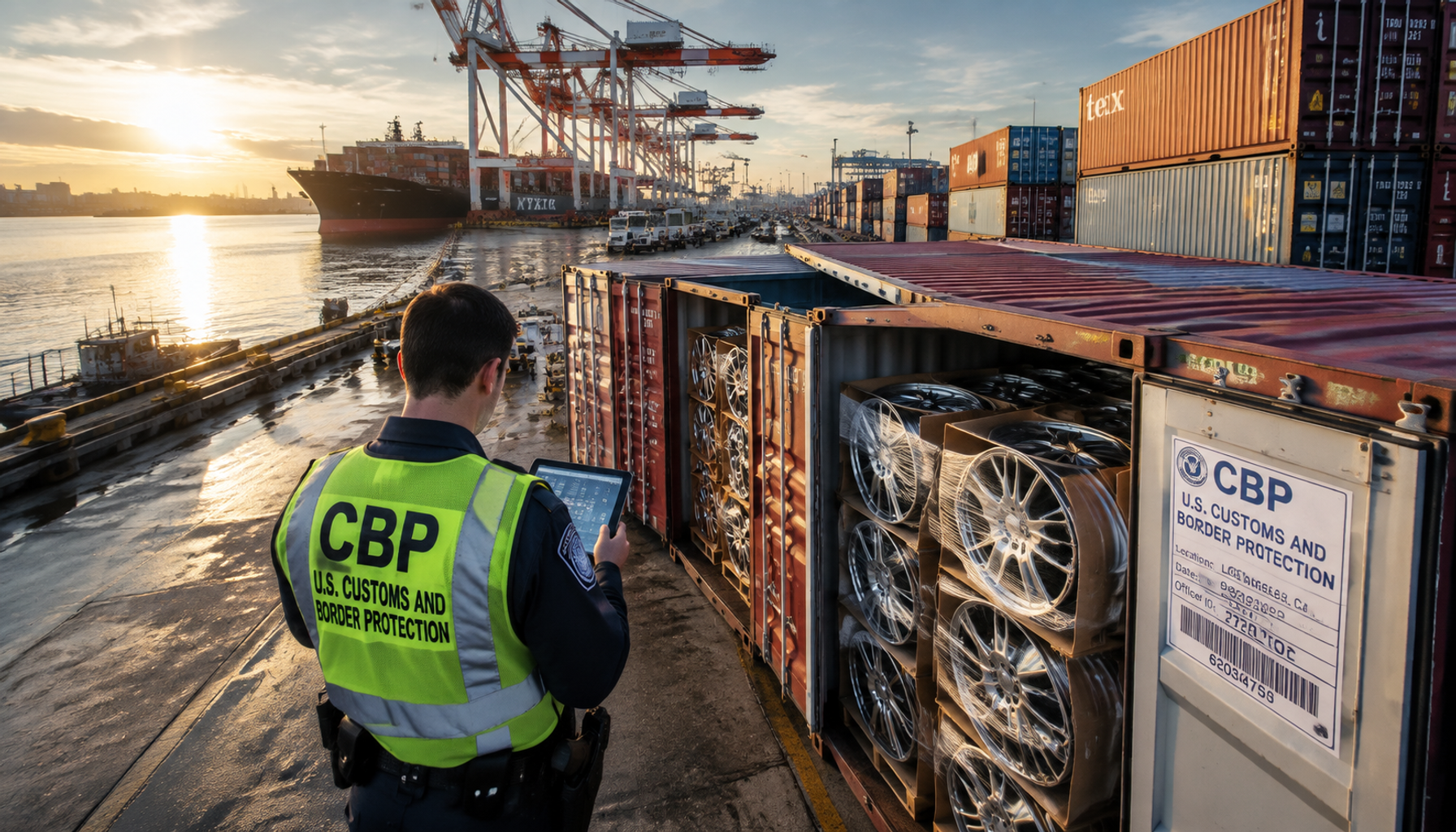
John runs a LEV aftermarket distribution company outside San Diego. Last April, he placed a $68,000 order for 5,000 cast aluminum wheels with integrated hub motors—the kind everyone in the e-bike industry calls a "motorized wheel unit." His supplier in Ningbo invoiced it as "EV parts, not subject to aluminum wheel AD/CVD," and John believed it. Why wouldn't he? It's a motor, not a wheel. It's for an electric bike, not a car. There's even a separate HS code.
On May 19, 2026, the U.S. Department of Commerce published a scope ruling that made the entire industry's stomach drop: cast aluminum wheels with an integrated motor rotor, sensor ring, or structural hub cover fell within the existing aluminum wheel AD/CVD order. Not a new case. A clarification, they called it. "Later-developed merchandise," in trade-law language. And clarification means retroactive.
John's 5,000 units were sitting in a bonded warehouse in Long Beach. Customs and Border Protection (CBP) slapped a hold on them, demanded the AD/CVD cash deposit, and started a focused assessment of his entries going back to 2023. The number they quoted him was $214,000—duties, interest, and a penalty for "failure to exercise reasonable care." His profit margin was 9%. His company is now in receivership.
No tear-jerker intro here. This is a warning, and if you import aluminum wheels or EV wheel assemblies, you need to read every part of this before your next PO. Here's what changed in 2026, how the duty math actually works, and the exact checklist a customs broker would want you to run today.
Why 2026 Changed the Game for Aluminum Wheels and EV Parts
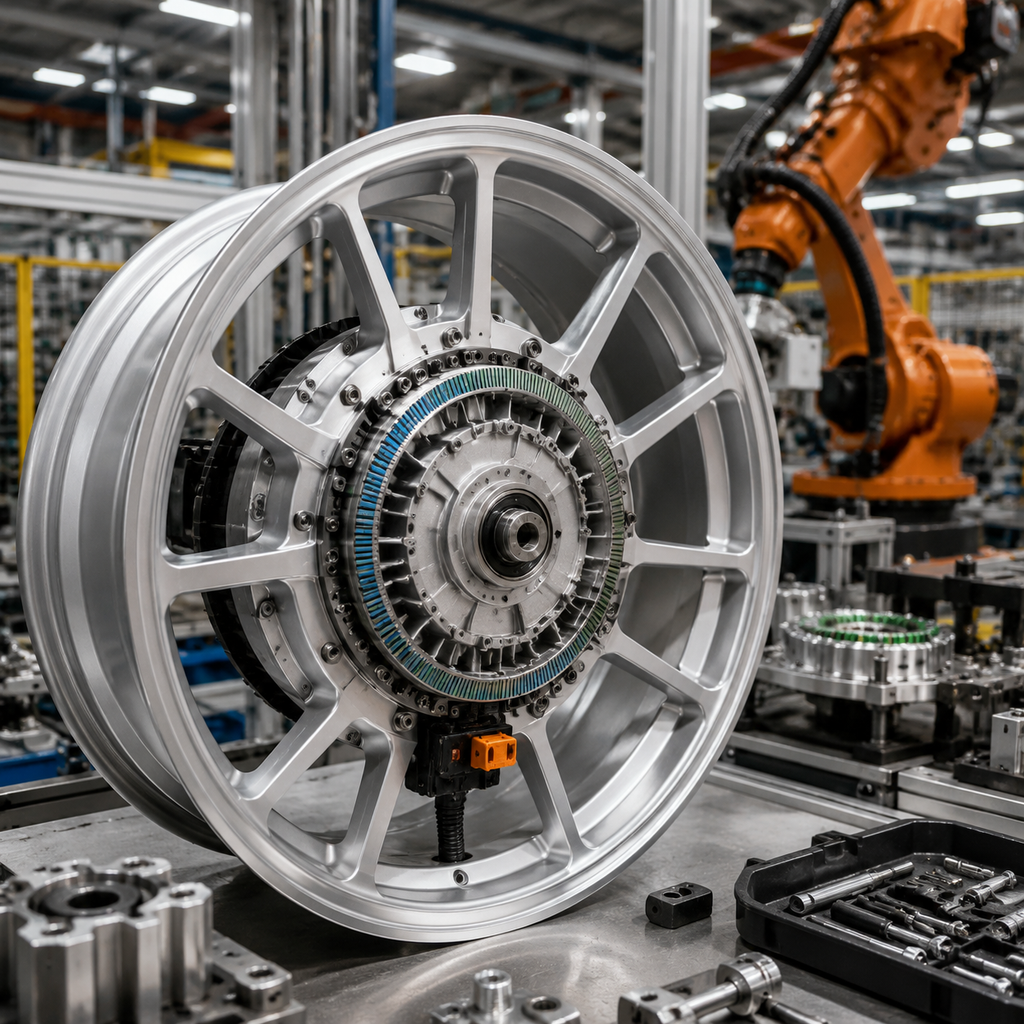
The aluminum wheel trade case has been around since 2012. Chinese producers have been paying antidumping (AD) and countervailing (CVD) duties for over a decade. The underlying order—Certain Aluminum Wheels from the People's Republic of China (A-570-836 / C-570-837)—covers cast aluminum road wheels for passenger vehicles, 14 to 18 inches in nominal diameter, regardless of everything else.
What changed isn't the order. It's what the Department of Commerce now says counts as a "wheel."
The "Later-Developed Technology" Clause No One Reads
Every AD/CVD order contains a hidden time bomb: a provision for later-developed merchandise. If a product is developed after the original investigation and incorporates the same essential characteristics as the covered merchandise, Commerce can pull it into the order without a full new investigation. For years, importers of hub-motor wheels argued their product wasn't an "aluminum wheel"—it was an "electric motor" or an "EV drivetrain component." Courts were split. CBP was starting to push back. Then, in Q2 2026, Commerce settled it by issuing a country-wide scope ruling.
The ruling was blunt: if the cast aluminum part provides the structural rim and disc faces of a road wheel, and it's been "fitted or adapted" for an electric traction motor, it falls within the scope.
The motor rotor, magnet ring, or sensor ring doesn't make it a motor. It makes it a wheel with extra parts. The product is still cast aluminum; it's still a road wheel; it's still from China. Covered.
That immediately hit more than just passenger car wheels. Electric motorcycle wheels, e-bike motorized wheel units, electric ATV wheels, and certain autonomous delivery vehicle wheels all got pulled into the net. If it rolls on the road and carries a vehicle under 4,536 kg load capacity, it's subject to the order. That's how John's e-bike wheels, which he sold under an "EV parts" HS code, ended up on the wrong side of the wire.
The Anti-Circumvention Sweep: Thailand, Vietnam, Mexico
At the same time, Commerce opened anti-circumvention inquiries into wheels shipped from Thailand, Vietnam, and Mexico. The allegation is the same pattern we saw in steel and truck wheels: Chinese foundries ship raw cast wheel rims to a third country, where a local shop does minor machining, painting, or assembly, and then ships the finished wheel to the US as "Thai origin" or "Mexican origin."
In June 2026, Commerce issued preliminary findings on two Thai producers and one Mexican plant: country of origin remained China, meaning all covered entries were subject to the full AD/CVD deposit. If you have any wheels from those countries, or any supplier who can't show a substantial transformation with sourced material traceability, assume you're exposed. The final determinations are expected in November 2026.
Here's the part that hurts: the anti-circumvention inquiry is country-wide. That means even if your Thai factory is a legitimate, long-standing producer, your entries during the inquiry period are potentially subject to retroactive assessment from the date the inquiry was initiated. This is exactly the kind of risk that gets ignored in a 30-minute supplier call.
The Scope You Think You Know Is Wrong
Let me kill three myths right now, because all three are costing importers real money in 2026.
Myth 1: "It's an assembly, not a wheel, so the tariff classification doesn't matter." CBP doesn't care about your HS code as deeply as you think. Scope determinations under an AD/CVD order are based on the physical characteristics of the merchandise, not the box you checked on the entry. You can classify under 8708.70 (road wheels), 8711.50 (motorcycle parts), or 8501.00 (electric motors), and CBP can still find the merchandise covered by the aluminum wheel order. John's entire defense collapsed when a CBP import specialist took a digital caliper to his product and measured the rim diameter: 16 inches. Nominal diameter within 14-to-18. It's a wheel. Period.
Myth 2: "My supplier says it's fine." Your supplier in Ningbo is not the one who'll pay the bill. Actually, legally they might be, but in practice CBP comes after the importer of record first. You are the importer of record. You signed the 5106. You filed the entry summary. You are liable, jointly and severally, for duties and penalties. Your supplier's email saying "no AD/CVD applicable" isn't worth the pixels it's displayed on.
Myth 3: "Only aluminum wheels for cars are covered." Re-read the scope language from the original order—it covers "road wheels for passenger vehicles." The 2026 clarification explicitly noted that "passenger vehicle" is not limited to four-wheeled automobiles. Two-wheeled, three-wheeled, and low-speed vehicles are included.
An aluminum wheel for an electric motorcycle or a motorized e-bike falls inside the order if it's cast aluminum, between 14 and 18 inches, and manufactured in China.
Here's the honest summary: the scope is now broader, the country-of-origin rules are stricter, and the retroactive exposure is real. The physical product degree of transformation that used to get you out of the order is now grounds for anti-circumvention. You are not safe because your product is "smart" or "EV-specific." You're safe when the product falls outside the scope description on paper and is manufactured in a country with a verified substantial transformation chain.
Do the Landed Duty-Paid Math Before You Sign Anything
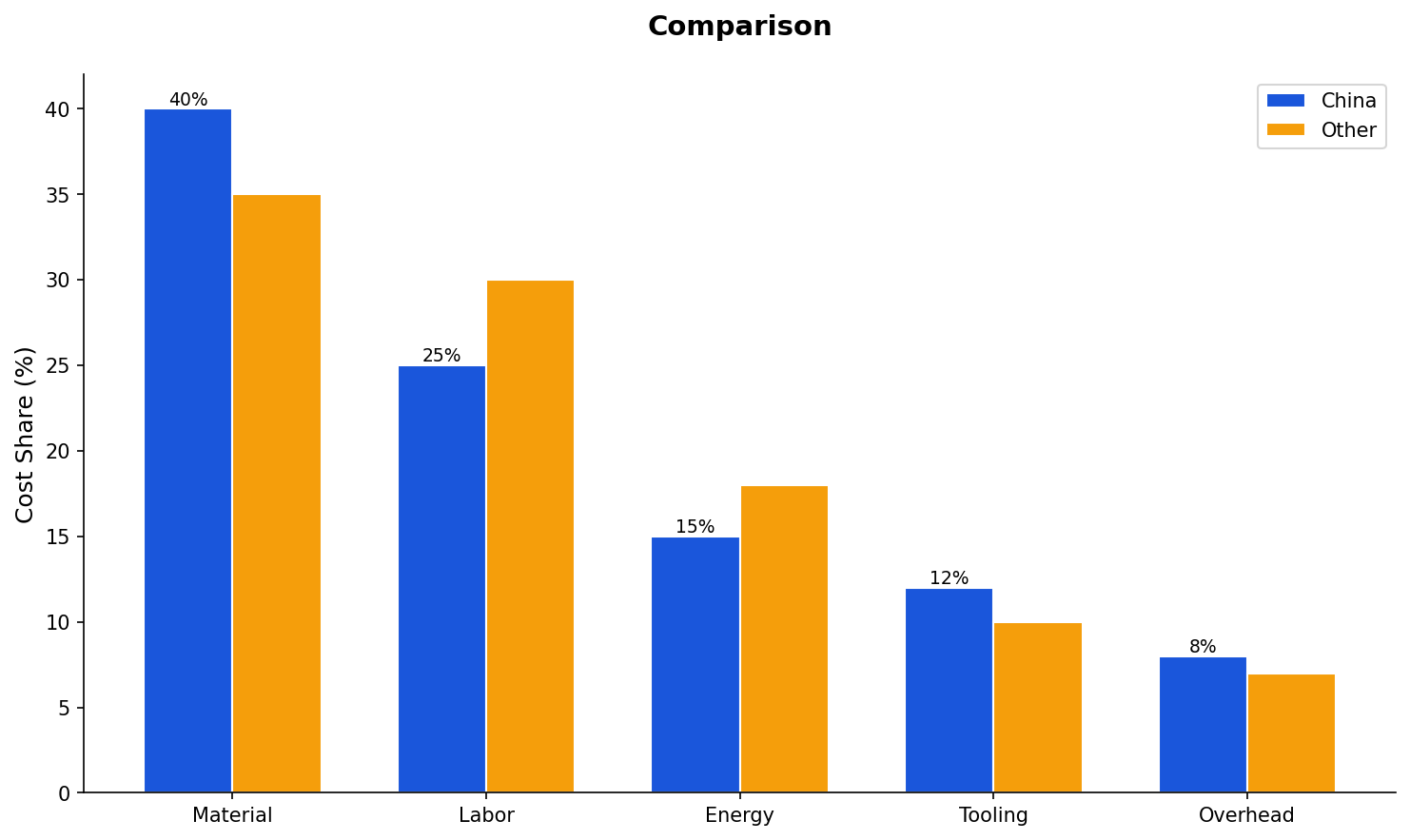
Stop comparing FOB quotes. The only number that matters is your landed duty-paid cost, and it includes duties you haven't priced yet. Here's what the 2026 stack looks like for a covered China-origin aluminum wheel, using conservative published figures as of July 2026:
| Cost component | China direct (covered producer) | Thai "transit" (anti-circumvention risk) | Mexico (verified origin) | US domestic |
|---|---|---|---|---|
| FOB price per wheel | $42.00 | $46.50 | $58.00 | $96.00 |
| Ocean freight & handling | $4.20 | $3.80 | $2.10 | $0 |
| Section 232 tariff (25%) | $11.55 | $12.58 | $15.03 | $0 |
| AD/CVD cash deposit (est. 82.14%) | $37.94 | $41.82 | $0 | $0 |
| Section 301 (if applicable) | $0 (covered producer with separate rate) | $12.58 | $0 | $0 |
| Compliance/legal review cost | $1.50 | $8.00 | $6.00 | $0 |
| Total landed duty-paid | $97.19 | $125.28 | $81.13 | $96.00 |
Read that table again. The "cheap" Chinese wheel at $42 FOB doesn't win at a landed level. And the Thai wheel, which a lot of people switched to in 2025 as a "loophole," is actually the most expensive option once anti-circumvention uncertainty, higher 301 exposure, and compliance costs are factored in. The Mexican wheel with verified origin wins easily because it avoids both the AD/CVD order and the Section 301 surcharge. If you can qualify a real Mexican mill and foundry, that's your structural advantage.
Those numbers assume your Chinese supplier has a separate rate and you're not hit with the China-wide rate of 142.98%—the default for exporters that failed to apply for separate rate status in the original investigation. If your supplier is trading through a trading company without its own rate, or you've been importing "under a different name" thinking it helps, the effective duty can exceed what your wheels sell for retail.
One more number: the AD/CVD cash deposit isn't the same as the final duty. After the annual administrative review, CBP may demand an additional assessment based on the reviewed rate, which can be higher or lower than the deposit rate. That's the "assessment gap." Smart importers budget 20-30% headroom above the cash deposit rate. Naive importers find out about the gap when a check for $80,000 is demanded after their bank account already went to zero.
Five Ways Importers Get Burned by AD/CVD in 2026
I've seen these exact scenarios play out in the last 18 months. Learn them now, or pay for them later.
1. Buying from a middleman who hides the true producer
Your supplier says "we have our own factory." Then the anti-circumvention questionnaire asks for the basic info: who cast the wheel, where, and on what production line. Suddenly the answer is "our affiliate" and you can't document a single casting operation. If the certificate of origin doesn't name the actual foundry, you have a compliance hole. No paperwork, no customs relief. You need the full manufacturing tree from ingot to rim to finished wheel to prove origin and substantial transformation.
2. Shipping "rims only" and flashing them in the US
This one's a classic. A wheel rim is shipped in one container, and the center disc or motor housing is shipped separately, with the plan to press them together at a US warehouse. CBP has seen this trick since the 1990s. The two parts, when combined, are the essential character of a covered aluminum wheel, and the importation can be treated as a single entry subject to AD/CVD. Plus, separating the parts often triggers a "parts versus finished article" determination under General Rule of Interpretation 2(a). You don't win that argument—you just get audited.
3. Misdescribing the product to shippers and brokers
John did this. His supplier's commercial invoice said "Hub Motor Kit Complete, Not for Road Use." You don't need to be a metallurgist to see that the hub motor kit included a cast aluminum rim, complete with tire bead seats and valve hole. A CBP officer looked at it for 30 seconds and determined it was a wheel. Misdescription isn't just costly—it's a penalty multiplier. Under 19 U.S.C. 1592, the difference between a "negligent" and "fraudulent" violation is the difference between a $30,000 settlement and a $1.2 million fine.
4. Letting a supplier decide your entry strategy
Suppliers will offer to "split the shipment into parts," "label as replacement parts," or "ship through Malaysia so it's not China." Every one of those suggestions comes from a factory salesman, not a licensed customs broker. In a trade case environment, these suggestions are not just risky—they're evidence of knowledge, which gets you a fraud penalty instead of a mistake. Your entry strategy is your business, not your supplier's. Hire a stable, licensed broker or a dedicated trade compliance attorney before your next PO.
5. Ignoring the Scope Ruling if you're an "EV parts" importer
If you've imported any aluminum wheels or wheel-motor assemblies since 2023, under the new ruling, your company has retroactive exposure on unliquidated entries. Many e-bike and EV parts importers didn't even know their product was part of the aluminum wheel case. The fact that you didn't know doesn't reduce the duty; it only undermines your good-faith defense. Get an entry audit done by an independent customs consultant NOW, not after CBP knocks on your door.
The 7-Point AD/CVD Compliance Checklist for 2026
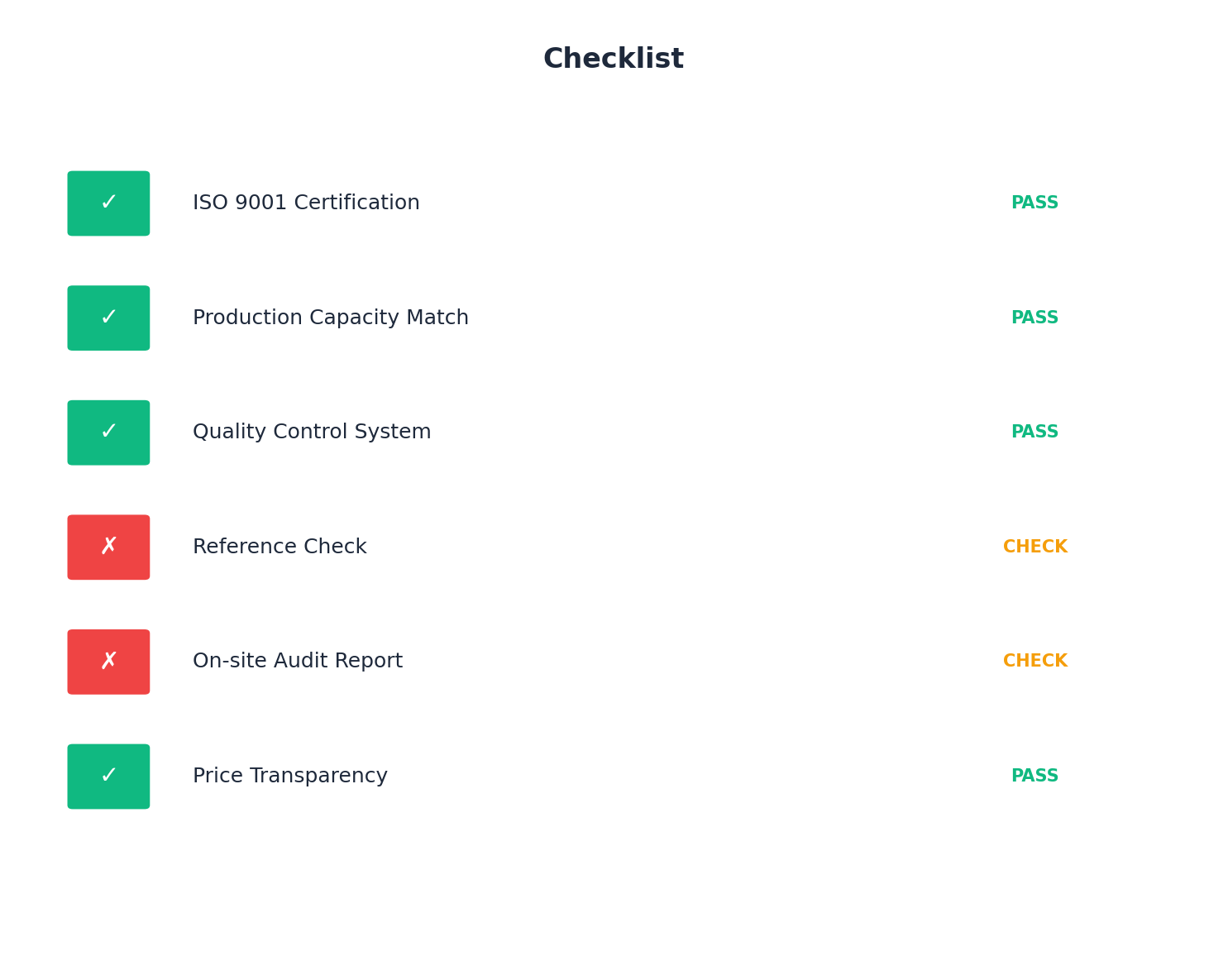
Go down this list before you sign the next PO. If you can't check every box, stop and fix it first.
- Obtain a written scope opinion from a US trade attorney. Give them your product, an actual sample or technical drawing, and ask the direct question: is this covered by A-570-836 / C-570-837 as modified by the 2026 scope ruling? This is your first line of defense in a CBP audit.
- Map the full supplier chain. Who cast the aluminum? Where's the ingot sourced? Is there a wrought aluminum product in the supply chain that flips the country-of-origin analysis? You need a written sub-certificate from the foundry, not just from the wheel assembler.
- Verify the separate rate status. If you import from China, your supplier must have an active separate rate in the relevant administrative review. If not, you're paying the China-wide rate. Get the rate from the Commerce database, not from your supplier's sales rep.
- Confirm the HS code and keep the technical file. You need a documented rationale for every entry: product sheet, drawing, process flow, and the legal basis for your classification. If it's "EV parts," show why it's not a wheel—or accept that it is one and price accordingly.
- Check the anti-circumvention list. As of August 2026, Thailand, Vietnam, and Mexico are under scrutiny for aluminum wheels and cast aluminum wheel blanks. If your shipment is from one of those countries, request a written origin opinion and a factory visit protocol to prove substantial transformation.
- Audit your unliquidated entries from 2023-2025. Pull your entry summary history. Calculate your exposure if the 2026 ruling applies retroactively. Most importers discover their gap is 5-6 times their annual compliance budget.
- Set up a compliant entry process for the next shipment. This means a dedicated AD/CVD code on your entry (if applicable), a segregated cash deposit tracking account, and an annual review trigger so you update your deposits when the new review rate is published.
Supplier Screening Questions That Actually Work
Most factory audit questionnaires are useless. They ask about ISO certifications and annual capacity while ignoring the only questions that matter under AD/CVD. Add these four to your next RFQ:
Q1: "What is your US entity name and case number in the aluminum wheels administrative review?"
A legitimate Chinese producer in the aluminum wheel case will know their case number and their current cash deposit rate. If they answer "we don't need one because we only export EV parts," you've learned everything you need to know: they're not managing the trade case, and you'll be managing a CBP penalty.
Q2: "Can you provide a mill certificate for the A356.2 or A356.1 ingot, including the physical location of the melt furnace?"
This question catches both origin fraud and low-quality casting. If the ingot comes from a smelter outside China but the foundry can't document it, the "substantial transformation" story falls apart. If they can't trace the melt, they're likely buying scrap from multiple mixed sources—which isn't necessarily an origin problem, but it's a quality one.
Q3: "Will you sign a warranty that the product is not covered by A-570-836 / C-570-837, and indemnify us for any duties and penalties assessed?"
Watch what happens when you ask this. A provider that knows their product is covered will refuse to sign, because they know the truth. A provider that genuinely believes it's outside the scope will sign—and then you have a document to show CBP in your good-faith defense. We've seen both reactions in the same month.
Q4: "Can we see your current scope ruling or binding ruling letter, and your latest administrative review questionnaire response?"
Suppliers who actively manage trade compliance will have a file for each. If they look at you like you have two heads, that's your red flag. Move on.
The pattern is simple: you're not looking for the cheapest factory. You're looking for the factory whose trade compliance team can prove your wheels are safe to import. If a supplier can't explain their AD/CVD position in under five minutes, they don't have one—and that position will be your problem, not theirs.
What You Should Do Now (Before the Next Shipment)
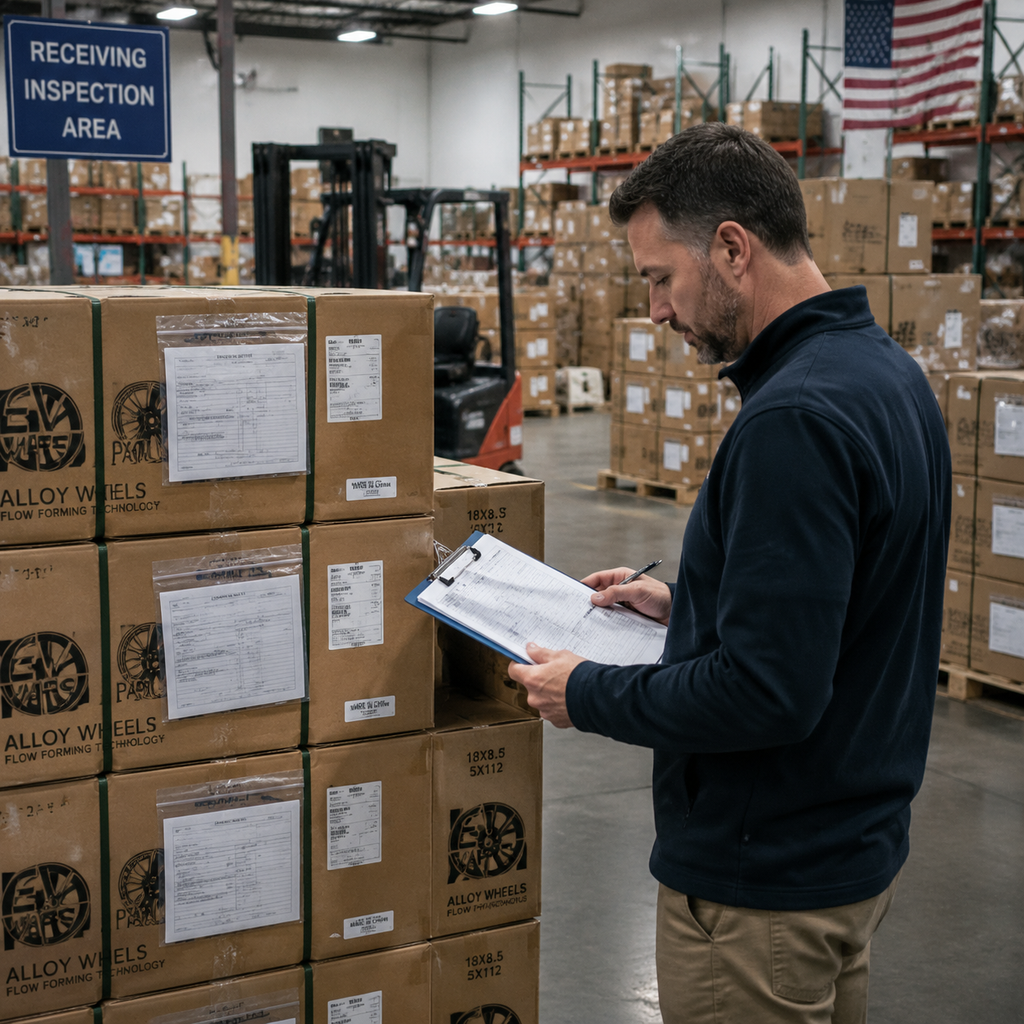
If you read this article and felt a small panic about your last shipment, good. That panic is your brain doing its job. Here's the three-step survival plan:
Step 1: Stop any shipment that hasn't been liquidated yet. If it's in transit, in a bonded warehouse, or subject to an entry that's still open, you have time to intervene. Contact your broker and ask for a "suspension of liquidation" date on each entry. You may be able to post a higher cash deposit or change the entry's AD/CVD code before liquidation. Once liquidated, your ability to fight shrinks dramatically.
Step 2: Run an exposure calculation. List every entry from the last three years involving aluminum wheels, wheel blanks, hub-motor wheels, or "EV parts" with an aluminum structural component. Estimate the value, apply the applicable AD/CVD rate (check whether your supplier has a separate rate), and you'll have your worst-case number. Most importers find it's 3-5x their annual profit from the product line. That number isn't a scare tactic—it's a business decision input.
Step 3: Bring in humans who have done this before. Not your broker's entry clerk—an actual customs and trade lawyer who has handled AD/CVD scope disputes or a consultant who's worked at CBP's Office of Trade. A 45-minute consultation costs $500-800 and will tell you whether your exposure is a paper scare or a real liability. In the trade cases we've seen over the past decade, the importers who dug into their exposure early paid far less in penalties than those who waited for a CBP Form 28 (Request for Information) to arrive on their desk.
One last thing: don't shoot the messenger. AD/CVD is not a punishment for being stupid. It's a system that large importers and multinationals navigate with legal teams and compliance software. The mistake isn't importing covered wheels. The mistake is importing them without knowing they're covered and without pricing in the risk. The right response is not to stop sourcing from China—it's to source smart, document everything, and build the duty math into your pricing from the first quote.
If you're preparing your next aluminum wheel or EV wheel assembly purchase and need help evaluating supplier quotes, customs exposure, or a landed-cost model, submit your RFQ and full technical drawing. We'll run a scope review and provide a compliance assessment before you commit to the PO.
FAQs on Aluminum Wheel AD/CVD and EV Parts
Are aluminum wheels with a hub motor still subject to AD/CVD?
After the 2026 scope ruling, a cast aluminum wheel that includes an integrated motor rotor no longer escapes the existing AD/CVD order. Commerce treats it as "later-developed merchandise" and subjects it to the same duty rates as the base aluminum wheel.
Can I avoid AD/CVD by shipping from Thailand or Mexico?
Not automatically. If the aluminum wheel was only cast, machined, or assembled there from Chinese parts, CBP can treat the country of origin as China. The 2026 anti-circumvention reviews explicitly target Thailand, Vietnam, and Mexico as transshipment or light-processing hubs.
How far back can Customs go in a retroactive AD/CVD audit?
CBP can retroactively assess unliquidated entries going back as far as the date the order was published, and for fraudulent misclassification the look-back can extend to all open entries within the prior five years. Interest and penalties stack on top of the duties.
What's the actual duty hit for aluminum wheels in 2026?
A covered producer from China faces the AD/CVD cash deposit plus the 25% Section 232 tariff and, in many cases, Section 301 duties. Total effective rates on the entered value can exceed 100%, depending on the producer's separate rate status and the specific scope ruling.
Get a 48-hour scope & duty assessment before you buy
Upload your supplier quote, technical drawing, and proposed HS code. Our trade team will flag AD/CVD exposure, verify country-of-origin risk, and return a landed-duty model you can take straight to your finance team. One assessment now can save you six figures later.
Submit your RFQ for review →Last updated: August 13, 2026