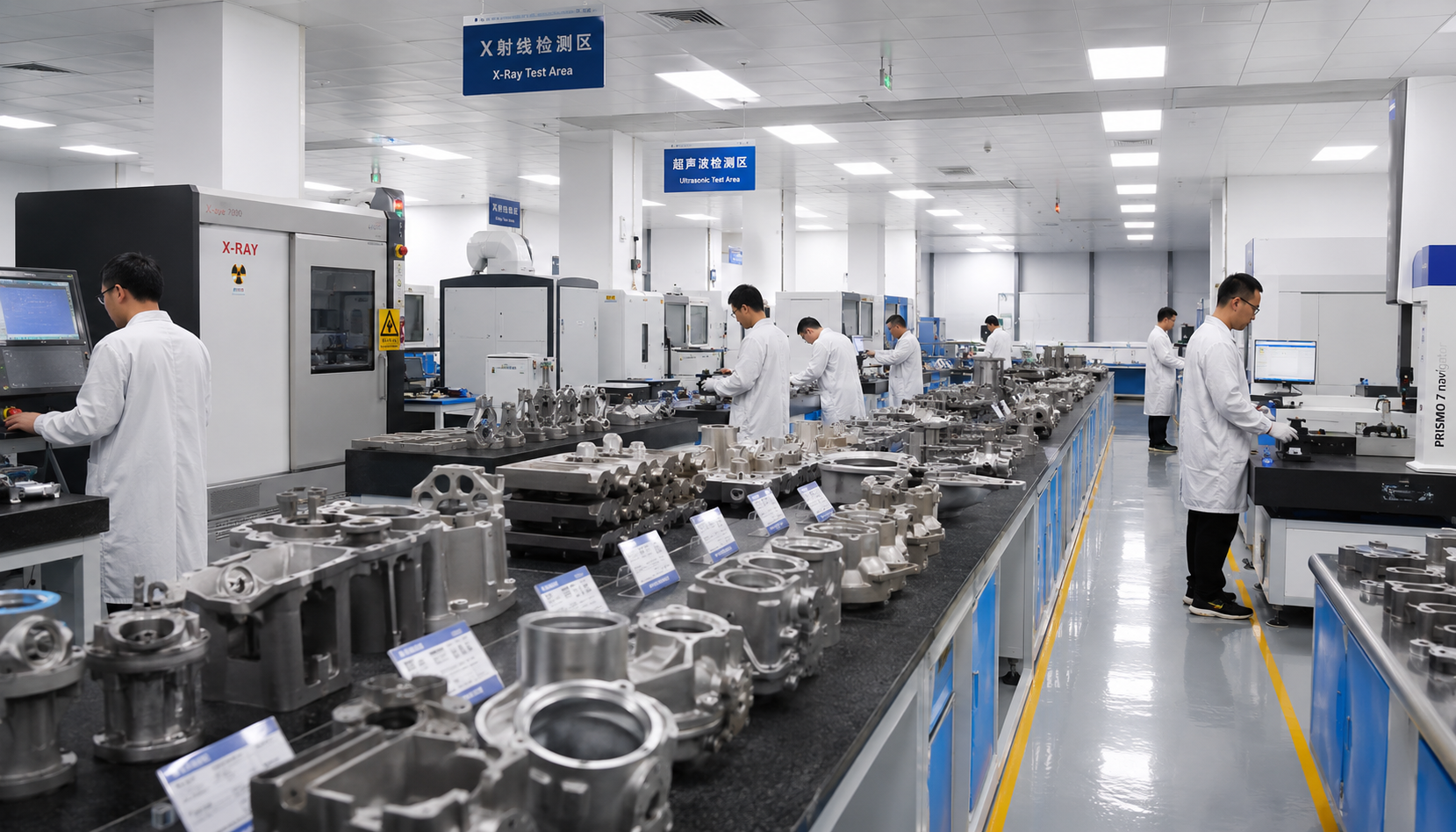
Casting Testing Methods: 7 Tests That Save Buyers $150K in Scrap (2026 Data)
You've been waiting 10 weeks for that casting shipment. The invoice is due. Your production line is stalled. Then the inspection report comes back: 12.4% of parts don't meet spec.
That's not a hypothetical. According to the 2026 Global Casting Quality Benchmark Report, nearly one in eight casting shipments fails initial inspection. For a mid-volume buyer spending $1.2M annually on castings, that translates to $148,800 in potential scrap, rework, and delayed production.
Here's the thing—most of those failures were avoidable. Not because the foundry couldn't make good parts, but because the right casting testing methods weren't specified in the contract, or the supplier's testing protocol had gaps you didn't know about.
This guide covers the 7 testing methods that catch defects before you pay. You'll learn what each test detects, how much it adds to your part cost, and—more importantly—how to make sure your supplier actually runs them correctly.
The Real Cost of Skipping Casting Testing
Let's put some numbers on this. Not hypotheticals—actual figures from buyers we've worked with in 2025-2026.
Case in point: A Texas equipment manufacturer ordered 5,000 ductile iron castings from a new supplier in Shandong. The supplier's QC report showed "100% passed visual inspection." But the buyer didn't specify ultrasonic testing. Three months later, 340 castings cracked under hydraulic pressure. Total loss: $212,000 in scrapped parts plus 6 weeks of production delays.
That's the cost of skipping the right test. Here's the breakdown of what inadequate testing actually costs you:
- Scrapped parts: 8-15% of shipment value for mid-volume buyers
- Production delays: 4-8 weeks average, at $8K-$15K per week in downtime
- Expedited replacement shipping: 40-60% premium on freight
- Rushed re-inspection and recertification: $3K-$7K per batch
- Relationship cost: Lost trust with your own customers if defective parts reach them
The irony? Most of these failures are caught by the 7 tests below. You just need to know which ones apply to your parts—and how to verify they're actually being done.
The 7 Casting Testing Methods Every Buyer Should Know
Not all tests are created equal. Some catch surface defects. Some find internal voids. Some verify mechanical properties. The key is matching the test to your part's critical features.
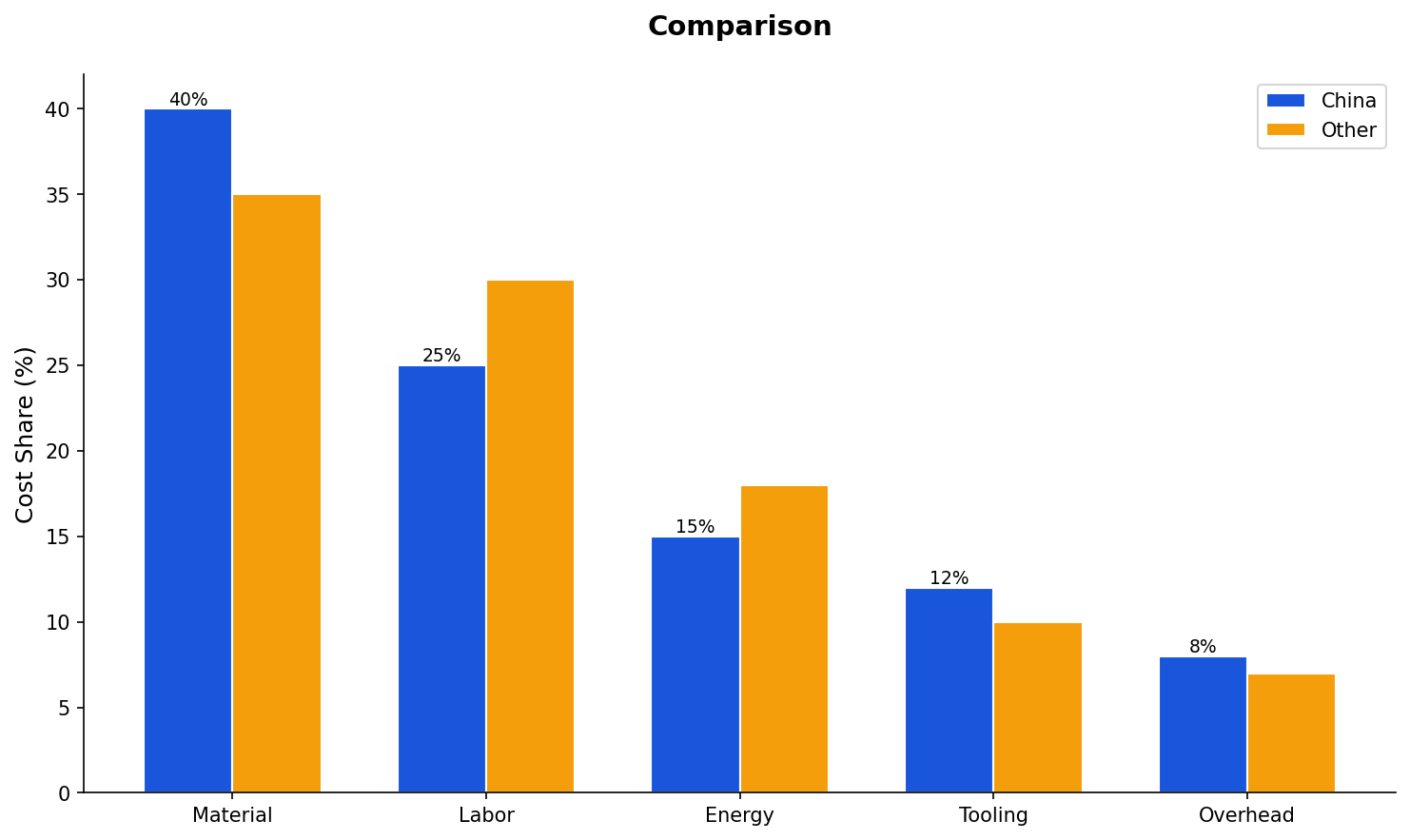
Here's a quick-reference comparison before we dive deep:
1. Visual Inspection (VT) — The First Line of Defense
Visual inspection is the most basic—and most overlooked—testing method. A trained inspector (not a production worker) examines each casting for surface defects: cracks, porosity, misruns, cold shuts, and surface contamination.
What it catches: Surface-level defects visible to the naked eye or under low magnification. Roughly 30% of all casting defects are detectable by VT alone.
Buyer's tip: Don't just ask "do you do visual inspection?" Ask: "Who performs VT—a dedicated QC inspector or the machine operator?" The answer tells you everything about their quality culture. Also ask for their VT acceptance criteria—ASTM A802 is the standard for steel castings.
Cost add: 1-3% to part cost.
2. Dye Penetrant Testing (PT) — Surface Crack Detection
Dye penetrant testing (ASTM E1417) uses a colored liquid that seeps into surface-breaking defects. After applying a developer, defects show up as colored lines against a white background. It's cheap, fast, and works on any non-porous material.
What it catches: Surface cracks, porosity, laps, and seams that are too fine for visual inspection. Typically catches defects 0.5mm and wider.
Buyer's tip: PT is great for non-ferrous castings (aluminum, brass) where magnetic particle testing won't work. But it only finds surface-breaking defects—if you're worried about subsurface voids, you need UT or RT.
Cost add: 3-5% to part cost.
3. Magnetic Particle Testing (MT) — Ferrous Defect Finder
Magnetic particle testing (ASTM E709) uses magnetic fields and iron particles to detect surface and near-surface defects in ferromagnetic materials (steel, ductile iron, gray iron). When a magnetic field is applied, particles gather at defect locations, creating visible indications.
What it catches: Surface and shallow subsurface cracks, inclusions, and voids. More sensitive than PT for ferrous materials—can detect defects as small as 0.1mm.
Buyer's tip: MT is faster than PT for ferrous castings and gives better sensitivity. But it only works on magnetic materials—for aluminum or bronze, use PT. Also, MT requires the part to be demagnetized after testing, which some suppliers skip.
Cost add: 4-7% to part cost.
4. Ultrasonic Testing (UT) — Internal Void Detection
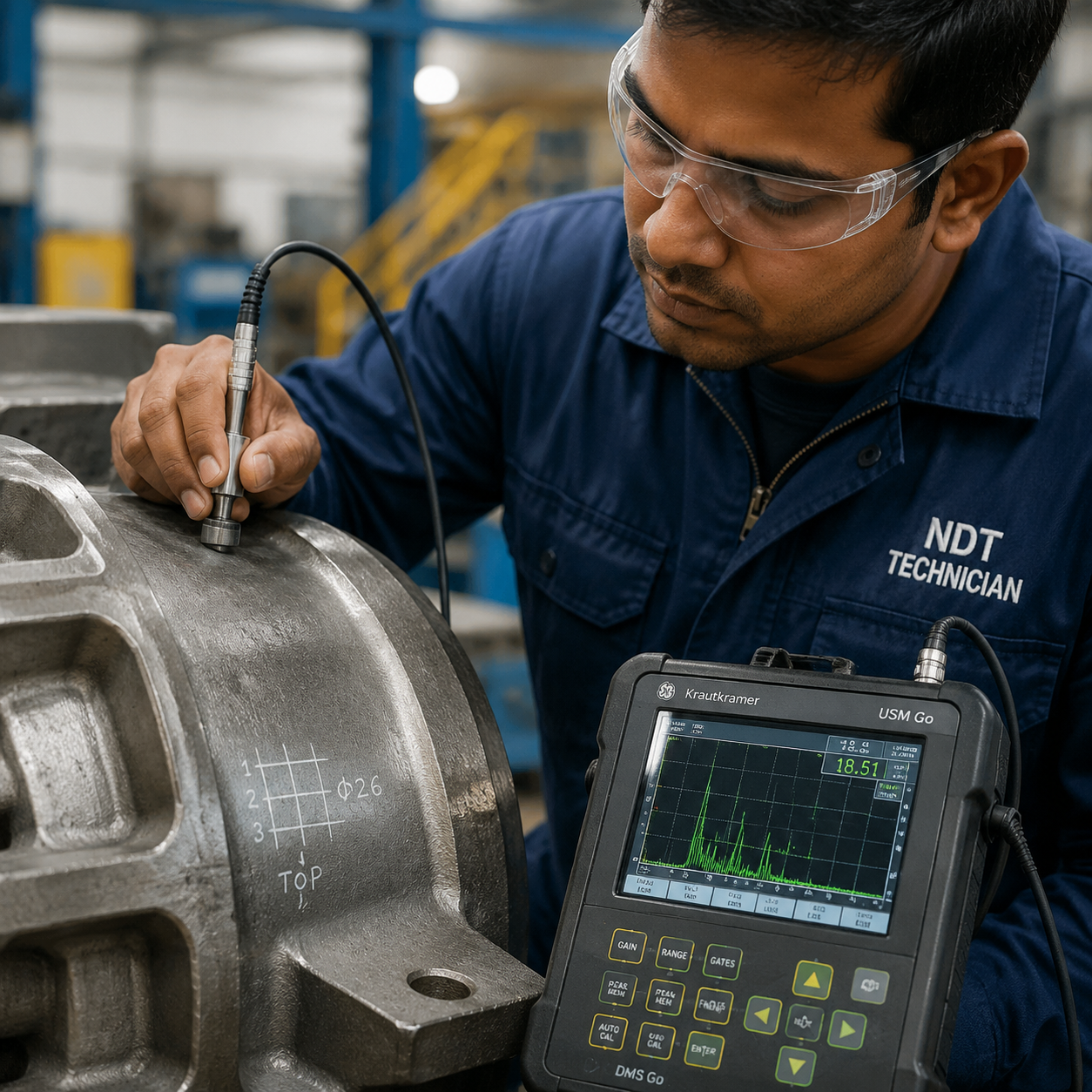
Ultrasonic testing (ASTM E164) sends high-frequency sound waves through the casting. When a wave hits an internal defect (void, crack, inclusion), it reflects back differently. The inspector reads the echo pattern on a screen to identify and measure defects.
What it catches: Internal voids, porosity, cracks, inclusions, and wall thickness variations. UT is the go-to method for detecting subsurface defects in thicker sections (up to 6 meters in steel).
Buyer's tip: UT is one of the most commonly faked tests. A supplier might claim "100% UT inspected" but only sample-test 5% of parts. Always ask for the UT report with part serial numbers and defect location mapping. If they can't produce individual reports, they're likely not testing every piece.
Cost add: 5-8% to part cost.
5. Radiographic Testing (RT) — X-Ray for Castings
Radiographic testing (ASTM E94/E142) uses X-rays or gamma rays to create a permanent image of the casting's internal structure. Think of it as a medical X-ray for metal parts. Defects show up as darker areas on the film or digital detector.
What it catches: Internal porosity, shrinkage cavities, inclusions, cracks, and wall thickness variations. RT gives a permanent, auditable record—which is why it's required for safety-critical castings (valve bodies, pressure vessels, aerospace parts).
Buyer's tip: RT is the gold standard but it's expensive and slow. Use it for critical castings only. For non-critical parts, UT is sufficient and costs half as much. Also—digital RT is replacing film RT in most modern foundries. Film RT requires chemical processing and is harder to fake.
Cost add: 8-15% to part cost (film); 6-10% (digital).
6. Mechanical Testing — Tensile, Hardness & Impact
Mechanical testing isn't about finding defects—it's about verifying the casting's material properties meet your specifications. Common tests include:
- Tensile testing (ASTM E8): Measures ultimate tensile strength, yield strength, and elongation.
- Hardness testing (ASTM E10/E18): Brinell or Rockwell hardness to verify heat treatment consistency.
- Impact testing (ASTM E23): Charpy V-notch for toughness, critical for cold-environment applications.
What it catches: Material non-conformance—wrong grade, incorrect heat treatment, insufficient strength or ductility.
Buyer's tip: Mechanical testing is typically done on test coupons cast with the same batch, not on the parts themselves. Make sure your contract specifies which batch number the test coupons came from, and how many are tested per batch (ASTM A703 specifies one tensile test per heat per batch).
Cost add: 2-5% to part cost (included in material certification).
7. Pressure Testing — Leak Detection
Pressure testing (hydrostatic or pneumatic) fills the casting with pressurized fluid or gas to check for leaks. It's mandatory for valve bodies, pump housings, hydraulic components, and any casting that will contain pressurized fluid.
What it catches: Through-wall porosity, cracks, and shrinkage that create leak paths. Hydrostatic testing (ASTM F164) uses water; pneumatic uses air or nitrogen.
Buyer's tip: Hydrostatic is safer than pneumatic (no stored energy risk). Always specify test pressure—typically 1.5x the maximum working pressure for 30 seconds minimum. And demand a signed test report with pressure readings and hold time.
Cost add: 3-8% to part cost (varies with complexity).
How to Choose the Right Testing Method for Your Castings
You don't need all 7 tests on every part. That would burn through your budget. Here's a decision framework that buyers at top OEMs use:
| Part Type | Recommended Tests | Why |
|---|---|---|
| Non-critical structural (brackets, housings) | VT + PT (or MT for ferrous) | Surface defects are the main risk; internal defects rarely cause failure in service |
| Pressure-containing (valves, pump bodies) | VT + PT/MT + UT + Pressure Test | Leak paths and internal porosity are critical; UT catches subsurface defects, pressure test validates integrity |
| Safety-critical (brake components, steering knuckles) | VT + MT + UT + RT + Mechanical | Zero-defect requirement; RT provides auditable record, mechanical tests verify material properties |
| High-temp / high-wear (turbine blades, dies) | VT + PT + UT + Mechanical + Impact | Thermal fatigue and impact resistance are key; UT catches internal defects that could propagate under thermal cycling |
Rule of thumb: If a casting failure could injure someone, stop production, or cost more than $10K in downtime—add UT and either RT or pressure testing to your spec. The testing cost is 2-8% of part value. The cost of failure is 10-50x that.
How to Audit Your Supplier's Testing Lab
A supplier can claim they have "full NDT capability" on their website. But when you walk into their testing lab, what do you actually look for?
Here's a 5-point audit checklist that separates real capability from marketing fluff:
- Lab accreditation. Is the lab ISO 17025 accredited? If yes, by which body? (CNAS in China, UKAS in the UK, A2LA in the US). An accredited lab means their testing procedures, equipment calibration, and inspector training are audited annually.
- Inspector certification. Ask for NDT inspector certificates (ASNT Level II or III). A Level I inspector can only perform tests under supervision. A Level II or III can interpret results and sign off. If all their inspectors are Level I, that's a red flag.
- Equipment calibration records. UT machines and X-ray systems need annual calibration. Ask to see the latest calibration certificates. If they're more than 14 months old, the equipment isn't reliable.
- Sample retention. Do they keep failed test samples? A good lab retains failed castings for 90 days so you can review them. A lab that scraps everything immediately is hiding something.
- Third-party cross-checks. Do they ever send samples to an independent lab for verification? Suppliers who do this regularly are confident in their results. Suppliers who never do it—ask why.
Warning: We've seen suppliers produce "UT reports" with serial numbers that don't match actual castings. The only way to verify is to randomly select 5-10% of tested parts and have them re-tested by a third-party lab. Do this on your first few orders. After that, random spot checks keep everyone honest.
3 Mistakes That Cost Buyers Big
After working with hundreds of casting buyers, these three testing mistakes come up again and again:
Mistake #1: Relying on the supplier's "standard testing." There's no such thing. Every foundry has a different definition of "standard." One supplier's standard might be VT-only. Another's includes PT. You need to specify exactly which tests, which standards (ASTM/EN/ISO), and which acceptance criteria—in your contract.
Mistake #2: Not testing the first article thoroughly. The first article (or first batch) is your only chance to catch process-level issues before mass production. Test first articles aggressively—include RT and mechanical testing even for non-critical parts. The $2,000 you spend on first-article testing could save you $50,000 in scrapped production.
Mistake #3: Accepting a "certificate of conformance" without test data. A certificate that says "all parts passed inspection" is worthless. You need actual test reports: UT scan images, tensile test curves, pressure test logs. If your supplier pushes back, that's a sign their testing might not be as thorough as claimed.
Frequently Asked Questions
What is the most common casting testing method?
Visual Inspection (VT) is the most common method. It's the first line of defense and catches roughly 30% of surface-level defects. But relying on VT alone is a mistake—internal defects require UT or RT.
How much does casting testing cost?
Costs vary by method: VT adds 1-3% to part cost, PT adds 3-5%, UT adds 5-8%, and RT adds 8-15%. But the cost of NOT testing is much higher—average scrap-related losses run $75K-$150K per incident for mid-volume buyers.
Which casting testing method is best for detecting internal defects?
Ultrasonic Testing (UT) and Radiographic Testing (RT) are the two main methods for internal defect detection. UT is faster and cheaper, while RT provides a permanent image record. For critical safety parts, most buyers specify both.
Do Chinese casting factories have in-house testing labs?
Most ISO-certified foundries in China have in-house labs for basic testing (VT, PT, mechanical). For advanced methods like UT and RT, about 40% have in-house capability—the rest outsource to third-party labs. Always verify lab accreditation during your factory audit.
What testing methods does ASTM E1417 cover?
ASTM E1417 covers Liquid Penetrant Testing (PT) procedures. It specifies the requirements for penetrant materials, inspection processes, and acceptance criteria. If your supplier claims PT capability, ask for their ASTM E1417 certification.
Stop Guessing. Start Testing With Confidence.
You don't need to become an NDT expert overnight. But you do need a sourcing partner who can help you specify the right casting testing methods, verify supplier capability, and catch defects before you pay.
We work with ISO-certified foundries across Asia and do independent QC on every order—including random third-party lab cross-checks. Get your free casting quality checklist and supplier audit template.
Request Your Testing Spec Sheet →Need Independent Quality Inspection?
Don't rely on supplier self-reports. We provide third-party inspection at 200+ Chinese foundries — dimensional checks, material testing, NDT, and full PPAP documentation. Every report comes with original data, not summaries.
Get Inspection Support →