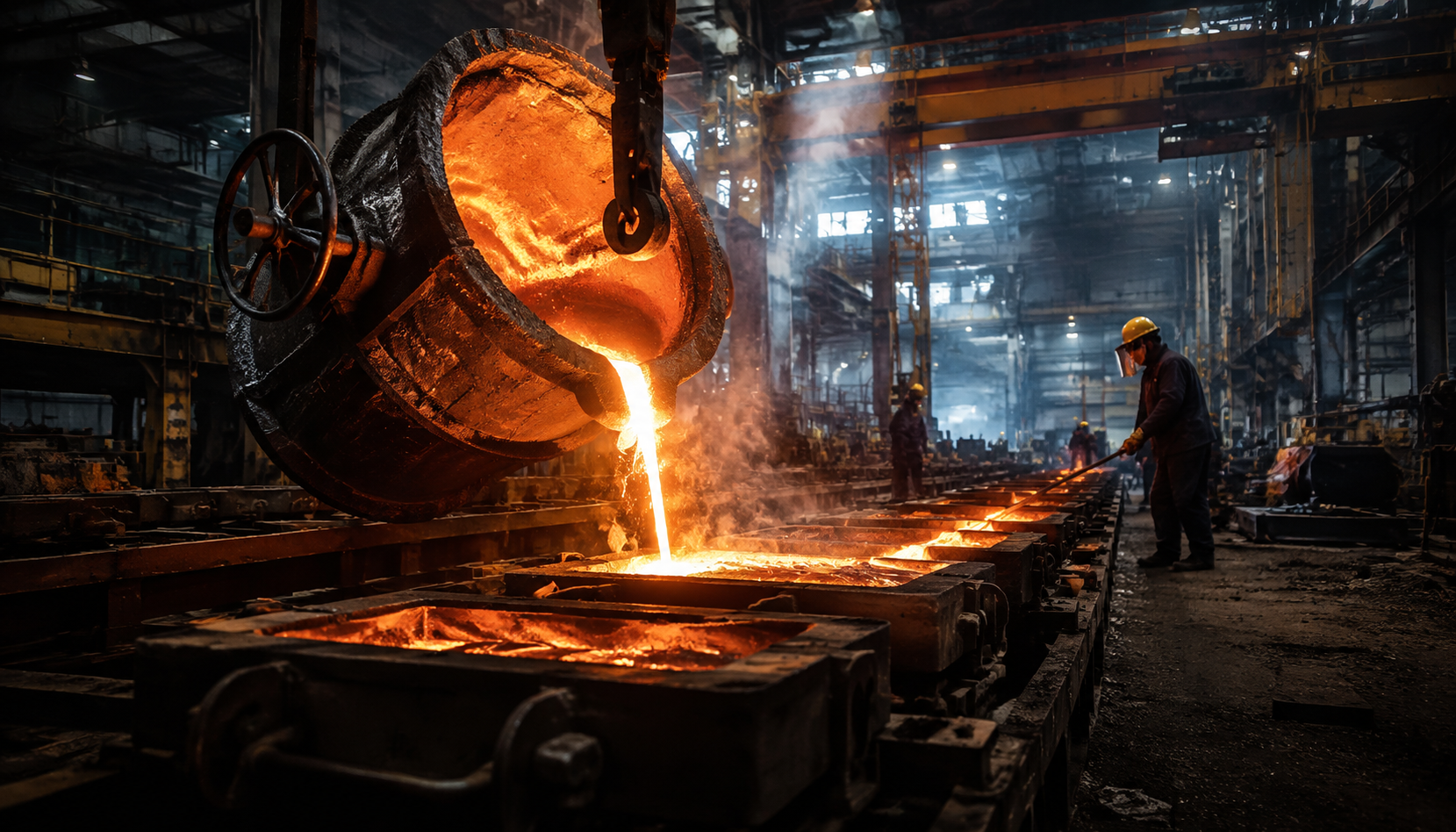
Three thousand. That's how many foundries operated in the United States in the year 2000. By 2020, the American Foundry Society counted about 1,700. Nearly half gone in two decades.
The ones that remain are either highly specialized, brutally efficient, or completely booked out on a four-month backlog. And here's the uncomfortable part: most of them still don't know how to handle a buyer who walks in with a dual source casting supplier qualification plan.
If you're reading this, you're probably tired of living with a single source. You've watched lead times drift. You've swallowed price increases because there was nobody else to call. Or maybe you got lucky—nothing failed catastrophically, but you know deep down that one broken mold, one plant fire, one labor strike away from nothing.
This isn't another generic "vendor assessment" blog post. This is the exact 5-step system I've used in oil & gas procurement to qualify second-source foundries in China, Turkey, and the U.S. It will take you about 60 days and will cost a fraction of one emergency airfreight shipment.
Why a Dual Source Casting Supplier Qualification Plan Isn't Optional Anymore
Let me throw a number at you. Between 2020 and 2025, average lead times for sand castings in the U.S. stretched from roughly 8–10 weeks to 14–18 weeks. That's not a precise figure from a government dataset—it's a range I've compiled from quoting activity and delivery promises across dozens of foundries. It tracks what buyers in the industry will tell you if you pour them a drink.
Single-source dependency was tolerable when foundry capacity was abundant and prices were stable. It isn't now. Casting capacity is tight globally. China still produces around half of the world's castings—about 50 million metric tons a year, according to the World Foundry Organization—but much of that capacity is committed to domestic projects. The era of "order today, ship in four weeks" is over for most part families.
Robert Davis, a sourcing director for a Georgia industrial equipment manufacturer who spends close to $2 million a year on castings, once said it better than I ever could: "A second source isn't a backup plan. It's your only real negotiating leverage. Without it, you're not purchasing—you're accepting what you're given."
That's the whole case in one sentence. Dual sourcing doesn't just protect you from disaster. It protects your margin. It changes the conversation.
Step 1: Build a Casting Criticality Matrix Before You Qualify Anyone
Don't start contacting foundries yet. The discipline of a casting supplier qualification plan begins with your own parts list.
Sort your castings into a 2×2 matrix with supply risk on one axis (number of foundries that can actually make the part, existing tooling ownership, material availability) and business impact on the other (annual spend, line-down cost, safety classification). This classification guide breaks down the full process, but the rule of thumb is:
- Quadrant A — Critical: high business impact + high supply risk. These parts get the full dual-source treatment first. Non-negotiable.
- Quadrant B — High priority: high business impact but multiple capable foundries exist. Qualifying a second source is important yet can be scheduled over 6–12 months.
- Quadrant C — Standard: low impact but some supply constraints. Not worth a full qualification cycle; having a back-up quote on file is enough.
- Quadrant D — Low risk: commodity castings with many suppliers. Don't waste your audit budget here.
If you're managing more than 50 casting SKUs, start with the top 20% by spend and the parts that would cost you the most if you couldn't get them. That's where the ROI of dual sourcing is real. Everything else can wait.
Step 2: Screen the Candidate Pool with Non-Identical Criteria
Here's a mistake I see constantly: buyers try to qualify a "mirror image" of their incumbent foundry. Same process, same country, same capacity profile. That defeats the entire purpose.
Your second source should be different where it matters:
- Different geography. If your incumbent is in Shandong, your second source should not also be in Shandong. A regional disruption (flooding, power rationing, port issues) doesn't care about your carefully constructed vendor list.
- Different process route, when feasible. If your primary uses green sand molding, consider a foundry with resin sand or V-Process capability. This isn't about process preference—it's about not inheriting the same systemic weakness twice.
- Different ownership and management structure. Family-run, state-linked, and externally managed foundries behave differently in a crisis. You want diversity here too.
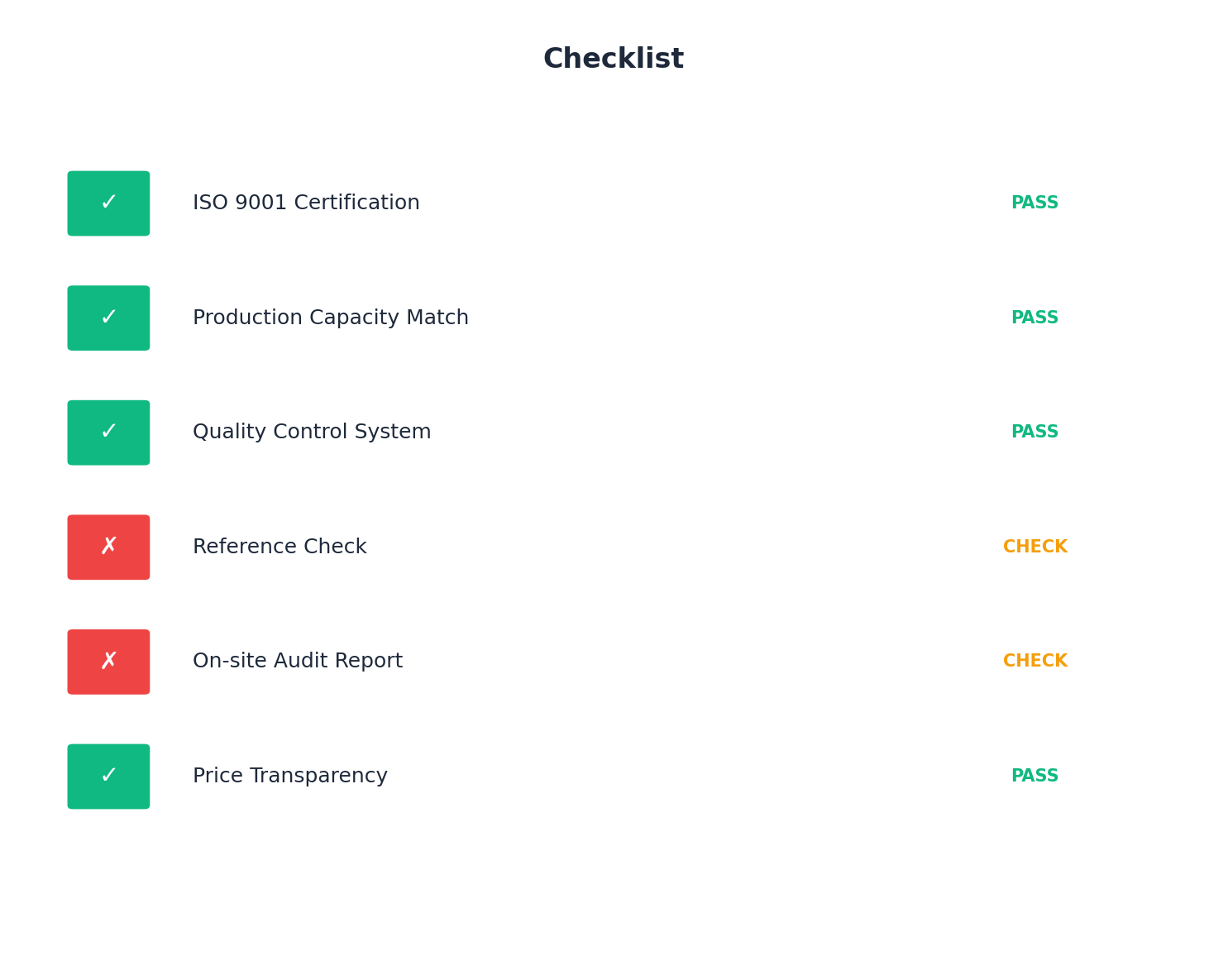
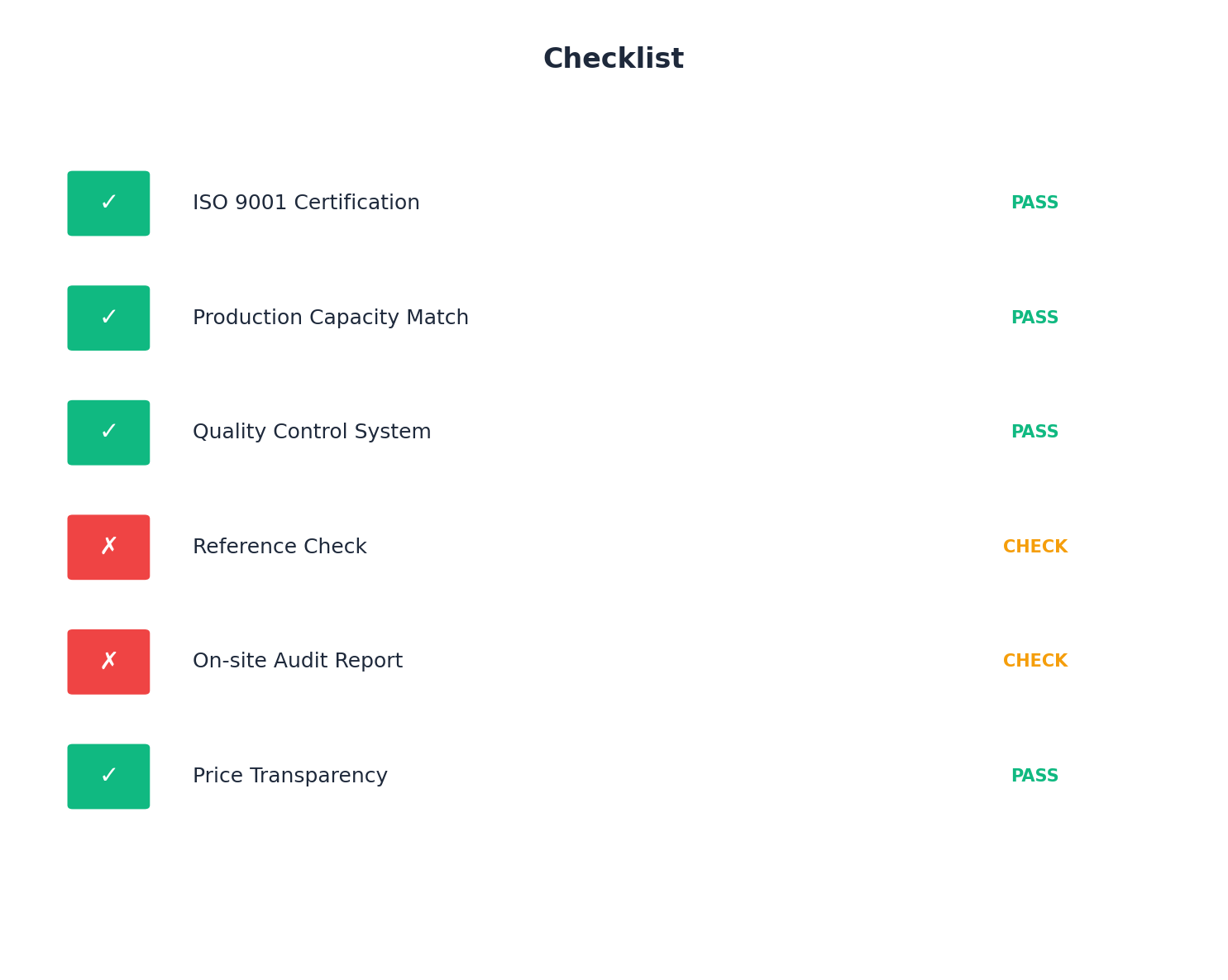
- Verified certifications. ISO 9001 is table stakes. If you're buying pressure-containing castings, you should also require ASME or PED certification. For aerospace-grade work, IATF 16949 or Nadcap. Always verify against the issuing body's database before you invest travel money. Here's how to verify foundry credentials without getting scammed.
Aim for a shortlist of three. Three is enough to get competitive quotes and zero risk that you bet everything on an audition that fails. Once you have three candidates with certs in hand, you move to the part that actually matters—the audit.
Step 3: The 7-Point Foundry Audit That Separates Real Suppliers from Cheap Shops
Screening gets you candidates. The audit eliminates them. I've visited well over a hundred foundries across six countries, and I've condensed the process into a 7-point verification that you can run in a single day on a factory floor.
Do not delegate this to an outside inspection company unless you physically cannot travel. Nobody knows your part family and quality requirements better than you do.
- Scrap and concession records. Ask to see internal rejection rates by cast-on date, not by customer. You're looking for the foundry's honest baseline, not the customer-facing quality dashboard. On-time delivery matters, but first-pass yield tells you how much they actually control their process.
- Rework and welding procedures. Every foundry welds defects. The question is which defects, who welds them, and whether the welding procedures are qualified. A foundry that can't show you an active welding WPS (welding procedure specification) is a foundry that's covering up with workmanship.
- Material test traceability. Walk from the heat number on a product certificate back to the original melt log. If they can't trace a single heat in under 15 minutes, that's a systemic integrity issue, not a sad one-off.
- Mold and core making environment. Look at sand temperature, binder levels, and core storage discipline. Be wary of a foundry that stores cores outside or lets them sit for weeks—moisture absorption is a classic root cause of gas porosity defects.
- Melt shop control. Check charge materials. Are they using clean foundry returns or truckloads of mystery scrap? Check liquid metal temperature records if they melt on site. Check whether they actually run spectrometric analysis on every heat, not every third heat.
- Heat treatment and NDT facility. Ask who performs heat treatment: in-house or subcontracted. If subcontracted, demand the qualification records for the subcontractor's furnace monitoring systems. If NDT (ultrasonic, radiography, magnetic particle) is needed on your components, verify the operators hold ASNT Level II or equivalent certification.
- Housekeeping of the quality office. This sounds superficial, but on my very first audit, I discovered a shocking absence of calibration stickers on calipers and gauges across the whole quality lab. That shop nearly lost a multi-million-dollar frame casting contract over sticky notes. It didn't turn around—we ran.
Robert Davis saw a similar pattern in his own audits. Here's his exact comment on the relationship between price and quality: "The worst deals I've seen weren't the most expensive ones. They were the ones where someone chased the lowest quote from an unqualified foundry, then paid for it twice—in scrap, delays, and emergency shipping."
The key is that these seven points aren't a pass/fail scoring system. They're a conversation starter. If you find a foundry that passes five out of seven but has a clear improvement plan for the other two, that's often a better long-term partner than the one that ticks all the boxes but resists being audited at all.
For a printable version of these 7 points as a one-page scorecard, grab the full foundry audit checklist I've used on three continents. It's the same document my team still uses for every new supplier.
Step 4: First Article Inspection (FAI) — Where Your Qualification Plan Lives or Dies
Audits are backward-looking. They tell you how a foundry has performed for other customers. But you don't care how they performed for others. You care about how they'll perform for you.
That makes the first article inspection the most critical step in your entire dual source casting supplier qualification plan.
The FAI isn't a single dimension check. It's a sequence:
- Preliminary sample submission. The foundry must pour your tooling, break it off, and submit the casting to your dimensional sampling plan (ISIR, if you follow AIAG standards).
- Dimensional layout. A full layout to print, usually with a CMM (coordinate measuring machine) report covering every critical characteristic.
- Material verification. Not just chemistry—this means mechanical properties: tensile, yield, elongation, hardness. If you're buying heat-treated castings, the FAI includes confirming the heat treat cycle actually produces properties within spec.
- Internal soundness. Depending on your part class, this could be radiography (X-ray), ultrasonic testing, or a first-article cut-up. Never skip the destructive cut-up on the first article. It's worth the cost of one or two sample castings to see actual wall thicknesses and microstructure.
- Finishing and machining tolerance check. If the foundry supplies machined surfaces, the FAI extends to machining output as well. Process capability (Cpk) should be calculated on critical dimensions.
Remember: a qualified foundry might still fail FAI. That doesn't have to be the end of the road. A failed FA followed by a genuine root-cause correction and a resubmission demonstrates something you don't get from a passing FA: evidence of a process capable of self-correction. That's more valuable than a perfect first run.
Step 5: Monitor Continuously with a Dual-Source Scorecard
Qualification isn't a one-time event. If you stop monitoring, your "dual source plan" becomes a document gathering dust on a server you forgot the password to.
Set up a quarterly business review dashboard that tracks four metrics for both suppliers side by side:
- PPM (parts per million) — internal and external defects. Set a threshold. Common practice is 500 PPM or below for qualified casting suppliers, 2,000–5,000 PPM is still common for uninspected small-lot castings. Your numbers will depend on your part complexity.
- OTIF (on-time in-full) — the percentage of orders that arrive on the agreed date in the agreed quantity. If you're seeing consistent OTIF below 70%, your qualification plan has already failed; the material is arriving, but the reliability isn't there.
- Cost trend — not the quoted unit price only. Track total landed cost: freight, currency movement, expediting costs, inventory carrying cost.
- Responsiveness — how long it takes a supplier to quote a new drawing, raise a corrective action, or answer an urgent email. This is a leading indicator of problems you'll only see nine months later.
Robert Davis's advice on volume allocation is the most practical I've heard anywhere: "Start with 70/30, not 50/50. The second foundry needs to be hungry, but not drowning. If they can't earn their way to 50% on quality and delivery alone, you picked the wrong second source."
At quarterly reviews, shift volume based on data. If the incumbent's PPM has been drifting up for six months, accelerate the ramp to the second source. If the new source's OTIF is slipping, pause the ramp and get its corrective action. You don't transfer volume to a failing supplier just to hit a target split.
Common Mistakes That Kill Dual-Source Programs
I've watched enough buyers trip over the same five obstacles. Save yourself the trouble.
Mistake 1: Treating the second source as if it doesn't matter. If you qualification process for the backup supplier is half-hearted, you don't actually have a backup. You have a decoy.
Mistake 2: Splitting everything 50/50 immediately. It sounds balanced. It's not. It doubles your contingency planning workload, doubles your tooling management, and doubles the number of suppliers who can blame each other when things go wrong. Ramp gradually.
Mistake 3: Forgetting to transfer tooling ownership. Keep tooling ownership with your company, not locked inside a foundry service level agreement. The day you want to switch volumes, tooling release disputes will freeze your plan for months.
Mistake 4: Ignoring currency and trade policy. If your incumbent is in China and your second source is in Vietnam, you need both a USD/CYN strategy and a tariff contingency. A dual-source plan that breaks on trade policy was never a plan.
Mistake 5: No internal alignment. If your engineering team doesn't sign off on the second foundry's process route, they'll slow down every approval cycle until you give up. Get an internal casting tolerance review done by engineering before you start tooling.
Each of these mistakes has killed real dual-sourcing initiatives in companies that had every resource to succeed.
FAQ: Dual-Source Casting Supplier Qualification
How many casting suppliers should I qualify for a dual-source plan?
Two qualifies as dual-source, but three is more practical if your parts are critical. Three lets you keep one supplier on the bench without the other two treating every quote as a tug-of-war. If you're buying commodity castings with several qualified shops, stick with two and keep the third in the "approved but inactive" list.
How long does it take to qualify a new casting foundry?
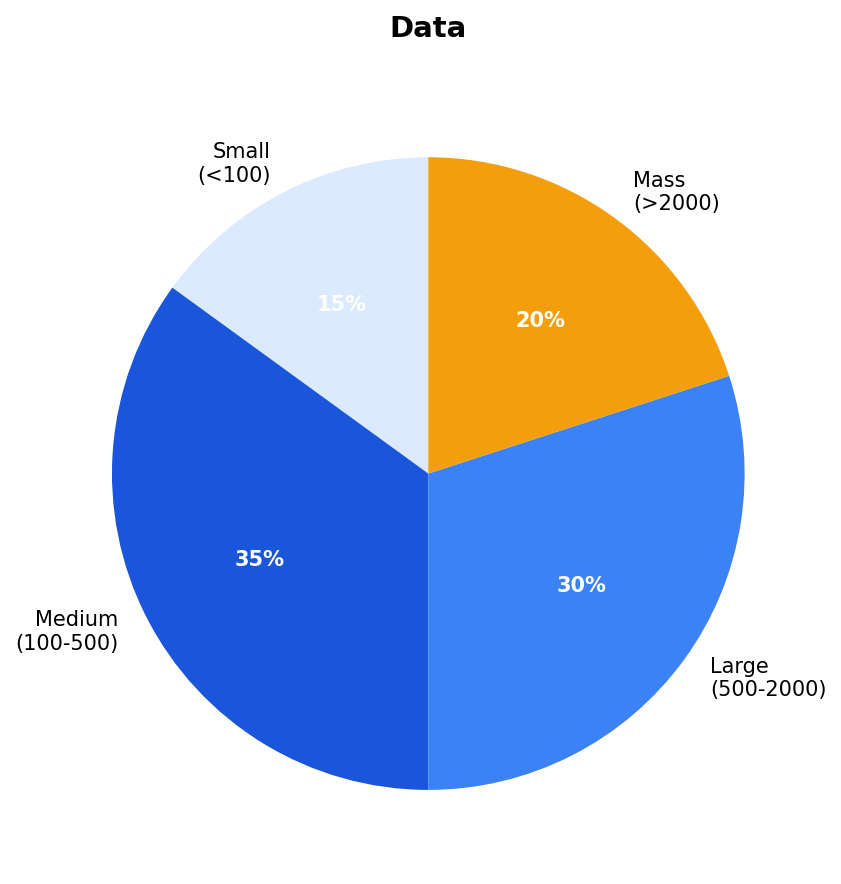
6 to 12 weeks is realistic. Day 1 to 2 is the audit. Weeks 3 to 8 are first article sampling and material testing. Then comes a small trial production batch, which takes another 2 to 4 weeks depending on the foundry's queue. If someone claims they can do it in less than 4 weeks, they're about to cut the one step that protects you—probably the FAI.
Should I split casting volume 50/50 between two suppliers?
No, not at first. A 70/30 or 80/20 split is much smarter for the first 12 months. It gives the second source a real order book while keeping the incumbent accountable. After a few quarters of stable PPM and OTIF from both suppliers, you can consider 60/40.
What's the most common reason casting supplier qualification fails?
The audit fails because buyers let price drive the decision before process verification. Foundries that look great on paper can crack under a real FAI with complex geometry or difficult material specs. Moving to series production without a documented FAI is the single fastest way to turn a dual-source plan into a warranty claim.
Your Next Move: Turn This Plan Into Action
In 60 days, you could have a qualified second-source foundry pouring your parts, or you could still be postponing the decision for one more quarter. The difference is the plan—and the discipline to execute it.
Start tonight. Pull your top 20 casting SKUs by spend into the criticality matrix. Select your three candidate foundries. Enter the audits with the 7-point checklist. Then let the data—not the sales pitch—tell you who earned your business.
If you want the exact 7-point audit triage scorecard and the FAI dimensional sampling template I've referenced here, they're part of the free supplier qualification toolkit available below. No sales call attached. Just the tools you need to protect your casting supply chain before something forces you to.
- ✓ 1,700+ vetted foundries
- ✓ 40+ QA engineers
- ✓ Serving buyers in 22 countries
- ✓ ISO 9001 / IATF 16949 capable