You Found a "Cheap" Chinese Valve Casting Supplier. Now Read This Before You Wire a Penny.
It started with a phone call.
A valve manufacturer in Houston had signed with a China foundry for 500 API 600 gate valve bodies. The price? 38% below their previous domestic supplier. The foundry's sales manager sent over "API-certified" paperwork, glossy photos of clean workshops, and a material test report that looked perfect.
The first delivery arrived three weeks late. The second one arrived with the right paperwork—and the wrong castings. Ultrasonic testing found internal shrinkage cavities in 11 of the 60 bodies sampled. The foundry's response? A photo of a rusty knuckle and an offer to "discount the next order."
They didn't have API Monogram certification. They'd never applied for it.
That story isn't one company. It's a composite of a dozen stories I've heard in 15 years of buying valve castings for oil and gas projects. And it's exactly why you're here—because searching "API 6D API 600 casting china supplier" comes from one of two places: desperation because your current price structure is killing you, or smart diligence because you've already been burned.
This guide is for the second group. Let's make sure you never join the first.
First, Get Your Own Standards Straight
Before you evaluate a single foundry, you need to know what you're actually buying. I've watched procurement teams muddy this up more times than I can count—and it costs them real money when they qualify the wrong supplier.
API 600 covers bolted bonnet steel gate, globe, and check valves for refinery and general service. The bodies and bonnets are typically cast—most commonly WCB (ASTM A216), LCB for low-temp service, or CF8M (ASTM A351) for corrosive environments. If your part number starts with a 2-inch or larger gate valve in carbon steel, API 600 is the design code you're working against.
API 6D is the pipeline valve standard. It covers gate, ball, and check valves used in oil and gas transmission systems. It's broader than API 600 and adds requirements like fire-safe design, seat leakage classes, and strict end-to-end face-to-face dimension consistency. Pipelines don't forgive dimensional drift—that's why API 6D puts so much weight on the assembly, not just the casting.
Here's the overlap that confuses everyone: both standards can apply to the same casting. A WCB gate valve body for a pipeline skid might need to satisfy API 6D for the valve assembly and API 600 for the pressure boundary design. So when you search for a supplier, you're often looking for a foundry that can pour pressure-containing castings that will later be machined, assembled, and certified into a valve that meets either standard.
That means the foundry itself doesn't need to be API 6D certified—that's the valve certification. The foundry needs to be API Monogram certified for casting production per API Specification Q1, or be qualified under your valve assembler's supplier control program. Keep that distinction in your head: you're buying certified castings that will become certified valves. One is the raw ingredient; the other is the finished meal.
If a foundry tells you "we are API 6D certified," that's a red flag right there. Ask what exactly their API Monogram scope covers. If the salesman hesitates, you've learned something valuable before spending a dollar.
Most Chinese foundries you'll find in Pingdingshan, Suzhou, Wuzhou, or Dalian fall into two buckets:
- API Monogram licensed foundries producing valve body castings under a verified quality management system. These are your realistic candidates. There are maybe a few hundred of them in China that genuinely hold an active license with valve body castings in scope—not the thousands that claim it on Alibaba.
- Non-licensed foundries with ISO 9001 and maybe a third-party PED certificate. They can pour acceptable WCB castings, but you (or your valve assembler) will own all the qualification risk. That's not automatically a dealbreaker—it just means your engineering team has to do the work the API system would have done.
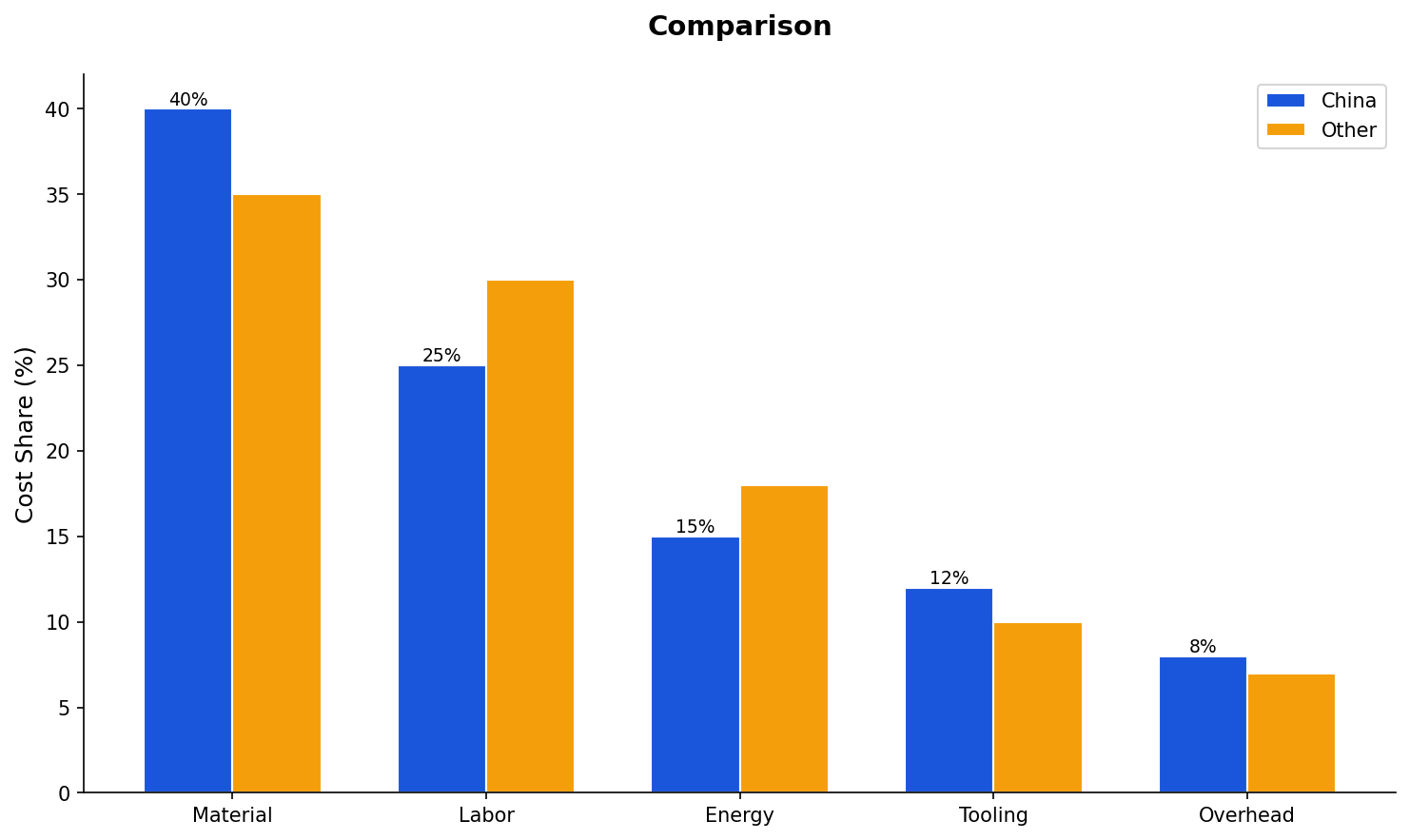
Once you know which standard governs your valve assembly, you can match it to the right casting supplier instead of chasing the first foundry with "API" in its website title.
Why China Still Makes Sense for Valve Castings
Let's not pretend the only reason you're reading this is quality fear. You're also following the money. And the money is real.
China produces more than half of the world's castings—roughly 50-55 million metric tons annually, per World Foundry Organization data. Valve body castings are a huge slice of that, centered in Shandong, Zhejiang, Jiangsu, and Hebei provinces. Shandong alone is home to over 1,200 ISO-registered foundries, with a dense cluster of API-licensed shops around Zibo and Yantai.
Cost differentials remain substantial. A WCB valve body casting from a Chinese foundry, heat-treated to API 600 material requirements, typically lands around $1.80–$3.20 per kilogram FOB depending on complexity and volume. The same casting from a US or Western European foundry? Realistically $4.00–$7.00 per kilogram—before you factor in the faster turnaround you might get from a domestic shop.
That's a 40-60% landed cost advantage even after ocean freight and import duties. For annual volumes of 50-200 tons, the savings easily run into six figures. I've seen a mid-sized valve company bank over $400,000 per year by shifting their WCB body castings to two qualified Chinese foundries. That's not pocket change—that's the difference between a profitable product line and a break-even one.
But cheap castings that fail NDT aren't cheap. They're expensive piles of scrap that can shut down a skid, blow out a weld, or—worst case—fail hydrostatic testing on a certified assembly. That's the trade. You're not buying castings; you're buying confidence at a discount.
Robert Davis on the Cost Trap: "Cheap Is a Down Payment on a Review"
I brought this up with a contact who knows the dark side of castings pricing—Robert Davis, a Georgia hardware wholesaler who spends about $1.5 million a year on imported castings across railings, valves, and structural components.
"Cheap is a down payment on a review," Robert told me. "Every time I saved 30% by ignoring the audit process, I paid it back later in sorting, rework, or freight for replacement parts."
He's not wrong, and I've seen the same math play out in oil and gas. You don't need to overpay, but you need to build verification costs into your total cost analysis from day one. A $3.20/kg casting with $0.30/kg of inspection is still a bargain. A $2.80/kg casting with no inspection is a gamble. Run the numbers across a 100-ton annual order and the difference between those two scenarios is about $10,000—which is roughly the cost of one three-day audit trip with a third-party inspector.
The 7-Point Verification Checklist for China Casting Suppliers
This is the part to bookmark. Over the years, I've narrowed my process down to seven checks that separate serious API casting suppliers from the dressed-up brokers. Run every one of them before you sign anything. Print this section if you have to—it's the difference between a supplier relationship and a supplier accident.
1. Verify the API Monogram Certificate — On API's Site, Not the Foundry's
Any foundry can Photoshop a certificate. That's step one of "how to look legit." I've seen certificates with the wrong logo font, certificates with expired dates, and certificates for a company in a completely different city than the foundry being pitched.
Go to the API Compass database (compass.api.org—the official API Monogram Directory) and search the company name. Don't accept a PDF they email you. Confirm:
- The certificate is active, not expired or suspended. API suspends licenses quietly; if you don't check, you'll find out the hard way when your auditor can't verify them.
- The scope explicitly lists valve body and bonnet castings, not just "steel castings." A foundry with a license for "steel castings for general service" is not the same as one scoped for pressure-containing valve parts.
- The facility address matches the plant you'll be dealing with—not a trading company's office in Shenzhen. If the certificate says Ningbo but the sales office is in Shenzhen, you're likely talking to a broker wearing a foundry's credentials.
Robert's habit, which I've stolen: he asks for the API certificate number and the auditor's name from the last surveillance visit. "If they can't tell me who audited them, the certificate is wallpaper." It sounds aggressive, but a legitimate API Monogram holder knows their auditor. They've met them, hosted them, and eaten lunch with them. A nine-second hesitation on that question tells you everything.
2. Audit the Foundry — In Person or Through a Third Party
Google Maps street view is not an audit.
If a foundry passes the certificate check, budget for a physical audit. If you can't travel, use a third-party firm like SGS or Bureau Veritas to do a supplier audit in your name. A proper audit costs $3,000–$6,000 plus travel. Compared to the cost of a rejected container of valve bodies—which can run $40,000–$80,000 on the water plus your production downtime—that's rounding error.
Focus on these seven audit checkpoints:
- Melting and refining: Does the foundry have AOD or VOD equipment for steel refining, or are they melting induction furnace charges without degassing? If you're buying WCB, you need a melt that's controlled, not guessed.
- Heat treatment: Are there actual furnace charts with time-temperature recordings, not sticky notes? A foundry that can't produce last month's heat-treat charts has no heat-treatment control, period.
- NDT capability: Do they run UT, PT, and RT on site? Or are they outsourcing inspection to a lab that's a four-hour drive away? Outsourcing isn't automatically bad—but it adds lead time and coordination risk you need to understand before you plan around it.
- Material traceability: Can a heat number be traced from melt ladle to final test certificate? Follow one heat through the entire process while you're on site. Watch them do it live, not from memory.
- Repair practices: Is weld repair documented? Who approves repair procedures? API standards have strict limits on weld repair of pressure castings. If the repair supervisor can't show you the approved WPS for the repair in question, the repair isn't controlled.
- Incoming raw material QC: Do they test scrap and alloying metals before charging the furnace? A foundry that trusts its scrap dealer without spectrometric verification is a foundry that will surprise you with chemistry.
- Housekeeping: Not cosmetic. Sand, dust, and poor storage directly lead to inclusions and porosity. You don't need a showroom floor—you need organized sand handling and clean melt decks.
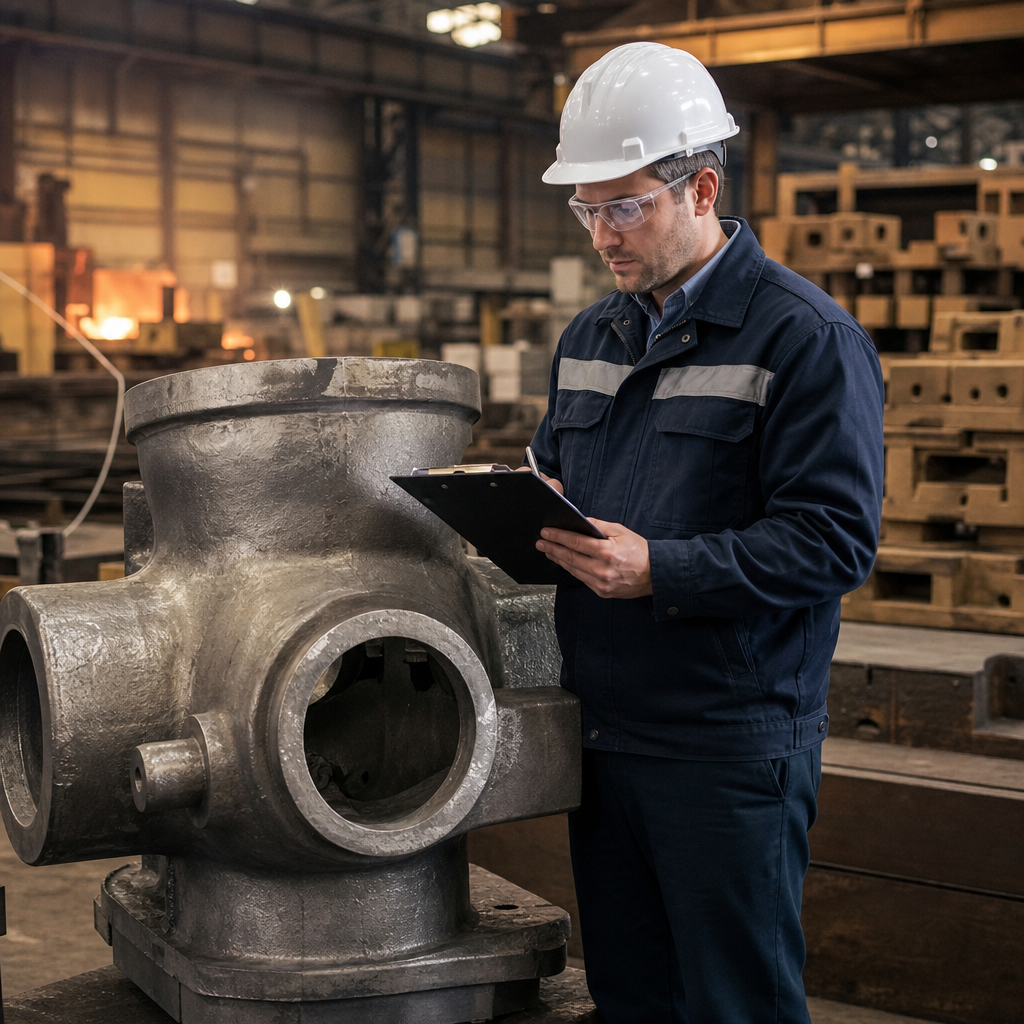
Walk out if the foundry can't show you furnace records from last month. Not a polished copy—the actual working records with burned edges and coffee stains. That'll tell you more than any PowerPoint.
3. Demand Third-Party Testing for the First Production Lot
A common pattern I've seen: samples are perfect, first production lot arrives full of surprises. Why? Because samples often come from a different melt, a different shift, or sometimes a different foundry entirely—that last one is more common than you'd think in the broker-heavy corners of the Chinese casting market.
For your first order, put in writing that you require third-party inspection on every heat—not just a certificate of conformance. A CoC is a piece of paper that says someone claims something. A third-party inspection report says an independent agency verified it. The difference matters most precisely when the foundry is under delivery pressure.
Specifically:
- Chemical composition per the applicable ASTM spec (A216 for WCB, A351 for CF8M, etc.)—verify actual percent values, not just "meets spec"
- Tensile testing with actual yield and elongation values recorded, not a pass/fail checkbox
- Ultrasonic testing per the acceptance criteria in your agreed standard (typically 80% coverage on pressure boundary sections)
- Liquid penetrant testing on surfaces that will be welded
Cost on this runs roughly 3-5% of the casting value. Worth every cent. On a $50,000 first order, that's $1,500–$2,500 to make sure the other $48,000 isn't headed for the scrap bin.
4. Run a Pre-Production Sample Made Under Production Conditions
This is the one check most buyers skip, and it drives me crazy. They approve a sample that was poured on a Tuesday morning by the best team in the foundry with the pattern set up on the best molding line—then they're shocked when the production run behaves differently.
With a pre-production sample, you're not asking for a "showpiece" sample. You want castings made on a real production shift, with production tooling, production operators, and production quality controls. Ask for:
- The same molding line that will be used for volume production
- The same heat treatment cycle (not "normalized in a lab furnace"—that's a different material condition and you know it)
- The same inspection personnel who will sign off on the production order
Then cut the sample up. Literally. Cut through the flanges, the neck, and the body wall. Macroetch the cut surfaces to check for centerline shrinkage and porosity. I've seen samples that looked perfect on the outside and were honeycomb on the inside. Not on my watch. If the foundry balks at destructive testing on a sample they're getting paid for, ask them what they're afraid you'll find.
5. Lock Down Material Traceability in the Contract
API 6D and API 600 assemblies demand full heat traceability. You need to be able to say, "This valve body, heat number 2208-115, poured on this date, came from that ladle of WCB." Your customer's auditor—or a regulator, if this goes offshore—will ask exactly that question, and "approximately" is not an acceptable answer.
Put traceability requirements directly into your purchase order:
- Each casting must be permanently marked with heat number and pattern number—stamped, not tagged
- Traceability records must be maintained for 10 years (and actually retrievable when you call)
- No reverse marking or plate transfer from casting to casting allowed—this is the silent killer of traceability systems
If a foundry pushes back on this, you're probably dealing with a job shop that melts by "what looks right" rather than a disciplined API-quality operation. The good ones do this every day and won't blink. The marginal ones treat traceability paperwork as a burden, which means when something goes wrong, they'll have a filing cabinet of excuses instead of a chain of evidence.
6. Test the Customer Service Chain Before You Commit
Here's a low-cost but highly revealing exercise. Send a technical question to the foundry—something specific, like your requirement for UT coverage on a complex pocket area. Make it a real question with a real answer you already know. Then time how long it takes to get a substantive reply.
If you get a response within 48 hours from an engineer who asks clarifying questions, that's a good sign. If you get an answer in a week from a salesperson who says "our quality is very good," you've just seen your future correspondence on a quality dispute. And remember: a quality dispute is when you'll need them to respond fast, not when they're chasing your order.
Fast-moving projects need fast-moving suppliers. Offshore castings already add lead time to your schedule. You can't afford a supplier that takes five days to answer a CTA question about radiography standards.
7. Verify Financial Stability — When Did the Foundry Last Upgrade?
Foundries are capital-hungry businesses. Shutdowns happen; facilities change hands; equipment gets old. Ask the foundry for a summary of their last two years of capital expenditures. "We invested in a new electric induction furnace in 2024" or "we upgraded our sand reclamation line" are good answers. "We invested in a new sales office" is not.
If they can't name a single capital improvement in 24 months, ask why. A foundry that isn't investing is a foundry that's running on borrowed time—and your castings will be produced on that borrowed time. You don't want to be the customer whose order is in process when the foundry's bank calls in its loans.
The Price Negotiation: How to Push Without Breaking Quality
Once the verification checks pass, the price conversation begins. This is where Robert Davis's advice is worth its weight in scrap—and it's where most buyers either leave money on the table or squeeze so hard they break the quality system they just verified.
"Foundries in China assume you'll push on price," Robert says. "What they don't expect is an informed buyer who breaks down their cost structure and targets the real savings—not the profit—and when negotiations stall, I walk away with a clear list of what's worth paying for. That's when everything changes."
Here's what a realistic WCB valve body cost structure looks like at a mid-size Chinese foundry:
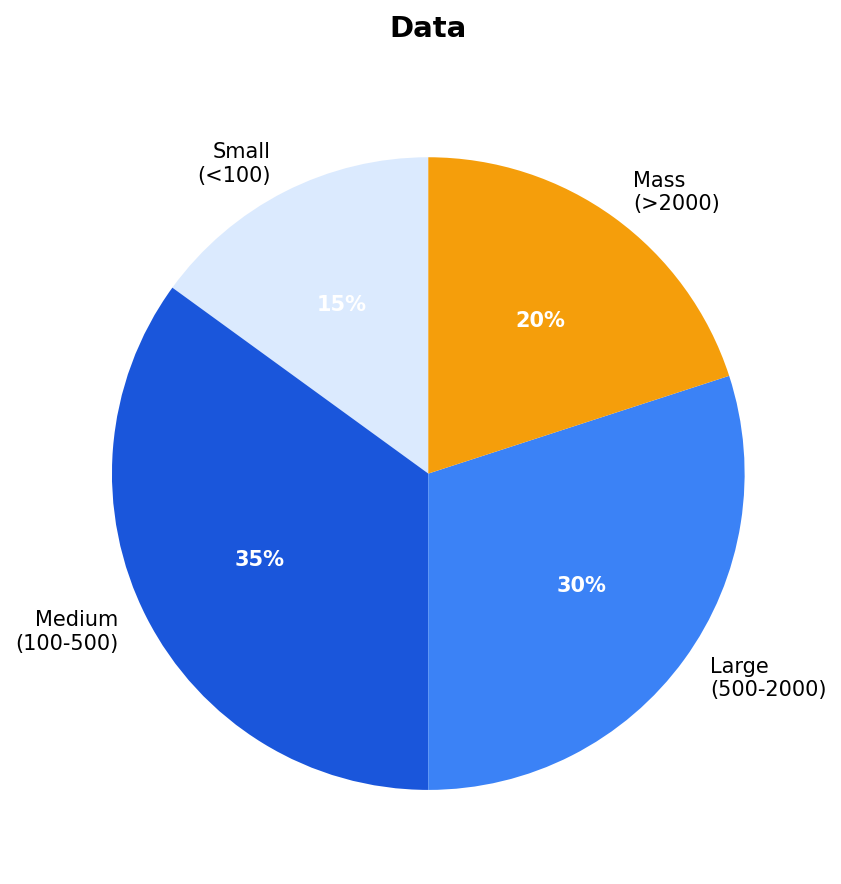
- Raw materials (45% common): scrap steel, ferroalloys, gases, refractories
- Labor & overhead (12-15%): casting operators, inspectors, supervisory staff
- Energy (8-12%): melting electricity, heat treatment fuel
- Tooling amortization (5-10%): pattern costs spread across the order
- Inspection & QC (4-7%): NDT, lab testing, certificates
- Logistics & export packaging (5-8%): pallets, crating, freight to port
- Foundry margin (8-15%): the only truly negotiable number
Your leverage points, in order:
- Series volume. A casting supplier's fixed costs—patterns, programming, ceramic products—amortize better on 200 pieces than 20. Commit to an annual volume and you can legitimately push 3-7% lower per piece. The foundry would rather take a haircut on margin for a predictable 200 pieces than chase spot orders.
- Rigid inspection scope. Wait, doesn't more inspection mean higher price? Yes, but it also means fewer hidden nonconformances. If you commit to fewer surprises, the foundry doesn't load 5% "rework buffer" into your price. Define NDT coverage clearly and you can trim that buffer down to zero. The foundry is essentially discounting you for being a competent, predictable buyer.
- Multi-year agreements. Foundries love forecast visibility. A 12-month blanket order with release quantities is worth another 3% to them—and locks your price against mid-year scrap fluctuations. That's a hedge that costs you nothing.
- Payment terms. If you can do 30% against L/C at sight or even 50% export L/C instead of 100% L/C at sight, you're giving the foundry cash-flow comfort that has real value. Use it to buy price, just don't extend your own risk unnecessarily.
What's not worth pushing: the cost of the actual melt. When a foundry says "I can't cut raw material costs," they're usually telling the truth. Steel scrap and ferroalloy prices move globally. Asking a foundry to absorb metal cost increases is a recipe for a supplier that starts cutting corners on alloying additions to keep their margin. You don't want WCB that's closer to mild steel by weight because the chrome and manganese were left out. That's how you get a valve body that passes the dimensional check but fails the pressure test.
"I always request a cost breakdown before signing," Robert told me when I asked for his most effective negotiation move. "If a foundry can't show me where the money goes, they're either hiding margin or hiding defects. The transparent ones usually get the deal—and they're the ones worth dealing with."
What Chinese Foundries Do That You Should Never Tolerate (And What's Normal)
Some buying guides treat every Chinese foundry as a landmine. That's lazy thinking—most API Monogram shops are serious operations run by serious metallurgists. But there are behaviors you should treat as non-negotiable red flags:
Red Flags — Walk Away
- Claims of API Monogram without a verifiable certificate number
- Refusal to show latest third-party audit reports
- Adding "certified charge materials" but failing to document the actual charge sheet
- Promising 45-day delivery where the lead time math doesn't add up (large valve bodies typically need 45-75 days after pattern approval—be skeptical of instant miracles)
- Pattern changes without customer approval, especially on critical dimensions
Yellow Flags — Manage Them
- English documents that are obviously machine-translated. Communication defaults will cost you time, not necessarily quality. Decide early whether you have the patience to manage that.
- One quality engineer covering 200 castings a week. Ask how their workload actually goes—are inspections happening at the right gate, or is the QE buried in paperwork while parts move anyway?
- Unclear policy on weld repairs. Some weld repair is acceptable per API standards under controlled procedures; qualified repair is not the same as "slap a rod on it." Ask to see their repair procedure and how many repairs per casting they allow.
Actually Normal — Don't Overreact
- Foundry staff who are polite but slow to respond to complex technical emails. They know the words for "good quality" but not "shrinkage porosity in the neck of a gate valve casting." Use clear bullet-point questions and simple language—and expect that extended technical discussions run faster over a call than in email.
- Photographs of the foundry that look dated or low-res. Some of the best foundries I've worked with have marketing departments that run on a 2012 smartphone. Equipment condition matters; photography skills don't.
- A sales engineer doing a lot of the talking while the metallurgist stays quiet in the background. The metallurgist is your friend—get them on a call. The best technical conversations I've had with Chinese foundries were with the guy in the dusty lab coat, not the one in the ironed shirt.
What Lead Times Should You Actually Plan For?
Here's a realistic schedule based on my experience with API Monogram casting foundries in China—call it a planning baseline, not a promise:
| Milestone | Typical Duration |
|---|---|
| Pattern making (new sand pattern for body casting) | 15–30 days |
| First article sample & NDT | 10–15 days after pattern |
| Customer approval of sample | 5–10 days (depends on you) |
| Production casting (quantity of 50–100) | 20–35 days |
| Third-party inspection | 3–7 days on site |
| Ocean freight to US Gulf Coast | 30–40 days |
Total elapsed land-to-port: realistically 90–130 days from order to receipt, assuming no rework disasters. If you need faster, air freight will add ridiculous cost—so the smart play is to maintain a 3-month rolling forecast and release quantities monthly. That's how you get closer to 75-day cycles. Foundries will happily hold your pattern and production slot if they know your forecast is real. The ones who get burned are the buyers who call out of nowhere expecting castings in 30 days; that doesn't exist, and anyone who promises it is lying to you.
Frequently Asked Questions
Is API Monogram the same as ISO 9001?
No. ISO 9001 is a generic quality management certification that any plumbing fittings factory can hold. API Monogram is a product-specific certification based on API Specification Q1, with much stricter requirements for traceability, design control, and risk management. For valve castings going into API 600 or API 6D assemblies, API Monogram is the credential that matters. ISO 9001 tells you a factory has a quality manual; API Monogram tells you their quality system has been audited against the specific demands of API products.
Can one Chinese foundry supply castings for both API 600 and API 6D valves?
Yes—the casting foundry produces valve bodies that will be assembled into different valve types. What matters is that the foundry's quality system meets the requirements of your valve assembler and that the casting material meets the applicable ASTM/AISI spec. The valve standard itself (600 vs 6D) governs the finished valve, not directly the casting production, though design requirements impact the casting geometry. In practice, a qualified WCB body casting supplier can serve both lines—you just need to verify their scope and your assembler's approval.
What's the minimum order quantity for API-certified valve body castings from China?
For an API Monogram foundry, realistically 20–50 pieces per size, or a combined annual volume of 10–30 metric tons, before they'll treat you as a serious account. Below that, expect high per-piece pricing or polite refusal. Some smaller foundries accept 10-piece orders but you'll pay pattern and setup amortization heavily. If you're below those volumes, you're better off consolidating through a trading company that aggregates orders—though you'll inherit their quality management obligations.
How much does a typical valve body casting weigh and what's the price per kilogram?
Small gate valve bodies (2-4 inch) range from 5 to 15 kg; large pipeline valves (12-24 inch) can go from 80 to 400 kg or more. As of 2026, expect WCB body casting prices from an API-licensed Chinese foundry around $1.80–$3.20/kg FOB, but the final value depends on complexity, wall thickness, heat treatment, and NDT requirements. Always ask for a per-piece quote that includes pattern amortization, heat treatment, first-article testing, and export packaging. The per-kg number is a starting point for comparison, not the number you negotiate on.
Do I need to travel to China for the first audit?
It's ideal but not always mandatory. If you're experienced with valve castings, one in-person audit gives you a strong feel for the shop culture—equipment condition, operator discipline, how the heat-treat charts are stored. If you can't go, budget for a third-party audit via SGS or BV. At minimum, do a video walkthrough with the foundry showing furnace controls, heat-treat charts, and NDT equipment—and ask to see a production shift in real time, not a prepared demo. It's not the same as being there, but it filters out the reality-challenged suppliers.
What's the biggest mistake buyers make with Chinese casting suppliers?
Skipping verification. Either they trust a pretty website, or they do a superficial inspection but fail to test the first production lot under production conditions. The middle path—verify the certificate, audit the plant, test the production first article—is what separates buyers who keep returning from those who keep getting burned. The buyers who fail do so because verification feels like it's slowing them down. In reality, it's the only thing keeping their delivery schedule intact.
The Bottom Line
API 6D and API 600 valve castings from China can save your program 40-60% on raw casting costs. That's real money. But like any high-stakes procurement, the discount only exists if you build verification into the process. The foundry's price is not your cost. Your cost is the price plus the inspection, the audit, the rework risk, and the freight on any part that fails on arrival. Verified suppliers make that math work. Unverified ones make it a lottery.
The seven checks work—I've seen them produce reliable, qualified castings from first-tier Chinese foundries over and over again. The foundries that pass all seven are rare, but they exist, and they're worth every dollar of the audit and inspection cost. When you find one, you've found an asset that will carry your valve line for years.
Start with the certificate verification. Today. Not tomorrow, not after the NDA is signed. It takes ten minutes on compass.api.org and it tells you more than a month of email back-and-forth. If the certificate doesn't check out, you've saved yourself a world of pain. If it does check out, you're one audit away from a serious supplier relationship that could cut your valve casting costs by half.
Before your next purchase order, grab the free sourcing checklist. It's the same 7-point verification I walk through here—formatted into a one-page PDF you can hand to an auditor or keep on your desk as a final gate before signing. Download the API Casting Supplier Verification Checklist →
Need Help with API 6D & API 600 Casting China Supplier: 7 Checks Before You Buy?
Get matched with 3 verified foundries in 24 hours. No markup, transparent pricing.
Request Quotes →- ✓ 1,700+ vetted foundries
- ✓ 40+ QA engineers
- ✓ Serving buyers in 22 countries
- ✓ ISO 9001 / IATF 16949 capable
See the full valve casting supplier China shortlist for API 6D / API 600 sourcing.