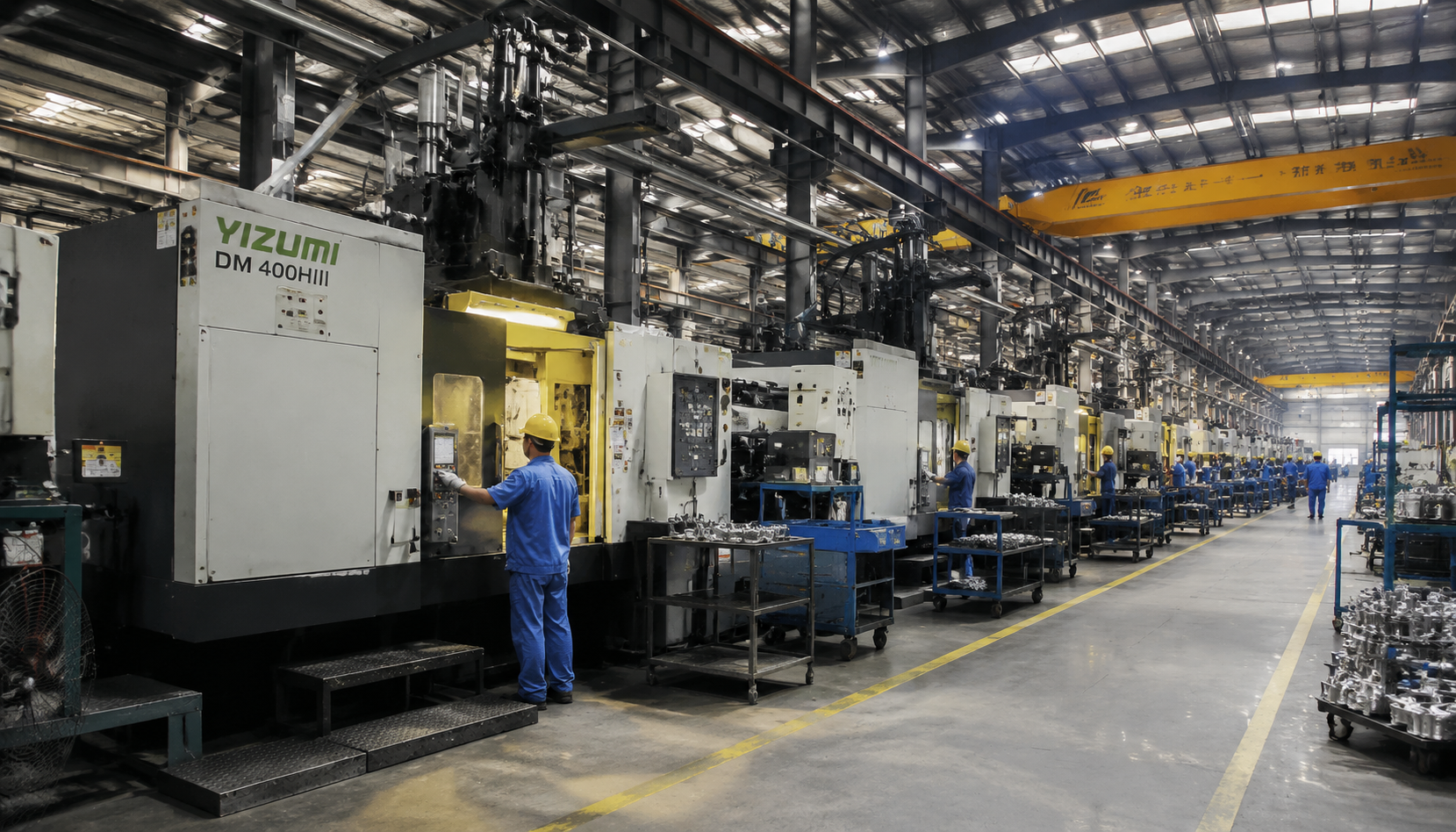
You Got Burned by a Die Casting Supplier in China? Here's How to Never Let It Happen Again
That sinking feeling when a batch of castings doesn't pass inspection. The excuses. The blame game. The delay that costs you your customer. I've seen it happen more times than I can count. Here's exactly what to check before you sign the next PO.
Picture this: You just landed your biggest contract. The PO is signed, the deposit is wired — 30% upfront to a die casting supplier in China who promised 4-week lead time, ISO 9001 certification, and "strict quality control." You feel good about it.
Then week 5 hits. No containers loaded. Emails go unanswered for 48 hours. Finally, you get a message: "Sorry, tooling issue. Two more weeks." Week 7, a partial shipment arrives. Half the parts are out of spec — porosity in the sealing surface, wall thickness off by 0.3 mm. The other half? Wrong alloy. You ordered ADC12. They shipped A380. Close? Not close enough. Your customer rejects the whole lot. You're on the hook for air freight, rework, and a pissed-off client who's now looking at your competitor.
Sound familiar? You're not alone. I've worked with 40+ buyers over the last decade who've walked into this exact trap. Not because they're careless — because they didn't know what to look for. The die casting industry in China has over 8,000 registered factories. Some are world-class. Some are garages with a machine and a prayer. The difference isn't luck. It's knowing the right questions to ask before you wire a cent.
Here are the 7 checks that separate a reliable partner from a recurring headache. Skip one, and you're gambling with your reputation.
1. Tooling Ownership — Who Actually Owns Your Molds?
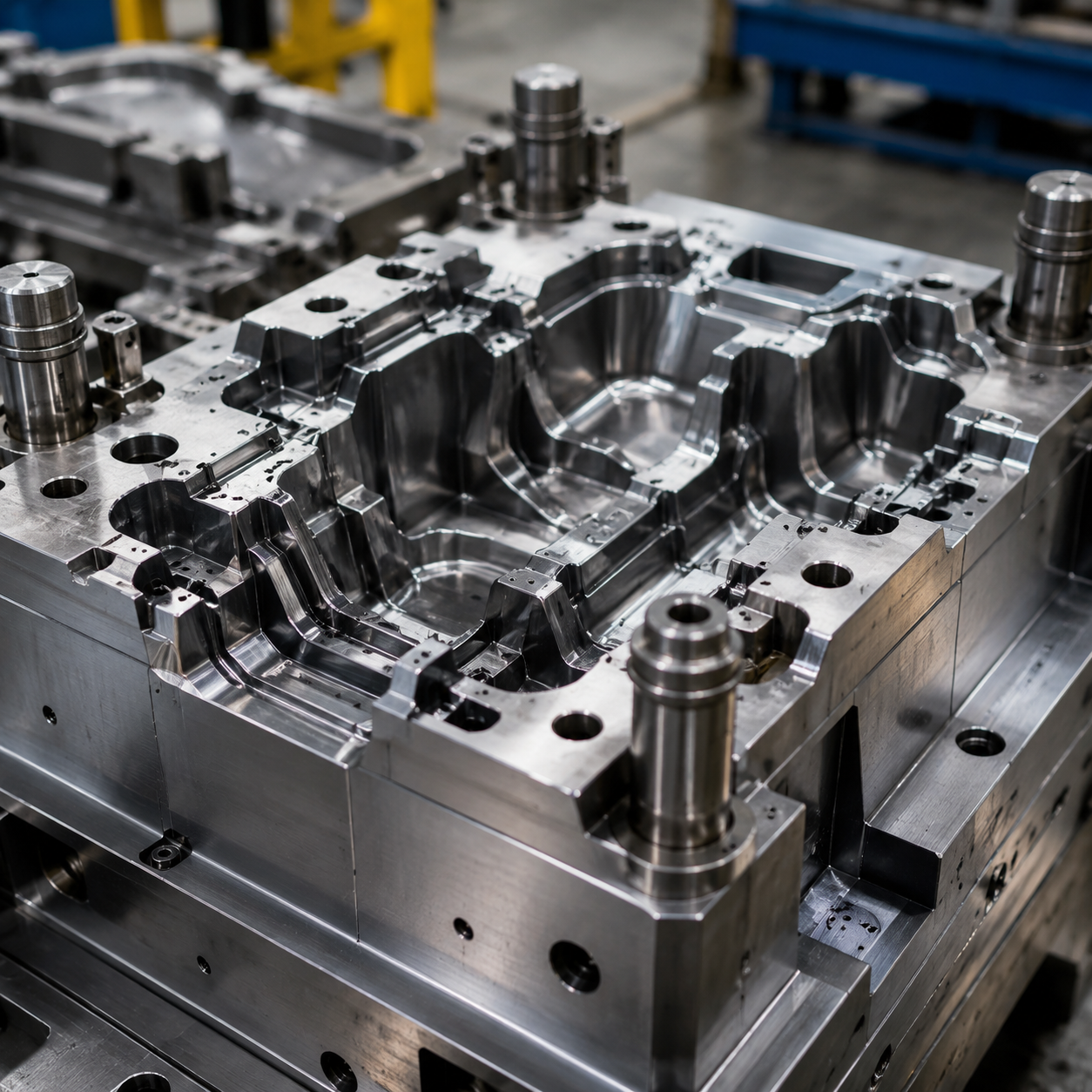
Here's a story that plays out every single day. A buyer pays $40,000 for a set of dies. The supplier builds them, runs the first batch, everything looks good. Six months later, quality starts slipping. The buyer wants to move to another factory. Then comes the punchline: "The tooling belongs to us. You only licensed it."
Read your contract. More specifically, read the section titled "Tooling Ownership." If it's not there, you don't own your dies.
What you need to do:
- Get it in writing: The contract must state that all tooling, once paid for, is your property. No ambiguity.
- Physical marking: Every die should be physically stamped with your company name or ID number. A photo of the stamp goes into your records.
- Storage clause: Who stores the dies? For how long? At what cost? If they retire a die without telling you, you're back to square one.
- Right to inspect: You — or a third party — should have the right to inspect the tooling at any time, no notice needed.
I once worked with a buyer who had 12 dies sitting in a supplier's warehouse. When he asked for them back, the supplier demanded $80,000 in "storage fees." The contract was silent on storage. He paid. Don't be that guy.
2. Certifications Aren't Wall Decor — Verify Them
Every die casting supplier in China has an ISO 9001 certificate hanging in their lobby. I've seen them in factories with 8 employees and a leaking roof. The certificate cost them $3,000 and took two weeks to buy online. Yes, buy.
Fake and "semi-legitimate" certifications are a real problem. The certification body matters. An ISO 9001 issued by ANAB-accredited or UKAS-accredited bodies carries weight. A certificate from "Global Standard Certification Services" in Shenzhen? Less so.
Your verification checklist:
- Ask for the certificate number and the issuing body's full name.
- Cross-check on the accreditation body's website (ANAB, UKAS, DAKKS).
- Look for specific scope — "Die Casting of Aluminum Alloys" is what you want. Not just "Manufacturing."
- Check the expiry date. Expired certs are common.
- If they claim IATF 16949 (automotive), that's a higher bar. Verify it directly with the IATF database.
And here's the hard truth: certification alone doesn't guarantee quality. I've walked into ISO-certified factories where the calibration tags on the CMM were 3 years out of date. The cert gets you in the door. What you do after that door opens — that's where real quality lives.
3. Material Composition — "Close Enough" Costs You
The alloy spec on your drawing is non-negotiable. But in practice, substitutions happen all the time. "ADC12 is basically A380, right?" Wrong. ADC12 has a slightly different silicon and copper content. For some applications, it's fine. For others — like a hydraulic valve body or a structural bracket — the difference in mechanical properties can cause failure.
Here's what I've seen buyers do right:
- Require a Material Test Report (MTR) with every batch. Not a generic cert from six months ago. A fresh MTR tied to that specific heat number.
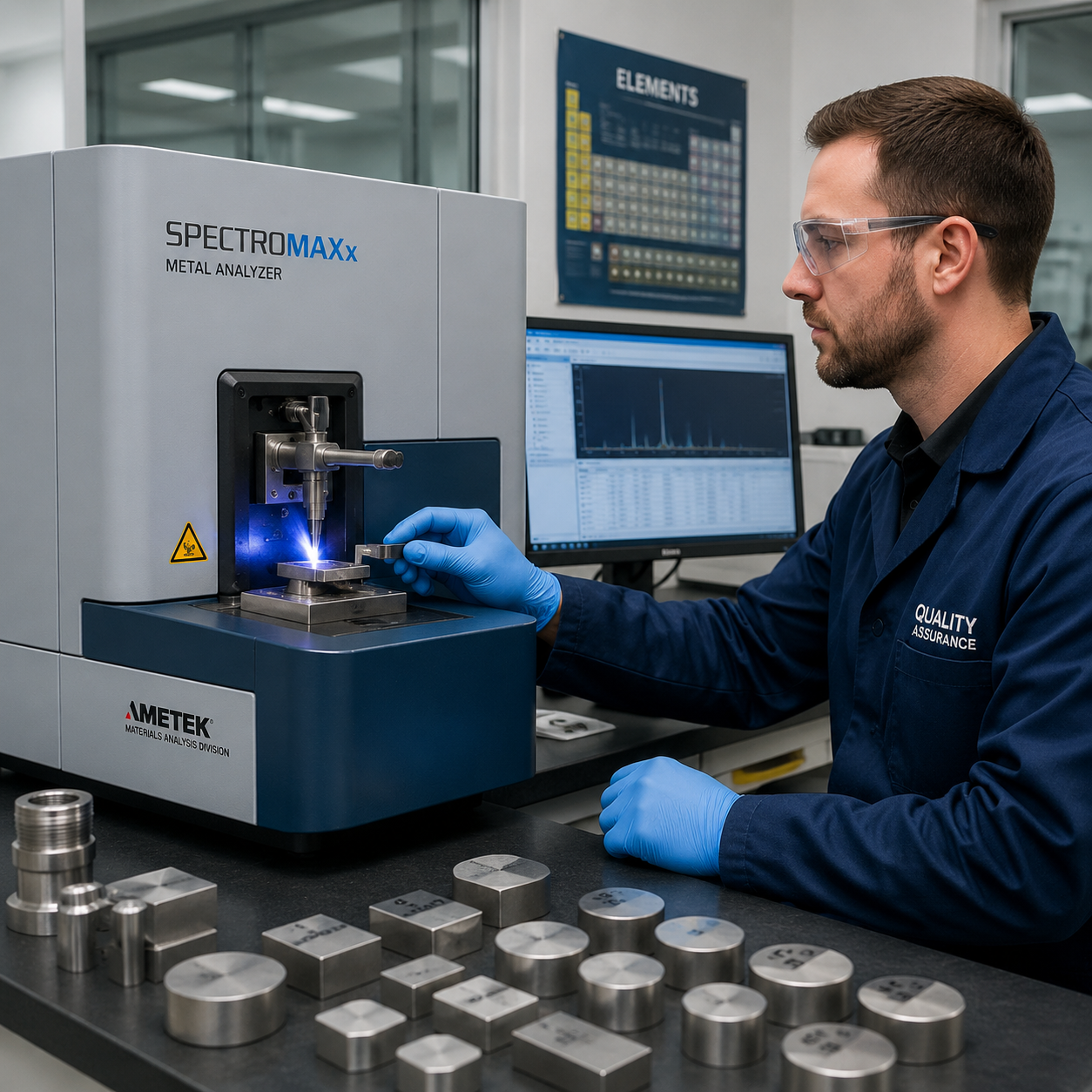
- Insist on a spectrometer test. The supplier should have an Optical Emission Spectrometer (OES) in-house or use a third-party lab. Ask to see the calibration records.
- Specify the standard. ASTM B85 for aluminum die castings, ASTM B176 for zinc. If your supplier doesn't know these numbers, that's a red flag.
- Random spot testing. Send a sample from every 5th batch to a lab like SGS or Intertek. The cost is small. The peace of mind is huge.
One buyer I know saved $12,000 on a batch by accepting "equivalent" material. The parts failed after 6 months in the field. The replacement cost — including warranty claims and lost customer trust — was over $200,000. That "save" ended up being the most expensive decision he ever made.
4. Quality Control — Not "Do We Have QC?" but "How Does QC Actually Work?"
Every supplier says they have quality control. The good ones can show you a flow chart. They can tell you the exact inspection points, the sampling plan (AQL 1.0? 0.65?), and what happens when a part fails.
The mediocre ones will point at a CMM in the corner and say, "We measure." Measuring random parts after they're made isn't QC. It's sorting. Real QC is a closed-loop system.
What to ask (and look for):
- First Article Inspection (FAI): Do they do it? Is it documented to AS9102 or a similar standard? Ask for a sample FAI report from a previous customer.
- In-process checks: Do they check dimensions during the run, or only at the end? In-process checks catch drift early. End-of-line checks catch scrap.
- Defect tracking: Ask to see their defect log. If they don't have one — or if it's blank — they're not tracking problems. And if they don't track problems, they don't fix them.
- Gauge calibration: Every caliper, every fixture, every CMM should have a calibration sticker with a date. Check 3 random gauges. If the stickers are expired, the QC system is theatrical.
One factory I audited had a "Quality Department" with one person whose main job was to fill out the inspection reports. He never actually measured anything. He just estimated. When I asked him how he knew a part was in tolerance, he said, "I've been doing this 10 years. I can tell by looking." That factory is out of business now. Don't learn the hard way.
5. Capacity — Are You Their Priority or Their Side Hustle?
You found a die casting supplier in China with great prices and decent quality. But here's the question nobody asks: How many other buyers are they serving, and what's your priority rank?
Some factories operate at 60% capacity and can flex up. Others are at 95% and every new order pushes someone else out. If your order is small, you'll get bumped every time a bigger buyer comes in with a rush job.
How to assess real capacity:
- Ask for a production schedule. A legitimate factory can show you a general timeline of current orders (anonymized). They don't have to share customer names, but they can show load levels.
- Visit during a busy period. If you walk the floor and half the machines are off, ask why. If it's planned maintenance, that's fine. If there's no work, you have to wonder.
- Check shift patterns. One shift = 8 hours of production. Two shifts = 16. Three shifts = 24. If they claim high capacity but only run one shift, the math doesn't work.
- Ask about their biggest customer. If that customer accounts for 60%+ of revenue, you're a filler. That's not necessarily bad — but know where you stand.
I had a buyer who placed a $50,000 order with a factory that was already running flat out for a major automotive client. Week after week, his order got pushed. When it finally shipped — 9 weeks late — the quality was rushed and terrible. The supplier knew they couldn't deliver, but they took the order anyway. That's on them, but also on the buyer for not checking the load.
6. Communication — The True Test of a Partnership
Here's a pattern I've seen dozens of times. Before the PO, the supplier emails you back within 2 hours. They answer every question. They send photos. They're charming. After the deposit, response time stretches to 24 hours, then 48, then "I am checking with production."
Communication isn't a soft skill. It's a leading indicator of how you'll be treated when things go wrong — and they will go wrong at some point.
What to test before you commit:
- Send a complex question. Ask about a technical detail on your drawing — a specific tolerance, a draft angle, a surface finish requirement. The quality of the answer tells you a lot. A vague "we can do it" is not an answer.
- Check English proficiency. Is their English good enough to discuss technical issues? If you're dealing with a sales rep who is the only English speaker in the company, you have a single point of failure.
- Ask for a weekly update format. Before you start, agree on what a weekly update looks like: photo of production, status of each part, issues list, shipping forecast. If they can't follow a simple format, imagine how they'll handle a complex problem.
- Video call with the production manager. Not just the sales team. The person who actually runs the shop floor. If they can't or won't, that's a red flag.
One of the best factories I've worked with sends a daily photo of the production line with a QR code that links to a real-time dashboard. That's not the norm — but it shows you the level of transparency you should be looking for.
7. Payment Terms — Don't Pay for a Promise

Standard terms in China are 30% deposit, 70% before shipment. That's the norm. But "normal" doesn't mean it's smart. You're essentially providing the supplier with working capital. If something goes wrong, you're in a weak position to negotiate.
Better approaches:
- 30/40/30. 30% deposit, 40% when you see inspection photos or a third-party inspection report, 30% after shipment and document handover. This ties payment to progress, not promises.
- Letter of Credit (L/C). For larger orders, an L/C protects both sides. You don't pay unless the documents are in order. The supplier gets paid when they ship. It's not perfect, but it's better than wiring 70% blind.
- Escrow services. Some platforms offer escrow for international trade. The fee is 1-2%, which is cheap insurance.
- Final payment linked to inspection. Write into the contract that the final payment is contingent on a pass/fail inspection by a mutually agreed third party (SGS, Bureau Veritas, etc.).
I know a buyer who paid 90% upfront because the supplier said they needed the cash for material. The order never shipped. The supplier went dark. The buyer spent 18 months and $30,000 in legal fees trying to get the money back. He recovered about 40%. Don't finance your supplier's cash flow. That's what banks are for.
Your 7-Step Checklist Before You Sign the Next PO
Print this. Pin it on your wall. Use it every single time.
- Tooling clause — Written, stamped, and photographed. You own your dies.
- Certification verification — Cross-check the issuing body. Don't trust the wall.
- Material composition — MTR per batch. Spectrometer verification. Random spot testing.
- QC process walkthrough — FAI, in-process checks, defect log, gauge calibration.
- Capacity assessment — Production schedule, shifts, biggest customer %, buffer capacity.
- Communication test — Technical question, weekly format, video call with production manager.
- Payment structure — Tied to progress and inspection. Never pay 70% blind.
Do all 7, and you'll eliminate 90% of the problems that eat buyers alive. Skip even one, and you're rolling the dice.
Frequently Asked Questions
How do I find a reliable die casting supplier in China?
Start with trade directories like Made-in-China.com or Global Sources, but don't stop there. Use the 7 checks above to vet every candidate. The best suppliers are often mid-sized — not the cheapest, not the most expensive — and they welcome audits. A supplier who resists a factory visit is a supplier you don't want.
What's a reasonable lead time for die casting from China?
For a standard aluminum die casting order, 4-6 weeks is reasonable — 2 weeks for tooling setup (if existing dies), 2-4 weeks for production and shipping. First-time orders with new tooling can take 8-12 weeks. Any supplier promising 3 weeks for a first run is either over-promising or cutting corners on QC.
Should I use a sourcing agent or go direct?
A good sourcing agent like Interstate Asia adds value in three ways: (1) they already know which factories are reliable, (2) they handle communication and quality control, and (3) they protect your interests in disputes. The cost (typically 5-10%) is usually offset by better pricing and fewer mistakes. Going direct saves the fee but costs you time and risk.
What's the minimum order quantity for die casting?
MOQ varies widely. Small factories might accept 200-500 pieces per run. Larger ones typically want 1,000+. For very high-volume parts (automotive), MOQ can be 5,000+. If your volume is low, consider shared tooling or negotiating a higher unit price to cover the setup cost.
How do I handle a defective batch from China?
First, don't stop payment unilaterally — that can trigger legal problems. Document everything with photos and a third-party inspection report. Then open a formal negotiation. Most suppliers will offer a discount, a replacement run, or a credit. If they refuse, you have a contract dispute. This is where having a sourcing agent or a lawyer who specializes in China trade pays off.
The Bottom Line
Finding a good die casting supplier in China isn't about luck. It's about process. The 7 checks above are the process that experienced buyers use — the ones who don't get burned, who don't scramble when a shipment goes sideways, who don't lie awake wondering if their tooling is being held hostage.
You don't have to do it alone. If you're looking for a die casting partner and want someone in your corner — someone who knows the factories, the traps, and the people behind them — talk to us at Interstate Asia. We're not a factory. We're your boots on the ground.
Or, if you're still in the research phase, download our full Die Casting Supplier Evaluation Checklist. It's the same one we use when auditing factories for our clients. No fluff. Just the questions that matter.
Don't get burned again. You've got better things to do than fight with a supplier who should have been vetted before the PO was signed.
- ✓ 1,700+ vetted foundries
- ✓ 40+ QA engineers
- ✓ Serving buyers in 22 countries
- ✓ ISO 9001 / IATF 16949 capable
Need Help with Got Burned by a Die Casting Supplier in China? Here's Your Fix?
Get matched with 3 verified foundries in 24 hours. No markup, transparent pricing.
Request Quotes →