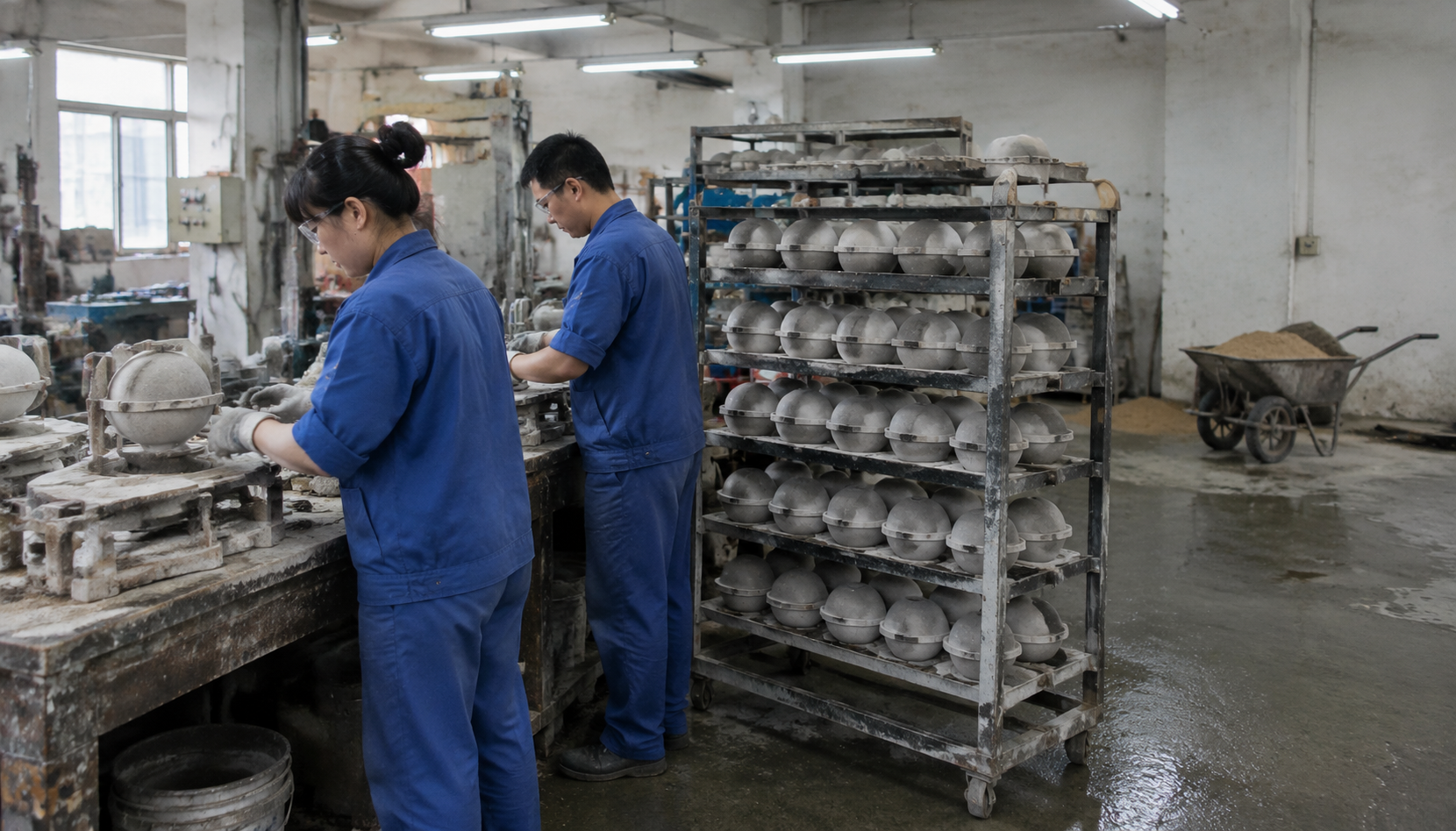
The crate arrived in March. Two thousand stainless float balls, 100 mm, polished, nested in foam, paperwork perfect. Everyone signed off.
By June, 340 of them were in a scrap bin at your customer's plant. Not cracked. Not obviously wrong. Just sinking lower than they should, and a handful that had quietly filled with water and gone down like a stone. The threads were fine. The finish was fine. The problem had been cast in eighteen months earlier, in a shell room nobody ever photographed for the audit.
If you're currently hunting for a silica sol casting floating ball supplier, that story is the one worth keeping in your head. Not because Chinese foundries are bad — plenty are excellent — but because the failure mode on a hollow cast sphere is invisible at goods-in and expensive at the customer end.
This guide is the checklist I'd want in hand before signing an LOI. It covers the three different products people mean when they say "floating ball," why the binder system decides your wall thickness, the buoyancy math that turns a tolerance into a scrap rate, and the seven questions that separate a real silica sol shop from a trading company with a rented photo studio.
Why Hollow Cast Float Balls Fail Six Months Late
A float ball is a pressure vessel that happens to be round. It has to hold external pressure without buckling, hold its weight within a tight band so the valve actuates at the right level, and hold concentricity at the stem so the seat seals.
Three things kill it:
Wall thickness drift. The ball still looks like a ball. It still passes a go/no-go gauge. But if the wall runs 2.4 mm instead of 2.0 mm on a 100 mm sphere, you've added roughly 97 grams of steel to a part that only displaces 524 grams of water. The float now sits lower, the valve trips late, and the customer's tank overflows once a week in humid weather. Nobody blames the casting. They blame the valve.
Through-wall porosity. Not the big obvious blowholes — the hairline network that only shows up after 200 hours of immersion. Water seeps in, the ball gains weight slowly, and one day it stops floating. On a water-glass shell with poor slurry control, this is common. On a properly built silica sol shell, it's rare.
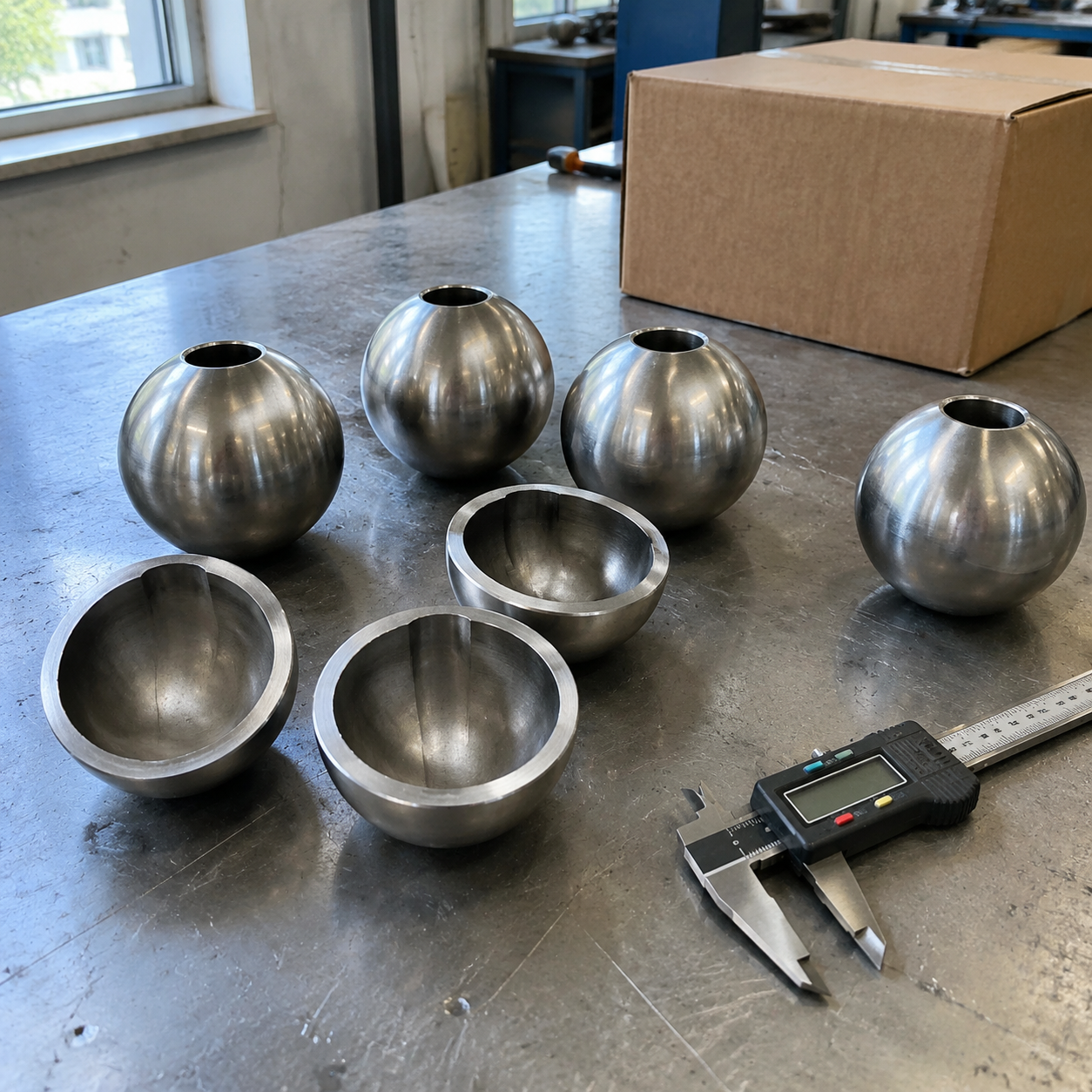
The seam. Half the "cast" float balls on the market aren't cast at all. They're two stamped hemispheres brazed or welded at the equator, then polished so you can't see the joint. The joint is exactly where chloride attack starts, and exactly where the fatigue crack runs. If your supplier never clarifies which process they're quoting, ask. Directly.
First, Agree on What "Floating Ball" Actually Means
This sounds pedantic. It isn't. Three completely different products get sold under that phrase, and a supplier who quotes without asking which one you mean is quoting blind — which means their price is fiction.
| What you're buying | How it's normally made | Where silica sol casting fits |
|---|---|---|
| Float valve ball — hollow sphere with an integral boss, thread or stem, used in level control, steam traps, cisterns | Two stamped hemispheres brazed at the equator, or welded, or cast hollow in one piece | Best fit. One-piece casting removes the seam entirely, and the boss can be cast with the sphere so the thread is machined concentric |
| Ball valve ball — solid or hollow sphere, mirror finish, bore through it | Bar stock forged and machined, or cast near-net then machined, ground, lapped | Works for larger sizes where bar stock gets expensive. Porosity that survives machining shows up as pitting at final polish — the riskiest part of this route |
| Weighted / guided float — drilled sphere on a rod, often with a counterweight | Cast solid or thick-walled, then drilled and tapped | Straightforward. The drilling setup and thread position matter more than the casting |
Get your drawing and your supplier on the same row of that table before anything else moves. A 100 mm float valve ball and a 100 mm ball valve sphere look identical in a photo and share almost no manufacturing logic.
Silica Sol vs Water Glass: Why the Binder Decides Your Wall
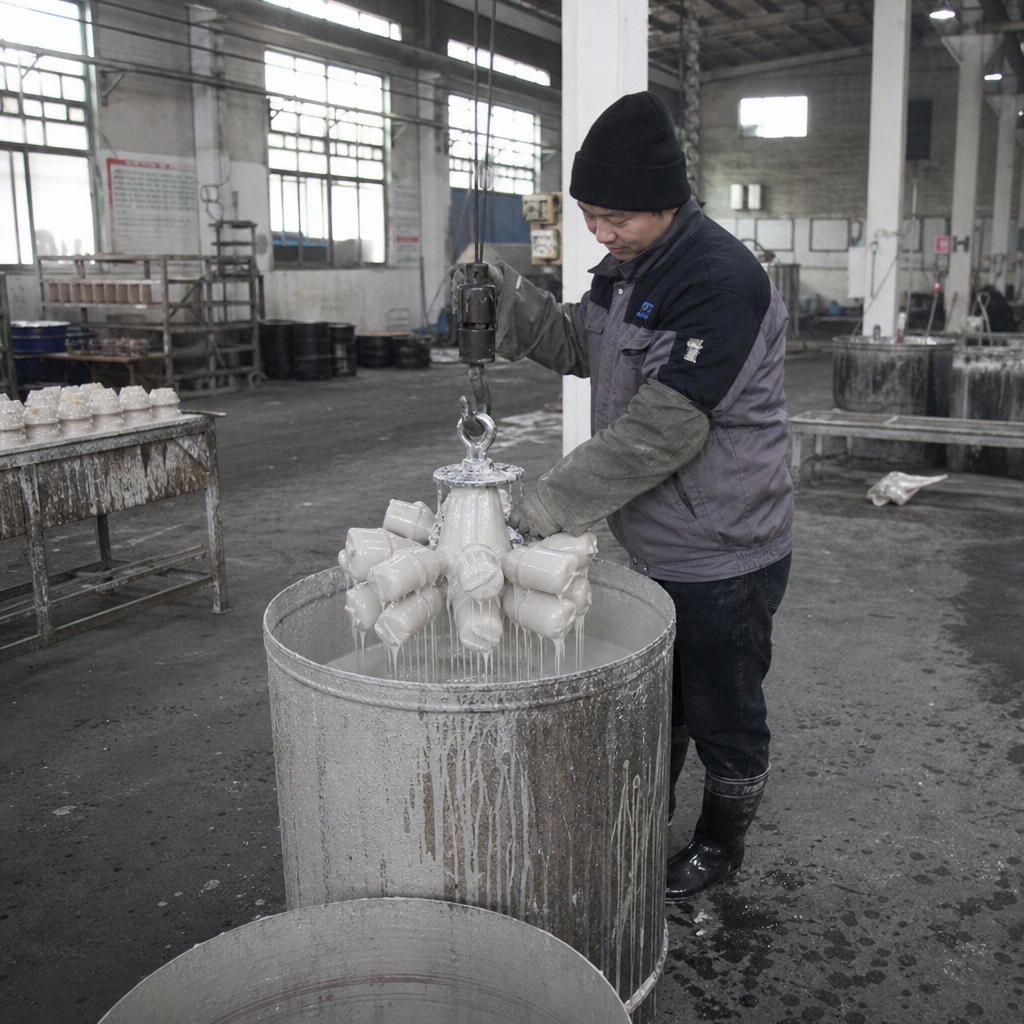
Both are investment casting. Both use a wax pattern and a ceramic shell. The difference is what holds the refractory together. (Our silica sol vs water glass comparison digs into the slurry chemistry if you need it.)
Water glass (sodium silicate) is the cheap route. Shells build fast, three or four coats instead of six or seven, and the binder costs a fraction of colloidal silica. The price is paid downstream: residual sodium oxide at the pattern interface causes surface defects, the shell is weaker so thin sections distort, and you end up grinding and welding far more than the price difference saves.
Silica sol (colloidal silica) builds a shell with a much cleaner mould face. As-cast roughness lands around Ra 3.2-6.3 instead of Ra 12.5-25, dimensional tolerance sits near ISO 8062 CT5-CT6 instead of CT7-CT8, and — the bit that matters for you — a 2 mm wall on a hollow sphere becomes achievable rather than aspirational.
There's a third option you should know about because it's extremely common and rarely volunteered: the composite shell. The first two face coats use silica sol, the backing coats switch to water glass to cut cost. For a chunky bracket, that's a perfectly sensible engineering choice. For a thin-walled float ball, the backing layers are where distortion creeps in.
None of this makes composite shells evil. It makes them something you should be told about rather than discover at the sample stage. Ask one question: "Which coats use silica sol, and which use water glass?" A real foundry answers in ten seconds, with a number. A trader forwards the question to someone else and gets back a paragraph about how they have advanced equipment.
The Numbers That Decide Whether It Floats
This is the part most purchase orders leave out, and it's the part that generates the warranty claims.
Wall thickness and weight
Take a 100 mm outside diameter sphere in CF8M (ASTM A351 Grade CF8M, EN 1.4408, GB/T 2100, the cast equivalent of 316) at 8.0 g/cm³:
| Nominal wall | Approx. part weight | Displaces | Net buoyancy |
|---|---|---|---|
| 1.5 mm | 366 g | 524 g | ≈ 158 g |
| 2.0 mm | 483 g | 524 g | ≈ 41 g |
| 2.4 mm | 578 g | 524 g | −54 g (sinks) |
Read that again. Going from 2.0 mm to 2.4 mm doesn't reduce buoyancy — it reverses it. A float ball at 100 mm diameter has almost no margin, which is why experienced buyers specify wall thickness by weight band rather than by drawing tolerance.
I know a buyer in the automotive aftermarket—$2.1M a year in valve components—who rejected an entire lot last year because the wall ran 0.4 mm over nominal. Every ball passed the go/no-go gauge. The buoyancy didn't. That's the cost of not specifying a weight band.
Practical control: weigh every piece after trimming, sort into ±3% bins, and cap the upper band. It costs almost nothing on a 0.5 kg part. Shops that don't do this are shipping you a buoyancy lottery.
Roundness and stem runout
Out-of-round spheres seat badly. For a float valve application, ask for roundness within 0.1 mm on diameters under 150 mm and stem-to-sphere runout under 0.1 mm. On a ball valve sphere, the spherical form tolerance drops to 0.02-0.05 mm and the surface goes to Ra 0.2-0.4 after lapping — those are machining requirements, but the casting has to leave enough stock to get there without breaking into porosity.
Collapse pressure
On paper, a 2 mm wall on a 100 mm sphere buckles at well over 100 bar. In practice, that number collapses the moment the sphere is out-of-round, dented, or has a seam. Imperfection sensitivity in thin spherical shells is savage — a dented welded ball can fail below 15 bar while an identical perfect one holds 90.
For most level-control duty you're working at 1-6 bar and this is a non-issue. If you're in a pressurised vessel or a subsea application, say so at RFQ stage, because that changes the material call to duplex, adds a hydrostatic record, and often adds radiography.
What a Real Supplier Asks You in the First Email
This is the fastest filter in the whole article. A foundry that casts float balls regularly will come back with questions within a day, and they'll sound like this:
- What's the material grade, and is there a chloride or temperature condition?
- Is the stem cast in one piece or welded on afterwards?
- What's the thread spec — and do you need a gauge certificate?
- What's the buoyancy requirement in grams, or is wall thickness the governing spec?
- Pressure test: hydrostatic, air under water, or both? At what pressure?
- Surface: as-cast, tumbled, or polished to a Ra value?
- Annual volume, batch size, and is there an existing wax die you can send?
If the reply is "we can do it, please send drawing," you've learned something. If the reply arrives in under ninety minutes with a price attached and no questions, you've learned a lot more.
The Seven-Point Supplier Verification
Run this against every candidate. It takes about a week and it will save you a shipping container of scrap.
1. Ask for the process card, not the catalogue
You want coat count, binder type per coat, stucco material, drying conditions, dewax pressure and sintering temperature. A silica sol shop has this document because their engineers use it. If you get a PDF of a 2005 brochure instead, that tells you where you rank in their customer list.
2. Ask for first-article data from a current customer's part
Anyone can hand-finish one ball for you. Ask for a dimensional report from a float ball or similar hollow part they're running right now, with the customer name blanked out. Look at the Cpk, not the pass/fail column.
3. Ask who machines it and who inspects it
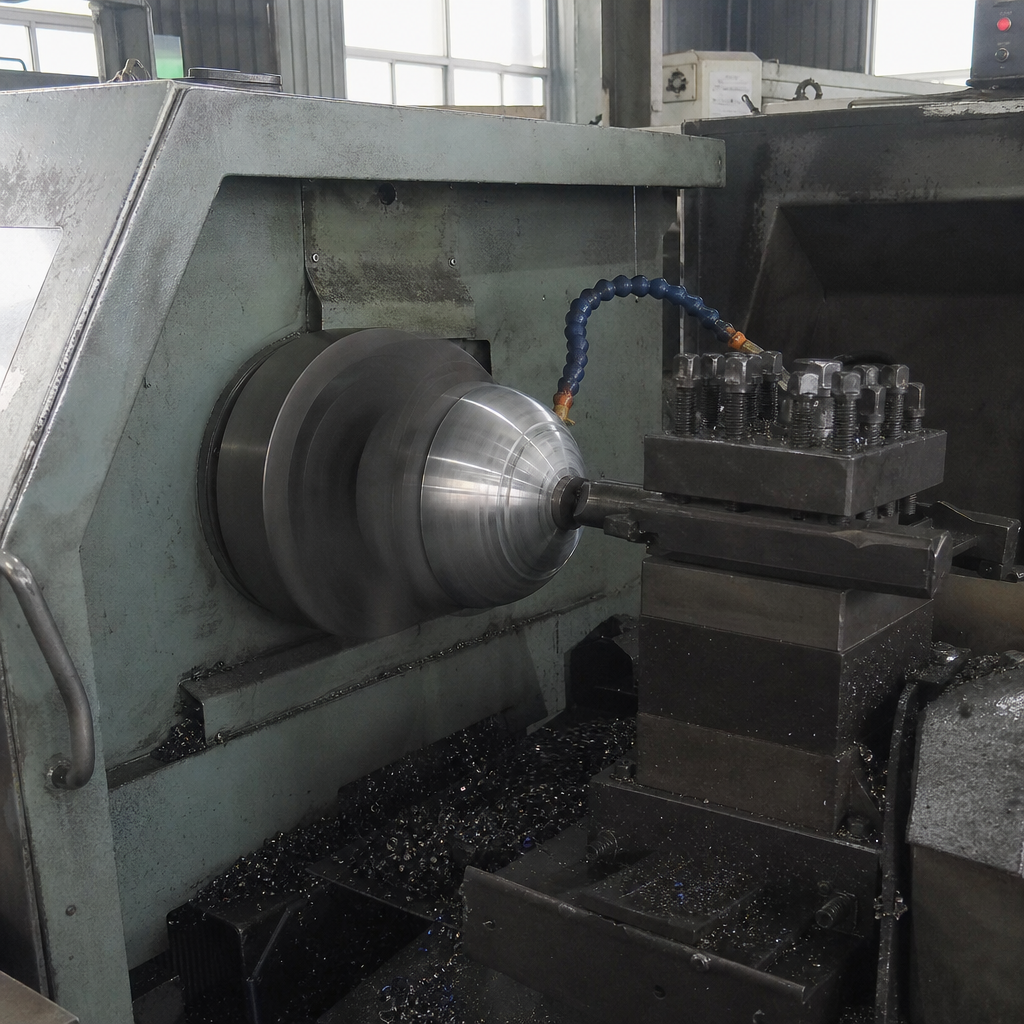
Plenty of legit foundries send parts out for machining. That's fine — as long as you know, because the machining subcon is where your stem runout lives, and they may be 40 km away with a different quality system. The dangerous answer is "all in house" from a company with one shell line and no lathes.
4. Demand wall thickness as a distribution
Thirty pieces, ultrasonic gauge, six points per sphere, plotted. The average is meaningless — you want the spread and the tail. If their tail sits at 2.5 mm on a 2.0 mm nominal, your buoyancy margin is gone across a measurable share of the lot. This is where the buyer I mentioned earlier got burned: the sample was 2.0 mm, the production lot averaged 2.3 mm, and the valve tripped late all summer.
5. Ask for radiography of a sectioned ball
Film or digital, showing their internal acceptance level. Nobody's casting is porosity-free, and any supplier claiming otherwise is either lying or doesn't measure. You're looking for a written severity level — ASTM E505 or an equivalent internal standard — and evidence they reject against it.
6. Ask for the leak test record
Air under water at 1.5× working pressure, 30-60 seconds, bubbles counted. This is the single most useful test for a hollow float and the cheapest to run. A shop that doesn't leak-test 100% of hollow parts is gambling with your reputation.
7. Get one customer reference buying the same part for two years
Not the same industry. The same part, in production, for at least 24 months. Then call them and ask one question: "How many complaints in the last twelve months?" Two or three is a normal, honest answer. Zero from a shop with a messy foundry floor is marketing.
Reading the Quote: Where the Money Actually Hides
Piece price is the least interesting number on a casting quotation. Here's the structure you should expect, with rough 2026 market ranges for a 100 mm hollow CF8M (ASTM A351) float ball at 2 mm wall, 1,000 piece order:
| Line item | Typical range | What to watch |
|---|---|---|
| Wax die / tooling | $800 – $2,500 one-off | Who owns it if you move? Get that in writing |
| Cast + trim, as-cast | $4 – $7 / pc | Check whether the quote says "as-cast" or "finished" |
| Machining (boss, thread, seat) | $2 – $5 / pc | Thread gauging included or extra? |
| Polishing / tumbling | $1 – $4 / pc | Mirror polish on a ball can double this. Specify Ra, not a word |
| Leak test + dimensional report | $0.30 – $1 / pc | Should be near-free on 100%. If it's expensive, they're outsourcing it |
| Packaging | $0.50 – $1.50 / pc | Individual foam pockets, not bulk bags. Balls that knock together get dents, and dents become scrap |
So a fully finished 100 mm float ball lands somewhere around $9-18 FOB at that volume, and the spread between the cheapest and most expensive quote is rarely about labour — it's about which of those line items got quietly deleted.
Two more commercial points worth pinning down early. Lead time: tooling 15-25 days, first article 5-7 days after tool trial, production 25-35 days, plus third-party inspection if you want it. Anyone promising six weeks door-to-door on a new tool is planning to subcontract. Payment: 30/70 against documents is standard. A first order at 100% T/T in advance from a supplier you haven't audited is a decision you only get to make once.
If you're still deciding whether silica sol is the right process at all, the comparison in investment casting versus sand casting is worth ten minutes — the wall thickness argument alone usually settles it. And if tolerances are your sticking point, the ISO 8062 tolerance bands for stainless castings explain what CT5 actually buys you in millimetres.
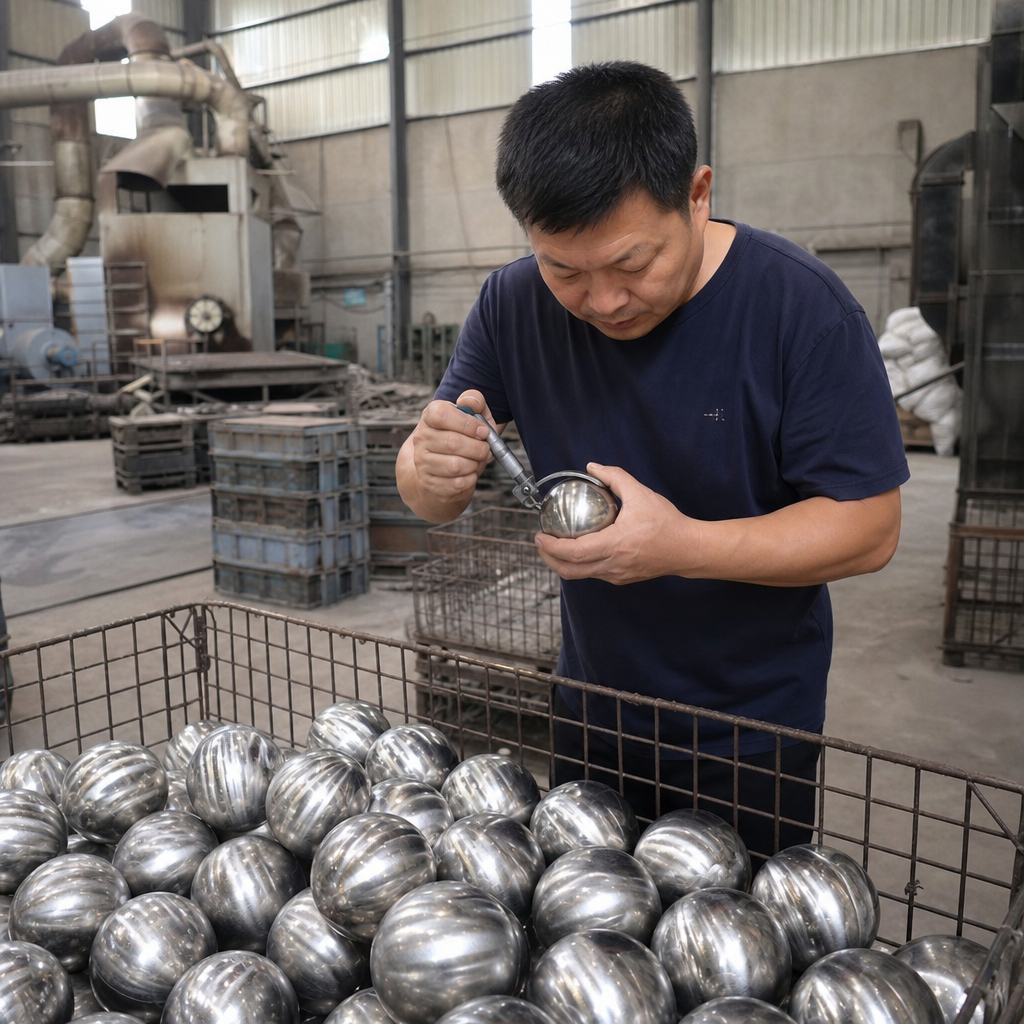
Inspection You Should Pay For
Not everything needs testing. These are the ones worth the money on a hollow float ball:
- 100% leak test under water, 1.5× working pressure. Non-negotiable.
- 100% weighing with a documented weight band. Cheap, and catches wall drift in real time.
- Dimensional first article on 5 pieces per lot: OD, roundness, stem runout, thread gauge.
- PMI with XRF on one piece per heat. Confirms you got CF8M and not CF8 — the price difference is real and so is the corrosion difference.
- Radiography on a sample, only if the part is pressure-critical or destined for a safety function. Look for a written acceptance level to ASTM E505.
- Salt spray per ASTM B117 if the end use is coastal or marine. 316 typically lands in the 200-500 hour range before red rust; duplex pushes past that comfortably.
Budget maybe $250-600 for a pre-shipment inspection on a first order. That's one tenth of a percent of a typical container value and it's the cheapest insurance in the whole transaction.
Common Mistakes Buyers Make on This Part
Judging the supplier by the sample. The sample was made by the best molder on the floor with the shell supervisor watching. Production is not that. Ask for production data, not a sample.
Specifying "polished" instead of Ra 0.8. "Polished" means whatever the inspector had for lunch. Put a number and a measuring method on the drawing.
Forgetting the weight band. Drawing tolerance on wall thickness plus no weight limit equals a float that works at 20 °C in fresh water and fails in a warm brine tank. Specify grams.
Assuming brass and stainless are interchangeable. Brass float balls are almost always stamped hemispheres, brazed or soldered — that's a different supply chain entirely. If you switch material to 316 and keep the same drawing, expect to pay for a new die and to re-qualify the thread.
Not asking who owns the tooling. Pay for the wax die, own the wax die, get a clause that says so. Otherwise your second-source plan costs you a second tool anyway.
Chasing the lowest quote on a thin-wall hollow part. You are buying process control, not steel. The $2 difference per piece is the difference between six coats of silica sol and four coats of water glass, and you won't see it until it's in a tank.
FAQ
Can I get a hollow float ball cast in one piece with the thread already on?
Cast one piece, yes. Cast the thread, no — threads are always machined. What you want is the boss cast integral with the sphere so the thread is cut concentric to the sphere rather than welded on afterwards. Specify runout under 0.1 mm and check it with a dial indicator on the first article.
What's the practical minimum wall for a silica sol cast float ball?
Around 1.5 mm on diameters from 80 to 150 mm in 316. Below that, fill and wall uniformity get expensive fast and the yield drops, which shows up as a price jump rather than a refusal. Above 200 mm diameter, walls get proportionally easier but distortion during dewaxing becomes the bigger risk.
How do I verify wall thickness on incoming goods?
Two ways, and you want both. Ultrasonic gauge on a mapped grid for the audit trail, and 100% weighing for production control. Weighing catches everything the ultrasonic sampling misses and takes a few seconds per piece on a 0.5 kg part.
Does silica sol casting work for duplex 2205 float balls?
It does, and it's the right call for warm brine, seawater, or anything with high chloride and low pH. Duplex is harder to pour than CF8M — you need controlled nitrogen and a proper heat treat — so ask for the ferrite content report alongside the mechanical certificate. A supplier who can't produce that isn't casting duplex regularly. Specify duplex 2205 to ASTM A995 Grade 4A or 2507 to Grade 5A, and get the heat treat record.
What volume justifies a dedicated wax die?
Roughly 300-500 pieces a year makes tooling pay back on most float ball sizes. Under that, look at whether the supplier has an existing die close to your dimensions — sometimes a 98 mm ball in an existing tool beats a 100 mm ball in a new one, if your buoyancy calc has room.
Before You Sign Anything
Send those seven verification questions to three suppliers this week. Not to five, not to one — three, because the answers only mean something in comparison. You'll find that one comes back with a process card and a Cpk, one comes back with a brochure, and one doesn't come back at all.
The float ball is a boring part that fails in interesting ways. Which means the supplier worth keeping isn't the cheapest one on the RFQ list — it's the one who, unprompted, tells you their shell has six coats and asks what temperature your tank runs at.
If you already have a quote in hand and want it read against a second process route before you commit, send the drawing and the quote — the wall thickness numbers alone usually tell you whether the price is real.
Get a second opinion on your float ball quote
Send the drawing, the material grade, and the quote you've been given. You'll get back a line-by-line read: which process route was actually priced, where the wall thickness risk sits, and which test records are missing.
Need Help with Silica Sol Casting Floating Ball Supplier: 7 Checks?
Get matched with 3 verified foundries in 24 hours. No markup, transparent pricing.
Request Quotes →Email cfwc@163.com · WhatsApp +86 159 4126 7000 · or Request a Quote from verified foundries →