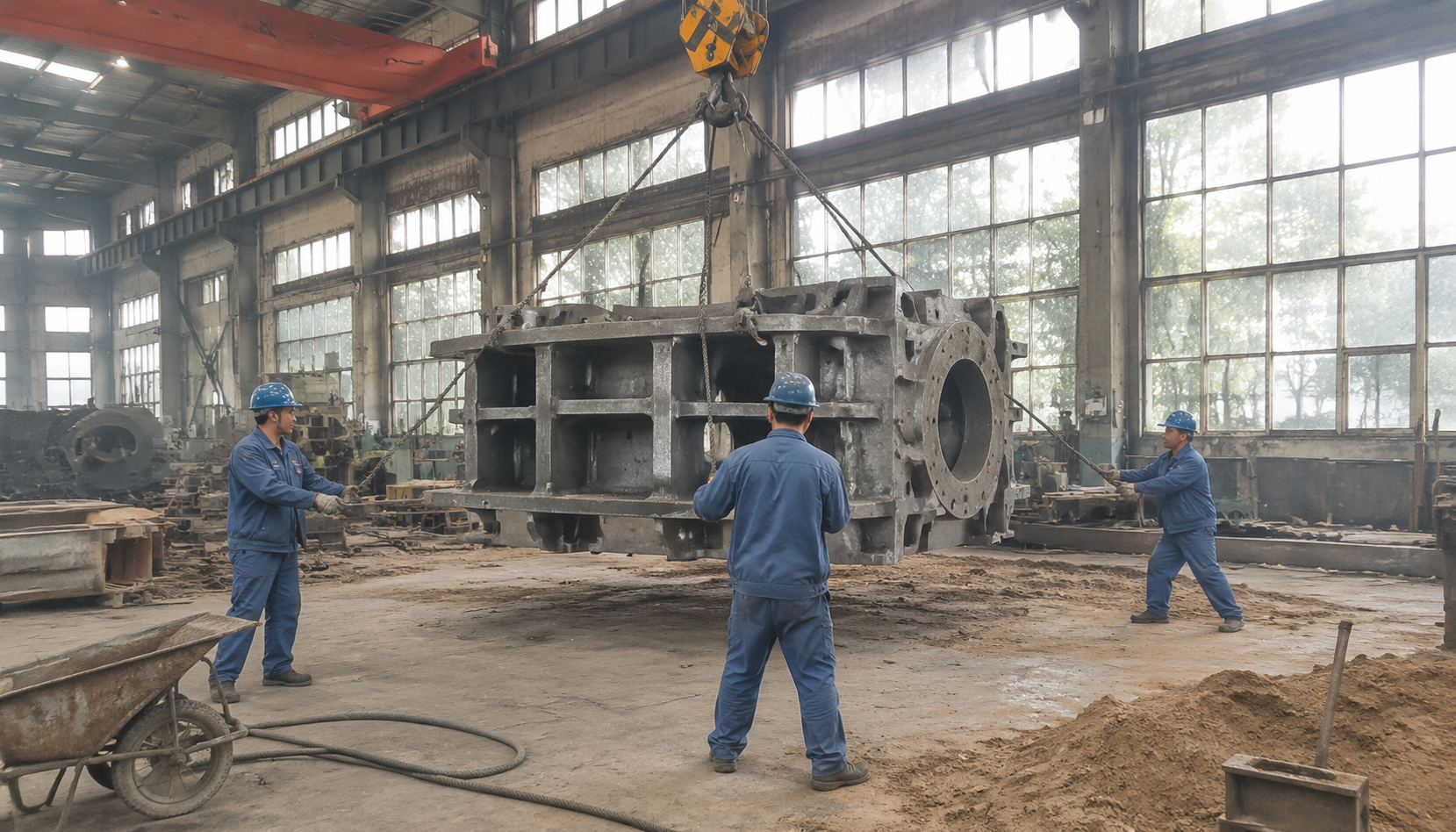
In 2019 I signed off on a jaw crusher frame for a Pilbara site. Twelve tonnes finished, Hadfield manganese wearing plates, delivery promised in 90 days. On day 96 the supplier told me the frame had been sitting outside for three weeks waiting for a heat treatment slot at another plant two hundred kilometres away, and that the ultrasonic test had found shrinkage in the pitman arm area.
Nobody lied to me. Every one of those facts was knowable at the enquiry stage. I just didn't ask.
That order cost 41 days of schedule and about USD 60,000 in air freight, standby rigging crew and a temporary rebuild. The casting itself was fine on the second attempt. The paperwork wasn't the problem. The problem was that I'd bought a casting instead of buying a supply chain.
Since then I've put roughly USD 18 million of heavy castings through Chinese foundries — mill liners, crusher frames, bucket lips, track pads, kiln tyres, gearbox housings, dragline wear parts. Some of it has been excellent. Some of it has been expensive tuition. What follows is the checklist I actually use, in the order I use it.
Why heavy castings break sourcing plans more often than light ones
A 200 kg bracket is forgiving. If it's late or wrong, you air freight it and move on. A 14-tonne frame is not forgiving. Four things scale up with weight and quietly wreck otherwise sensible purchasing plans:
- Crane capacity and hook height. A foundry can have the floor space and still not lift your part safely.
- Furnace and ladle size. You need enough molten metal in one heat, not two heats poured into the same mould.
- Heat treatment chamber dimensions. The single most common hidden constraint in Chinese foundries.
- Machining envelope. A boring mill that swings 2.5 metres cannot touch a 4-metre frame.
Each of those has a number attached. Your job is to get the number before you get the quotation. Once a quotation is on the table, the number that matters has already been assumed by somebody who isn't you.
Check 1 — Ask what they poured last month, not what they can pour
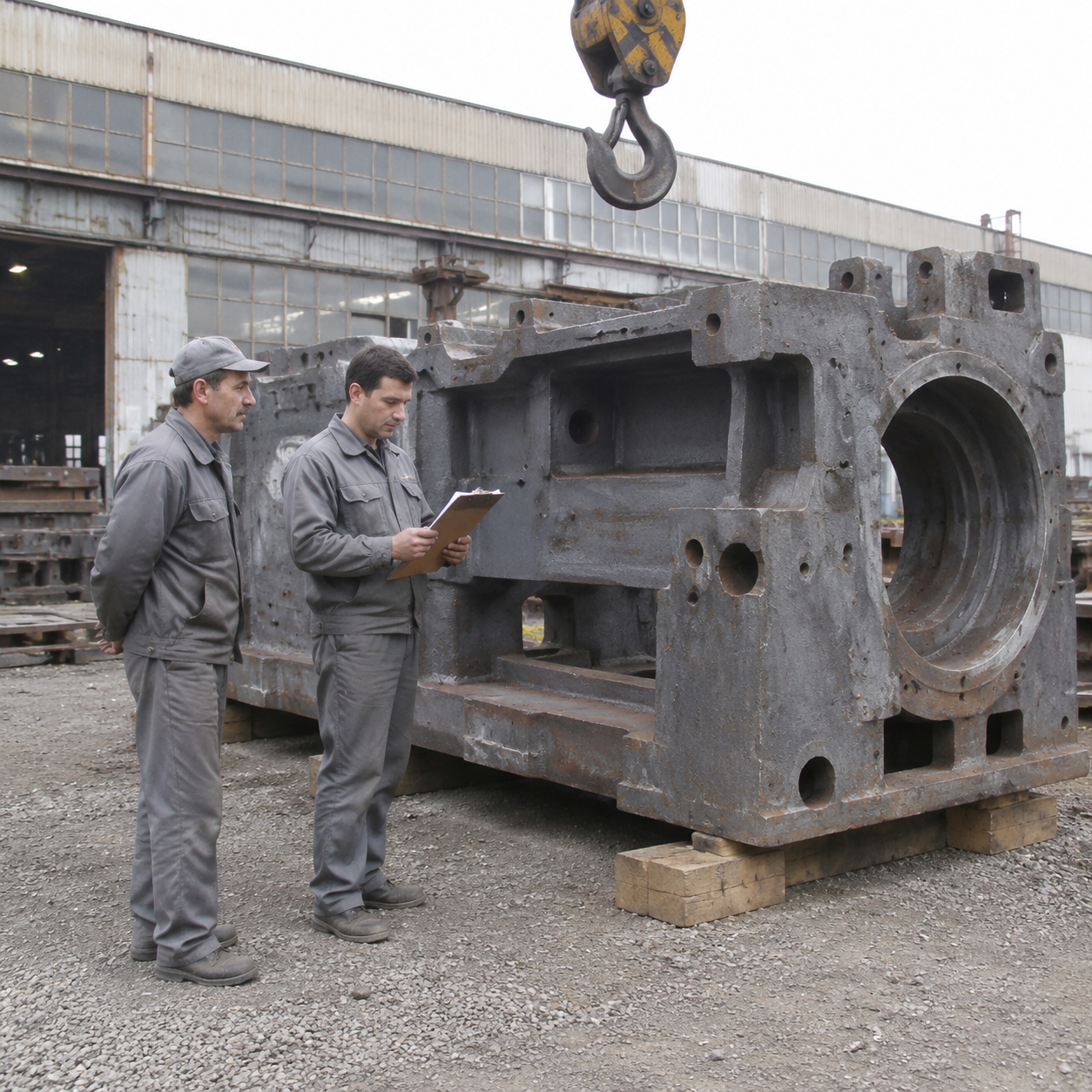
Every Chinese foundry website in this sector shows the same thing: a photograph of one enormous casting. It might be a one-off government contract from 2014. It tells you nothing about whether they can repeat it next quarter.
Ask instead:
“What was the heaviest single casting you poured in the last 12 months? What was the part, what was the weight, and can you send me the inspection report from that job — drawing number redacted is fine. What was the purchase order date?”
That last question is the one that catches people out. A foundry that genuinely poured 30 tonnes last year can name the part, the month and the customer's industry. A foundry working from a capability sheet will give you a weight with nothing behind it, or a date that turns out to be four years old.
Rough market picture, based on enquiries I've run across Shandong, Henan, Jiangsu and Liaoning:
| Foundry type | Typical single-piece limit | What it means for you |
|---|---|---|
| General sand foundry, small shop | 0.5 – 3 t | Wear plates, small housings, brackets |
| Mid-size sand foundry with heat treat | 3 – 15 t | Crusher frames, gearbox cases, pump bodies |
| Heavy bay foundry, 50 t+ cranes | 20 – 60 t | Mill end caps, kiln tyres, dragline components |
| State-linked heavy machinery plants | 100 t+ | Rarely quote mining volumes; expect long lead times |
Those bands are indicative, not gospel — plenty of exceptions exist. But if your part is 22 tonnes and the supplier's ceiling is 15, you'll find out in the worst possible way: after the pattern is made.
Check 2 — Match the equipment list against your drawing
Ask for a photograph of the equipment nameplate. Not a spec sheet — a photograph. Then check five things:
- Ladle capacity in tonnes, and how many heats they can run per shift.
- Heat treatment furnace internal dimensions. Length × width × height. Your part plus fixturing has to fit inside with clearance.
- Maximum quench tank size and agitation. Matters for low-alloy steel, irrelevant for Hadfield manganese.
- Boring mill swing and table capacity. If you need machined bores, this is your real constraint.
- Brinell or portable hardness testing on site, and a spectrometer for chemistry on every heat — with a current calibration certificate.
I worked one enquiry where the foundry could cast a 9-tonne mill end cap but their heat treatment furnace was 3.2 metres wide. The part was 3.6 metres across. Their solution was to send it out to a competitor for annealing, which added 19 days and a truck trip each way — and none of that appeared in the quotation I received.
Check 3 — Get the schedule in stages, not in a promise
“90 days” is not a schedule. It's a number somebody typed into a quotation template. Ask for the same order broken down, and then sanity-check each line against what you know about foundry work:
| Stage | Realistic window (parts over 2 t) | What usually slips |
|---|---|---|
| Pattern and core box | 15 – 25 days | Buyer drawing changes, pattern material shortages |
| Moulding, pouring, shakeout | 20 – 35 days | Furnace scheduling, mould drying in humid months |
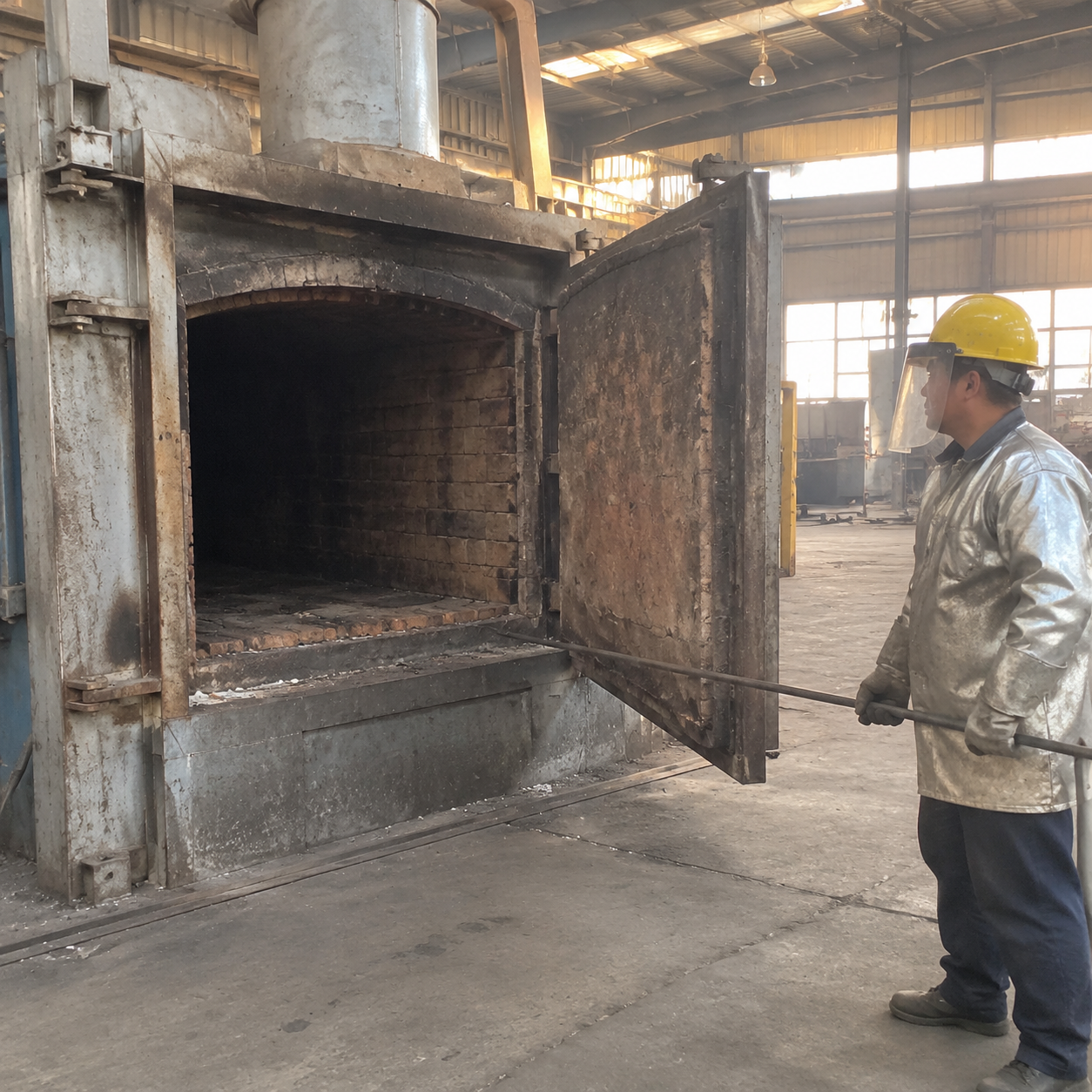
| Heat treatment | 7 – 14 days | Furnace queue — the classic one |
| Rough machining | 10 – 20 days | Boring mill backlog, rework after NDT finds defects |
| Final inspection and docs | 5 – 10 days | Third-party inspector availability |
| Inland haul to port | 2 – 6 days | Abnormal-load permits for oversize pieces |
Add those up and you land at 75 to 130 days for a heavy part, before ocean freight. If someone quotes you 45 days total on a 10-tonne casting, one of two things is true: they already have the pattern, or they're planning to subcontract the casting and tell you later.
Ask which one. In writing. And ask for the promised-versus-actual dates on their last three jobs above five tonnes. A supplier who can answer that has a production planning system. A supplier who can't has a sales team.
Check 4 — NDT: find out who's actually reading the film
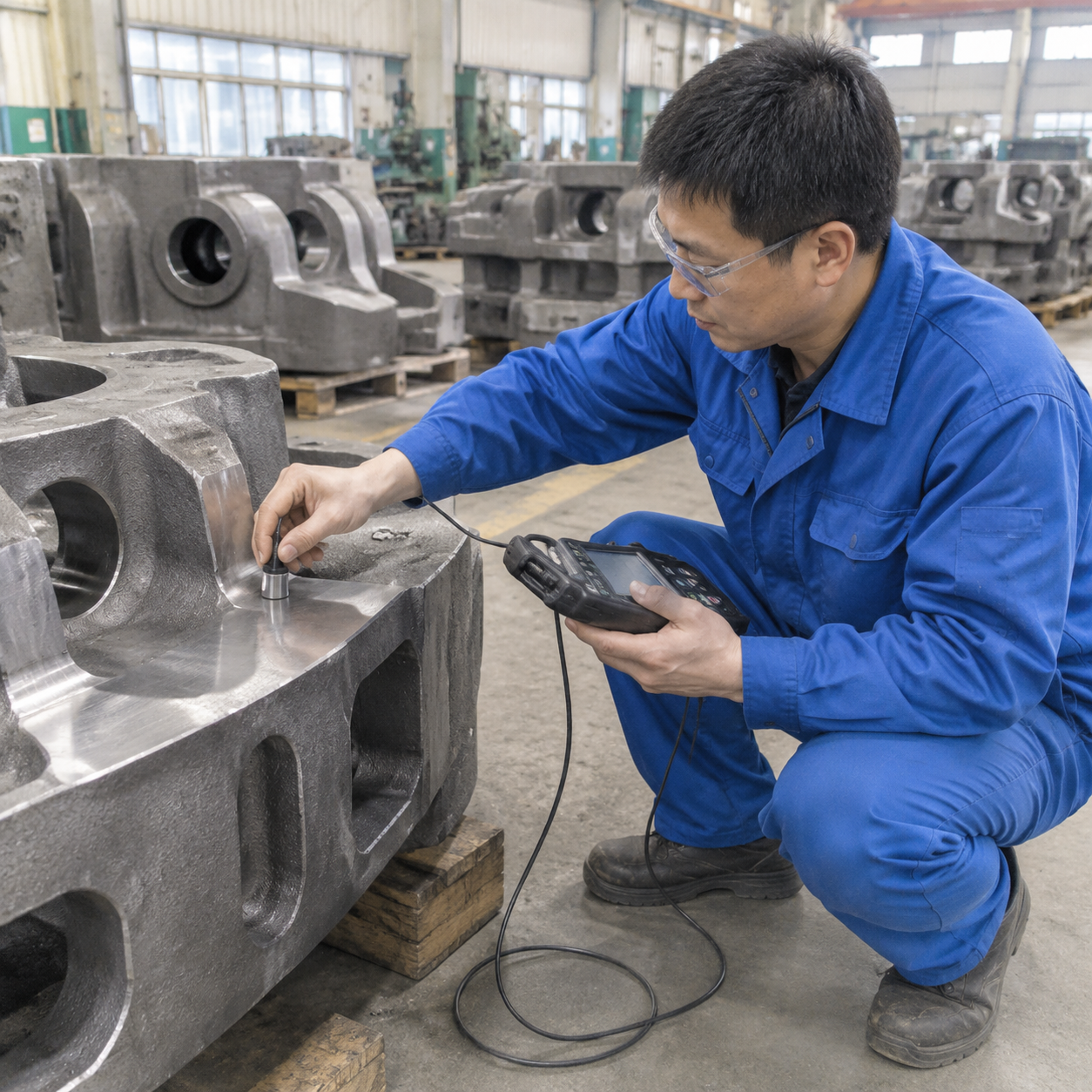
Ultrasonic testing on a large steel casting is not a checkbox. It's a judgement call about whether a shrinkage indication is a rejectable defect or an acceptable one per the acceptance criteria you agreed. Those are different things, and the gap between them is where disputes live.
Four questions that separate a real NDT setup from a decorative one:
- Are your UT operators certified, and to what level? Level II under ISO 9712 or ASNT is the baseline. Ask to see certificates with dates.
- What percentage of the critical sections are examined? “100% UT” means nothing if it's 100% of the accessible surface only.
- What's the acceptance criteria, and is it in the PO? Reference a specific class, not “sound casting”.
- Can a third party witness the test? SGS, BV, TÜV, or your own inspector. If they resist this, that's your answer.
For steel castings, the standards you'll typically see referenced are ASTM A609 for ultrasonic, ASTM E709 for magnetic particle, ASTM E94 for radiography and ASTM E165 for penetrant. Australian buyers often specify AS 2574. European buyers push EN 12680. None of that matters if the acceptance criteria are vague, and none of it matters if the standard revision year isn't stated — A609 has been revised several times and the acceptance levels are not interchangeable.
One more thing: ask for the radiographs or UT plots from the actual part, not a sample report. I've been handed a beautiful inspection file that turned out to belong to a different heat number. It took ten minutes to spot because the part weight on the report didn't match ours. Ask how long they retain films and digital records, too — if you need to defend a defect claim eighteen months later, "the file was cleared" is not an answer.
Check 5 — Heat treatment and the certificate chain
Two separate issues, often confused.
The metallurgy. For low-alloy steel castings, heat treatment determines whether you get the mechanical properties on the drawing. Ask for the furnace chart — time, temperature, cooling method — for your specific heat number. If they can't produce a chart tied to your heat number, the heat treatment is a rumour.
The paperwork. For anything heading into Australia, the EU or a mining OEM's supply chain, you'll want an EN 10204 3.1 certificate: issued by the manufacturer's independent inspection authority, tied to the specific heat, with actual test results rather than typical values. A 2.2 certificate is a statement of compliance, not test data. Know which one your customer actually requires before you order, because upgrading after the fact is nearly impossible.
The chain to verify: heat number on the casting → heat number on the chemistry report → heat number on the mechanical test certificate → heat number on the NDT report. If any link is missing or mismatched, you have a documentation problem that will surface at your customer's incoming inspection, not at the foundry gate.
For more on how certification gaps get priced into a quotation, see what an EN 10204 3.1 certificate actually costs you.
Check 6 — Heavy lift reality: how the part gets to your site
This is where heavy castings differ most from everything else you buy from China.
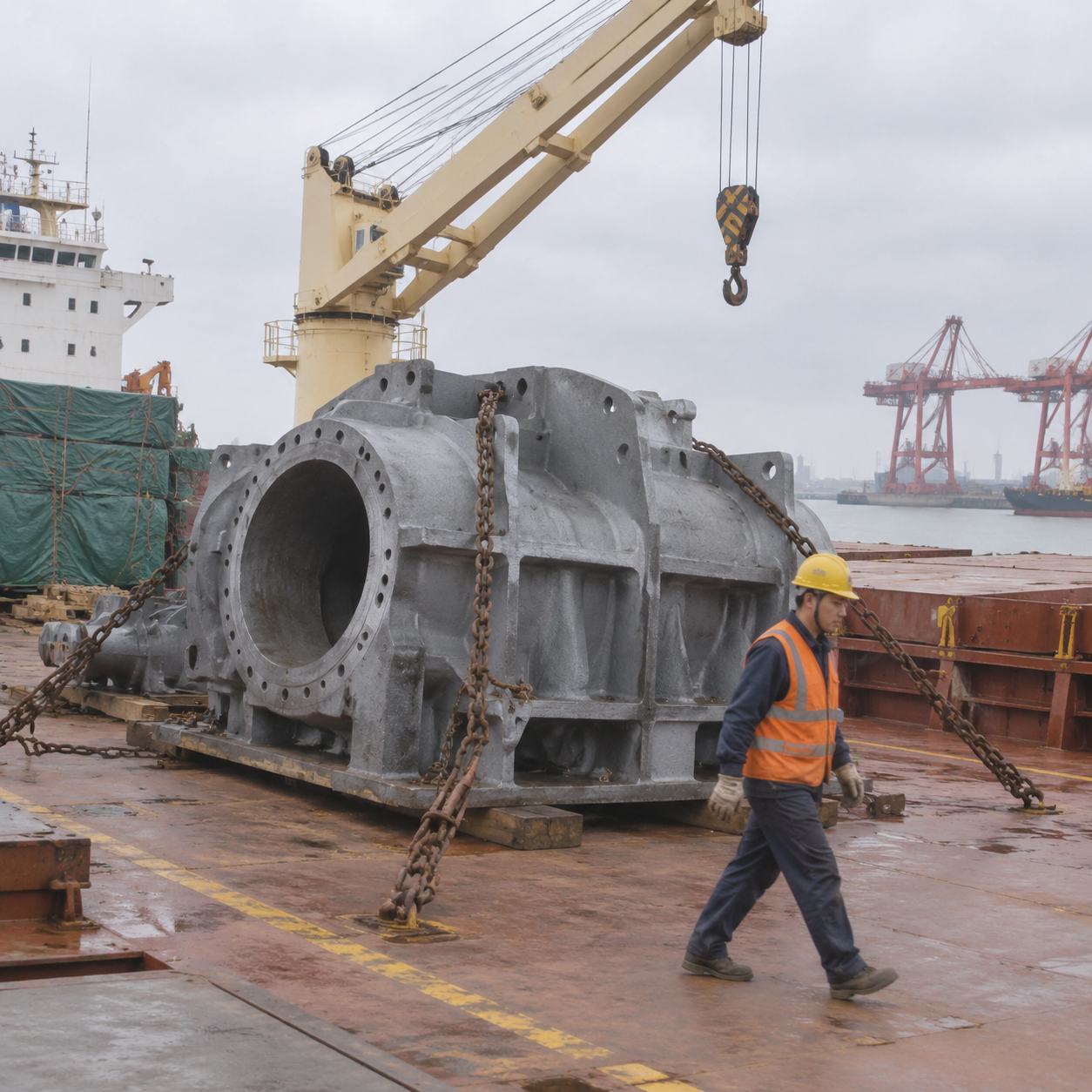
A 20-foot container carries roughly 28 tonnes of payload at best, and the door opening rules out anything with serious width. A 40-foot high cube carries less weight, not more. So once your part passes about 20 tonnes — or exceeds roughly 2.3 metres in any dimension — you're into flat racks, open tops, or break bulk.
Which means three questions at quotation stage:
- What's the lift weight including packing and lashing? Not the net casting weight. The number the crane operator cares about.
- Does the loading port handle heavy lifts? Not every Chinese port has the gear for a 40-tonne single piece, and the inland haul may need an abnormal load permit with a fixed route and time window.
- Who's doing the lashing design? A 25-tonne casting that shifts in heavy weather is not an insurance claim, it's a casualty.
Budget 18 to 40 days of ocean transit depending on destination, and expect break bulk to run 30-60% more per tonne than containerised freight for the same weight. On a heavy order that's real money — worth having in the landed cost model before you compare two suppliers on unit price. Our breakdown of landed cost on Chinese castings covers the freight side in more detail.
One practical detail that gets missed: ask for photographs of the packing and lashing before the container is sealed or the flat rack is loaded. After loading, your only evidence is what the vessel's stevedores did to it, and by then the foundry is no longer responsible.
Check 7 — Patterns, wear parts and who owns what
Two clauses decide whether your second order is easy or starts from zero.
Pattern ownership. You paid for the pattern, so you own it — but that's only true if it's written down. Get an explicit clause stating the pattern is your property, that it must be maintained in usable condition, and that it will be returned or transferred at your instruction. Foundries that won't sign this are telling you they plan to hold your tooling hostage on the next order.
Ask where the pattern is stored and under what conditions. Wooden patterns in a damp shed warp, and a warped pattern quietly turns into out-of-tolerance castings two orders later. Some foundries charge a storage fee after twelve months; better to know that now than to discover it when you come back for a repeat run.
Consumable wear parts. If you're buying crusher liners, bucket teeth or mill liners, insist on a wear-life baseline: measured tonnes processed or hours run before changeout, per part number. Without that baseline, a slightly cheaper liner with 15% less wear life looks like a saving and isn't. Ask for two customer references running the same part number in comparable duty, and actually call them.
For high-manganese and high-chrome wear parts specifically, chemistry alone won't tell you the life you'll get — heat treatment and section thickness matter as much. That's the subject of why two Hadfield liners with identical specs wear differently.
What belongs in the purchase order
The seven checks above are questions. This is where the answers stop being conversation and start being contract. Six clauses I now insist on for any heavy casting order:
- Named standards with revision years. “UT per ASTM A609-18” beats “UT per ASTM A609”. So does naming the acceptance class.
- Inspection hold points. Written notice before pouring, before heat treatment and before machining, so you or your third party can attend. Once the mould is poured, you've lost your window.
- Documents before final payment. Chemistry, heat treatment chart, mechanical test certificate, NDT reports, dimensional report, packing photos. Tie the balance payment to the document package, not to the bill of lading alone.
- Defect disposition procedure. Who decides whether an indication is repaired, re-tested or scrapped, and who pays for the re-test. Silence here is how a two-week delay becomes a two-month argument.
- Delay consequences. Liquidated damages don't have to be punitive to work. The existence of a number changes how your job gets scheduled on their floor.
- Pattern and tooling ownership, in the words from Check 7, with a stated storage term.
None of this is unusual or adversarial. Chinese foundries sign contracts like this every week for European and Australian buyers. The ones who push back hardest on hold points and document release are usually the ones who struggle to meet them.
Red flags I now treat as disqualifying
Not all of these are fatal. All of them are worth a direct question.
- No answer on the heaviest recent casting. Either they don't do heavy work or they don't track it. Both are problems.
- Refuses third-party inspection. There is no legitimate reason to refuse a paid inspection you're commissioning.
- Quotes a single-line price with no breakdown. You don't need their margin, but you do need to know what's included — machining, NDT, packing, heat treatment.
- Sends a spec sheet instead of a nameplate photo. Spec sheets get edited.
- Pushes you toward a smaller section or thinner wall “to save cost”. Sometimes legitimate. Often a sign they're at the edge of their capability.
- Uses a trading company but presents as a factory. Not automatically bad — a good agent adds real value — but you should know which one you're dealing with before you plan a factory visit.
Common mistakes buyers make on heavy casting orders
Approving the drawing, not the process. Your drawing says “UT per ASTM A609”. It doesn't say who tests, at what coverage, or what happens when an indication is found. Put the process in the purchase order.
Comparing unit price instead of landed cost. Two quotes 8% apart on price can be 25% apart once you account for machining scope, packing, freight mode and the realistic chance of one rework cycle.
Ordering the wear parts and the structural parts from the same supplier. A foundry that's excellent at 500 kg manganese liners is often mediocre at a 12-tonne machined frame. Different equipment, different people, different quality systems.
Not visiting before the first heavy order. A two-day visit costs less than one rework cycle. If you can't go, pay someone who can and give them a specific checklist rather than a general instruction to “have a look”. Our foundry audit checklist is built for exactly this.
Treating the first order as the real order. Order one part, at full price, and treat it as a paid trial. The information you get is worth more than the discount you'd get from ordering ten.
Frequently asked questions
What's the maximum single-piece weight a Chinese foundry can cast?
It ranges from under a tonne to over 100 tonnes, and the average is far lower than the marketing suggests. Most general sand foundries sit between 3 and 15 tonnes per piece. A smaller group with 50-tonne bay cranes and large heat treatment furnaces handles 20 to 60 tonnes. State-linked heavy machinery plants can exceed 100 tonnes but rarely take on mining-scale volumes. Always ask what they poured in the last twelve months, not what the brochure claims.
Which NDT standards should I specify?
For steel castings: ASTM A609 for ultrasonic, ASTM E709 for magnetic particle, ASTM E94 for radiography, ASTM E165 for penetrant. Australian buyers frequently specify AS 2574; European buyers use EN 12680. The standard matters less than the acceptance criteria, the coverage percentage, and whether a third party witnesses the test. Write all three into the purchase order.
How long does a large casting order from China really take?
Seventy-five to 130 days from drawing release to loaded, for parts above two tonnes. Pattern making takes 15-25 days, casting 20-35, heat treatment 7-14, rough machining 10-20, and inspection plus documentation 5-10. Then add 18-40 days of ocean freight. A 45-day total quote on a 10-tonne machined casting is either a stock item or a subcontract in disguise.
Can I ship a 30-tonne casting in a container?
No. A 20-foot container's payload tops out near 28 tonnes, and the door opening excludes most bulky frames anyway. Heavy or oversize castings go on flat racks, in open tops, or as break bulk on a multipurpose vessel. Each option needs a different lift plan and lashing design, and the decision should be locked in before the casting is poured — not after.
Should I use a foundry or a sourcing agent for heavy castings?
It depends on how much process risk you can absorb. A direct foundry relationship is cheaper per piece and gives you clearer technical dialogue, but you own every scheduling and quality problem personally. An agent or sourcing platform earns its margin when your order spans several processes — casting plus machining plus heat treatment plus NDT — because that's where projects fragment and information gets lost between vendors. Either way, the seven checks above still apply.
What to do with this list
Don't send all seven checks in one email. You'll get a brochure back.
Send them in sequence, one at a time, and watch how fast the answers come and how specific they are. A foundry that genuinely pours heavy work will answer check one with a part number, a weight and a date. That response tells you more about their operation than a two-day audit ever will.
And if you're at the stage of comparing several Chinese suppliers on a heavy order and want a second set of eyes on the technical and commercial side before you commit tooling money, that's a conversation worth having early rather than after the pattern is cut. Tell us the part, the weight and the duty and we'll tell you what the market can realistically do — including when the honest answer is that the part shouldn't be cast in one piece.
One last thing. The jaw crusher frame that cost me 41 days? The replacement foundry quoted 18% more and delivered in 88 days. Cheapest isn't the risk. The risk is not knowing which number you're actually buying.
Need Help with Heavy Equipment Castings Supplier in China: 7 Hard Checks?
Get matched with 3 verified foundries in 24 hours. No markup, transparent pricing.
Request Quotes →Prefer email? cfwc@163.com · WhatsApp +86 159 4126 7000