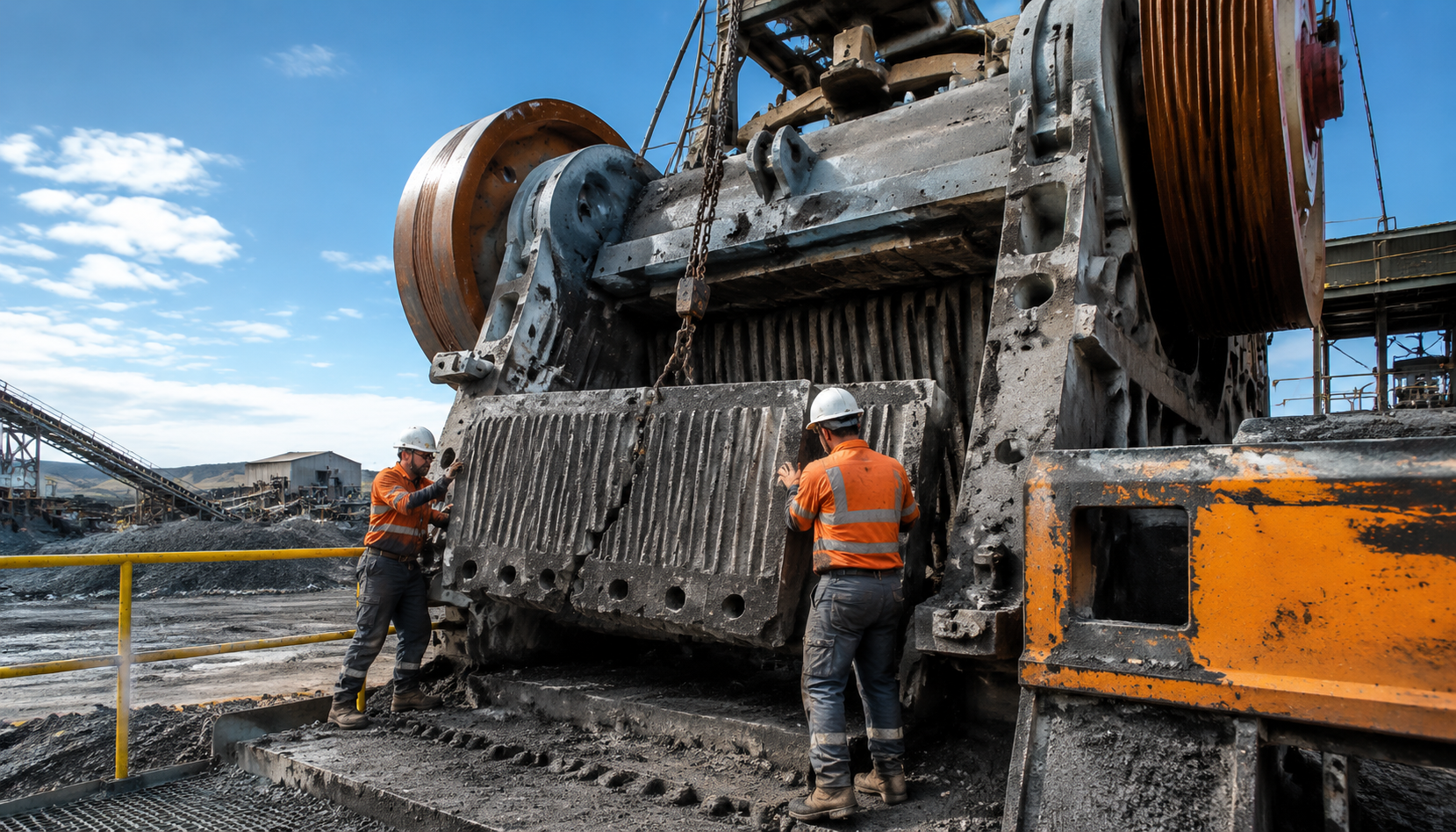
It's 2:17 AM. Your phone vibrates on the nightstand. You already know who it is—and what they're about to say.
"Primary crusher's down. The liner cracked through at the bottom. We're looking at a 36-hour swap, minimum."
Eight weeks ago you signed off on those high manganese steel liners. The supplier's sales rep swore they'd go 6 months in your application. He shook your hand, looked you in the eye, said "Mn18, fully heat-treated, ASTM A128 certified." Sounded solid.
Now you're burning through overtime, losing production, and wondering if you got sold a story instead of a product.
You're not alone. I've been on your side of that phone call more times than I care to count. My name's James Thompson. I've spent 14 years sourcing heavy equipment components for mines in Western Australia, Queensland, and New South Wales—everything from dump truck buckets to gyratory crusher mantles. And I've learned the hard way that not all high manganese steel is created equal.
This article is the checklist I wish someone had handed me 10 years ago. Five things that separate a 3-month failure from a 6-month run. No fluff. No sales pitch. Just what works.
1. The Metallurgy Trap: "It's High Manganese" Doesn't Mean Much
Here's something most buyers don't realize: the term "high manganese steel" covers a wide range of alloys—some of which are completely wrong for your application.
True high manganese steel, also called Hadfield steel, was invented by Sir Robert Hadfield in 1882. The defining characteristic is its ability to work-harden under impact. When a rock hits the surface, the steel deforms at the atomic level, transforming from a soft, austenitic structure into a hard, martensitic layer. That's what gives it abrasion resistance. Without impact, it doesn't harden properly.
But here's the catch: the ASTM A128 standard defines several grades, and each one has a specific chemistry profile that affects performance.
| ASTM A128 Grade | Mn % | C % | Cr % (max) | Typical Application | Relative Wear Life |
|---|---|---|---|---|---|
| Grade A | 11–14 | 1.05–1.35 | — | Jaw crusher plates, cone crusher mantles | Baseline |
| Grade B-1 | 11–14 | 1.05–1.35 | 1.5–2.5 | High-impact gyratory crushers | +10–15% |
| Grade B-4 | 11–14 | 1.05–1.35 | 1.5–2.5 | Severe impact + abrasion | +15–20% |
| Grade E-1 | 11–14 | 1.05–1.35 | 1.5–2.5 | Extra-heavy sections | +20–25% |
| Grade F | 11–14 | 1.05–1.35 | 1.5–2.5 | Non-magnetic applications | — |
Source: ASTM A128 / A128M – 15 Standard Specification for Steel Castings, Austenitic Manganese.
I had a client in the Pilbara who was running Grade A in a primary gyratory crusher—a high-impact application where Grade B-1 would have given them 14% longer liner life. The supplier knew it. But Grade A was cheaper, so that's what they quoted. The client lost $87,000 in unscheduled downtime over 8 months before we caught it.
The fix: Don't just ask "is it high manganese?" Ask for the ASTM A128 grade, the heat number, and the mill test certificate (MTC). If the supplier can't provide all three, that's a red flag.
2. Heat Treatment: The Difference Between "Good" and "Brittle"
High manganese steel requires a specific heat treatment to achieve its full potential. Without it, you get a liner that's brittle, prone to cracking, and will fail prematurely.
The standard treatment is solution annealing: heat the casting to 1050–1100°C (1920–2010°F), hold it long enough to dissolve all carbides into solution, then quench rapidly in water. This locks the carbon in solid solution, keeping the steel in its soft, austenitic state.
If the cooling is too slow—or the temperature is too low—carbides precipitate at the grain boundaries. That makes the steel hard but brittle. A rock hits it, and instead of work-hardening, it cracks.
Here's what to check on your supplier's heat treatment process:
- Solution annealing temperature: Must reach at least 1050°C. Temperatures below 1000°C won't fully dissolve carbides.
- Soak time: Minimum 1 hour per 25 mm of section thickness. Thicker sections need longer.
- Quench: Water quench, not air cool. Water must be agitated and maintained below 40°C during quenching.
- Hardness check: As-quenched hardness should be 180–230 HB. If it's above 250 HB, carbides are likely present—and that's a problem.
A foundry in Shandong once told me "we do full heat treatment." Turned out they were air-cooling their Mn18 castings. The liners were failing in 6–8 weeks in a cone crusher that should have seen 5+ months. After we switched to a supplier with proper solution annealing and water quench, liner life jumped to 7 months on the same machine. Same chemistry. Same design. Just different heat treatment.
The bottom line: Heat treatment is not a checkbox. It's a process that requires precision. Ask your supplier for their heat treatment parameters before you place the order. If they can't describe their process in detail, move on.
3. Work Hardening: Why Your Low-Impact Application Needs a Different Approach
High manganese steel work-hardens under impact. That's its superpower. But it's also its limitation.
In applications where the feed material is small, soft, or has low impact energy—like secondary or tertiary crushers, or when crushing recycled materials—the steel doesn't get enough impact to harden properly. The surface stays soft, and wear accelerates.
I've seen this happen more times than I'd like to admit. A mine in Queensland was using Mn18 in a secondary cone crusher with a closed side setting of 12 mm. The feed was mostly 40–60 mm material, which didn't generate enough impact energy to work-harden the surface. Liners were lasting 8–10 weeks. They should have been getting 5 months.
The solution? In low-impact applications, you have two options:
- Option 1: Switch to a higher manganese grade (Mn22 or Mn25) that work-hardens more readily at lower impact levels.
- Option 2: Add chromium or molybdenum to the alloy to increase as-cast hardness without relying on impact hardening.
A study published in the International Journal of Minerals, Metallurgy and Materials (2019) found that increasing manganese content from 14% to 22% raised work-hardening rate by approximately 35% at moderate impact energy levels. The trade-off is higher material cost—typically 8–12% more per tonne—but the extended wear life often more than compensates.
What to do: Match the manganese content to your actual feed characteristics—not your supplier's standard offering. If you're unsure, get a sample liner with a higher Mn content and run a side-by-side comparison. That data is worth more than any sales brochure.
4. Liner Design: Geometry Matters More Than You Think
Even the best metallurgy won't save a liner with bad geometry.
The shape of your crusher liner controls two things: crushing efficiency and wear distribution. If the liner wears unevenly, you're losing capacity long before the liner is actually "worn out."
I've seen liners that looked fine at the top but were completely gone at the bottom—and vice versa. That's a geometry problem, not a material problem.
Here are the geometry factors that matter most:
- Chamber profile: The profile determines how material flows through the crusher. A poorly designed profile creates dead zones where material accumulates and accelerates local wear.
- Feed opening vs. closed side setting ratio: If the feed opening is too large relative to the CSS, you get excessive impact at the bottom of the chamber, causing premature wear in the lower section.
- Liner thickness distribution: The liner should be thickest in areas that experience the highest wear. This sounds obvious, but many generic liners have uniform thickness, which wastes material in low-wear areas and under-protects critical zones.
- Relief angles: Proper relief angles allow crushed material to exit the chamber efficiently. Insufficient relief causes packing, which increases wear and reduces throughput.
In 2022, I helped a copper mine in South Australia redesign their cone crusher liners specifically for their feed characteristics. By optimizing the chamber profile and adjusting the thickness distribution, we increased liner life by 28% without changing the material grade. All geometry, no metallurgy change.
The takeaway: When you're sourcing liners, don't just specify the material. Specify the geometry too. Provide your crusher model and feed data to the supplier, and ask for a geometry recommendation based on your specific application. A good supplier will ask for this information. A bad one won't.
5. Quality Control: How to Verify What You're Actually Getting
This is the big one. The one that separates a real high manganese steel liner from a cheap knockoff that looks the same but behaves completely differently.
I've personally pulled apart liners from 34 different foundries across China, India, and Southeast Asia over the past 14 years. The variation is shocking. Two liners with the same ASTM A128 grade, same nominal chemistry, same visual appearance—and completely different performance.
Here's the 7-point quality checklist I use for every supplier I work with:
| # | Check Item | What to Verify | Red Flag |
|---|---|---|---|
| 1 | Mill Test Certificate (MTC) | Chemical composition for each heat, C 1.05–1.35%, Mn 11–14% | Generic values, missing heat numbers |
| 2 | Hardness Test | As-quenched: 180–230 HB; work-hardened: 450–550 HB | As-quenched > 250 HB (carbides present) |
| 3 | Heat Treatment Documentation | Solution annealing temp ≥1050°C, water quench, soak time records | No documentation, or air-cooling process |
| 4 | Dimensional Inspection | Critical dimensions within ±3 mm of drawing | Dimensions outside ±5 mm (will cause uneven wear) |
| 5 | Ultrasonic Testing (UT) | Internal soundness, no cracks or shrinkage porosity | Foundry doesn't offer UT or charges extra |
| 6 | Visual & Dye Penetrant (PT) | Surface cracks, porosity, cold shuts | Visible defects on any liner |
| 7 | Mass Check | Actual weight within ±5% of nominal | Underweight (insufficient material) or overweight (geometry wrong) |
Note: Items 5 and 6 are typically done on a sampling basis (e.g., 1 in 10 liners). Make sure the sampling plan is agreed before production starts.
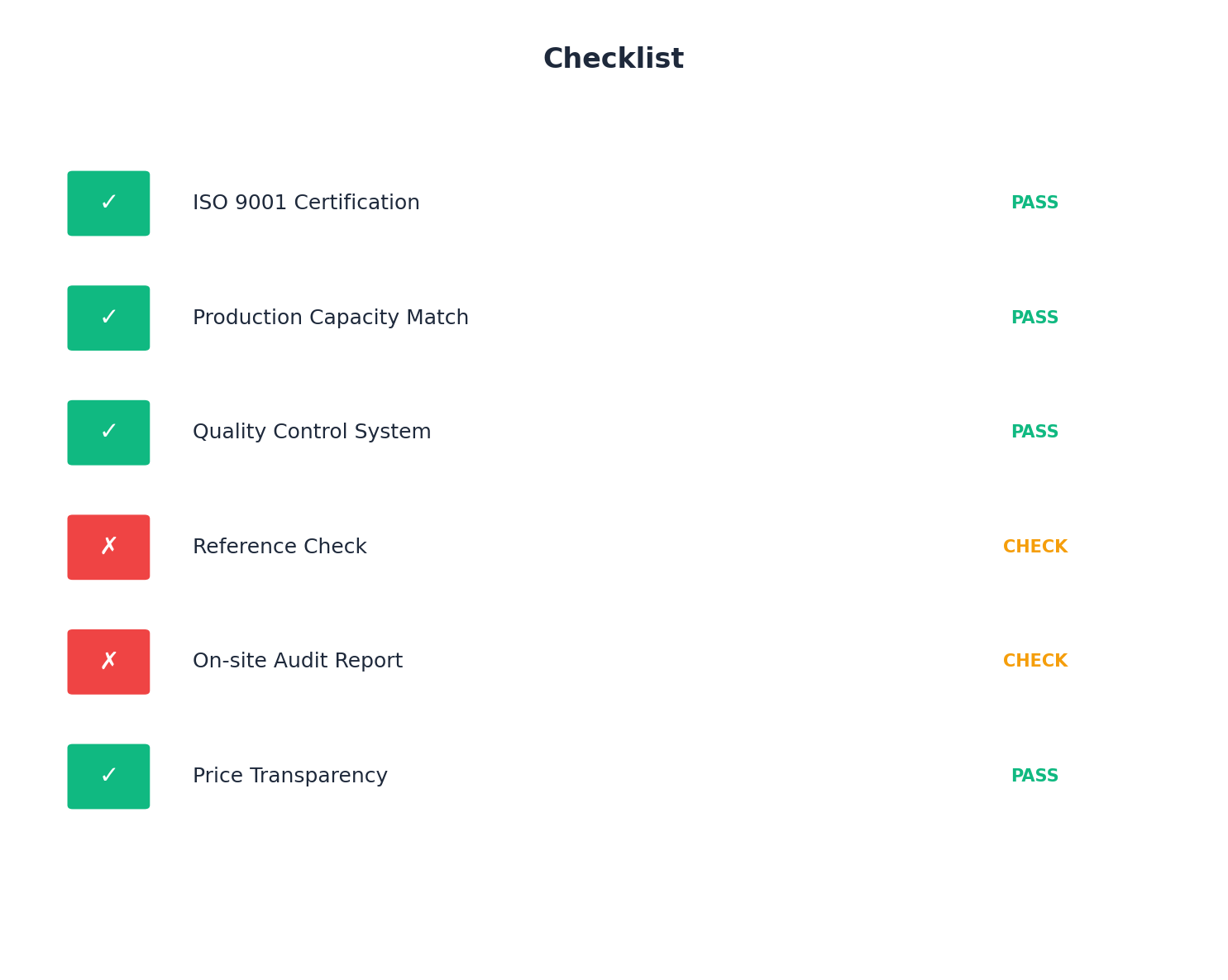
A client of mine in Indonesia was buying Mn18 liners from a foundry that provided what looked like a legitimate MTC. We ran a random chemical analysis on three liners from the same batch and found one had 8.2% manganese—well below the ASTM A128 minimum of 11%. That liner failed in 5 weeks. The other two in the batch met spec and ran for 7 months. Same batch. Same supplier. Same paperwork.
That's the reality of sourcing high manganese steel castings. The only way to protect yourself is to verify—not just trust the paperwork.
The Bottom Line: What Your Next Purchase Should Look Like
Let's bring it together. When you source your next set of high manganese steel crusher liners, here's the spec you should be giving your supplier:
"I need ASTM A128 Grade B-1 (or B-4, depending on impact level), with solution annealing at 1080°C minimum, water quenched, as-quenched hardness 180–230 HB. Provide MTC with heat numbers, dimensional inspection report, and UT/PT on agreed sampling basis. Geometry per crusher model and feed data attached."
If your supplier hesitates on any of these points—or tries to sell you a "standard" liner without asking about your application—that's your cue to look elsewhere.
The 2 AM phone call isn't inevitable. Most liner failures are preventable. They happen because someone along the chain cut a corner on metallurgy, heat treatment, geometry, or quality control. And that someone is almost never the person who has to stand next to a dead crusher at 3 AM.
You're the one on the line. You deserve components that perform to spec.
I still work with mines across Australia and Southeast Asia, sourcing heavy equipment components that meet rigorous standards. If you want a quick review of your current liner specs—or a second opinion on a supplier's proposal—I'm happy to take a look.
Download the 7-point quality checklist PDF and use it for your next order. Print it. Hand it to your quality team. It'll save you a 2 AM phone call.
Frequently Asked Questions
What is the difference between Mn18 and Mn22 for crusher liners?
Mn18 (ASTM A128 Grade A) has 18% manganese and is the standard for most jaw crusher and cone crusher applications. Mn22 has 22% manganese and higher work-hardening capacity, making it suitable for high-impact applications like primary gyratory crushers. Mn22 typically delivers 15–25% longer wear life in severe applications but costs 8–12% more.
How long should high manganese steel crusher liners last?
In typical hard rock mining with proper manganese grade selection, 6–9 months is realistic for jaw crusher liners. Cone crusher liners may last 3–6 months depending on closed side setting and feed material. Liners failing in under 3 months usually indicate a metallurgy issue, improper heat treatment, or wrong grade for the application.
What causes premature failure of manganese steel liners?
The most common causes are: (1) insufficient work hardening due to low-impact feed, (2) incorrect manganese content for the application, (3) poor heat treatment leading to carbide precipitation, (4) chemical composition outside ASTM A128 spec, and (5) incorrect liner design causing uneven wear distribution.
Can high manganese steel liners be welded or repaired?
Yes, but only with specialized austenitic manganese steel welding electrodes (ENiCrFe-3 or EMn-NiCr). Standard carbon steel electrodes will cause cracking due to thermal expansion mismatch. Preheat is not required, but interpass temperature must stay below 300°C to avoid carbide precipitation in the heat-affected zone.
How do I verify my supplier's ASTM A128 certification is real?
Request a mill test certificate (MTC) with actual chemical composition values for each heat. Verify the manganese content is between 11–14% for standard grades, and carbon is 1.0–1.35%. Cross-check the certificate number with the steel mill if possible. Many fake certificates use generic values—real ones show batch-specific numbers.
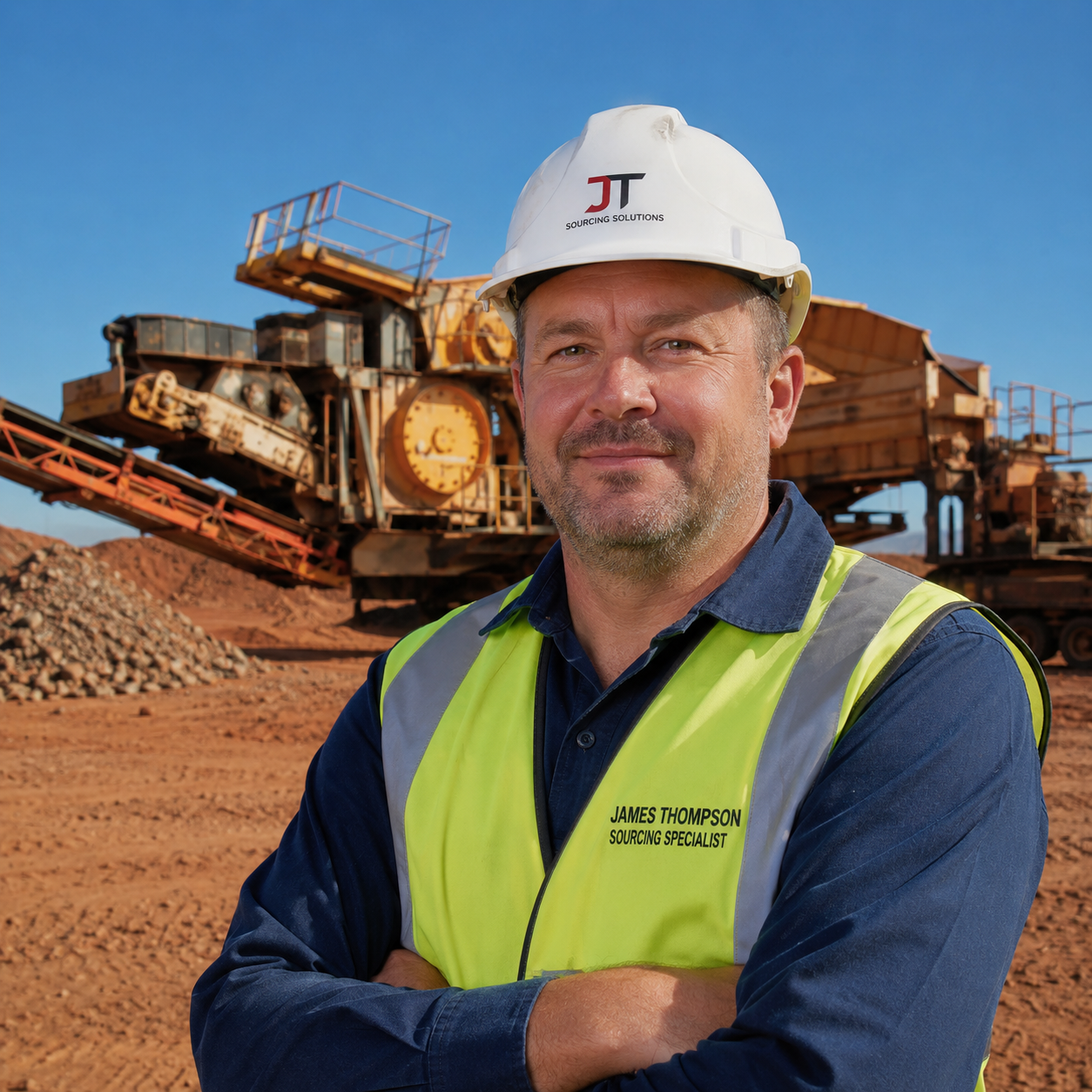
James Thompson has 14 years of experience sourcing heavy equipment components for mining operations across Australia and Southeast Asia. He works with Interstate Sourcing to help mines find reliable suppliers for crusher liners, dump truck bodies, and other high-wear components. He's personally inspected over 60 foundries across China, India, and Vietnam.
This article is based on actual field experience. The 7-point checklist has been road-tested across 34 foundries and 3 continents.
Need Help with High Manganese Steel Mining Crushers: Why Liners Fail (And How to Fix It)?
Get matched with 3 verified foundries in 24 hours. No markup, transparent pricing.
Request Quotes →