The Foundry Inspection Checklist That Saved Us $240K (And Why You Need One)
You're about to sign a purchase order for 5,000 ductile iron castings. The price is 22% below market. The supplier sent you photos of a clean workshop and a scanned ISO certificate. Looks good, right?
Hold that thought.
Last year, a buyer I know—let's call him Tom—skipped the on-site inspection on a "low-risk" order of ASTM A536 ductile iron pump housings. The foundry had been recommended by a trading agent, the price was aggressive, and Tom needed the parts in six weeks. He flew the PO. Eight weeks later, the first batch arrived.
Thirty-seven percent of the castings failed the hydrostatic pressure test. Micro-cracks in the wall sections—porosity that no visual inspection could catch. The foundry refused to cover the rework costs, citing "material specification acceptable per internal standards." Tom's company ate a $68,000 loss. The project got delayed by nine weeks. He lost two client contracts.
That's what happens when you skip the inspection.
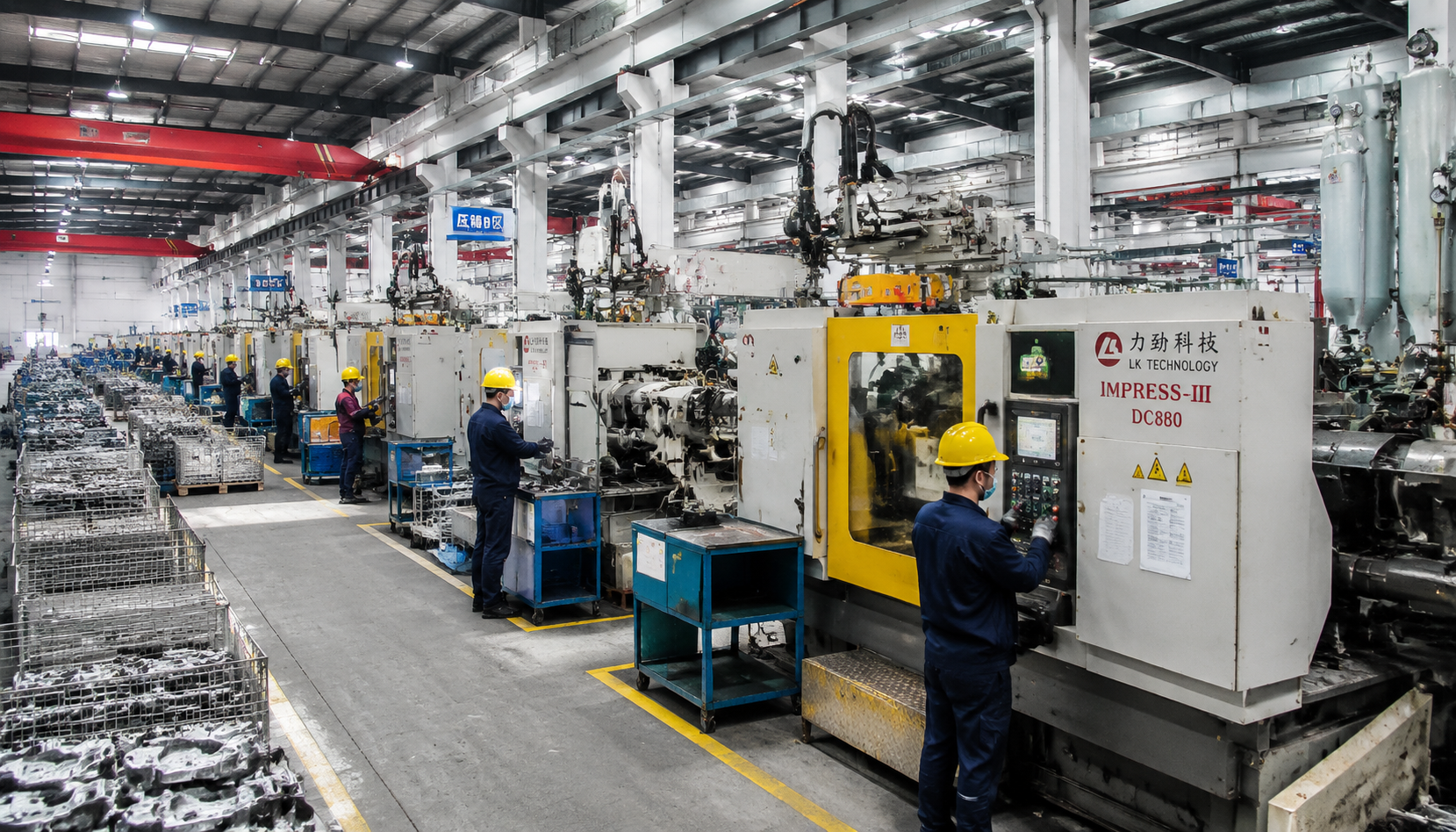
I've been on the ground at 45+ foundries across China over the past six years—from the big automotive-tier suppliers in Jiangsu to the small family-run shops in Hebei. Some are world-class. Others... let's just say the photos look better than the reality. The difference between a good foundry and a risky one almost always shows up during a structured on-site inspection.
This article gives you the exact 7-step checklist I use—the same one that helped Tom's team cut their defect rate from 8% to 0.9% and save an estimated $240K annually in rework, shipping, and lost business. You'll also get a printable PDF version at the end.
Why Most Foundry Inspections Fail (Before They Start)
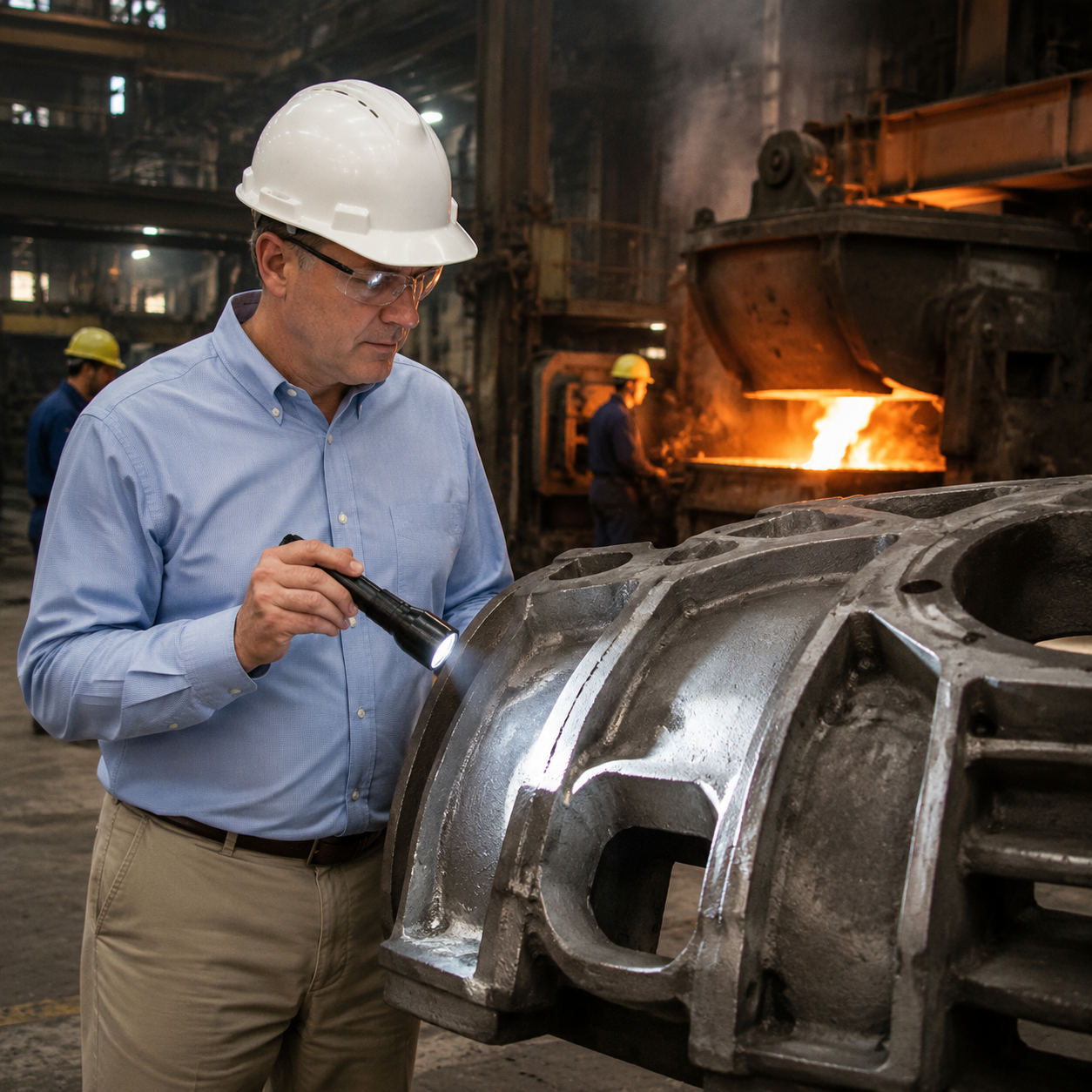
Here's the uncomfortable truth: most inspection checklists you find online are written by people who have never set foot in a casting plant. They're generic—check "ISO certificate," "look at the equipment," "talk to the manager." That's not an inspection. That's a tour.
A real foundry inspection is built around risk patterns. Not theoretical risks—the ones that actually burn buyers. Over the last 45+ audits, I've seen the same problems repeat:
- Material substitution — The foundry uses a cheaper grade than specified (e.g., ASTM A48 Class 30 instead of Class 35) and relies on "similar properties" to justify it.
- Hidden porosity — Surface looks fine, but internal shrinkage voids only show up under X-ray or after machining.
- Heat treatment shortcuts — The furnace log says 2-hour soak at 1650°F, but the actual cycle time is 1 hour, 15 minutes. Who's checking?
- Measurement system drift — The CMM (coordinate measuring machine) hasn't been calibrated in 14 months. The tolerance report is fiction.
These patterns don't show up on a factory tour. They show up when you know what to look for—and where to look.
The 7-Step Foundry Inspection Checklist
This checklist is organized by increasing depth of investigation. You can stop at Step 4 if everything checks out. If you see red flags, dig deeper. Each step includes a green flag (what good looks like) and a red flag (what should worry you).
Step 1: Document Review — Start with Paper, Not the Factory Floor
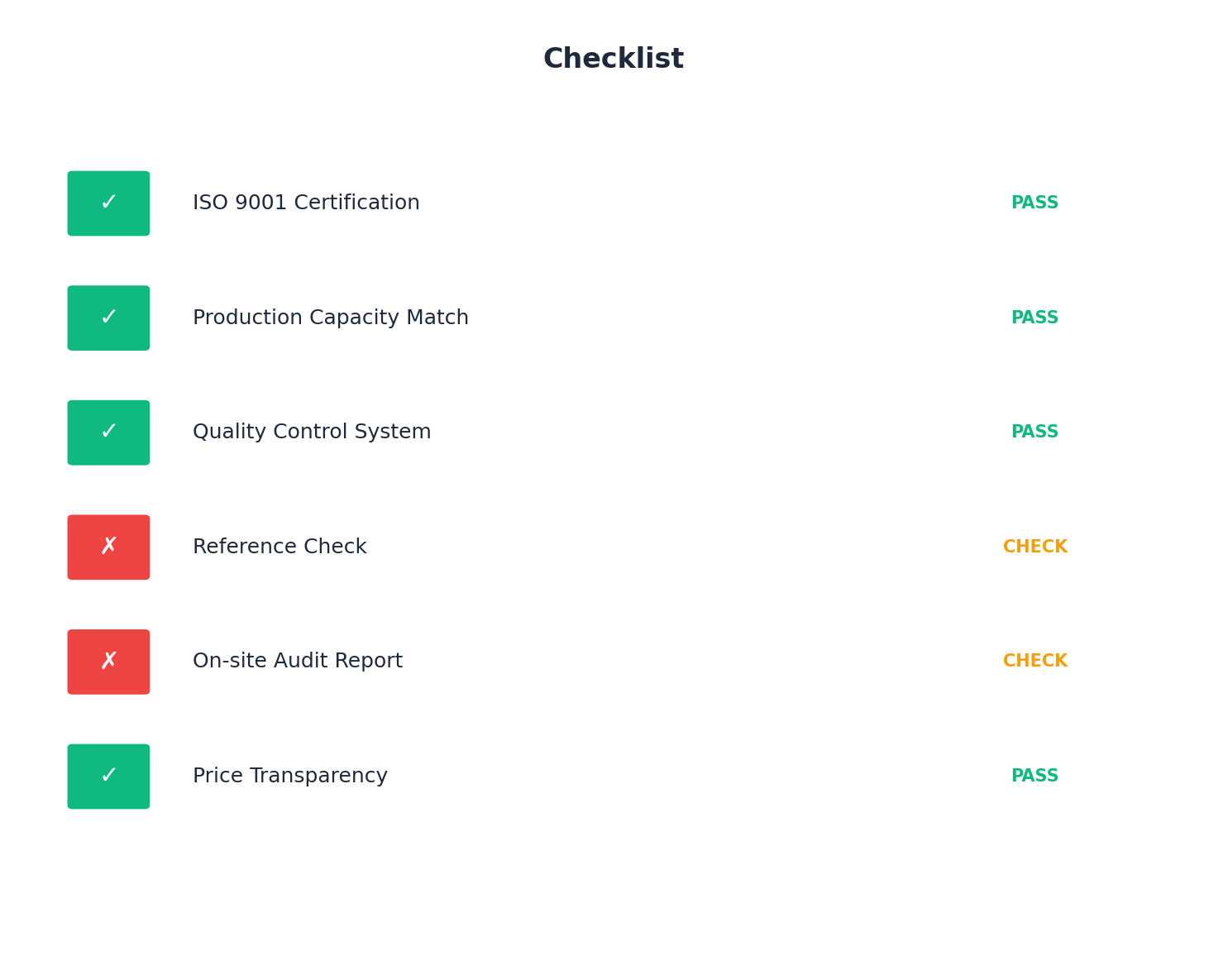
Before you walk the production line, sit down with the quality manager and review these documents. If the paper trail is weak, the process almost always is too.
Green flag: The QM hands you a binder with tabs, everything is dated, and they can explain the corrective action process without hesitation.
Red flag: "The certificate is on our website, you can check later." Or "We just upgraded our system, so the old records are not available."
One of the best foundries I ever visited—a precision sand casting plant in Shandong—had a QM who walked me through 18 months of MTC data on a single Excel sheet, with heat numbers cross-referenced to production dates. That level of traceability is rare, and it tells you the management values process control.
Step 2: Raw Material Yard — The Truth Is in the Sand and Scrap
Walk to the raw material storage area. This is where you see how a foundry actually manages quality—or doesn't.
Green flag: Clean, organized, labeled bins. Sand covered and tested regularly (you can ask to see the sand test records).
Red flag: Scrap pile mixed with rusty random metal, sand exposed to rain, no labels on alloy bins. This is a foundry that hopes for quality, not one that controls it.
I once visited a foundry where the "ductile iron" scrap pile had a 50-gallon drum of galvanized steel scraps mixed in. The QM shrugged and said, "The furnace operator knows how to adjust." He did not. Two hundred castings failed due to zinc contamination.
Step 3: Melting and Pouring — Where Chemistry Happens
This is the heart of the foundry. The quality of your castings is determined here, in the melt. You don't need to be a metallurgist to ask the right questions.
Green flag: Spectrometer on-site, calibrated daily, with a data log you can review. Furnace operator follows a written procedure.
Red flag: "We send samples to an external lab." That means they have no real-time control. Any batch can go bad before they know it.
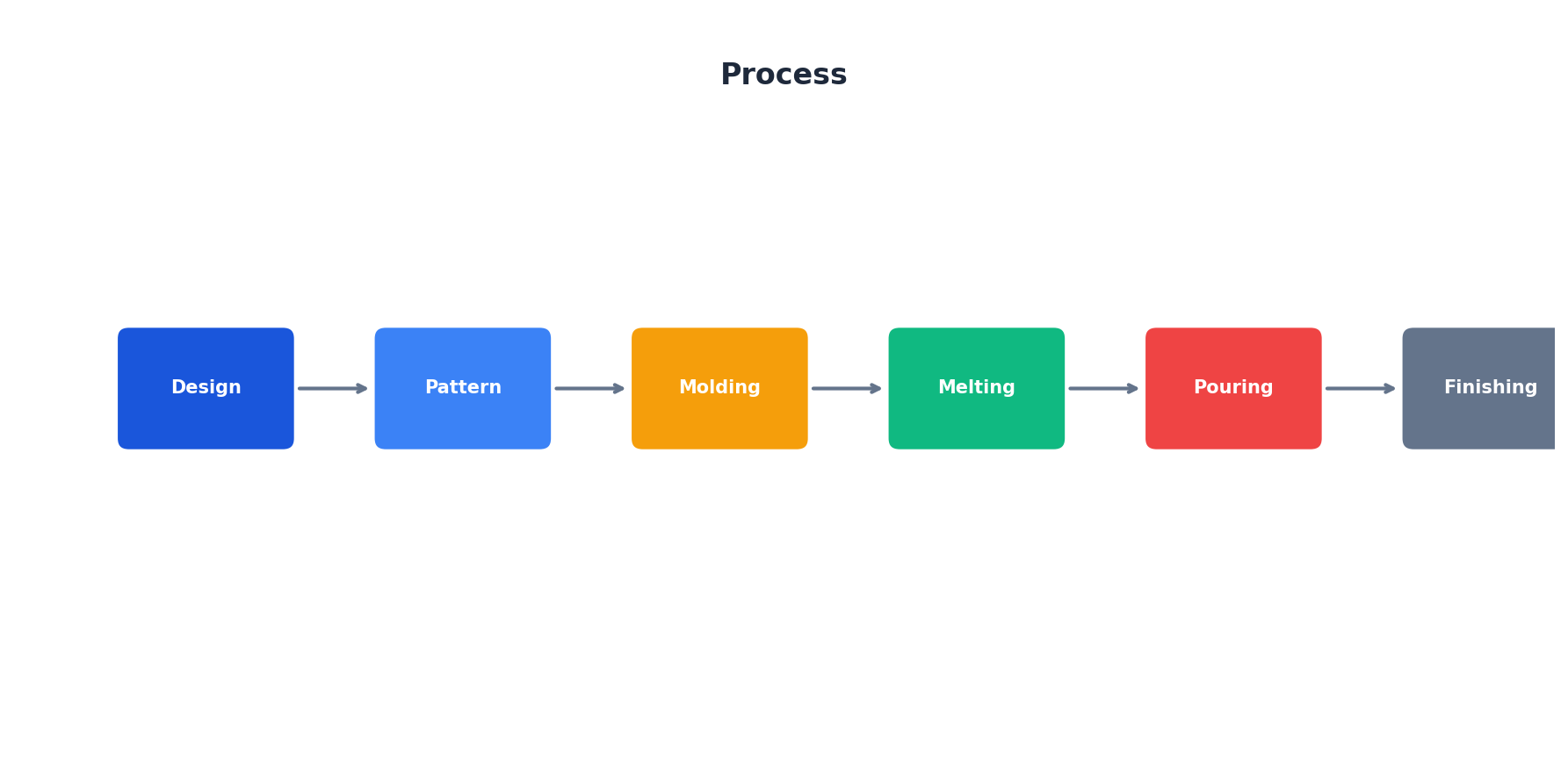
Step 4: Molding and Core Making — Where Geometry Is Born
Now look at how the molds are made. This is especially critical for complex geometries with internal cavities or thin walls.
Green flag: Core room is climate-controlled. Molds are checked with a go/no-go gauge before closing. The foundry uses core prints and chaplets to prevent shift.
Red flag: Cores piled on the floor, mold closing without inspection. Core shift is one of the top reasons for casting rejection.
Step 5: Shakeout, Cleaning, and Finishing — Where Hidden Defects Appear
This is where castings are removed from the mold, cleaned, and prepared for delivery. A messy finishing area often correlates with poor surface quality and hidden damage.
Green flag: Clean workstations, operators using proper PPE, finished castings stored on pallets with protective padding.
Red flag: Castings thrown into bins, grinding marks inconsistent, risers removed with a sledgehammer. You'll pay for that later.
Step 6: Quality Control Lab — The Proof Is in the Testing
The QC lab is where the foundry proves (or fails to prove) that your castings meet specs. This step is non-negotiable.
Green flag: In-house tensile and hardness testing. They can show you a control chart for tensile strength across multiple batches.
Red flag: "We send samples to the customer for testing." That means they ship first, test later—or worse, they skip testing altogether.
"The lab is where a world-class foundry separates itself from the rest. If they can't show you data, they don't have any."
— Dr. Wei Zhang, metallurgical engineer with 22 years in Chinese foundries
Step 7: Shipping and Packaging — The Last Place to Lose Quality
You'd be surprised how many good castings get damaged in transit because of poor packaging. The final step of your inspection is the shipping area.
Green flag: Dedicated packaging area, castings separated by foam or cardboard, moisture barrier for sea freight.
Red flag: Castings thrown into cardboard boxes with no dunnage, no moisture protection, packing list handwritten on a scrap of paper.
How to Use This Checklist: A 3-Part Scoring System
Don't just check boxes. Score each step on a simple 3-point scale:
- 2 points — Green flag: meets or exceeds expectations
- 1 point — Yellow flag: acceptable with minor concerns
- 0 points — Red flag: needs immediate improvement
Total maximum score: 14 points (7 steps × 2 points). Here's how to interpret:
- 12-14 points — Low-risk foundry. Proceed with standard quality checks.
- 8-11 points — Medium risk. Schedule a follow-up inspection and request a corrective action plan for weak areas.
- 0-7 points — High risk. Do not place orders without significant improvement and re-inspection.
That's the same scoring system Tom uses now. The first time he ran a supplier through this checklist, three out of four foundries scored below 8. He walked away from two of them. The one that scored 13 is now his top supplier—and their defect rate has stayed below 1% for 18 months.
Three Mistakes Buyers Make During Foundry Inspections
Even with a great checklist, buyers make predictable errors. Avoid these three:
Mistake 1: Announcing the Inspection Date
"We'll be there on Wednesday the 15th." Now the foundry has a week to clean up, prep documents, and hide the problem areas. Better approach: Give a 2-week window and confirm the exact date 48 hours ahead. Or better, show up unannounced—but be prepared to wait if the QM is truly unavailable.
Mistake 2: Staying in the Front Office
Some buyers spend the entire inspection in the conference room reviewing certificates and never walk the shop floor. The real condition of a foundry is on the floor—the housekeeping, the equipment maintenance, the operator behavior. You should spend at least 70% of your inspection on the production line.
Mistake 3: Not Taking Photos
Document everything. Take photos of the raw material yard, the furnace area, the QC lab, the packaging station. These photos are your evidence if a dispute arises later. They also help you compare suppliers side-by-side when you're back at your desk.
When to Walk Away: The Non-Negotiables
Some issues are fixable with a corrective action plan. Others are deal-breakers. Here's what I consider non-negotiable:
- No spectrometer or no calibration records — They cannot control chemistry reliably.
- No traceability system — If they can't trace a casting back to its heat number and date, they can't manage quality.
- Refusal to share MTCs — A quality foundry is proud of its data. Secrecy is a red flag.
- Unsafe working conditions — If the foundry doesn't care about its workers' safety, it doesn't care about your castings.
Walk away from these deals. The short-term pain of finding a new supplier is less than the long-term pain of a catastrophic quality failure.

Frequently Asked Questions
Download the Printable Foundry Inspection Checklist
Get the full 7-step checklist as a one-page PDF—the same one used in 45+ foundry audits. Print it, take it with you, and never walk into a foundry unprepared.
Download PDF ChecklistOr send us your casting specs and we'll help you pre-screen suppliers before you book the flight.
Final Word: The Checklist Is Just the Start
A foundry inspection checklist is not a guarantee. It's a tool—one that shifts the odds heavily in your favor. The foundries that score well on this checklist are the ones that invest in process control, training, and quality systems. They're the ones that will deliver consistent castings, batch after batch.
The ones that don't... well, you'll find them out before you lose $68,000.
Tom still uses this checklist on every new supplier. His defect rate now averages 0.9%. His team trusts their supply chain. And that $240K in annual savings? It went straight to the bottom line.
Your turn. Download the checklist. Book the flight. Walk the floor. You'll come back with more than just castings—you'll come back with confidence.
Brian Miller is a senior sourcing engineer with 14 years of experience in China-based manufacturing. He has conducted over 150 supplier audits across 6 provinces and specializes in casting quality systems for the oil & gas, pump, and valve industries.
Need a Verified Casting Supplier?
We've audited 200+ foundries across China. Tell us your requirements — material, quantity, tolerances — and we'll match you with 3 qualified suppliers that have already passed our technical vetting. Each comes with a full audit report.
Get Matched with Suppliers →