Crusher Liner High Chrome Wear Parts Sourcing: The 2026 Playbook
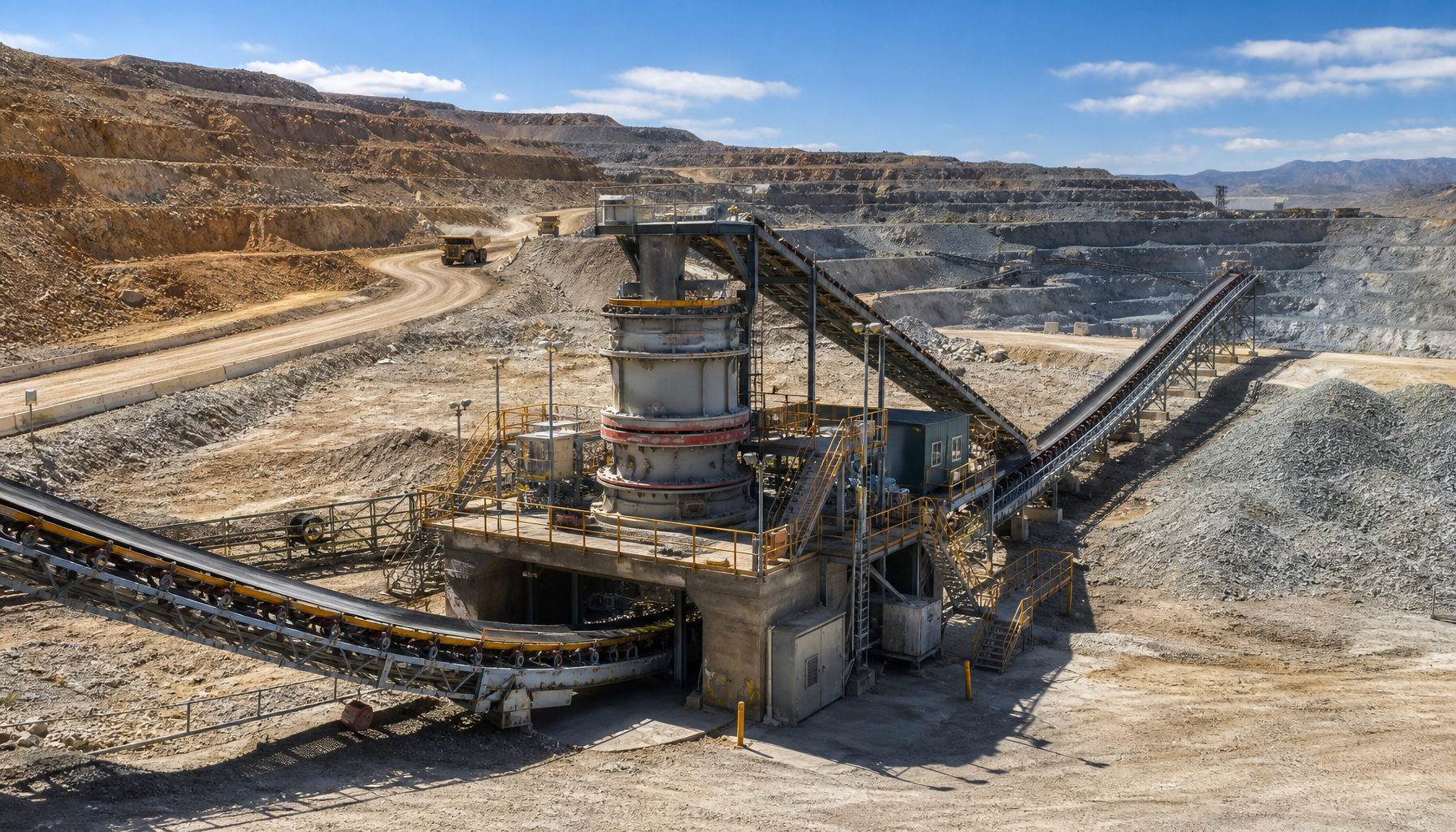
Picture this: it’s 7:42 on a Tuesday morning and the voice on your radio is tight. Your maintenance foreman just found the bowl liner in your HP cone with a crack running clean through the feed opening — 1,400 hours into a 2,800-hour expected life. The crusher is down. The shift is losing 300 tonnes an hour. And sitting in the warehouse, wrapped in plastic and looking perfectly innocent, is the replacement liner cast by the foundry that beat everyone else’s price by 18%.
Sound familiar? If you’ve been sourcing crusher liners for more than a few months, it probably does. Here’s a number that should grab you by the collar: in a typical hard-rock crushing circuit, wear liners eat 15–20% of total operating cost per tonne of ore. That’s not a rounding error. That’s the difference between a pit that prints money and a pit that quietly bleeds it.
A 2025 industry review of 40+ open-pit mines in Australia, Chile, and Canada put liner replacement spend at roughly $1.20–$1.80 per tonne crushed in secondary and tertiary circuits. Run that through your own numbers. If you’re moving 300 tonnes an hour on a 7,200-hour year — that’s over 2 million tonnes annually. At $1.20 per tonne, you’re burning $2.5 million a year on wear liners alone. Miss the specification, pick the wrong supplier, or accept a mediocre casting, and that number balloons by 30–40% before you even notice.
Here’s the thing though: most procurement people treat crusher liners like a commodity. They send out an RFQ, compare prices per ton, and pick the lowest number. That’s exactly backwards. High chrome wear parts are a metallurgy problem wearing a purchasing disguise. Get the sourcing decision right and you’ll cut cost-per-tonne by double digits. Get it wrong and you’ll be swapping bowls mid-shift — and all those saved dollars disappear into missed production.
This guide walks you through what actually matters in 2026: the material math, the global supply picture, the supplier audit, and the acceptance tests you should run before a container ever leaves the foundry gate.
Why High Chrome? The Metallurgy That Justifies the Price
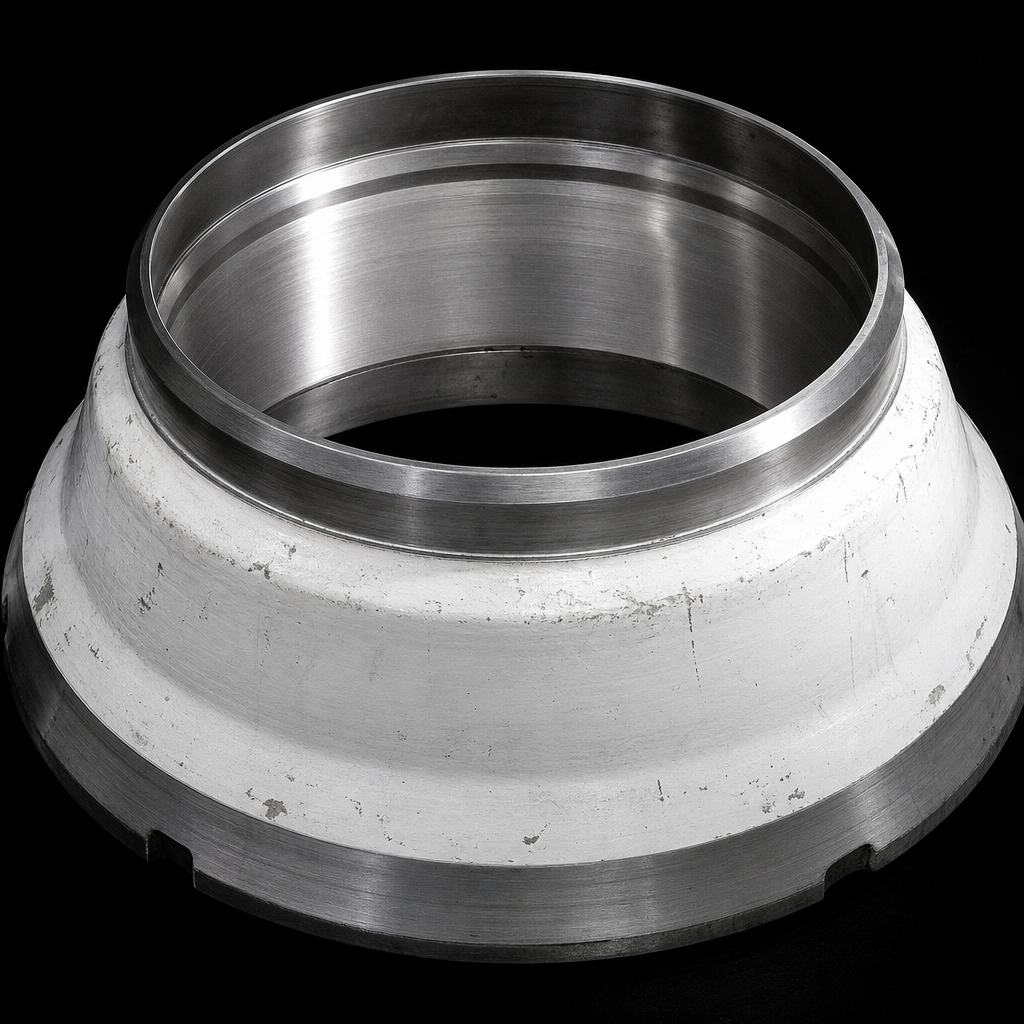
High chrome white iron is a different animal from the manganese steel that rules primary crushing. Where Hadfield manganese (12–14% Mn) works by work-hardening under impact, high chrome white iron works by brute force abrasion resistance. Its microstructure is packed with hard carbides in a martensitic matrix — and that’s the entire story.
The key numbers to know:
- Chromium content: 11–30%, per the ASTM A532 specification family. The most common crusher liner grades sit in the 17–23% Cr range.
- Carbon: typically 2.5–3.5%. The carbon-to-chromium ratio determines the type of carbides you get.
- Carbide hardness: the M7C3 carbides in high chrome iron measure 1,100–1,300 Vickers, versus about 840–1,100 for the cementite (M3C) carbides in lower-alloy white irons. That difference is why high chrome beats Ni-hard and low-alloy options in heavily abrasive feeds.
- Bulk hardness: expect 550–750 HB depending on grade and heat treatment.
Now here’s where it gets counterintuitive: harder isn’t automatically better. High chrome iron is brittle. It has essentially zero ductility and poor impact toughness. Feed it a piece of tramp iron or a fresh face of extremely blocky rock, and a 700 HB liner can crack clean through. Manganese steel would just flex and laugh it off.
So the real selection logic goes like this:
- Primary crushing, high impact, large feed: manganese steel. Period.
- Secondary and tertiary cone crushing, moderate impact, high abrasion: high chrome white iron wins, typically delivering 2–3.5 times the wear life of manganese under the same conditions.
- Gyratory concaves and jaw dies: these have significant sliding and gouging. High chrome can work in some jaw plate applications, but only with careful attention to fracture risk.
Don’t let a supplier sell you “the hardest liner we make.” Let your ore hold the vote. If your circuit generates high impact energy at the liner — large feed, tight settings, high eccentric speed — hardness alone will betray you. The right grade is the one that survives and lasts. Those are two different things.
The Global Supply Reality in 2026
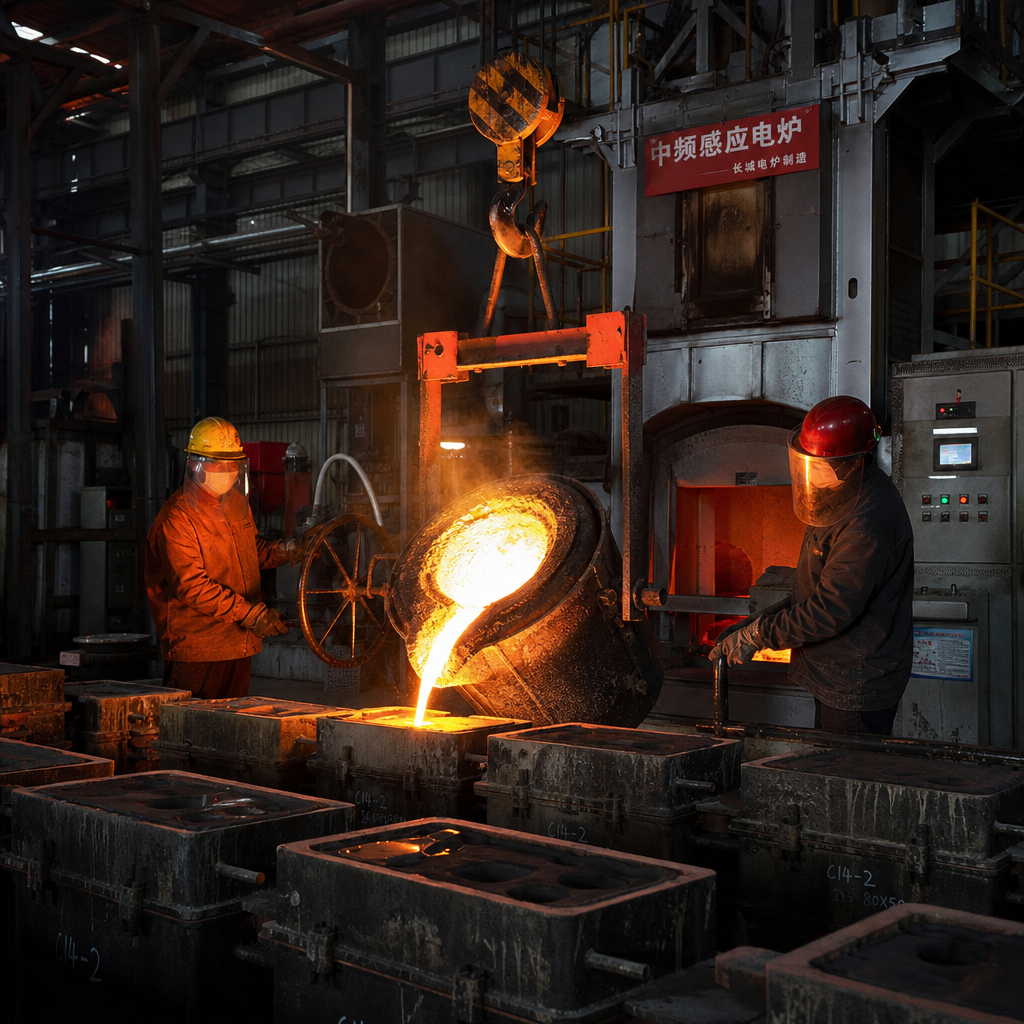
If you’re a buyer who’s been burned by a bad batch before, you already know the geography I’m about to walk you through. If you’re sourcing crusher liners at scale in 2026, you’re most likely looking at China. That’s not a political statement, it’s an arithmetic one. China dominates the global high chrome casting supply chain for a simple reason: concentrated production clusters, mature casting know-how, and cost structures that India and Vietnam haven’t been able to match at the same quality level.
Here’s what the landscape looks like:
- Hebei province (Tangshan, Xingtai, Handan) is the densest cluster for abrasion-resistant castings in China. Hundreds of foundries supply liners to the domestic mining sector and export worldwide.
- Liaoning province (Shenyang, Anshan) has a strong base in mining equipment and related wear parts, feeding off the heavy machinery ecosystem around it.
- Shanxi and Shandong host established casting clusters, often with better environmental compliance records than some of the smaller Hebei shops.
- Industry estimates put the number of Chinese foundries doing abrasion-resistant castings at 800+, but only 200–300 of those have genuine high chrome production capability, complete metallurgical testing, and export experience. The rest are casting brake discs or municipal manhole covers and calling themselves “wear part specialists.”
That last point is your biggest risk. The buyer who sources from a general-purpose iron foundry because the price looked great isn’t buying value — they’re buying a lottery ticket.
Pricing for high chrome liners from China in 2026 typically ranges from $2,800 to $5,500 per metric ton, depending on alloy content (especially the molybdenum price, which has been volatile), heat treatment quality, and dimensional complexity. Mo—usually present at 0.5–2.5% in premium grades—runs about $70,000–$85,000 per metric ton in raw alloy markets, so its swings hit your final price directly.
You’ll also see Indian and Vietnamese suppliers bidding increasingly more in this category. Some Indian foundries make very good manganese steel; high chrome is a smaller, more mixed pool. Vietnam has iron foundries emerging, but consistent high chrome metallurgy at scale is still rare. If you want options, Chinese suppliers remain the practical baseline — just stay selective on capability, and verify everything, rather than using country-level stereotypes as a shortcut.
The 7-Point Supplier Audit for High Chrome Liners
I’ve walked into more foundries than I can count with this checklist in my pocket. Steal it — it’ll save you the expensive lessons I learned the hard way. You don’t need to become a metallurgist to source liners well. You need a checklist that separates real foundries from fast-talking suppliers. Here’s the one I use and you can steal it:
1. In-house chemistry testing — non-negotiable
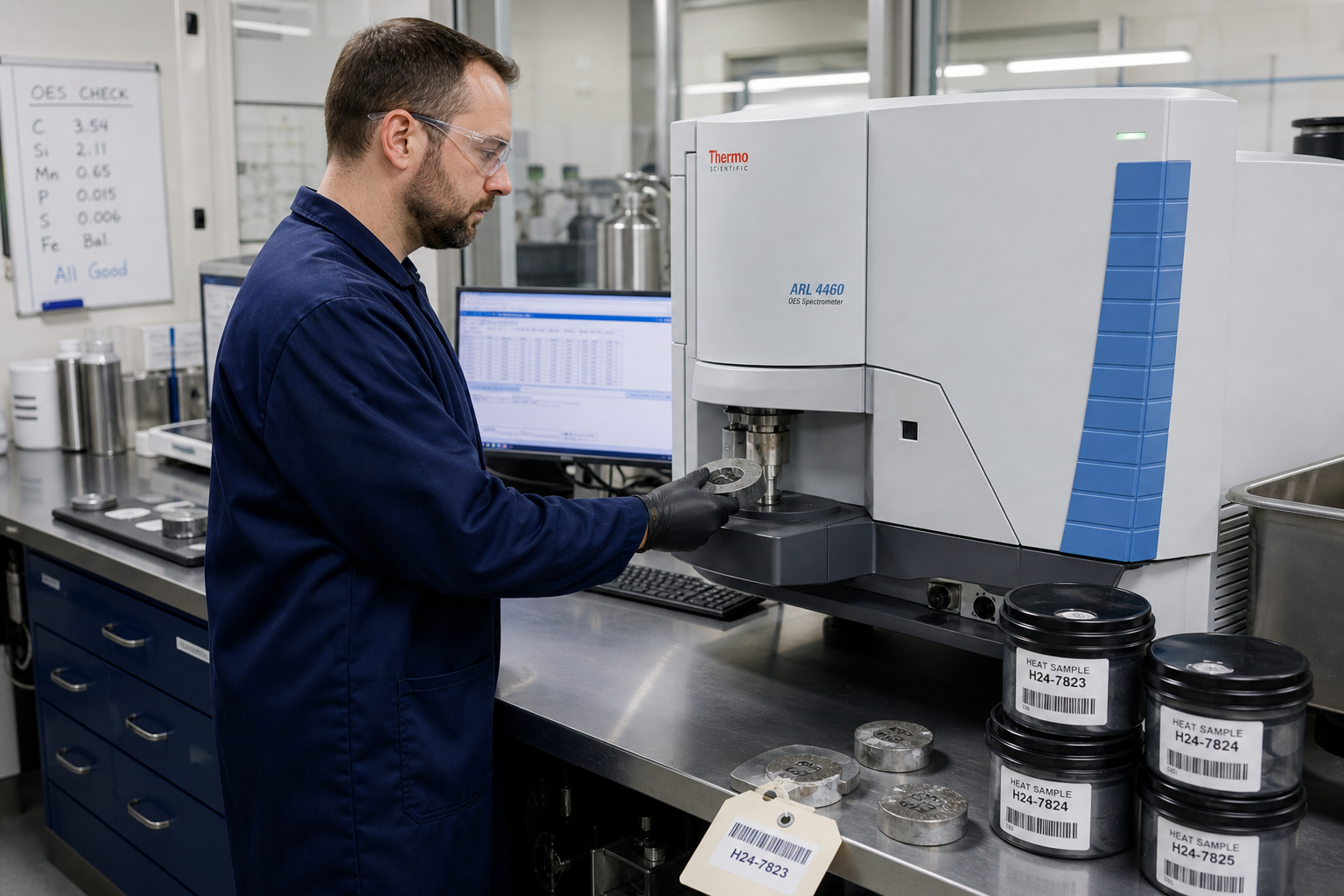
The first question you ask is, “Can I see your optical emission spectrometer?” If your potential supplier sends their chemistry out to an external lab for every heat, that’s a yellow flag. It means they can’t control alloys in real time. The casting grade you specify needs spectrographic verification before and after pouring. Every reputable high chrome foundry has one on site. No exceptions.
2. Heat treatment capability beyond a “standard anneal”
High chrome white iron gets its martensitic matrix from a destabilizing heat treatment — typically holding around 950–1,050°C, followed by air cooling, and often a subcritical temper. The furnace needs visible thermocouples, strip-chart or digital records, and written soak cycles for each alloy grade. If a foundry says, “We pour it and the hardness is fine,” walk away.
3. Casting process that matches your dimensional needs
Ask what molding process they use. For complex bowl liners and mantles, resin-bonded sand or V-process (vacuum) molding gives better dimensional consistency than green sand. If you’re buying manganese and high chrome from the same foundry, check that they’re honest about which process works for each material rather than forcing one process for everything.
4. Gating and feeding design — the hidden difference maker
Shrinkage is the silent killer of high chrome liners. Feeders (risers) must be sized and placed to compensate solidification shrinkage, or you get internal porosity that only shows up as premature catastrophic breakage. You won’t see this from the outside. Look at their casting simulation software (proCAST or MAGMASOFT is common) and ask how they handle feeding. A foundry with no simulation discipline is gambling on your liner.
5. Crack prevention practice
High chrome, high carbon castings are crack-prone. That’s just physics. The best foundries fight this with careful pouring temperatures, controlled mold coatings, proper shakeout timing, and stress-relief when needed. Ask them what they do specifically to avoid cracking in high chrome parts — the foundry that answers with a detailed protocol is worth more than one that replies with a blank stare.
6. Capacity and backup
Look at their melt capacity. A mid-size foundry running a 5–10 ton medium frequency induction furnace can handle a typical 1–3 tonne liner order per week. But you want to know their total monthly output and how much of capacity is already committed. A foundry that’s oversold becomes a foundry that rushes your heat, drops quality on the shop floor, or pushes your delivery date three weeks and claims force majeure.
7. Export and commercial competence
You’d be shocked how many technically good Chinese foundries ship their castings to the nearest port with zero rust protection, missing export packaging markings, and a pile of incomplete documents. Your liner order has to clear customs, arrive complete, and not be rejected when your receiving team opens the crate. Verify they have an export operations person — someone who understands packing, crating, fumigation, and Incoterms. Test them with a simple question in the RFQ stage: “Provide your export packing specification for a 20-foot container shipment of crusher liners.”
If a supplier passes all seven points, they’re probably a competent exporter of high chrome. If they fail three or more, cut them loose, no matter how sweet the quote is.
Quality Acceptance — What to Check Before You Pay the Final 30%
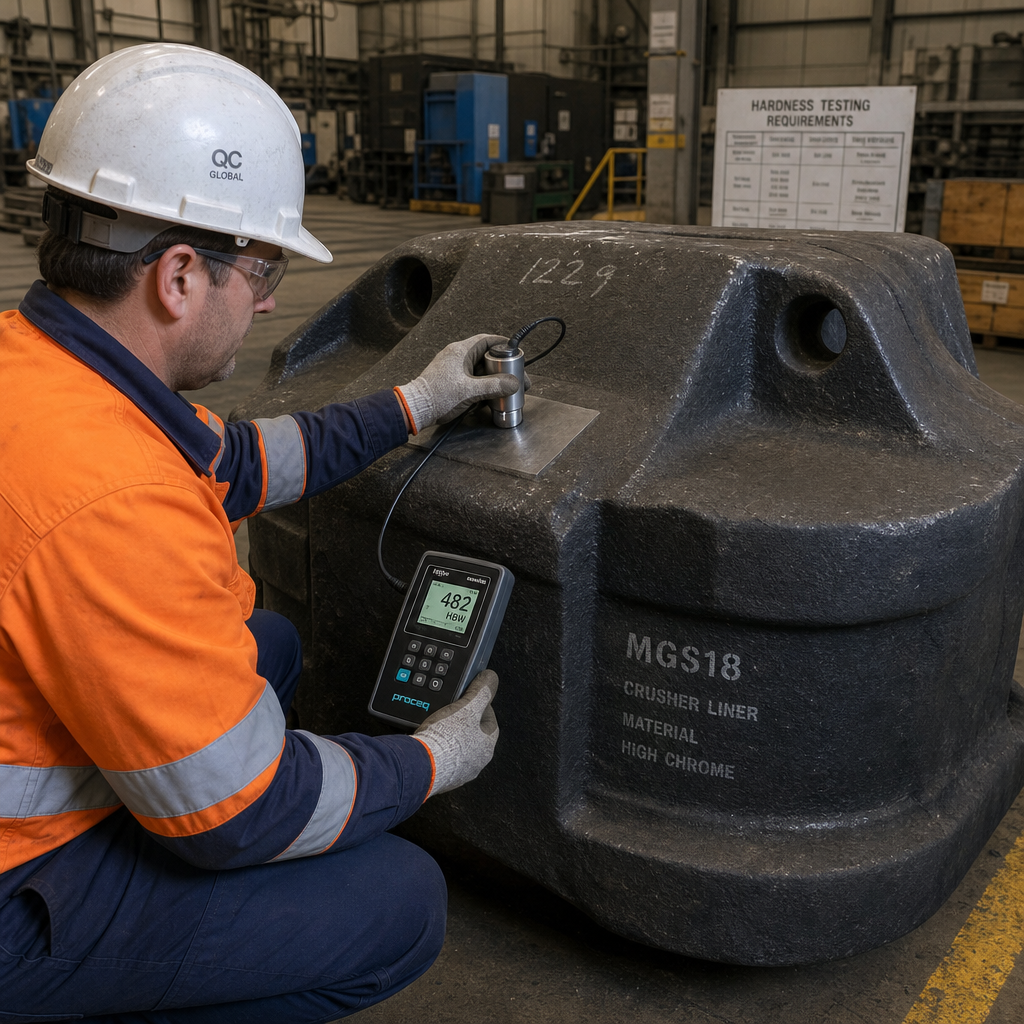
Let’s say your containers have arrived. The liners look big and heavy and expensive. Before you haul them to the crusher and install them, you sit down with your maintenance engineer and run a real acceptance protocol. In my world, I won’t release the final balance payment until all of the following checks pass:
Chemistry verification
Take a representative sample — ideally from an area near the gate or riser contact so it reflects the body of the casting, not just the surface — and have it tested with a handheld XRF analyzer. If XRF isn’t available at your site, send a drilled sample to a certified third-party lab. Verify chromium, carbon (XRF doesn’t reliably measure C, so you’ll need LCS analysis or trust the foundry’s mill cert), molybdenum, and any other alloying elements you specified.
Hardness testing
Brinell hardness (HB) is the accepted standard for wear parts. Test at a machined reference pad on each casting — not on the raw as-cast surface, and never on a tapered edge. Expect your spec to be confirmed within about 30–50 HB. A “650 HB liner” reading 540 HB means the heat treatment was compromised.
Metallographic examination
This is the step most buyers skip, and it’s the one that catches dishonest foundries. A properly cast and heat-treated high chrome iron will show a microstructure of blocky M7C3 carbides in a martensitic matrix. If you see pearlite or large pools of austenite, the heat treatment was inadequate, and the liner will wear far faster than promised. You can do this on a sacrificial test coupon or on the riser head of the casting itself. It costs a couple hundred dollars and one hour of lab time. Worth it.
Dimensional and fit check
Bowl liners and mantles have to fit the crusher frame precisely. Measure critical diameters, seat taper, and wear surface profiles with a tape for large features and calipers or a CMM where tolerances demand it. The cheapest way to catch dimensional drift is a test fit before installation, if you can do it without lifting the crusher. If not, check at installation with your maintenance team and document the results.
Crack and defect inspection
Run dye penetrant (PT) on machined bearing surfaces and edges, and magnetic particle testing (MT) if practical. You’re looking for surface cracks that originated during cooling or from careless handling. You won’t find sub-surface shrinkage without ultrasonic testing, so decide based on history: if you’ve had breakage problems in the past, require UT on a sample of castings from every heat.
Documents you should hold in hand
- Certified chemical analysis report per heat (material certificate)
- Hardness test report
- Heat treatment chart / soak cycle record
- EN 10204 3.1 certificate if you contractually require it (and if you don’t, ask yourself why)
- Any agreed non-destructive testing report
- Photos of the castings, especially the identifying marks
If any of these fail, stop the process and go back to the supplier. It is far cheaper to quarantine and remake one liner than to install a bad one and lose the wear-life gamble for the next six months.
The “Cheap Liner” Trap — Price-Per-Ton vs Cost-Per-Tonne
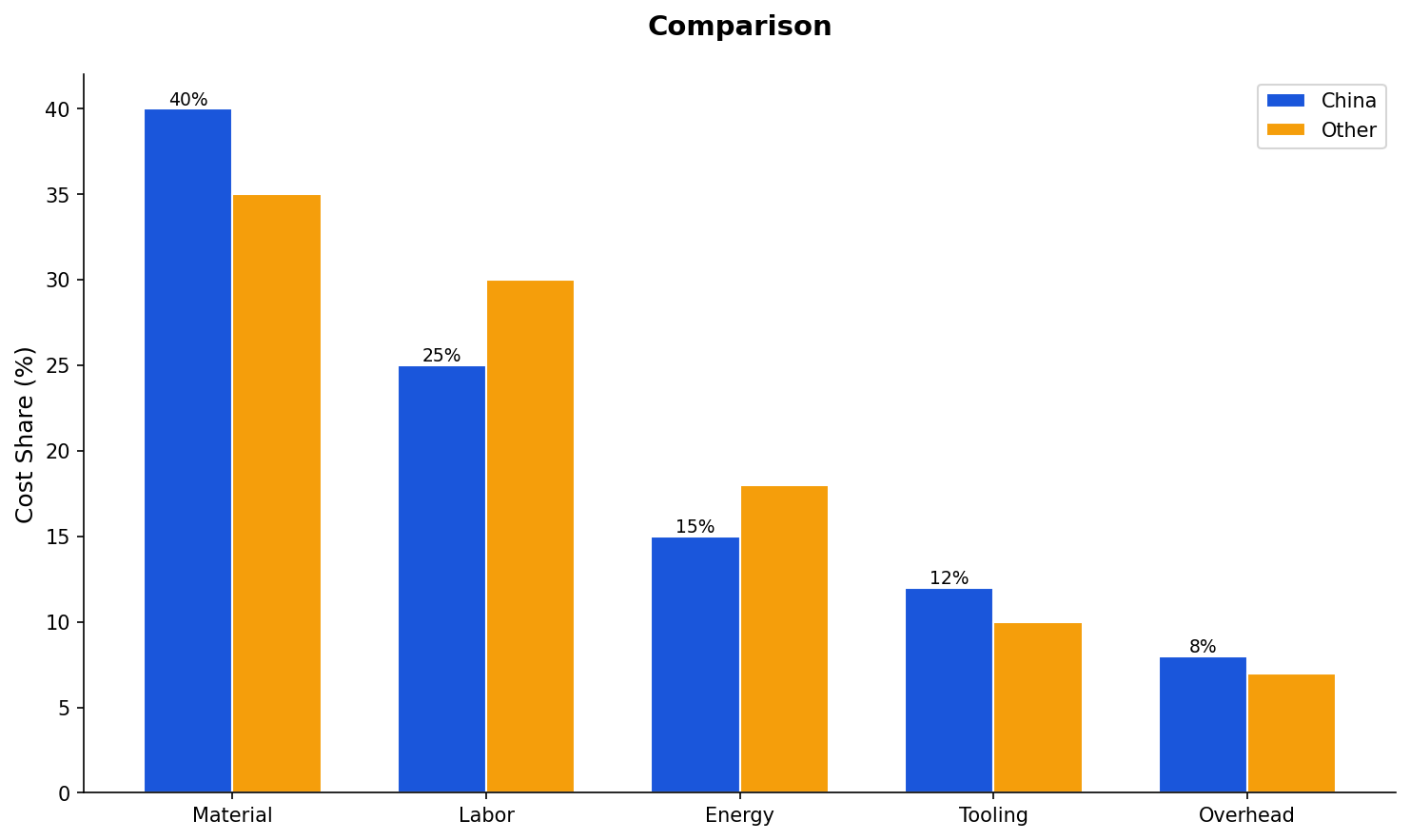
Let’s talk money because this is where sourcing decisions go to die.
A typical imported Chinese manganese steel liner will cost you around $1,800–$2,800 per metric ton at the port. A high chrome liner from a reputable foundry will cost you $2,800–$5,500 per ton. On paper, the premium looks like a 60–100% markup.
But a high chrome liner doesn’t cost you per ton — it costs you per tonne of ore crushed. And that’s a completely different equation.
Let me give you a simplified example from an actual copper operation in the Andes (figures are accurate enough for the lesson and rounded for brevity):
- Secondary crusher: HP800-class cone, mid-abrasion porphyry feed
- Manganese liner life: ~1,100 hours
- High chrome liner life: ~2,800 hours (a 2.5x improvement, consistent with typical results)
- Manganese price: $2,300/t Came to roughly $1.55 per operating hour, once weighed
- High chrome price: $3,900/t Came to roughly $1.27 per operating hour — about 18% cheaper in wear cost
Now add the second kicker: with high chrome, you replace the liner about 2.5 times less often. Each changeout takes a crew of two six hours, at an average all-in cost of about $3,000 in labor and lost uptime. Multiply that by the number of changeouts you just avoided, and high chrome gets even more attractive.
But — and this is a big “but” — high chrome only wins if the application is right. If your circuit hits the liner with high impact energy, high chrome will break, and all those savings vanish in one catastrophic failure. The smart play is a side-by-side trial: run high chrome on one crusher and your standard manganese on the identical unit next door, over the same ore supply, for three months. Let the data decide.
You should also fight for the right pricing structure. A sophisticated foundry will quote you on an alloy-based pricing formula, where the base price tracks published chromium and molybdenum indices. That protects both of you when alloy prices swing. If a supplier quotes a flat “market price” that magically holds steady for six months, they’re already charging you for the most expensive alloy month they can imagine. Get the formula.
Lead Times, MOQs, and Supply Continuity in 2026
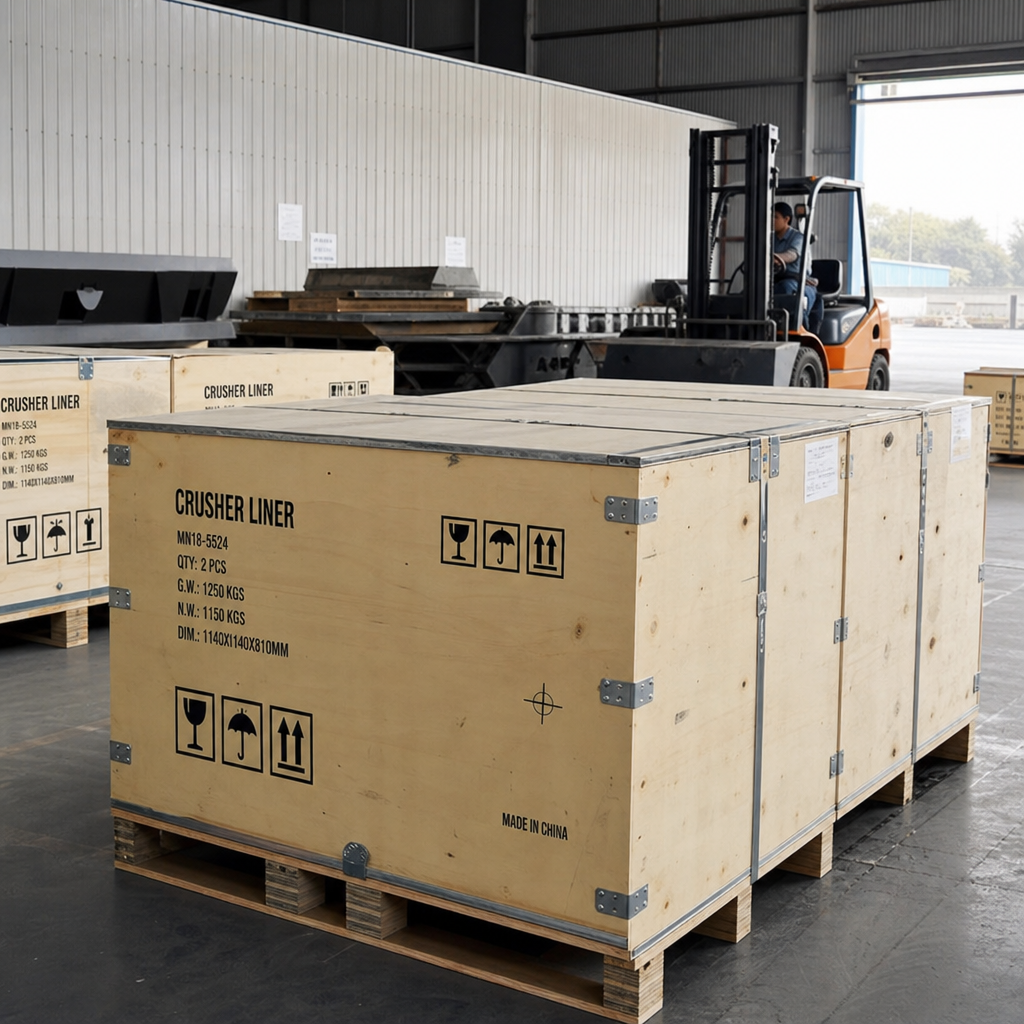
Wear parts sourcing isn’t a one-time purchase. It’s a supply chain, and if you treat it like a transactional bargain hunt, the supply chain will bite you in the form of a stalled crusher and a frantic weekend call to a supplier who can’t ship for six weeks.
Here’s the reality of lead times:
- First order with a new foundry: expect 45–60 days from drawing approval to shipment, including pattern or tooling work, first article casting, and quality approval.
- Repeat orders after the pattern exists: typically 30–50 days. Faster than that usually means they’re sacrificing heat treatment time, or rolling castings that should still be cooling into the marketplace. Neither is good for you.
- Prototype or trial order: maybe 5–10 pieces on a tight timeline if the foundry is already running your material grade.
A few pieces of sourcing discipline that save the most headaches:
Never go below a running set plus one spare
You need one set of liners in the crusher, one set ready to go on the shelf. If you let your inventory drop to the pair bolted in the machine and nothing else, you’re one casting defect away from a crusher down event. It’s that simple.
Lock framework capacity for a 3–6 month horizon
After a successful trial and the second production order, negotiate a framework contract: committed prices for a rolling window, guaranteed production slots, and agreed tolerance on alloy surcharge pass-through. This doesn’t just stabilize your price — it stabilizes their production planning, which means your delivery dates actually hold.
Awareness of Chinese environmental production limits
For those buying from China, know the winter production restriction cycles in the heavy industrial provinces. Tangshan and surrounding Hebei cities often face emissions restrictions from October to March, depending on smog levels. A smart buyer schedules their critical orders for September delivery — before the restrictions kick in — rather than discovering in December that their supplier’s induction furnace is one of the 50% that shuts down for two weeks.
Dual-source when the risk justifies it
For a mine that spends $1M+ annually on liners, dual sourcing makes practical sense. The economics work differently for smaller operations. If dual sourcing is beyond your volume, at minimum develop one validated backup supplier — foundry, not trader — and keep your patterns registered with them so a switch is fast.
Seven Sourcing Mistakes That Cost You Real Money
I’ve watched buyers make the same mistakes for two decades. Let’s make sure you don’t repeat them:
- Comparing price per ton, not cost per operating hour. The cheapest quote is almost never the cheapest liner.
- Skipping the trial order. The only way to validate life-in-light-duty is to run the liner in your crusher against your ore for a full wear cycle. A “successful trial” that’s just a warehouse inspection is not a trial.
- Not checking recycled scrap content. Foundries that use cheap scrap steel instead of clean alloy returns can end up with erratic trace elements and a chemistry mess. Ask about their charge materials; request the melt shop practice report.
- Buying through a trading company without a clear foundry identity. A trader might “source from X foundry this batch, Y the next.” That’s the quickest path to inconsistent quality. If the trader can’t name and guarantee which foundry makes your castings, walk.
- Skipping the heat treatment documentation. “It’s hard enough, don’t worry” is the most expensive sentence in sourcing. Without a signed heat treatment chart, you have no contractual basis to reject a liner that underperforms.
- Underspecifying the drawing tolerances. High chrome liners crack when they’re forced to fit. If your drawing has tight shrink-fit clearances baked in from a manganese liner experience, high chrome will fail in a different way. Drawings should specify material-specific fit tolerances.
- Ignoring packaging and export requirements until the last minute. Rust is the silent killer. A liner that arrives surface-rusted can pass a hardness test but already has shallow corrosion pits that act as crack initiation points. Write packaging standards into the PO: VCI paper, anti-rust oil on machined surfaces, humidity indicators, proper plywood crates. It costs pennies per crate and saves you from ugly arguments later.
Frequently Asked Questions
High chrome or manganese steel for my cone crusher?
Manganese steel (12–14% Mn Hadfield) handles high impact energy and is the right call for primary crushing with large feed. High chrome white iron (ASTM A532) wins in secondary and tertiary crushing where impact is moderate but abrasion dominates. The decision is an economic one: calculate cost per tonne against expected life, not against hardness alone.
What’s the typical minimum order at a Chinese foundry for custom high chrome liners?
Most foundries expect one complete set per drawing number, or roughly 500 kg to 2 tonnes per order, because tooling and pattern amortization drive minimums. A reputable foundry will run a 2–3 piece trial set before you commit to full production. Anything less is usually a trading company reselling somebody else’s castings.
How many hours will a high chrome liner last?
In a typical mid-abrasion secondary cone crusher application, a high chrome liner runs 2,000 to 4,000 hours. Actual life depends on feed size, crusher speed, closed-side setting, and ore abrasivity. Insist the supplier quotes life against your specific ore type, not a made-up benchmark.
What certificates should I ask for from the foundry?
Minimum documentation: a certified chemistry report (Cr, C, Mo, Ni, Cu), hardness test results, and a heat treatment curve. For larger or safety-critical liners, request EN 10204 3.1 inspection certificates, magnetic particle testing (MT), or ultrasonic testing (UT) as appropriate.
Putting It Into Practice
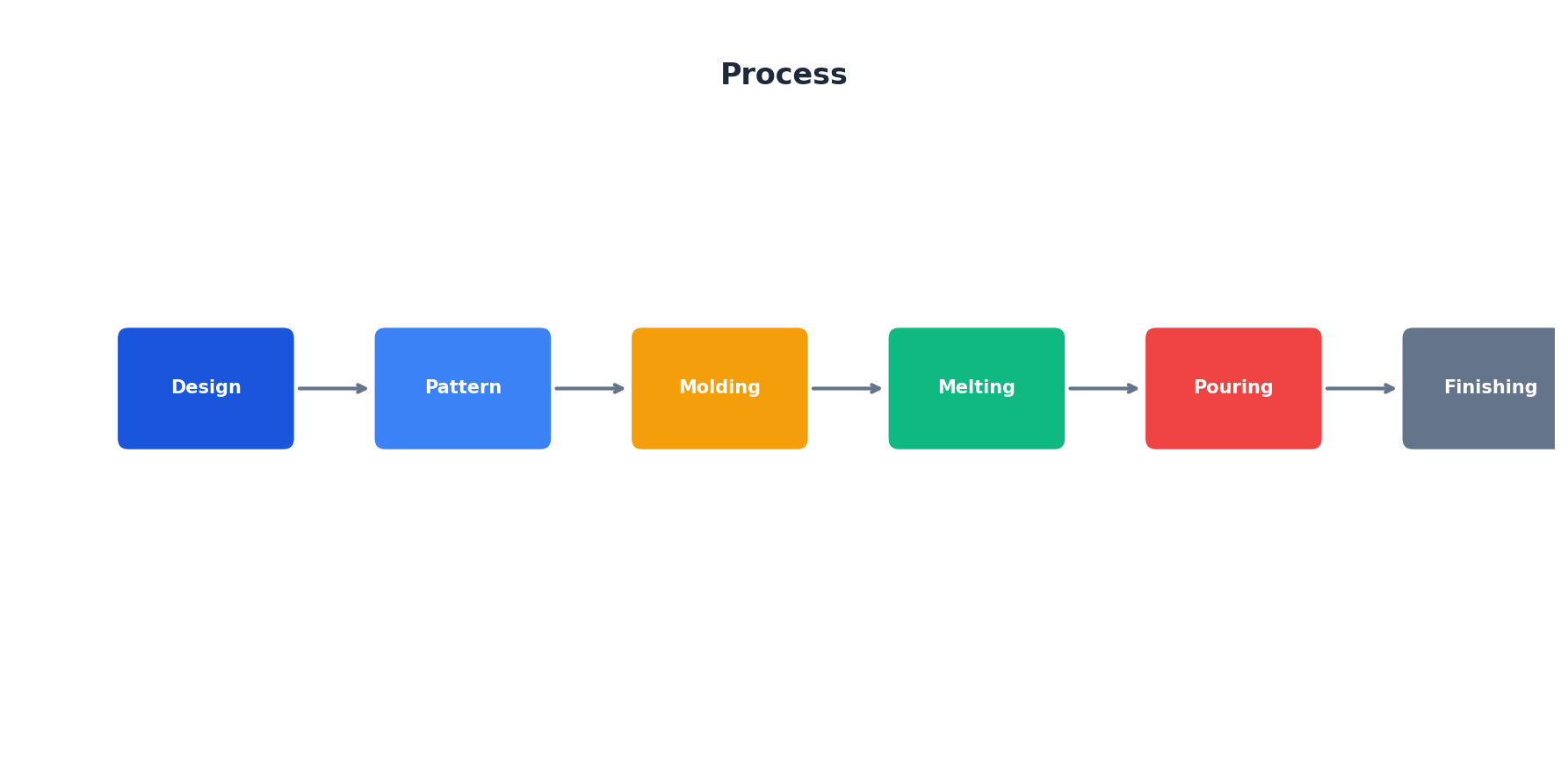
Here’s your action plan, in order:
- Define the operating window. Ore type, feed size distribution, F80, crusher model, speed, closed-side setting, current liner life. Write it all down in one document.
- Select the alloy grade. Use ASTM A532 as your reference framework, but let the application engineer weigh in. If you need 18-25% Cr with 1-2% Mo and specified hardness, write it precisely.
- Shortlist candidates using the 7-point audit. Three suppliers maximum. Don’t spread yourself thin trying to evaluate six.
- Run a field trial. Small batch, controlled variables, measured results. Record the hours. Measure the wear. Calculate cost per operating hour.
- Scale up with data. If the trial wins, place the production order for the full pattern set and negotiate the pricing formula and framework capacity.
- Build inventory discipline. Running set plus spare, always. Review alloy price trends quarterly and time purchases accordingly.
High chrome crusher liner sourcing is not the most glamorous part of mining procurement. It’s not a shiny new haul truck and it’s not a big-name OEM contract. But it’s a place where good decisions put real money back into your budget, every single shift, all year long. Do the math, check the metallurgy, and hold your suppliers to the same standards you’d hold anyone who touches your production.
In 2026, the buyer who treats liners as a metallurgy problem is the one who doesn’t have to beg for liner availability in the middle of a wet season rush. Be that buyer.
- ✓ 1,700+ vetted foundries
- ✓ 40+ QA engineers
- ✓ Serving buyers in 22 countries
- ✓ ISO 9001 / IATF 16949 capable
Need a second opinion on your liner sourcing strategy?
Send us your crusher model, feed parameters, current liner life, and quotes you’ve received. We’ll give you a straight assessment of whether your high chrome specification and supplier choice actually make economic sense — before you commit to a container.