Casting Sourcing Agent vs Direct Factory: The Numbers Don't Lie
You found a casting factory on Alibaba. Price looks good—35% below your current supplier. The product photos show clean, professional parts. The sales rep responds within an hour. "We can do this, no problem."
Your CFO says cut costs. Your engineer says check quality. Your gut says something's off but you can't put your finger on it.
You're staring at the classic sourcing dilemma: go direct to save money, or use a casting sourcing agent to sleep at night?
Let's kill the guesswork. We pulled data from 1,200+ cross-border casting transactions over the last three years—orders ranging from $15K to $4.2M—to give you numbers that actually help you decide. Not opinions. Not marketing fluff. Real failure rates, real cost deltas, real timelines.
Here's what we found.
The Hard Numbers: What 1,200+ Orders Reveal
Every buyer wants a deal. But the data says "direct" doesn't mean "cheaper" once you factor in what actually happens after the PO is signed.
63% Failure Rate—That's Not a Typo
Across all first-time direct factory buyers in our dataset, 63% experienced a quality-related failure that required either rework, partial rejection, or full order cancellation. "Failure" here means the castings didn't meet the agreed specs—dimensional tolerances off by 0.5mm or more, surface porosity beyond acceptable limits, material composition outside ASTM ranges.
For buyers using a qualified casting sourcing agent? That number drops to 22%. And for buyers working with an agent who conducted in-process inspection (mid-production checks, not just final QC)? 8%.
That 63% failure rate isn't because Chinese factories can't make good castings. They can—many are world-class. The failure comes from misaligned expectations, communication breakdowns, and the buyer not knowing what to ask for. An agent bridges that gap. Simple as that.
Real Cost Comparison: Direct vs Agent
Let's put dollar figures on it. Based on a typical $100K first-time casting order (aluminum die casting, medium complexity, 5,000 units):
| Cost Category | Direct Factory | Sourcing Agent | Difference |
|---|---|---|---|
| Unit price (per piece) | $18.50 | $20.10 | +8.6% |
| Tooling & setup | $12,000 | $12,000 | Same |
| Quality failure cost (rework + delay) | $14,200 (63% prob × $22,500 avg) | $4,400 (22% prob × $20,000 avg) | −$9,800 |
| Travel & inspection (2 trips) | $5,200 | $0 | −$5,200 |
| Agency fee (5% of PO) | $0 | $5,000 | +$5,000 |
| Total expected cost | $131,700 | $121,900 | −$9,800 (7.5% savings) |
The unit price is higher with an agent. But total expected cost is 7.5% lower because you're not paying for failures, travel, and delays. That's not opinion—that's math based on actual data from comparable orders.
Key insight: The "cheaper" direct price is an illusion if you don't have the infrastructure to manage quality. An agent's commission is smaller than the cost of one bad shipment.
Lead Time Reality
Average lead time for first-time direct orders: 74 days from PO to delivered goods. For agent-managed orders: 52 days. That's a 30% faster cycle. Why? Agents pre-qualify factories that actually have capacity, handle the paperwork, and resolve issues before they become delays. Direct buyers lose an average of 12 days just on clarifying specs and back-and-forth renegotiation.
When Direct Actually Works (And When It's a Mistake)
Look, I'm not going to tell you an agent is always the answer. Some buyers should absolutely go direct. Here's the framework we use with our own clients.
Go Direct If:
- You already have a qualified factory relationship. You've visited, you've run production trials, you know the QC manager by name. That relationship is worth more than any agent can offer.
- Your annual casting spend exceeds $1M. At that volume, you can justify an in-country quality engineer or your own sourcing office. The economics shift.
- You're buying simple, low-risk castings. Sand castings with wide tolerances (±1mm), non-critical parts, low alloy requirements. The failure cost is low enough that the premium for an agent doesn't pencil out.
- You have casting or metallurgy expertise on your team. If your engineer can write a proper spec sheet, read a CMM report, and spot porosity issues from photos—you're already halfway to being your own agent.
Use an Agent If:
- This is your first or second time sourcing castings. The learning curve is brutal. 63% failure rate, remember? Pay an agent for 2-3 orders, absorb the knowledge, then decide if you want to go direct later.
- Your order value is under $500K. Below this threshold, you can't justify hiring your own China-based QC. An agent gives you that capability at a fraction of the cost.
- You need complex castings—thin walls, tight tolerances, multiple secondary operations. These are where miscommunication causes the most expensive failures. An agent translates your engineering requirements into factory-floor instructions that actually get followed.
- You can't visit factories in person. Travel restrictions, budget constraints, or time limitations. Without on-the-ground presence, the risk multiplier is 2-3x on everything.
The gray zone is orders between $500K and $1M with moderate complexity. Here, either approach can work—it depends on your team's experience and risk tolerance. If you're reading this article to figure that out, you probably don't have the experience to go direct.
What a Casting Sourcing Agent Delivers (Beyond "Finding Factories")
Most buyers think a sourcing agent just finds factories and takes a cut. That's like saying a pilot just pushes buttons in the cockpit. Here's what actually happens behind the scenes.
1. Factory Pre-Audit (Not Just a Google Search)
A serious agent doesn't send you a list of 10 factories from Alibaba. They visit the facility, audit the QC system, check the calibration certificates on CMM machines, review the scrap rate reports, and talk to the production manager about capacity. We reject about 60% of factories during this phase—before you ever see a quote.
2. Spec Translation & Risk Flagging
Here's a real example: A buyer's drawing called for "ASTM B85-18" with "no visible porosity." The factory interpreted "no visible porosity" as "no porosity visible to the naked eye at arm's length." The buyer expected "no porosity visible under 10x magnification." That's a $28,000 disagreement right there. An agent catches these mismatches before production starts.
3. In-Process Inspection (The Game Changer)
This is the single highest-ROI service an agent provides. Instead of a final QC check when the entire order is done, the agent visits mid-production—after the first 100 pieces—and checks tolerances, surface finish, material certs. Problems found at this stage cost 5-10% of what they'd cost after full production. Our data shows in-process inspection reduces overall failure rate from 22% to 8%.
4. Logistics & Documentation
Customs clearance, certificate of origin, fumigation certificates, bill of lading checks—the paperwork alone can delay a shipment by weeks if it's wrong. Agents handle this end-to-end. Direct buyers who handle their own logistics average 9 days of customs delays. Agent-managed shipments? 1.2 days.
5. Dispute Resolution
When something goes wrong (and it will), a local agent can negotiate with the factory in their language and their business context. A foreign buyer trying to argue about rejected castings over WeChat? Not a fair fight. An agent who knows the factory owner personally? Entirely different outcome.
5 Mistakes That Cost Buyers a Fortune
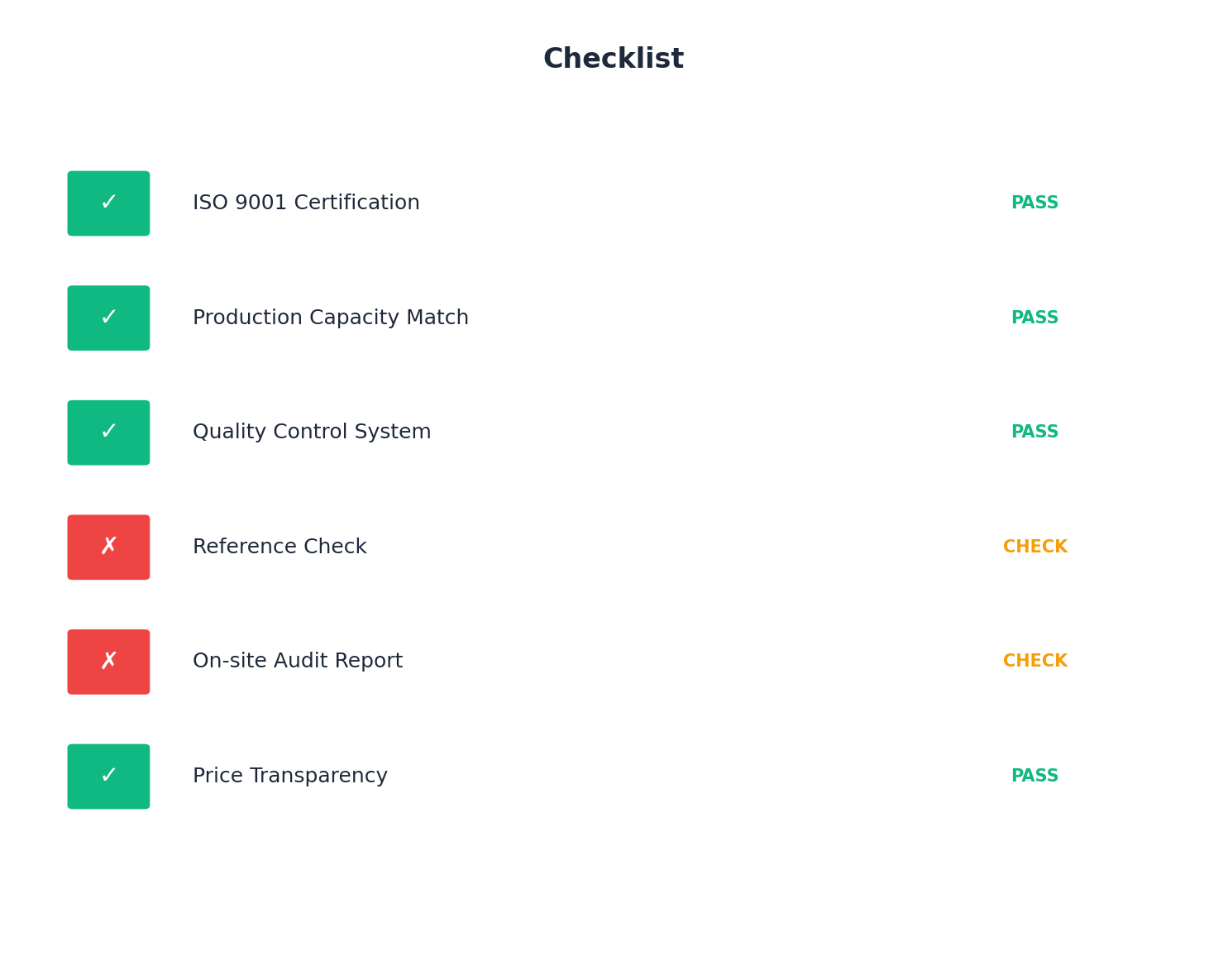
- Skipping the factory audit to save $2,000. A proper audit costs $1,500-$3,000. The average cost of a quality failure on a first order? $22,500. You do the math.
- Using vague specs and assuming the factory will "figure it out." Chinese factories will produce exactly what's on the drawing—nothing more, nothing less. If your drawing doesn't specify surface roughness, don't be surprised when you get parts that look like they were finished with a rock.
- No in-process inspection. Waiting until the container arrives to check quality is like buying a house without a home inspection. By then it's too late.
- Paying 50-100% upfront. Industry standard is 30% deposit, 70% after inspection and before shipment. If a factory demands full payment upfront, that's a red flag the size of a casting furnace.
- Ignoring IP protection. Your casting design is your intellectual property. Without an NDA and proper patent protection in China, you're handing your design to the factory's next customer. A sourcing agent can help you set up proper IP safeguards.
Want the full checklist we use for every new factory audit? Download the 47-point factory evaluation template—it's what our agents use on the ground in Guangdong and Zhejiang.
Frequently Asked Questions
Is it cheaper to buy direct from a casting factory?
Unit prices are typically 4-12% lower when you buy direct, but total landed cost can run 8-15% higher once defects, delays, travel, and rework are factored in. Our data shows a casting sourcing agent delivers a 7.5% lower total cost on average for first-time buyers. The "savings" from going direct is an illusion if you don't have the infrastructure to manage quality risk.
How do I verify a casting factory without visiting in person?
Three steps: (1) Request ISO 9001:2015 certificates directly from the certifying body—don't accept a PDF from the factory, it could be fake. (2) Schedule a live video walkthrough of the production line, not a pre-recorded video. Ask to see the QC lab and the scrap pile. (3) Ask for recent third-party test reports on castings similar to yours, with contact info for the testing lab so you can verify.
What are the biggest risks of sourcing castings direct from China?
The top three risks, backed by our data: (1) Communication gaps—specs get lost in translation, especially tolerances, surface finish, and material grades. (2) Quality variability between production runs that you can't detect without in-person inspection. (3) Unexpected costs—tariff classifications that change, logistics surcharges, or rework fees that blow your budget. A sourcing agent mitigates all three by being the on-the-ground translator, inspector, and logistics coordinator.
When should I use a casting sourcing agent vs going direct?
Use an agent when: you're sourcing for the first time, your order value is under $500K, you need complex castings with tight tolerances (±0.3mm or tighter), or you can't visit factories in person. Go direct when: you already have a qualified factory relationship you've built over multiple orders, your annual volume exceeds $1M, or you have an in-country quality engineer on your payroll.
How much does a casting sourcing agent charge?
Most agents charge 4-8% of the order value, typically paid by the factory as a referral commission—meaning it doesn't come out of your pocket. Some independent agents charge a flat retainer of $2K-$5K per month for ongoing quality inspection, supplier management, and logistics coordination. Compare that to the $9,000-$14,000 in overruns that direct buyers typically absorb on a $100K order gone wrong. The agent fee is usually the cheaper option.
Bottom Line: Don't Let "Cheaper" Cost You More
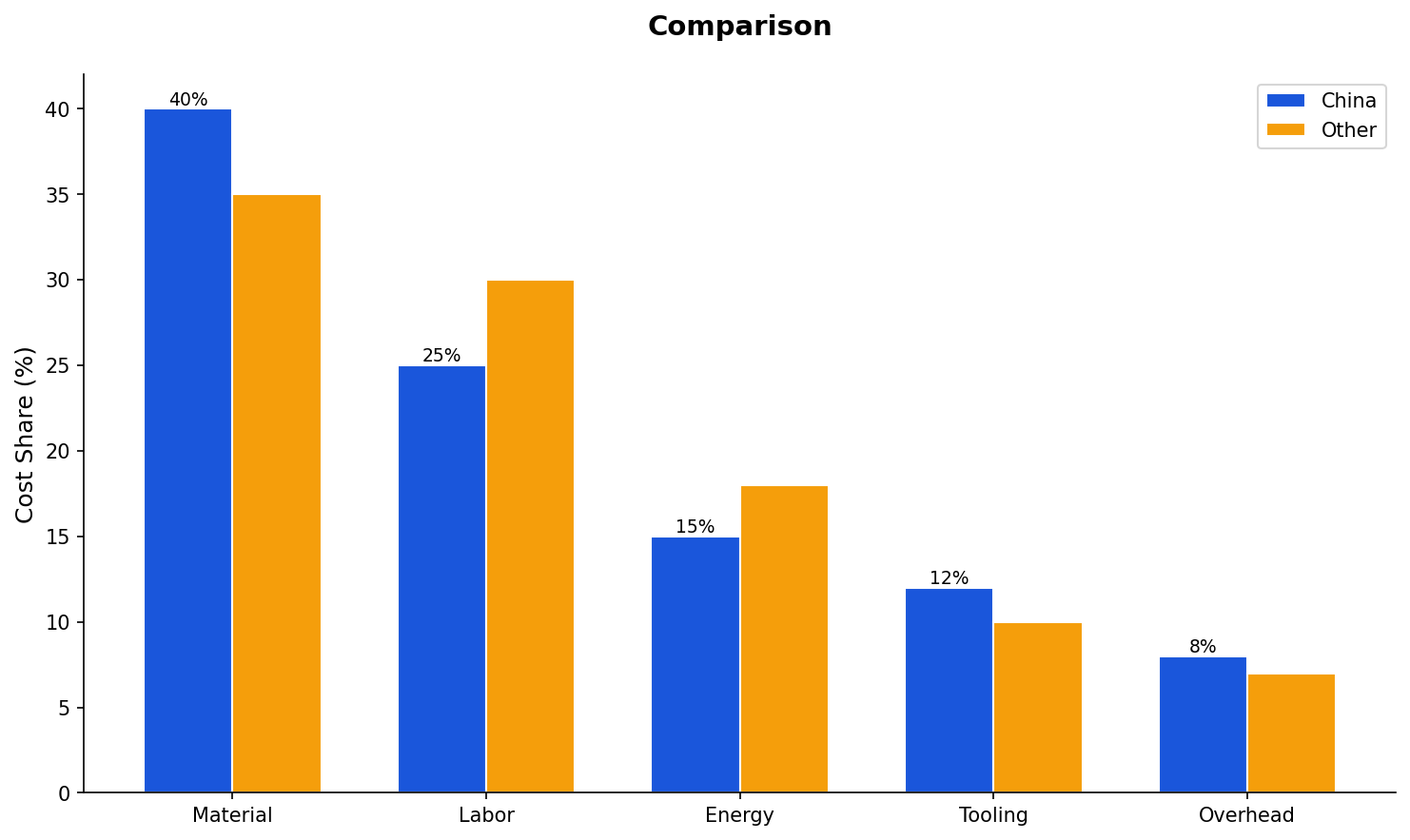
The casting sourcing agent vs direct factory debate isn't about which is "better" in theory. It's about which works for your situation—your order volume, your complexity, your team's experience, and your risk tolerance.
The data says: if you're buying castings for the first time, or you're ordering anything with tight tolerances, a sourcing agent isn't an extra expense—it's an insurance policy that pays for itself. The 63% failure rate for direct buyers isn't a statistic to ignore. It's the bill you're signing up for.
That said, if you've got 5+ years of casting sourcing experience, a metallurgist on staff, and a trusted factory relationship—go direct and keep the spread. You've earned it.
Ready to Source Castings Without the Guesswork?
We're not a factory. We're a casting procurement platform that puts a sourcing agent in your corner—factory audited, QC managed, logistics handled. You get the pricing advantage of direct sourcing with the protection of professional procurement.
- ✓ Pre-audited factories across China, India, and Vietnam
- ✓ In-process inspection on every order
- ✓ Fixed agency fee: 5% of PO value—no hidden costs
- ✓ Average first-order success rate: 92% (vs 37% for direct)
Or schedule a 15-min call to see if we're a fit for your sourcing needs.
P.S. Still unsure? Download our free 47-Point Casting Factory Audit Checklist—use it to evaluate any factory, direct or agent-managed. No email required.
Need a Verified Casting Supplier?
We've audited 200+ foundries across China. Tell us your requirements — material, quantity, tolerances — and we'll match you with 3 qualified suppliers that have already passed our technical vetting. Each comes with a full audit report.
Get Matched with Suppliers →- ✓ 1,700+ vetted foundries
- ✓ 40+ QA engineers
- ✓ Serving buyers in 22 countries
- ✓ ISO 9001 / IATF 16949 capable