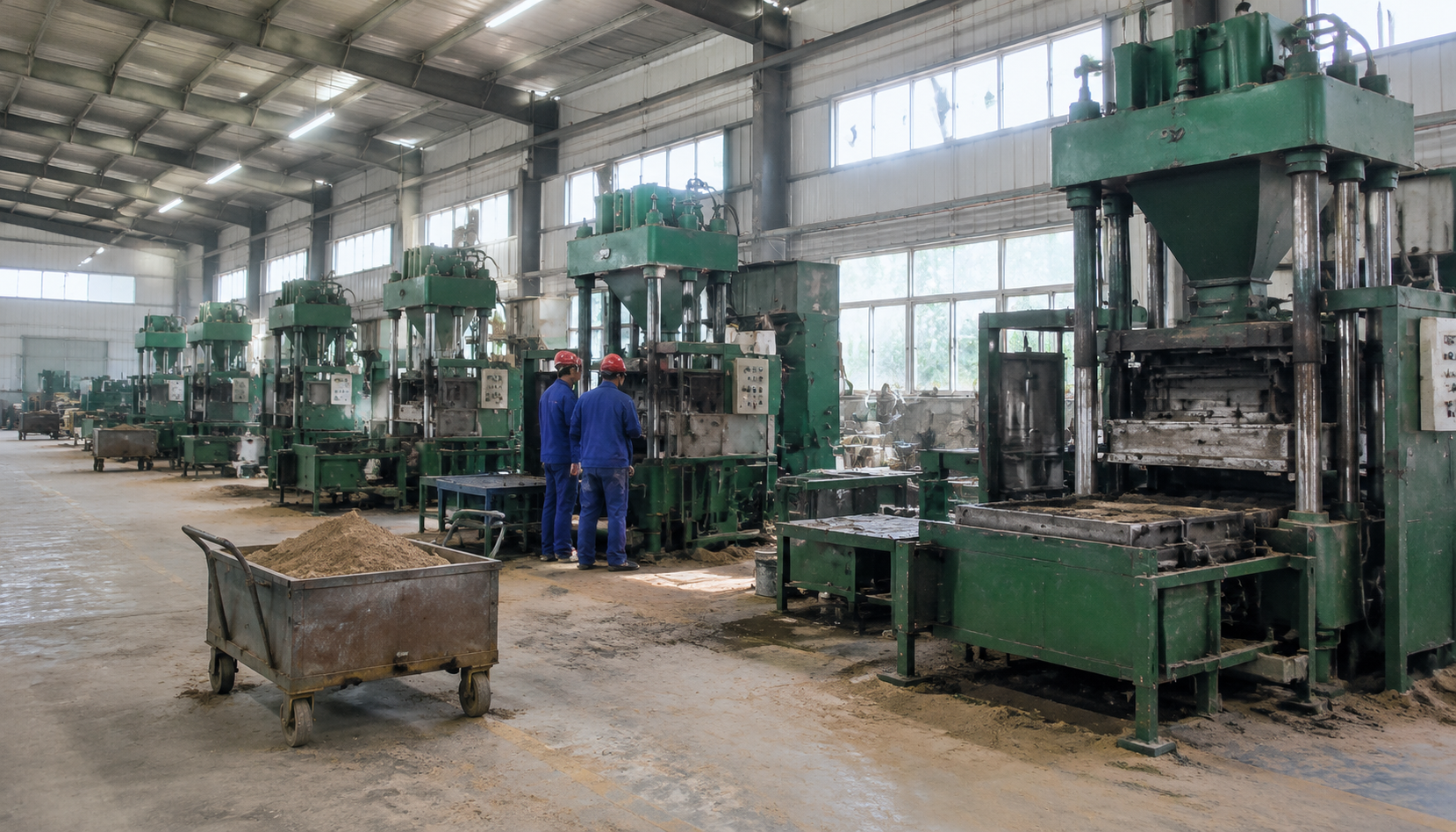
China reported roughly 52 million tonnes of castings in 2023 and around 12,000 casting enterprises. Sounds like a deep market. It is. It's also the reason buyer-side screwups keep happening — with that many options, nobody wants to be the person who sends a $40,000 tooling deposit to a company that turns out to be three people in an office renting a warehouse address.
Here's the number that actually matters to you, though. When sourcing agents and QC teams look back at failed casting orders, the breakdown is boringly consistent: bad price comes up rarely. Bad verification comes up almost every time. Wrong material grade that nobody checked. A "factory" that was a trading company. A certificate that expired two years ago but was emailed as a fresh PDF.
So this isn't a list of questions to ask. Anyone can email questions, and any good sales rep can answer them smoothly. This is a list of things you look at and cross-check against a second source. Eight of them. Do all eight and your risk profile changes dramatically.
Why verifying a casting supplier got harder, not easier
Two decades ago, if you wanted a foundry, you went to a trade fair, met the owner, and shook his hand in a booth with his own castings on the table. Now you meet an account manager on Alibaba, get a quote in 90 minutes, and the actual plant might be a subcontractor he's never visited either.
Three things shifted the ground:
Consolidation. China went from roughly 24,000 casting enterprises in the early 2000s down to around 12,000 today, with environmental enforcement closing thousands of small, dirty plants. Good for quality overall. Bad for you, because the survivors are now booked solid and a lot of the mid-tier volume flows to subcontractors you'll never hear about.
The trading-company layer. Plenty of legit exporters don't own a furnace. That's not automatically a red flag — some are excellent at consolidating multi-process orders. The problem is when they present as a foundry. You pay foundry pricing, you get trading-company accountability, and when something fails, nobody is standing in front of the furnace.
Document forgery that's actually decent. Certificate templates are easy to produce. A scanned ISO 9001 PDF with a real-looking logo costs nothing to make. Verification means going to the issuing body's database, not looking at the PDF.
Fine. Let's work through the eight checks in the order I'd actually run them — cheapest and fastest first, so you don't waste a flight on a supplier who fails at step two.
Check 1: How to check a Chinese foundry's business licence and credit code
Start with the business licence. In China, the 18-digit Unified Social Credit Code is the key that unlocks everything else — corporate registry, legal disputes, court judgments, all of it. Get the licence image and the code before you get a quote.
Now read the business scope (经营范围) line carefully. It needs to contain casting or foundry language — 铸造, 铸件, 有色金属铸造, something of that family. If it says 贸易 or 销售 only, you're talking to a trader. If it says 机械配件加工, that's machining, not casting, and they may be outsourcing the pour.
Two traps here. First, scope lines in China are broad and sometimes stale; a genuine plant may have castings buried under a broader manufacturing description. So don't reject on scope alone — flag it and verify physically. Second, the registered address and the plant address often differ for perfectly innocent reasons (registered in a city office for tax and banking, produced in a county industrial park 60 km out). Ask for both addresses and the reason for the gap.
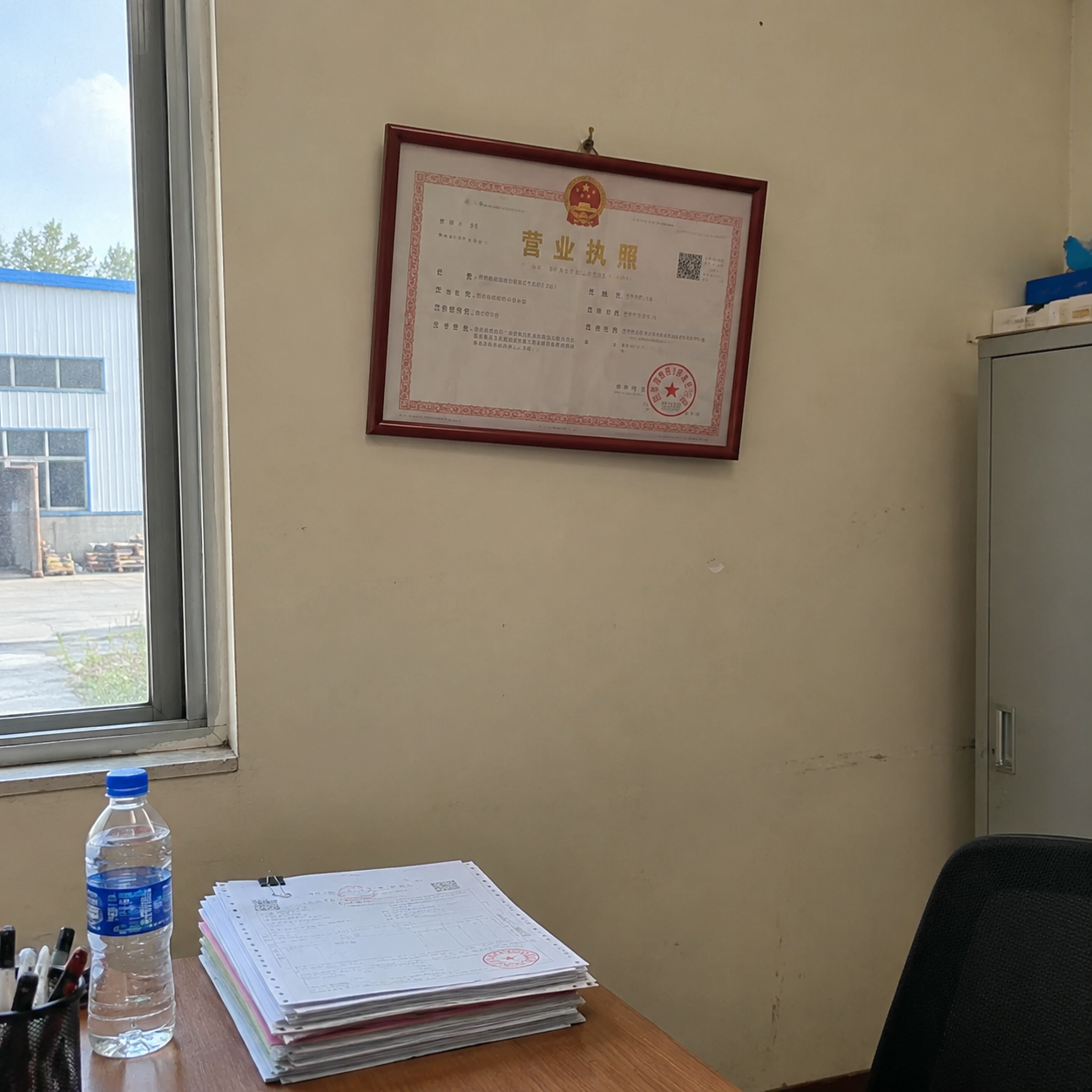
Then cross-check the company against a third-party registry — QCC, Tianyancha, or the official National Enterprise Credit Information Publicity System. You're looking for three things: the shareholders (are they individuals or another company?), the number of employees declared on social insurance filings, and any 被执行记录 (enforcement records) or 失信 records. A foundry claiming 300 staff with 22 people on social insurance is telling you something. It might be labour outsourcing, which is normal enough, or it might be a much smaller operation than advertised.
One more: search the company name plus the word 铸造 in a Chinese search engine and look at the results for five minutes. Old tender notices, environmental permits, government inspection reports — these leak out and often contradict the glossy catalogue.
Check 2: Verify the ISO certificate at the issuing body, not in your inbox
Every casting supplier you'll ever meet has ISO 9001. Ask them to send it and it arrives in two minutes. That tells you almost nothing.
What you actually do:
Read the scope statement. ISO 9001 certificates are scoped. A certificate that covers "machining of metal components" does not cover "production of ductile iron castings." If the scope doesn't name your process, it's decoration.
Check the expiry and the surveillance audit dates. Certificates run on three-year cycles with annual surveillance. A certificate that's technically valid but has missed a surveillance audit is a suspended certificate. Most buyers never look.
Go to the certifier's database. Every accredited body publishes a searchable register. In China, the national 认证认可信息公共服务平台 lets you search by certificate number or company name. IAF members publish their own through IAF CertSearch. If the certificate number doesn't come back as active, in the supplier's exact legal name, at that exact address — you've got your answer, and it's a short conversation.
Then ask what you actually need, not what sounds impressive:
- General industrial castings: ISO 9001 is the baseline. Don't pay a premium for IATF unless you're automotive.
- Automotive supply chain: IATF 16949, and it must be site-specific. Group certificates covering a sister plant don't transfer.
- Pressure equipment in Europe: PED 2014/68/EU conformity, AD 2000-Merkblatt W0 for cast steel, plus a notified body with casting experience — not just a paper trail.
- US pressure or structural work: ASME BPVC Section IX for welding, and material certs against the relevant ASTM spec — A216 for carbon steel valves, A536 for ductile iron, A48 for grey iron, B108 for aluminium.
Here's the question that separates real from rehearsed: "Which notified body audits your pressure casting line, and when was the last audit?" A plant that genuinely holds the certification answers in two seconds with a name and a month. A trader pivots to talking about their "quality philosophy."
One distinction worth teaching your receiving dock, because it costs people real money: a certificate of conformity says the supplier believes the parts meet spec. A material test certificate says somebody actually pulled a bar, ran it, and wrote down the number. They arrive looking almost identical. They are not the same document.
Check 3: Match claimed casting capacity against equipment nameplates
Capacity is a number you can spot-check. Ask for the equipment list with model numbers and quantities, then ask for photographs of the equipment nameplates — not the machines in a catalogue, the actual plates on the actual machines in their building. Serial numbers, manufacturer, year of manufacture.
Then do the arithmetic yourself. For sand casting, take the number of molding machines, cavities per pattern, and cycle time. For die casting, take tonnage, shot weight, and shots per hour. Multiply by shifts and 300 working days. What comes out is a ceiling. If they claim 800 tonnes a month and the math gives you 350, you've found either a subcontracting operation or a sales number.
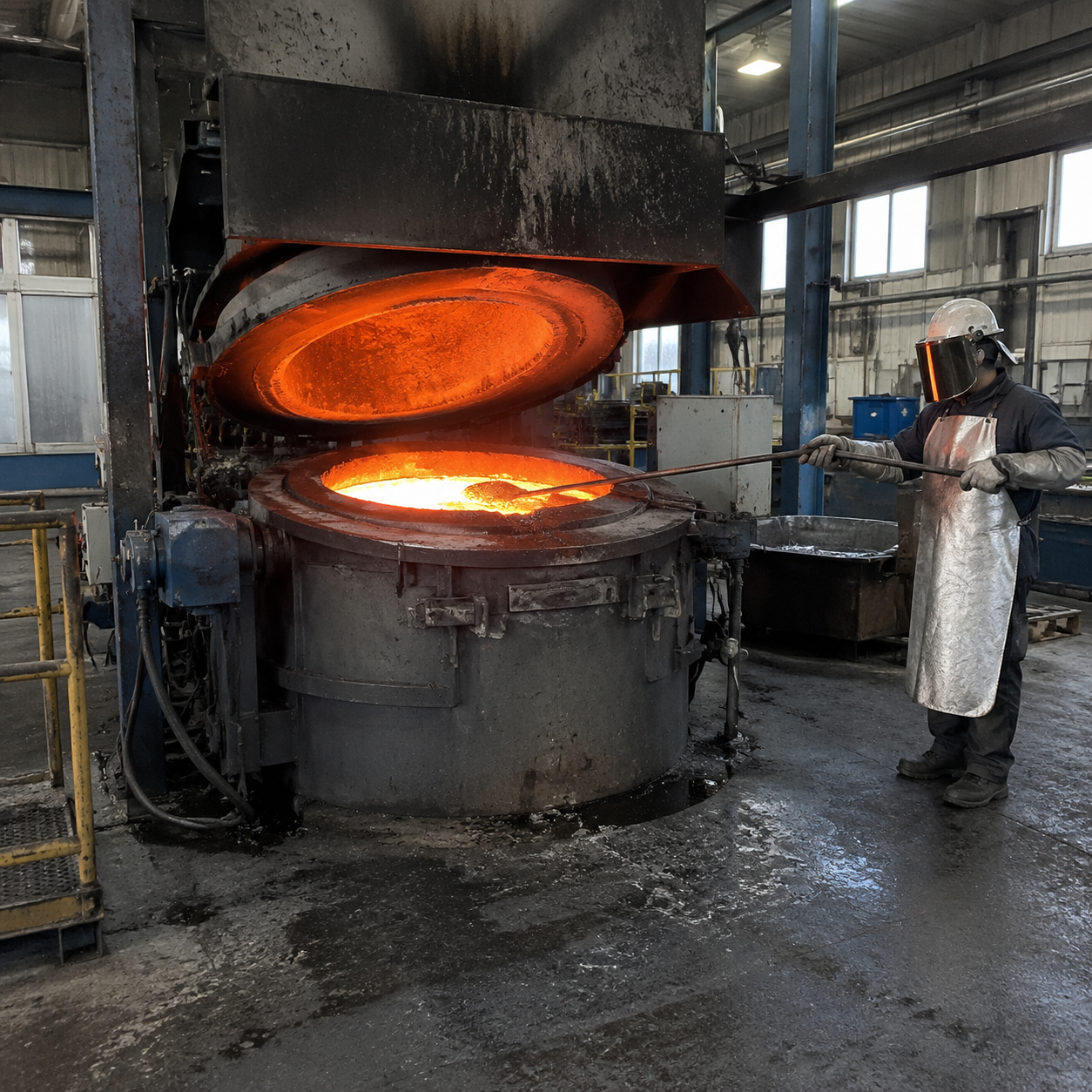
Also ask what they don't do in-house. Heat treatment, machining, NDT, surface finishing. Almost no foundry does all of it. That's fine — but you want the list, because subcontracted steps are where traceability breaks. If heat treatment goes out to a shop that doesn't record furnace charts per batch, your material properties are unverifiable no matter what the certificate says.
One tell: ask them to walk you through what happens when two orders for the same part overlap. A plant with real capacity planning has a schedule board, a batch numbering convention, and a physical separation rule. A plant winging it says "we handle it."
Check 4: Get scrap rates and NDT reports, not quality adjectives
"We have strict quality control" is not a data point. Here's what is:
Scrap rate over the last twelve months, by process. Sand casting typically lands in the 3–5% range for a competent shop; die casting in a good plant runs lower. If they can't produce a number because "every part is different," they don't track it — which means nobody is steering.
Last five customer complaints and the corrective actions. Not a summary. The actual CAPA records. This is uncomfortable to ask and revealing to receive. A plant with a functioning system hands over a clean document with root causes and dates. A plant without one gets defensive.
Measurement capability. What CMM do they have, what's its calibration date, and who calibrates it? Call that calibration house and confirm. Sounds obsessive. Takes eight minutes. Catches the shops that bought a CMM and stopped calibrating it in 2021.
Material verification on every heat. They should be running a spectrometer on each melt and keeping the records against the heat number. Ask for three recent spectrometry reports with heat numbers, then ask to see those heat numbers on the shipping paperwork for the matching castings. This is the pivot point of the whole audit — if the chain from melt to shipment holds, most other things follow.
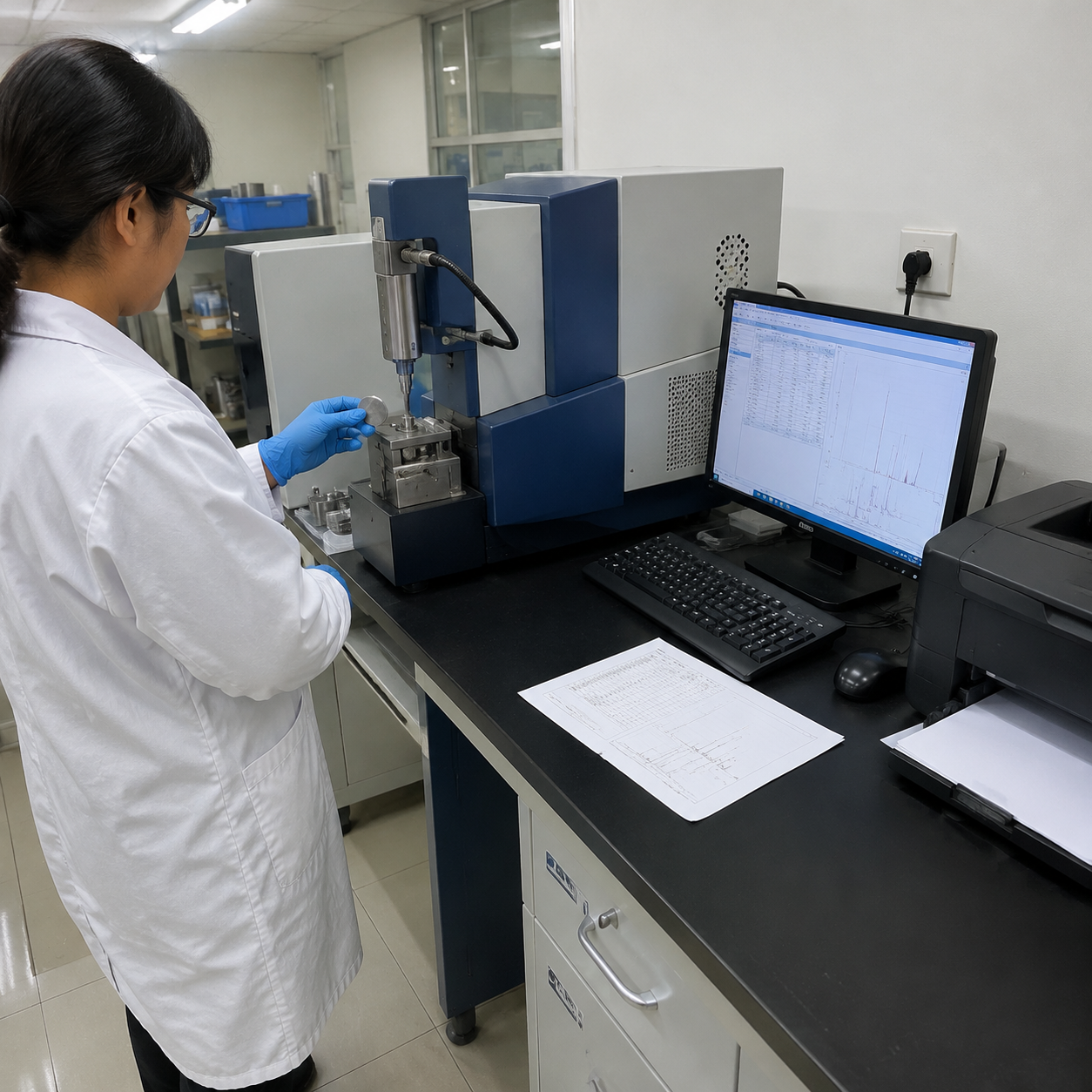
Ask too about NDT. Do they have X-ray, ultrasonic, magnetic particle, dye penetrant in-house, or is it outsourced? Outsourced NDT is normal for smaller plants, but you want the third-party's accreditation and you want the reports issued in the casting supplier's name with the heat number referenced.
"We do X-ray" is a sentence, not a specification. What you actually need is the reference standard and the acceptance level. Radiology of steel castings runs to ASTM E446 for sections up to 2 inches and E186 for heavy-walled 2–4.5 inch sections. Liquid penetrant is E165, magnetic particle is E709 or E1444, ultrasonic contact testing of carbon and low-alloy steel castings is A609. Then the severity level — usually 1 or 2 for commercial work, tighter for pressure-retaining — and the name and certification level of whoever signed the report.
Sampling logic matters just as much, and this is where most buyers never push. For mechanical properties, ask how many tensile bars come from each heat, whether they're cut from a separately poured keel block or from an attached test coupon, and which standard governs the test (ASTM A370 is the usual). Brinell hardness under ASTM E10 is a spot check on the casting — it is not a substitute for tensile. And the question that exposes whether there's a real procedure: if a bar fails, what happens? Retest from the same heat, or scrap the heat? A foundry that says "we test again" without being able to show you a written retest rule doesn't have one.
Check 5: How to check foundry ownership and litigation records
Ownership matters more than buyers expect, because it tells you who you're actually dealing with and whether the entity in front of you is the entity that will be there in eighteen months.
Pull the shareholder structure. Look for three patterns:
Shared ownership with a trading company. Common and usually legitimate — the foundry and the exporter share investors. But it means the "factory" and the "sales office" answer to the same person, so pressure from one reaches the other.
A brand-new entity with an old plant. Sometimes a group restructures for tax or environmental reasons. Sometimes a failing company spins up a clean shell. Check whether the new entity has the plant lease in its own name.
Rapid entity churn. If the current legal entity was registered eighteen months ago and a previously-named similar company has been deregistered, dig. That pattern rarely ends well.
While you're in the registry, look at the litigation section. Two or three contract disputes over twelve years is noise in a plant that size. A cluster of judgments around unpaid material suppliers is a cash flow signal, and cash flow problems show up in your order as material substitution.
Check 6: The foundry audit visit — two days, and don't let them drive the route
Everything above is desk work. This is where you find out whether the documents describe the building.
Book two days minimum for a first-time supplier. One day is a tour; two days is an audit. And when you arrive, tell them you want to walk the process from raw material to shipping, and that you'll be choosing the route based on where the material actually flows.
What to look at, in order:
Pattern and tooling area. Are patterns stored on racks with identification tags, or in a pile? Tool life records? A foundry that can't find its own patterns will lose yours.
Sand plant or wax room. For sand casting, look at the sand testing bench and ask to see today's compactability and moisture readings. For investment casting, look at slurry viscosity records. These are daily logs; a real process has them, a photo-op doesn't.
Melting floor. Watch a pour. Are charge materials segregated and labelled? Is there a scrap metal pile that looks like it came from a demolition site? Is the furnace operator using a chart or going by eye?
Cleaning and finishing. This is where visual defects survive. Look at the reject bin. Nobody stages a reject bin. Walk over and look at what's in it, and ask the supervisor what defects he's seeing most this month.
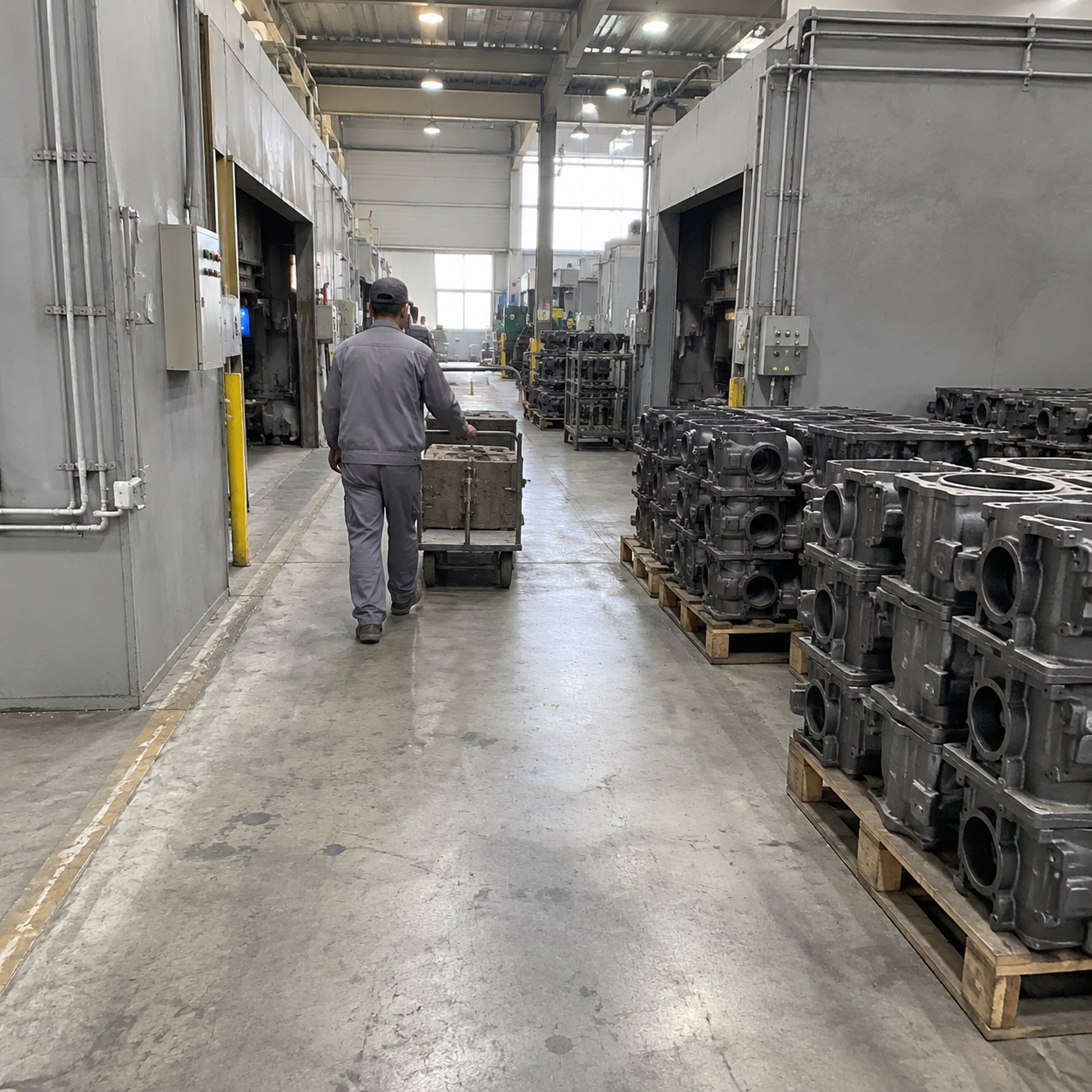
Final inspection and packing. Are inspection records filled in by hand as parts are checked, or filled in at the end of the shift? Watch for five minutes and you'll know.
Two questions worth saving for day two, when they've stopped performing: "Who signs off a shipment when quality is marginal but the customer is waiting?" and "Show me the last time you stopped a shipment." The answer to the second one tells you whether the quality system has authority or just a certificate.
Check 7: Verify heat number traceability on one real part
Pick a part they've made recently — ideally one already shipped. Then trace it:
- Heat number on the casting → melting record → spectrometry result
- Heat number → heat treatment furnace chart (if applicable)
- Heat number → material test certificate issued to the customer
- Part serial or batch → dimensional inspection report → CMM output
- Batch → NDT report, with the inspector's qualification level
- Batch → packing list → shipping documents
Every link should exist and should carry the same number. Broken links are where warranty claims become arguments. If you want the longer version of this habit, it's written up separately in our piece on heat number traceability.
Pay attention to the material certificate format. EN 10204 3.1 means the certificate is issued by the manufacturer's own independent inspection department — that's normal and acceptable for most work. EN 10204 3.2 means an independent third-party inspector signed it, which is what you want for pressure-retaining and safety-critical castings. If they issue 3.1 certificates and describe them as "third-party certified," that's a terminology gap worth correcting before it becomes a problem at your customer's dock.
Now the failure mode that survives every other check, and it's common enough to plan for: the material certificate arrives on the trading company's letterhead, carries a certificate number that resolves to nobody, and references no heat number at all. It looks like a document. It certifies nothing.
You fix that in the purchase order, not in a phone call. Put this in writing:
Material test certificates shall be issued by the producing foundry, in the legal name of the entity that poured the heat, and shall reference the heat number as marked on the castings supplied. Certificates issued by an intermediary, or issued without a heat number, will be rejected at incoming inspection. EN 10204 3.1 minimum; 3.2 where the part is pressure-retaining.
That single clause changes what arrives in your inbox. And when it doesn't, you have a contractual basis for rejecting a shipment instead of an argument with a sales manager.
Check 8: Confirm the money side before anyone wires anything
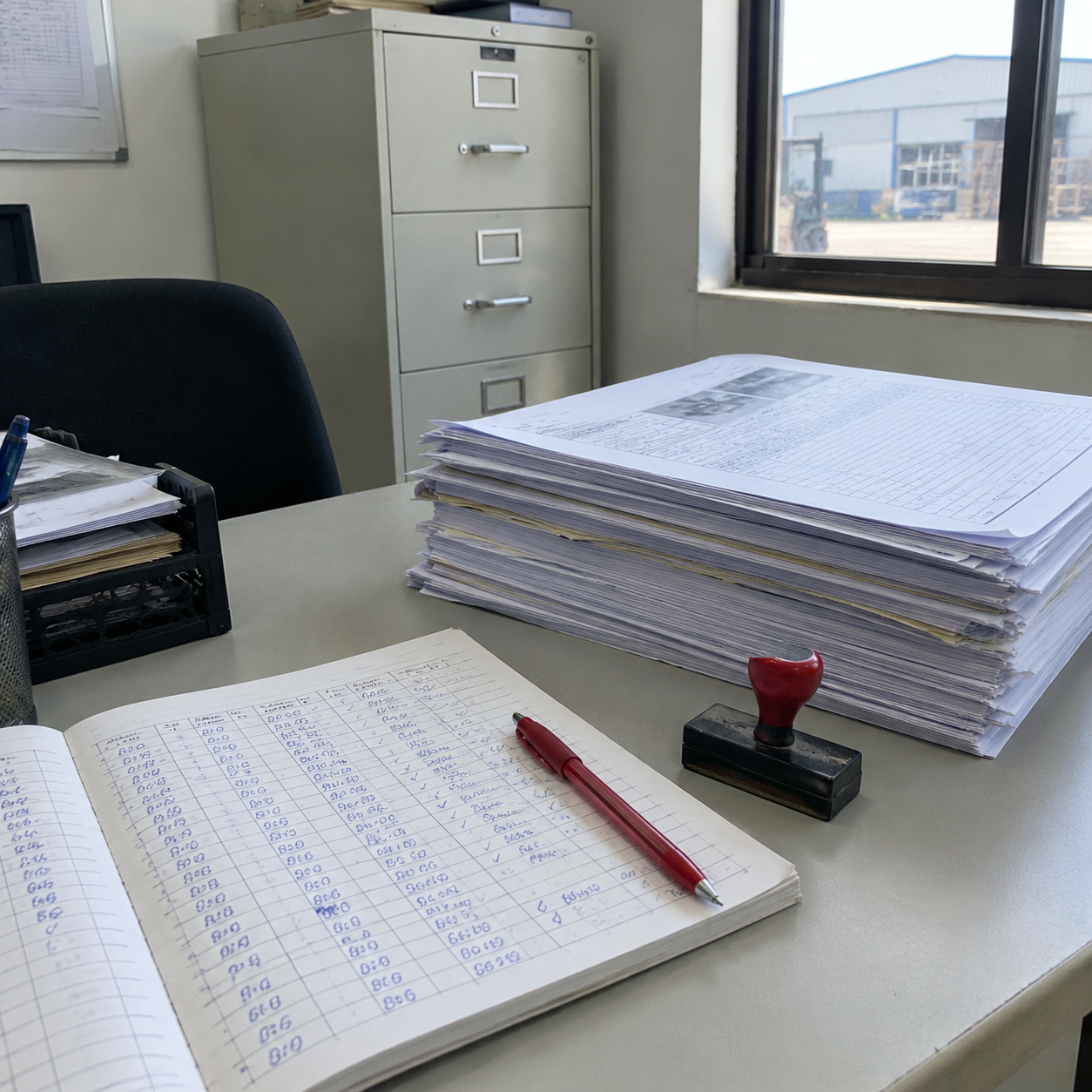
The last check is the one that gets people. Casting fraud is not exotic — it's an email with slightly altered bank details, or a deposit paid to an individual's account because "it's faster."
Three rules, no exceptions:
The bank account name must exactly match the legal entity name on the licence. Not "similar." Exact. If the invoice comes from a Hong Kong entity but the account belongs to a mainland company, stop and get a signed explanation on letterhead.
Verify banking changes by phone, on a number you already had. Never on a number from the email that announced the change. This is the single most common vector for six-figure losses in metal sourcing, and it takes thirty seconds to block.
Structure payment against milestones you can verify. Tooling deposit, then first-article approval, then production, then balance against pre-shipment inspection. A supplier who refuses milestone payments and insists on 100% before shipment is telling you how they expect the relationship to go. We've laid out the milestone structures that hold up in practice in this piece on casting payment terms.
Also check their export records if you can — customs data providers can show whether the company has actually shipped the product category you're buying, and to which markets. A supplier claiming fifteen years of exports to Germany with no customs footprint is a claim worth testing.
Common mistakes that cost the most
Skipping the certifier's database because the PDF looked fine. The certificate is the easiest document in the world to reproduce. The database isn't.
Accepting a group certificate as a site certificate. Especially with IATF. The audit was of one building, not the group.
Doing the plant visit as a guest. If the sales manager chooses the route, you've seen the showroom. Pick the route yourself and include the reject bin.
Never asking for the heat number trail. Everything about casting quality comes back to traceability. If they can't produce it for a part they already shipped, they can't produce it for yours.
Paying tooling to a personal account. Ten minutes of convenience, months of consequences.
Verifying once and assuming it stays true. Certificates get suspended. Ownership changes. A light re-check every twelve months — registry, certifier database, one reference call — is cheap insurance.
Frequently asked questions
How long does a full casting supplier verification take?
Desk work runs three to five working days if you're systematic: registry, certifier databases, equipment math, and the heat number trail. Add two days on site. If you're sourcing a safety-critical or high-value part, budget three days on site so you can watch a full production cycle rather than a staged one.
Is it a problem if my supplier is a trading company rather than a foundry?
Not by itself. Good trading companies consolidate multi-process orders, handle export paperwork, and take quality responsibility in a way a small plant can't. The problem is misrepresentation — paying foundry prices for a layer you didn't agree to. Ask directly, get the plant name in writing, and make sure the quality clauses and warranty attach to an entity that can honour them.
What's the minimum documentation to request before paying a deposit?
Business licence with the credit code, ISO 9001 certificate number and issuing body (so you can look it up), the equipment list, spectrometry reports for the material grade you're buying, and the tooling ownership agreement if you're paying for tooling. Tooling ownership is the one people forget — and it becomes very expensive at the point you want to move the tool.
How do I verify a casting certificate that looks suspicious?
Search the certificate number directly on the issuing body's public register, or on China's national certification database if it was issued domestically. Confirm four things match: legal company name, certificate number, scope statement covering your product, and current validity with surveillance audits up to date. If any one of them doesn't match, treat the certificate as absent.
Should I use a third-party inspection company instead?
For the plant visit, often yes — a local inspector with foundry experience costs far less than a flight and will read the sand test logs correctly. But don't outsource the whole verification. The judgement calls about whether a supplier fits your programme are yours, and no inspection report replaces the two hours you spend standing on the melting floor deciding whether you trust the person running it.
Next step
If you're working through this list for a live project, don't do it sequentially from memory. Print the eight checks, write the document you need for each one in the right-hand column, and mark each as received, verified, or missing. The gaps are your negotiation position — and usually, they're also your answer.
Two of the eight checks catch most of the real problems: the certifier database lookup, and the heat number trail. If you only have an afternoon, do those two. They're boring, they're fast, and they've stopped more bad orders than any factory tour ever has.
Need Help with How to Verify a Casting Supplier: 8 Checks Before You Pay?
Get matched with 3 verified foundries in 24 hours. No markup, transparent pricing.
Request Quotes →