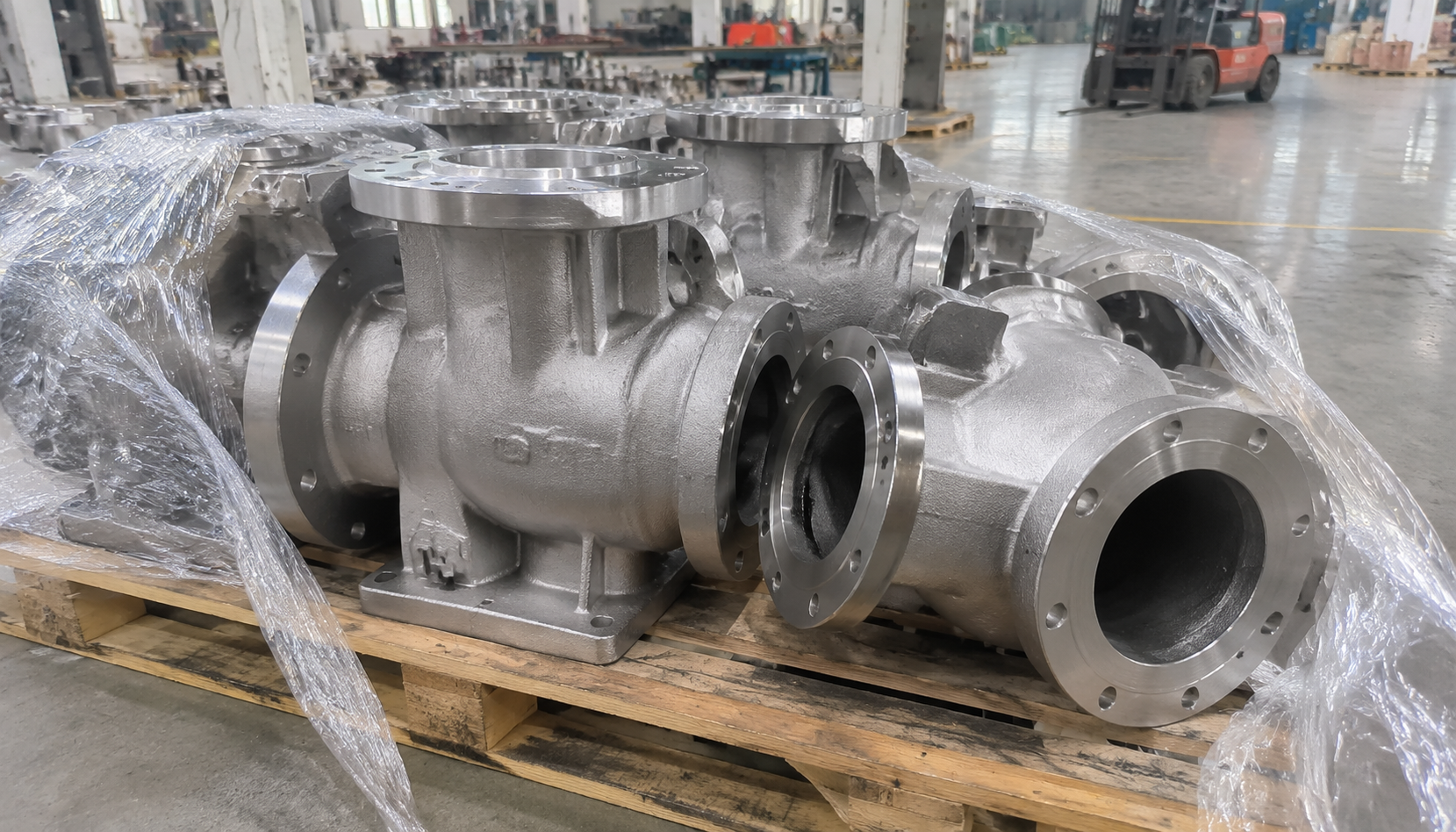
You send the same drawing to five foundries. Same alloy, same quantity, same tolerances. The quotes come back at $4.20/kg and $11.80/kg.
That's not a rounding error. That's a 180% spread between people who are all looking at the same piece of paper.
Most buyers do one of two things here. They take the cheapest quote and hope, or they take the middle one to feel safe. Both are guesses. Neither is analysis.
I've been on the buying side of castings for a long time, and I've watched prices come in all over the map on parts that should cost the same thing. The gap almost never comes from greed. It comes from four or five structural things that nobody puts in writing unless you ask.
This is what stainless steel castings actually cost per kilogram in 2026, what's inside that number, and how to tell a real quote from a quote that's about to cost you six figures in rework and air freight.
The real 2026 price ranges, by process and alloy
Start with a baseline so you know what "normal" looks like. These are FOB China ranges from Q1 2026 order data, for production quantities with standard dimensional tolerances and a chemical cert plus dimensional report. No third-party inspection, no machining.
| Process | Alloy | Order Size | Price per KG (USD) |
|---|---|---|---|
| Sand casting | 304 / CF8 | 500 kg+ | $3.50 – $5.20 |
| Sand casting | 316L / CF3M | 500 kg+ | $4.40 – $6.30 |
| Investment casting | 304 | 100–500 kg | $5.80 – $8.50 |
| Investment casting | 316L | 100–500 kg | $6.50 – $10.00 |
| Investment casting | 17-4PH | 100–500 kg | $9.00 – $16.00 |
| Sand casting | Duplex 2205 | 500 kg+ | $7.50 – $12.00 |
| Either | 304, machined finished | Any | $12 – $25 |
For comparison, the same 304 sand casting bought domestically in the US lands around $8–14/kg. Western Europe runs $9–16/kg. Indian and Vietnamese quotes typically sit $0.50–1.50/kg above Chinese ones on the same spec, though that gap has narrowed in the last two years.
Two things to notice. First, the range within a single row is wide — 50% or more. Second, the biggest single jump in the whole table isn't country, it's process. Investment casting costs 60–80% more per kilogram than sand casting for the same alloy, and that's not a rip-off. It's wax, ceramic shell, and a lot more labor per kilo of finished metal.
If you're getting quotes from both process types on the same part, you're not comparing prices, you're comparing two different products. Knock that out before you do anything else.
What's actually inside that per-kilo number
Here's the part that changes how you negotiate. Take a 316L sand casting at $5.00/kg. Where does the five dollars go?
| Cost Element | USD per KG of Finished Casting | Share |
|---|---|---|
| Raw material (scrap + ferroalloys) | $1.80 – $2.40 | 38–45% |
| Melting energy (induction) | $0.35 – $0.55 | 7–10% |
| Molding and coremaking | $0.45 – $0.70 | 9–13% |
| Pouring, shakeout, cutoff | $0.30 – $0.50 | 6–9% |
| Cleaning, grinding, heat treat | $0.40 – $0.65 | 8–12% |
| Inspection (chem, PT, dimensional) | $0.15 – $0.40 | 3–8% |
| Scrap loss on rejects (3–8%) | $0.15 – $0.40 | 3–8% |
| Packaging | $0.10 – $0.20 | 2–4% |
| Factory overhead | $0.40 – $0.60 | 8–11% |
| Foundry margin | $0.35 – $0.65 | 8–13% |
Look at the top line. Raw material is under half of what you pay. That single fact kills most price arguments before they start.
When a quote comes in 30% under the others, the foundry cannot be saving that money on metal. Stainless scrap and ferroalloys trade on a public index. Nobody has a secret discount on nickel. The 30% has to come out of the boxes below — inspection, scrap handling, cleaning, or the margin itself.
Sometimes that's fine. A foundry with a full order book and a cheap power contract can shave overhead. A foundry running the same family of parts for a decade can beat the cycle time on molding and cleaning.
But when the gap gets past 25%, it's rarely efficiency. It's usually things being quietly removed from the process.
"If a quote comes in 25% under the pack, don't ask them to explain the number. Ask them to send the process sheet and the inspection plan. The real ones send it in a day. The others go quiet." — Brian Miller, casting quality auditor with 20 years on the foundry floor
Rule of thumb: 40–45% of your per-kilo price is metal. Anything below that floor in a quote means the metal spec, the melt practice, or the yield assumption has changed. Ask which.
Why the same drawing gets quoted three different ways
Now to the part that actually decides the number. The spread isn't random. It comes from five decisions each foundry makes silently before they send you anything.
1. Which process they assumed
Send a 1.2 kg bracket with a 3 mm wall and no statement of process, and you'll get sand casting quotes from some shops and investment casting quotes from others. The sand quote might be $4.80/kg, the investment quote $8.90/kg. Neither is wrong. They read your drawing differently.
Fix: put the process, or the tolerance class, in the RFQ. Even "ISO 8062 CT6" as a line item forces everyone onto the same page.
2. How much return scrap they're allowed to use
This one is invisible and it matters. A foundry running 100% virgin charge and a foundry running 60% clean return scrap with 40% virgin both produce "CF8M." The cert looks the same. The traceability behind it doesn't.
Return scrap carries the risk of tramp elements building up over cycles — tin, lead, arsenic. For general hardware, nobody cares. For a part going into a chloride line or a food contact application, that's the difference between a five-year service life and a two-year one.
3. Whether the tooling is amortized
Pattern equipment for a 6 kg sand casting part can run $3,000–$12,000. Some quotes bury that in the per-kilo rate. Some quote it separately. Some assume you already have it and quote as if the pattern exists.
You get a $4.30/kg quote from a shop that didn't include tooling and a $5.10/kg quote from a shop that did, and the second one looks worse by 18%. It isn't. Ask who owns the pattern and where it physically sits before you compare.
4. What inspection they priced in
Chemical composition and a dimensional report are baseline. Everything above that — penetrant testing per ASTM E165, radiography per ASTM E94, ultrasonic per A609 — costs money and gets priced separately by good shops and ignored by careless ones.
A 316L valve body requiring 100% PT on machined faces will add $0.35–$0.90/kg to the quote. If two quotes differ by that amount and one is silent on PT, you've found the difference.
5. What yield rate they assumed
A foundry that assumes 6% scrap and a foundry that assumes 2% will quote differently on identical work. The 2% shop is either very good or very optimistic. If they're optimistic, the reject cost comes back to you as a production delay and a fight over who pays for the replacement.
Put a scrap allowance clause in the PO. Something like: rejects above 3% replaced at foundry cost, confirmed by shared inspection data. Foundries that know their yield will sign that without blinking.
"Every price argument I've sat in on for the last ten years comes back to the mill cert. The quote said 316L. The cert says carbon 0.06. That's 316, not 316L, and somebody paid 316L money for it." — Brian Miller
How alloy and melt practice move the number
Alloy choice is the biggest lever you control after process. Rough multipliers against a 304 baseline:
- 304 / CF8 — baseline, 1.0x
- 316 / CF8M — 1.18–1.25x (the 2–3% molybdenum is the whole story)
- 316L / CF3M — 1.22–1.30x (extra argon-oxygen decarburization time to hold carbon under 0.03%)
- 17-4PH / CB7Cu-1 — 1.8–2.6x (copper, niobium, plus solution anneal and aging)
- Duplex 2205 / CD3MN — 1.9–2.5x (nitrogen control, tighter melt window)
- Super duplex 2507 — 2.6–3.5x
The 304-to-316 jump is the one buyers underestimate most. It looks like a small alloy change on paper. In practice it forces the foundry into tighter melt chemistry control, more expensive charge materials, and a different heat-treat or cooling path. A 22% price increase is normal. If a shop quotes 316L at 304 pricing, ask what's on the cert before you ask anything else.
Duplex is where quotes really scatter, because not every foundry can hold the ferrite-austenite balance. Shops that can't usually still quote. They just quote low and hope the first heat passes.
Batch size, part weight, and tooling: the three hidden levers
Two parts with identical alloy and process can still land 40% apart on $/kg. These are the reasons.
Part weight per piece
Small parts always cost more per kilo. A 200-gram investment casting carries the same wax injection, shell building, and knockout labor as a 4 kg one, spread over a twentieth of the metal. Expect a 200 g part to run $12–20/kg where the 4 kg version of the same alloy runs $6–9/kg.
This is why comparing $/kg across different part families is a trap. If you're buying a mixed order, price per piece and price per kilo tell completely different stories.
Order quantity
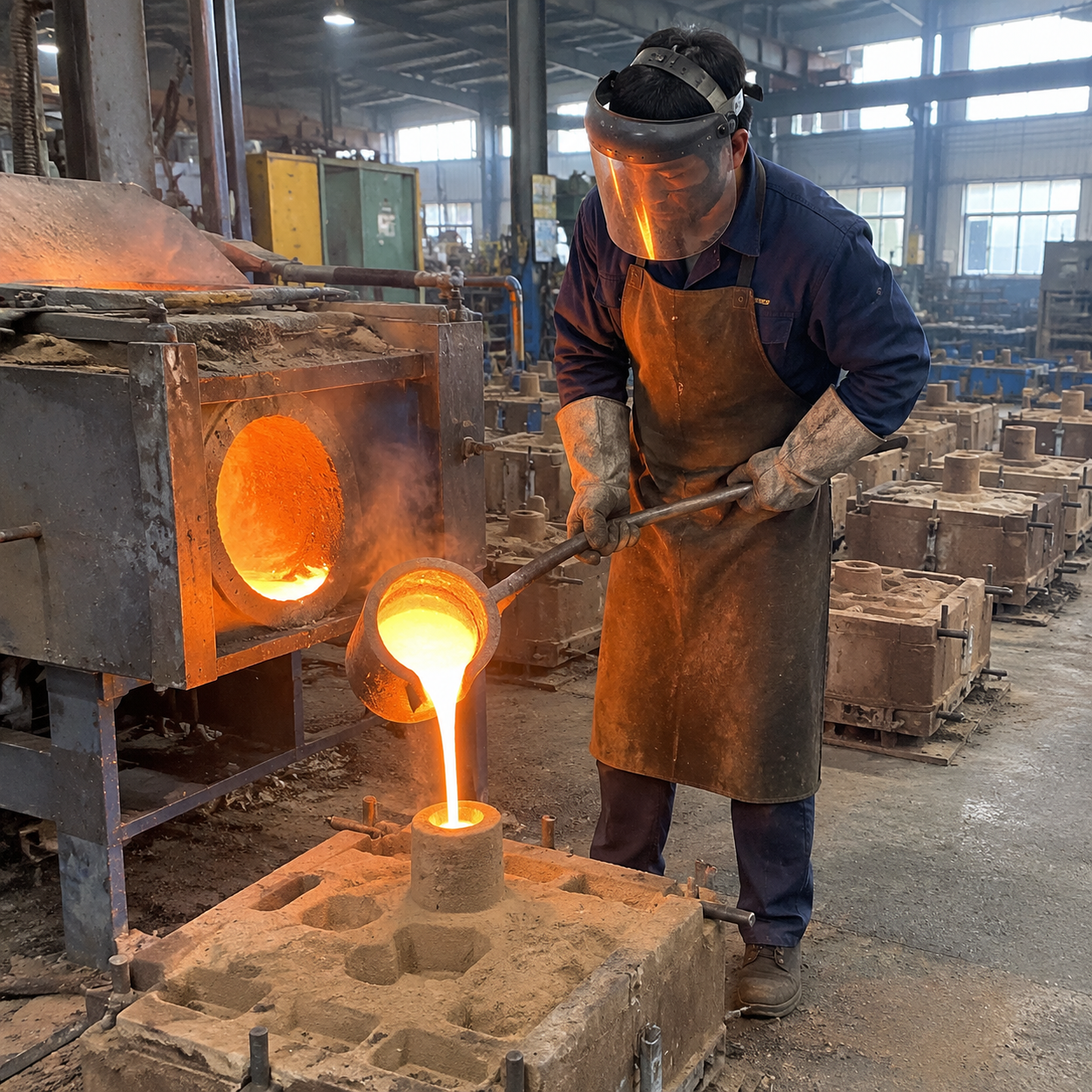
Mold setup dominates small runs. Going from 50 pieces to 500 pieces on a sand casting typically drops the per-kilo price 15–25%. Going from 500 to 5,000 drops it another 5–10% and then flattens out. Past a certain volume, the foundry's cost is labor and yield, not setup, and there's nothing left to give.
If you're planning a first order at low volume with intent to scale, say so in the RFQ. Some foundries will price the first run near cost to win the ramp. Others won't move. Either way, you learn something.
Wall thickness and geometry
Thin walls burn yield. A 3 mm wall in sand casting means higher pouring temperature, more misruns, more cold shuts. Foundries quote the yield risk into the rate, usually without telling you. If your design has a 2.5 mm section, expect to pay for it.
The fix is a design conversation, not a price negotiation. Thickening one rib or moving a gate location can drop your per-kilo figure by more than any supplier swap.
The low-price trap: what sub-$3 stainless actually means
You will see 304 sand castings quoted under $3.00/kg from Chinese suppliers. Sometimes it's real — a foundry with a large existing order for the same part family, filling empty capacity. Usually it isn't.
When a stainless quote sits 30%+ below market, one or more of these is true:
- The alloy is diluted. CF8 spec requires 18–21% chromium and 8–11% nickel. A heat at 17.5% Cr and 7.2% Ni still passes some in-house spectrometers set loosely. It will also pit in a wet environment two years earlier than it should.
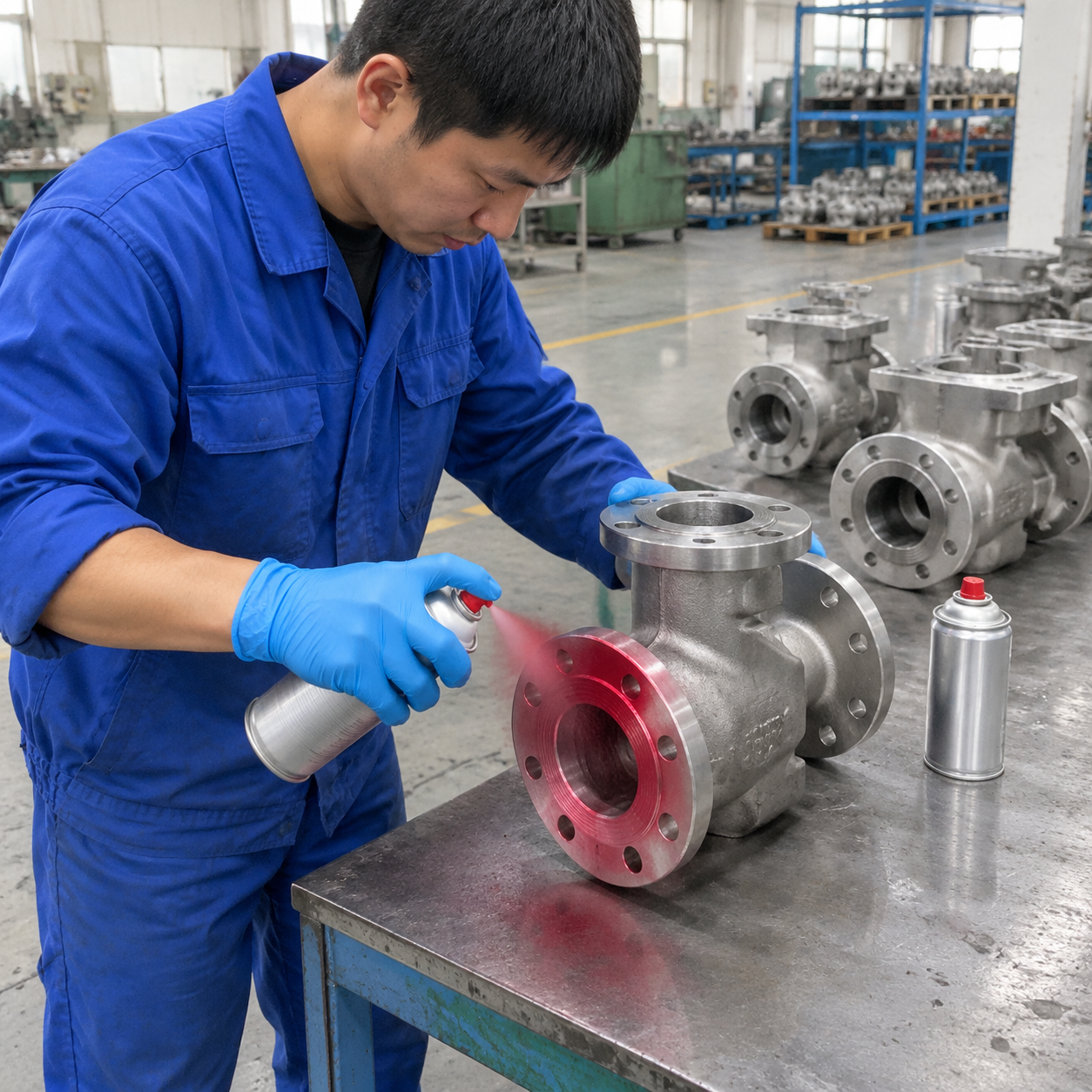
- Inspection is on paper only. The cert exists. Nobody ran the test. This is common on PT — the report says "100% PT, no indications" and the machined faces tell a different story after you cut into them.
- The scrap rate is being hidden. The cheap quote assumed a 2% reject rate. The actual rate is 9%. Somebody eats the difference, and it's usually the buyer, in the form of a short shipment and a six-week replacement lead time.
- The tooling was quoted separately and you missed it. Check line items before you celebrate.
- They're buying the order. A below-cost first order to win the account, followed by a 35% increase on the second PO. Ask for a price validity period and a stated adjustment mechanism.
"Nobody budgets for penetrant testing. Then the first batch shows dye bleed on a machined face, the whole lot gets quarantined, and the savings are gone in rework and air freight." — Brian Miller
None of this means buy the most expensive quote. It means the cheapest quote is a claim, not a fact. Verify it before you build a production schedule on it.
Comparing quotes properly: a seven-point check
Before you rank a single number, run every quote through this. Two minutes per quote, and it eliminates most of the false comparisons.
- Confirm the process on every quote. Sand, investment, or lost foam. If it's not stated, ask. Don't compare across process types.
- Demand a material breakdown. Charge cost plus alloy surcharge plus melt loss, or a stated $/kg for metal. Foundries that can't produce this are pricing on feel, and feel moves with the nickel index.
- Ask for the scrap allowance in writing. Expected yield rate, and who pays for rejects above it.
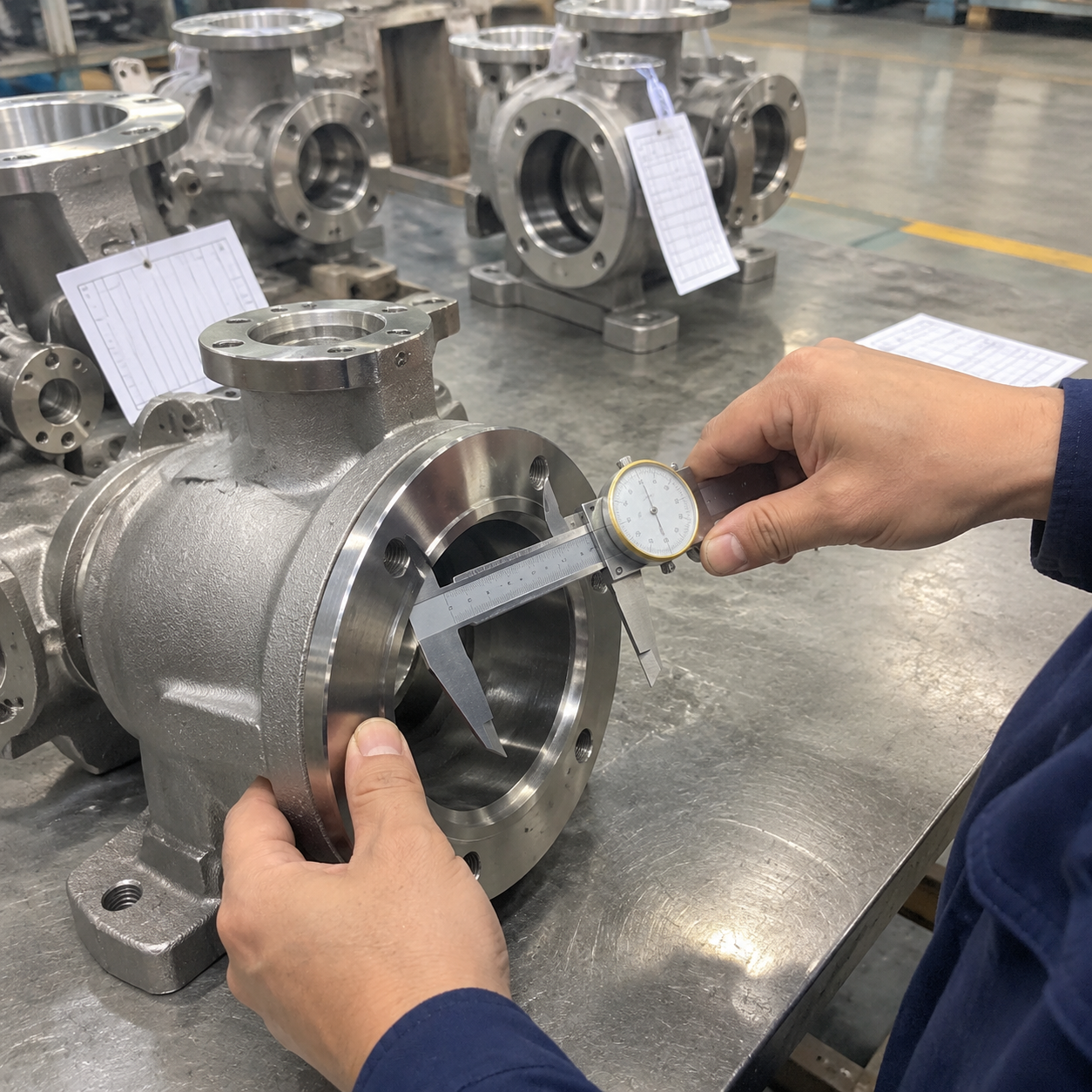
- Pin down the inspection scope. Chemical cert, dimensional report, and any NDT — by standard number. "We check quality" is not a scope.
- Verify traceability. Heat number on the casting or the packaging, retained for how long, retrievable on request. This is the single thing that saves you when a field failure happens 18 months later.
- Separate tooling from piece price. Amount, ownership, and what happens to the pattern if you move suppliers. Get it in writing.
- Compare landed cost, not FOB. A $0.60/kg advantage disappears the moment you air-freight a replacement batch because the first shipment had 8% rejects.
Then, and only then, put the numbers side by side. If the lowest landed cost is also the lowest FOB, and the shop passed all seven checks, you've found a real price. That happens more often than the pessimists think — maybe one in four RFQs.
For the supplier side of this, the verification steps for a Chinese casting supplier cover what to check before the first PO, not after.
Common mistakes that cost real money
Comparing $/kg across part families. A 200 g fitting and a 12 kg housing aren't in the same universe. Compare per piece, or compare $/kg only within the same weight band.
Ignoring the process assumption. Half the "outrageous" quotes I've seen were investment casting quotes compared against sand casting quotes. Not a scam, just a mismatch.
Treating FOB as the final number. Freight, duty, and inland delivery can add 8–20% depending on destination and part density. Castings are heavy, so this bites harder than it does on consumer goods.
Not putting the reject clause in the PO. The price negotiation takes two weeks. The reject argument takes four months. Write it down first.
Assuming certification means capability. ISO 9001 tells you the foundry has a documented process. It tells you nothing about whether they can hold duplex ferrite balance or run a proper PT. That's what a factory audit is for.
FAQ
What is a fair price per kg for stainless steel castings in 2026?
For 304 sand castings at 500 kg and above, $3.50–$5.20/kg FOB China is the normal band. For 316L investment castings at 100–500 kg, $6.50–$10.00/kg. Anything more than 20% outside those bands deserves an explanation before you sign.
Why are stainless castings so much more expensive than carbon steel?
Three reasons stacked. The charge material costs 4–6x more per kilo. Melting runs hotter and longer, so energy per kilo goes up 30–50%. And stainless is less forgiving on yield — gas porosity and hot tearing show up more, so reject rates run higher than on carbon steel. Add those together and a 2.5–4x multiplier over carbon steel is normal.
Is it cheaper to buy castings by the piece or by the kilo?
Depends on what you're buying. For high-volume parts with stable geometry, per-piece pricing protects you from foundry yield games. For mixed or low-volume orders, per-kilo is simpler and easier to benchmark. Many contracts use per-piece pricing with a per-kilo reference to catch pricing drift when the nickel index moves.
How much does order quantity change the price?
Going from 50 to 500 pieces typically saves 15–25% per kilo. From 500 to 5,000, another 5–10%. Beyond that, the curve flattens — you're into labor and yield, and there's not much left to negotiate.
Should I expect an alloy surcharge?
Yes, on any contract longer than three months. Nickel and molybdenum move, and foundries that don't quote a surcharge either build in a buffer or renegotiate later. A clean surcharge formula tied to a published index is better for both sides than a fixed price that gets abandoned halfway through.
What to do next
Take your current quotes — the ones sitting in your inbox right now — and run them through the seven-point check above. Most buyers find at least one quote that was never comparable in the first place. Some find two.
Then ask every remaining supplier three questions: what's your expected yield rate, what inspection standard are you pricing, and can you send a heat-number traceability sample from a previous order. The answers sort the field faster than any price comparison.
Price per kilo is a starting point, not an answer. The number that matters is landed cost per good part, after rejects, after rework, after the six weeks you lost on a batch that didn't pass. Get that number right and the per-kilo argument usually takes care of itself.
If you want the RFQ template and the seven-point checklist as a one-page document you can send to suppliers, it's available here.