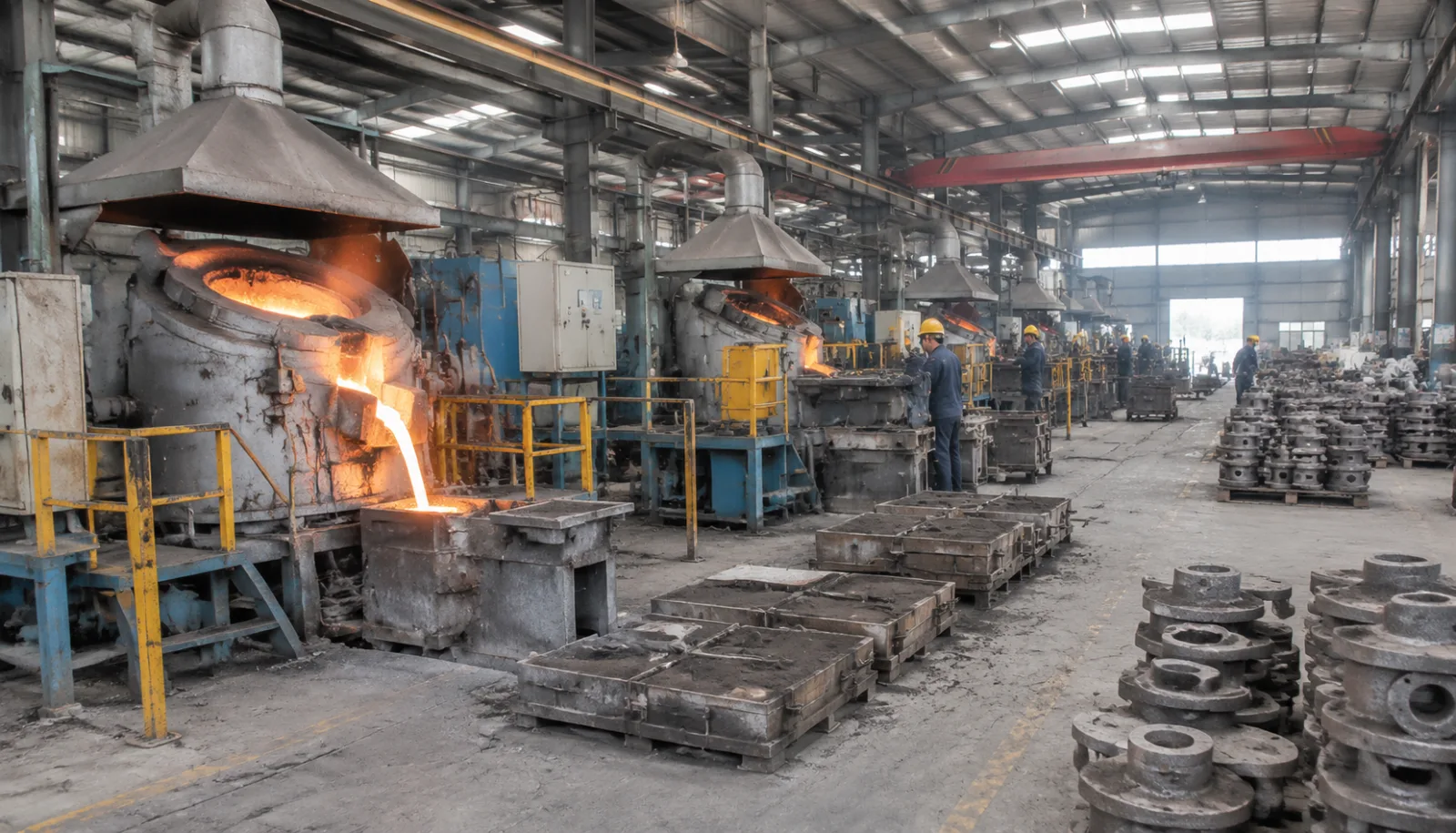
Most supplier verification effort goes into whether a foundry can make the part. Comparatively little goes into whether it can make your volume, and whether it will still be there in three years. Those two failures — the supplier who cannot scale and the supplier who quietly winds down — cost more in disruption than a rejected lot ever does.
This page is about the questions that establish capacity and continuity, and about the arithmetic that lets you check the answers.
Capacity claims and the arithmetic that tests them
Stated capacity is usually a theoretical maximum: the tonnage the plant could pour if everything ran perfectly on the best product mix. Real capacity is lower, and the gap is where lead time promises die.
You can bound the claim yourself with three numbers:
| Input | How to get it | What it constrains |
|---|---|---|
| Furnace size and count | Ask, or see it on a visit | Maximum metal per heat |
| Heats per day and shifts | Ask; verify against worker headcount | Daily tonnage ceiling |
| Moulding line capacity | Ask for boxes per hour and pattern changes | Whether metal can be turned into parts |
A plant with two 3-tonne furnaces running two shifts, 26 days a month, at a realistic 70 percent yield, caps out near 450 tonnes a month. If the brochure claims 800, one of the three inputs is being described generously. That does not make the foundry dishonest, but it does tell you the brochure is a sales document.
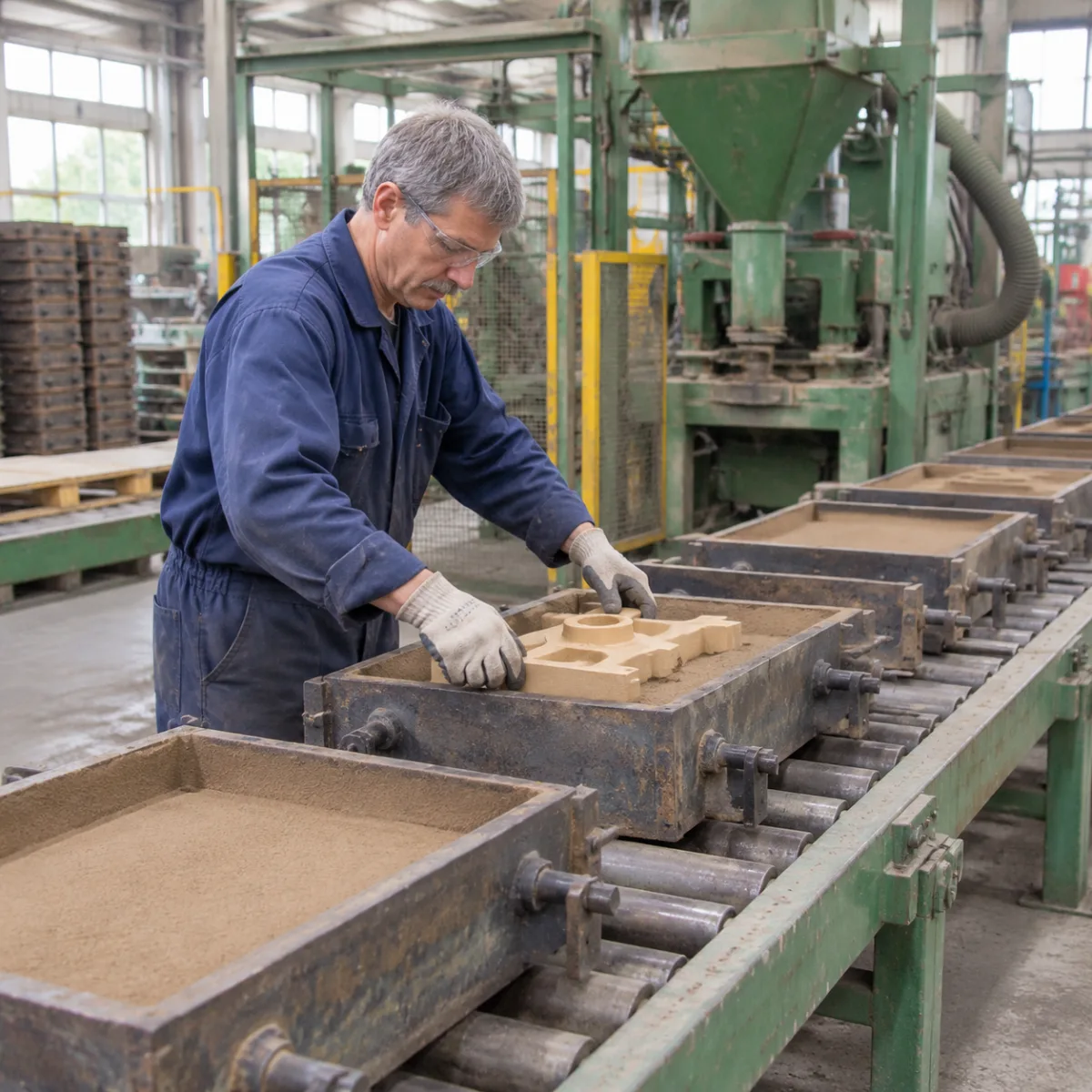
Moulding is the constraint buyers forget. A foundry can melt metal faster than it can make moulds, particularly on a jobbing floor with frequent pattern changes. For high-mix work, the honest capacity number is pattern changes per shift, not tonnes.
What to ask for, and what a good answer looks like
| Request | Good answer | Warning sign |
|---|---|---|
| Monthly tonnage poured, last 12 months, by process | A table with real variation month to month | A single flat number, or only annual |
| Current utilisation | 60–80%, stated by process | “We always have capacity” |
| Top five customers as % of revenue | No single customer above 30% | Refusal to answer, or one customer at 70% |
| Lead time for a new part of my size | Broken into tooling, first article, production | One number covering everything |
The customer concentration question is the one most likely to be deflected, and it is the most informative. A foundry with one dominant customer is a captive plant in all but name, and your order will be scheduled around that customer’s pull. A foundry that answers with percentages has a management team that tracks its own risk.
Reading utilisation correctly
Utilisation is a two-sided signal and buyers usually read only one side.
- Under 40 percent — ask why. Empty capacity in a working foundry usually means lost customers, a quality event, or a price problem, not a bargain. It can also mean a plant in seasonal decline.
- 60 to 80 percent — the healthy band. Room for your work, enough other work to keep the plant stable.
- Above 90 percent — your order is in a queue behind bigger customers. Lead times will slip on the small or new account first, and quality incidents cluster when plants are pushed.
Also ask which process is utilised, not just the plant. A foundry can be at 60 percent overall and 100 percent on the resin sand line you need.
Financial and continuity signals you can check from outside
You are not doing a credit assessment. You are looking for the handful of signals that distinguish a going concern from a thin shell, and most of them are public.
Registration and standing
The National Enterprise Credit Information Publicity System shows registration status, registered capital, establishment date, scope of business and administrative penalties. Two things to look at: whether the registered business scope actually includes casting production, and whether the entity is old enough to have the history it claims. A three-year-old entity quoting fifteen years of experience is quoting the group, the predecessor or the salesperson’s imagination.
Registered capital versus the plant
Registered capital is not a measure of financial health, but a very low figure against a plant with several furnaces is worth a question. It sometimes indicates a structure where the operating entity is separate from the asset-holding entity, which matters if you ever need to enforce a claim.
Litigation and enforcement records
Public judgment databases show commercial disputes and enforcement actions. You are looking for patterns: repeated non-payment judgments, enforcement proceedings, or a cluster of supplier disputes. One dispute is business. Six in two years is a cash flow story.
Export capability in their own name
Customs registration determines whether the foundry can export directly or must go through a trading company. This affects who appears on your shipping documents, who owns the export tax treatment, and how easy it is to enforce a warranty. A foundry without direct export rights is not disqualified, but you should know which entity you are actually contracting with.
Headcount and shift pattern
Ask for total headcount and the split between production, quality and admin. A foundry claiming 400 tonnes a month with 30 production staff is describing a very different operation from the one you are imagining. Social insurance participation counts, where available, corroborate headcount claims in a way that an org chart cannot.
The capacity question that actually predicts failure
Not “how much can you make” but “what happens to my order when your biggest customer doubles their forecast”. Ask it directly and listen to the structure of the answer.
A foundry with a real planning function answers in terms of allocation, notice periods and contractual priority. A foundry without one answers that it will not happen. The first answer tells you they have thought about it; the second tells you nobody has.
Two practical protections follow from that conversation:
- Put a capacity commitment in the supply agreement — a minimum monthly volume and a notice period before allocation changes.
- Qualify a second source early, even at a small volume. The value of a second source is not the volume it supplies; it is the negotiating position it gives you when the first one slips.
The growth paradox
Fast growth is the most common precursor to quality failure in Chinese foundries, and it is the hardest signal to read because it looks entirely positive on the sales side.
What actually strains first is not the furnaces but the quality function: new moulders on the floor, more subcontracting to keep up, less time per pattern change, and inspection compressed at month end. Ask what changed in the quality organisation over the last two years — headcount, certifications, new equipment — and compare that with the revenue growth. If revenue doubled and the quality team grew by one inspector, the plant is running on luck.
A short checklist you can run in a week
- Furnace size, count, shifts — and the arithmetic against the claimed tonnage.
- Monthly tonnage by process for the last twelve months.
- Utilisation by process line, current.
- Top five customers as a percentage of revenue.
- Registered entity, capital, establishment date, business scope.
- Litigation and enforcement search.
- Direct export rights, and which entity will appear on the documents.
- Headcount split, and growth in the quality function versus revenue growth.
- A named second source, qualified at low volume.
That is a week’s work, most of it by email. It is also the difference between a supplier relationship you can build a programme on and one that surprises you in the second year.
Related verification pages
Send your annual volume and the ramp
Capacity answers are only meaningful against a volume. Give us the annual tonnage or piece count and the ramp profile, and we will return monthly capacity by process, current utilisation and the lead time you would actually get, not the lead time on the website.
Prefer email? cfwc@163.com · WhatsApp +86 159 4126 7000