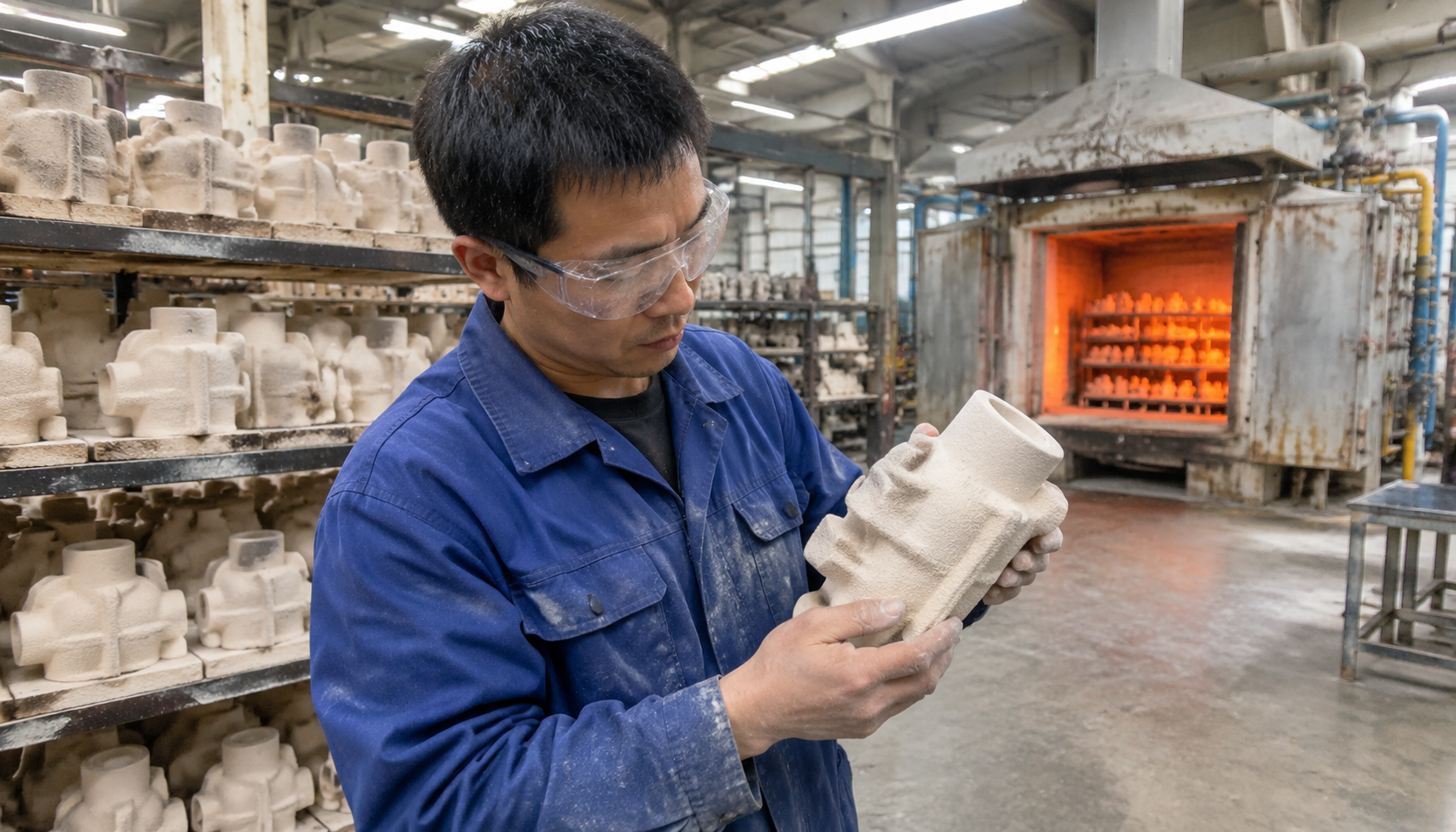
Three numbers decide whether your duplex stainless steel silica sol casting survives service. Everything else — the surface finish, the tolerance report, the shiny certificate of conformance — is decoration until you have checked these.
PREN at or above 34. Ferrite and austenite somewhere near a 50/50 split, inside a 40–60 band. Solution anneal at 1040°C minimum, quenched fast enough that sigma phase never gets a foothold.
Get all three right and you own a component that will sit in chlorinated seawater for twenty years without a complaint. Get any one of them wrong and the part still passes dimensional inspection. It still ships. It still looks correct in the crate. Then eighteen months later you are reading a failure analysis report with a micrograph you really did not want to see, and a technician is telling you the crack started at a sigma-phase network nobody caught at the foundry.
Here is how to catch it before it ships. I have been buying castings for oilfield and chemical service for fifteen years, and I have watched all three of these numbers go sideways in ways that were completely invisible on the paperwork.
Start with the chemistry, because chemistry is where it is actually decided
The PREN formula is short enough to keep in your head: PREN = %Cr + 3.3 × %Mo + 16 × %N.
For 2205 (UNS S32205), that lands you at 34 to 36. For 2507 (UNS S32750), you are at 42 to 43. The conventional divide between "duplex" and "super duplex" sits at 40, which is why that single number matters so much in a purchase specification.
What most buyers do not realize is that PREN is not a property of the grade — it is a property of the heat. A foundry can pour material that hits S32205 on chromium and nickel and still miss the PREN floor if the nitrogen is low, because nitrogen contributes 16 points of multiplier. Standard nitrogen for 2205 is 0.14% minimum. If the furnace run comes in at 0.11% and the foundry does not correct it during the AOD or VOD stage, your PREN drops to roughly 33.5 and nobody notices, because the certificate still says S32205 and the chromium number still looks fine.
That is why the mill certificate alone is not verification. It is a claim. Verification is what your own lab does with a sample cut from the casting.
The ferrite-austenite balance, and why a single percentage is not enough
Duplex gets its name and its properties from roughly equal parts ferrite and austenite in the microstructure. The two phases do different jobs. Ferrite brings the strength and the chloride resistance. Austenite brings the ductility and the toughness. Skew the ratio and you trade one for the other without getting the benefit of either.
ASTM A995 (which absorbed what used to be A890) controls this through ferrite measurement per ASTM A800, and your purchase specification almost certainly tightens that window to something close to a 40/60 to 60/40 band. Some end users — offshore clients especially — get stricter still.
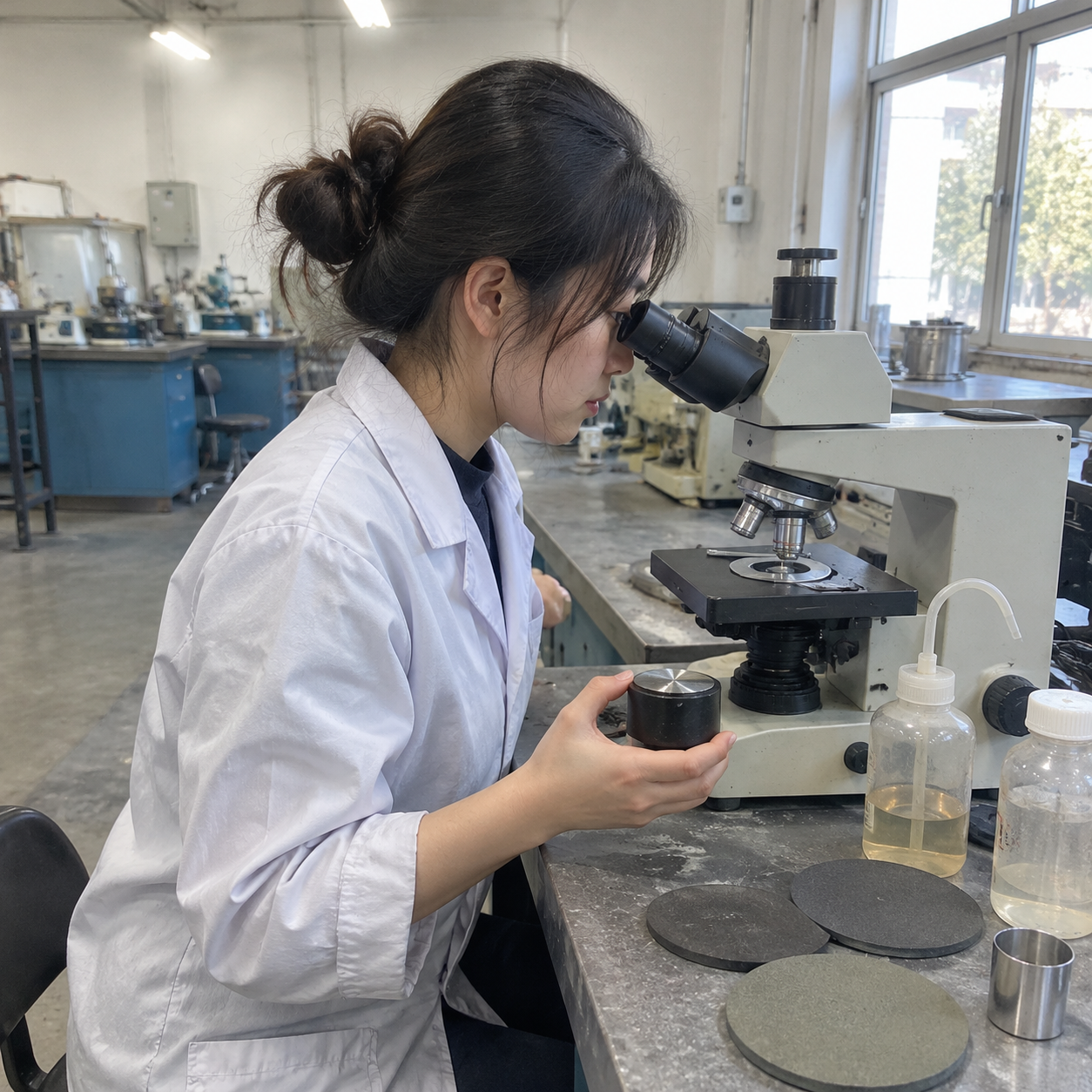
Here is the trap. A single ferrite reading tells you the average. It does not tell you whether the phases are evenly distributed, and it does not tell you whether there is a third phase hiding in there that should not be present at all.
The anneal window is narrower than the standard suggests
Solution annealing for duplex happens between roughly 1040°C and 1120°C, followed by a fast quench. Water, usually. Some foundries will tell you a polymer quench is fine and it can be, but for a heavy section you want water and you want it verified.
Why so strict? Because of sigma phase. That intermetallic comes out of the ferrite somewhere between 600°C and 950°C, and it forms fastest right around 850°C. Ten minutes in that range on thin material is enough to nucleate it. Sigma phase kills toughness and chloride resistance — it will pull a 2205 part down to somewhere near 316L performance, and the certificate will not show a thing because the chemistry never changed. The chemistry is fine. The thermal history is not.
The other end matters too. Go above the top of the window and you get grain growth and a ferrite-heavy structure. Go below and you do not fully dissolve the sigma and the secondary austenite that formed during cooling from the previous step.
What you want from the foundry is not a certificate that says "solution annealed." You want the heat-treat chart. Charge temperature, hold time, quench medium, quench start temperature, and a thermocouple record for the load your part was actually in. If the foundry cannot produce that for your specific batch, the words "solution annealed" on the certificate are a rumor.
Ask for it before you place the order, not after. Foundries that run proper heat-treat records will send them without argument. Foundries that do not will tell you it is not standard practice, or that their process is "well established." Both answers mean the same thing.
2205, 2507, CD3MN — know which one you are actually buying
These three cover the vast majority of duplex castings in the field, and they are not interchangeable.
| Grade | UNS | ASTM A995 | PREN (typical) | Where it belongs |
|---|---|---|---|---|
| 2205 | J92205 | Grade 4A | 34–36 | Seawater pumps, chemical process valves, general chloride service |
| 2507 | J93404 | Grade 6A (CD3MWCuN) | 42–43 | Subsea, high-chloride high-temperature brine, sour service with care |
| CD3MN | J92205 | Grade 4A | ~34 | Legacy designation, mostly overlaps 2205 — verify on the cert |
The mistake I see most often is a designer specifying 2507 in a place where 2205 would have done the job, then discovering the foundry's 2507 yield is low and the price spread has doubled. Super duplex in a silica sol casting is harder to pour than 2205 because the wider freezing range and higher alloy content make feeding harder and segregation more likely. A good foundry will tell you this up front and quote accordingly. A foundry that quotes 2507 at a 10% premium over 2205 is either lying about the grade or has not poured much of it.
Conversely — if your service is above roughly 60°C with chlorides present, 2205 is probably not enough, and the PREN 34 number that looked reassuring at the quotation stage is exactly the number that fails you in year four. Temperature and chloride concentration together are what drive pitting, not chloride alone.
Where silica sol casting helps — and where it hurts
Silica sol investment casting (the lost-wax process using a silica sol binder rather than the older water-glass system) gives you a few real advantages for duplex work.
First, dimensional control. Silica sol shells are more dimensionally stable during firing than water-glass shells, which means tighter as-cast tolerances and less distortion. For a valve body with a machined flange face, that translates into less stock allowance and fewer machining setups.
Second, surface finish. Lower shell surface roughness gives you a casting finish in the Ra 6.3 to Ra 12.5 range typically, sometimes better, which matters if you are trying to avoid a passivation problem in a crevice.
Third, thinner walls. You can get down to roughly 2.5 to 3 mm in duplex with silica sol — useful for impellers and thin-section housings.
Now the downsides, which most sales literature skips.
Solidification feeding is harder than with carbon steel. Duplex freezes over a wider range, and the ferrite-austenite transformation involves a volume change that promotes shrinkage porosity. Getting a sound casting means generous risering, and generous risering means lower yield — sometimes 45 to 55% pour weight to finished weight. That is baked into the price, whether the foundry shows it to you or not.
Hot cracking is a real risk in sections with abrupt thickness changes. Anywhere the design steps from 20 mm to 6 mm in one move, you are asking for trouble. If your drawing has that, expect the foundry to ask for a fillet or a redesign, and if they do not ask, be suspicious.
Repair welding is the biggest single quality issue. Duplex welding requires controlled heat input and often a post-weld anneal to restore the phase balance in the heat-affected zone. Many foundries will weld a small porosity defect and call it done. The weld itself may be structurally fine and the phase balance in that local region may not be. This is where I would spend most of your inspection budget.
Verify the material in three steps, not one
Here is where I bring in Dr. Elena Rodriguez, a corrosion and materials engineer who has done failure analysis on more duplex components than I care to count. She is blunt about what a certificate is worth.
"A mill certificate is a declaration by the party with an interest in the outcome. That is not a criticism of foundries — it is just how a supply chain works. If you want to know what you got, you cut a test coupon from the actual casting, from the thickest section and from a riser-fed area, and you send it to a lab that has never spoken to the foundry. Chemistry by optical emission or combustion for nitrogen. Ferrite by ASTM A800 magnetic method or by metallographic point count. Both, if you are serious. And for anything going into seawater, an ASTM G48 Method A crevice-free pitting test at the rated temperature."
Step one: chemistry, from a real coupon
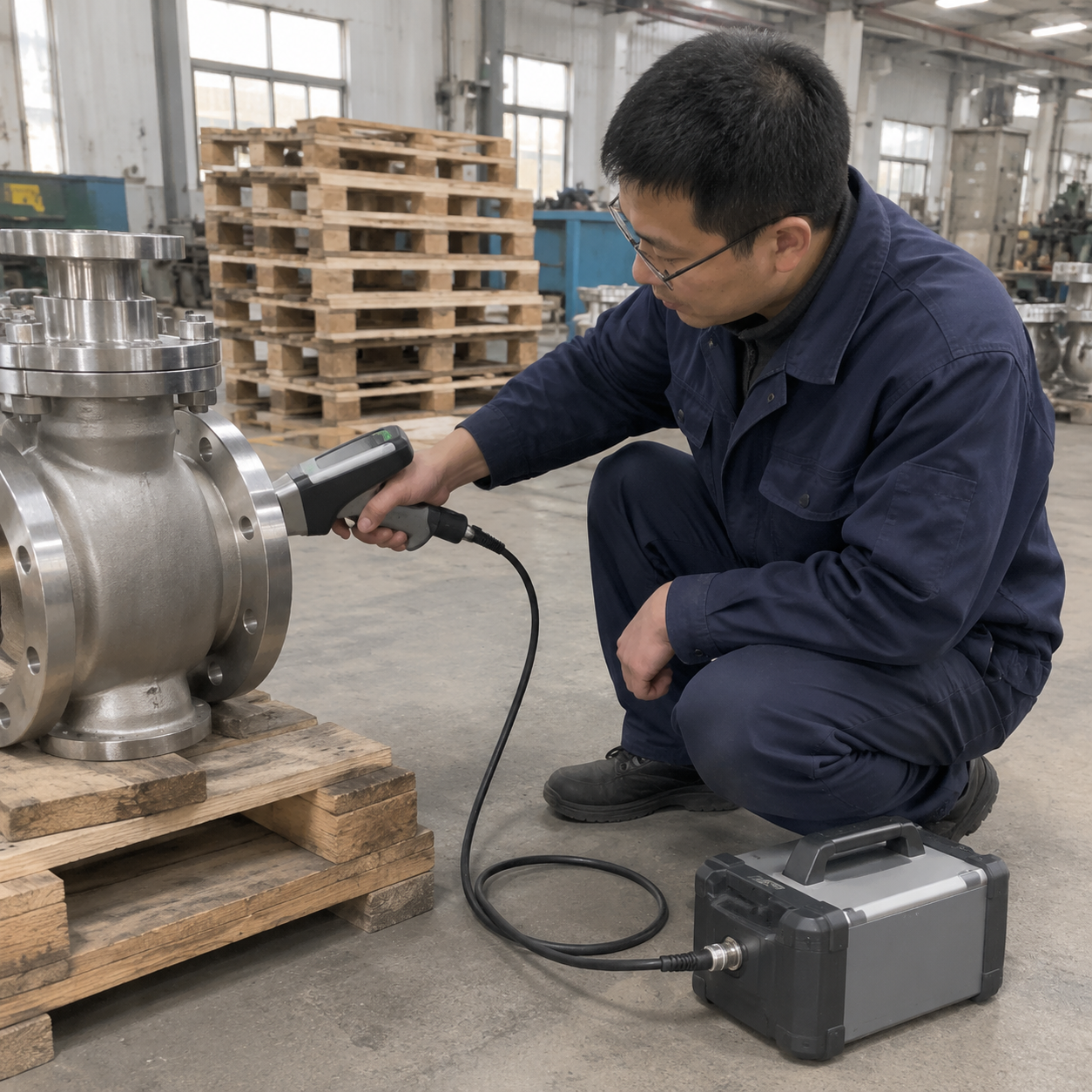
Nitrogen is the one that gets missed. Standard optical emission can measure it if the instrument is set up for it, but many shops do not bother because it is a nuisance. Ask specifically whether nitrogen is included in the reported elements. If it is not, the PREN number they show you is only partial.
Also check that the carbon is low and the carbon equivalent is where it should be. Carbon above 0.03% in a duplex grade is a red flag that the foundry used the wrong charge mix.
Step two: ferrite content, by more than one method
ASTM A800 gives you the magnetic method, which is fast, non-destructive, and can be done on the casting itself. Use it for screening. But understand its limits: it reads magnetic volume fraction, not phase morphology, and it is sensitive to the probe placement and to any cold work in the measurement area.
Metallographic point counting on a polished and etched section is slower and destructive, but it shows you the actual structure. A report that says 50% ferrite from the magnetic method and shows no micrograph is only half a report.
Step three: corrosion performance, tested not assumed
ASTM G48 Method A puts your sample in 6% ferric chloride solution for 24 hours and checks for weight loss and pitting. The test temperature is the variable that matters — 2205 is typically tested at +20°C or +25°C, 2507 at +40°C or +50°C. A 2205 casting that pits at +20°C in G48 has a problem, and no amount of paperwork will fix it.
Seven things to check when you are standing in the foundry
I have never bought a duplex component from a foundry I have not walked through. Not because Chinese or Indian or Vietnamese foundries are worse — some of the best duplex work I have seen came out of a 60-person shop outside Ningbo — but because the gap between what a foundry says it does and what it actually does is invisible from a quotation. You have to look.
Here is what I check, in order.
- The heat-treat furnace log. Not the certificate. The logbook or the digital record. Ask to see the entry for a load from the past month and match it to a job number. Foundries with real records pull them up in thirty seconds.
- Quench tank condition. Walk over and look. Water temperature, whether there is a pump running, whether the tank is agitated. A stagnant quench tank is a stalled quench, and a stalled quench is sigma phase.
- The weld repair log. Every duplex casting that has been welded should have a record: location, extent, filler, heat input, and whether it was re-annealed. Ask how many castings in the last month required weld repair. If the answer is zero, either their process is extraordinary or their record-keeping is not.
- Material segregation. Duplex charge material must be kept separate from the 304 and 316. Look at how the raw material is stored. Bins labeled by hand with mixed scrap in them is a warning sign.
- The spectrometer and who runs it. Ask to watch a test. Ask whether nitrogen is in the element list. Ask when the instrument was last calibrated and by whom.
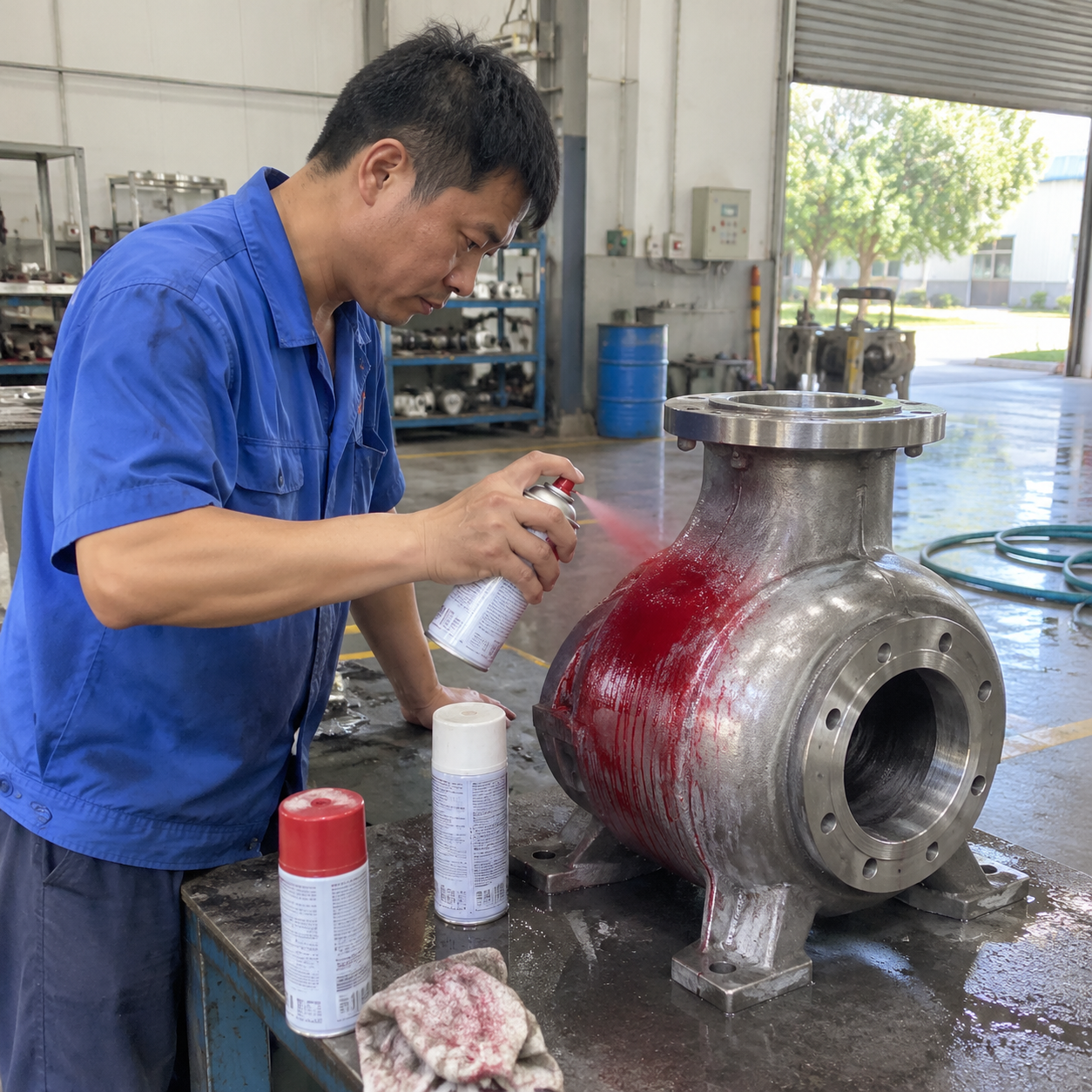
- PT and RT capability. For duplex, dye penetrant is standard. Radiography for critical sections. Ask whether they do it in-house or subcontract, and if subcontracted, whether you can see the subcontractor's certification.
- The customer list, with names. Not "we supply the oil and gas industry." Actual end users, or actual distributors, that you can call. Foundries with genuine duplex experience have references they are proud to give.
Two hours of that will tell you more than a hundred pages of quality manual.
What the price and lead time should actually look like
Rough numbers from the market — treat these as ranges, not quotes, because they move with nickel and molybdenum and they vary a lot by geometry.
2205 silica sol castings, machined and inspected, generally land somewhere around $12 to $24 per kilogram for parts in the 2 to 40 kg range. Simple geometry at the low end, thin-wall or heavily cored parts at the high end. 2507 runs 40 to 70% above that, sometimes more, because the yield rate is worse and the material cost is higher.
Tooling for a new pattern and a new shell system: allow 6 to 12 weeks and expect it to be the long pole on the first order. Repeat orders typically run 6 to 10 weeks from PO to shipment, assuming the raw material is in stock. If a foundry promises 4 weeks on a first duplex order, ask how they are compressing the tooling, because they are not compressing physics.
One thing worth knowing: if a quotation comes back suspiciously low — say 30% under everyone else — the most common explanation is that they have quoted 2205 and intend to pour something closer to a 4A/CD3MN lean chemistry, or they have skipped the solution anneal and are relying on the as-cast structure. Both are things you find out in testing, which is why you budget for the third-party lab before you budget for the champagne.
Mistakes I have watched buyers make
Accepting a certificate of conformance as verification. A CoN is a document the supplier writes about itself. It is a starting point. You still need a test coupon.
Not specifying the test temperature on G48. "Passes ASTM G48" means nothing without a temperature. A 2507 tested at +20°C will pass comfortably and tell you nothing about whether it survives at +50°C.
Letting the foundry choose the design of the riser. Riser design drives yield and drives soundness. If the foundry is optimizing for yield alone, you get internal porosity in the section that matters. Ask to see the simulation or at least the gating drawing.
Skipping the pre-production sample. First article inspection on a duplex casting means cutting it up. Section it, check the microstructure at the thick section and at a thin section, run G48 on a coupon. That first casting costs you a few hundred dollars and saves you a recall.
Assuming all duplex foundries are equivalent because they all say "duplex." The number of foundries worldwide that genuinely pour 2507 with a solid heat-treat record is a small fraction of the number that list super duplex on their website. References are your filter.
Questions buyers keep asking
Can duplex stainless steel be investment cast at all?
Yes, and silica sol is the right binder system for it. Water-glass binders work but give you a rougher surface and looser tolerances, which costs you downstream in machining. Duplex is poured routinely in silica sol shells from a few hundred grams up to several hundred kilograms.
What standard should my purchase specification reference?
ASTM A995 (which replaced A890) for the casting itself, ASTM A800 for ferrite measurement, ASTM A751 for chemical analysis, and ASTM G48 Method A if you need corrosion testing. If you are in oil and gas, add NACE MR0175 / ISO 15156 for sour service, and for offshore work in the North Sea, NORSOK M-630 or M-650 on top of that. Do not accept a reference to "A890" alone — it is superseded and some foundries still use it because it is looser.
How much weld repair is acceptable?
There is no universal number, and anyone who gives you one is guessing. What matters is whether repairs are qualified: recorded, mapped, welded with approved duplex consumables, heat input controlled, and re-annealed or at least re-inspected. A casting with three documented, qualified repairs is a better buy than a casting with zero repairs and no weld log.
Is 2507 worth the premium over 2205?
Only if the service actually calls for PREN 42. If you are moving ambient-temperature seawater with intermittent exposure, 2205 is usually sufficient and you are paying a 50% premium for margin you will not use. If you are at elevated temperature with concentrated chlorides, or you are in a crevice geometry where pitting initiates easily, 2507 earns its money. Do the corrosion calculation before you do the grade selection.
Before you send the RFQ
Pull out your drawing and check three things right now. Is there a PREN minimum on the specification, or did you just write the grade? Is there a ferrite content requirement, and does it reference ASTM A800? Is there a heat-treat requirement with a quench specified, or does it just say "solution annealed"?
If any of those are missing, the foundry will fill them in for you, in the way that is cheapest for them. That is not dishonesty — that is what a specification gap invites.
I keep a one-page audit sheet that covers all of it: the chemistry elements to demand, the ferrite measurement methods to accept, the G48 test temperatures by grade, the heat-treat records to request, and the seven foundry checks above. If you want a copy, drop your email in the form below and I will send it over. No sales call, no newsletter — just the sheet.
Need Help with Duplex Stainless Steel Silica Sol Casting: The 3 Numbers?
Get matched with 3 verified foundries in 24 hours. No markup, transparent pricing.
Request Quotes →