Ninety thousand.
That's roughly how many IATF 16949 certificates are active worldwide right now, and just over half of them were issued to sites in China. The China Foundry Association puts the country's casting plant count at around 24,000.
Run the math and it looks like you have options. One automotive-certified plant for every few hundred foundries. Comfortable.
It is not comfortable. A certificate proves a quality management system exists on paper. It says nothing about whether that plant can hold a ±0.3 mm wall section on a four-cavity die after 80,000 shots, or whether the PFMEA on their desk was written by somebody who has actually stood next to the machine at 3 a.m. when the shot monitor started screaming.
I've sat in PPAP reviews where the file was 400 pages thick and the foundry still couldn't tell me which heat number went into which casting. The paperwork passed. The process didn't.
Here is the version of this article I wish somebody had handed me in year one: what the automotive quality standards actually require from a foundry, what they deliberately leave out, and the six checks that separate a real automotive caster from a plant with a laminated certificate in reception.
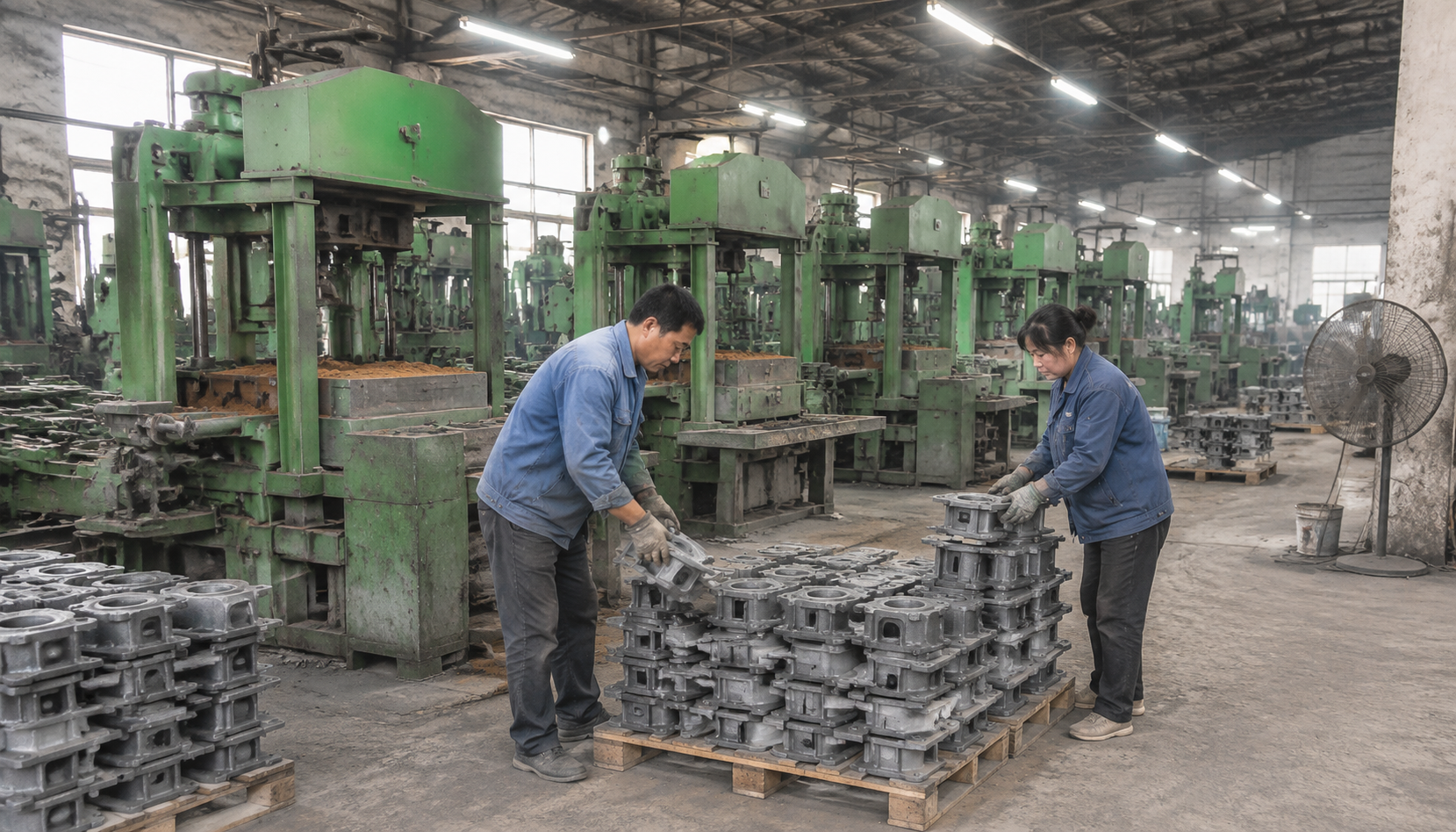
What "automotive quality standard" actually covers — and what it leaves out
Most sourcing engineers walk into a foundry with one document in mind: the IATF 16949 certificate. That's the right starting point and the wrong finishing point.
IATF 16949 is a quality management system standard. It tells you the plant has documented processes for document control, corrective action, internal audit, management review, calibration, and supplier management. It does not tell you the plant understands casting.
That gap is what CQI-27 exists to fill, and it's the gap that sinks most Tier-1 PPAP submissions.
| Standard / document | What it actually governs | Who audits it | What you should ask for |
|---|---|---|---|
| IATF 16949 | Quality management system across the site | Certification body (third party) | Certificate with scope line, IATF number, expiry, last surveillance date |
| CQI-27 | Casting-specific process controls — melting, moulding, heat treat, NDT, rework | Customer or self-assessment | Latest completed assessment, plus the corrective action plan for open items |
| VDA 6.3 | Process audit across P2–P7 (project management through customer care) | Customer or VDA-trained auditor | Most recent audit report with score and any E1 downgrade triggers |
| PPAP | Part-specific evidence that the process produces conforming parts | You | Submission package at the level you specify |
| OEM CSR | Ford Q1, GM BIQS modules, Stellantis CSRs, VW Formel Q | The OEM or their delegate | Current score sheet, dated, with module-level results |
Notice something. Four of those five live at the process or part level. Only one lives at the system level. Yet nine out of ten supplier questionnaires you'll see lead with the IATF certificate and treat the rest as optional attachments.
That ordering is backwards.
Check 1 — Read the scope line, not the logo
Every IATF 16949 certificate has a scope statement. It's usually printed in 8-point type under the company name, and it's the single most overlooked sentence in supplier qualification.
Here's why it matters. A foundry might be certified for:
"Machining and assembly of aluminium die cast components."
Read that carefully. Machining and assembly. The casting itself is not in scope — they buy raw castings from somebody else, machine them, and ship them under a certificate that mentions die casting in the company name.
When the dimensional data goes sideways on a wall-thickness callout, you're not talking to the plant that made the part. You're talking to a middleman who has to relay your complaint to a supplier they may or may not audit.
So pull the certificate and check four things:
- The scope wording. Does it name casting (sand, investment, die, gravity)? Or only downstream operations?
- The IATF certificate number. Verification is free on the IATF oversight database. Certificates get suspended, withdrawn and reinstated. A PDF in an email proves nothing.
- Last surveillance audit date. IATF audits run on a three-year cycle with annual surveillance. If the last one was 14 months ago, ask why.
- Open nonconformities. A major NC doesn't automatically disqualify a plant. A major NC the plant won't discuss does.
One more thing worth knowing: during and after the pandemic, remote and hybrid audits became far more common. IATF has tightened the rules since, but a plant that has never had a full on-site certification audit in the last five years should expect you to look harder at the floor than at the folder.
Check 2 — Ask for CQI-27 before you ask for the price
CQI-27 is AIAG's Casting System Assessment. It's a table-driven questionnaire, and unlike IATF it goes after the things that actually kill castings: melt chemistry control, inoculation practice, mould sand properties, die thermal management, riser and gating design, heat treat furnace surveys, radiographic technique, and — the one that catches people — rework and salvage control.
The reason it matters to you is simple. IATF 16949 auditors are generalists. They can audit a wiring harness plant on Monday and a foundry on Tuesday. They check whether you have a process for controlling special characteristics. They don't check whether your sand has the right loss-on-ignition value.
CQI-27 does. Or at least, it asks.
Three things to look for in the assessment:
It must be current and complete
An assessment with 40% of the questions marked "N/A" is not an assessment. Casting shops love to scope out sections that don't apply to their process — fine for centrifugal casting if they run sand — but melting, heat treat, and NDT sections apply to almost everybody.
Open items need owners and dates
Every real foundry has open CQI-27 items. That's not the red flag. The red flag is an assessment with a perfect score, because it means somebody filled it in the office.
Ask who performed it
A CQI-27 assessment performed by the quality manager about his own process has some value. One performed by a customer SQE, or by a trained third-party auditor, has far more.
If you're also running VDA 6.3 process audits — and if you're supplying into a German OEM chain, you are — the two documents complement each other. VDA 6.3 P6 (process analysis / production) will surface whether the shop floor actually follows the control plan. CQI-27 will tell you whether the control plan itself is technically sound. Do both, or at minimum read both. There's a worked example of the checklist in our CQI-27 audit walkthrough.
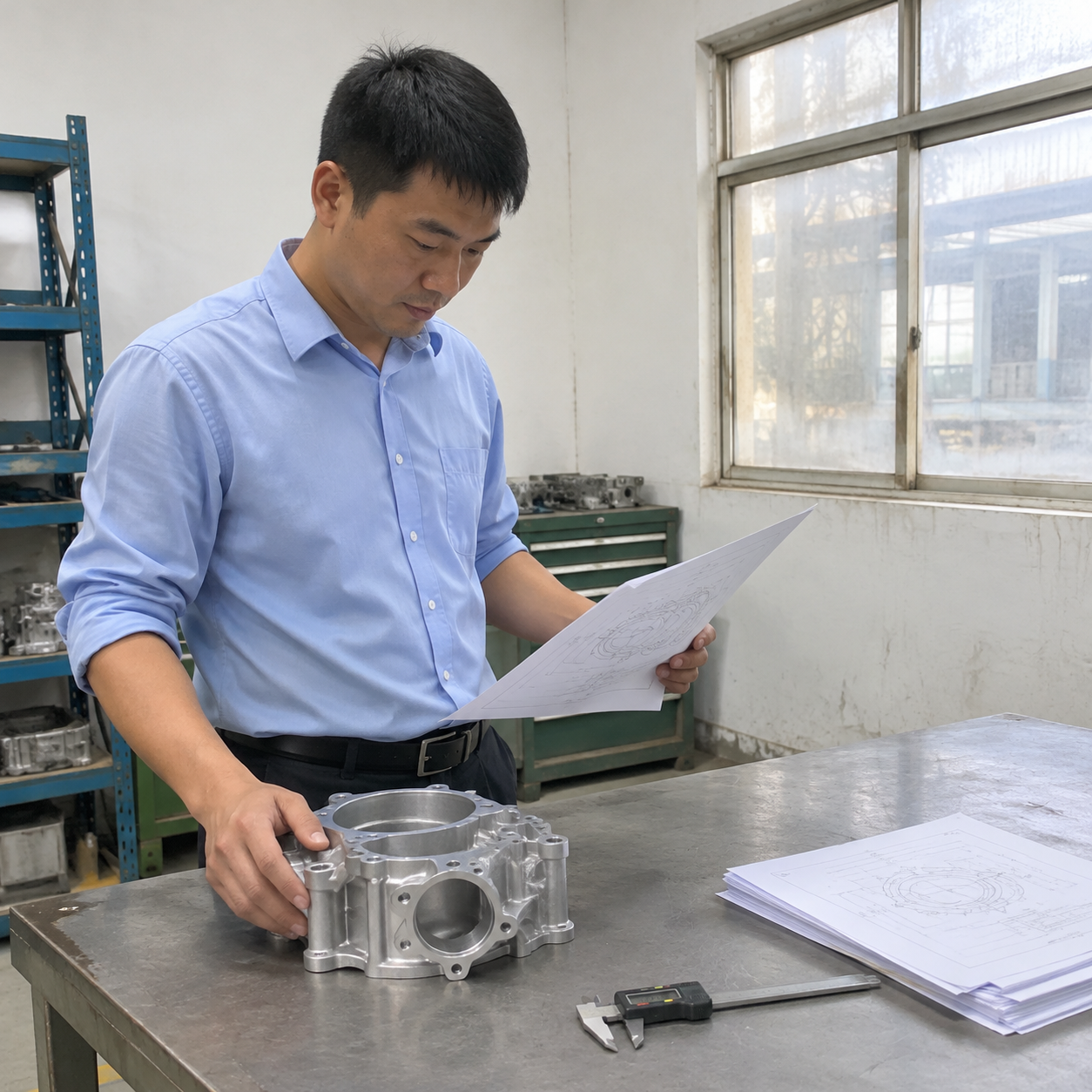
Check 3 — PPAP: demand Level 4 or 5 on castings
PPAP Level 3 is the default across the industry, which is exactly why so many casting PPAPs are thin. Level 3 gives you the warrant, the dimensional results, the material test results, and the initial process studies. You get a snapshot of a good day.
On a casting, you want the process.
Request Level 4 with part-specific requirements, or Level 5 if you can support the on-site review. That pulls in the full PFMEA, the control plan, the MSA studies, the process flow diagram, and — most importantly — the evidence that the foundry actually thought about how this part could go wrong.
Here's the shortlist of what you should physically hold before you sign the PSW:
- Process flow diagram that matches the route card on the floor. Not the route card from the last part they made.
- PFMEA with casting-specific failure modes: shrinkage porosity, cold shut, gas porosity, hot tear, die soldering, dimensional drift from die wear, heat treat distortion. If the PFMEA lists "dimensional out of spec" as a single line item, it was copied.
- Control plan that names the specific gauges, the specific frequencies, and the specific reaction plan. "Check visually" is not a control.
- MSA — GR&R on the gauges used for the special characteristics, not just the calipers in the inspection room.
- Initial process studies — Cpk or Ppk with the sample size and the subgroup logic attached.
- Material certification traced to heat number, tested to the right standard. A356-T6 to ASTM B108, ductile iron to ASTM A536, and so on.
- Full dimensional layout with the datum scheme matching the drawing, signed and dated.
- IMDS / material data reporting, which is where European submissions frequently stall.
The single most common PPAP failure I see on castings isn't a missing document. It's a full set of documents describing a process that doesn't exist on the floor. Control plan says 100% visual inspection after trimming. Floor has one inspector covering three lines. That's a finding, and it's the kind of finding that gets worse the closer you look.
There's a fuller breakdown of submission levels in this PPAP level guide if you're building the requirement into a purchase order.
Check 4 — Stop accepting dimensional reports. Ask for capability.
A dimensional report tells you the parts in the box were good. Capability tells you the next 50,000 will be.
On a casting, this distinction is everything. Sand and die both wear. Die wear moves wall thickness. Core shift moves bores. Thermal drift in the die moves everything after about hour four of a shift. A layout on the first-off parts is a photograph of the best the process will ever be.
What to demand:
- Cpk ≥ 1.33 on significant characteristics, ≥ 1.67 on safety-critical ones. Anything below that on a special characteristic is a conversation, not an approval.
- At least 25 subgroups drawn across shifts and across a full die or pattern life cycle, not 30 consecutive pieces off one machine.
- Stability evidence. A control chart with plotted points, not a summary Ppk typed into a table. If the process isn't in statistical control, the Cpk number is fiction.
- Tolerance reality check against ISO 8062-3. General casting tolerances run in DCTG grades. If the drawing calls for a grade tighter than the process can hold without 100% gauging, you either renegotiate the drawing or accept the inspection cost. Better to find that out now than at SOP.
- Die or pattern life statement. How many shots before refurbishment? Who owns the tooling? What happens to your part when the die reaches end of life mid-programme? Get this in writing before tooling kicks off.
The question I always ask, and it's the one that separates the shops worth keeping: "Show me a control chart from a part you've been running for two years." A foundry that can pull one has a process. A foundry that can't has a routine that happens to work.
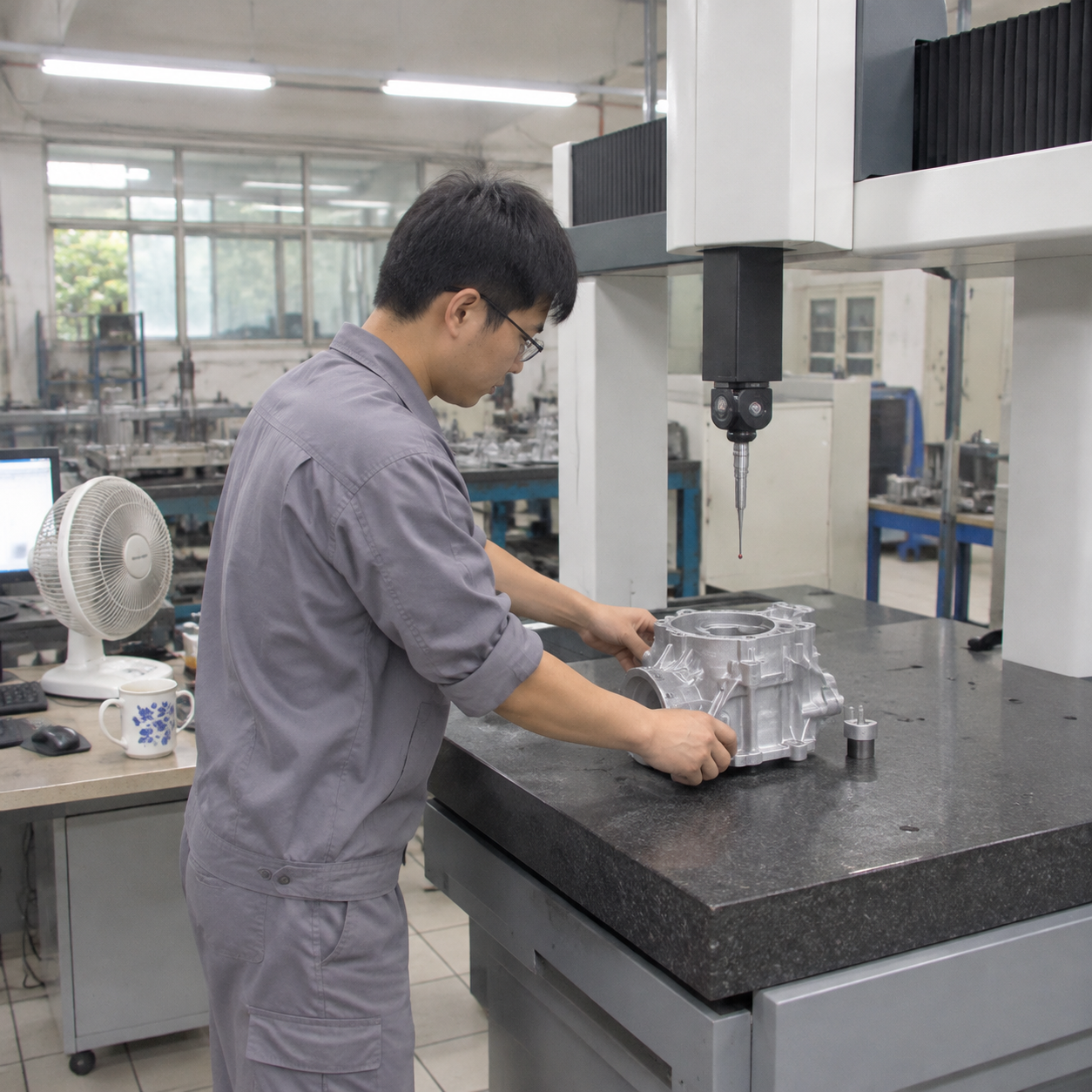
Check 5 — Traceability: run the two-hour test
This one takes two hours and it will tell you more about a foundry than a week of meetings.
Pick a casting at random from a finished-goods pallet. Hand it to the quality manager and say: "Tell me everything about this part."
You want a chain that runs from the finished part back to the raw material:
finished part → production date and shift → machine or mould number → heat number → spectrometer result for that heat → heat treat batch and furnace chart → NDT film or X-ray image number → operator and inspector ID
Now time it. If the plant runs a real traceability system, you'll have all of it in under two hours, because it's all in the system. If they're still calling people at hour three, you've learned something expensive before it cost you anything.
A few specifics worth checking while you're at it:
- Heat traceability to the part. For safety-critical castings, "same batch of melt" is not enough. You want the specific heat number, and for large pours, the position in the pour sequence.
- NDT film retention. Radiographic films usually need to be kept for the life of the part or per the customer's CSR — often 15 years for automotive safety parts, sometimes longer. Ask where the films are stored and what happens when the basement floods.
- Rework records. Weld repair on castings is a controlled process. If repair is allowed at all, it needs approval, qualified welders, a weld procedure, and a record tying the repair to the serial number. Ask how many repairs happened last month. A number of zero usually means the repairs aren't being recorded.
- Scrap data. Ask for the last six months of internal and external scrap by defect type. A foundry that won't share scrap data is telling you something.
Check 6 — Match the CSR stack before you quote
IATF 16949, CQI-27, VDA 6.3 and PPAP get you to a competent casting supplier. They don't get you to a supplier that your OEM will accept without a fight, because every major customer bolts their own requirements on top.
This is where a European Tier-1 background helps you and also trips you up. If you've spent a decade in the VW and BMW supply chain, you know Formel Q and you know VDA 6.3 scoring down to the downgrade rules. You are, frankly, less fluent in the North American stack — and that gap is where I'd spend your preparation time.
| OEM | What it is | What a foundry has to show you |
|---|---|---|
| Ford Q1 | Supplier status flag, not a certificate | Current Q1 status letter with date; underlying PPM, delivery and warranty performance |
| GM BIQS | 30-module assessment, scored in levels | Latest score sheet, module-by-module, dated; watch the modules on fast response and error proofing |
| Stellantis CSR | Customer specific requirements layered on IATF | Evidence of self-assessment against the current CSR revision, not an older one |
| VW Formel Q / VDA 6.3 | Process audit scoring plus escalation logic | Most recent VDA 6.3 report; ask directly about any E1 downgrade and how it was closed |
Two practical warnings here.
First, Q1 status expires. So does a BIQS score. A 2019 screenshot is not evidence of a 2026 capability, and a plant that hands you one has either not been re-scored or doesn't understand the requirement. Both are problems.
Second, an OEM approval at one site does not transfer to another. If your part moves from their Suzhou plant to their inland plant to save cost, the CSR evidence starts over. Get that written into the change control clause before you sign, not after.
The cost side nobody puts in the slide deck
Full compliance costs the foundry real money, and that money lands in your piece price. Expect a properly certified automotive casting to run meaningfully above a commercial-grade part from the same plant — the gap is usually in the range of 12–25% depending on part complexity and inspection level, though it varies enough that I'd treat any single number with suspicion.
Where it goes:
- Retained NDT films and records storage over a 15-year horizon
- Dedicated gauging and CMM time, not shared with commercial work
- Scrap rates that rise when you tighten inspection from AQL sampling to 100% on special characteristics
- Holding the process in a stable state instead of chasing good parts
- Tooling maintenance scheduled on shot count rather than on failure
The temptation is to negotiate that premium down. Resist it, at least on the parts that matter. A line stoppage at your assembly plant costs more per hour than the annual compliance premium on most castings. That's not a rhetorical point — put the number on paper and the argument usually ends itself.
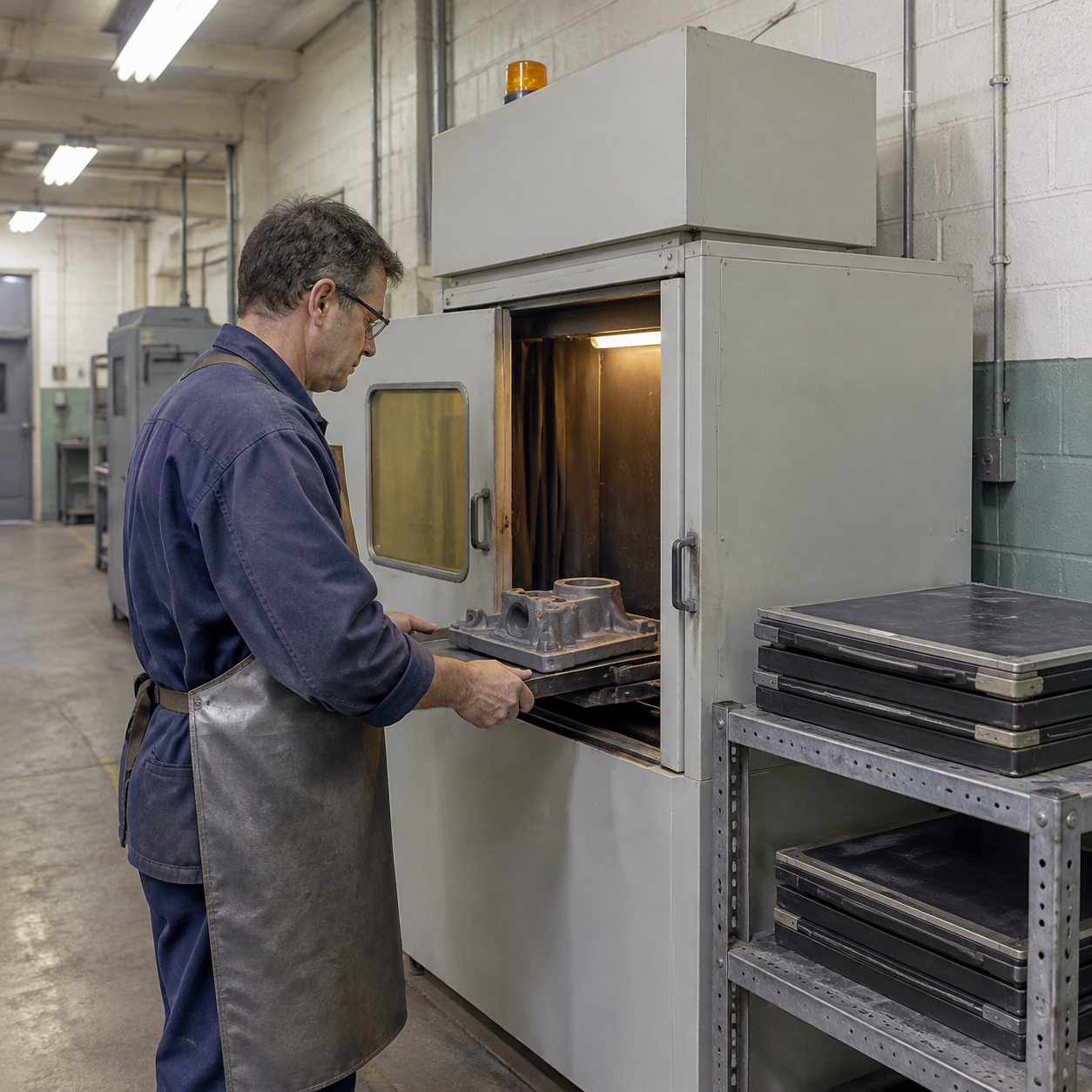
Five mistakes that show up again and again
1. Treating the IATF certificate as a capability statement
It isn't. It's a systems statement. Plenty of well-certified plants make bad castings, and a few excellent foundries are under-certified because they don't want the paperwork. Neither situation is what the certificate implies.
2. Auditing the trading company instead of the foundry
If the organisation that quotes you doesn't own the melting furnace, you haven't qualified your supply chain. You've qualified a mailbox. Ask for the business licence, the certificate, and the floor plan, and check the addresses match.
3. Approving from the conference room
No PPAP review is complete without standing on the floor and watching your part run. Watch the melt being poured. Watch the trimming. Watch what happens to a part that fails the visual check. That last one is where the rework policy lives or dies.
4. Forgetting who owns the tooling
Die ownership, pattern ownership, pattern maintenance responsibility, and the right to transfer tooling are commercial terms that belong in a purchase order. Foundries go bankrupt. Die sets disappear. Settle this before you pay for the tooling, not during a crisis.
5. Accepting "we make parts for many automotive customers"
That sentence has no content. Ask for the specific programme, the specific part family, the specific OEM, and — the one that actually tests them — the name of the customer SQE who last audited them. Real automotive suppliers answer that in about four seconds.
Frequently asked questions
Is IATF 16949 enough to approve a casting supplier?
No. IATF 16949 covers the quality management system, not the casting process. You still need CQI-27 assessment evidence, a complete PPAP package at the right submission level, and dimensional capability data for the specific part number you're buying.
What is CQI-27 and do I actually need it?
CQI-27 is the AIAG Casting System Assessment, with process-specific tables for sand, investment, die and permanent mould casting. If your part carries a casting-specific failure mode — porosity, hot tear, heat treat distortion — you need it or something equivalent. A generalist IATF auditor will not find these issues.
Which PPAP level should I require for castings?
Level 3 is the default and it's usually too thin. Level 4 with part-specific requirements, or Level 5 with the on-site review, gives you the PFMEA, control plan and capability studies you actually need to judge the process.
What Cpk should a casting process hold?
1.33 on significant characteristics and 1.67 on safety-critical ones, established on a stable process with at least 25 subgroups across shifts and tooling life. A Ppk calculated from 30 consecutive pieces off one machine is not a capability study, whatever the report says.
Can a Chinese foundry meet Ford Q1 or GM BIQS?
Some do, and a few hundred at least. But those statuses are customer-specific and dated. Ask for the current score sheet with the date on it, and verify it with the OEM if the programme value justifies the call.
What to do before your next supplier visit
Six checks, in order. Pull the IATF certificate and verify the scope line against the database. Request the current CQI-27 assessment with its open items. Specify PPAP Level 4 with part-specific requirements in the RFQ, not after award. Demand capability studies, not layouts. Run the two-hour traceability test on the floor. Confirm which CSR stack applies and get dated evidence.
That's a single day of work. It's also the difference between a supplier that ships conforming castings for five years and a supplier that ships you a containment report in month four.
If you'd rather not build the checklist from scratch, we maintain a foundry qualification pack covering the IATF scope review, CQI-27 gap questions, PPAP element list and the traceability test protocol — built for Tier-1 buyers qualifying casting suppliers in China. Request the pack or start with the general foundry audit checklist.