The container clears customs on a Tuesday. Your receiving guy cuts the strapping, pulls a 40 lb spring hanger off the pallet, and sends you a photo. There's a crack running through the bushing boss, clean as a pencil line. Not a shipping bruise. A casting defect — a cold shut that never fused, hidden under a coat of black paint.
You pull three more parts. Two are fine. One has a soft spot where the metal never fully solidified, and you can dig a scribe into it with thumbnail pressure. The supplier's paperwork says ASTM A536 65-45-12. The paperwork is lying, or the foundry had a bad shift and shipped it anyway.
Now you're on the phone with your trailer assembly line, telling them the suspension kits are short, and the next container is already on the water.
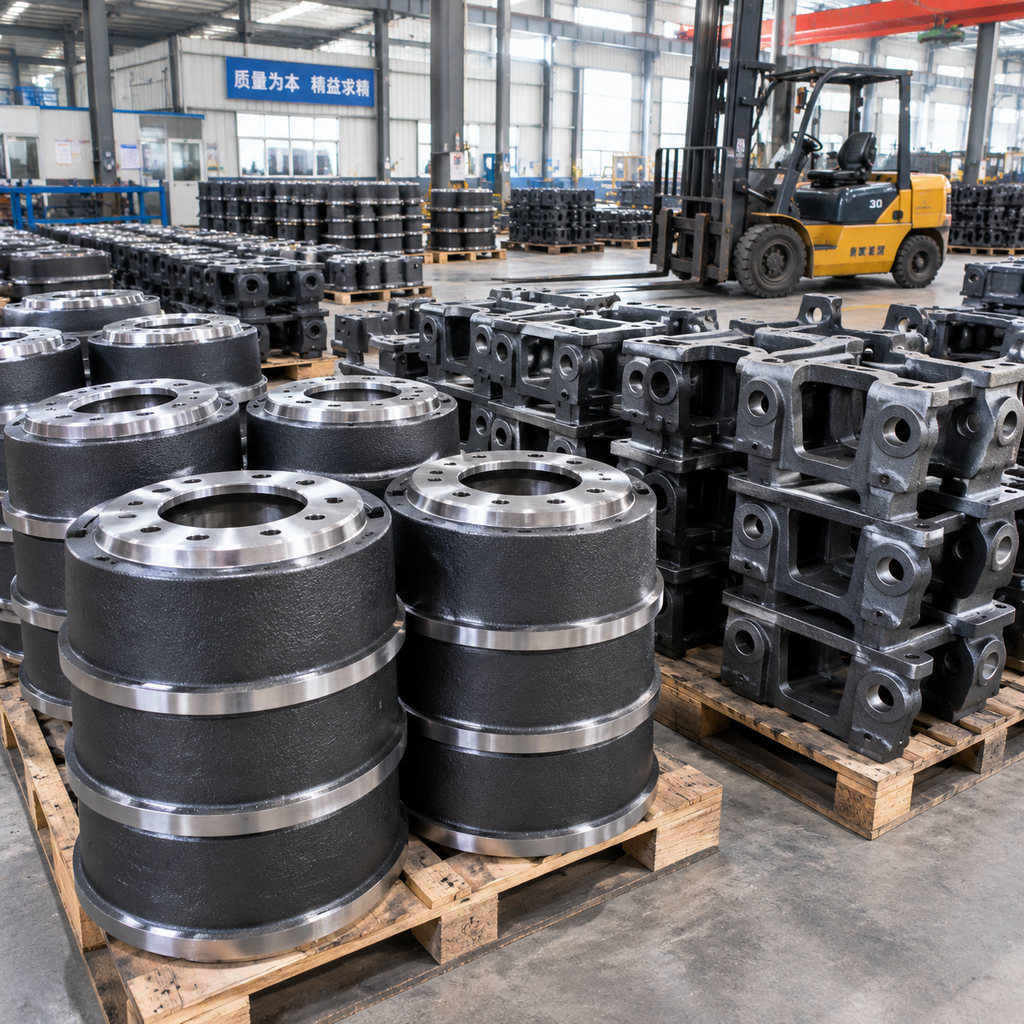
If that sounds familiar, you're in good company. Trailer castings — equalizer beams, spring hangers, brake drums, coupler bodies, landing gear legs — are some of the most quietly dangerous things to source long-distance. They're low-value per piece, which means nobody flies over to inspect. They're structural, which means a bad one puts a loaded trailer on the shoulder of I-80.
This is the vetting sequence that works. Seven checks, in order, before money moves.
Why Trailer Castings Go Wrong More Often Than Other Castings
Three things make this category worse than, say, buying manhole covers or counterweights.
First, the parts are safety-critical but priced like commodities. A 65-45-12 equalizer beam sells for $18–$40 FOB, depending on weight and machining. At that price point, buyers default to spot-checking instead of auditing. The economics push you toward cutting corners on verification, and the physics push you toward needing it.
Second, the defect modes are invisible. Shrinkage porosity, cold shuts, misrun, graphite flotation, magnesium fade — none of these show up in a visual inspection if the foundry has a decent paint booth. A part that passes a glance can fail at 60% of its rated load. You won't know until a customer's trailer is loaded with 44,000 lbs of drywall.
Third, the supply chain is unusually opaque. A huge share of "trailer casting manufacturers" you'll find on Alibaba, Made-in-China, and even at trade shows in Louisville are trading companies. Some are honest intermediaries who add real value. Others quote you a foundry's part, take 20% off the top, and disappear when the first quality claim lands.
The seven checks below are ordered by how cheap they are to run. Start at one. Most bad suppliers never make it to check three.
The 7-Point Foundry Vetting Sequence
Check 1: Business License Scope — Does It Say Manufacturing?
Every Chinese company has a business license (营业执照) with a Unified Social Credit Code and a registered "business scope" line. Pull the license before you do anything else. It costs nothing.
What you're looking for: the scope should contain 铸造 (casting/foundry), 机械加工 (machining), or 金属制品制造 (metal products manufacturing). If it says only 贸易 (trading), 批发 (wholesale), or 进出口 (import/export), you are talking to a middleman.
That's not automatically fatal. Some traders are genuinely useful — they consolidate orders, handle machining, manage export documentation, and speak better English than a foundry owner in Botou. But you need to know which one you're dealing with, because it changes the price you should accept and the risk you're carrying.
Cross-check the registered address against the address on the quote. If the license says a 12th-floor office in Qingdao and the quote says "our factory in Hebei," you've found the gap. Ask directly: "Is this your own melting shop, or a partner foundry?" A straight answer is a good sign. Evasion is not.
Check 2: The Melting Shop and Pouring Records
Ask for a live video walkthrough. Not a prepared factory tour video — a live call where you can ask the camera operator to walk somewhere specific. Ten minutes is enough.
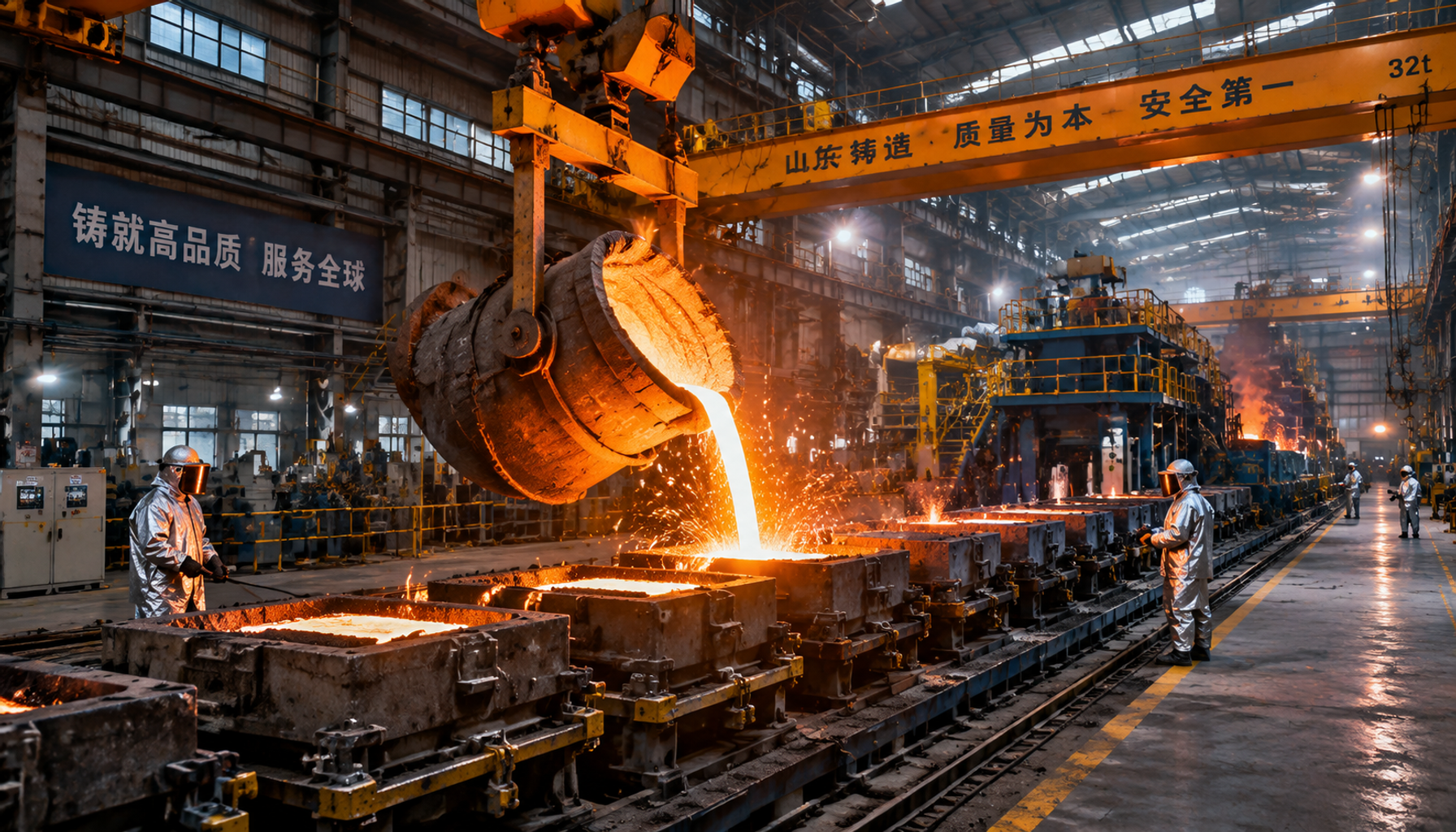
You want to see: induction furnaces or a cupola, sand molds on a molding line, a pouring station with a temperature readout, and a shakeout area. If the "factory" is a warehouse with pallets of finished parts and no melt shop, it's a trader or a machining shop.
Then ask for pouring records (浇注记录) from the last three months. A real foundry keeps heat-by-heat logs showing:
- Heat number and date
- Furnace charge composition
- Pouring temperature (ductile iron typically 1,380–1,420°C)
- Magnesium treatment method and time
- Number of molds poured from that heat
If those logs don't exist, the foundry cannot trace a defective part back to its heat. Which means when something fails, nobody can tell you whether it was one part or the whole batch.
Check 3: Spectrometer Results, Per Heat
Ductile iron lives or dies on chemistry. Request the optical emission spectrometry (OES) report for each heat that will produce your order — not a sample report from 2023.
For a 65-45-12 grade to ASTM A536, expect something in this neighborhood:
| Element | Typical Range | Why It Matters |
|---|---|---|
| Carbon (C) | 3.50 – 3.90% | Too high → graphite flotation, weak top sections |
| Silicon (Si) | 2.00 – 2.80% | Drives nodularity; too high → low impact toughness |
| Manganese (Mn) | 0.25 – 0.60% | Pearlite former; raises strength, lowers ductility |
| Phosphorus (P) | ≤ 0.05% | Above spec → brittle phosphide eutectic at grain boundaries |
| Sulfur (S) | ≤ 0.02% | Consumes magnesium; kills nodularity |
| Magnesium (Mg) | 0.035 – 0.055% | The whole ballgame. Low = flake graphite. High = dross and carbides |
Carbon equivalent (CE) should land between 4.2 and 4.6 for most trailer components. A supplier who can't produce a CE calculation on request is running on habit, not control.
The tell: ask for the Mg residual on the last ten heats. If they give you one number, or a range so wide it covers everything from 0.02% to 0.09%, they're not testing per heat. Magnesium fades within minutes of treatment — a single shift-end sample tells you nothing about the parts poured at 2 a.m.
Check 4: In-House Metallography and Tensile Testing
This is the check that separates serious foundries from the rest.
A foundry that ships structural trailer castings should have, on site:
- A metallographic microscope with image analysis, for nodularity rating and pearlite content
- A tensile testing machine, for the yield and elongation numbers in ASTM A536
- A Brinell hardness tester
- Someone on staff who can read a microstructure photo and tell you what's wrong with it

Ask for a metallographic report and read it yourself. You're looking for:
Nodularity ≥ 85%. Below that, you're paying for ductile iron and getting something closer to compacted graphite iron, with lower fatigue life.
Graphite nodule count and size. Nodule count in the 100–200 per mm² range is healthy for a part of this section thickness. Nodule size should be classified 5–7 per ASTM A247. Big, sparse nodules mean slow cooling or a heavy section that wasn't properly inoculated.
Pearlite content matched to the grade. This is where a lot of suppliers quietly cheat. A 65-45-12 part needs enough pearlite to hit 65 ksi tensile — typically 40–70%. An 80-55-06 part needs the pearlite pushed up past 85%, usually through alloying (copper, tin, or a small nickel addition) or a normalizing heat treatment. If the supplier is selling you 80-55-06 but the microstructure shows 40% pearlite, they're selling you 65-45-12 with a better label.
Also ask for tensile data on a machined-from-casting test bar, not a separately cast keel block, if the application is safety-critical. Cast-on test bars from the mold are more representative of what's actually in your part.
Check 5: Verify the Certification — Actually Verify It
ISO 9001 certificates are handed out like business cards. IATF 16949 is a higher bar and matters if you're supplying anybody in the automotive-adjacent trailer world. Both are worth having — but only if the certificate is real, current, and covers the address that will actually make your parts.
Three things to verify:
1. The certificate number is live. IATF certificates are registered in a public database at iatfglobaloversight.org. Look up the number. If it doesn't appear, the PDF is decorative.
2. The certification body is accredited. TÜV, SGS, BV, Intertek, DNV — these are fine. A "certificate" issued by an organization you've never heard of, with no accreditation mark, is worth exactly nothing.
3. The scope and site match. This is the one people miss. An IATF certificate covers a specific legal entity at a specific address producing specific product categories. A trading company can hold a certificate for "distribution of metal products" — which does not mean the foundry they subcontract to is certified. Ask for the certificate and the business license side by side. If the names don't match, ask why. If the answer is "our partner factory is certified," you now know you're buying through an intermediary and should price accordingly.
Also worth requesting, depending on the part: ISO 14001 for environmental compliance, and any customer-specific approvals. Some US trailer OEMs and aftermarket distributors have their own supplier qualification programs — if your customer requires one, confirm the Chinese supplier actually holds it.
Check 6: Molding Process and Pattern Condition
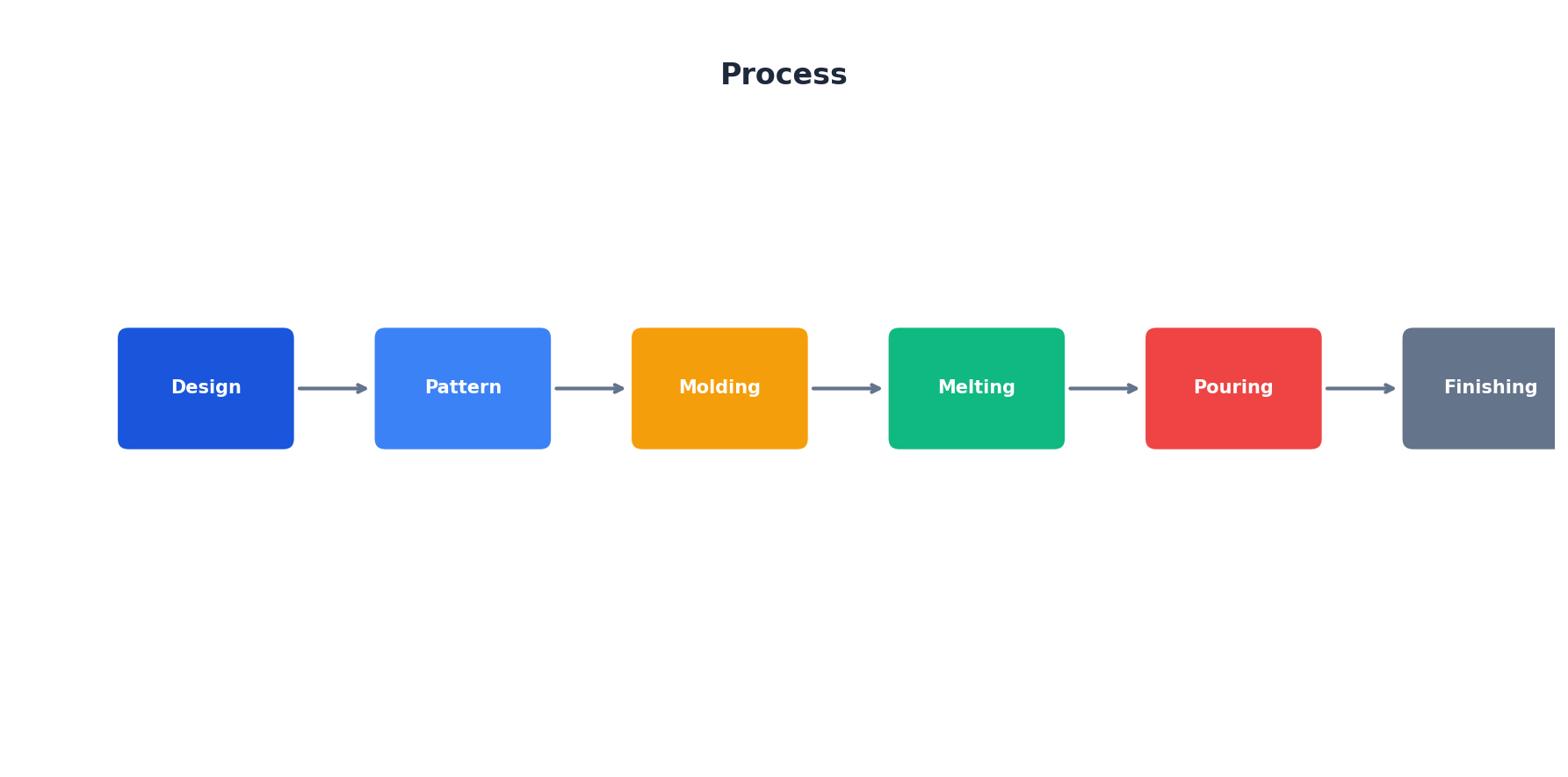
The molding method determines what tolerances are achievable and how consistent the parts will be.
For trailer castings you'll mostly see:
- Green sand molding — the workhorse. Cheapest per part for volumes above ~500 pieces. Typical dimensional tolerance around ISO 8062 CT9–CT11 for a part this size.
- Resin-bonded sand (no-bake / furan) — better surface finish and dimensional control, better for larger parts and lower volumes. Slightly more expensive per kg.
- Shell molding — used for smaller, higher-precision ductile iron parts. Good for coupler components and small brackets.
Ask which line your parts will run on, and how many pieces per mold. If it's a single-cavity pattern running on a manual jolt-squeeze line, expect more dimensional variation and a slower ramp. Not disqualifying, but price it in.
Then ask about the pattern itself. Wooden patterns swell and wear — a pattern that's made 20,000 molds is going to drift. Metal patterns (aluminum) hold tolerance longer. Ask when the pattern was last refurbished, and whether dimensional checks are run on the pattern itself, not just the castings.
Finally, ask how many shifts the line runs and what the scrap rate is. A foundry running 8% scrap on trailer castings is either fighting a real process problem or shipping the marginal parts to you. Ask what happens to parts that fail inspection. A good foundry has a scrap bin with a lock on it.
Check 7: First Article Inspection by a Third Party
The last check is the one you pay for — and it's the cheapest insurance in the whole sequence.
Before your first production run ships, commission a third-party inspection (SGS, BV, TÜV, or a specialist casting inspection firm). Specify the scope in writing:
- Chemical analysis on the actual castings, not the heat report
- Tensile test per ASTM A536, with the test bar location documented
- Metallographic examination — nodularity, pearlite, nodule count
- Hardness at a defined location on the part
- Full dimensional layout against your drawing, on a CMM if available
- Magnetic particle or dye penetrant inspection on critical sections
- Visual and radiographic inspection if the part is a load path component
Budget $600–$1,800 per part number for a proper FAI depending on the testing scope. Compare that to the cost of a 500-piece batch of spring hangers arriving with 30% shrinkage porosity.
The FAI report should come from the inspector directly, not forwarded by the supplier. If the supplier insists on "handling" the third-party report, that's a red flag. If you'd rather build the inspection scope yourself, our pre-shipment inspection checklist for Chinese castings lays out the tests, sampling sizes, and acceptance criteria line by line.
Material Grades: What You Should Be Specifying
Most trailer casting RFQs in North America land on one of these. Get the grade right and half your quality arguments disappear. If you want the fuller picture of how these grades differ and where each one belongs, our side-by-side ductile iron grade comparison walks through the trade-offs.
| Application | Common Grade | Tensile / Yield (ksi) | Elongation |
|---|---|---|---|
| Equalizer beams, spring hangers | ASTM A536 65-45-12 | 65 / 45 | 12% |
| Torque arms, high-load brackets | ASTM A536 80-55-06 | 80 / 55 | 6% |
| Coupler bodies, structural fittings | ASTM A536 100-70-03 | 100 / 70 | 3% |
| Brake drums (standard duty) | ASTM A48 Class 35 / SAE J431 G3000 | 35 (tensile only) | — |
| Heavy-duty brake drums | ASTM A536 65-45-12 | 65 / 45 | 12% |
| Landing gear legs, coupler plates | ASTM A216 WCB (cast steel) | 70 / 36 | 22% |
| Fifth wheel components | ASTM A148 Class 90-60 | 90 / 60 | 6% |
Two things buyers get wrong here.
Under-specifying the grade to save money. Swapping 65-45-12 for a gray iron on a suspension part saves maybe 25–30 cents per kilogram. On a 6 kg equalizer beam that's $1.80 a part. It also cuts fatigue life by more than half. Trailer suspension sees millions of cycles; gray iron cracks. Don't.
Over-specifying and paying for it. Some buyers default to 80-55-06 everywhere because it sounds stronger. Higher pearlite means lower machinability — so you pay more on the casting and more on the machining operation, for a part that didn't need it. Match the grade to the load case.
How the Grade Actually Gets There: Alloying and Heat Treatment
A supplier can quote you ASTM A536 80-55-06 all day. Getting the metal to hit it is a different conversation. Two levers do the work: chemistry and heat treatment.
Alloying. Copper, tin, and nickel are pearlite promoters. A 65-45-12 part can usually hit grade on base chemistry with clean inoculation. An 80-55-06 part typically needs 0.4–0.8% copper, or a small tin addition in the 0.03–0.06% range, or both. That alloying raises cost a few cents per kilogram and cuts machinability — which is why over-specifying is expensive on both ends.
Heat treatment. For heavy sections where the as-cast structure won't hold grade, or for the highest strength levels, the foundry needs a furnace and a controlled cycle:
- Normalizing — austenitize at 900–930°C, then air cool. Raises pearlite content and tensile strength. The standard route to 80-55-06 and 100-70-03.
- Annealing — austenitize then slow cool in the furnace. Lowers hardness and improves machinability, usually on high-alloy or heavy-section parts.
- Austempering — quench into a molten salt bath held at 250–400°C. Produces austempered ductile iron (ADI), with tensile strengths well past 150 ksi. Rare in trailer work, but you'll see it on high-stress suspension pins and some defense applications.
Ask which route the foundry is using to hit your grade, and ask for the furnace cycle parameters for the specific heat. A foundry that says "we just pour it and it comes out 80-55-06" is either overstating its process control or telling you the parts are really 65-45-12 with a nicer label. Either way, you want to know which before you place the order.
What Trailer Castings Actually Cost from China in 2026
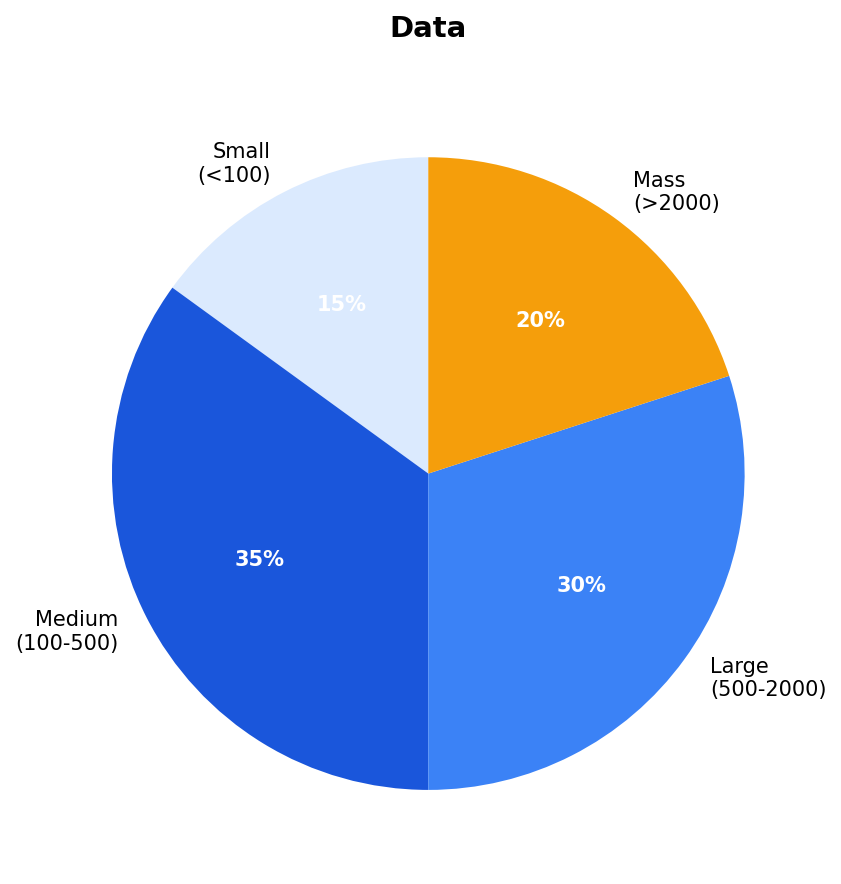
These are estimates based on typical FOB pricing for 500+ piece orders, unmachined, in mid-2026. Your mileage will vary with part complexity, wall thickness, and machining content.
| Material | Typical FOB China (USD/kg) | Example Parts |
|---|---|---|
| Gray iron, A48 CL35 | $0.95 – $1.45 | Brake drums, landing gear legs, hinge hardware |
| Ductile iron, 65-45-12 | $1.20 – $1.75 | Equalizer beams, spring hangers, hubs |
| Ductile iron, 80-55-06 | $1.35 – $1.95 | Torque arms, kingpin supports |
| Cast steel, A216 WCB | $1.50 – $2.30 | Coupler plates, heavy-duty brackets |
Add-ons that move the number:
- Pattern and tooling: $900–$4,500 per part number, one-time. More for large parts with cores.
- Machining: adds 30–120% depending on how many faces and holes. A fully machined brake drum can double in price.
- Coating: e-coat, powder coat, or paint adds $0.15–$0.60/kg.
- Low volume surcharge: under 200 pieces, expect 30–60% above the base rate. Under 50 pieces, don't bother unless it's a prototype.
- Inspection and certification paperwork: $150–$400 per shipment for a standard pre-shipment inspection.
Freight, as a rough guide for 2026: Shanghai to Los Angeles runs about $2,800–$4,200 for a 20' container and $3,600–$5,400 for a 40'. Shanghai to Rotterdam is roughly $2,300–$3,600 (20') and $3,000–$4,800 (40'). These swing hard week to week — get a live quote, not a remembered number.
Total lead time from PO to receiving dock, realistically:
- Pattern making: 25–40 days
- First article samples after pattern approval: 15–25 days
- Production run: 30–45 days
- Ocean transit to US West Coast: 25–35 days
That's 95–145 days. If a supplier promises 45 days door-to-door on a new part, they're either air-shipping (expensive) or planning to send you something they already have in stock (which may not be your spec).
The Certification Trap Most Buyers Walk Into
Here's the pattern. You ask for ISO 9001 and IATF 16949. The supplier sends two PDFs. Both look legitimate — nice logos, certificate numbers, an issue date, an expiry date. You file them and move on.
Three months later, a batch fails. You dig into the certificate and find one of these:
The certificate belongs to a different legal entity. The trading company you contracted with holds a "quality management system" certificate for its office. The actual foundry — a completely separate company in a different province — has never been audited by anybody. The supplier didn't lie, exactly. They just let you assume.
The certificate expired. Certification bodies suspend and withdraw certificates all the time, usually for failure to complete surveillance audits. The PDF the supplier has on file is from 2023 and the certificate was pulled in 2024. Check the public database, every time, on every order.
The scope doesn't cover your process. A certificate might cover "machining of ferrous components" but not "casting." Or cover gray iron but not ductile iron. Read the scope line carefully. It's usually the shortest line on the certificate, and it's the only one that matters.
The certificate is from a non-accredited body. If the issuing organization isn't listed with an accreditation body like ANAB, UKAS, DAkkS, or CNAS, the certificate is a marketing document.
Spend fifteen minutes verifying certificates before you place the first order. It's the highest-return fifteen minutes in the whole sourcing process.
Common Mistakes to Avoid
Accepting a quote without a material specification attached. "Ductile iron" is not a spec. ASTM A536 65-45-12 with a defined test bar location is a spec. Write the grade, the standard, the acceptance criteria, and the testing frequency into the PO. Every claim you don't put in writing is a claim you can't enforce.
Paying 100% before shipment on a first order. Standard for a first order is 30% deposit, 70% against a copy of the bill of lading. Some suppliers will push for 50/50 on a first run, which is negotiable and usually reasonable. A demand for 100% upfront, or a request to wire to a personal bank account rather than a corporate one, ends the conversation.
Ordering from a supplier whose only communication channel is a chat app. You want a company email domain, a landline that reaches the office, and a named contact who picks up. Suppliers who operate entirely through WeChat personal accounts leave no paper trail when things go wrong.
Ignoring the machining question until after the casting arrives. If your part needs machined faces, decide early whether the foundry machines in-house, uses a nearby partner shop, or ships raw castings for you to machine domestically. Each option changes the price, the tolerance stack, and who owns the scrap if a casting is out of tolerance at the machining stage. Get it in the contract.
Skipping the pre-shipment inspection to save $400. This is the single most expensive shortcut buyers take. A pre-shipment inspection catches dimensional drift, cosmetic defects, packaging problems, and wrong-part mix-ups while the goods are still in the supplier's warehouse — where you have leverage. Once the container is loaded, your leverage is gone.
FAQ
Where in China are trailer castings actually made?
Three clusters cover most of the volume. Hebei province — particularly Botou and Cangzhou — is the historic center for gray and ductile iron castings, with hundreds of small and mid-size foundries. Shandong, especially around Qingdao, Weifang, and Linyi, has larger, more automated operations and better export logistics. Zhejiang and Jiangsu have precision-focused foundries that lean toward shell molding and smaller machined parts. For trailer suspension and brake components, Shandong and Hebei together are where you'll do most of your sourcing.
How much more expensive is ductile iron than gray iron?
Roughly 20–35% per kilogram, FOB. The gap comes from magnesium treatment, tighter process control, and higher scrap risk. On a part where gray iron technically meets the load case, the savings are real. On a structural suspension component, they're not worth taking — the fatigue performance difference is not marginal.
How do I confirm a supplier is a real factory and not a trading company?
Three quick tests. Pull the business license and read the scope — it should include casting or manufacturing, not just trading. Ask for a live, unscripted video walkthrough that includes the melting shop. And ask for pouring records with heat numbers. A trader can fake the first. The second and third are very hard to fake convincingly.
What's the right first order quantity?
Enough to hit a sensible volume price break, not so much that a quality problem is catastrophic. For most trailer castings, 300–800 pieces is the sweet spot for a first order — it gets you past the low-volume surcharge on most lines and gives you a real statistical sample to inspect. If the supplier insists the minimum is 2,000 pieces on a brand-new part, that's a sign their line isn't set up for flexible small batches.
Should I use an escrow or letter of credit instead of T/T?
For orders above about $30,000, a letter of credit is worth the bank fees and paperwork — it gives you documentary control over the release of funds. Below that threshold, the fees usually eat the benefit. For smaller first orders, a modest deposit with the balance against a copy of the B/L, plus a pre-shipment inspection, covers most of the risk at far lower cost.
Before You Send the Deposit
Run the seven checks in order. License scope, melting shop, spectrometer data, in-house lab, certificate verification, molding process, third-party FAI. Most suppliers that fail will fail at check one or check two, and you'll have spent nothing but an afternoon.
The ones that pass all seven are worth keeping. A foundry that keeps heat records, tests magnesium per heat, and hands you a metallographic report without being asked is a foundry you can grow with — and in this category, that's rarer than it should be.
If you're evaluating a Chinese trailer casting supplier right now and want an independent set of eyes on the foundry before money moves, an on-site audit takes two to three days and costs less than a single rejected container. Request a third-party foundry audit or download the pre-shipment inspection checklist to run against your current supplier.