Casting Process Guide
Lost Foam vs Lost Wax Casting: Which One Belongs in Your Next PO?
A purchasing manager in Ohio got quotes from three Chinese foundries for the same bracket. Two quoted lost wax. One quoted lost foam. The lost foam quote came in 38% cheaper and the tooling was $4,800 instead of $11,200. He signed. Six weeks later the first shipment landed with surface finish that looked like peeling wallpaper, and 14% of the parts failed dimensional checks at his machinist.
He isn't the first buyer to make that call, and he won't be the last. The problem isn't that lost foam is bad. The problem is that "cheaper" is doing a lot of emotional work in that sentence, and nobody on his side of the table asked what the process actually delivers before the PO went out.
If you're staring at two quotes right now—one lost foam, one lost wax—and trying to figure out which one is telling the truth about your part, this is the page you want open. Not because there's a single right answer. Because the answer depends on six variables you can check in about 30 minutes with the right questions.
The 30-Second Version
Both processes use a pattern that gets destroyed to free the metal. That's the only thing they truly share.
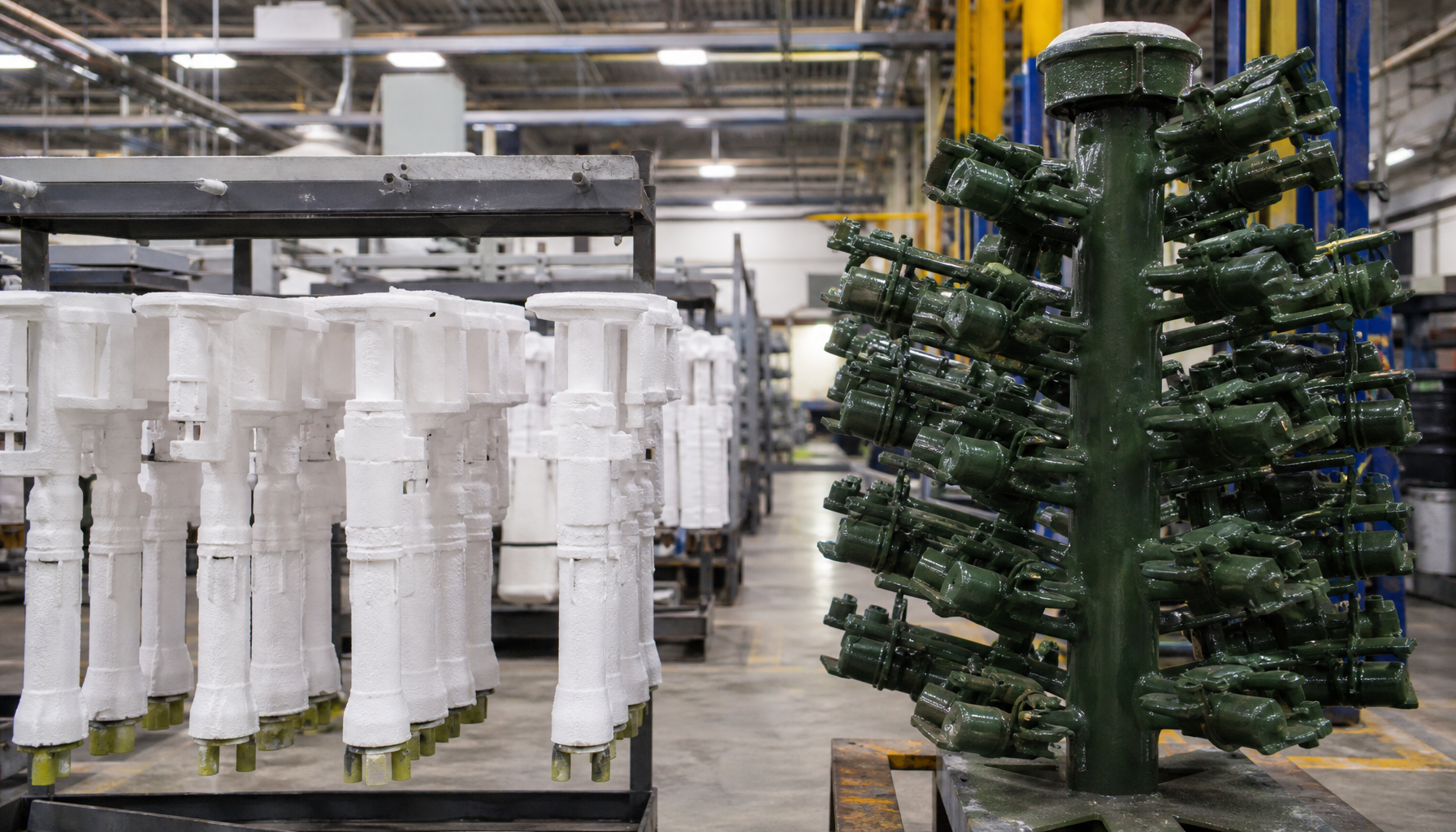
Lost foam casting uses a pattern made of expanded polystyrene (EPS). You bury the foam pattern in unbonded sand, pour molten metal directly on top, and the foam vaporizes as metal fills the cavity. The pattern IS the mold cavity. No parting line, no draft angle, no cores.
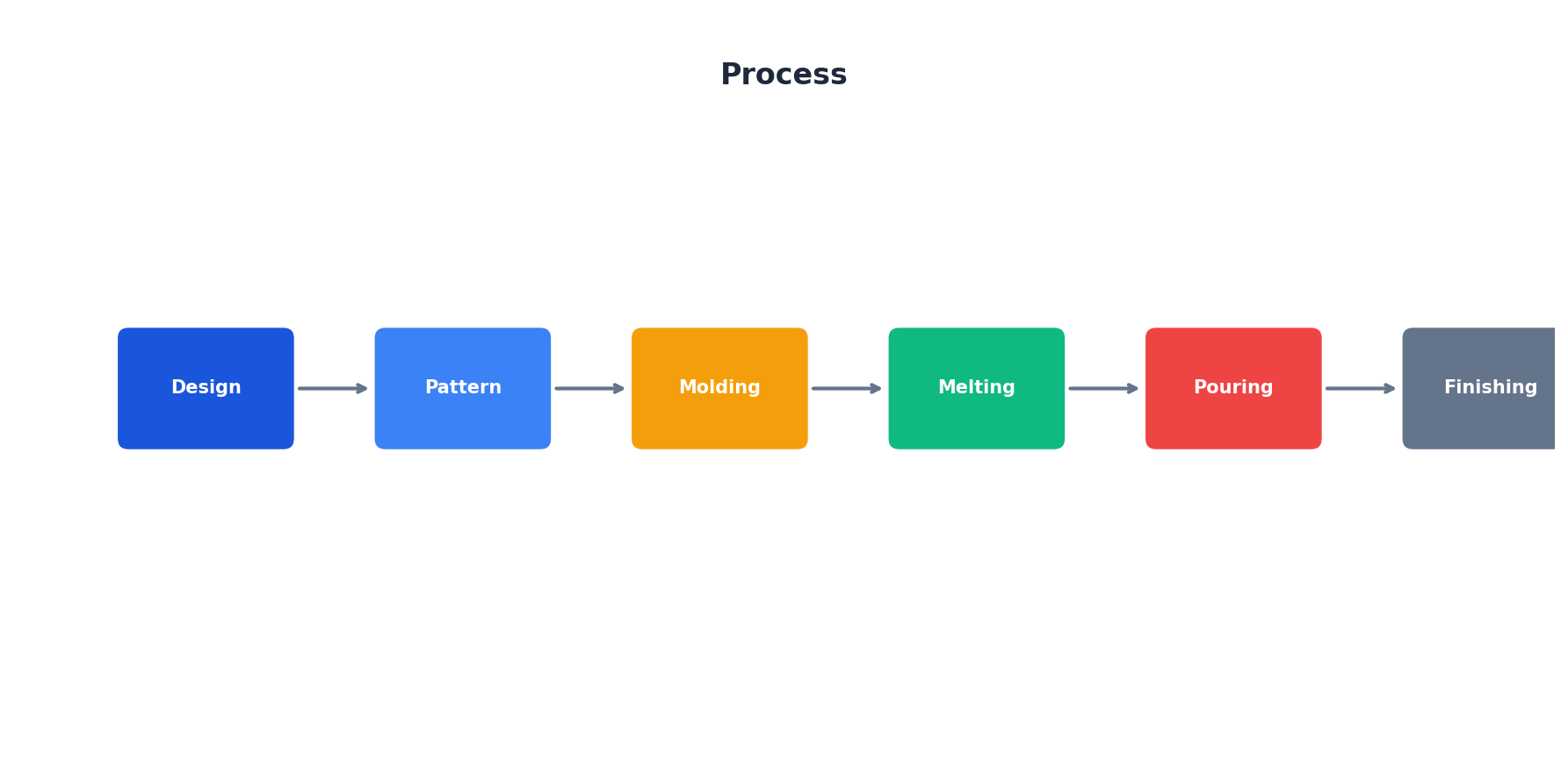
Lost wax casting—industry people call it investment casting—uses a wax pattern. You coat the wax with ceramic slurry, build up 5–9 shell layers, melt the wax out in an autoclave, fire the shell, then pour. The wax leaves, the shell stays, and the metal fills the hollow shell.
That difference—foam disappears into the metal, wax disappears before the metal—drives everything else: cost, tolerance, surface, tooling, and what your machinist will say when the parts hit the floor.
Where Lost Foam Quietly Wins
Start with the process fundamentals if you want the fuller technical picture on lost foam casting—the economics below only make sense once you understand that the foam pattern becomes the cavity.
Tooling cost: usually 50–70% less than lost wax
Foam patterns are cut from EPS blocks on a CNC hot-wire machine or molded from an aluminum die. A simple foam pattern tool for a part the size of a shoe box runs $3,500–$7,000. The equivalent wax injection die for investment casting runs $8,000–$18,000, and if the part needs a complex multi-slide die, you're looking at $20,000+.
If your order is 200–2,000 pieces and you may never reorder, that tooling gap alone can decide the process before you look at per-part cost.
No parting line, no draft angle
Foam patterns don't need to be pulled out of a mold. That means you can cast features with zero draft—vertical walls, undercuts, internal ribs—that a sand casting would need cores for and a die casting can't make at all. If your part design has a deep blind pocket or an undercut that's been forcing you into a multi-piece weldment, lost foam can often cast it in one shot.
Sand reuse and no binder system
Lost foam uses dry, unbonded silica sand. No green sand muller, no resin binder, no reclamation chemistry. For the foundry, that's a cheaper consumable stream. For you, it shows up as a lower per-kilo price on medium and large parts—typically $2.20–$3.60/kg for aluminum, versus $3.80–$5.50/kg for investment casting at similar volumes.
Big parts stop being scary
Investment casting shells get heavy and fragile fast. Past about 25–30 kg, the ceramic shell handling cost and scrap rate creep up. Lost foam doesn't care. Engine blocks, pump housings, and 100 kg+ manifolds are routine. If your part is bigger than a dinner plate, lost foam deserves a hard look.
Where Lost Wax Punches Back
Surface finish and dimensional tolerance
This is where the Ohio buyer got burned, and it's where most lost foam arguments fall apart in the first shipment.
- Lost wax: typical as-cast Ra 3.2–6.3 µm. Dimensional tolerance commonly ±0.13 mm on the first inch, +0.025 mm per additional inch (per ISO 8062 DCTG 4–5).
- Lost foam: typical as-cast Ra 12.5–25 µm. Dimensional tolerance commonly ±0.25 mm on the first inch, +0.05 mm per additional inch (DCTG 6–7).
Roughly a 2–4× gap in both finish and tolerance. If your drawing has a machined surface on every face, this may not matter—your machinist was going to cut it anyway. If your drawing expects a 4 mm wall with ±0.15 mm on a bearing bore, lost foam is going to lose.
Put a standard number on the table before you argue. ISO 8062-3 defines the dimensional tolerance grades (DCTG) referenced in this article, and both ASTM B108 for aluminum investment castings and ASTM B26/B26M for aluminum sand castings give you the mechanical property baselines to hold a supplier to. If a foundry can't map its claimed capability to one of those, you're negotiating without a ruler.
Thin walls and fine detail
Investment casting routinely holds 1.5 mm walls and 0.8 mm detail in aluminum or stainless. Lost foam struggles below 3 mm walls in aluminum—the foam pattern deforms slightly under sand compaction, and thin sections in the foam are fragile before pour. Stainless and steel in lost foam? Wall minimums usually jump to 4–5 mm.
Process control you can audit
Wax injection is a machine cycle with logged pressures and temperatures. Shell building is a documented, repeatable sequence. A lost wax foundry running to NADCA or ISO 8062 Class 4 can hand you a process capability sheet that means something.
Lost foam is more artisanal. Foam density varies batch to batch. Coating thickness on the foam pattern is often applied by hand dip. Sand compaction is a vibration table, not a controlled pressure. That doesn't make it unreliable—but it makes it harder to put a Cp/Cpk number on and defend at your quality review.
Small, intricate parts go to wax, period
Anything under about 200 g with fine internal passages—impellers, turbine blades, medical instrument components, firearm parts—belongs to investment casting. Full stop. Lost foam can't hold the detail and can't justify the pattern cost at that scale.
Side-by-Side: The Numbers That Actually Matter
| Factor | Lost Foam | Lost Wax (Investment) |
|---|---|---|
| Pattern material | Expanded polystyrene (EPS) | Wax (filled or unfilled) |
| Tooling cost (medium part) | $3,500–$7,000 | $8,000–$18,000 |
| Tooling lead time | 2–4 weeks | 5–8 weeks |
| Typical as-cast tolerance | ±0.25 mm + 0.05 mm/inch | ±0.13 mm + 0.025 mm/inch |
| Surface finish (Ra) | 12.5–25 µm | 3.2–6.3 µm |
| Minimum wall (aluminum) | ~3.0 mm | ~1.5 mm |
| Practical part weight range | 0.5 kg – 200+ kg | 0.01 kg – 30 kg (sweet spot < 10 kg) |
| Unit cost (aluminum, 1,000 pc) | $2.20–$3.60/kg | $3.80–$5.50/kg |
| Typical scrap rate (mature process) | 5–12% | 2–5% |
| Best-fit part size | Medium to large, simple geometry | Small to medium, complex detail |
| Volume sweet spot | 50–5,000 pc/yr | 500–50,000+ pc/yr |
Read that table twice. Specifically the tolerance and surface rows. Those two lines cause more returned shipments than every other row combined.
The Cost Math Nobody Shows You Up Front
Foundries quote you a piece price. Wise buyers calculate total landed cost. Here's how the two processes stack up on a 1.5 kg aluminum housing, 2,000-piece annual order, delivered to a US Midwest address.
| Cost line | Lost Foam | Lost Wax |
|---|---|---|
| Tooling (amortized over 2 yr) | $2,600/yr | $6,500/yr |
| Unit price × 2,000 | $4.30/pc = $8,600 | $6.90/pc = $13,800 |
| Machining allowance (extra stock removal) | $0.85/pc = $1,700 | $0.30/pc = $600 |
| Reject / rework at receiving | ~8% = $688 | ~3% = $414 |
| Freight (foam parts heavier, more stock) | $1,400 | $1,400 |
| Annual total | $14,988 | $22,714 |
Lost foam still wins here—by about 34%. But notice how much the gap shrank once machining allowance and reject rate got honest numbers. On a part with tighter tolerance, that gap closes further. On a part with cosmetic requirements on all surfaces, it can flip entirely.
Rule of thumb: lost foam wins on cost when your part can tolerate DCTG 6–7 tolerance AND has at least 40% of its surfaces getting machined anyway. Miss either condition and rerun the math.
Common Mistakes Buyers Make
Mistake 1: Treating "lost foam" and "lost wax" as interchangeable quotes
They're not competing on the same axis. A foundry that quoted you lost foam chose that process because it fits their equipment—not necessarily because it fits your part. If they didn't ask you about tolerance and surface finish before quoting, they're pricing to their capability, not your requirement.
Mistake 2: Assuming foam tooling is free because it's cheap
Foam patterns are cheaper, but they wear out. A single EPS pattern typically produces one casting (it's destroyed in the pour). Molding dies for the foam patterns themselves have finite life—usually 5,000–20,000 cycles before replacement. On a 50,000/year program, foam tooling amortization is not the bargain it looks like on the first PO.
Mistake 3: Not requiring first-article inspection (FAI) on both processes
Lost foam foundries vary wildly. Two suppliers can hit ±0.20 mm and ±0.55 mm respectively on the same drawing. Never release a PO without a full dimensional FAI report from the actual production tool, with a CMM layout, not a hand-gauge sketch. If you're still narrowing the shortlist, our supplier directory lists foundries by process, certification, and the size range they actually run.
Mistake 4: Skipping the foam-coating question
Foam patterns get dipped in refractory coating before sand burial. Coating thickness determines surface finish and whether the metal flows evenly. Ask your supplier: "What's your coating method and target thickness?" If they can't answer in numbers (typically 0.3–0.5 mm wet), you're buying lottery tickets.
Mistake 5: Overlooking heat treat and porosity risk
Lost foam castings sometimes show higher internal porosity than investment castings because the foam decomposition gases have to escape through the metal. For pressure-tight parts (hydraulic housings, pump bodies), require either X-ray or a documented leak test on the first 50 parts. Don't assume "no visible defects" means "no porosity."
Mistake 6: Ignoring the machinist's reality
If the lost foam part arrives 0.4 mm oversized in a spot that's supposed to be net-shape, your machinist has to fixture it, indicate it, and cut it. That's $0.40–$1.20 per part in added cycle time that never shows up in the foundry quote. Include your machining partner in the process selection call before you commit.
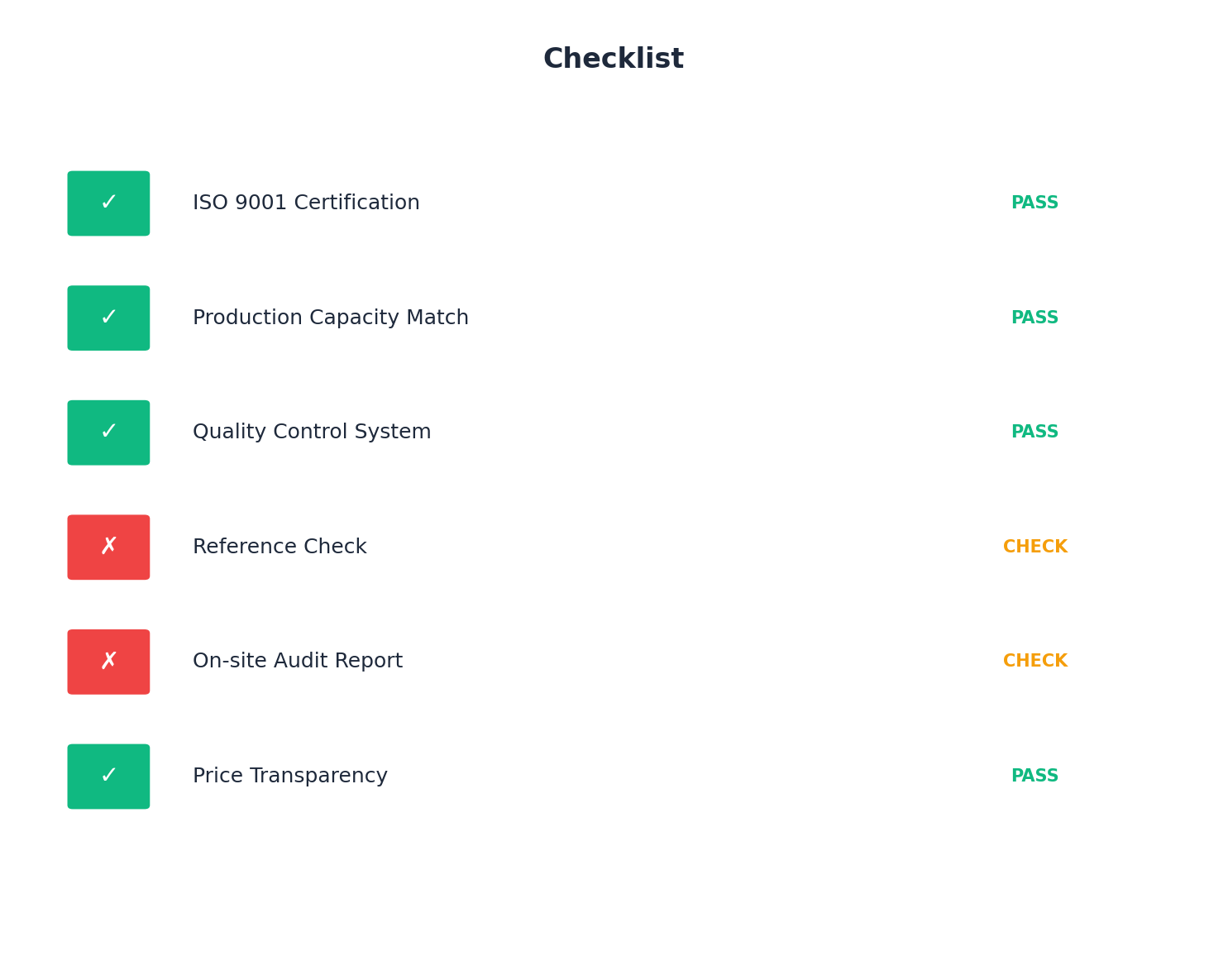
Six Questions to Ask Before You Sign
- "What DCTG grade can you hold on this specific part, and what's your scrap rate on similar geometry?" — Generic capability sheets lie. Ask for a specific part reference.
- "Show me an FAI report from a part you're currently running in this process." — Real documents only. If they can't share one, that answers the question.
- "What's the foam pattern / wax die life, and who owns it after the program ends?" — Tooling ownership clauses save six-figure surprises during supplier transitions.
- "What surface Ra can you guarantee as-cast on the top and bottom faces?" — Most suppliers quote an average. The bottom face in lost foam is always worse.
- "Do you subcontract the foam molding or the shell building?" — Subcontracted steps are where schedule slips and accountability vanish.
- "If I grow to 5× volume, does your process still make sense?" — Some lost foam suppliers can't scale past 10,000 pc/yr without a second line. Ask now.
Quick Decision Tree
If you don't want to read another word, use this:
- Part under 200 g with fine detail or thin walls → lost wax. Not close.
- Part 200 g to 3 kg, tight tolerance (±0.15 mm or better), cosmetic surfaces → lost wax.
- Part 3 kg to 200 kg, tolerance ±0.3 mm OK, most surfaces machined → lost foam.
- Part with undercuts or internal features that would need cores in sand casting → lost foam, if tolerance allows.
- Low volume (under 500 pc), one-time order, medium part → lost foam (tooling cost dominates).
- High volume (10,000+ pc/yr), consistent reorder → lost wax (unit cost and scrap rate dominate).
- Pressure-tight or safety-critical → lost wax, with documented X-ray.
When the answer is "it depends," the two variables doing most of the work are part weight and as-cast tolerance requirement. Plot your part on those two axes and the choice usually makes itself.
FAQ
Is lost foam casting cheaper than lost wax?
Usually, yes—by 25–40% on medium-sized aluminum parts at volumes between 200 and 5,000 pieces per year. The gap narrows or disappears at very high volume (lost wax amortizes tooling well) or when tolerance requirements force extra machining on lost foam parts.
Can lost foam achieve the same surface finish as lost wax?
No. Lost foam as-cast finish runs Ra 12.5–25 µm, roughly 3–4× rougher than investment casting (Ra 3.2–6.3 µm). If your drawing has a cosmetic class A surface, lost foam needs either post-processing or you need to switch processes.
Which process is better for large parts?
Lost foam. Investment casting shells become heavy and fragile above about 25–30 kg. Lost foam routinely casts 100 kg+ parts without issue, and the pattern cost doesn't scale the way wax die cost does.
What's the minimum order quantity for each?
Lost foam can be economical from about 50 pieces if the part is large enough to justify pattern cost. Lost wax is usually economical from 500 pieces, dropping in unit cost sharply between 1,000 and 5,000 pieces.
Can I switch processes later if volume changes?
Yes, but expect to pay new tooling. A lost foam pattern doesn't convert to a wax die. Plan for one tooling cycle per process change, and keep the original 3D model in a format both foundries can consume.
How long does each process take to first part?
Lost foam: typically 4–7 weeks from PO to first article (pattern making + coating + trial pour). Lost wax: 8–12 weeks (die making + shell development + first pour). Add 2 weeks for FAI documentation if you require full CMM layout.
Next Steps
Before you send the PO, do this:
- Pull your drawing and circle the tightest tolerance callout. If it's ±0.15 mm or better, lost wax is likely your answer unless the feature is fully machined.
- Weigh the part. Under 3 kg with detail? Lean lost wax. Over 3 kg and simple? Lean lost foam.
- Ask both suppliers the six questions above. Format the answers side by side. The one that stalls on question 2 is the one to drop.
- Get an FAI quote before you get a production quote. A $400 FAI now is cheaper than a $14,000 scrap return later.
The Ohio buyer I opened with isn't unusual. He took the 38% lower quote because nobody on either side of the table had connected "cheaper" to "what surface finish is your machinist expecting." Two quotes, one decision, six questions. That's the whole game.
If you want a second opinion on two competing quotes, submit both to our sourcing desk with the drawing and tolerance callouts. We'll come back with a one-page comparison flagging where the cheap quote is likely to bite.
Get a quote comparison in 48 hours
Upload your drawing and the two competing quotes. A casting engineer reviews them and flags tolerance, tooling, and scrap-rate risks before you commit.
Submit Your Quotes →