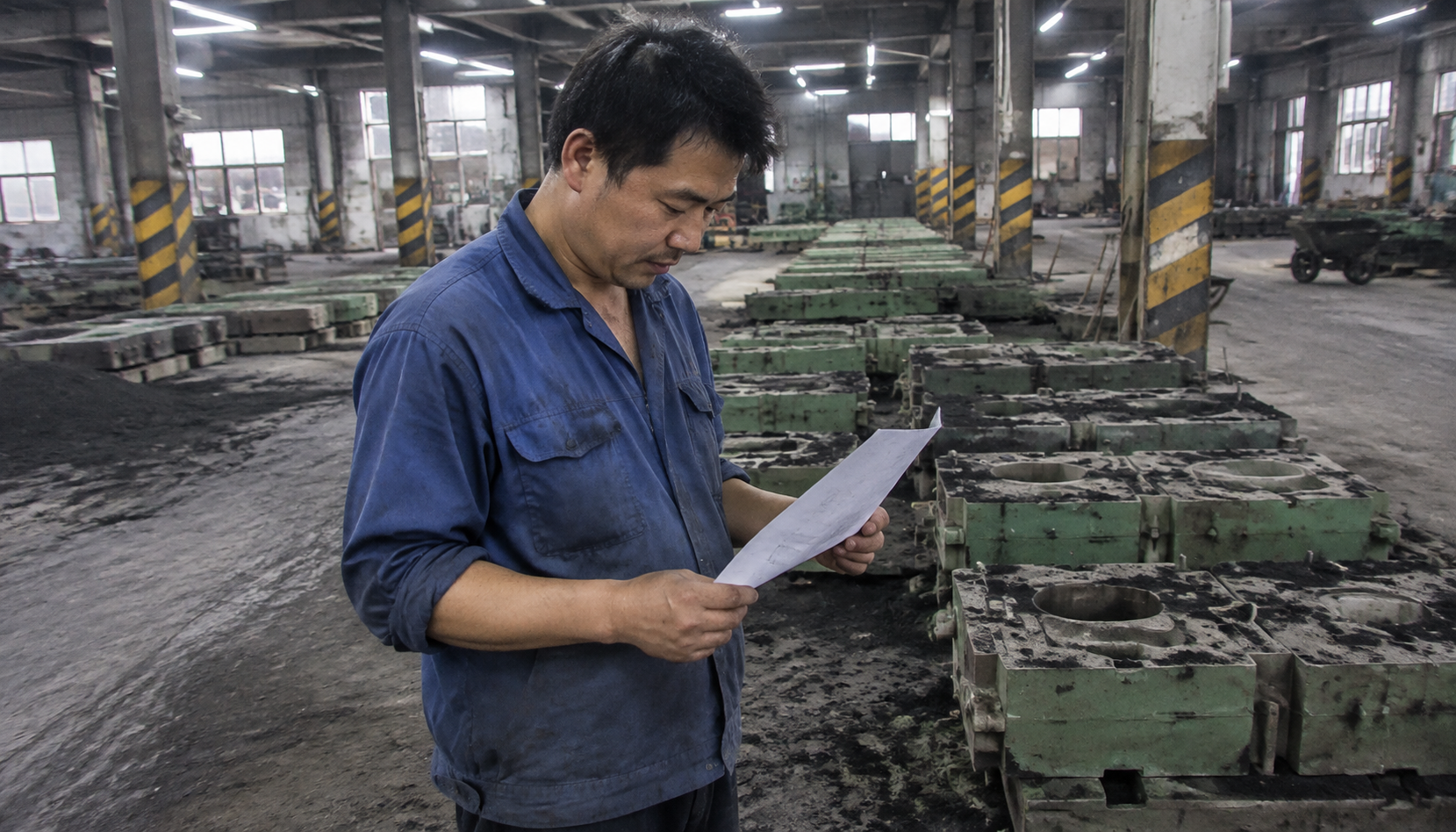
China holds an estimated 400,000+ valid ISO 9001 certificates — more than any other country, according to the ISO Survey of Certifications. The China Foundry Association puts the number of casting enterprises in the country at roughly 25,000.
Run those two numbers side by side and you'd expect that any foundry you contact in Qingdao, Ningbo, or Wuxi can produce a quality certificate before you finish your first email.
They can. Nearly all of them will. That's exactly why the certificate stopped being a filter and started being noise.
Here's the part that matters for your sourcing file: a Chinese foundry with a valid ISO 9001 certificate is not necessarily a good foundry. It's a foundry that paid for an audit and passed it. Those are different things, and confusing them is how buyers end up with 8% porosity on a $60,000 die casting order.
This guide is about reading the certificate properly — the number, the scope line, the accreditation mark, the audit trail — and then going to the floor to see whether any of it is real. Twenty minutes at a desk, two hours in a plant, and you'll know more than a stack of PDFs will ever tell you.
The certificate count hides three separate problems
When people say "Chinese factories fake their ISO certificates," they're usually describing one of three things, and only one of them is actually fraud.
1. Expired or suspended certificates still on the wall
An ISO 9001 certificate runs on a three-year cycle with surveillance audits in between. Fail a surveillance audit or skip it, and the certification body suspends the certificate — but the framed copy stays in the meeting room. Nothing about a printed PDF tells you it's still live. The factory may not even be hiding it; the person who printed it in 2021 has moved on.
2. Genuine certificates with no international standing
China's certification market is regulated by CNCA, and the reputable bodies carry accreditation marks from CNAS, or from IAF members like UKAS or ANAB. But there's a long tail of small domestic issuers. A certificate is legally real, issued by a registered company, and completely useless to you because no IAF member recognises it. Your auditor back in Ohio won't accept it as evidence of anything.
3. Scope mismatch — the expensive one
This is where buyers actually lose money, and almost nobody checks it. More on that below, because it deserves its own section.
Outright forged certificates exist. In my experience walking floors, they're maybe 1 in 50. Scope mismatches are closer to 1 in 4.
Which accreditation marks actually mean something
Every legitimate ISO 9001 certificate carries at least two logos: the certification body's, and the accreditation body's. The second one is the one worth your attention.
In China, certification bodies are licensed by the CNCA. That licence is permission to operate — it is not a statement that the certificate will travel. What you want to see is an accreditation mark from a body that is a signatory to the IAF Multilateral Recognition Arrangement for quality management systems.
The marks you'll see most often on Chinese foundry certificates:
- CNAS — the China National Accreditation Service. An IAF MLA signatory for QMS. A CNAS-accredited certificate is genuinely portable; a third-party auditor in Ohio or Stuttgart can trace it.
- UKAS — the UK's accreditation service. Some Chinese plants pay extra for this route specifically because Western customers recognise the mark without asking follow-up questions.
- ANAB — the US counterpart. Less common on Chinese certificates, but not rare, and it's accepted without argument.
- DAkkS, JAS-ANZ, SCC — the German, Australian/New Zealand, and Canadian bodies. All IAF MLA signatories. All fine.
What's not fine: a certificate issued by a body with no accreditation mark at all, or with a logo that doesn't resolve to an IAF member. Those exist, they're legal in China, and they will not survive contact with your customer's supplier quality team.
Quick check: IAF CertSearch is a free, global database of certificates issued by IAF-accredited certification bodies. It doesn't depend on the factory sending you anything. If a supplier claims a major accreditation and isn't in there, ask which body and which certificate number, then check that body's own client directory directly. Certificates that resolve in one place but not the other are the ones to walk away from.
Verify a Chinese ISO 9001 certificate in 20 minutes
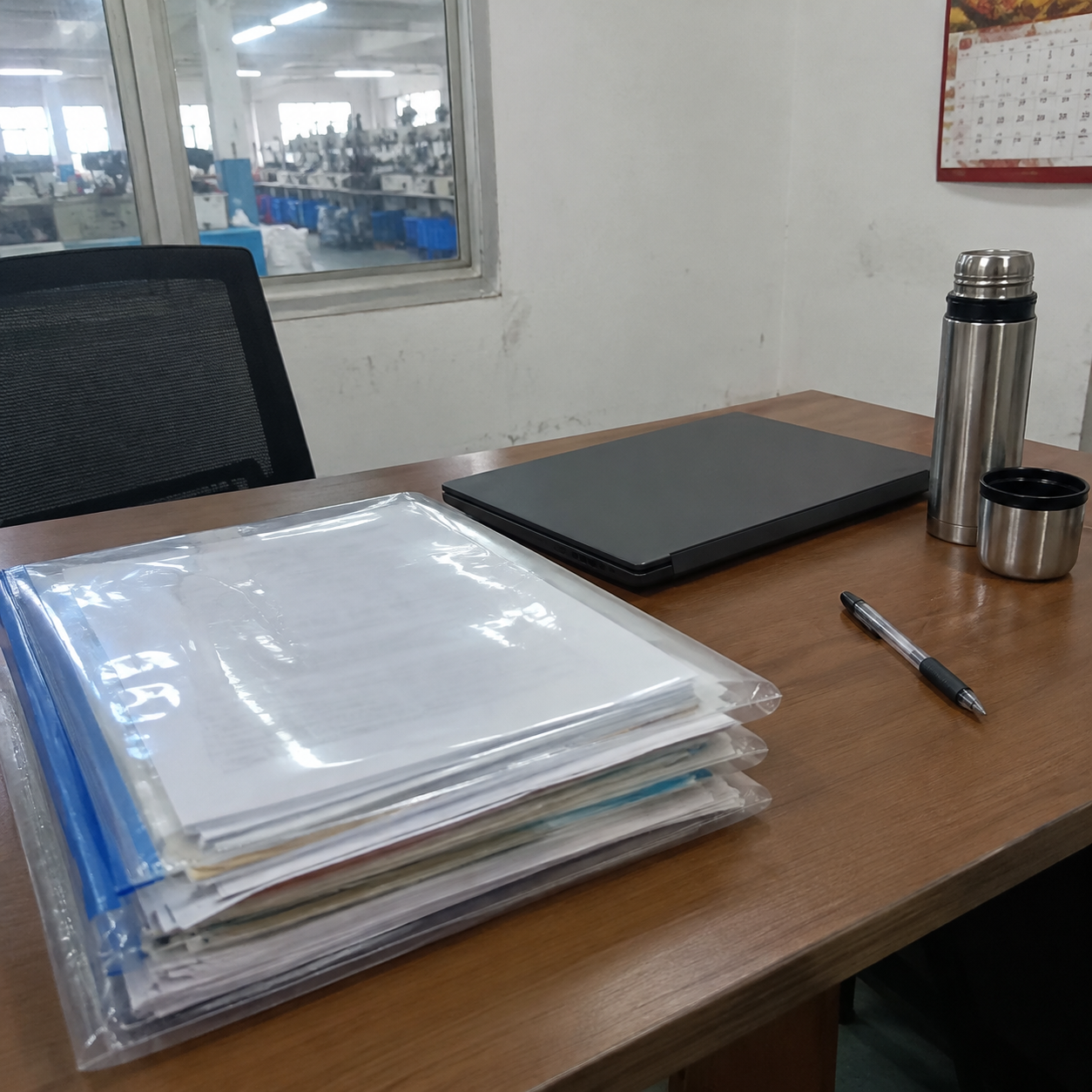
You don't need an auditor. You need a browser and a refusal to accept the PDF at face value.
| Step | What you ask for | What you're checking |
|---|---|---|
| 1 | The certificate number, not the certificate image | That the number follows the issuing body's format, and that the same number appears on the audit report |
| 2 | Certification body name + accreditation mark | Is it CNAS, UKAS, ANAB, or another IAF member? Search the accreditation body's own directory, not the factory's site |
| 3 | IAF CertSearch lookup | Free, global, and independent of the factory. Unlisted but claimed = ask why |
| 4 | The scope statement, word for word | Does it name casting, foundry production, or the specific process — or just "trading"? |
| 5 | Most recent surveillance audit report + next audit date | Is the certificate currently in cycle, or quietly lapsed? |
Twenty minutes, five emails. If a supplier stalls on step 1 or step 5, you've learned more than any certificate could tell you.
One practical note: Chinese factories often send the certificate as a photo of a framed copy on the wall. Ask specifically for the PDF from the certification body's portal. A wall photo is a picture of a document; a portal PDF is a record. The difference shows up the first time you have to defend a supplier choice to your own quality manager.
Second practical note: send the request to the quality manager, not the sales rep. A plant running a live QMS answers in a couple of hours, because someone there already keeps those files in a folder. A plant running a binder forwards you a JPEG and hopes you stop asking.
The four dates on a certificate, and what each one tells you
Most buyers read the expiry date and stop. Read all four.
- Initial certification date. How long the system has survived external audits. Under two years is a young system — not disqualifying, but it hasn't been stress-tested through a bad month yet.
- Current issue date. When this version was issued, usually after a recertification audit. Useful for spotting a certificate that was reissued after a suspension.
- Expiry date. The end of the three-year cycle. A certificate expiring within 90 days is either about to be renewed or about to quietly disappear.
- Last surveillance audit. This one is the tell. Surveillance audits fall roughly twelve months apart. A certificate issued in 2023, audited in 2024, with nothing since, is either suspended or drifting.
Certificates don't get revoked loudly. The certification body updates a database, sends a letter the sales department files, and the framed copy keeps hanging there for another eighteen months. That's not malice in most cases. It's just an organisation that never built the habit of tracking its own paperwork — which is, incidentally, exactly the trait you're trying to screen out.
The scope statement is where deals go wrong
Read this line carefully the next time a supplier sends you a certificate:
"Design and manufacture of aluminum alloy castings for automotive and industrial applications."
That's a real scope. It covers design, it covers manufacture, it names the material and the process.
Now read this one:
"Sales of metal products."
That's also a real scope — and it tells you almost nothing. A trading company can hold that certificate legitimately. The foundry that actually pours your parts may be 40 kilometres away, unlisted, and never audited by anyone.
Three scope problems to check for by name:
- Process missing. The scope says "machining" or "assembly" but your part is a casting. The foundry side of the business isn't covered.
- Material missing. The scope names aluminium but you're buying ductile iron. Different process, different furnace, different failure modes.
- Group vs. entity. The certificate belongs to the trading group's head office. The scope covers "the organisation at the following address" — and that address isn't the plant making your parts.
Ask the supplier to confirm in writing that the certified entity is the same legal entity that will appear on your purchase order, at the same address, performing the same process. That single sentence resolves most of it. Some suppliers will go quiet at that point, which is the answer you needed.
When your "foundry" is actually a trading company
A large share of the suppliers who answer a "castings China" enquiry are trading companies. Some are genuinely good — they consolidate four processes across three provinces, run incoming inspection at a warehouse, speak fluent technical English, and carry the risk of a bad shipment themselves. Some are two people with a WeChat account and a cousin who knows a plant.
A trader holding a valid ISO 9001 certificate scoped to "sales of metal products" is telling you the truth. They have a documented sales process. What they don't have — and what the certificate doesn't cover — is the foundry.
If you buy through a trader, the certificate you actually need belongs to the plant that pours the metal. Ask for four things:
- The plant name and address that will physically produce your parts
- That plant's own certificate, with a scope naming casting and your material
- Their most recent customer audit report, if they'll release it
- Who performs final inspection, and at which site
A legitimate trader answers all four within a day, because their supply base is their product. A trader who can't name the plant is not a supplier you can audit, which means not a supplier you can qualify. Our casting supplier directory separates trading companies from plants for exactly this reason.
What ISO 9001 does not measure
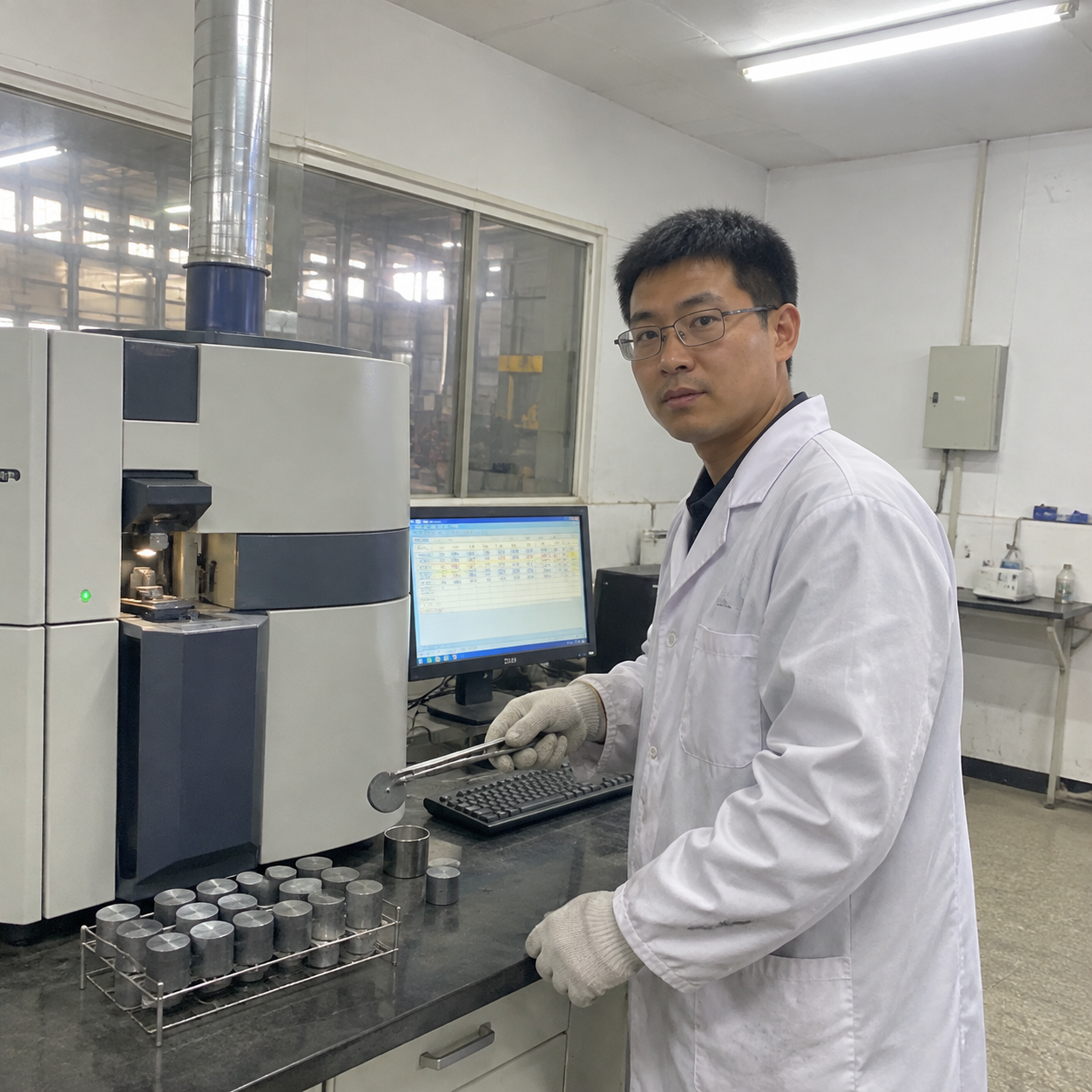
ISO 9001 is a management system standard. It asks whether you have documented processes, whether you follow them, whether you measure results, and whether you fix what breaks. It is genuinely useful — a foundry that runs a real QMS will catch its own scrap problems before you do.
It does not measure whether the castings are any good. Concretely, a valid certificate tells you nothing about:
- Dimensional capability. Whether the plant can hold your GD&T tolerances on a 40kg casting. That's a Cpk number, not a certificate.
- Metallurgical control. Whether the melt is spectro-checked every heat, and whether the results are traceable to your lot number.
- Porosity and x-ray acceptance. Whether they radiograph critical sections to ASTM E505 Level 2, or just eyeball the surface.
- Capacity and loading. Whether your 3,000-piece order lands in a plant already running at 95% on somebody else's work.
- Tooling discipline. Whether the die or pattern is maintained on schedule or run until it cracks and the parting line grows.
You'll notice those are the exact things that make castings fail in service. That's not a coincidence. ISO 9001 certifies the kitchen has a recipe book. It doesn't certify the chef.
Where a real certificate earns its keep is in prediction. A foundry that has maintained continuous certification for eight-plus years, with clean surveillance audits and a scope that genuinely covers casting, is statistically more likely to have stable process control and a working corrective action system. That's a real signal. It's just not the signal most buyers think they're buying.
What to look for on the floor
Certificates are checked at the desk. QMS reality is checked by walking. On a two-hour factory visit, these are the things that separate a working system from a binder.
| Paper QMS | Working QMS |
|---|---|
| Quality manual on the shelf, pristine | Quality manual on the shelf, annotated, with a revision log that shows 2025 changes |
| Calibration stickers with recent dates and no other trace | Calibration register that a clerk can pull up in under two minutes, cross-referenced to the instrument ID on your bench |
| "We do internal audits annually" | Internal audit reports listing actual nonconformities found — and what changed afterwards |
| Incoming inspection described as "per standard" | A named inspection plan per customer, with sampling levels and a defined AQL |
| Corrective actions described as "we fix the problem" | 8D or CAR records with root cause, containment, and effectiveness verification a month later |
| No visible scrap data | Scrap rate posted at the line, by defect type, updated weekly |
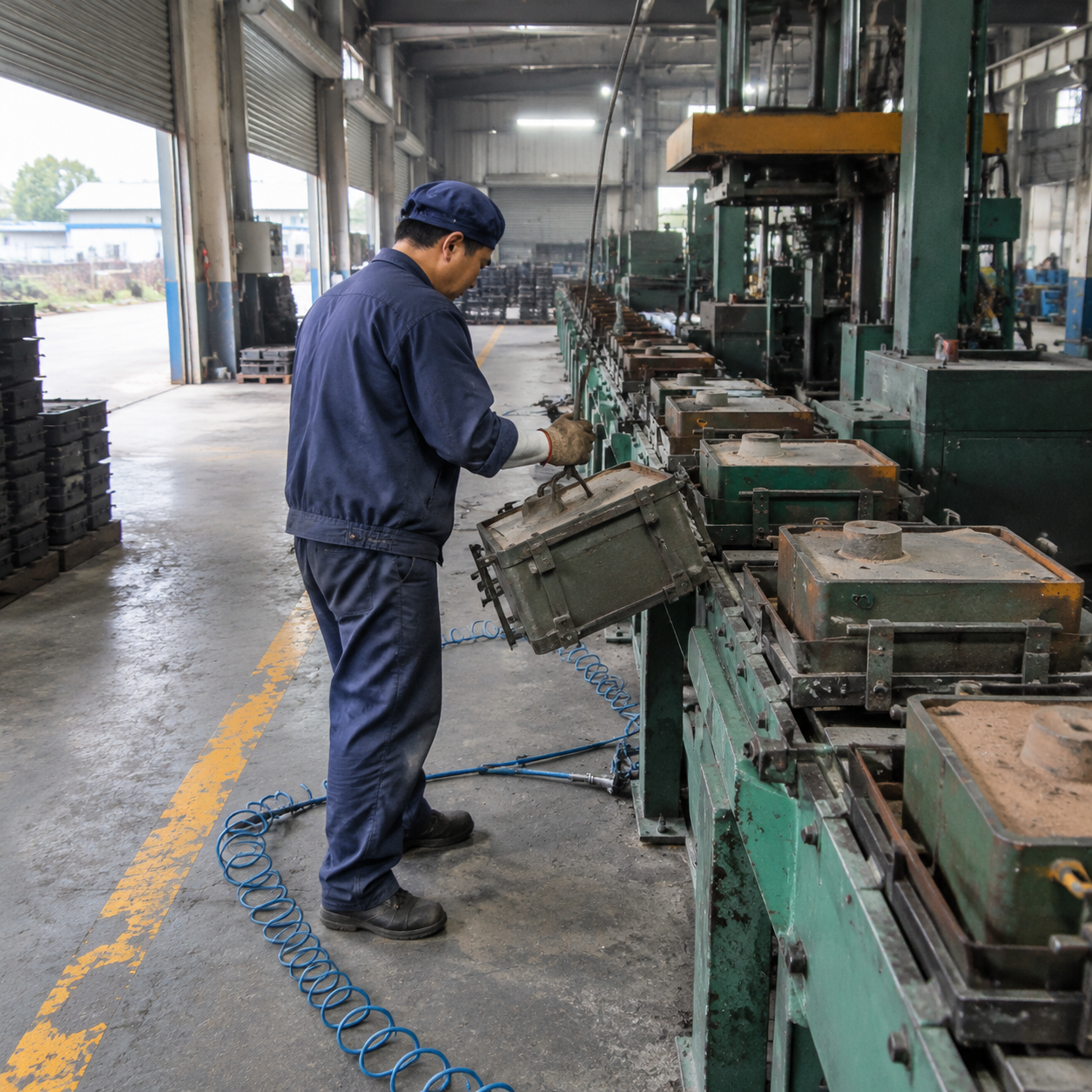
The fastest single test: ask the plant manager to show you the last three corrective actions from customer complaints. Not the quality manual — the actual complaints. A foundry running a real QMS will pull them up, tell you what went wrong, and be mildly annoyed that it happened. A foundry running a binder will say "we don't have many complaints" and change the subject.
Second fastest test: walk the scrap bin. Everyone has one. How full it is, and whether the parts in it look like the parts you're buying, tells you more about process control than an audit report. If the scrap in the bin is a different product family from yours, ask where your family's scrap goes. The answer is usually a separate bin nobody offered to show you.
Questions that separate the two
- Who signs off a first article before the run starts, and what do they check?
- What was your scrap rate last month, and what was the top defect?
- Which heat numbers came out of your furnace this week, and where are the spectro results?
- When was your last internal audit, and what did it find?
- Last time a customer rejected a shipment, what did you change?
None of those are trick questions. All of them are answered in under a minute by a plant that actually runs the system. The hesitations are your data. If you want a longer list to take with you, our quality control guides cover the inspection and documentation side in more depth.
ISO 9001 vs IATF 16949: which one your order actually needs
If your castings end up on a vehicle — anywhere in the powertrain, chassis, or a safety-critical bracket — ISO 9001 is the entry ticket, not the standard. IATF 16949 is.
IATF 16949 sits on top of ISO 9001 and adds the automotive core tools: APQP for launch planning, PPAP for part approval, MSA for gauge studies, SPC for process control, FMEA for failure mode analysis. A foundry holding a real IATF certificate has been audited on whether it uses those tools, not just whether it owns the templates.
Two things to check before you take it at face value:
- Scope. Chinese foundries frequently hold IATF 16949 for the machining and assembly operation while the casting floor sits outside the scope. If the scope reads "machining of aluminium components," your castings aren't covered by it.
- Registration. The IATF maintains a public database of valid certificates. Look the supplier up rather than trusting the PDF — the same discipline as the ISO 9001 check, for the same reasons.
ISO 14001 is environmental. It tells you nothing about part quality. But a plant that maintains it usually has someone on staff who reads regulations and files things on time, which correlates with plants that keep their calibration register current. Treat it as a soft signal, never as a filter.
Common mistakes buyers make with Chinese ISO 9001 certificates
Accepting the certificate as a supplier filter. If you filter a sourcing list by "must have ISO 9001," you'll lose maybe 5% of candidates and gain almost no quality assurance. Nearly everyone has it. Filter by scope and process instead.
Not checking the certification body. "ISO 9001" on the header, obscure issuer at the bottom, no accreditation mark anywhere. That's a certificate, not a qualification. Check the mark against the IAF member list.
Skipping the surveillance audit report. A certificate issued in 2023 and last audited in 2024 with no 2025 audit is a warning light. Certificates lapse quietly, and factories don't volunteer it.
Assuming the group certificate covers the plant. Chinese manufacturing groups frequently hold certificates at the trading arm. Ask for the address on the certificate and compare it to the address on your shipping documents. If they differ, the certificate covers a different legal entity.
Treating ISO 9001 as a substitute for a first article inspection. It never was. The certificate tells you a system exists; the FAI tells you the system produces parts that meet your drawing. Only one of those is your actual requirement.
Forgetting IATF 16949 and ISO 14001 are separate. If you're buying automotive castings, ISO 9001 is the floor, not the bar. Ask specifically whether the plant holds IATF 16949 and confirm the scope covers casting, not just machining.
Stopping at the certificate when the answer is on the drawing. A supplier can be perfectly certified and still be the wrong supplier for your part, because your tolerance, your wall thickness, or your alloy is outside what their process reliably holds. Certification answers "is there a system." It doesn't answer "can this system make my part."
FAQ
How do I verify an ISO 9001 certificate from a Chinese foundry?
Get the certificate number and the certification body's name, then look both up in IAF CertSearch or the certification body's own client directory. Confirm the accreditation mark traces to an IAF member. If the only place the certificate exists is the factory's own PDF, it's unverified.
Does ISO 9001 mean the castings will be good?
No. It confirms a management system exists and is followed. It says nothing about dimensional capability, metallurgical control, porosity acceptance, or whether the plant has capacity for your order. Pair it with a first article inspection and a documented capability study.
What's a scope statement and why does it matter?
It's the line on the certificate naming exactly what was audited. If it says "sales of metal products" rather than "manufacture of aluminium alloy castings," the foundry itself may not be certified at all. Always read the scope before the certificate date.
How common are fake ISO 9001 certificates in China?
Outright forgeries are rarer than people assume — maybe a few percent. The far more common problems are expired certificates, suspended certificates still on display, issuers without international accreditation, and scope mismatches where the certified entity isn't the plant making your parts.
How often does a certificate need renewing?
Three-year cycle with annual surveillance audits. Ask for the most recent surveillance report and the next scheduled audit date. If neither exists, assume the certificate isn't being maintained.
Can a trading company hold a valid ISO 9001 certificate?
Yes, and a lot of them do. The certificate is real; it just covers sales and trading rather than casting. If you're buying through a trader, get the name and address of the actual plant, then verify that plant's certificate separately.
Do I need IATF 16949 for automotive castings?
If your customer is in the automotive supply chain, almost certainly yes. ISO 9001 gets you in the door of the conversation; IATF 16949 with a casting scope is what most OEM programmes require. Check the scope names casting, and verify the registration in the public IATF database.
What to do before you place the order
Here's the sequence that works, in the order it should happen:
- Collect certificate number, certification body, accreditation mark, and scope text from every shortlisted supplier — in writing, not as a wall photo.
- Cross-check each one in IAF CertSearch and the accreditation body's directory. Strike out any that don't resolve.
- Read the scope line against your actual part: same process, same material, same legal entity, same address.
- Request the latest surveillance audit report and the next audit date.
- Only then book the factory visit — and use the questions above to test whether the system runs on the floor.
- Finish with a first article inspection to the drawing, and a capability study on your critical dimensions.
That's roughly two extra hours of desk work per supplier. It's the difference between knowing your foundry has a system and hoping it does.
The certificate is a starting question, not an answer. Ask it properly and you'll screen out the trading arm with a borrowed PDF, the plant whose certification lapsed two years ago, and the one running a binder nobody opens.
What's left is a shorter list — and a much better one.