Investment Casting vs Sand Casting: 2026 Cost Reality
You've got a casting RFQ sitting on your desk. Stainless steel impeller, about 4 kg finished weight, and you need 700 units a year. Foundry A says their sand casting process will save you 40% per part. Foundry B says investment casting will actually cost you less overall. Both can't be right. And this is exactly why comparing quotes side by side rarely works — because these two processes make money in completely different places.
The foundry comparing only casting prices is giving you a half-truth. The real cost difference shows up after the part leaves the casting line. Machining, material utilization, scrap rates, inspectiion — that's where the numbers flip. This article breaks down the real 2026 cost drivers, shows you exactly where each process wins, and gives you a formula to calculate your own breakeven point in about ten minutes, even before you pick up the phone.
Why "Investment Casting Is Expensive" Is a Half-Truth
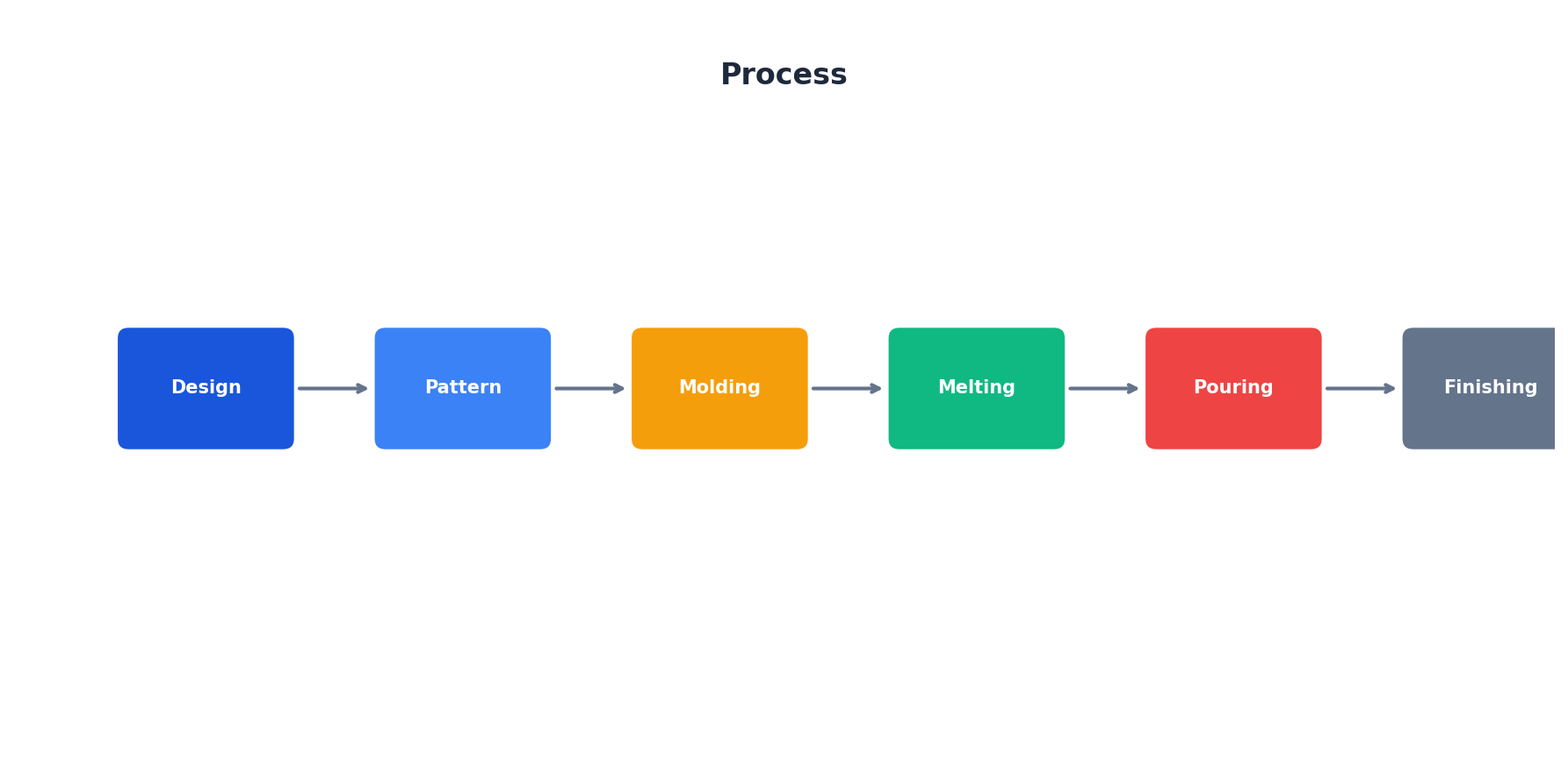
Strip down the cost of any casting and you get three buckets:
- Tooling cost — the mold, pattern, or wax injection die. Paid once, amortized over your total quantity. This is where sand casting has a massive upfront advantage.
- Casting cost — metal, labor, energy, and yield losses. Sand castings win here too, usually by a factor of 1.5 to 3.
- Post-casting cost — machining, surface finishing, heat treatment, scrap replacement, inspection, rework. This is where investment casting crushes sand casting.
That last bucket gets ignored in most quote comparisons because it's not on the foundry's invoice. It's on the machine shop's invoice — which CIOs see as "someone else's problem" until the annual budget review. But if you're sourcing the complete part (and you should be), machining cost isn't optional. It's often the single largest line item in your total landed cost.
Here's 2026 pricing data for a typical 4 kg stainless steel impeller sourced from ISO-certified foundries in China:
| Cost Component | Sand Casting | Investment Casting |
|---|---|---|
| Tooling (upfront) | $22,640 | $40,000 |
| Casting cost per part | $28 | $40 |
| Machining cost per part | $40 | $12 |
| Material yield loss per part | $7 | $3 |
| Total variable cost per part | $75 | $55 |
| Typical surface finish (Ra) | 6.3–25 μm | 1.6–6.3 μm |
| Standard tolerance | ±1.5–2.0 mm | ±0.1–0.3 mm |
Notice what happens. The sand casting quote looks better — $28 per part versus $40 per part. That's what the foundry sales rep pushes. But total variable cost per finished part actually favors investment casting by $20. And that's before you account for the extra grinding, welding, or straightening that sand castings often need to meet print.
"I've had buyers reject the investment casting quote because it was 'double the casting price.' Then their machine shop added $38 per part in cleanup machining. The sand casting cost them $86 per finished piece. The investment casting cost $58. That's a $28 per part swing, on a part that never should've been sand cast."
The 7 Cost Drivers That Actually Move the Number
Forget the marketing sheets. These seven drivers determine which process wins on your specific part:
1. Material Yield
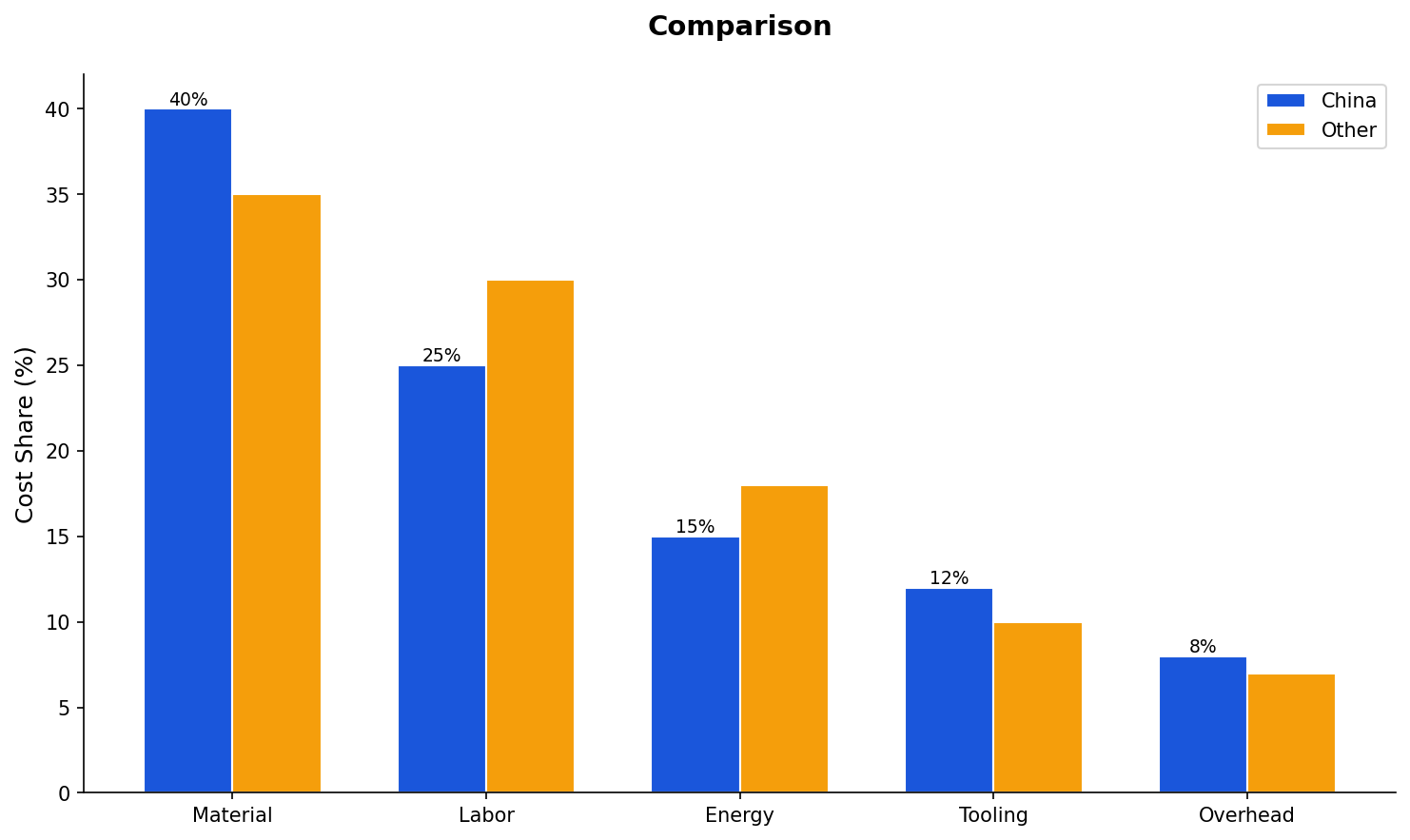
Sand casting uses a runner and riser system that gets cut off and recycled. Sounds harmless until you look at the numbers. A typical sand casting for a 4 kg finished part pours 6.5 kg of metal — that's 38% returnable scrap. Investment casting uses a tree assembly where the gating is minmized, pouring around 4.8 kg for the same part. In 2026, with 316 stainless steel at $6.80/kg, that yield difference is worth $11.56 per part. On 10,000 parts a year, that's $115,600 — your tooling cost difference just evaporated.
2. Machining Removal
Sand castings come out with 3 to 5 mm of machining allowance on critical surfaces. Investment castings need 0.5 to 1 mm. For a stainless impeller with tight hub geometry, that's the difference between $40 and $12 of machining per part. On complex geometries, quoting engineers sometimes add a 50% overage to sand casting machine time — because they know the cutters will hit hard spots. Investment casting machines like butter.
3. Scrap and Rework Rate
Sand casting has a first-pass yield around 85–92% depending on geometry. Investment casting typically runs 94–97%. That 5–8% gap doesn't sound dramatic, but on a 4 kg stainless impeller, every scrapped sand casting costs you the full $75 variable cost — and if you're already at capacity, it costs you the delivery date too. Buyers who don't track scrap rate are buying 108 parts to get 100.
4. Tooling Life and Maintenance
Sand molding is a destructive process. A pattern for a high-volume line lasts 20,000–50,000 cycles before the aluminum starts wearing and you see draft erosion on the prints. Maintenance goes one of two directions: you pay the foundry $1,500 to fix it after it becomes a problem, or you pay $4,000 for a preventive replacement. Investment casting dies are made from P20 or H13 tool steel, running 100,000+ cycles with proper maintenance. The amortized tooling cost per part is often lower for investment casting at volume.
5. Draft Angle Requirements
Sand casting can't exist without draft angles — usually 1° to 3° depending on depth. The part geometry is physically modified to allow pattern removal. If your design has bearing seats, and tolerances at 90° to the parting line, that draft eats into functional surface area and creates secondary machining. Investment casting uses wax patterns that die-cast dies can still release — but with tighter draft control. More importantly, investment casting can form internal passages without cores, eliminating entire draft constraints.
6. Surface Finish and Secondary Operations
A sand casting at Ra 12.5 μm goes through shot blasting, grinding, and often hand finishing to clean up parting line flash. That's labor. Investment casting comes off the tree at Ra 3.2 μm — often acceptable as-is for hydraulic surfaces. For parts that need Ra 1.6 μm in ID passages, investment casting gives you a head start that's impossible to match with loose sand.
7. Inspection and Certification
Investment casting offers near-lab-grade documentation — chemical analysis reports, mechanical test bars poured from the same heat, dimensional inspection reports with CMM data. Sand casting can do full certs too, but the cost is higher per part because the process is inherently less stable. If your industry (oil & gas, medical, aerospace) requires traceability, investment casting is already set up for it.
The Breakeven Calculation Most Buyers Get Wrong
Here's the formula that actually decides which process you should pick:
Breakeven Quantity = (Investment Tooling − Sand Tooling) ÷ (Sand Total Variable Cost − Investment Total Variable Cost)
Using the table above for that 4 kg stainless impeller:
($40,000 − $22,640) ÷ ($75 − $55) = $17,360 ÷ $20 = 868 units
Every part you order beyond 868 units makes investment casting cheaper on a total-cost basis. Under 868 units, sand casting wins. For most buyers placing 500-piece pilot orders, sand casting is the rational first move. But here's the trap: the average CNC machine shop quotes machining costs per feature, and the $40 machining number above assumes a properly prepared sand casting. If your design has thin walls under 5 mm or internal geometry that sand casting can't hit, the $28 "cheap" casting becomes a $50 impossible casting after rework.
The math changes completely for different alloys and part weights. Here are realistic breakeven points from 2026 quote data:
| Part Type | Alloy | Finished Weight | Breakeven (units) |
|---|---|---|---|
| Simple bracket | Carbon steel | 1.2 kg | 1,350 |
| Valve body | CF8M stainless | 3.5 kg | 720 |
| Impeller | 316 stainless | 4.0 kg | 868 |
| Pump housing | Ductile iron | 18 kg | 2,400 |
| Turbine blade | Inconel 718 | 0.8 kg | 85 |
"For exotic alloys, the breakeven collapses. Inconel 718 at $44/kg with high yield loss — investment casting wins by 200 units. If the geometry is complex at all, sand casting never had a chance. The machining cost difference on Inconel is brutal — invest in the die."
When Sand Casting Is the Right Call
Scan your part against these conditions. If most of them apply, you'd be throwing money away with investment casting:
- Large parts — anything over 25 kg where a single piece is the size of your forearm or bigger
- Simple geometry — flat plates, flanges, housing with thick walls (8 mm+), no internal passages
- Low volumes — annual demand under 500 units and no foreseeable volume growth
- Generous tolerances — ±1 mm or looser is fine for your application
- Carbon steel or cast iron — these alloys are cheap enough to pour extra material
- No thin walls — walls stay above 6 mm, so the grain structure doesn't become a warranty issue
A 35 kg cast iron machine base with ±2 mm tolerances, 200 units a year? That's a textbook sand casting. Nobody sane would invest $60K in an investment casting die for that part.
When Investment Casting Pays for Itself
Investment casting flips the math when any of these apply:
- Complex geometry — impellers, volutes, valve bodies with internal passages that would require sand cores
- Thin walls — 1 to 5 mm sections that sand casting simply can't fill without cold shuts
- Stainless steel, tool steel, or superalloys — expensive alloys where yield loss hurts
- Critical tolerances — ±0.2 mm or better on functional dimensions
- Machining cost concern — your machine shop rate is above $80/hour, which means every 10 minutes saved is $14
- Annual volume above your breakeven — or expected to be within 24 months of launch
Think medical instrument housings that need Ra 0.8 μm and biocompatible polish. Think aerospace brackets that can't have a parting line. Think pump impellers with 2.5 mm twisted vanes. Those parts can't be sand cast — not practically, not economically.
The best part: because investment casting produces near-net shape, your downstream processes behave dramatically better. CNC programs run faster, cutting tools last longer, and parts come off the line with fewer rejects.
Common Mistakes to Avoid in Your Comparison
The breakeven analysis above only works if you avoid these traps:
Mistake 1: Comparing Per-Kilogram Prices Instead of Finished Part Prices
"Sand casting is $2.50/kg, investment casting is $5.80/kg" — meaningless. Sand casting parts are heavier because of machining allowances, oversized gating, and partial cores. Investment parts are lighter and closer to final weight. Compare the delivered finished component cost, not raw kilograms.
Mistake 2: Ignoring Tooling Amortization Over the Part's Life
A $40,000 investment die sounds terrifying on the purchase order. But spread over 5,000 parts, it's $8 per part. Against the $20 per part you save on variable cost, you're ahead $60,000 over the life of the program. Get the total program cost — not the tooling, not the unit price.
Mistake 3: Treating Sand Casting Prototypes as Production Samples
Pattern shops quote sand casting prototypes at dirt-cheap prices — because they're machining the pattern to a prototype spec with different coreboxes. The production tooling that holds your production tolerance is a different conversation. Don't commit to a volume decision based on prototype quotes.
Mistake 4: Believing Investment Casting Is Slow
The ceramic shell process takes 7 to 14 days from wax to shell. But a batch of 100 parts is poured in a single heat, so per-part cycle time is shorter than sand casting for complex geometry. If your provider runs parallel shell systems, lead time is often equivalent.
Mistake 5: Ignoring the Cost of "Good Enough"
Sand casting might hold ±1.5 mm. If your design needs ±0.3 mm on a bore, every sand cast part ships with an extra 1 to 2 mm of machining stock — but if there are internal passages, the CNC tool must still clean the ID. That's $14 more machining on a $28 casting. Suddenly the "cheap" sand casting isn't cheap.
FAQ: Investment Casting vs Sand Casting Cost
Is investment casting more expensive than sand casting?
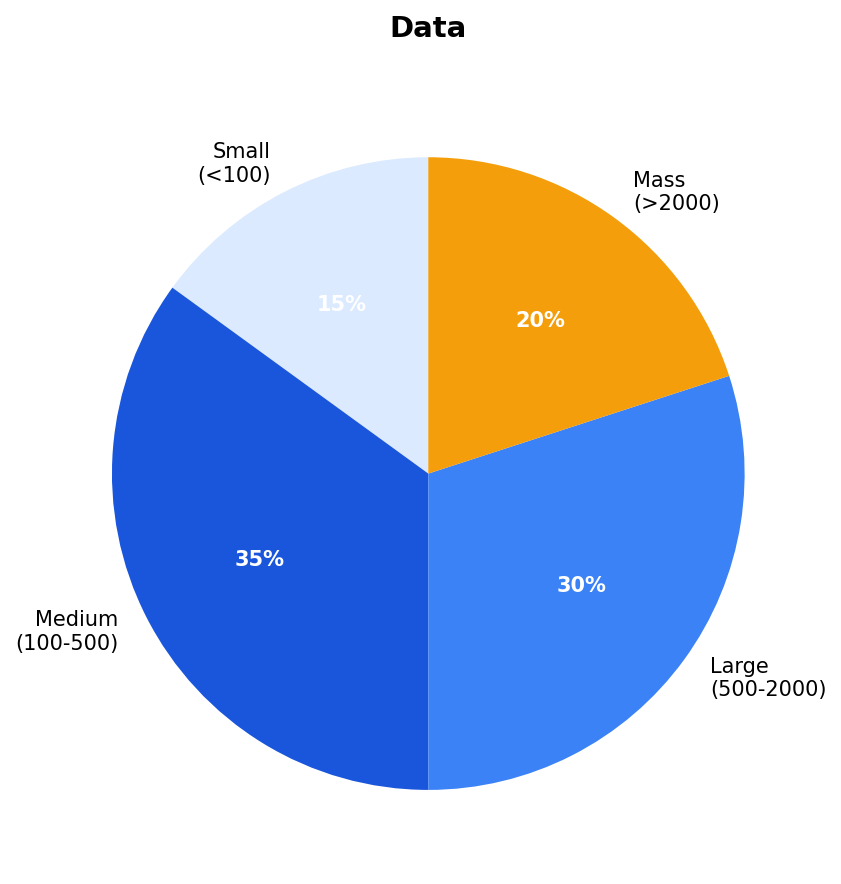
Depends on volume and part complexity. Investment casting tooling costs 3–6x more, and the casting itself costs 1.5–3x more per part. But because it's near-net shape, machining costs drop 50–75%. For a complex stainless steel part, the breakeven lands around 868 units. Below that, sand casting wins. Above that, investment casting wins.
What is the minimum batch size for investment casting?
You can technically run investment casting at 50 pieces. But at that quantity, the tooling cost per part is brutal. In practice, investment casting makes sense when your annual volume is 500 pieces or more — unless the part geometry is too complex to sand cast at all.
What tolerance can sand casting hold?
Standard sand casting holds about ±1.5 to ±2.0 mm on linear dimensions. Premium or tight-tolerance sand casting can hit ±0.5 to ±1.0 mm, but that pushes your price up. Investment casting holds ±0.1 to ±0.3 mm on most features without extra cost.
What kind of parts are best for investment casting?
Complex geometry, thin walls down to 1 mm, internal passages or undercuts, corrosion-resistant alloys, and parts that need a good surface finish around Ra 1.6–6.3 μm. Think impellers, valve bodies, turbomachinery parts, and medical components.
Can I start with sand casting and switch to investment casting later?
Yes, but it's rarely seamless. The part design, draft angles, and datum references may need changes. If you expect to exceed the breakeven volume within 2–3 years, start with investment casting from day one. You'll pay more upfront in tooling but avoid paying twice for patterns and machining fixtures.
Next Steps: Get a Real Quote Comparison
Before you sign a tooling purchase order, make sure you're comparing apples to apples. Send the same drawing to three sand casting foundries and three investment casting foundries, then model the total cost per part — including tooling amortization, casting price, machining, scrap allowance, surface treatment, and inspection.
That's exactly what we do at Interstate Sourcing. As an independent procurement agency, we run the dual-process cost model for your specific part and send you the numbers before you spend anything. No obligation. You'll get:
- Sand casting and investment casting quotes for the same drawing
- A full cost breakdown with your breakeven quantity
- Foundry qualifications based on your casting alloy, tolerance, and volume
- Lead time comparison with production scheduling
Email your drawing to sourcing@verifycasting.com and get the dual-process cost model within 3 business days. No charge, no follow-up spam — just a straight cost comparison that lets you make the right call the first time.
Need Help with Investment Casting vs Sand Casting: 2026 Cost Reality?
Get matched with 3 verified foundries in 24 hours. No markup, transparent pricing.
Request Quotes →