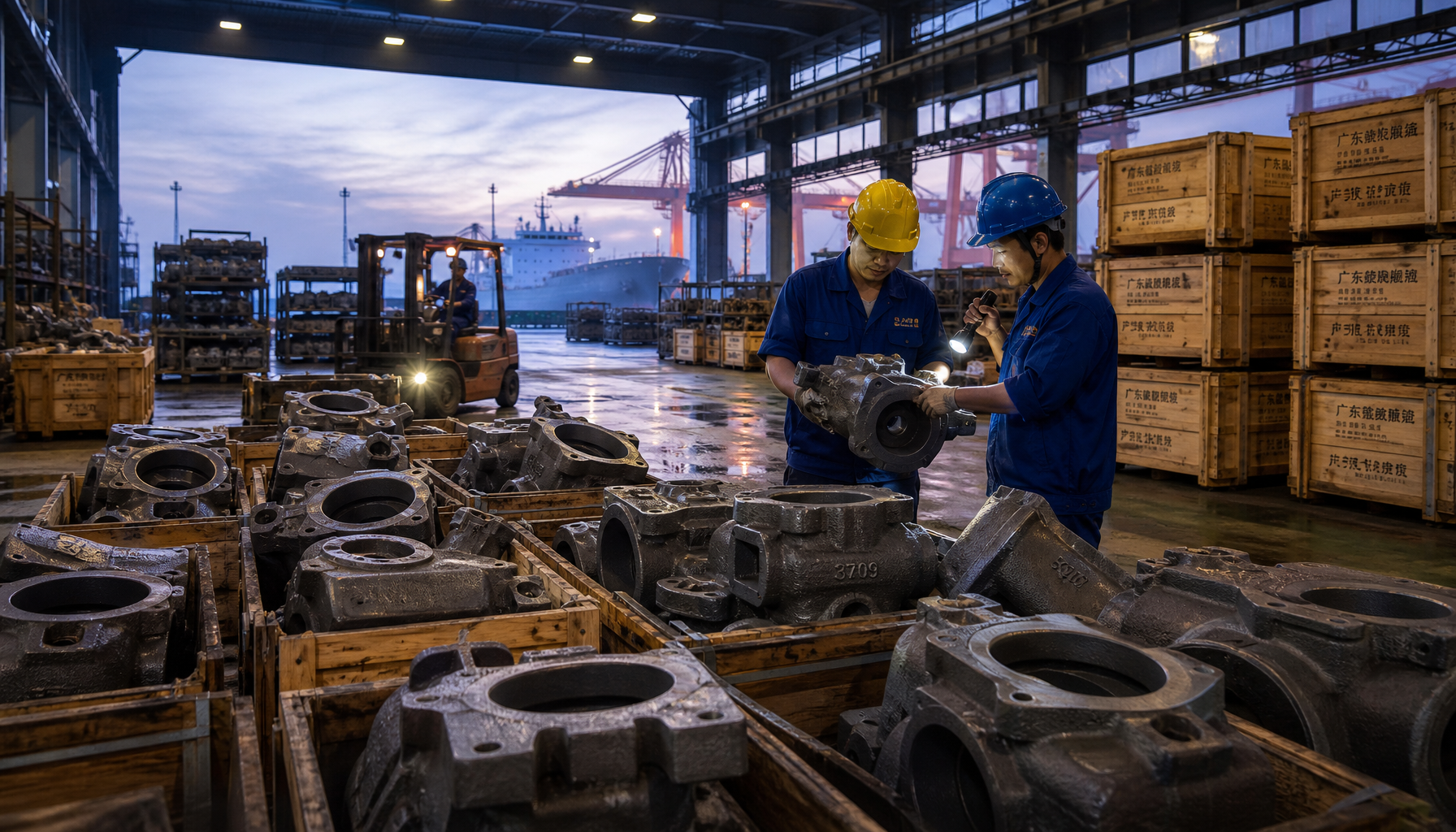
You open the crate. Thirty castings, all gray iron, all supposed to be the same part. Two of them have a surface so rough you could strike a match on it. Three have a blob of sand fused to a machined face. One has a 1.8mm step where the parting line should be flush. Your CMM guy runs the first article and the 200mm bore comes in at 200.9mm—outside the ±0.5mm you specified.
You call the foundry. They say, "That's normal for green sand."
And here's the thing—they're not lying. It is normal for green sand. The problem is nobody told you that when you placed the order, because the quote sheet just said "sand casting" and the price looked good.
This is the single most expensive misunderstanding in casting procurement. Green sand and resin sand (no-bake) are two different processes with two different quality ceilings. Pick the wrong one and you'll spend the next six months arguing about who pays for rework. Pick the right one and the parts just show up correct.
Here's how to tell them apart, what each one actually delivers, and how to spec the right process the first time.
The Real Difference Isn't the Sand—It's the Binder
Buyers get tripped up here because both processes use "sand." Silica sand, to be specific. Same grain, roughly same sieve distribution. What changes is what holds the grains together.
Green sand uses bentonite clay plus water. "Green" doesn't mean environmentally friendly—it means the mold is still wet when you pour. The clay-water film coats each sand grain and gives the mold its strength. It's cheap, it's reusable, and it's been the workhorse of the foundry industry since the 1800s.
Resin sand (also called no-bake, self-setting, or furan sand) uses a chemical binder—usually furan resin with an acid catalyst—that cures the mold hard at room temperature. No water. No clay. The mold sets like concrete over 20-60 minutes, depending on the formulation.
That one change cascades into everything else: mold strength, surface finish, dimensional stability, minimum wall thickness, cost per kilogram, and how much machining you'll need downstream.
Quick rule of thumb: green sand molds are flexible and wet. Resin sand molds are rigid and dry. Rigid and dry gives you better parts. Flexible and wet gives you cheaper parts. Your job is knowing which one your drawing actually requires.
Terminology check: In Chinese quotes you'll see "粘土砂" (clay sand = green sand) and "树脂砂" (resin sand). Some suppliers also quote "水玻璃砂" (water glass / sodium silicate sand)—that's a third process, common for large steel castings. Don't assume "resin" when the quote says "sand."
If your foundry's quote language is vague, that's a flag. A supplier who writes "sand casting" without naming the process is either hoping you won't ask, or isn't sure themselves. Either way, you're the one absorbing the risk.
Green Sand Casting: Where It Wins, Where It Bites You
Green sand is the default for a reason. Roughly 70% of the world's castings by tonnage come out of green sand molds. It's fast, it's automated, and a well-run green sand line can push 200+ molds per hour.
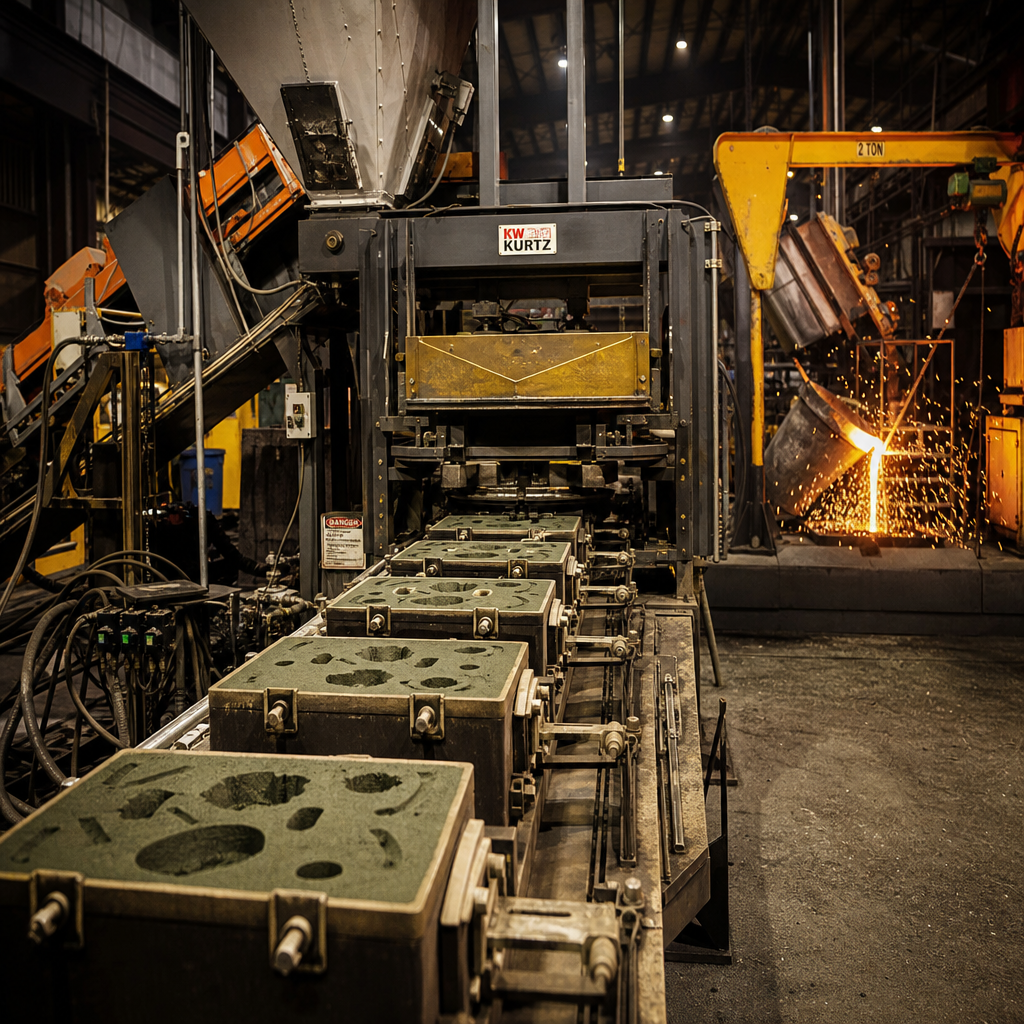
What green sand actually gives you
| Property | Typical Green Sand | Notes |
|---|---|---|
| Dimensional tolerance (ISO 8062) | CT8–CT10 | CT7 achievable with tight process control |
| Surface roughness (as-cast) | Ra 12.5–25 μm | Ra 25+ on vertical faces without coating |
| Minimum wall thickness | 3–4 mm (small parts) | Thinner walls risk misrun |
| Part size sweet spot | 0.5 kg – 50 kg | Larger parts possible but efficiency drops |
| Annual volume threshold | 500+ pieces/year | Below this, tooling amortization kills you |
| Recyclability | 85–95% sand reuse | After reconditioning |
Where green sand bites you
Three failure modes show up on the dock almost every time someone specs green sand for the wrong part:
1. Parting line mismatch. Green sand molds are squeezed, not cured. The cope and drag can shift 0.5–1.5mm during closing. On a part with a cosmetic parting line, that's a visible offset. On a part where a machined face crosses the parting line, that offset becomes a machining problem—or, worse, a leak path if there's a sealing surface.
2. Sand burn-on and penetration. Molten metal at 1,400°C hitting wet clay-bonded sand causes the sand surface to break down. Metal penetrates the mold wall, and you get a rough, fused layer that has to be ground off. On internal passages or small cores, that burn-on can be impossible to reach. You end up scrapping the part or shipping it with a flow restriction.
3. Dimensional drift across the run. Green sand mold properties change through a shift—moisture content, compactability, sand temperature. First-article inspections pass; part 400 of 800 fails. If you're only checking the first article, you find out when the customer rejects.
None of these are "the foundry is bad" problems. They're process capability limits. A foundry with a $4M green sand line will still hit them at the edges of the tolerance band.
One sourcing manager we work with, running hydraulic components out of Jiangsu, learned this the direct way. He had 400 valve bodies poured in green sand because the per-kg quote was $0.80 lower. The first article passed. Parts 200-400 started showing parting line offsets that pushed a critical sealing face past its flatness callout. Rejected 137 pieces. The "$0.80 savings" turned into a $14,000 scrap ticket and a four-week schedule hit.
Resin Sand Casting: Tighter Tolerances, Higher Price Tag
Resin sand trades cost for control. The mold cures hard before you pour, which means it doesn't deform when you close the flask, doesn't have moisture flashing to steam at the metal interface, and doesn't lose strength when hot metal hits it.
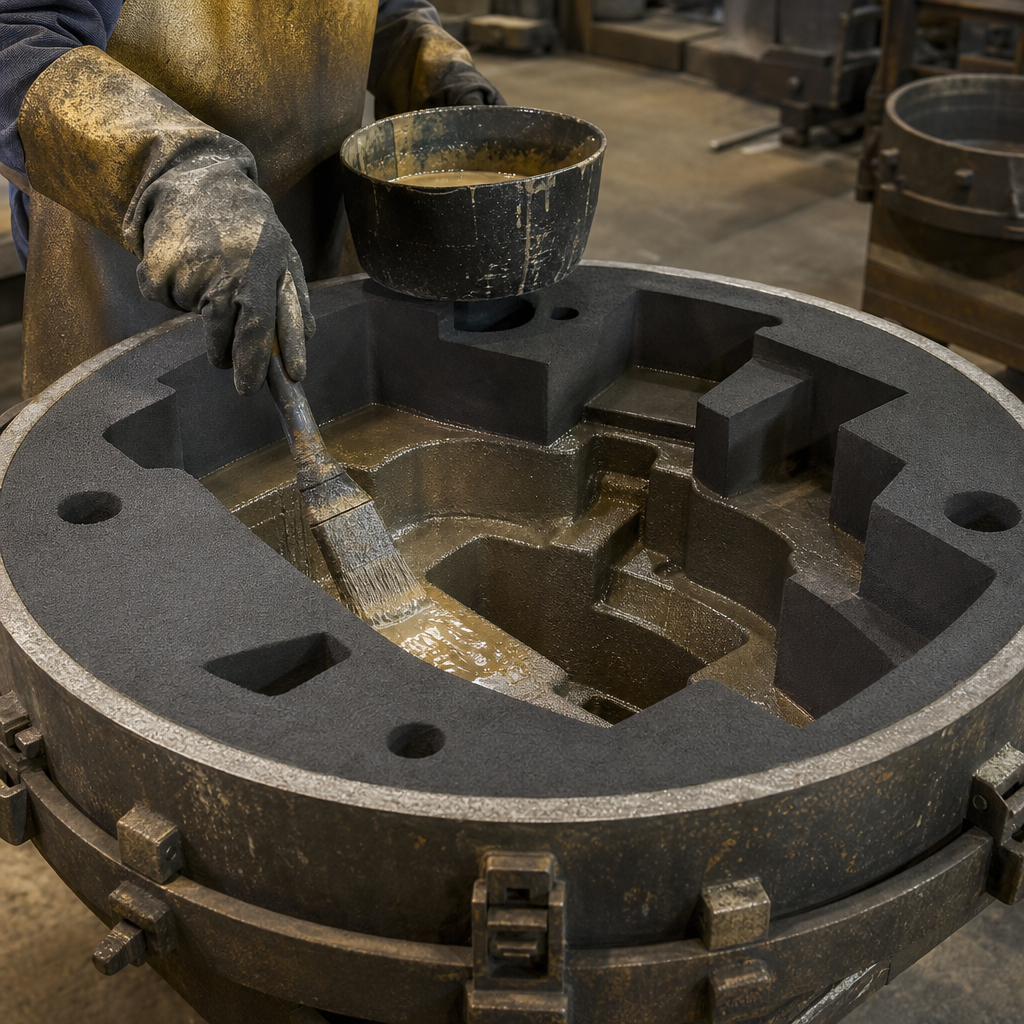
What resin sand actually gives you
| Property | Typical Resin Sand | Notes |
|---|---|---|
| Dimensional tolerance (ISO 8062) | CT6–CT8 | CT5 achievable on critical features |
| Surface roughness (as-cast) | Ra 6.3–12.5 μm | Ra 6.3 with good coating and clean pattern |
| Minimum wall thickness | 2–3 mm | Thin walls hold up better than green sand |
| Part size sweet spot | 20 kg – 2,000 kg | Where resin sand economics work best |
| Annual volume threshold | 50+ pieces/year | Lower volume viable because tooling is simpler |
| Sand reuse | ~90% mechanically, but requires reclamation | Thermal or mechanical reclamation needed |
Where resin sand hurts your wallet
Binder cost. Furan resin runs $1.80–2.60 per kilogram. Bentonite clay runs $0.15–0.25 per kilogram. Yes, that's a 10x difference. A resin sand mold for a 100kg part might use 3–4% binder by sand weight—so 4–6kg of resin per mold, plus catalyst. Green sand uses 6–10% bentonite, but at a fraction of the price.
Cycle time. A no-bake mold needs 20–60 minutes to cure before you can strip it. Green sand molds come off a molding machine ready to pour. If your foundry is running a high-volume contract, resin sand's slower cycle time shows up in the per-piece price.
Sand reclamation. Resin-coated sand can't just be mulled and reused like green sand. The dead binder has to be burned off or mechanically scrubbed. Foundries without a reclamation system truck the sand to landfill—and that cost lands on your quote.
That said, the resin premium is smaller than most buyers assume. On a 500kg part with a $60 machining allowance reduction, the binder cost delta gets swallowed by the machining savings. The places resin sand really hurts are on small, simple parts where the casting price is the total cost.
Side-by-Side: The Comparison That Actually Matters
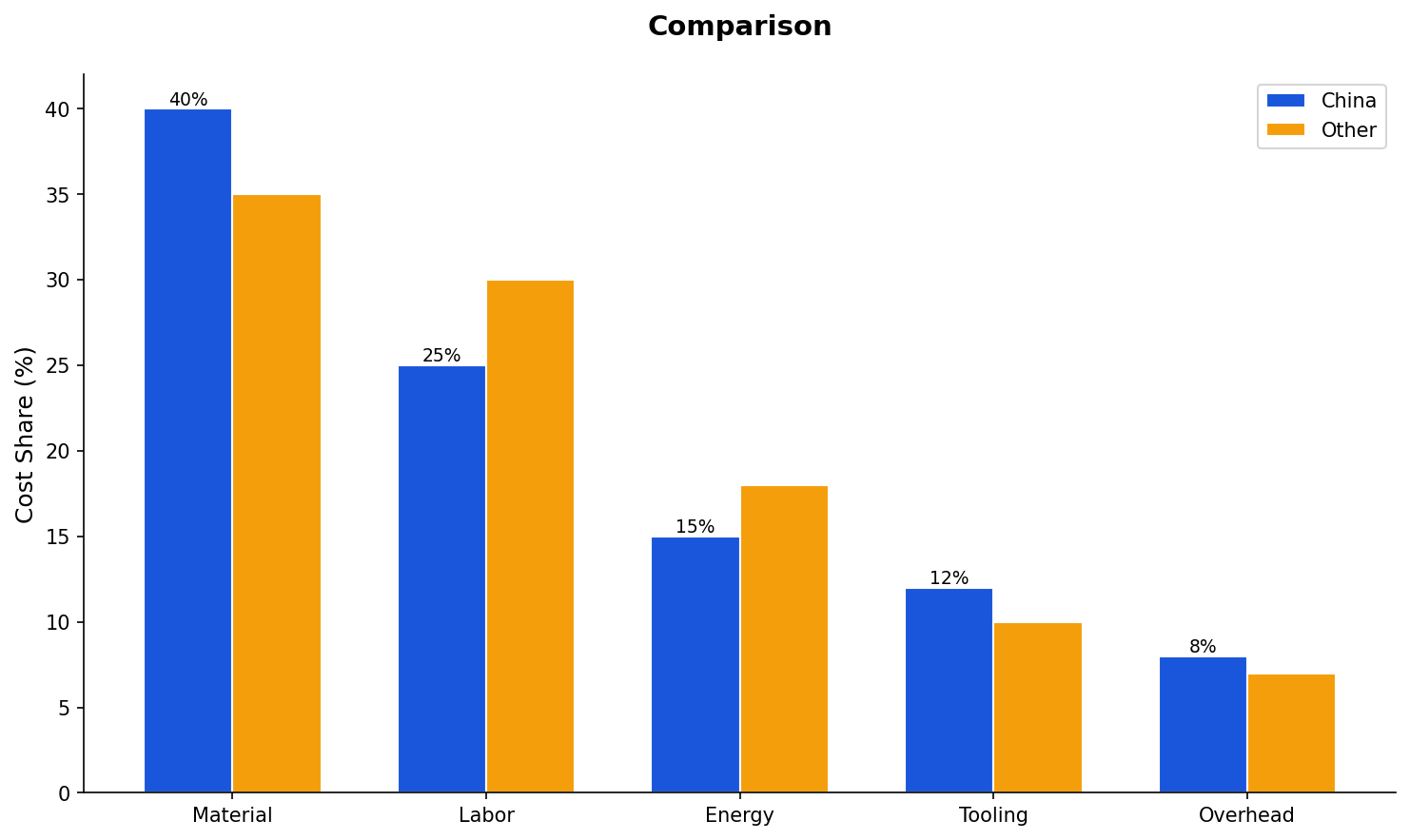
Here's the table I keep open when reviewing a new RFQ. Print it, stick it above your desk.
| Quality Parameter | Green Sand | Resin Sand | What It Means for You |
|---|---|---|---|
| Dimensional tolerance (ISO 8062) | CT8–CT10 | CT6–CT8 | On a 300mm span, that's ±1.5mm vs ±0.8mm |
| Surface roughness (as-cast) | Ra 12.5–25 μm | Ra 6.3–12.5 μm | Resin sand often ships without surface prep |
| Machining allowance needed | 3–5 mm | 1.5–2.5 mm | Directly cuts your CNC time and stock loss |
| Minimum wall thickness | 3–4 mm | 2–3 mm | Thin-wall designs often force resin sand |
| Sand inclusion defect rate | 1.5–3.5% typical | 0.3–1.0% typical | The #1 source of rejected castings disappears |
| Gas defect / porosity | Higher (water → steam) | Lower (no moisture) | Resin sand wins on pressure-tight parts |
| Relative casting cost (index) | 100 | 120–140 | But see total-cost math below |
| Tooling cost | Higher (pattern + core boxes + flasks) | Lower (simpler pattern, no flask) | Resin sand tooling often 20–35% cheaper |
| Setup lead time | 6–10 weeks | 4–7 weeks | Resin sand gets you to first article faster |
| Volume sweet spot | 500+ pieces/year | 50+ pieces/year | Resin sand doesn't need high volume to make sense |
Surface Finish and Dimensional Accuracy: The Deep Dive
Two numbers buyers ask about most, so let's dig into why they differ.
Why resin sand gives a better surface
Green sand mold walls are held together by a water film. When molten metal contacts the wall, that water flashes to steam instantly, expanding 1,600x in volume. The steam pressure pushes sand grains away from the wall, and metal flows into the resulting pockets. That's what "rough surface" actually is at the microscopic level—metal that's filled in the gaps where sand grains got pushed out.
Resin sand has no water. The binder cures into a rigid matrix, and the mold wall stays put. The metal freezes against a solid, smooth wall. Add a refractory wash coating and you get Ra 6.3–12.5 μm straight out of the shakeout—good enough for many applications with no surface prep at all.
Why resin sand holds dimensions better
Three reasons, and they compound:
Mold rigidity. A cured resin mold doesn't deflect when metal pressure hits it. Green sand at 0.4 MPa metallostatic pressure will flex—sometimes 0.3–0.8mm on large flask walls. On a dimension that crosses the mold, that flex is dimensional error.
No moisture-driven expansion. Green sand mold walls absorb heat and the water film vaporizes. The mold cavity actually shrinks slightly before metal fills it. Resin sand doesn't do this.
Better core stability. This is the sleeper issue. Cores in resin sand are also resin-bonded and cure rigid. Green sand cores (typically shell or oil-sand) can shift during pouring. If your part has internal passages—bores, oil galleries, water jackets—core shift is where your wall thickness variation comes from. Green sand tolerance on wall thickness through a core is often ±1.5mm. Resin sand holds ±0.6mm.
If your part has a pressure-containing wall or a bore you can't re-machine, this single difference often justifies resin sand on its own.
The pattern-making side matters too. Green sand tooling has to account for squeeze deflection, so pattern dimensions are often built to a slightly larger nominal and then "caught" by the sand system. Resin sand tooling is closer to final dimension. On a complex casting with 40+ dimensional features, that difference compounds across the drawing.
The Cost Math Buyers Get Wrong
Every time this topic comes up, someone says "resin sand is 30% more expensive" and rules it out. That's a per-kilogram comparison. It's not the number that matters.
Here's a real example from a hydraulic manifold body, roughly 45kg finished, 200 pieces/year, sourced in Jiangsu.
| Cost Line | Green Sand | Resin Sand |
|---|---|---|
| Casting price per piece | $248 | $312 |
| Machining allowance (stock removed) | 4.5 mm average | 1.8 mm average |
| CNC roughing time | 85 min | 42 min |
| Machining cost @ $65/hr | $92 | $46 |
| Scrap rate (foundry + machining) | 4.2% | 1.1% |
| Scrap cost amortized | $18 | $5 |
| Incoming inspection labor | $12 | $6 |
| Total landed cost per good part | $370 | $369 |
Dead heat. The $64 casting premium evaporated in machining time and scrap.
Now flip the scenario. A 2kg bracket with no machined features, CT10 tolerance is fine, 5,000 pieces per year:
| Cost Line | Green Sand | Resin Sand |
|---|---|---|
| Casting price per piece | $4.10 | $5.60 |
| Machining required | None | None |
| Scrap rate | 2.1% | 0.8% |
| Total landed cost per good part | $4.19 | $5.64 |
Green sand wins by 35%. Resin sand's precision buys you nothing when there's no machined surface and the tolerance is loose.
The rule that follows from this: resin sand pays for itself when the value of reduced machining and reduced scrap exceeds the casting premium. On parts with machined faces, tight tolerances, thin walls, or pressure-tight requirements, resin sand usually wins on total cost. On simple, loose-tolerance, high-volume parts, green sand wins every time.
One more thing buyers miss: scrap rate in resin sand lands lower and the scrap is cheaper to handle. A rejected green sand casting often has machining operations already sunk into it. A rejected resin sand casting tends to fail earlier—before your shop has put 40 minutes of CNC time into it. That's a margin difference that doesn't show up in a per-kg quote.
Common Mistakes Buyers Make
Mistake 1: Specifying "sand casting" without naming the process
This is the most expensive three words in a purchase order. If your drawing doesn't say "green sand" or "resin sand (no-bake)," the foundry quotes whichever is cheaper for them—usually green sand—and you find out at first article. Put the process on the drawing. Put the ISO 8062 tolerance grade on the drawing. Put the surface roughness requirement on the drawing.
Mistake 2: Assuming all foundries can do both
They can't. A green sand shop with a $3M automated molding line isn't going to run 200 resin sand molds by hand for your order. And a jobbing resin sand shop doesn't have the automation for a 10,000-piece green sand run. When you send an RFQ to five foundries and two come back 40% cheaper, check whether they're quoting a different process.
Mistake 3: Chasing the lowest per-kg quote
Per-kg price tells you what the foundry pays for metal and labor. It tells you nothing about your total cost. A foundry quoting $2.60/kg in green sand with a 5mm machining allowance can cost you more than one quoting $3.40/kg in resin sand with 1.5mm allowance. Run the total-cost math before you compare quotes.
Mistake 4: Skipping the pattern and core review
Process selection without pattern design is guessing. If the foundry plans to use green sand, ask how many cores are needed and what the core print design looks like. If it's resin sand, ask about pattern draft angle and the gating design. A 12° draft is fine for green sand; resin sand can often work with 8°. Those details change cost and quality.
Mistake 5: Not auditing the sand system
Two foundries both offering "green sand casting" can deliver wildly different quality. The difference is in the sand lab: compactability, moisture control, green strength, permeability, loss on ignition. A foundry that tests its sand hourly and adjusts live will hold CT8. One that tests once a shift will drift. Ask for their sand testing records before you award a contract.
Mistake 6: Trusting a first-article inspection as a quality guarantee
First-article approval means the process can produce a good part. It says nothing about whether the process will produce good parts at part 800 of 800. Ask for a production run data set—say, the last 20 similar jobs with CMM results. If the foundry can't produce it, you've just learned something.
How to Spec the Right Process: A Decision Framework
Run through these five questions before you send an RFQ. The answer to each one pushes you toward a process.
- Does the part have a machined face or a critical bore? Yes → resin sand. The reduced machining allowance and better dimensional control usually pay back the premium.
- Is any wall thinner than 5mm? Yes → resin sand. Green sand at 3mm will misrun. Resin sand at 3mm is routine.
- Is the annual volume above 500 pieces and the part under 50kg? Yes → green sand. Tooling amortization works, and process capability is adequate for most parts.
- Does the part need to hold pressure (hydraulic, pneumatic, steam)? Yes → resin sand. Lower gas porosity and sand inclusion rates directly reduce leak path probability.
- Is the tolerance tighter than ±1.0mm on a dimension over 150mm? Yes → resin sand. Green sand can't reliably hold it.
If you answered "yes" to questions 1, 2, 4, or 5, resin sand is your process. If all you have is volume and simplicity, green sand is correct.
One caveat: this framework assumes a competent foundry in both cases. A marginal resin sand shop can underperform a strong green sand shop on the same drawing. Process capability is a ceiling, not a floor—the foundry has to actually operate inside it.
Frequently Asked Questions
Is resin sand casting better quality than green sand casting?
For surface finish and dimensional accuracy, yes. Resin sand typically lands at CT6–CT8 and Ra 6.3–12.5 μm. Green sand usually runs CT8–CT10 and Ra 12.5–25 μm. But "better" depends on your part. High-volume simple parts often don't need resin sand's precision, and paying for it just inflates unit cost without any functional benefit.
How much more does resin sand casting cost than green sand?
Expect a 20–40% higher per-kg casting cost, driven by binder cost (furan resin runs $1.80–2.60/kg, bentonite clay runs $0.15–0.25/kg). But if resin sand cuts your machining allowance from 4mm to 1.5mm, the total landed cost can flip in resin sand's favor. Always compare total cost, not casting price.
Can green sand casting hold tight tolerances?
Green sand holds CT8–CT10 under ISO 8062 for most ferrous and aluminum parts, and CT7 with a well-controlled sand system. It cannot reliably hold CT5–CT6—that's resin sand territory. If your drawing calls for ±0.5mm on a 200mm dimension, green sand will fight you and lose.
Which process gives a better surface finish?
Resin sand. A cured no-bake mold has higher hot strength and a smoother cavity wall, so you get Ra 6.3–12.5 μm as-cast. Green sand's moisture and clay system leaves a rougher skin, usually Ra 12.5–25 μm, and sand burn-on is more common.
When should I specify resin sand over green sand?
Specify resin sand when: the part is over 100kg, geometrically complex, has walls under 5mm, needs CT6–CT7 tolerance, or has a machined face where you want to reduce stock allowance. Stick with green sand for high-volume parts under 50kg with generous tolerances and no machined features.
Can I get CT7 tolerance in green sand?
Sometimes. A foundry with tight sand control, rigid flasks, and a disciplined pouring procedure can hit CT7 on parts under 30kg. But you need to verify it—ask for CMM data from their last 20 production runs of a comparable part. If they can't produce that data, assume CT8–CT9.
Does resin sand casting work for aluminum, or only ferrous metals?
Both. Furan-bonded resin sand is common for gray iron, ductile iron, carbon steel, and stainless steel. For aluminum, resin sand is also used but the economics shift—aluminum's lower pouring temperature reduces burn-on risk in green sand too, so the quality gap narrows. Check what your specific alloy needs before assuming resin sand is mandatory.
Next Steps
Before you send your next RFQ, do three things:
1. Open your drawing and add the process. Write "GREEN SAND" or "RESIN SAND (NO-BAKE)" directly in the process notes. Add the ISO 8062 grade and the surface roughness callout. This one change eliminates 80% of the quality arguments that happen at first article.
2. Run the total-cost math. Get a machining quote based on the two different stock allowances. Most buyers only ask for the casting price. The machining delta is where the real decision lives.
3. Ask the foundry for two things. Sand testing records (for green sand) or binder batch records (for resin sand), and CMM first-article data from a similar part. If they can't provide either, that's your answer.
If you're sourcing castings from Asia and want a second opinion on which process your part actually needs—before you commit tooling money—send the drawing and target volume. You'll get a process recommendation with the reasoning spelled out, plus a total-cost comparison between the two processes. No obligation, no sales pitch, just the math.
Get a process recommendation for your part
Upload your drawing and target annual volume. You'll get a written recommendation on green sand vs resin sand, with the tolerance and cost reasoning behind it, within two business days.