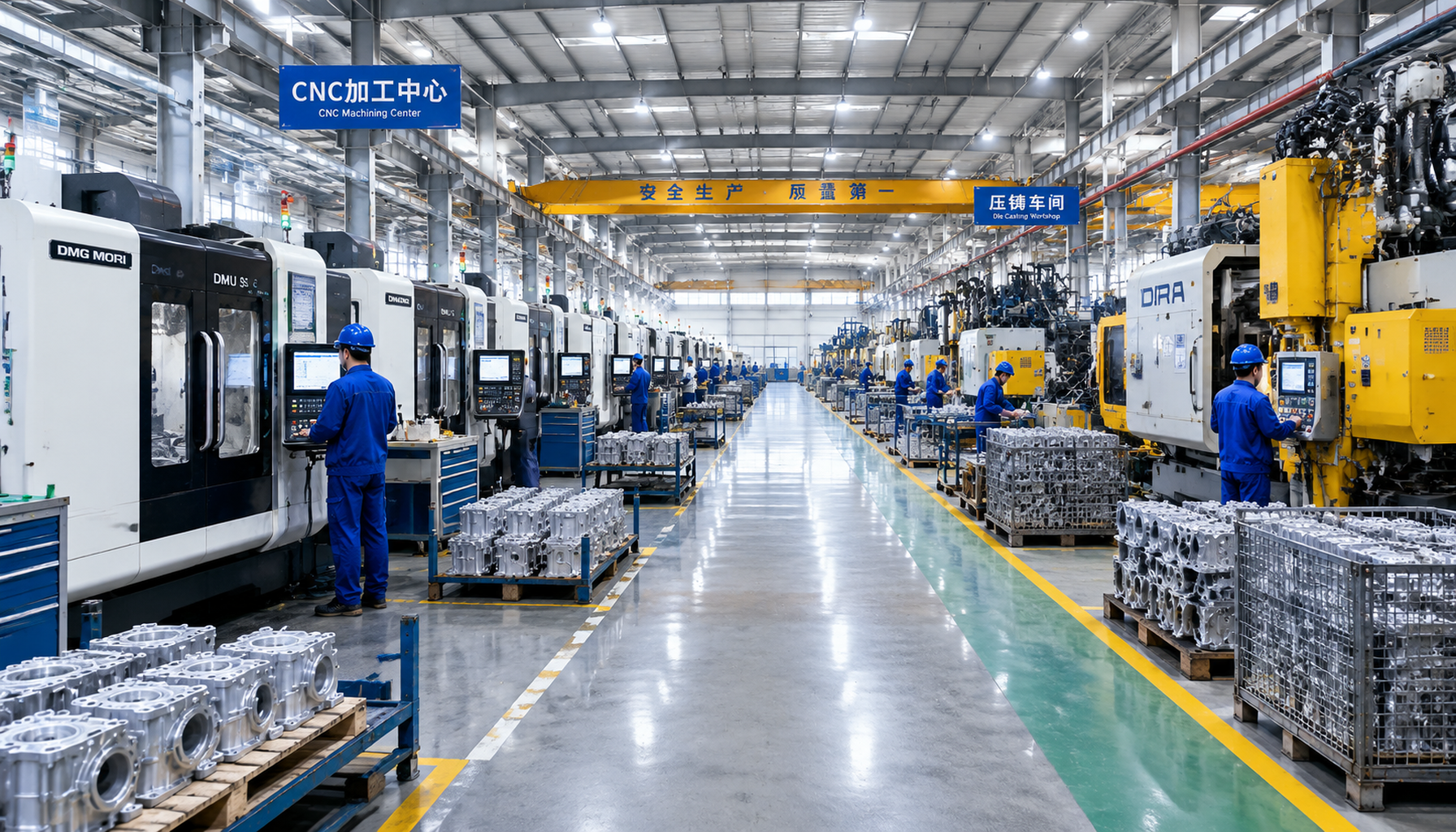
Here's the number that matters: for a mid-volume aluminum casting with moderate machining, the landed cost difference between a US domestic source and a Chinese one runs somewhere between 30% and 55% — and it swings hard depending on how much machining content you've got on the part.
But the second number matters more. Most buyers who chase that 55% end up actually realizing 20-25% once scrap, rework, freight variance, and the cost of their own time on quality firefighting gets added back in.
So let's skip the brochure talk. This is what the cost structure actually looks like, where it leaks, and how to negotiate with numbers instead of vibes.
Where Your Unit Price Actually Comes From
Every casting quote you get from China is a stack of six numbers. If your supplier can't break them out, you can't negotiate any of them.
| Cost Element | Typical Share of Unit Price | What Actually Drives It |
|---|---|---|
| Raw material | 30-45% | LME aluminum index + foundry's alloy premium + scrap recovery credit |
| Tooling amortization | 5-15% | Tool life assumption, order volume, who owns the die |
| Melting & pouring | 10-15% | Furnace type, yield rate, shift structure, energy cost |
| Fettling & finishing | 8-12% | Manual vs. robotic, gate design, flash allowance |
| Machining | 15-35% | Cycle time, tolerance stack, fixture count, machine hour rate |
| Overhead, scrap allowance & margin | 12-20% | Yield assumption baked into the quote, factory utilization |
Notice that machining is the single widest range on the list. That's not an accident. It's also the element most buyers under-scrutinize because it's buried in a single line item labeled "machined price."
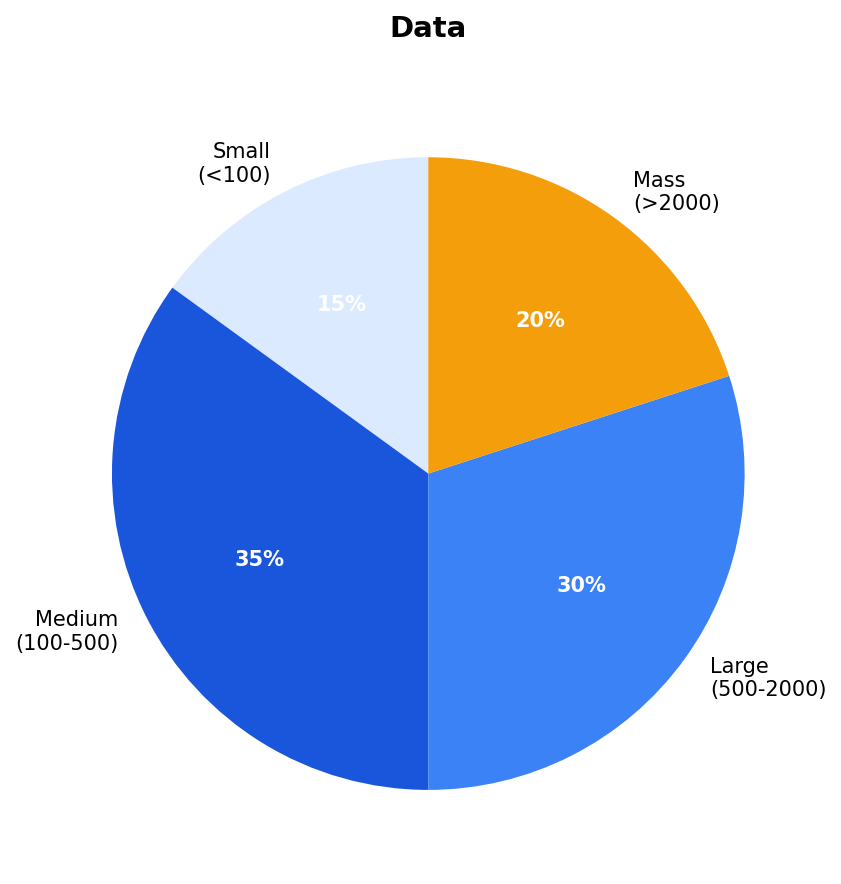
The Machining Line Item Is Where You're Bleeding
Here's a pattern that shows up constantly. A buyer sends over a print, gets a casting quote, and a machining quote. The casting looks competitive. The machining looks... fine. They approve, first article comes in, and the second invoice reveals that the machining cycle ran 40% longer than quoted.
Why? Because cycle time estimates in the quotation stage are almost always optimistic, and the assumptions aren't documented.
Three things drive machining cost harder than anything else:
1. Tolerance stacking on non-critical features
Going from ±0.25mm to ±0.05mm on a bore face can add 2-3x the cycle time for that operation. If that tolerance is on a feature that doesn't functionally need it, you're paying real money for precision you'll never check.
I've seen buyers inherit prints from a European OEM that specified tight tolerances on features that were only referenced for assembly clearance. A fifteen-minute redesign conversation removed two boring operations and cut machining cost by roughly 18%.
2. Surface finish specs you probably don't need
Ra 1.6 is a common default. If your application calls for a gasket seat, sure. If it's an internal bracket nobody touches, Ra 6.3 is fine. The difference on a lathe or mill is 20-40% of the finishing cycle — and it compounds across every part in the run.
3. Fixture count and setup changes
Every time the part has to come off the machine, get re-fixtured, and be re-datumed, you're paying for setup labor and risking stack-up error. Parts designed for 4-axis or 5-axis single-setup machining are dramatically cheaper than parts that need three separate operations on three machines.
A part that needs one setup at a 5-axis shop may cost more per machine-hour than a part running on a 3-axis cell — but the total per-part cost can come out 15-25% lower once you count setup labor, work-in-progress handling, and the lower first-pass yield of multi-op work. Do the per-part math, not the hourly rate comparison.
Ask for the setup sheet. If the supplier can't tell you how many setups your part needs and which datums each one uses, the quote was a guess.
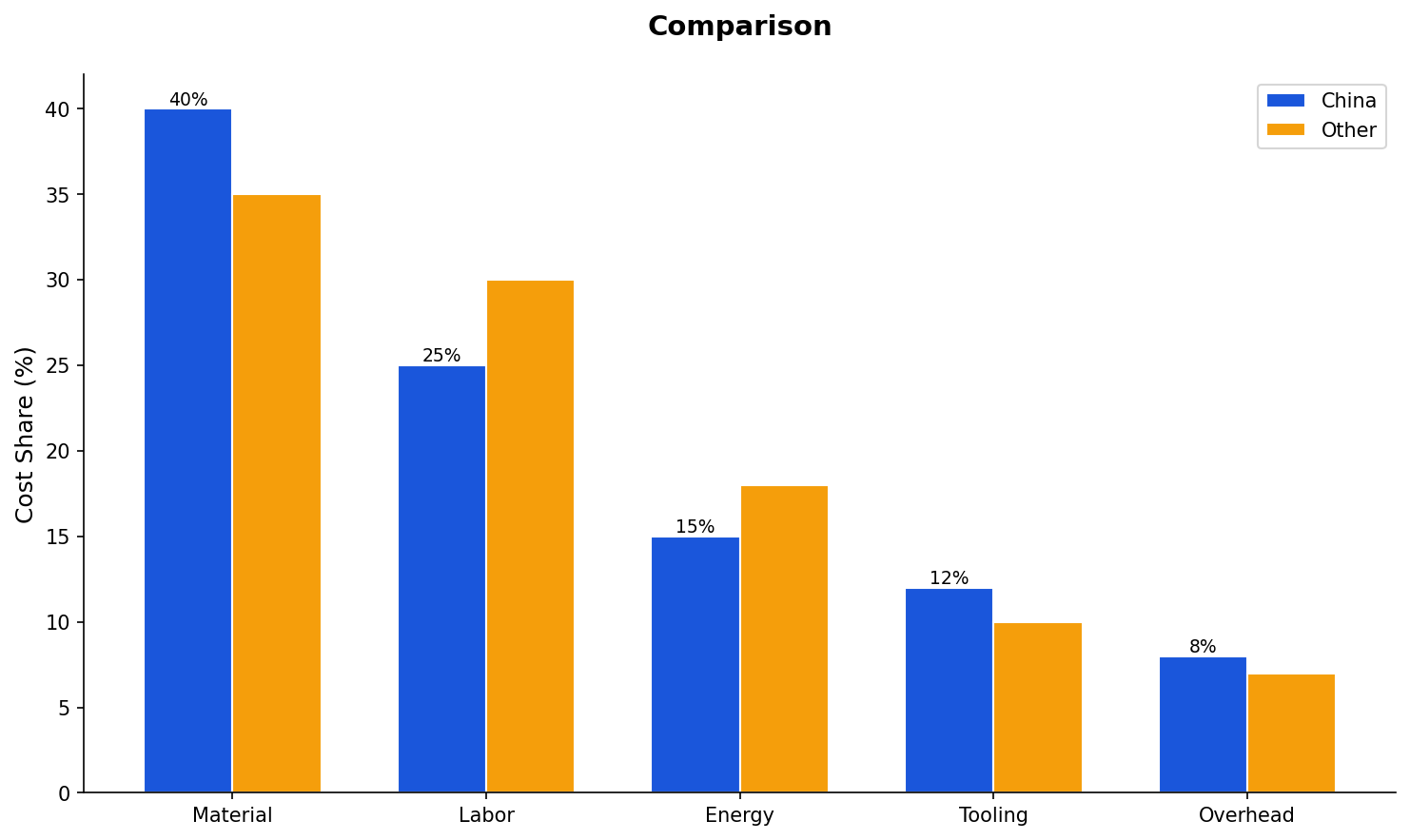
The Landed Cost Trap Nobody Warns You About
FOB price is a starting point. Landed cost is the number that hits your P&L, and it includes at least seven things the FOB quote doesn't mention:
- Ocean freight (varies 30-60% year over year on the same lane)
- Import duty and any applicable Section 232/301 add-ons
- Customs brokerage and documentation fees
- Marine insurance (cheap, but not free)
- Inland drayage both ends
- Incoming inspection and any sample teardown
- Scrap and rework cost on the parts that fail
That last one is the sneaky one. If your supplier bakes a 2% scrap allowance into the price but your actual incoming reject rate is 4%, you're absorbing 2% of the order value in pure loss. On a $180,000 annual spend, that's $3,600 gone — before you count the labor to process the returns.
| Landed Cost Component | Typical Add-On to FOB |
|---|---|
| Ocean freight (LCL and FCL blended) | 4-9% |
| Duty (country and product dependent) | 0-25% |
| Brokerage + documentation | 1-2% |
| Insurance | 0.3-0.8% |
| Drayage both ends | 1-3% |
| Incoming inspection | 1-2% |
| Scrap/rework allowance (actual vs. quoted) | 0-5% |
Run that math before you compare a Chinese quote to a domestic one. The domestic quote often already includes freight to your door. Apples to apples, the gap narrows.
And if you have never built a landing cost sheet before, build one before your next RFQ goes out. Not after. The number of buyers who discover a two-week port storage charge on the first shipment because nobody coordinated the customs bond is not small, and it does not show up in a single supplier's quote.
How to Negotiate With Numbers, Not Feelings
Suppliers in China will negotiate. They expect it. What they don't expect is a buyer who arrives with a cost model.
Here's a framework that works:
Get the material cost separated
Ask for raw material cost at the LME index plus the alloy premium, specified separately. When aluminum moves on the LME, you want a price adjustment clause tied to the index, not a renegotiation every quarter.
Get the machining quoted by cycle time, not by part
Ask for machine hour rate and cycle time, separately. If they won't give it, they either don't know their own numbers or they're padding. A competent shop can tell you their 3-axis rate and 5-axis rate within five minutes.
Negotiate the tolerance that's driving the cost, not the price
The single best cost lever is a print revision. Bring your engineering team into the negotiation. If moving one datum or relaxing one tolerance saves 12% of cycle time, that's a permanent saving. A 3% price cut is a temporary one.
Structure payment around performance
30% deposit, 60% against shipping documents, 10% held against incoming inspection results. The 10% hold is not an insult — it's the mechanism that keeps the scrap allowance honest. Suppliers who are confident in their process don't argue about it.
The best supplier relationships I've seen don't have the lowest price. They have the clearest cost breakdown, and both sides know exactly what happens when something moves.
Common Mistakes to Avoid
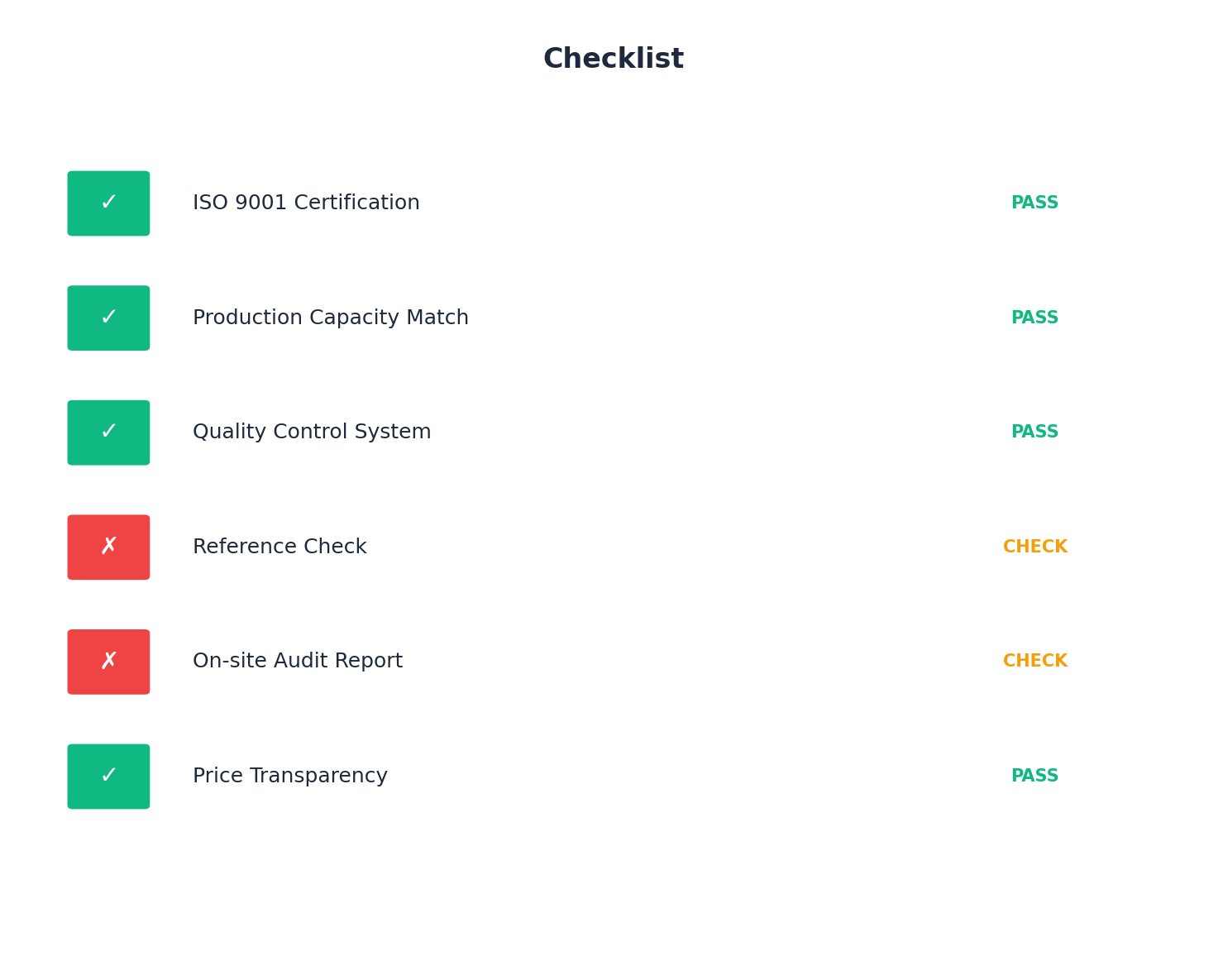
Chasing the lowest quote without a capability audit. A quote is a piece of paper. An audit is a building with machines in it and people running them. The 8% cheaper supplier who can't show you their CMM or their furnace logbook will cost you more than the 8%.
Treating the casting and machining quote as one scope. Make them two scopes with a defined interface. Who owns the casting that won't clean up in machining? Who eats the scrap? If the answer is "the foundry" and the machine shop is a different company, you need it in writing before the first PO.
Accepting certifications at face value. Pull the certificate number. Verify it at the issuing body. Check the scope statement covers your specific process. A QMS certificate from a foundry doesn't cover a separate machining operation in a different building.
Specifying tight tolerances by habit. Every tolerance on your print is a cost line. If a feature isn't functionally governed, don't spec it tight "just to be safe." Tight tolerances fail incoming inspection at a higher rate, and that failure rate is charged back to you one way or another.
Checking only the parts, not the packaging. Castings travel 7,000 miles. If the supplier's packaging wasn't designed for a container crossing the Pacific, you'll find out at the receiving dock. Ask for the packaging spec and a photo of a loaded pallet before the first shipment leaves.
Signing a PO with no agreed sampling plan. "We do 100% inspection" means nothing if the AQL is not defined and the inspection report isn't handed over with the shipping documents. Insist on a written AQL for critical dimensions, not a verbal promise of "we check every part."
Frequently Asked Questions
How much can you actually save sourcing castings from China in 2026?
For mid-volume aluminum and iron castings, the gap between a US domestic price and a Chinese landed price typically runs 30-55% depending on volume, machining content, and part complexity. Once you subtract tariff, freight, and inspection, the workable savings range is usually 20-40%. Anything quoted above 60% savings is a red flag and usually hides a material or tolerance substitution.
Why does my FOB price jump so much when I add machining?
Machining is machine-hour driven, and it's where most cost surprises come from. Tightening a tolerance from ±0.3mm to ±0.05mm can triple cycle time on a single face. If your print stacks tight tolerances on features nobody measures, you're paying for precision you'll never check.
Should I buy castings and machining from the same supplier?
Not automatically. A foundry that does light machining as a favor is not a machine shop. A machine shop that outsources casting isn't in control of the casting. The cost question is secondary to who owns the GD&T and who eats the scrap when a casting won't clean up.
How do I verify a Chinese foundry's certifications before I commit?
Ask for the certificate number and issuing body, then verify directly at the issuer. ISO 9001 is easy to check. For IATF 16949, pull the number and confirm it in the IATF database — expired certificates still get scanned and emailed around as if they're live. Check the scope statement too. A cert for "aluminum die casting of brackets" doesn't cover a hydraulic manifold.
What's the biggest cost mistake buyers make on casting projects?
Negotiating the unit price instead of the landed cost. A 4-cent-per-kilo saving means nothing if the packaging fails, 3% of the shipment is scrapped at machining, and the second container sits at the port for two weeks on a documentation issue.
Next Steps
If you're evaluating a China casting and machining program right now, do these three things before your next quote review:
- Separate the casting and machining line items in every quote you receive. If a supplier won't split them, that's information.
- Pick your three tightest tolerances and ask your engineering team whether each one is functionally required. You'll probably find one that isn't.
- Build a landed cost sheet with the seven components above, and run your current best quote through it. The number you get is the number that actually matters.
If you want a second set of eyes on a quote you've already received — or want to see how the cost breakdown looks for your specific part — send over the drawing and annual volume. You'll get a line-by-line breakdown, not a single number.