You signed at $1.02 a kilo. The foundry you'd used since 2019 quoted $1.38 for the same part, same drawing, same Class 35 spec. You did the math on the drive home and figured you'd just saved forty grand on a twenty-ton order.
Then the container hit Savannah.
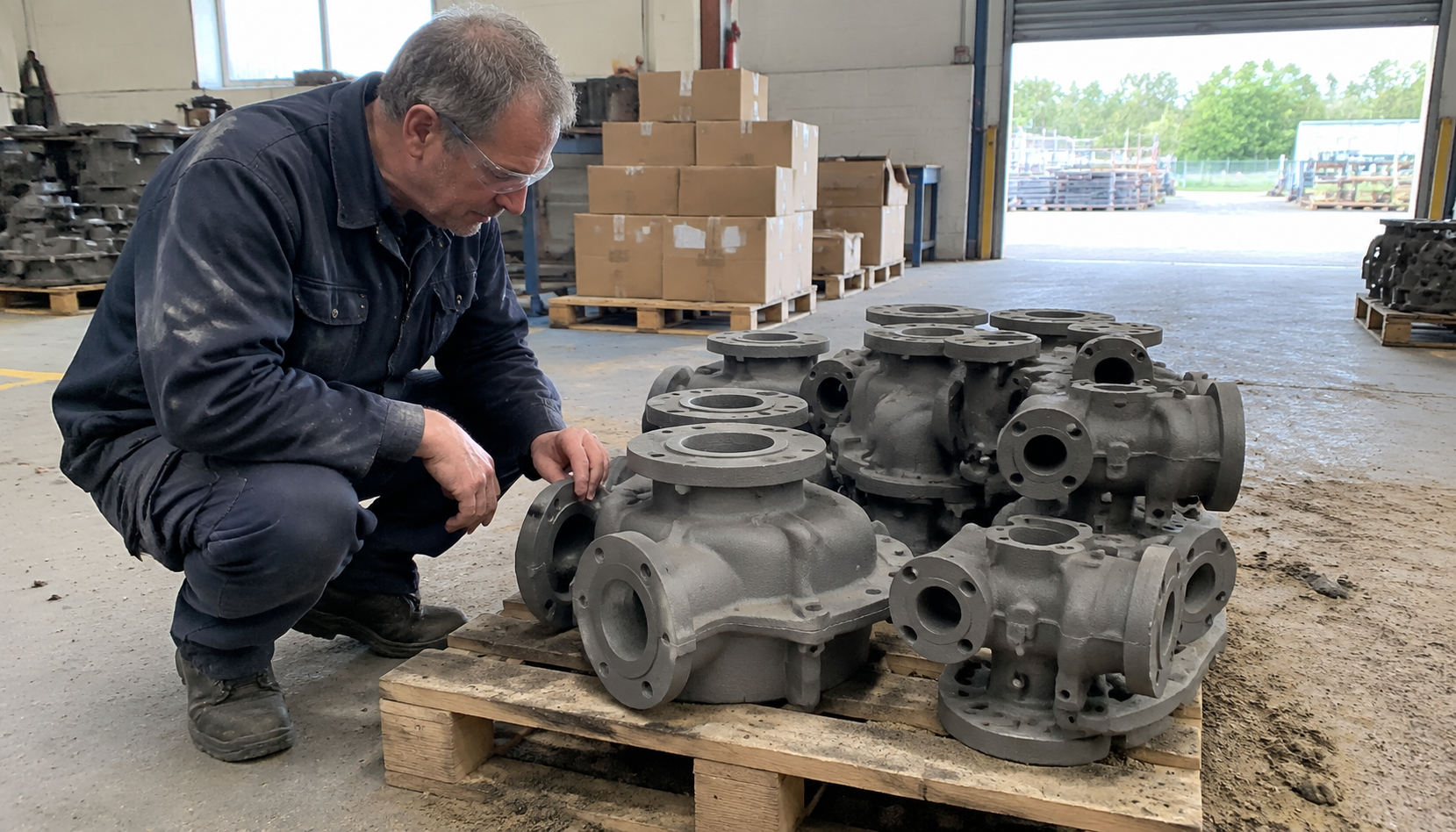
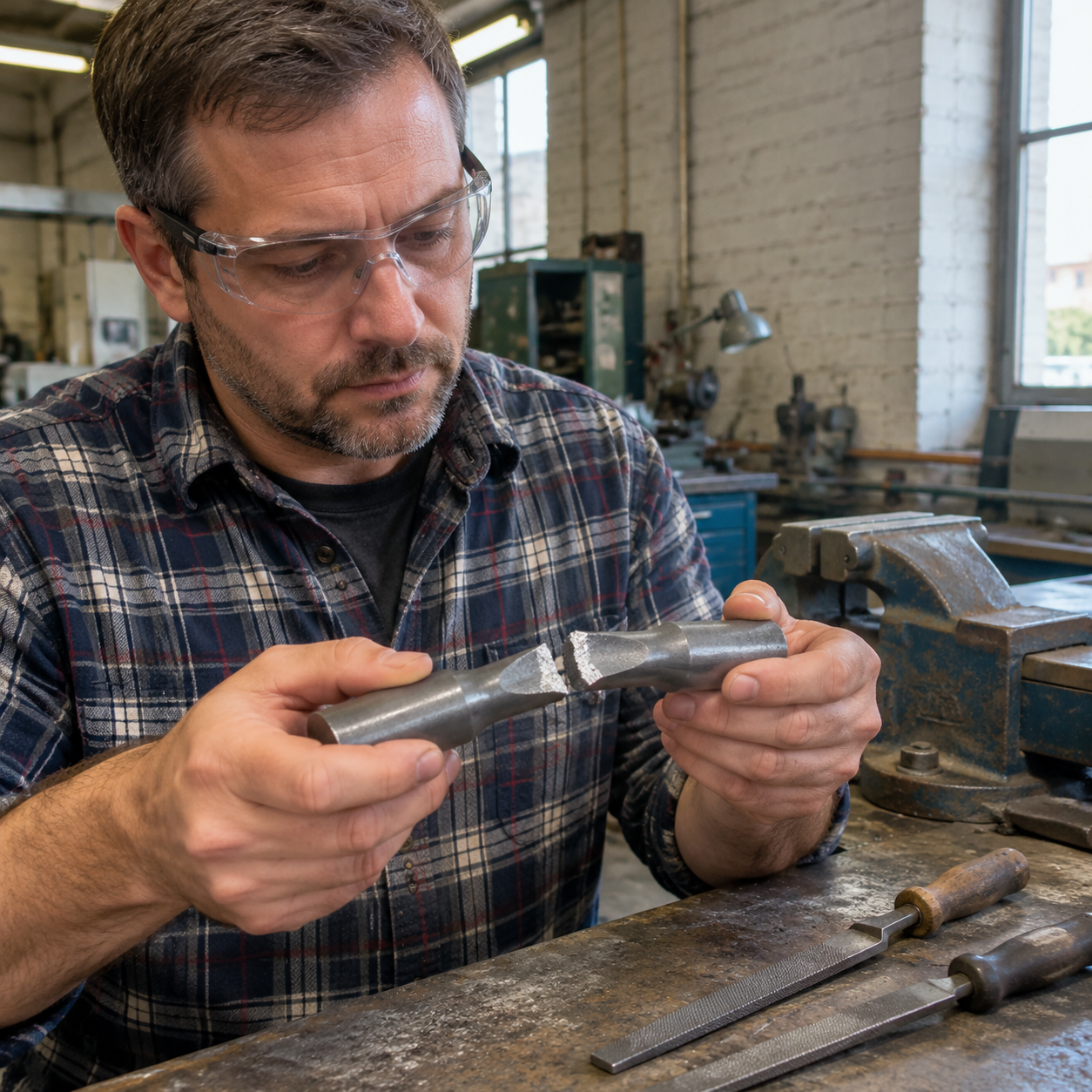
Eleven of twenty-two pallets failed incoming inspection. Nothing dramatic — no one's line stopped — but enough that your customer's QA guy emailed you a photo of a porosity cluster on a machined face with the word "explain" underneath it. The mill cert said 35,000 psi tensile and 187 HB. The parts you could get a clean reading on came in at 163 HB. The heat number on the certificate didn't match anything on the packing list.
By the time you'd paid for sorting, air-freighted four pallets to keep the account alive, and eaten the credit memo, that $1.02 had become about $1.71 landed. You paid more than the supplier you were trying to beat.
I've had that phone call. So has nearly every buyer I know who sources castings. I moved about $1.5 million in castings and hardware through a Georgia warehouse last year, and the lesson that keeps repeating is this: the per-kilo number is the least reliable piece of information in the whole quote.
So here's what gray iron actually costs in 2026 — the ranges you should be hearing, what's inside a quote, and the spots where a cheap number turns expensive.
First, the number you're probably looking for
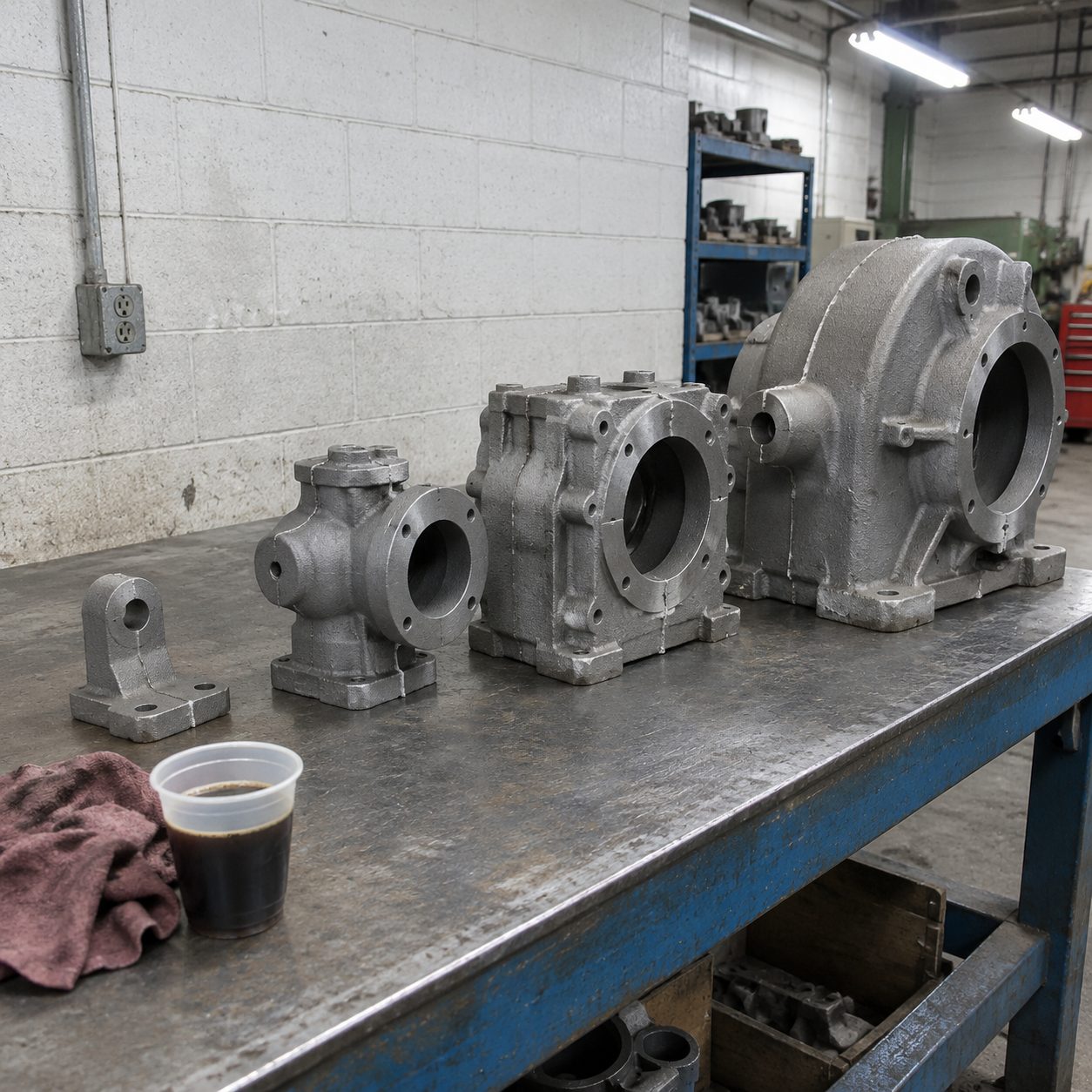
Here's the bracket I'd work from if I were budgeting a 2026 RFQ today. These are ranges I've pulled from my own quotes and from numbers other buyers have shared through 2025 and into 2026. Green sand, as-cast, no machining, 1–5 ton order quantities, FOB for the Asian origins.
| Origin | Large parts (20–100 kg) |
Mid-size (2–20 kg) |
Small parts (<2 kg) |
What to know |
|---|---|---|---|---|
| China (FOB Ningbo/Qingdao) | $0.95–1.35 | $1.25–1.85 | $1.80–3.20 | Widest spread of any origin. The good shops and the scary ones quote from the same province. |
| India (FOB Nhava Sheva/Chennai) | $1.10–1.50 | $1.40–2.00 | $1.95–3.40 | Stronger on machined assemblies. Gray iron depth is thinner than ductile. |
| Vietnam | $1.20–1.60 | $1.50–2.10 | $2.10–3.60 | Fewer gray iron shops. Often a Chinese shop with a Vietnamese name plate. |
| Mexico | $1.60–2.30 | $1.90–2.90 | $2.60–4.50 | Nearshoring premium is shrinking but still real. Truck freight beats ocean for 2-week turns. |
| US domestic | $2.10–3.20 | $2.60–4.20 | $3.50–6.50 | No duty, no ocean, 8–14 week leads. Capacity is tight in the Midwest jobbing shops. |
Treat those as estimates, not gospel. My confidence is around ±15%, and freight plus scrap moves the whole table every quarter. But if your quote comes in well below the bottom of the range for that weight class, you're not lucky. You're looking at a number that will change.
Why part weight drives the price more than anything else
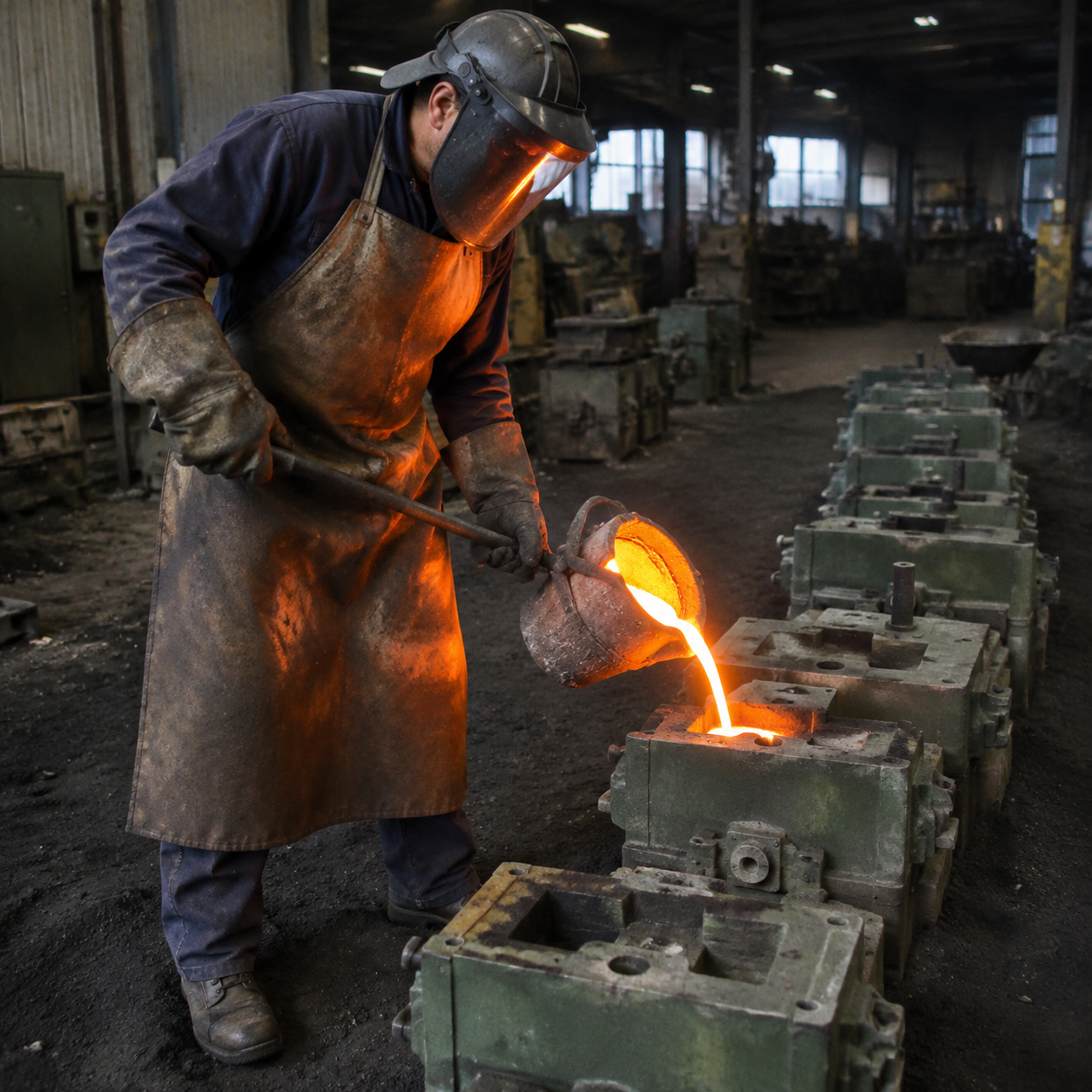
This is the thing buyers get wrong most often. They ask "what's your price per kilo for gray iron?" and expect one answer. There isn't one, because you're not buying iron. You're buying molds, pours, handling and shot blasting, and the iron is just riding along.
Do the arithmetic on a 0.4 kg bracket. The mold it sits in costs the same to make, close, pour and shake out whether it holds one bracket or eight. A foundry running a 400 × 500 mm flask might get eight brackets per mold, which helps — but the fettling, the gate removal, the visual inspection, the counting and the bagging are all per piece. Metal is maybe a quarter of that price. On a 40 kg gear housing, metal is closer to half, and the molding cost spreads over a lot more kilograms.
That's why a small part at $2.60/kg and a big part at $1.10/kg can carry identical margins. Same shop, same iron, same day.
Why two foundries quote $0.95 and $2.40 for the same drawing
A 150% spread on an identical drawing sounds like fraud. Usually it's five ordinary differences:
Molding method. Green sand is the floor. Shell molding, resin-bonded sand, and lost foam all cost more per mold but give you tighter dimensional control and better surface finish. If one shop is quoting shell and another green sand, you're comparing two different products.
Casting yield. Yield is the weight of good castings divided by the weight of iron poured. A well-designed gating system might get 70%. A lazy one gets 55%, and 45% of the iron goes back into the furnace as returns — which means melting energy and labor paid twice. Cheap quotes often come from shops with bad rigging, which is also why they have more shrinkage porosity.
Scrap allowance. An honest shop builds 3–5% internal rejection into the price. A shop chasing the order builds in zero and ships you the bad ones. That difference alone is worth more than $0.05/kg.
Inspection level. Visual only, or visual plus dimensional plus a poured tensile bar per heat, plus ultrasonic on critical sections? A Class 35 certification with accredited lab testing is a real cost line, usually $0.02–0.05/kg. Skip it and you get a photocopied certificate.
Who's actually answering your email. A trading company quoting gray iron has to buy it from a foundry and add 6–12%. If a trading company is cheaper than a foundry, ask which of the four items above they cut.
Where the money goes: a $1.45/kg quote, taken apart
Take a 5 kg gray iron casting quoted at $1.45/kg in a 2,000-piece order, as-cast, China origin. Here's roughly how that dollar forty-five splits:
| Cost element | Share of price | $ per kg | Can you negotiate it? |
|---|---|---|---|
| Metal charge (scrap, pig iron, alloys) | 38–45% | $0.55–0.65 | Barely. It's a market price. |
| Melting energy | 6–9% | $0.09–0.13 | No. Ask for their power contract if they claim otherwise. |
| Sand, bentonite, binder, consumables | 5–8% | $0.07–0.12 | A little, via gating design and yield. |
| Direct labor (molding, pouring, fettling) | 15–20% | $0.22–0.29 | Yes, through volume and part geometry. |
| Cleaning, shot blast, inspection, test bars | 5–7% | $0.07–0.10 | Yes — but this is the wrong place to save. |
| Tooling amortization | 2–5% | $0.03–0.07 | Yes. Ask for a tooling buyout instead. |
| Packaging (pallet, film, desiccant, strapping) | 3–4% | $0.04–0.06 | Yes. Specify it and price it separately. |
| Overhead, financing, margin | 10–15% | $0.15–0.22 | Yes — at volume, this is where you win. |
Two things fall out of that table.
One: about 40% of the price is hostage to the scrap market, and nobody in the room controls it. A 10% move in heavy melting scrap shifts the finished casting price by roughly 4%. So when a foundry tells you they had to raise prices 8% last quarter, check the scrap index before you argue. They may be telling the truth. When they tell you they raised it 8% and scrap was flat, that's your opening.
Two: the other 60% is where negotiation actually happens. Nobody wins an argument about the iron price. You win by changing the geometry of what you're ordering — fewer cores, better yield, tooling bought outright instead of amortized, packaging you spec yourself, and a volume commitment in exchange for the margin.
The 2026 cost drivers you can't argue with
These are the inputs that set the floor for every gray iron quote you'll see this year. Ballpark numbers, China domestic, and they move:
- Foundry pig iron: roughly $415–470 per ton, up from the 2024 trough. This is the single biggest line item in the charge.
- Heavy melting scrap: roughly $340–395 per ton. Volatile month to month, and foundries track it weekly.
- Foundry coke: $300–390 per ton for cupola shops. Coke quality affects sulfur pickup, which affects the chemistry you're paying for.
- Ferrosilicon (FeSi75) for inoculation: $900–1,050 per ton equivalent. Small addition rate, but it's the difference between machinable iron and a chilled headache.
- Industrial electricity: $0.09–0.13/kWh. Melting runs 500–650 kWh per ton of iron, so power alone is $0.05–0.08/kg before anything else happens.
Two more that don't show up on an index but absolutely show up in your price:
Winter production curtailment. Northern China provinces (Hebei especially, where Botou is a serious casting cluster) throttle foundries for heating-season air quality from roughly November through March. Quotes placed in October with a February delivery are the ones that slip. Book heavy parts before the freeze.
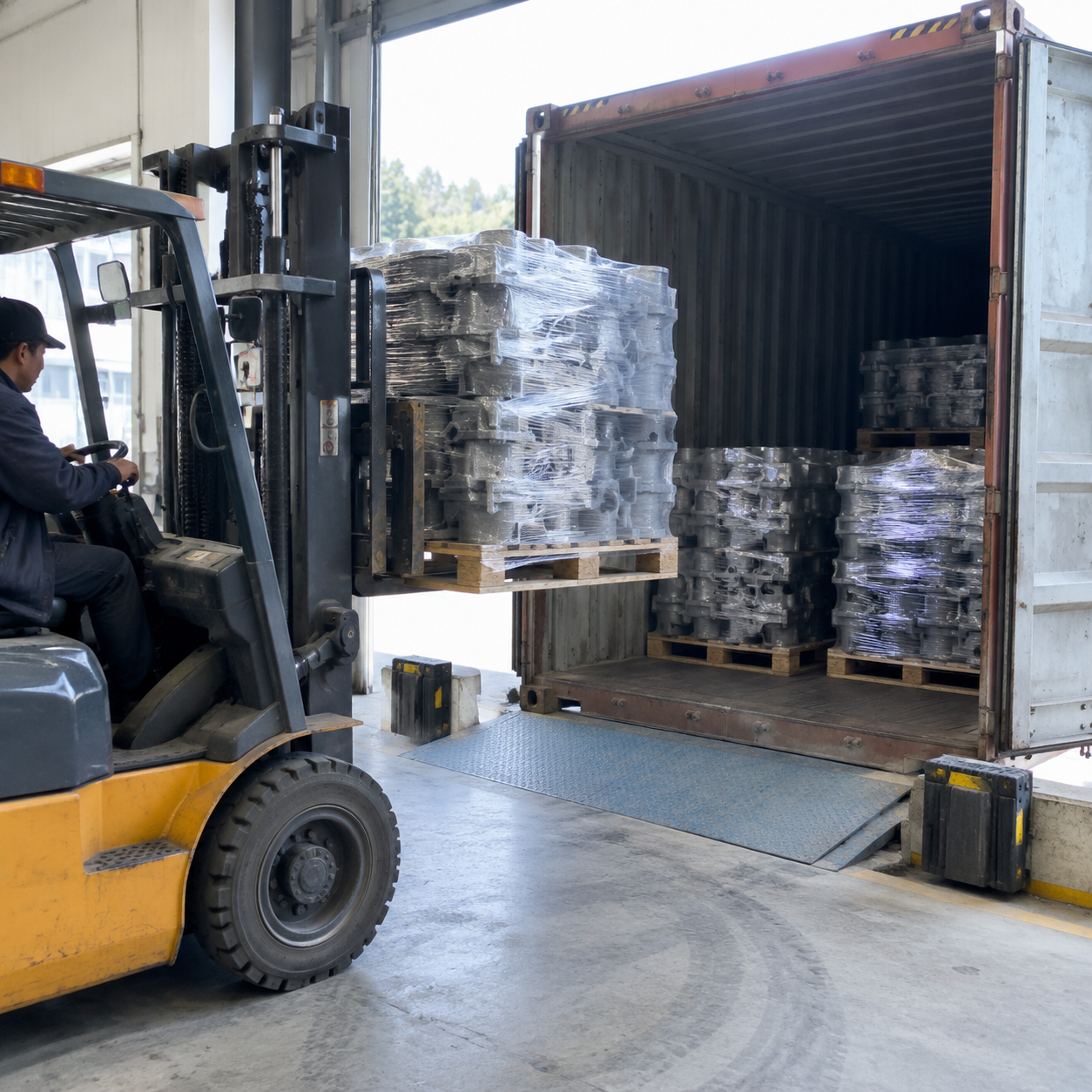
Ocean freight. A 20-foot container from Ningbo to Savannah ran anywhere from $1,900 to $5,000 across the last eighteen months. On a weight-limited load of 22 tons of castings, that spread is $0.09 to $0.23 per kilo — bigger than most of your negotiation wins. Lock freight when you lock the PO, or you're gambling.
The stack between FOB and your dock
This is where the $1.02/kg quote becomes $1.59/kg, and it's the table I wish someone had shown me eight years ago. Worked through on a real China-origin gray iron part, dense load, 22 tons in a 20GP:
| Cost line | $ per kg |
|---|---|
| FOB China (the number on the quote) | 1.05 |
| Ocean freight, 22 t in a 20GP at $2,900 | 0.13 |
| Origin charges, docs, export clearance allocated | 0.03 |
| Marine insurance | 0.01 |
| US duty, MFN roughly 2.5% on most cast articles | 0.03 |
| Section 301 tariff, China origin, 25% | 0.26 |
| Terminal handling, customs broker, ISF filing | 0.02 |
| Inland trucking to your DC | 0.06 |
| Landed cost | 1.59 |
Look at that Section 301 line. Twenty-six cents a kilo is four times the ocean freight. If your sourcing decision was built on a FOB comparison against a domestic quote, you compared the wrong numbers.
And a warning that catches people in this exact product family: there are anti-dumping and countervailing duty orders covering certain cast iron products — soil pipe fittings being the big one. If your part sits inside an AD/CVD scope, the deposit rate can be brutal and retroactive. Have your customs broker run the HTS classification and check the scope language before you sign anything. Do not take the supplier's word on classification.
The hidden costs that don't show up in a per-kilo table
- Tooling ownership. If the foundry amortizes a $4,200 pattern into your unit price and you move suppliers in year three, you own nothing. Negotiate a buyout clause: pay the tooling cost up front, get a written statement that the pattern and core boxes are your property and will be shipped to you on request.
- Minimum order quantity. Jobbing shops in China typically want 500 kg to 1 ton per part number per pour, and 2–5 tons for a first order. Below that, you're piggybacking on someone else's heat and paying for the privilege.
- Payment terms. 30% deposit / 70% before shipment is standard and reasonable. 100% T/T before shipment on a first order is not — that's a shop with no working capital or a trading company with no factory. An L/C at sight costs you 0.5–1.5% in fees and ties up credit, but it buys you document control.
- Price validity. Get a stated validity window — 30 days is normal, 90 is generous. Without one, a quote from March is fiction by July, and you'll find out at deposit time.
- Machining and casting allowance. Does the quote include 3 mm of machining stock, or a finish-machined part? That's easily $0.60–2.50/kg of difference hiding in a single line.
- Rejection handling. Who pays for the return freight on failed parts? If the answer is "we'll credit you on the next order," you've just financed their quality problem.
Verifying the mill cert without flying to China
Gray iron is specified by tensile strength, not by chemistry, which is exactly why the certificate is where cheap quotes get creative. The three you'll see most: ASTM A48 Class 35 (35,000 psi minimum tensile), EN-GJL-250 / GG25 (250 MPa, which lands in the same neighborhood), and JIS FC250. For general engineering work, those are near-equivalents — buy the one your customer's drawing calls out and don't let anyone talk you across.
Typical chemistry for a sound Class 35 / GG25 heat looks roughly like this:
| Element | Normal range | Red flag |
|---|---|---|
| Total carbon | 3.20–3.60% | Over 3.75% while still claiming 35 ksi |
| Silicon | 1.80–2.30% | Under 1.6% — chilled edges, miserable to machine |
| Manganese | 0.50–0.90% | Over 1.2% — free carbides, hard spots |
| Phosphorus | ≤0.15% | Over 0.20% — brittleness, that's not Class 35 |
| Sulfur | ≤0.12% | Over 0.15% — cupola running dirty |
| Carbon equivalent | 3.90–4.30 | Outside that band with a 35 ksi claim |
Now the seven things I check on every certificate, in order, before I release a deposit:
- Heat number matches the packing list and the parts. Cast-on or stamped heat numbers on the castings, same digits on the cert. If the cert has a heat number and the parts have none, you have a piece of paper, not traceability.
- The tensile bar was cast in green sand, from the same iron. ASTM A48 wants the test bar poured from the same ladle into a green sand mold. Suppliers sometimes send bars from shell or dry-sand molds because they test stronger. Stronger bar, weaker castings — that's the whole trick.
- The lab is ISO/IEC 17025 accredited. Ask for the accreditation number and check it. In-house testing in a shop with no accreditation is a data point, not a certification.
- The cert date is not before the pour date. Sounds stupid. I've seen it twice.
- Hardness and tensile are consistent. 35 ksi at 240 HB is a story that doesn't hold together. Class 35 should land around 170–229 HB.
- Chemistry passes the smell test above. A 4.4 CE with 0.22% phosphorus is not Class 35 no matter what the letterhead says.
- One cert per heat, not one cert for the whole order. Twenty tons is not one heat. If a single certificate covers twenty tons, you've identified the document vendor.
If you want the full procedure with the sample-drawing language you can paste into a PO, I've written it up separately in the mill test certificate verification guide.
Mistakes I see buyers make over and over
Comparing FOB to delivered. Covered above, and it's still the number one reason buyers think they got a deal and then find out they didn't. Build the landed cost table before you shortlist.
Buying on $/kg when the part is small. If your part weighs under a kilo, the per-kilo price is mostly a measure of handling and mold count. Comparing two foundries on $/kg for a 400 g bracket tells you almost nothing. Compare per-piece price at a fixed quantity, with the same inspection scope.
Assuming the scrap allowance is zero. It's never zero. If a quote is 6% under everyone else and the drawing hasn't changed, that 6% is roughly your expected rejection rate and it's being transferred to you. Budget 3–5% rejection on any new source and price it in.
Not locking the exchange rate. If you're paying in RMB or the quote is indexed to it, a 4% currency move eats your negotiation. Ask for a USD quote with a stated validity, or a currency clause with a band.
Skipping the sample pour. One free or cheap sample doesn't prove anything — foundries hand-assemble samples. A paid 50-piece trial run from a production mold is worth more than three free samples from the pattern shop.
Believing "we have ISO 9001" means anything about the iron. ISO 9001 is a management system certificate. It says the shop documents its process. It says nothing about whether that heat hit 35 ksi. That's what the tensile bar is for. If you're auditing a new foundry, bring the on-site audit checklist instead of relying on certificates.
A seven-point check before you sign
Print this and run it against every gray iron quote over a few thousand dollars.
- Landed cost, not FOB. Freight, duty, 301, terminal, inland, insurance. One number, per kg, at your dock.
- Itemized quote. Metal, melting, molding, fettling, inspection, tooling, packaging, freight — broken out. A one-line quote is a quote you cannot negotiate.
- Tooling terms in writing. Cost, amortization schedule if any, ownership, and shipping rights on termination.
- Heat-level certification commitment. One cert per heat, green sand tensile bars, accredited lab, heat numbers stamped on parts. Put it in the PO.
- Rejection and remedy. Who pays return freight, who issues credit, how fast. 3% allowance acknowledged in the contract.
- Price validity and currency. Stated window, stated currency, stated index for any scrap adjustment.
- Factory or not. Business license, the actual address, a video call inside the molding line with the molds moving. Not a showroom. If they can't show you a running molding line at 10 a.m. their time, they're not making your castings.
FAQ
Is gray iron cheaper than ductile iron per kg?
Yes, typically 15–30% cheaper for the same geometry. Ductile needs magnesium treatment, cleaner low-phosphorus scrap, tighter chemistry control and often heat treatment. If a supplier quotes you ductile at a gray iron price, ask what they're substituting. See the gray vs ductile comparison for the full cost delta.
How much does machining add?
Roughly $0.60–2.50/kg for standard turning, milling and drilling in the 500–2,000 piece range. Multi-setup parts with tight tolerances go past that. On small parts, machining can easily double the price.
What's a realistic minimum order?
500 kg to 1 ton per part number per pour, and 2–5 tons for a first order at most Chinese jobbing shops. Below that you're buying schedule space, and you'll pay 20–40% over the bench price for it.
Why did my price jump 12% in six months?
Check scrap and pig iron first — those are 40% of the price and a 10% move there is a 4% move in your quote. Then check freight, which is separate and can swing more. Then check the exchange rate. If all three are flat and the price moved anyway, ask for the itemized breakdown again and compare line by line.
Should I avoid China entirely in 2026?
No. But stop comparing China FOB to US landed. Add the 25% Section 301 in and the gap closes fast on small parts — on a 1 kg bracket, China at $2.20 FOB is $3.10 landed, and a Midwest shop may quote $3.60. That's a 14% saving for an extra 10 weeks of lead time and an ocean of risk, which is not always a trade worth making. On 40 kg housings the math flips hard in China's favor because freight per kilo collapses.
Next steps
If you take one thing from this: the per-kilo number is a starting point, not a decision. The buyers who get burned aren't the ones who paid the most per kilo. They're the ones who compared the wrong numbers and never asked what the difference was made of.
Here's what I'd do this week if I were you:
- Take your top three gray iron part numbers and build a landed cost table for each, from at least three origins. If you're not sure which Incoterm to quote on, read the FOB vs CIF breakdown first — it changes your comparison more than you'd expect.
- Send the itemized breakdown request — the eight cost lines from the table above — to every foundry on your shortlist. The ones who fill it in are the ones who know their own costs. The ones who send back a single number are telling you something too.
- Ask each of them for one heat certificate from the last 90 days, with the lab's accreditation number. Then call the lab.
Do those three things before you sign anything and you'll walk into the negotiation knowing which parts of the price are real and which parts are someone's hope.
That's the difference between a $1.02 quote and a $1.02 casting.