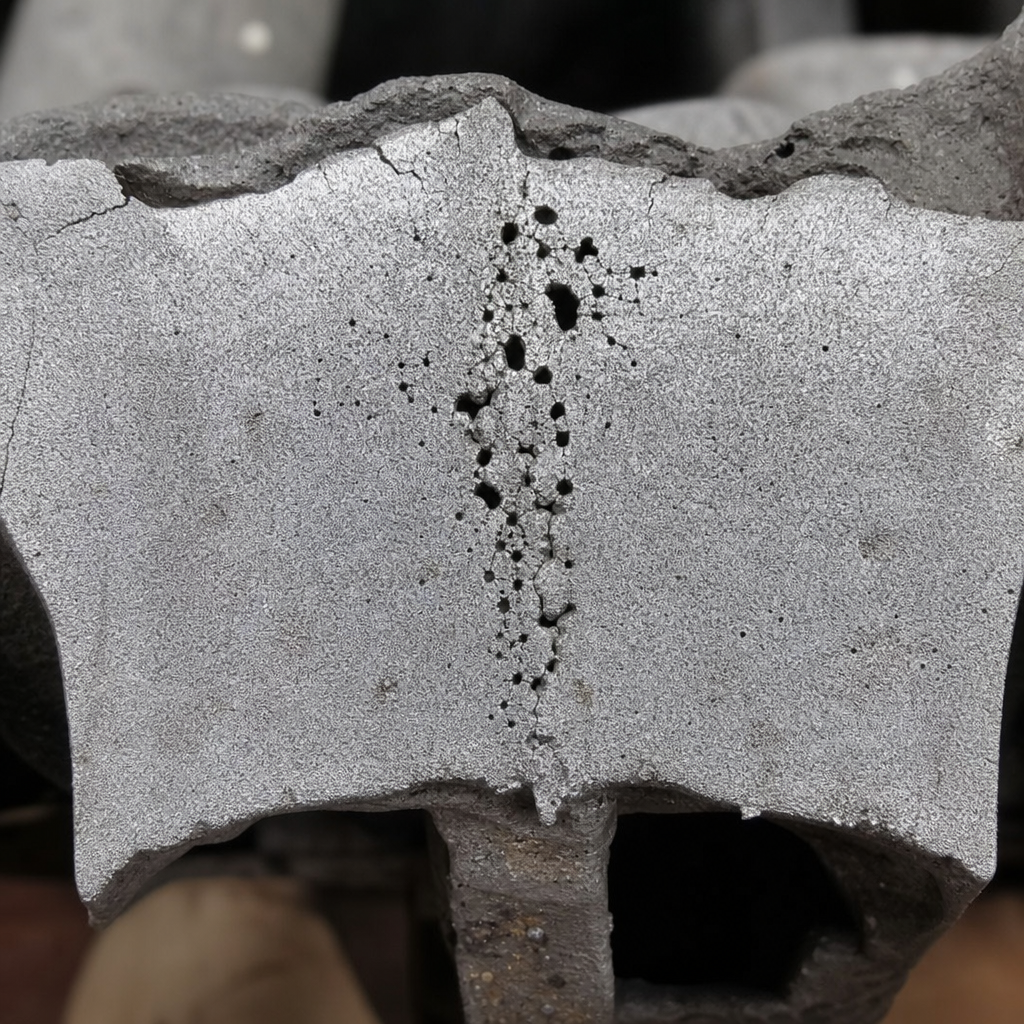
You found a foundry on Alibaba quoting $0.58 per kg for ductile iron. Sounds incredible. So you wire the 30% deposit, wait four weeks for pattern approval, then eight weeks for production. When the container finally lands in Savannah, you discover 11% of the castings have shrink porosity on the machined faces. Scrap. The other 89% spent six weeks in a humid warehouse, so the machined surfaces are rusted to the point your customer rejects three more pieces.
That's the real cost of "cheap" ductile iron. The $0.58 quote just became $1.96 per good part after freight, inspection, rework, and the rushed air-shipment you had to arrange to cover your own delivery date.
The truth is, ductile iron casting cost per kg in China is not a single number. It's a range—roughly $0.85 to $2.60 per kg FOB—and where you land in that range depends on grade, part geometry, annual volume, surface treatment, and how honest the foundry's quote actually is. This breakdown exists so you have a realistic benchmark before you accept any price, and a way to spot the quotes that are too good to be anything but trouble.
What You Should Actually Pay in 2026
Let's start with real numbers from the last twelve months of RFQs, purchase orders, and price renegotiations across the ductile iron market. These are foundry-gate prices in USD per kilogram, FOB Chinese port, for parts delivered in as-cast or shot-blasted condition—no machining, no painting, no third-party inspection. That stuff is quoted separately, and I'll get to it in a minute.
| Grade (ASTM A536) | Part Complexity | Annual Volume | Price Range (USD/kg FOB) |
|---|---|---|---|
| 65-45-12 | Simple, uniform walls | 3,000+ pcs | $0.85 – $1.20 |
| 70-50-05 | Medium, some cores | 1,000 – 3,000 pcs | $1.05 – $1.45 |
| 80-55-06 | Medium-complex | 500 – 2,000 pcs | $1.30 – $1.80 |
| 100-70-03 (heat treated) | Complex, thick sections | < 500 pcs | $1.80 – $2.60 |
| ADI (Austempered) | Complex, high-wear parts | < 200 pcs | $2.50 – $3.50 |
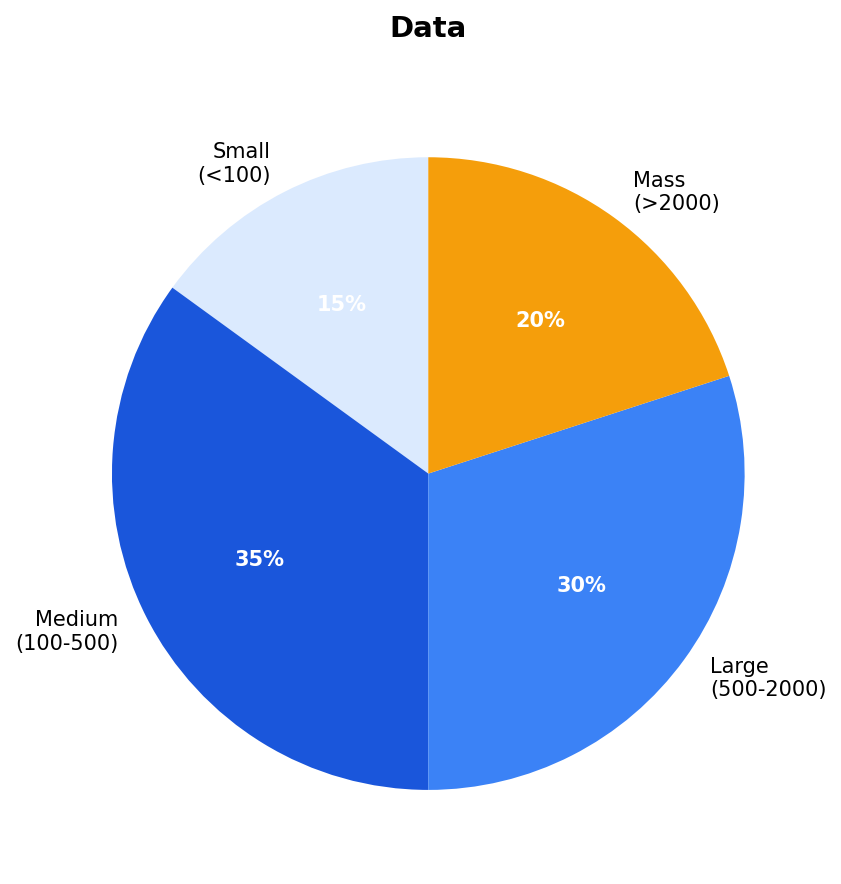
Where do these numbers come from? They're compiled from actual RFQ responses, signed purchase orders, and annual price negotiations across roughly 40 Chinese ductile iron foundries in Shandong, Hebei, Jiangsu, and Anhui over the trailing twelve months. Every foundry is different, so treat the table as a benchmark, not a guarantee. The intent is to give you a sanity check when a quote lands in your inbox.
If you're seeing quotes far below the bottom of these ranges, stop reading for a second and think about what has to be true for that price to work. The foundry still pays for electricity, scrap steel, nodulizer, sand, wages, and freight. A Chinese ductile iron foundry running a modern medium-frequency induction furnace has an average cash cost of around $0.80–0.95/kg before it sells anything. At $0.58/kg, the supplier has exactly two options: lose money on every ton, or skip steps. Skip steps is what actually happens.
That's the uncomfortable truth beneath every "unbeatable" quote: nobody sells below cost out of generosity. They sell below cost because they plan to quietly make up the difference on something you'll only discover after the deposit clears.
Where Your Dollar Goes Inside a Chinese Foundry
To understand the price range, you need to understand the cost stack. Here's a realistic breakdown for a typical 70-50-05 casting quoted at $1.25/kg from a competent Shandong or Hebei foundry in 2026:
- Raw materials (pig iron, scrap steel, returns, nodulizer, inoculant, copper/tin alloy): 38–44%
- Energy (induction furnace electricity, annealing furnace gas): 12–16%
- Direct labor (molding, pouring, shakeout, grinding): 10–15%
- Sand & consumables (resin, silica sand, coatings, filters): 8–12%
- Heat treatment & surface treatment (annealing, shot blasting): 8–12%
- Scrap allowance (internal defects always happen): 3–6%
- Overhead & margin: 8–12%
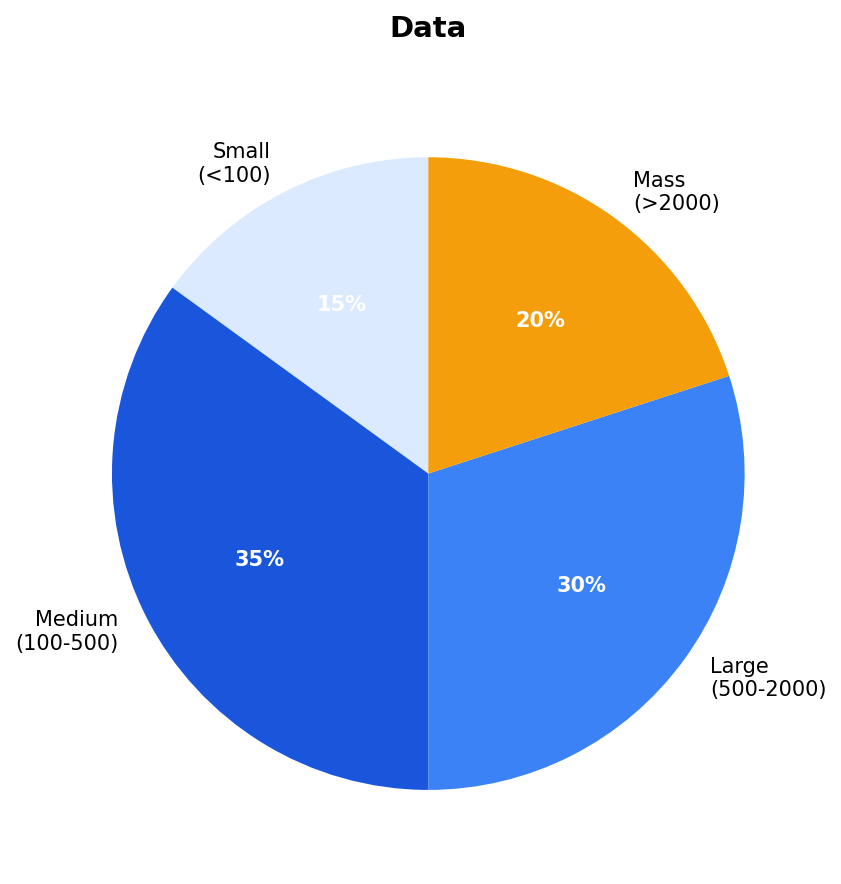
Notice what's missing from that stack: profit. At $1.25/kg, the foundry's margin is already thin. Chinese foundry owners are sitting on thin margins—8% before tax is normal. That's why lowball quotes should terrify you. There is no source of magical efficiency that turns $0.58/kg into a well-run operation. There's only a foundry that will make it up somewhere you can't see until it's too late.
Now run the math on your own part. Take the raw materials share—say 41%—and ask what happens when scrap steel, copper, or nodulizer prices jump 10% in a quarter. The foundry either eats the increase or hits you with a surcharge clause. Most Chinese foundries now write raw material price adjustment clauses directly into their contracts. If your quote doesn't mention one, ask. You'd rather know where the renegotiation trigger sits before you sign, not when the market moves against both of you.
Grade Matters More Than Price Per Kilo
If you only take one thing from this article, take this: ductile iron is not one material. The gap between 65-45-12 and 100-70-03 is bigger than the gap between cheap Chinese steel and expensive European steel. The grade controls the whole metallurgical process.
A 65-45-12 is a ferritic grade. You melt, nodularize, inoculate, pour, and often you're done. Fast cooling thin-section castings naturally land near ferritic structure. You don't need much alloy, and you might skip heat treatment entirely.
An 80-55-06 requires a pearlitic matrix. To get that, the foundry adds copper or tin—both expensive—or runs a controlled post-cast normalization cycle. A 100-70-03 with heat treatment costs even more because the annealing cycle is longer, the melt chemistry tolerances are tighter, and your foundry needs a metallurgical lab that actually knows what it's doing.
That's why you can't benchmark your part against a friend's part. Your neighbor's gear housing in grade 65-45-12 at 3,000 pieces a year might legitimately be $0.95/kg. Your valve body in 80-55-06 at 800 pieces a year might correctly be $1.55. Same metal, same country, different requirements.
Here's a practical example that shows how this plays out in real RFQs. Consider a flanged pipe fitting body: roughly 4 kg, uniform wall thickness, grade 65-45-12, 5,000 pieces per year. You'd reasonably see quotes around $0.90–1.10/kg. Take the same nominal fitting, but now it's a hydraulic valve body with internal oil galleries, cored passages, a pressure test requirement, and grade 80-55-06 at 1,200 pieces per year. That number jumps to $1.50–1.80/kg—not because the foundry is inflating anything, but because the work is genuinely different. The second part demands more cores, tighter melt control, pressure tightness verification, and a lot more labor per piece.
How China Compares: India, Vietnam, Mexico, USA
You've probably also looked at India and Vietnam, and maybe wondered whether US domestic suppliers are viable. Here's the honest competitive picture in 2026:
| Country | Typical Price (USD/kg FOB/Ex-Works) | What You Get |
|---|---|---|
| China | $0.85 – $2.50 | Deep supply chain, huge capacity, fastest tooling, but quality varies wildly |
| India | $1.10 – $1.80 | Good foundry base in Gujarat and Coimbatore, but export logistics and communication slower |
| Vietnam | $1.30 – $2.10 | Better for small-batch, but foundry density is much lower than China |
| Mexico | $2.00 – $3.50 | USMCA-friendly, shorter lead times for US buyers, but fewer ductile iron jobbing foundries |
| United States | $2.80 – $5.50 | Best quality control and traceability, but price reflects a very different cost environment |
One thing US buyers often underestimate: the tariff and shipping layers. A $1.20/kg China price becomes $1.65/kg after ocean freight and handling. Add Section 301 tariffs on Chinese iron castings, and the landed cost difference against Mexico shrinks fast. If your castings are heavy—say 15 kilograms each—freight can add $0.25–0.40/kg on its own. The "cheap" country advantage still exists, but it's not the 3x gap the raw numbers suggest.
There's also a timing angle. Mexico can put castings on a truck and have them at your door in two weeks. China demands six to eight weeks at sea plus customs clearance. If you're carrying a low inventory buffer, that lead time difference has a real dollar value in working capital and stockout risk. Run the full landed-cost model including inventory carrying cost, not just the per-kg line item, before you lock your sourcing strategy.
That said, China remains the only country where you can source everything: OEM machining, powder coating, assembly, pallet-packaged ready to sell. India is getting closer, but China still has the densest cluster of ductile iron foundries, pattern shops, and machine shops within a 300 kilometer radius. For complete cast and machined components, China's total landed cost advantage is still real. If you're sourcing round-bar stock or simple castings only, the case gets more complicated—variety of capabilities is where China's advantage survives the tariff math.
Anatomy of a Too-Good-To-Be-True Quote
Let me show you what a lowball $0.58/kg quote actually looks like. The price is just one line. The fine print is where the foundry quietly tells you what they're really going to deliver.
1. "Material: QT500-7 or equivalent"
QT500-7 is the Chinese GB grade system. It roughly maps to 70-50-05? Not exactly. The Chinese grade allows a lower elongation and does not require the same tensile verification regime as ASTM A536. Quote says "equivalent"—but equivalent by whose measuring tape? If it's not written in your standard, it's not enforceable. You asked for one material, they quoted another.
2. "Surface: as-cast, shot-blasted to remove sand"
Shot blasting to remove loose sand is not the same as a commercial blast or brush finish. If you plan to powder coat these parts, "shot-blasted to remove sand" is not enough. Expect to pay for a secondary abrasive blast at your own facility, and still hit adhesion problems.
3. "Weight: calculated by 3D model, final weight TBD after first article"
This line has killed more budgets than any other. The foundry uses an ideal CAD weight—then their tooling is slightly oversized, the risers are heavy, and the pour system adds mass. Your $1.20/kg quote suddenly applies to a part that weighs 12% more than the CAD file. If they won't commit to a maximum weight, expect to be billed on the optimistic number and delivered on the heavy one.
4. "Inspection: internal QC only"
This means the foundry's own team checks the parts. That's fine on paper, but "internal QC" at a $0.58/kg foundry often means a guy with a hammer taps the casting, listens to the ring, and feels the surface with his glove. A proper foundry sends tensile bars to an accredited lab, keeps spectro results for every heat, and gives you a chemical certificate. Demand that in writing before you sign.
5. "Payment: 50% deposit, balance before shipment"
Most lowball quotes also push for unfavorable payment terms. A 50% deposit at $0.58/kg is a small number, but it's the foundry's way of locking in your cash before you have any leverage. If you wire half the value of a $25,000 order and then find out the scrap rate is 11%, you've just given the foundry $12,500 of negotiating power over you. Standard terms for China are 30% deposit / 70% against a scanned copy of the B/L. Deviations from that pattern deserve a written explanation.
The punchline: By the time you add real heat treatment, third-party inspection, a proper paint spec, and packaging that survives international freight, the honest landed cost of a $0.58 quote is often higher than a straightforward $1.25 quote from a foundry that intended to deliver quality from day one. The lowball quote doesn't save you money—it just moves the cost to a place you can't plan for.
Before You Ask for a Price, Prepare These 7 Things
Chinese foundries quote fast—sometimes within 24 hours. That speed is a trap. If you send them a PDF without dimensions, they have to guess. And their guess will not favor you. A vague RFQ returns a vague quote; a vague quote turns into change orders later. The 15 minutes you spend preparing your RFQ is the cheapest part of the whole project. And a well-prepared RFQ—with complete drawing, spec, and volumes—tells the good foundries "this buyer knows what they're doing," which automatically separates you from the tire-kickers they price defensively. Here are the seven things you need before you ask anyone for a number:
- Full engineering drawing with GD&T, material grade, casting tolerance class (ISO 8062 or CT9-CT11), and surface finish requirements. No drawings, no meaningful quote.
- Target ASTM grade plus any secondary specs: hardness range, microstructure (ferrite vs pearlite ratio), pressure tightness test. Don't assume "standard ductile iron" means anything.
- Net weight and gross weight per piece, and how the foundry will verify it. Set a maximum weight tolerance of +4% in writing.
- Annual quantity and release schedule. A 10,000-piece commitment gets a different price than a one-time 1,000-piece order. Chinese foundries plan capacity by annual volume, not per-casting.
- Machining allowance and critical machined surfaces. If the part will be machined in the US, quote them only the casting condition. But tell them which faces will be machined—this affects riser placement and feeding design.
- Surface treatment spec and packaging standard. Shot blast grade, whether you need rust protection (VCI paper), plywood crate vs steel rack, maritime packaging. Don't leave this to "standard export packing."
- Required QC documentation. Chemical analysis per heat, tensile test results, dimension inspection report, and whether third-party inspection is required. Get these written into the quote response.
One more thing on documentation: make sure the RFQ says who pays for the pattern tooling and who owns it after production ends. Tooling ownership disputes are one of the most common complications we see in sourcing reviews. A foundry quoted $1,800 for a pattern set and then got the piece-price order, and somewhere in the fine print the buyer discovered the tooling belongs to the foundry for two years. That clause isn't necessarily unfair—but it needs to be explicit, not hidden. Decide before you send the RFQ whether you intend to move tooling between suppliers at any point, and write that into the agreement.
Three Negotiation Levers That Actually Work
Negotiating with Chinese foundries isn't about playing one quote against another. It's about giving the foundry a reason to cut margin. Here are the three levers that actually work, with examples of what you might say to get a meaningful concession.
Lever 1: Consolidate your annual volume
Instead of five parts at 2,000 pieces each at five different foundries, put all five parts at one supplier. A 10,000-piece annual commitment per customer is a different category for most foundries. Ask for a volume rebate ladder: 2% off if you hit 8,000 pieces, 4% off at 12,000 pieces. Foundries negotiate far more aggressively on a guaranteed annual quantity than on a one-time order.
Lever 2: Split tooling cost from piece price
You can lower your per-kg price by paying a larger portion of tooling up front. For example, the foundry quotes $1.30/kg with tooling amortized over the first year's order. Offer to pay 70% of tooling cost as a lump sum, then you take the annual use-up out of the price. The foundry gets cash flow, you get a better piece price for years.
Lever 3: Re-think surface treatment
Many buyers pay for powder coating at the foundry, or for a two-coat epoxy system when a basic zinc-rich paint would pass the spec. Cutting unnecessary cosmetic work can drop price meaningfully. But be careful: a cheaper surface finish saves money now and becomes a corrosion claim later. Only downgrade the finish if your application genuinely doesn't need it.
One more thing: do not negotiate on inspection. If a foundry offers a lower price in exchange for skipping third-party inspection, treat that as a red flag. You want the inspection. It protects you. The foundry's willingness to drop it tells you exactly how confident they are in their own quality.
A note on how to frame the negotiation conversation itself. The most effective approach in our experience is to bring the foundry data rather than pressure. "Here's our projected volume across this 12-month horizon, here's the tooling split we're proposing, here's which surface finish we can live without if the chemistry passes." You're showing them you understand their cost structure. That instantly moves you from a price-shopper into a partner, and partners get better pricing than strangers.
The 20-Minute Foundry Vetting Routine
You can find a decent ductile iron foundry in China in 20 minutes if you know what to look for. You can also waste several thousand dollars in a disastrous foundry in exactly the same amount of time. Here's the routine I've seen work again and again:
- Ask for the 5-year export history in the ductile iron HS code 7325.10. A foundry that regularly exports to the US, Europe, or Australia has already been vetted by buyers with even more demanding standards than yours. They'll have shipping data, export licenses, and a customs record you can verify.
- Request photos or video of their spectro analyzer and tensile test setup. Not a glamour shot of the factory floor—a specific shot of the QC lab instruments. If they can't show you a spectrometer, you can't trace your chemistry, period.
- Ask for three references from export customers with your type of part. Follow up with actual calls or emails. Chinese suppliers who are proud of their export record will connect you. Ones with something to hide will stall.
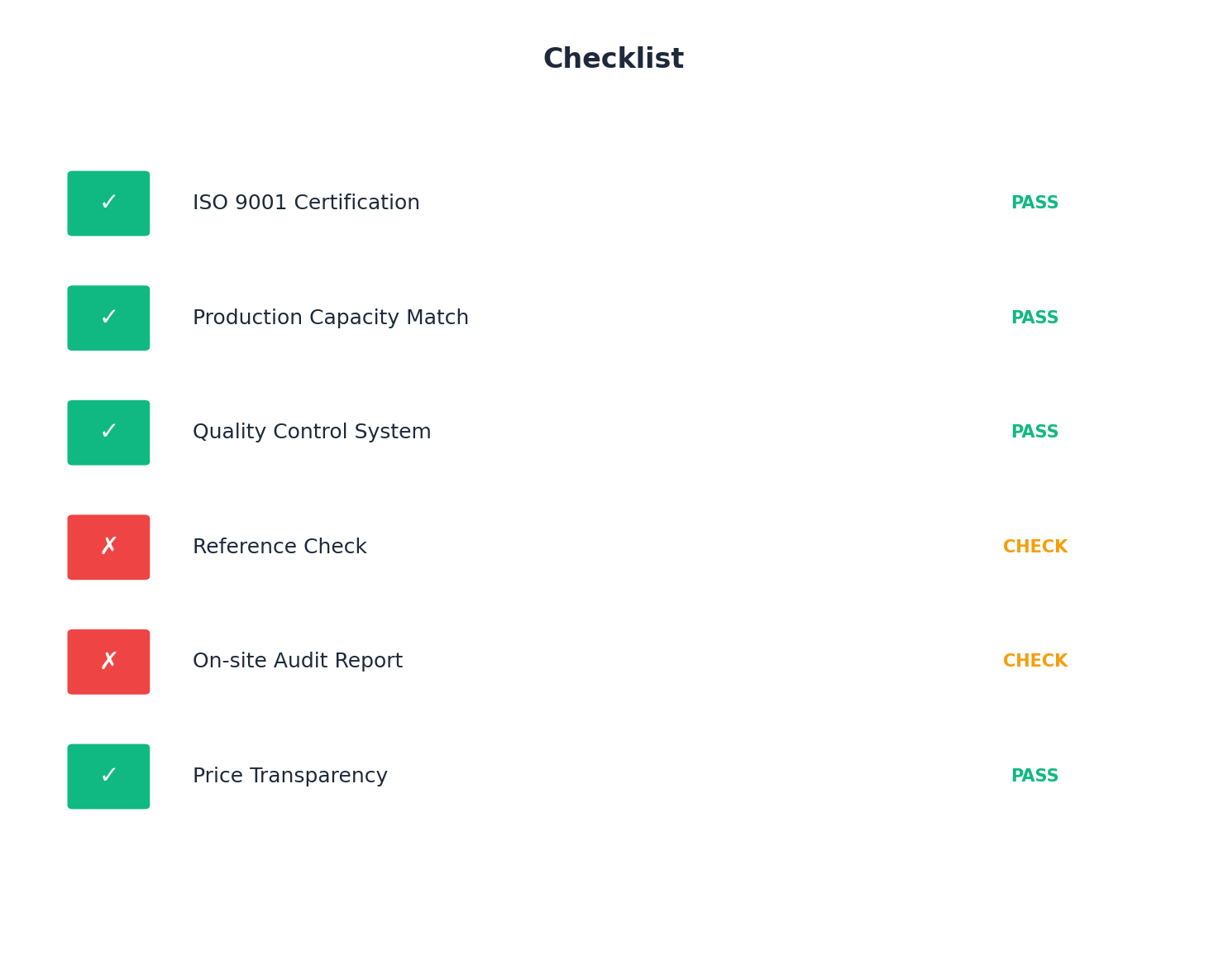
- Check foundry certifications but don't over-rely on them. ISO 9001 in China means the foundry has a file cabinet and a paid consultant. It's still useful—it filters out the backyard operations—but it doesn't guarantee your casting will be good. Export history is the stronger signal.
- Ask about their scrap rate and how they handle non-conforming parts. A real foundry knows its scrap rate by part number. If the representative answers "always below 3%" without looking at records, they're either lying or they don't track it. Both are bad.
The whole routine takes less time than a single conference call with a candidate supplier. And it filters out most of the bottom 50% of the world's ductile iron foundries before you invest a cent in samples.
If you want a deeper version of this vetting process—including what to check on site when you visit, what questions to ask the QC manager directly, and how to read a foundry's spectro certificates—see our foundry verification guide. This 20-minute routine is the front-line filter; that guide covers what happens after a foundry passes it.
Frequently Asked Questions
What is the ductile iron casting cost per kg in China?
In 2026, typical FOB prices for ductile iron castings from Chinese foundries range from $0.85 to $1.20 per kg for simple high-volume parts in grade 65-45-12, and $1.80 to $2.60 per kg for complex lower-volume castings in higher grades like 100-70-03 or heat-treated 80-55-06. These are casting-only prices, not including machining, freight, or tariffs.
Why is there such a big price difference between Chinese foundries?
The main price drivers are material grade, casting complexity, annual volume, heat treatment, finish requirements, and the foundry's quality system. A $0.58/kg quote is possible only if the foundry skips the steps that make ductile iron reliable: proper nodularization, inoculation, feed design, and inspection.
Does the price include machining?
No. Chinese foundry per-kg prices are normally for the casting alone, in as-cast or shot-blasted condition. If you want CNC machining, heat treatment, third-party inspection, or special packaging, each is quoted separately. Always request a "total landed cost" line-by-line breakdown so you know what the final part really costs.
How much is the mold or pattern tooling cost for ductile iron castings in China?
Pattern tooling in China for ductile iron typically ranges $800 to $5,000 depending on size, number of cavities, and mold design complexity. A simple part that fits a single-cavity box might be $1,000–2,000. Large or multi-cavity patterns with core boxes can exceed $8,000. These costs are usually quoted separately from the per-kg piece price.
What is the MOQ for a Chinese ductile iron foundry?
Most well-run foundries prefer annual quantities of 1,000 to 5,000 pieces per part number. You can find MOQs around 300–500 pieces, but expect a higher per-kg price and a larger share of the tooling cost covered by you. If a foundry has no MOQ and quotes overnight, that convenience usually comes at a hidden quality price.
Bottom Line: What Are You Actually Paying For?
Ductile iron casting cost per kg in China is not a race to the lowest number. Every dollar you shave off the quote shows up somewhere downstream: in porosity, in dimensional tolerance, in surprise "extra" charges for inspection, or in a container that fails your customer's acceptance when they see rust on machined surfaces.
When you set up your next sourcing cycle, use a sensible mental model: target a fair price for the grade and complexity, not the absolute lowest price on the table. The real cost benchmark is the landed cost of a good part that passes inspection on the first try—not the quote that looks cheap today and costs you a customer in December.
If you're comparing quotations on a ductile iron casting and want a second set of eyes on the fine print, submit your quote and drawing to the sourcing review desk below. You'll get back a line-item reality check: what's priced fairly, what's inflated, and which numbers are too good to be true.
Got a ductile iron quote you're not sure about?
Send your RFQ, drawing, and stamped quotation to the sourcing review desk. In 48 hours you'll get a realistic target price range for your specific part, plus the exact clauses most buyers miss.
Request a Quote Review