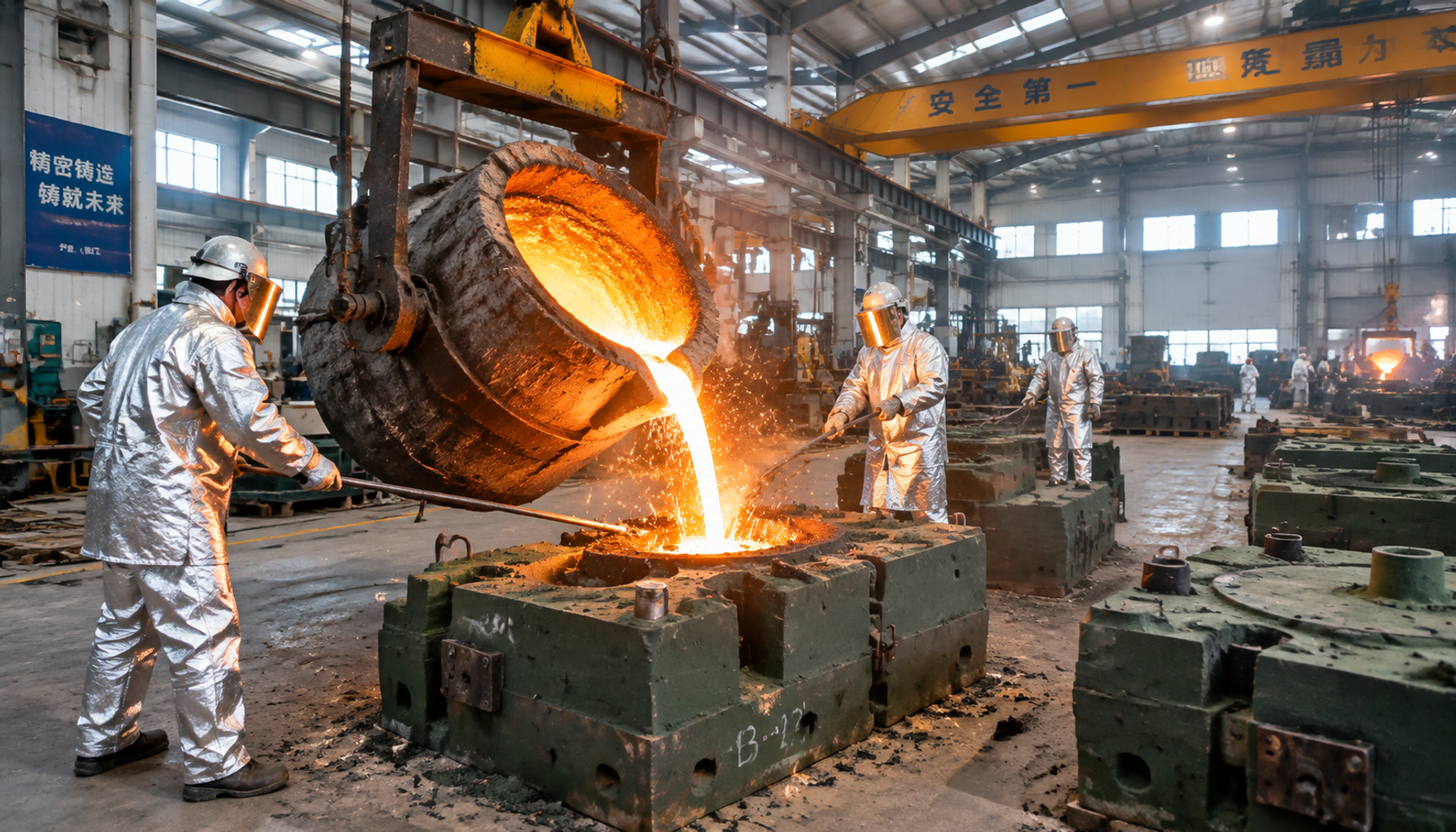
Your container clears customs on a Tuesday. By Friday your QA guy is standing over a C93200 bearing bushing with a magnifier, and it's weeping. Gas porosity across the bore. A hairline crack at the flange. And the chemistry sheet says tin at 4.1% when your drawing calls for 6.3–7.5%.
You paid $23,400 for that lot. Now you're paying again — in air freight for replacements, in rework hours, in a distributor customer who's stopped returning your emails.
Here's the part that stings: the price you got was not suspiciously low. It was 8% under the next quote. That's the danger zone. Not the obvious scam, the plausible one.
Seven of every ten copper casting failures I've been pulled into trace back to a single root cause: the buyer never confirmed they were dealing with an actual foundry before they wired a deposit. That's my own read of the failed lots I've handled, not an industry statistic — but the pattern is consistent enough that I'd bet a container on it. Everything downstream — the porosity, the off-chemistry, the missed dates — flows from that one unchecked assumption.
So let's fix it. This is the vetting process that separates a good supplier from a costly lesson.
First, Understand That "Copper Casting Manufacturer China" Is Not One Thing
When you search that phrase, you get back three completely different business models wearing the same website template. Confusing them is how buyers lose money.
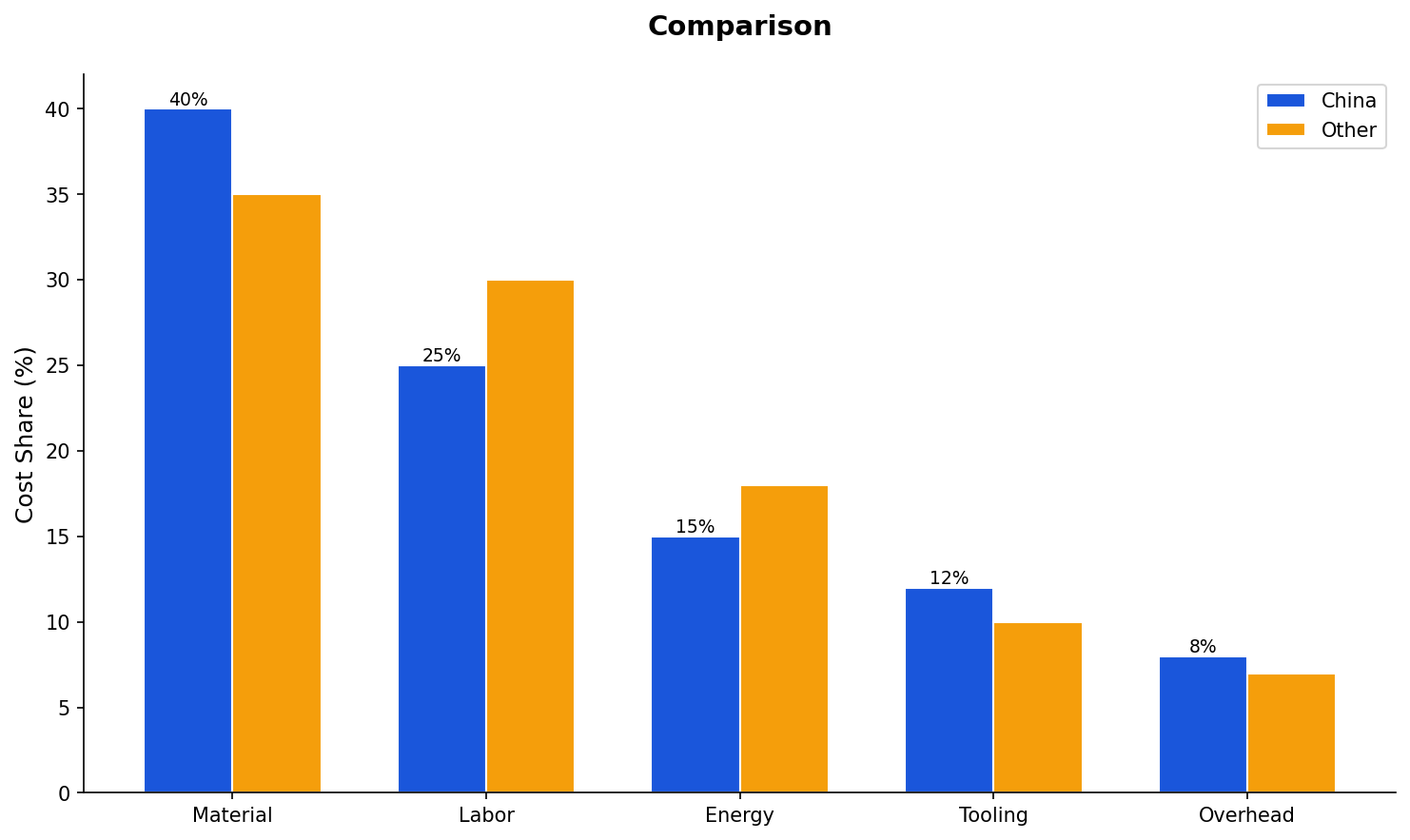
Model 1: The trading company. No furnace. No molding line. They take your RFQ, farm it out to a foundry you'll never see, mark it up 12–25%, and handle the paperwork. Some are genuinely good at logistics and communication. But when a lot fails, they can't fix it — they can only forward your complaint to a third party who has no obligation to you.
Model 2: The single-process job shop. One furnace, one molding method, 30–80 workers. Real factory, real floor. Great for simple parts in one alloy at volume. Terrible fit if you need sand castings on Monday and investment castings on Thursday, or if your order spans five alloys.
Model 3: The multi-process caster or sourcing platform. Sand, investment, centrifugal, and continuous casting under one quality system, or a platform that coordinates several verified foundries. You get one PO, one inspection standard, one throat to choke.
Which one do you need? Depends on your program.
If you're buying 40,000 identical C83600 valve bodies a year and you've already validated the foundry, Model 2 is fine and often cheapest. If you're an OEM running a mixed bag — pump housings in C95500, wear plates in C86300, bushings in C93200, all on different schedules — the coordination overhead of juggling three job shops will eat more of your time than the markup on Model 3.
The failure mode isn't picking the wrong model. It's thinking you picked Model 2 when you actually picked Model 1.
Where China's Copper Casting Capacity Actually Sits
China produced somewhere around 20 million tonnes of copper fabricated products in recent years, but the casting slice of that is concentrated in a handful of clusters. Knowing the map tells you where to look and, more usefully, what a supplier from each region is likely good at.
Jiangsu — Wuxi, Changzhou, Nantong, Taizhou. The densest concentration of mid-size copper alloy foundries in the country. Strong on sand casting and centrifugal casting. Most have in-house spectrometers because their customers are European and North American OEMs who demand chemistry certs. This is where I'd start for C93200 and C95400 work.
Zhejiang — Ningbo, Wenzhou, Taizhou, Shaoxing. Heavier on brass and lead-free brass for plumbing, valves, and fittings. Investment casting and gravity die casting are common here. If you need C89833 or C89836 lead-free material for potable water applications, this cluster has the deepest bench.
Guangdong — Foshan, Dongguan, Zhongshan. Precision work, smaller parts, tighter tolerances. A lot of the copper die casting and machining-integrated shops sit here. Good for parts under 3 kg where you also want CNC finishing.
Hebei and Shandong — Cangzhou, Botou, Qingdao, Yantai. Historically iron country, but a meaningful number of shops have added copper lines. Pricing is aggressive. Chemistry control is more variable, so verification matters more here than in Jiangsu.
Anhui and Jiangxi — Tongling, Guixi. These sit next to the country's copper smelting base. If you're buying high-volume ingot-adjacent castings or continuous cast tube and bar, proximity to cathode supply matters for lead time and price.
One practical note: don't optimize for the cheapest province. Optimize for the cluster whose specialty matches your part. A Ningbo lead-free brass specialist will beat a Hebei generalist on a potable water fitting every single time, even at a higher unit price, because they've already solved your metallurgy problem.
The RFQ That Separates Serious Suppliers From Tourists
Your RFQ is a filter. A vague one lets weak suppliers through. Here's what a copper casting RFQ needs to contain — and most buyers skip at least three of these.
1. Name the alloy by UNS number, not by nickname
"Bronze" means nothing. "Gunmetal" means five different things depending on who's reading it. Write C93200, or CuSn12 per EN 1982, or ZCuSn10Pb1 per GB/T 1176. If you write "85-5-5-5," you'll get C83600 from a good shop and something chemistry-adjacent from a bad one.
The number is the point. A UNS designation locks the chemistry window on both sides of the ocean — C93200 (SAE 660) under ASTM B584 means tin between 6.3% and 7.5%, lead between 6.3% and 7.5%, and a defined copper balance. A nickname locks nothing.
2. Specify the governing standard
This is the single most commonly missing line in a copper casting RFQ. Which standard governs acceptance?
- ASTM B584 — copper alloy sand castings for general applications. The default for valve bodies, pump parts, and general industrial castings. C93200, C83600, C86300 and C95400 all live here.
- ASTM B148 — aluminum bronze sand castings. C95200 through C95900.
- ASTM B271 — copper-base alloy centrifugal castings. Bushings, bearings, tube.
- ASTM B505 — copper alloy continuous castings.
- EN 1982 — the European equivalent. Common if your end customer is in Germany or Italy.
- GB/T 1176 — the Chinese domestic standard. Suppliers default here unless you tell them otherwise, and the chemistry windows are not identical to ASTM.
Without a named standard, "within spec" becomes a negotiation after the parts land. With one, it's a fact.
3. Put the chemistry table on the drawing
Min and max for every element you care about. Copper, tin, lead, zinc, nickel, iron, aluminum, manganese, silicon, phosphorus, antimony, bismuth. If lead content matters — and for potable water it does, under the U.S. Safe Drinking Water Act's 0.25% weighted-average limit — write the ceiling explicitly.
4. State your inspection level before the quote, not after
"We'll do random checks" is a sentence that has cost people entire production runs. Tell them: first article inspection with a full dimensional report, then AQL 1.0 on the production lot, plus X-ray on the first 50 pieces. Suppliers who can't do this will self-select out. That's the point.
5. Say what "good" looks like for defects
Porosity is not binary. Every casting has some. What you need to define is the acceptable threshold: no visible porosity above 1.5 mm on machined surfaces, no linear indications on the sealing face, no cold shuts, no shrinkage voids detectable by radiography in the pressure boundary. Reference a defect acceptance standard if you have one.
Send this RFQ to eight or ten prospects. You'll typically get five quotes back, and two of those will come with questions that show they read it. Those two are your shortlist.
Why Two Chinese Foundries Quote 3x Apart on the Same Part
You send identical drawings to two suppliers. One quotes $18.40 per piece, the other $57.20. Both say FOB Shanghai. You assume one is gouging and one is desperate.
Neither. Here's what's actually inside the number.
Metal cost: the biggest lever, and the easiest to hide
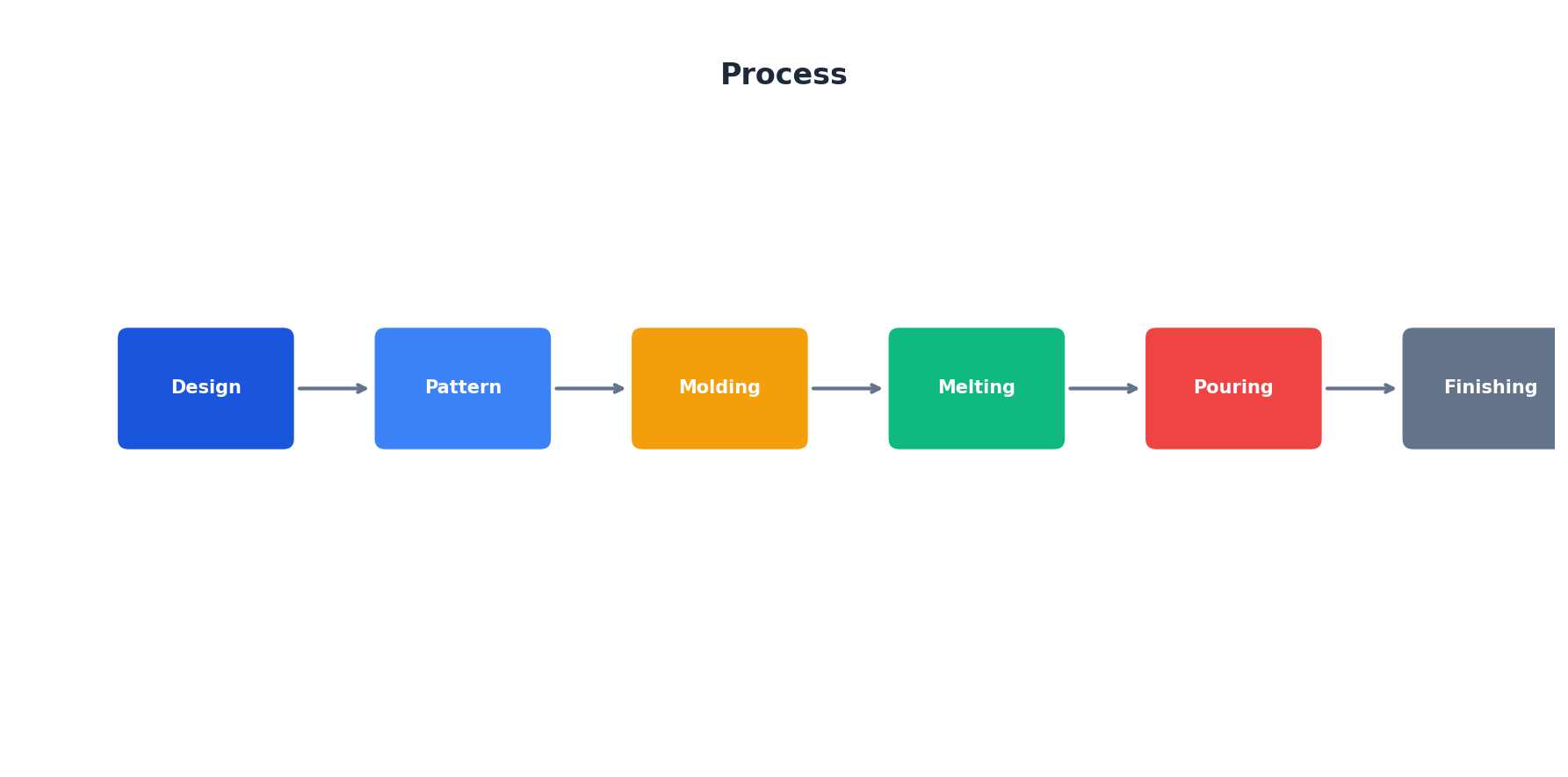
Copper has traded between roughly $8,000 and $11,000 per tonne on the LME over the past three years, and that's your floor for any copper casting. The gap opens on what goes into the furnace.
A supplier running virgin cathode pays full LME plus a premium. A supplier running clean, sorted, known-alloy scrap can source 8–12% below cathode. That's a legitimate cost advantage — if the scrap stream is controlled and the chemistry is verified.
Here's the catch. Unverified scrap is how you get 4.1% tin in a C93200 part that needs 6.3–7.5%. The cheap quote isn't cheating on labor. It's guessing on chemistry, and you're the one who finds out.
Ask every supplier: what percentage of your charge is secondary material, and how do you certify it? A supplier with a spectrometer and a scrap segregation system will answer in detail. A supplier without one will change the subject.
Conversion cost: what the foundry actually charges you
This is the $2.00–$4.50/kg on top of metal, and it's where the real spread lives. It covers melting energy, molding, pouring labor, knockout, grinding, heat treatment if needed, and overhead.
Low conversion cost usually means one of four things: older molding equipment with more sand-related defects, less inspection, lower labor rates in an inland province, or a foundry that's hungry and underpricing to win the PO. Three of those four are your problem later.
Tooling: one-time, but negotiated wrong constantly
Rough 2026 ranges, and these vary by complexity:
| Tooling Type | Typical Cost (USD) | Lead Time |
|---|---|---|
| Wood or resin pattern, simple sand casting | $500 – $2,500 | 10–18 days |
| Metal pattern, high-volume sand casting | $3,000 – $15,000 | 18–30 days |
| Investment casting wax die | $2,000 – $9,000 | 20–35 days |
| Centrifugal casting die | $2,500 – $12,000 | 20–30 days |
Two rules here. Get tooling ownership in writing — you paid for it, it's your property, and it stays your property if you leave. And never let tooling be amortized invisibly into unit price without a stated buyout figure. That's how you get held hostage on year three.
Finishing and testing: the line item nobody reads
Machining, tumbling, plating, pressure testing, radiography, third-party lab work. A quote that excludes these looks cheap until you add them back. Ask every supplier to quote FOB Shanghai with testing included, so you're comparing the same scope.
One more thing. If a quote comes in more than 15% under the median of your shortlist, don't celebrate. Get a sample. Nine times out of ten the sample is fine and the production lot isn't, because the sample was made carefully by the best guy on the floor and the production lot was made by whoever was on shift.
The Five-Step Factory Verification You Should Never Skip
If you're placing an order over $10,000 or building a repeat program, you verify. Either you fly over, or you hire a third-party inspector for $300–$600 a day. Both are cheaper than one bad container.
Here's what to look at, in order.
Step 1: The melting floor
Walk to the furnace. Not the office, not the showroom. The furnace.
Look for: induction furnaces with a stated capacity, a charge make-up area where scrap is sorted by alloy, and a spectrometer within 20 meters of the pour station. That last one is the tell. A foundry that verifies chemistry before pouring has one. A foundry that verifies chemistry after you complain doesn't.
Ask the operator to run a sample while you watch. It takes four minutes. If nobody can do this, you have your answer.
Step 2: The molding and pouring line
For sand casting: is there an automatic sand muller with a testing schedule, or is it a guy with a shovel and a guess? Green sand that isn't controlled produces sand inclusion and rough surface finish, and no amount of inspection catches it before it's poured.
For investment casting: check the wax injection area, the shell building line, and whether the slurry tanks are on a documented viscosity maintenance schedule. Degraded slurry equals shell cracks, which equals metal penetration defects.
For centrifugal: check the die preheat controls and the spin speed documentation. Those two variables determine whether you get a sound tube or a banded one.
Step 3: The inspection room
This is where the story gets honest fast. A competent copper foundry needs:
- Optical emission spectrometer (OES). Desktop units run $15,000–$40,000. If they don't have one, they're sending samples out, which means chemistry verification takes days, which means it isn't happening per heat.
- Tensile testing machine. Required if you're buying to ASTM B584 with mechanical property requirements.
- Hardness tester. Brinell or Rockwell, calibrated, with records.
- Calibrated measurement tools — calipers, micrometers, bore gauges, with current calibration stickers.
- Radiography access. Either in-house X-ray or RT, or a documented relationship with a local NDT provider.
Count what's actually there. Photograph the calibration labels. Ask for the calibration schedule.
Step 4: Packaging and logistics
Boring, and it's where you lose money anyway. Copper castings are heavy and they dent. Are parts separated by layer, or dumped in a box? Is the crate ISPM 15 heat-treated (required for solid wood entering the US and EU), or plywood? Is there a moisture barrier?
Ask to see the last three shipments' packing photos. Suppliers who pack well photograph it. Suppliers who don't, don't.
Step 5: The quality record room
Ask for three things on the spot:
- Six months of third-party test reports from a lab you recognize — SGS, BV, TUV, Intertek, or an accredited domestic lab. Not in-house certs.
- Their scrap or rejection rate for the last quarter, broken out by defect type. A foundry that tracks this number to one decimal place is a foundry that manages it.
- Two customer references in your industry or a comparable one, with contact details you can actually use.
If all three exist, you've found a real operation. If any one is missing, ask why before you commit.
The Documents You Must Get With Every Shipment
Don't accept a packing list and a photo of the parts on a pallet. A copper casting shipment should arrive with a document packet.
| Document | What It Proves | Non-Negotiable? |
|---|---|---|
| Material Test Report (MTR) per heat number | Actual chemistry, tied to your specific castings | Yes |
| Mechanical properties report | Tensile, yield, elongation, hardness vs. spec | Yes, if spec requires |
| Heat number traceability sheet | Which parts came from which pour | Yes |
| Dimensional inspection report | Critical dimensions measured on the lot | Yes |
| NDT records (RT / UT / PT) | Internal soundness for pressure or safety parts | Application-dependent |
| Pressure test certificate | Sealing integrity for valves, pump bodies | Yes for pressure parts |
| Third-party inspection report | Independent verification of the above | Recommended |
| Certificate of Origin / Form A or FTA cert | Duty treatment at your border | Yes for customs |
If the MTR arrives with a heat number that doesn't match what's stamped on your parts, stop. Don't negotiate. Don't accept a replacement cert. That mismatch is a document integrity failure, and it means nothing else in the packet is trustworthy either.
Common Mistakes Buyers Make With Chinese Copper Casters
These come up repeatedly, and every one of them is preventable before the PO.
Accepting a "factory" video that's actually a competitor's. Reverse-image-search the frames. Ask for a live video call walking the floor with today's newspaper in frame. Cheap, and it filters fast.
Quoting without a standard. "Bronze, similar to what we buy now" produces whatever the supplier has in the furnace. Name the UNS number and the governing standard.
Skipping first article inspection to save two weeks. You save 14 days and risk 45. FAI on copper castings catches pattern errors, shrinkage allowance mistakes, and machining stock problems — all of which are cheap to fix once and expensive to fix in production.
Letting the supplier own the tooling. You pay for it, you own it. Put it in the contract with a stated buyout price if you ever move the program.
Paying 100% before shipment on a first order. Standard terms are 30% deposit, 70% against B/L copy. A supplier demanding full prepayment from a new customer is telling you something about their cash position. Listen to it.
Ignoring lead-free requirements until the end customer asks. If your parts touch potable water and you're shipping into the US or EU, lead content is regulated. Sorting that out after the castings are poured means scrapping the lot.
FAQ
How much does a copper casting cost from a Chinese manufacturer?
For C83600 red brass sand castings in the 0.5–5 kg range, expect roughly $6.50–$9.00/kg landed in 2026, with metal cost making up 55–70% of that. Aluminum bronze like C95400 runs higher — $9–$14/kg. Centrifugal castings and tight-tolerance investment castings sit at the top of the range. Any quote more than 15% below the median of your shortlist deserves a sample before a PO.
How do I confirm a supplier is a real foundry and not a trading company?
Ask for three things: a live video walk of the melting floor with a dated object in frame, the brand and model of their spectrometer, and their environmental operating permit number. Trading companies can produce glossy PDFs but they can't produce a furnace.
Which copper alloys are commonly cast in China?
C83600, C84400, C93200, C86300, C90300, C95400, C95500 and the lead-free C89833 family are all routinely poured. Most Chinese foundries work to GB/T 1176 by default, so if you need ASTM B584, ASTM B148 or EN 1982 compliance, state it in the RFQ and request the test report against that standard specifically.
What's a realistic lead time for a first copper casting order?
Tooling 10–35 days depending on process. Sample casting 10–15 days after tooling. First article inspection and any revision 10–14 days. Production 25–40 days. Budget 10–14 weeks from PO to shipment on a new part, and don't let anyone promise you six.
Can I get small quantities for validation?
Many foundries will run a 5–20 piece trial lot, but expect to pay a premium of 40–100% over production unit price, plus tooling. It's worth it. A pilot lot that goes through your own assembly line and inspection process reveals things no certificate will.
What To Do Next
Before you email a single supplier, do these three things in order.
Write your RFQ with the UNS alloy number, the governing standard, the chemistry table, the inspection level, and the defect acceptance criteria. That document alone will eliminate half your prospect list.
Send it to eight to ten suppliers across at least two of the industry clusters above. Compare not just price, but which suppliers asked you questions.
Then verify. Live video call, spectrometer check, calibration labels, six months of third-party reports. If a supplier resists any of that, you've learned something useful at zero cost.
Copper casting sourcing in China works well when you treat the first order as a qualification exercise rather than a purchase. The buyers who do that end up with a supplier relationship that lasts a decade. The ones who don't end up writing posts like this one.
Want the vetting checklist as a printable PDF you can take on a factory visit? Grab it below, and if you send over a drawing and alloy spec, you'll get a quoted range back within two business days — including which of the five verification steps we'd expect to matter most for your part.
Get Your Copper Casting Vetted Before You Commit
Send a drawing, alloy spec, and annual volume. You'll get a costed quote with tooling broken out, the governing standard confirmed, and a named foundry with the process match for your part.
Request a Quote See Copper Casting CapabilitiesNeed Help with Copper Casting Manufacturer China: A Buyer's Vetting Guide?
Get matched with 3 verified foundries in 24 hours. No markup, transparent pricing.
Request Quotes →