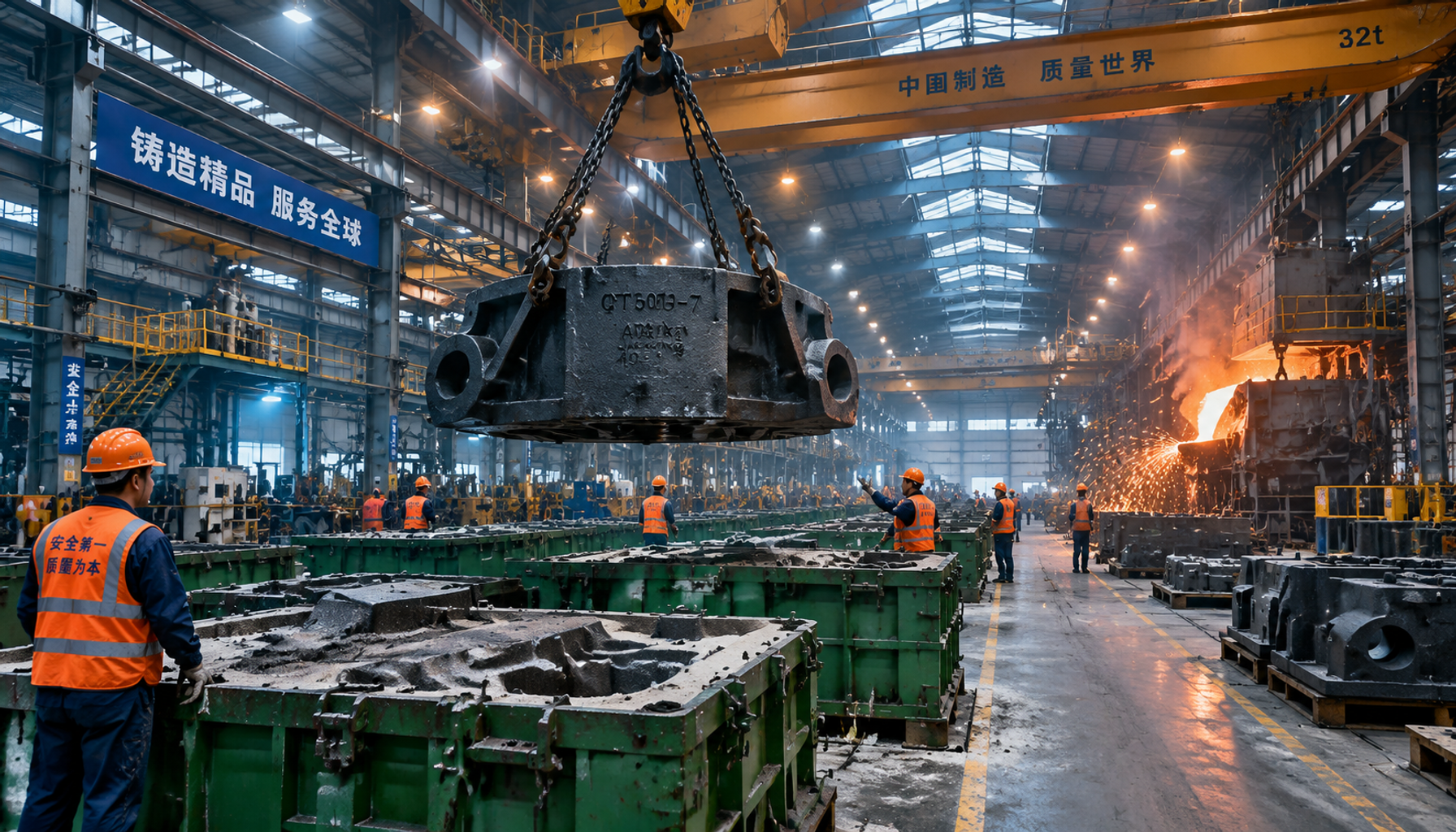
Start with one number: roughly 45%. That is China's share of global casting output by tonnage — around 52 million tonnes a year out of a world total near 115 million, per Chinese Foundry Association figures. If you buy track rollers, bucket teeth, counterweights, or hydraulic housings, close to half the planet's supply of those parts flows through Chinese melting shops.
Now the number that should actually shape your sourcing plan: about 3,000 to 4,000. That's a working estimate of how many of those foundries are genuinely export-capable — meaning they hold a manufacturing license, run documented QC, can produce EN 10204 3.1 certificates, and can ship a container without the buyer babysitting every step.
52 million tonnes of capacity. 3,000–4,000 suppliers you'd realistically buy from. That ratio is why two buyers can source the same part number and get wildly different outcomes.
This isn't a pitch for "buy from China." It's a breakdown of what the numbers say about who's actually in this market, what separates a $2,400 order from a $240,000 mistake, and the seven checks that filter the two apart.
The China Casting Landscape in 2026: What the Numbers Actually Mean
Global casting production sits near 115 million tonnes annually. China accounts for roughly 51–53 million tonnes of that. India follows at around 12–14 million tonnes, the US at roughly 9–10 million, and Germany around 5 million. For heavy ferrous castings — the iron and steel parts that make up most construction machinery components — China's share runs even higher, closer to 50%.
Break it down by end market and the picture sharpens. The global construction equipment castings segment is worth an estimated $9–12 billion annually — that's a figure built from equipment production volumes and typical casting content per machine, so treat it as directional rather than audited. A 20-tonne class excavator carries somewhere between 3.5 and 5 tonnes of cast components. A wheel loader in the same weight class runs 2.5–4 tonnes. Multiply by global unit production and the segment size falls out.
Here's the part most sourcing guides skip: capacity concentration. Chinese foundry output clusters hard. Shandong province alone hosts several thousand casting operations, with Weifang, Qingdao, and Linyi as the heavy anchors. Hebei — especially the Botou and Cangzhou clusters — specializes in gray and ductile iron. Jiangsu (Wuxi, Changzhou) leans toward higher-precision and machined work. Henan and Shanxi carry large volumes of steel castings. Guangdong handles a lot of the aluminum die casting that goes into cabs, brackets, and lighter structures.
Why should you care about geography? Because a supplier in the right cluster can get a pattern made, a part poured, and a heat-treat furnace booked in weeks. A supplier outside the cluster is brokering those steps — and you're paying for the broker.
What this means for your RFQ
If you're sourcing undercarriage components or wear parts, your realistic candidate list runs to a few hundred serious foundries, not tens of thousands. A tight RFQ sent to eight well-qualified suppliers in the right clusters will beat a broad blast to fifty random Alibaba listings every time.
What "Construction Machinery Castings" Actually Covers
The category is broad enough that "casting supplier" means almost nothing without a parts list. Here's how the segment breaks down in practice:
- Undercarriage: track rollers, idler wheels, sprockets, track links, track shoes, bushings, carrier rollers. Usually ductile iron or low-alloy steel, high wear requirements.
- Ground engaging tools (GET): bucket teeth, adapters, cutting edges, ripper shanks, wear pads. High-manganese steel or chrome white iron, impact and abrasion driven.
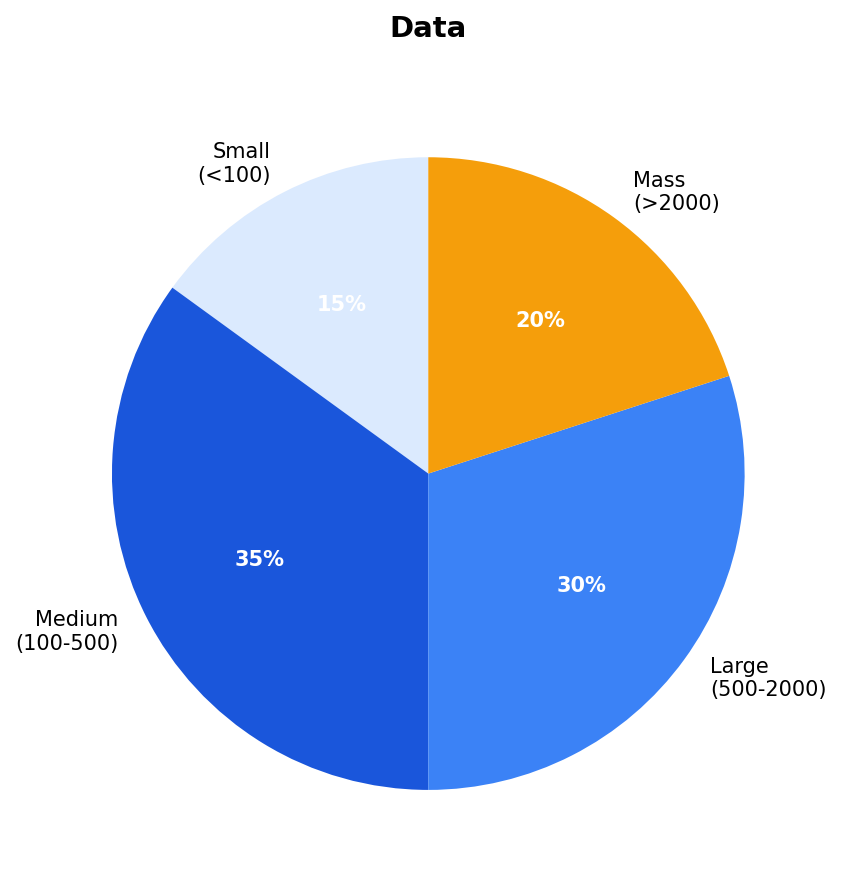
- Structural castings: counterweights, swing frames, axle housings, boom pivot bosses, mounting brackets. Gray iron and ductile iron dominate; weight ranges swing from 80 kg to over 5,000 kg.
- Hydraulic components: valve bodies, pump housings, cylinder end caps, manifold blocks. Ductile iron or steel, pressure-tightness critical.
- Powertrain: transmission housings, clutch housings, differential carriers, gear blanks. Often ductile iron with tight dimensional tolerance.
- Wear liners: crusher hammers, cone liners, chute liners, jaw plates. High-chrome iron, martensitic steel, or Mn-steel depending on the duty cycle.
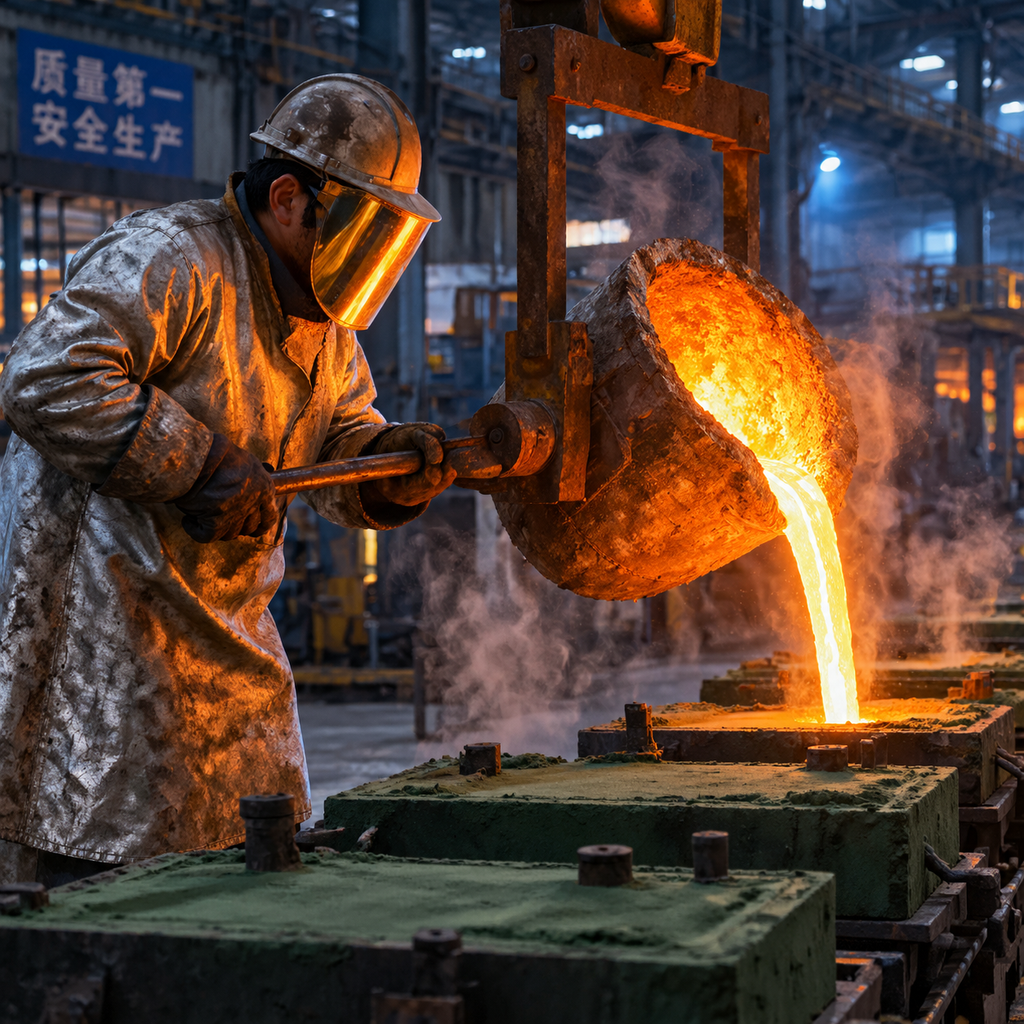
Weights run from about 0.5 kg for a small bushing to 8,000 kg for a counterweight. Processes split across green sand molding, no-bake resin sand, investment (lost wax), lost foam, V-process, and centrifugal casting for bushings. Aluminum die casting covers the lighter structural brackets and cab components.
The material question you need to answer before RFQ
Vague specs kill casting projects. "Ductile iron, good quality" gets you whatever the foundry has in the furnace that day. Say instead: "ASTM A536 Grade 65-45-12, nodularity ≥ 85% per ASTM A247, tensile 65 ksi min, elongation 12% min, hardness 170–230 HB, test coupon from the same heat as production castings, EN 10204 3.1 certification." Now you have something you can reject a shipment against.
The Three Tiers of "China Casting Supplier" — and Why the Label Lies
Every listing says "manufacturer." Roughly 6 in 10 aren't. Here's the real map:
Tier 1 — Direct export foundry. Owns a melting shop, molds, and a QC lab. Holds a manufacturing business license. Has export rights or works through a licensed export agent. Maybe 15–20% of the "China casting supplier" listings you'll encounter.
Tier 2 — Trading company. Owns an office and a WeChat account. Sources from 3–15 foundries, adds 8–15% margin, and often has no visibility into melting chemistry at all. Some are genuinely useful — they handle documentation, consolidation, and communication well. Most are not.
Tier 3 — Sourcing agent or procurement platform. Sits between you and multiple foundries. Negotiates price, runs incoming inspection, handles consolidation and shipping. Quality varies enormously — the good ones have metallurgists on staff and can tell you which foundry to avoid for high-pressure ductile work.
Four signals that a "factory" isn't one
- Quotes arrive in under 48 hours for a complex part with no drawings questions. A real foundry asks about wall thickness, gating, and machining stock.
- The address resolves to an office tower, not an industrial zone. Check it on a map.
- Business license scope reads 贸易 (trading) or 进出口 (import/export) rather than 制造 (manufacturing). This is public record.
- You ask for daily melting capacity in tonnes and get a vague answer. A foundry manager knows this number the way you know your own phone number.
None of these are automatically disqualifying. A trading company with a metallurgist and a real inspection protocol can outperform a lazy Tier 1 foundry. But you need to know which one you're dealing with before the deposit clears.
Material Grades: The Spec Sheet That Separates Good Castings From Garbage
Most casting failures traced back to Chinese suppliers aren't machining errors. They're metallurgical substitutions the buyer never caught because nobody tested.
The common swaps:
- Gray iron substituted for ductile iron on parts that see impact. ASTM A48 Class 40 is not ASTM A536 65-45-12. It's cheaper by roughly 15–25% per kilogram and it will crack under shock loading.
- Heat treatment skipped or shortcut. Normalizing and tempering adds cost and furnace time. A supplier quoting 18% below everyone else on a quenched-and-tempered part is often just not doing it.
- Test coupon from a different heat. The certificate says 65-45-12. The coupon that produced that number was poured separately, from cleaner metal, on a good day.
- Nodularity below spec. Ductile iron needs ≥85% nodularity with nodule counts around 100–150 per mm². Below that, you get a casting that machines like ductile iron and fails like gray iron.
Reference grades worth writing into your PO
| Application | Typical Grade | Key Property |
|---|---|---|
| Counterweights, housings | ASTM A48 Class 30/35/40, EN GJL-250 | Damping, compressive strength, low cost |
| Track rollers, sprockets, axle housings | ASTM A536 65-45-12 or 80-55-06, EN-GJS-500-7 | Tensile 65–80 ksi, elongation 6–12% |
| Hydraulic valve bodies | ASTM A536 65-45-12, pressure-tight | Density, machinability, no porosity |
| Bucket teeth, ripper shanks | ASTM A128 Grade B-2 (Hadfield Mn-steel) | Work-hardening under impact |
| Crusher liners, chute liners | ASTM A532 Class II/III (chrome white iron) | Hardness 550–650 HB, abrasion resistance |
| Boom pivots, structural steel castings | ASTM A27 70-40, ASTM A148 90-60 | Weldability, toughness, Charpy values |
| Gear blanks, high-load shafts | 42CrMo4, GS-34CrMo4, quenched & tempered | Hardness depth, fatigue strength |
Dimensional tolerance is the other spec most buyers leave loose. ISO 8062 defines casting tolerance grades — CT10 to CT14 covers most construction machinery work. Tighten to CT9 and expect tooling cost and rejection rates to climb. Loosen to CT15 and you're buying extra machining stock whether you wanted it or not.
Quality Documentation: What a Real Supplier Can Produce on Request
Ask for these five documents before you place a production order. A foundry that can produce all five on the first ask is a foundry worth talking to.
- Material certificate to EN 10204 3.1. Issued by the foundry's own lab, tied to a specific heat number, traceable to your castings. Not a template with blanks filled in by sales.
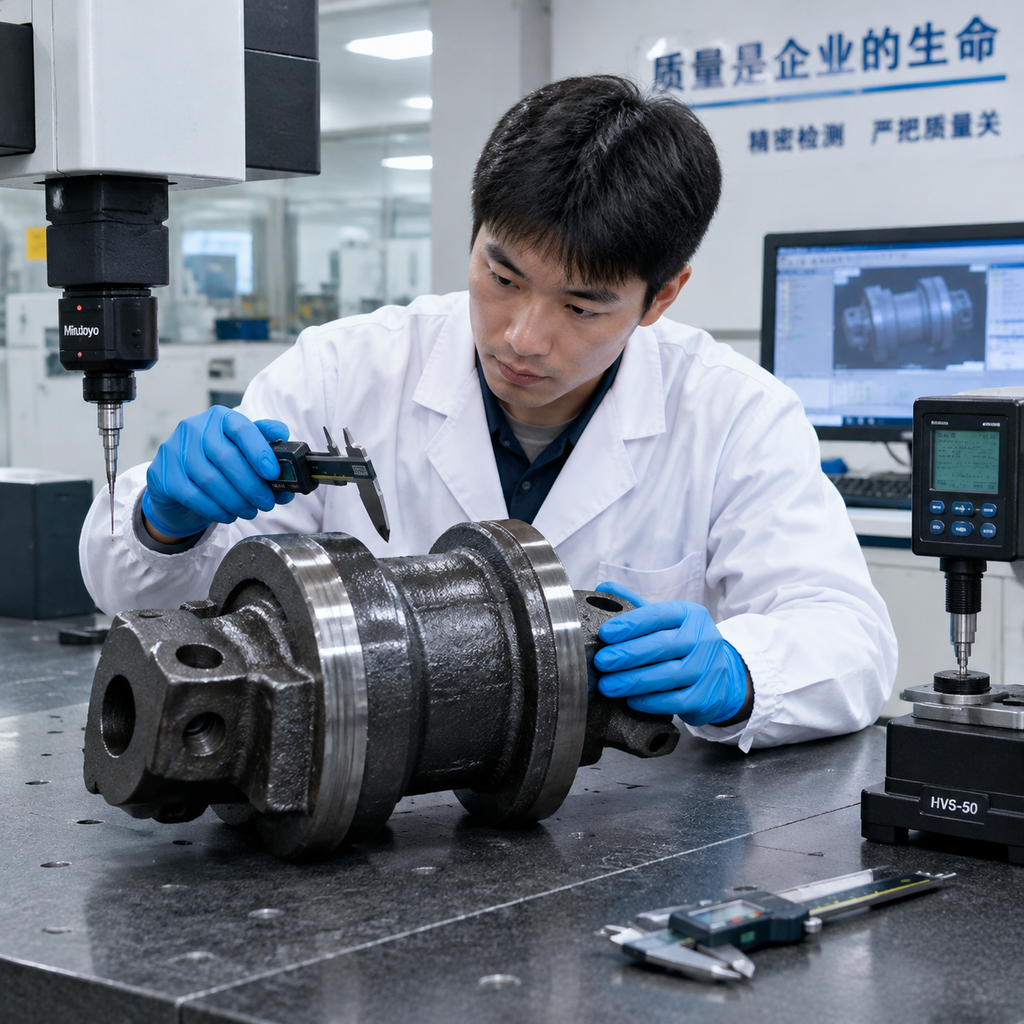
- First article inspection report (FAIR). Full dimensional layout against your drawing, with CMM or gauge data and a bubble-numbered drawing.
- Chemical composition analysis. Spectrometer readout for C, Si, Mn, P, S, Mg (for ductile), and alloying elements. Traceable to the heat.
- Mechanical test results. Tensile, yield, elongation, and hardness from test bars cast with your production heat. For steel castings, add Charpy impact values.
- Non-destructive testing reports. Magnetic particle per ASTM E709 for surface defects, ultrasonic per ASTM A609 for internal soundness on critical parts, dye penetrant where applicable.
The test coupon question that trips up most buyers
Here's the trap. A foundry pours a separately-cast keel block from clean, well-inoculated metal and tests that. Your production castings come from a different mold, a different gating system, and possibly slower cooling. The certificate passes. The parts don't match.
What you actually want: test coupons poured from the same heat, cast with the same gating arrangement, and — for critical parts — cut directly from a sacrificial casting. Legitimate foundries do this routinely. It costs them maybe 2–4% extra metal. Suppliers who resist are usually resisting because the numbers won't hold up.
Cost Structure: Where Your Money Actually Goes
Understanding the cost stack is how you tell a fair quote from a dangerous one. Here's a typical breakdown for a ductile iron casting, ex-works:
| Cost Element | Share of Part Price | Notes |
|---|---|---|
| Metal (pig iron + scrap) | 35–50% | Directly tracks scrap and pig iron market |
| Melting energy | 8–12% | Electric induction furnaces; sensitive to power tariffs |
| Molding and core-making | 10–15% | Sand, binder, labor, pattern wear |
| Labor | 10–18% | Cleaner, fettling, and finishing are labor-heavy |
| Heat treatment | 5–10% | Zero if the part doesn't need it |
| Scrap and rework | 2–8% | Varies wildly by part complexity |
| Foundry margin | 8–15% | Below 6% is a warning sign, not a bargain |
Machining, if you're buying finished parts, adds 15–40% depending on complexity. Coating, painting, and packaging add another 3–7%.
Indicative FOB pricing for raw castings, based on 2026 market ranges. Treat these as ±20% estimates — metal markets move and these are directional, not quoted:
- Gray iron castings: $0.95–1.40 / kg
- Ductile iron castings: $1.25–1.85 / kg
- Carbon steel castings: $1.60–2.60 / kg
- High-Mn / chrome white iron: $2.80–5.50 / kg
- Machined and finished parts: add $8–35 per machining hour equivalent
Tooling: the number nobody quotes upfront
Tooling cost is where first orders get expensive and where ownership disputes get ugly.
- Sand casting pattern and core boxes: $1,500–8,000 depending on size and complexity
- Investment casting wax die: $3,000–25,000
- Aluminum die casting die: $15,000–80,000
- Permanent mold tooling: $8,000–40,000
You'll usually be asked to pay 50–100% upfront. That's normal. What is not optional is the ownership clause. Your PO needs a written term saying the tooling is your property, marked with your part number, stored separately, maintained at the foundry's cost, and transferable to another supplier on written request. Without that sentence, you don't own the pattern — you rent access to it, at whatever price the foundry decides next year.
The 7-Point Pre-Order Verification
Run all seven. Skipping any one of them is how buyers end up with 40 tonnes of scrap in a warehouse they can't return.
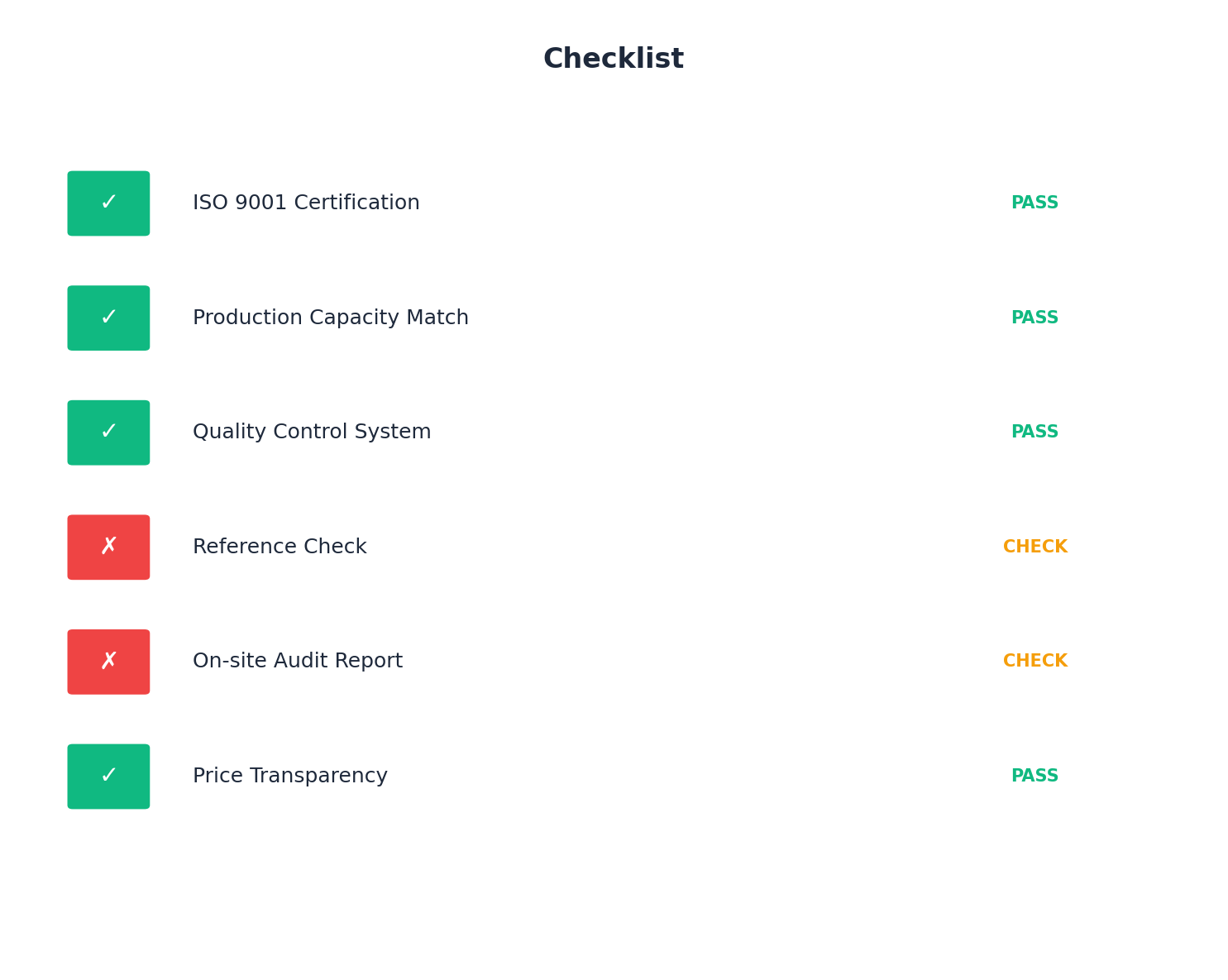
1. Verify the manufacturing license scope. Pull the business license and look for 制造 (manufacturing) in the registered scope. Trading companies registered as 贸易 are not foundries. This takes ten minutes and eliminates most of the risk in one step.
2. Demand furnace capacity data. Not "we have furnaces." You want: number of induction furnaces, tonnes per heat, heats per day, total daily melting capacity, and maximum single-piece weight. A foundry that can't pour a 3-tonne part in one heat will weld two halves together. Ask how they handle it.
3. Request a live video walkthrough. Not a pre-recorded factory tour. A live call where they walk you through the melting shop, the molding line, the QC lab, and the finished goods area. Ask them to open a furnace control panel and show the tap temperature. Ask to see the heat log book for today. Ten minutes of live video tells you more than forty pages of PDF.
4. Get the scrap rate in writing. Ask for the internal rejection rate on comparable parts over the last 12 months. A competent foundry on a mature part runs 2–5%. A foundry running 12% and hiding it will pass that cost to you through late deliveries and rework cycles. If they won't share the number, assume it's bad.
5. Book third-party pre-shipment inspection. SGS, BV, TÜV, or Intertek. Specify: dimensional check against drawing, visual inspection for surface defects, witness of mechanical testing, verification of heat number traceability, and a container loading supervision report. Budget $400–900 per inspection. It's the cheapest insurance in the entire transaction.
6. Confirm test coupon traceability in the contract. Write it into the PO: mechanical test bars must be cast from the same heat as production castings, and the heat number must be stamped or tagged on each casting. No same-heat traceability, no acceptance.
7. Check references in your specific part category. A foundry that makes excellent 200 kg gray iron counterweights may have never poured a 14% Mn bucket tooth. Ask for three references from buyers who purchased the same part family in the last 18 months. Then actually call them. Ask about delivery slippage and how the foundry handled a quality dispute — that's where the real character shows.
Common Mistakes That Cost Buyers Six Figures
These are the patterns that show up again and again in failed sourcing projects.
Buying on price alone from an unverified supplier. The gap between the lowest quote and the median quote for the same part is usually 20–35%. That gap is almost always made up of something: substituted material, skipped heat treatment, no NDT, or a trading company's margin stacked on top of a real foundry's price.
Skipping first article inspection to save three weeks. You will spend four months and a full container of freight sorting it out. FAIR exists for a reason. Approve the first article in writing before mass production starts.
Accepting a generic mill certificate. A certificate with no heat number, no production date, and no traceability to your specific castings is a decorative document. It proves nothing.
Not specifying heat treatment on the drawing. If the drawing says "ductile iron" and nothing else, you're buying as-cast. As-cast ductile iron has a fraction of the fatigue strength of a properly normalized and tempered part. Put the heat treatment cycle, target hardness range, and acceptable hardness variation on the drawing.
Ignoring the tooling ownership clause. Covered above, but it bears repeating because the disputes are expensive and avoidable.
Underestimating landed cost. FOB price times quantity is not your cost. Add freight, insurance, duty, port fees, inland trucking, and inspection. Buyers routinely find that a "cheap" Asian quote lands within 8% of a domestic quote once everything is counted — and they discover it after the PO is signed.
No IP protection on proprietary designs. If you're sending drawings for a part you designed, you need an NDA with teeth and a clear statement of design ownership. Chinese IP enforcement has improved considerably, but your leverage comes from the contract, not the legal system.
Logistics, Duties, and Landed Cost Reality
Casting shipments are heavy and dense, which changes the freight math. A 20-foot container has a volumetric capacity of about 33 cubic meters but a payload limit around 22–28 tonnes. Castings almost always hit the weight limit first. Plan on 22–26 tonnes per 20-foot container.
Typical ocean freight rates in 2026, per 20-foot container. These move constantly — check current spot rates before you budget:
- Shanghai → Los Angeles: $2,200–3,800
- Shanghai → New York: $3,000–5,000
- Shanghai → Rotterdam: $2,000–3,500
- Shanghai → Hamburg: $2,100–3,600
On the duty side: cast parts for construction machinery generally classify under HS heading 8431 (parts suitable for use solely or principally with the machinery of headings 8425 to 8430). Many of those codes carry additional US tariffs under Section 301. Verify the exact rate for your specific HTS code at the time of shipment — the lists have been amended repeatedly and the rate that applied two years ago may not apply now. For the EU, check whether your part falls under anti-dumping measures for certain cast iron articles (the EU has had measures on specific castings from China, so verify against current regulations).
Build your landed cost model like this: FOB China + ocean freight + marine insurance (0.3–0.5% of CIF) + duty rate × CIF + port and terminal charges + inland trucking + inspection fees + a 3–5% currency and contingency buffer. Run it before you compare against domestic quotes, not after.
Frequently Asked Questions
How do I know if a Chinese casting supplier is a real factory or a trading company?
Check the business license scope for the characters 制造 (manufacturing). Then ask for furnace capacity in tonnes per day, tap temperature records, and a live video walkthrough of the melting shop. A real foundry answers furnace questions in seconds and walks you to the furnace on camera. A trading company stalls, redirects, or sends a marketing video from 2021.
What is the typical MOQ for construction machinery castings?
On existing patterns, 50–300 pieces per part number. New tooling pushes it to 200–500 pieces because the foundry amortizes the pattern cost across the run. Investment casting runs lower, often 100–200 pieces. Any supplier quoting 5 pieces on a brand-new sand casting design is either selling stock or hasn't understood your drawing.
What lead time should I plan for?
Tooling: 25–45 days. First article approval: 10–15 days. Production: 30–50 days. Ocean freight to the US West Coast: 18–28 days. Budget four to five months from PO to warehouse on a first order. Repeats settle into 2.5–3.5 months. If a supplier promises six weeks total on a new part, they're either not making tooling or not making your part.
Which material should I specify for excavator bucket teeth?
ASTM A128 Grade B-2 high-manganese steel (Hadfield) for impact-heavy digging — it work-hardens under load and resists cracking. For highly abrasive, low-impact ground, chrome white iron per ASTM A532 Class II or III holds up longer. Ductile iron is the wrong choice here; it lacks the work-hardening behavior and will deform rather than wear.
Do I have to pay for tooling upfront?
Usually yes, 50–100%. That's a normal commercial practice, not a red flag. What matters is the ownership clause. Insist on a written term stating the pattern or die is your property, marked with your part number, stored separately, and transferable on request. Get that sentence in the PO before you release the tooling deposit.
Next Steps
The numbers on China's casting industry are impressive and largely irrelevant to your specific order. What matters is which of those 3,000-some export-capable foundries matches your part family, your volume, and your quality threshold — and whether you have the documentation trail to prove it after the parts land.
Run the seven-point verification. Get the same-heat test coupon clause into the PO. Pay for the third-party inspection. Book the live video walkthrough before you send a deposit. None of this is exotic, and all of it is cheap relative to a rejected container.
If you'd rather not build the vetting process from scratch, see how our sourcing desk filters and audits casting suppliers — including the pre-shipment inspection protocol we run on every heavy casting order.
Two more things worth reading before you send an RFQ: our breakdown of ductile iron versus gray iron for heavy equipment parts, and the full supplier verification checklist with the exact documents to request.