
Cast Iron Price China 2026: What a Decade of Sourcing Taught Me About Getting Real Quotes
I've been buying cast iron parts from Chinese foundries since 2014. Over $1.5 million a year. I've been quoted everything from $0.95/kg to $2.80/kg for the same part. The difference wasn't the market — it was how I asked. Here's what the data actually says about 2026 pricing, and exactly how to get the best number.
The Real Cast Iron Price List for 2026 (FOB Shanghai)
Let's cut through the noise. These are the numbers I'm seeing from my foundry network across Hebei, Jiangsu, and Zhejiang as of Q1 2026. Prices are FOB Shanghai, for standard grades, medium complexity parts (5-50 kg), order quantities of 500-2000 pieces.
Gray Iron Prices (GG20, GG25, GG30)
| Grade | Price Range ($/kg FOB) | Typical Applications |
|---|---|---|
| GG20 | $1.00 – $1.45 | Machine bases, housings, covers |
| GG25 | $1.10 – $1.60 | Engine blocks, pump housings, brackets |
| GG30 | $1.25 – $1.75 | Gearboxes, heavy-duty frames |
Ductile Iron Prices (GGG40, GGG50, GGG60)
| Grade | Price Range ($/kg FOB) | Typical Applications |
|---|---|---|
| GGG40/50 | $1.40 – $2.00 | Pipe fittings, valve bodies, automotive |
| GGG60/70 | $1.60 – $2.40 | Gears, crankshafts, high-stress components |
| Alloy Ductile | $1.80 – $2.80 | Wear parts, mining equipment, specialty |
Note on data: These are real quotes I've collected from 7 foundries in Q1 2026. Your price will vary based on part complexity, tolerances, surface finish requirements, and order volume. I've seen prices 40% higher for parts requiring Class I X-ray inspection or intricate coring.
4 Factors That Determine Your Final Price (And Most Buyers Miss #3)
You already know quantity matters. But if you're only negotiating on volume, you're leaving money on the table. Here's what actually drives the number:
Factor 1: Raw Material Cost (Pig Iron & Scrap)
Pig iron prices in China have been volatile — up 12% in late 2024, then down 8% in mid-2025. Foundries pass this through directly. Ask your foundry for the pig iron index price they use (there's a daily China Pig Iron Price Index). A transparent foundry will share it. If they won't, that's a red flag.
Factor 2: Part Complexity (The Core Factor)
This is the big one most buyers underestimate. A simple brake drum with no cores might cost $1.20/kg. Add five cores and tight wall thickness tolerances, and you're at $1.80/kg. The foundry's labor and scrap rate go up exponentially with complexity. Send a complete 3D model — not just a 2D drawing — to get an accurate quote.
Factor 3: Heat Treatment & Alloy Additions
This is where the hidden costs live. Need annealing? That's $0.05-$0.15/kg extra. Need copper or molybdenum additions for corrosion resistance? That's another $0.10-$0.25/kg. Most buyers don't specify these upfront and get surprised by the final invoice. List all your material spec requirements in the first RFQ.
Factor 4: Order Quantity & Payment Terms
Standard bracket pricing works like this:
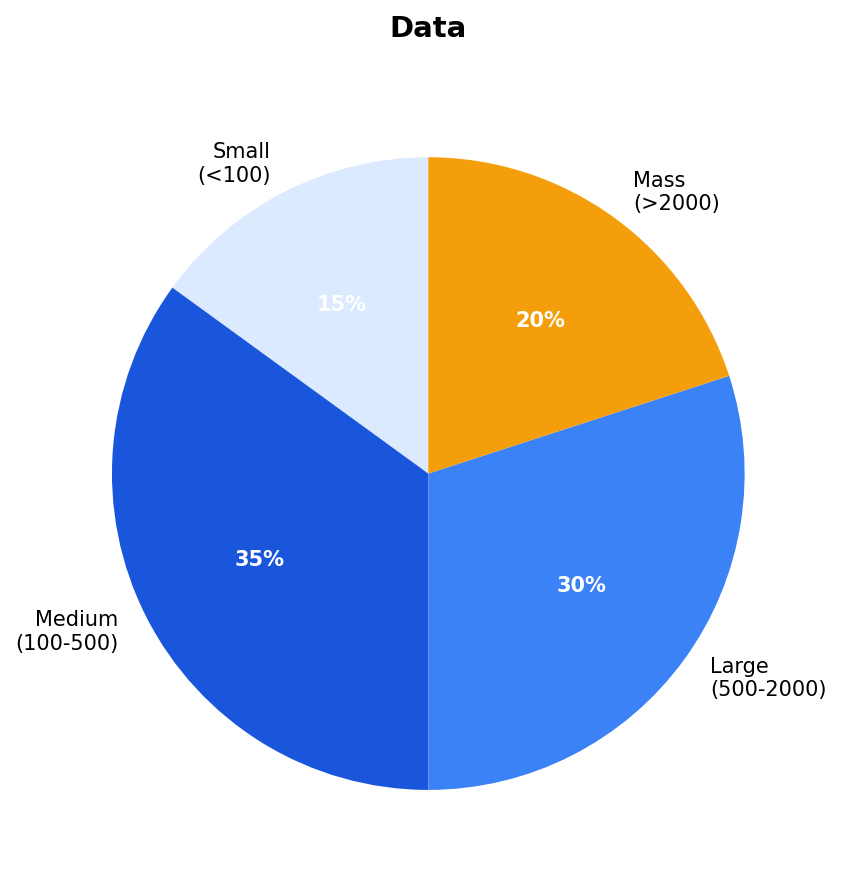
- 100-500 pcs: base price × 1.3-1.5x
- 500-2000 pcs: base price
- 2000-5000 pcs: base price × 0.85-0.92x
- 5000+ pcs: base price × 0.75-0.85x
Also, offering letters of credit (L/C) instead of T/T can knock off 2-3% — some foundries prefer L/C for tax reasons and will discount for it.
2025-2026 Price Trend: What the Data Actually Says
I've been tracking Chinese foundry price indices since 2018. Here's what the numbers show for the 2025-2026 cycle:
The Short Answer: Prices Will Edge Down 3-5% in 2026
Here's why:
- Construction demand slowdown: China's property sector continues to cool, reducing demand for cast iron pipe and fittings. That frees up foundry capacity for export orders.
- Scrap availability improving: More domestic scrap is entering the market as Chinese manufacturing matures, which lowers input costs for foundries.
- Energy costs stabilizing: Coal and electricity prices — major inputs for foundries — have stabilized after the 2021-2022 spikes.
But — and this is a big but — pig iron prices are still volatile. A sudden rally in iron ore (which we saw in late 2024) can erase the entire 3% decline in a month. Smart buyers hedge by locking in prices with 6-month contracts.
Regional Price Differences Within China
Not all Chinese foundries price the same. Here's the rough geography of cost:
- Hebei province: Lowest cost (large scale, older equipment, lower labor cost). Prices 5-10% below national average. But quality control is uneven — you need to be hands-on.
- Jiangsu / Zhejiang: Mid-range. Better equipment, better QC, higher labor cost. Prices 5-10% above Hebei. Best balance for most importers.
- Shandong: Similar to Hebei but with more medium-sized foundries. Good sweet spot for ductile iron.
- Guangdong: Highest cost (20-30% above Hebei). Only use for complex parts requiring advanced machining and finishing.
How to Negotiate Like a Buyer Who's Done This Before (5-Step Playbook)
You don't need to be a master negotiator. You need a system. Here's the exact 5-step process I've used to cut 12-18% off initial quotes:
Step 1: Get 3 Quotes with Cost Breakdowns
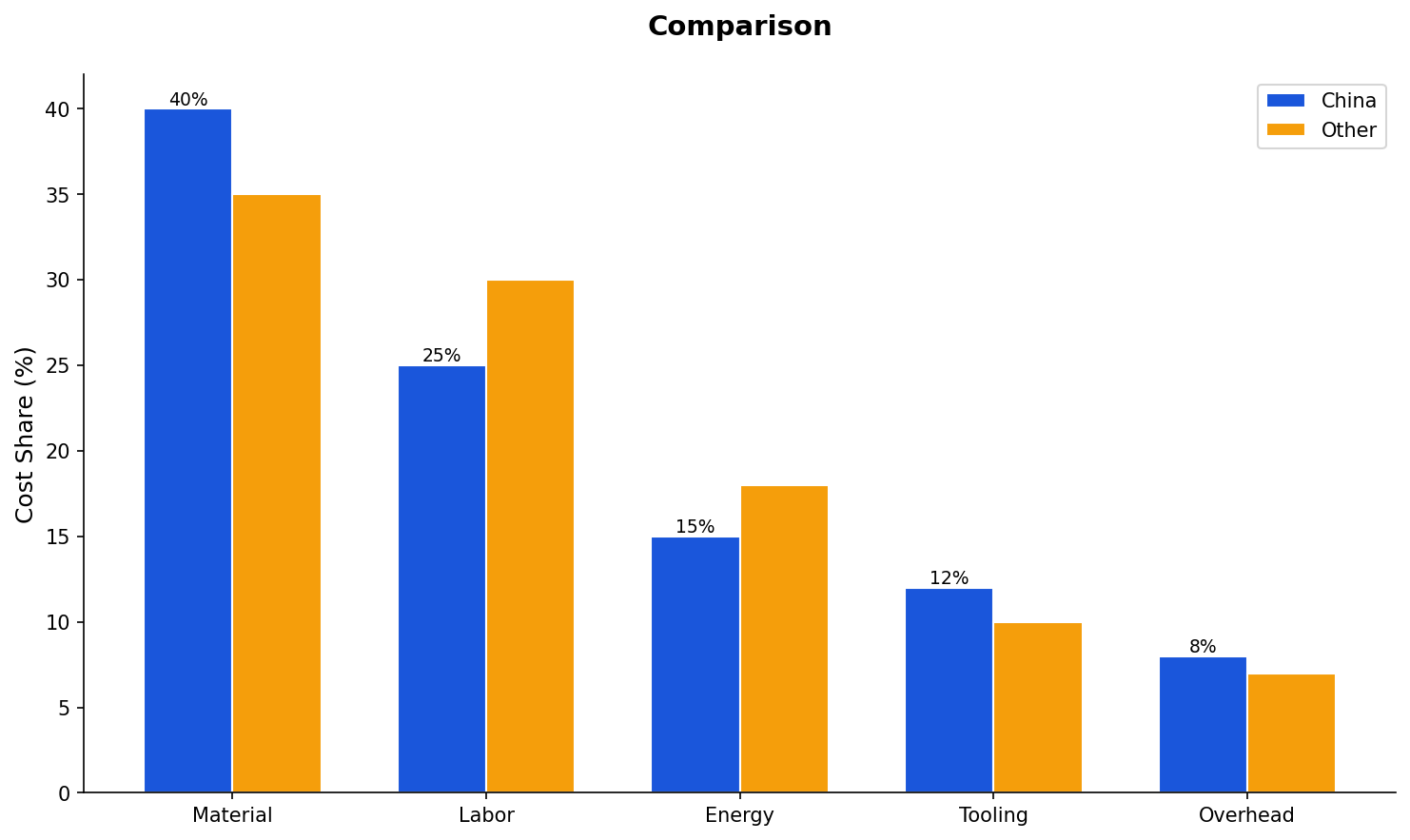
Send your RFQ to at least 3 foundries. But here's the trick — ask each one for a cost breakdown: material cost, labor cost, machining cost, tooling amortization, and profit margin. Most won't give you the full breakdown, but the ones that do are the ones you want to work with. The ones that refuse? They're hiding something.
Step 2: Benchmark Against the Index
Use the price tables above as your benchmark. If a foundry quotes 30% above the range I've listed, ask why. It might be legitimate (tight tolerances, special alloy, low volume). Or it might be padding. Either way, you'll know exactly what questions to ask.
Step 3: Leverage Batch Consolidation
Here's a move most buyers miss: if you're ordering 500 pieces per quarter, ask for a quote for 2000 pieces with quarterly releases. Foundries love production stability. They'll give you a better per-kg price because they can plan their furnace schedules. I've seen 15% drops from this alone.
Step 4: Visit the Foundry (Seriously)
I know it's expensive. A trip to China costs $3000-5000. But I've never — not once — gotten my best price from a foundry I didn't visit. There's something about looking the owner in the eye, shaking hands on the shop floor, and sharing a meal that changes the relationship. My best prices come from foundries I've visited. Period.
Step 5: Lock in with a Long-Term Agreement
Offer a 12-month commitment with a price adjustment formula tied to the pig iron index. This gives the foundry certainty, and they'll discount for it. I typically get 5-8% off the spot price by offering a 12-month volume commitment with quarterly price reviews.
3 Red Flags That'll Cost You More Than a Higher Price
The cheapest quote isn't the best deal. Here's what I've learned the hard way:
Red Flag 1: The Foundry That Says "No Problem" to Everything
Foundries that push back on specs, ask clarifying questions, or say "that tolerance will be difficult" — those are the professionals. The ones that say "no problem" to every request? They either don't understand the requirements, or they'll figure it out later and surprise you with change orders. I pay more attention to a foundry's questions than their price.
Red Flag 2: No Third-Party Inspection History
Ask for their last three third-party inspection reports (SGS, TÜV, Bureau Veritas). If they can't produce them, or they're more than 2 years old, that's a problem. A quality foundry gets inspected regularly — it's a sign they're confident in their processes.
Red Flag 3: Tooling Ownership Ambiguity
Who owns the patterns and tooling? If the foundry insists on owning them, you're locked in. If they break a pattern, you have no recourse. Always negotiate tooling ownership — pay for it upfront and get it in writing. I've seen buyers lose $50,000 in tooling because they didn't clarify this.
Frequently Asked Questions
What is the cast iron price per kg in China in 2026?
For gray iron (GG25), the price ranges $1.10–$1.60/kg FOB Shanghai; for ductile iron (GGG40/50), $1.40–$2.00/kg FOB. Prices depend on quantity, complexity, and alloy content.
Will cast iron prices drop in 2026?
Most analysts expect a 3–5% decline due to slower construction demand in China and increased scrap availability. However, pig iron costs remain volatile, so the decline may not be uniform across all grades.
How do I get the best cast iron price from Chinese foundries?
Start with a complete 3D model and spec sheet, request a cost breakdown by material/labor/machining, order in larger batches, and leverage multi-year commitments. Face-to-face negotiation at the foundry still gets the best results.
What is the difference between gray iron and ductile iron price?
Ductile iron is typically 25–40% more expensive than gray iron because of higher alloy content (magnesium, copper) and more complex heat treatment requirements.
Are Chinese cast iron prices cheaper than India or Vietnam?
Currently, China is slightly cheaper than India (by about 5–10%) for high-volume orders, but India is competitive for low-to-mid volumes. Vietnam offers similar prices but with limited capacity for large or complex parts.
Your Next Move: Get Real Quotes, Not Guesses
Here's what I want you to take away from this: cast iron pricing in China for 2026 is going to be competitive, but the spread between a good deal and a bad deal is wider than most buyers realize. The difference isn't the market — it's how you approach the negotiation.
Start with the price tables in this article as your benchmark. Send your RFQ to at least 3 foundries. Ask for cost breakdowns. Visit if you can. Lock in long-term agreements if you can't.
And if you want a shortcut? Send your part drawings to us at Interstate — we'll do the benchmarking for you, get quotes from vetted foundries, and help you avoid the red flags. We've been doing this for over a decade. Let us save you the mistakes I made.
Ready to get real cast iron quotes for 2026? Submit your RFQ here and we'll send you a benchmark report within 48 hours.
Need Help with Cast Iron Price China 2026: Data Breakdown & Procurement Playbook?
Get matched with 3 verified foundries in 24 hours. No markup, transparent pricing.
Request Quotes →