November 23, 2026
How to Choose a 316 Precision Casting Supplier Without Getting Burned
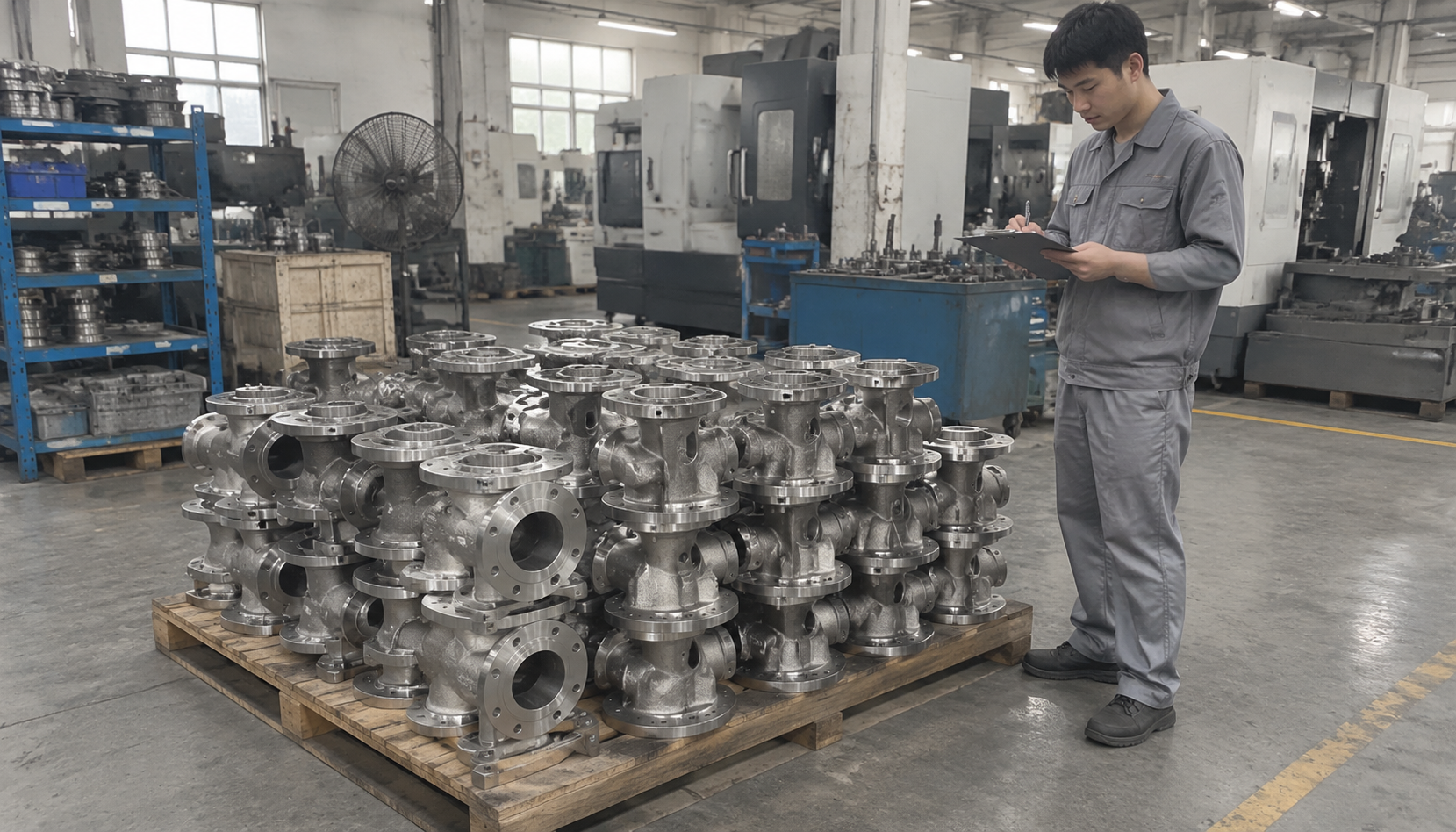
You know the drill. You get a shipment of 316 precision castings from a new supplier, the parts look fine on the surface, and you send them straight to machining. Then your machinist calls you. The material is softer than it should be. Some parts crack during machining. One batch fails a dye penetrant check you never asked for before.
That's the scenario that cost one pump manufacturer six weeks of production time and a rework bill that dwarfed the original casting order. The supplier apologized, promised to "tighten quality control," and sent a new batch. The apology didn't matter. The machinist's downtime was real money, and the customer's delivery date slipped.
If you're searching for a 316 precision casting supplier right now, you're probably in the middle of that same process: comparing quotes, reading supplier profiles, and trying to figure out which ones can actually deliver material that meets spec. This guide walks you through what to verify before you sign anything.
Why 316 Precision Casting Needs Extra Scrutiny
316 stainless isn't just another alloy. It's the go-to material for pumps, valves, and marine components because of its molybdenum content, which gives it strong resistance to chloride corrosion. That same property makes it expensive and harder to cast than 304 or carbon steel. The alloying elements can segregate during solidification, porosity is a constant risk, and getting the chemical composition right requires tight furnace control.
A supplier who handles carbon steel castings well can still fail miserably at 316. The melt temperature, holding time, and mold design all shift. And because the material cost is high, the cost of a bad batch scales with the part weight. One defective pump housing in 316 can cost you more than a whole batch of ordinary castings.
That's why "supplier capability" for 316 precision casting isn't a vague claim you can take at face value. It needs to be verified, line by line.
Check 1: Material Quality — Don't Trust the Certificate Alone
Every supplier will hand you a mill test report. Most of those reports are accurate. The problem is that the report describes what the supplier intended to pour, not necessarily what ended up in your parts.
Start by asking for a chemical composition report that matches the actual heat numbers in your order, not a generic certificate. You want to see the actual values for chromium, nickel, molybdenum, and carbon — not just "316 compliant." The molybdenum content matters most for corrosion resistance. If it's below 2.0%, you're effectively getting a 316L-like alloy that won't hold up in chloride environments.
Then push for mechanical property verification. Ask for tensile strength, yield strength, and elongation results from test bars poured with the same heat as your castings. A supplier who can't produce these numbers is either not testing or not tracking heat traceability. Both are red flags.
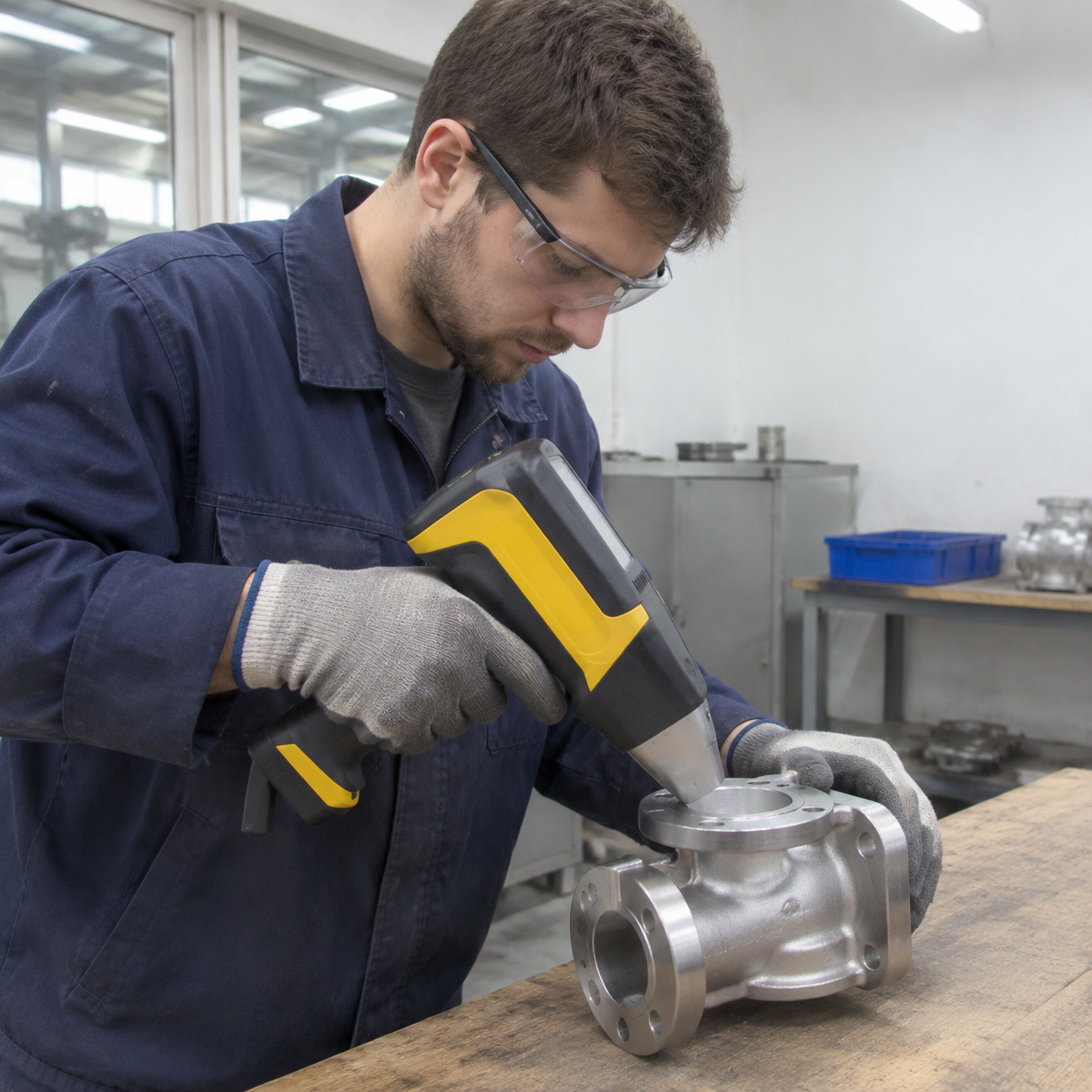
For critical parts, consider requesting a third-party material analysis on an incoming sample. A portable XRF gun can verify composition in seconds, and the cost is trivial compared to a scrapped machined part. Some of the best suppliers welcome this. The ones who resist it usually have a reason.
Check 2: Process Capability — Tolerance and Surface Reality
Precision casting promises tight dimensional control, but "precision" is a marketing word until you see the actual tolerances a supplier holds in production. Ask for a capability summary that shows typical tolerances for their 316 castings, not just the theoretical process range.
For investment casting, you can usually expect dimensional tolerances around ±0.1mm to ±0.3mm on linear dimensions, depending on part size and geometry. But that's a guideline. A supplier working with 316 specifically should be able to show you real part measurement data from recent orders, not just a brochure.
Surface finish matters too. 316 casts differently than other grades — it's more prone to surface defects if mold preparation or melt handling is off. Ask how they control surface quality: mold coatings, pouring temperature, and any post-cast treatment steps. If the answer is vague or they rely entirely on machining to clean up, expect more scrap downstream.
Check 3: Certifications — The Part Most Suppliers Skimp On
Here's where the second voice comes in. When you're buying castings for oil and gas equipment or any application where material traceability is a contractual requirement, the certification landscape gets serious.
Brian Miller, a procurement manager for an oilfield equipment manufacturer who sources castings across Asia and the Middle East, told us: "I've been burned twice by suppliers who had an ISO 9001 certificate hanging on the wall but couldn't produce a proper material traceability chain when the end customer asked for it. The certificate is the starting point, not the finish line."
His rule is simple. Don't just ask if a supplier is ISO certified. Ask for the certificate, check the expiry date, and confirm the scope covers the specific casting processes you're buying. Then ask for their internal inspection records for a 316 order from the last six months. If they can produce those without hesitation, you're dealing with a supplier who takes certification seriously. If there's a long pause and a promise to "send it later," the certificate is probably decorative.
For certain end markets, you may also need to verify compliance with standards like ASTM A351 for cast stainless steels, or customer-specific requirements. A supplier experienced in 316 precision casting should be able to produce reports aligned to these standards without you having to explain what they are.
Check 4: Price — What Drives the Number, and Where to Cut
316 precision casting costs more than 304 or carbon steel, and the price varies more than you'd expect between suppliers. The drivers are raw material cost (especially nickel and molybdenum), casting weight and complexity, machining requirements, and the supplier's quality overhead.
When comparing quotes, don't just look at unit price. Ask each supplier to break down the cost: material weight and grade cost, casting yield, machining inclusions, and any finishing or inspection steps. A supplier quoting 15% below the market may be skimping on material verification, inspection frequency, or finish. That saving disappears the first time you have to scrap a machined part.
The sweet spot isn't the cheapest quote. It's the supplier whose price reflects real process control, and whose defects-per-million rate you can verify. Sometimes paying 8-12% more on the casting saves you far more in downstream machining and scrap.
Check 5: Communication and Responsiveness
You're going to talk to this supplier for years if the relationship works. A supplier who answers technical questions within a day, provides real production updates, and flags potential issues before they become problems is worth more than a cheaper quote from someone who disappears for three days every time you ask about a tolerance.
Test this early. Send a detailed technical inquiry with specific questions about 316 composition, tolerance capability, and inspection processes. Watch how they respond. A supplier who gives vague, templated answers or redirects your questions to sales without technical depth will be a headache during production, when you need answers fast.
Communication also cuts across the entire verification process. If you can't get clear answers about material certifications or process capability in the inquiry stage, you'll struggle to get them during a production run. That's not a supplier you want to rely on.
Common Mistakes That Cost You Down the Line
Relying on a single sample part. One good sample doesn't tell you the supplier's consistent capability. Ask for production data across multiple batches.
Skipping the on-site or virtual audit. A supplier who refuses a factory visit or a detailed virtual walkthrough is hiding something. Even a video call through their melt shop and inspection area tells you more than a brochure.
Overlooking heat traceability. If a supplier can't trace each casting back to its original heat, you can't isolate quality problems or verify material for your customers.
Assuming "316" means 316. Some suppliers quietly substitute cheaper grades or use off-spec material to cut costs. Verify with actual composition data, not just the grade label.
FAQ: 316 Precision Casting Supplier Questions
How do I verify a 316 precision casting supplier's material quality?
Ask for chemical composition reports tied to actual heat numbers, plus mechanical test results from test bars poured with the same heat. For critical parts, consider third-party XRF analysis on incoming samples.
What certifications should a 316 precision casting supplier have?
ISO 9001 is the baseline, but verify the certificate scope covers your specific casting process and check expiry dates. For 316, also ask for material reports aligned with ASTM A351 or equivalent standards.
How can I tell if a supplier's precision casting capability is real?
Request real dimensional measurement data from recent 316 orders, and ask about their typical tolerance range for investment casting. A supplier who can share actual production data is more credible than one who only shows brochures.
Is it worth paying more for a verified 316 precision casting supplier?
Usually yes. The cost of a defective 316 casting — in scrap, rework, and production delays — often exceeds the price difference between suppliers. A supplier with verified quality control reduces that risk significantly.
What's the best way to audit a 316 casting supplier remotely?
Request a video walkthrough of the melt shop, inspection area, and material storage. Ask for live demonstrations of their inspection process, including composition verification and dimensional checks on actual parts.
Next Steps: Verify Before You Buy
Choosing a 316 precision casting supplier isn't about finding the one with the best website or the lowest quote. It's about running the checks that expose the difference between a supplier who can consistently deliver compliant material and one who looks good on paper. Verify the material data, confirm the process capability, check the certifications, and pay attention to how they communicate throughout.
The supplier who answers your technical questions quickly and with real data is the one you want. The one who hedges, delays, or sends you generic certificates is the one that will cost you down the line.
Start with the checks in this guide. If a supplier passes all five, you've found someone worth building a supply chain on. If any check fails, move on — the next quote on your list is probably the one that holds up.
Ready to source 316 precision castings with confidence?
Use our supplier verification checklist to evaluate every candidate before you commit. It includes the exact questions to ask, the documents to request, and the red flags to watch for during your supplier evaluation.
Need a quote for 316 precision castings?
Send your drawing, grade and annual volume. Metal, casting, machining and tooling come back as separate lines — so you can see exactly where the money goes.
Or email cfwc@163.com · WhatsApp +86 159 4126 7000