Start with three numbers.
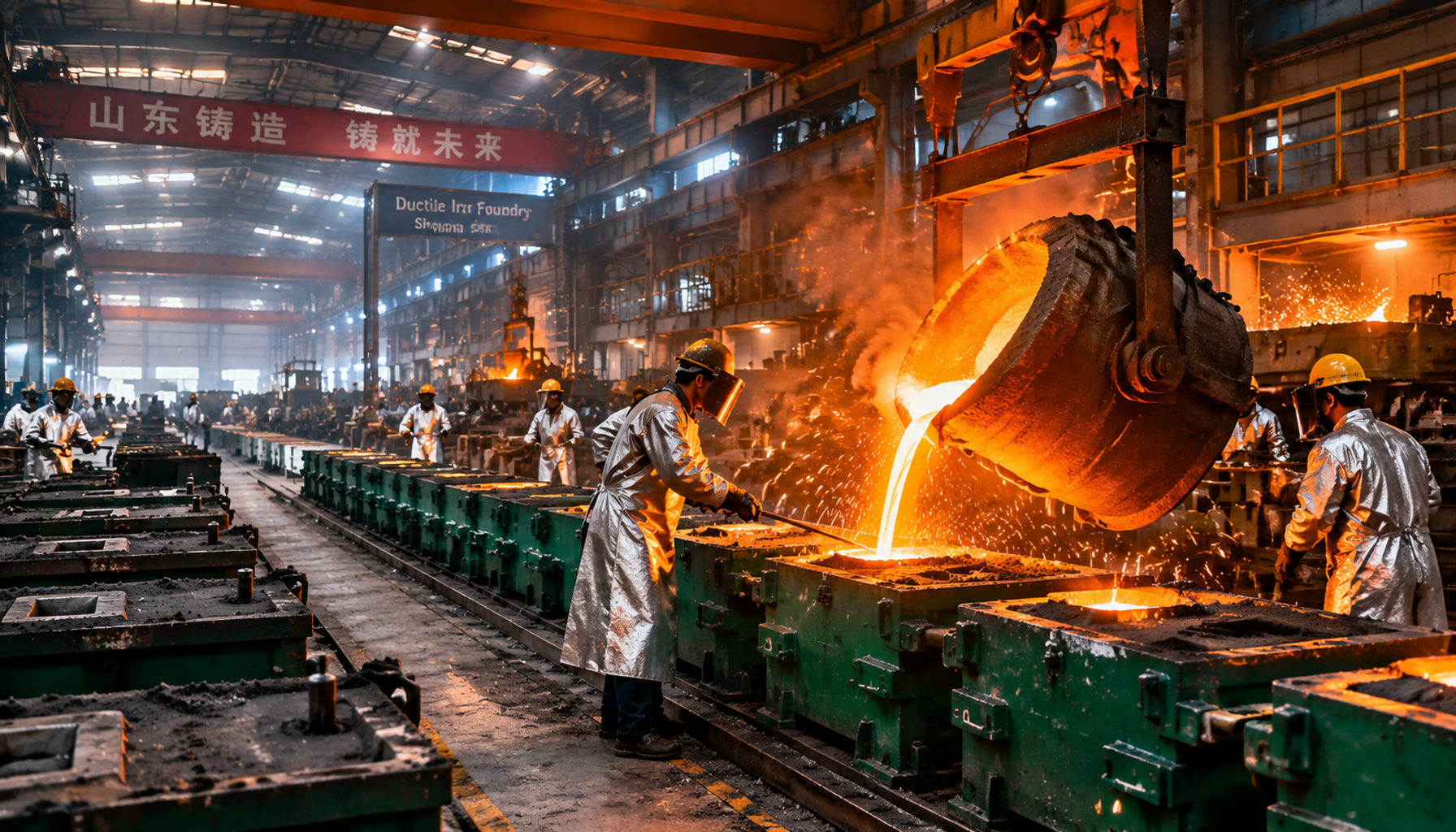
51 million tonnes. That's roughly what China cast in 2024 — somewhere between 44% and 47% of global casting output, depending on whose figures you trust (the range spans Modern Casting's Census of World Casting Production and China Foundry Association data, and they don't agree). No other country is within a factor of four.
280,000 units. Approximate annual trailer shipments in North America across all classes. Multiply that by the 6 to 11 cast components on a typical utility or flatbed trailer and you're looking at a component market in the low millions of pieces per year.
$14 to $22. That's what a 10 kg ductile iron trailer coupler lands at, FOB China. The same part cast in a US job shop runs $45 to $70 before freight. That gap is why you're reading this page.
Now the number that doesn't appear in any quote sheet: the cost of a coupler that cracks at -25°C in a Minnesota winter. Recall, freight, legal, and a customer who never orders from you again. That one sits somewhere north of $80,000 in the first incident and keeps climbing.
This guide is about closing the distance between the first number and the last one. It walks through real cost structures, the material grades that actually matter for trailer service, the failure modes that generate warranty claims, and a factory verification routine you can run in a single day on-site.
What Actually Drives Trailer Casting Pricing
A foundry's quote is a stack of cost layers. If you don't know roughly what's in each layer, you can't tell whether a quote is aggressive or desperate — and the difference matters a lot when you're about to place a 10-ton order.
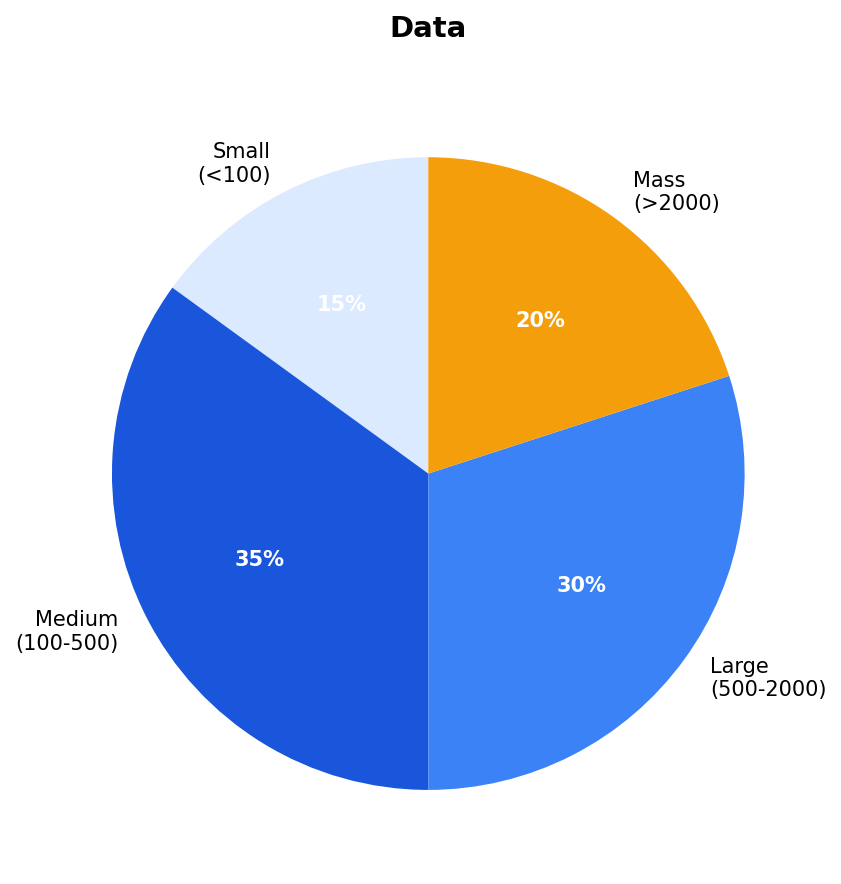
Here's how the layers typically break down for a ductile iron trailer part in the 5-30 kg range, produced in a Chinese foundry running 3,000 to 8,000 tonnes a year. The percentages are a synthesis of published foundry cost studies and quotes we've reviewed across Shandong, Hebei, and Jiangsu suppliers; treat them as directional, not audit-grade figures.
| Cost layer | Share of quoted price | What moves it |
|---|---|---|
| Raw material (pig iron, scrap, ferroalloys) | 32-42% | Pig iron index, scrap ratio, MgFe alloy for nodularization |
| Melting energy | 8-13% | Induction furnace efficiency, local power tariffs |
| Molding and core labor | 12-18% | Line automation, number of cores per part |
| Heat treatment | 4-8% | Whether you spec normalizing or just as-cast |
| Fettling, grinding, shot blasting | 7-12% | Labor intensity, surface finish requirement |
| Machining (if included) | 15-25% | Tolerance class, number of machined faces |
| Scrap and rework | 3-8% | Wall thickness, gating design, foundry skill |
| Margin | 8-15% | Order size, payment terms, relationship length |
Two things worth noting. First, raw material is the single biggest lever — and it's the one nobody controls. When the pig iron index moves 10%, your price moves 3-4% whether the foundry likes it or not. Quotes with a fixed material price for 12 months are either hedged or unrealistic.
Second, look at scrap and rework. A foundry quoting 3% scrap on a thin-walled suspension equalizer is either lying or about to lose money on your order. Realistic first-pass yield on a 6 kg bracket with two cores runs 92-97%. If the quote assumes 99%, they've never made the part.
Typical FOB price bands, by component
The table below reflects quotes seen across Chinese foundries in 2025-2026 on orders of roughly 1,000-5,000 pieces per part number, as-cast plus basic machining, excluding tooling. Treat these as ±15-20% ranges. Your exact weight, wall thickness, and machining spec swing the number more than the foundry's location does.
| Component | Material | Typical weight | China FOB (est.) | US domestic (est.) |
|---|---|---|---|---|
| Coupler, 2" ball, class III | A536 65-45-12 | 8-14 kg | $14-22 | $45-70 |
| Ball mount / hitch head | A536 / A148 | 5-12 kg | $11-20 | $38-62 |
| Brake drum, 12" × 2" | A48 Class 30 | 20-28 kg | $26-40 | $70-105 |
| Idler hub casting | A536 60-40-18 | 9-16 kg | $13-21 | $42-65 |
| Suspension equalizer | A536 65-45-12 | 4-9 kg | $7-13 | $24-42 |
| Spring hanger / shackle link | A536 / A27 | 1.5-4 kg | $3-7 | $11-22 |
| Fifth wheel plate (cast) | A148 Class 90-60 | 30-55 kg | $55-95 | $160-260 |
| Landing gear leg housing | A536 65-45-12 | 12-22 kg | $17-28 | $52-85 |
Notice the ratio. Across the board, Chinese FOB pricing sits at roughly 30-40% of US domestic cost for equivalent specification. That's the number your landed-cost model needs to survive — because tariffs, freight, and quality failures all eat into it.
The Material Grades That Actually Matter for Trailers
This is where a lot of sourcing decisions go wrong, and it's almost always because the buyer let the foundry pick the grade.
Ask a foundry "what material will you use for the coupler," and the answer you'll often get is "gray iron, G3000, very strong." G3000 corresponds to ASTM A48 Class 30 — a perfectly respectable gray iron with 30 ksi minimum tensile strength. It's also the wrong choice for anything on a trailer that bends.
Gray iron vs ductile iron: the part that matters
Both are cast irons. The difference is graphite morphology.
In gray iron, graphite forms as flakes — sharp-edged platelets suspended in the metal matrix. Those flakes act as internal stress concentrators. Under tension or bending, cracks initiate at flake tips and propagate. Gray iron has excellent compressive strength, great machinability, and good damping and thermal conductivity. Brake drums are gray iron for exactly those reasons.
In ductile iron, magnesium treatment converts the graphite into spheroids. The stress concentration disappears. Tensile strength roughly doubles, and elongation — the ability to deform before breaking — goes from under 1% to 12-18% depending on grade. That elongation number is your safety margin.
The grade specification you should write into the PO
For trailer structural components — couplers, ball mounts, equalizers, hangers, chain anchors — specify ASTM A536 Grade 65-45-12 as a floor. That means 65,000 psi minimum tensile, 45,000 psi minimum yield, 12% minimum elongation in 2 inches.
For higher-stress parts or where you want more fatigue margin, step up to A536 Grade 80-55-06. It requires heat treatment or alloy additions, so budget 8-15% more per kilogram. Worth it for fifth wheel components and anything in a heavy-haul application.
Where fatigue life is the design driver — high-cycle suspension components, cyclic-load hitch hardware — austempered ductile iron per ASTM A897 (common grade 900-650-09) is the next step. ADI roughly doubles the fatigue strength of standard ductile iron through an austempering heat treatment that produces an ausferritic matrix. You pay for it: 40-70% over A536 base price, plus a heat-treat furnace that most Chinese foundries don't have. If a supplier claims ADI capability without an in-house austempering line with chart-recorder traceability, that's a claim to verify before you commit a PO.
For brake drums and purely compressive housings, ASTM A48 Class 30 or Class 35 gray iron is correct and cheaper. Don't let anyone sell you ductile iron for a drum you didn't need it for.
And then there's the specification nobody writes, which is the one that bites. Low-temperature impact toughness. Trailers operate in Alberta, Minnesota, and North Dakota in February. Ductile iron in the as-cast ferritic condition with proper nodularity holds up. Ductile iron that's been over-pearlized for hardness, or has 70% nodularity instead of 90%, turns brittle at -20°C.
If you spec one thing beyond the base grade, make it this: Charpy V-notch impact testing at -20°C, minimum 12 J (9 ft-lb), on a separately cast test coupon per ASTM A370. It costs almost nothing and it screens out the foundries that can't control their magnesium treatment.
How to verify what you actually got
Material test reports (MTRs) are the baseline, and they need to be traceable to the heat number stamped on the casting or marked on the lot. Beyond the standard tensile certificate, ask for:
- Nodularity percentage per ASTM A247, from a metallographic sample. Target 85% minimum for A536 grades.
- Nodule count, typically 100-200 per mm² for good ductile iron.
- Matrix structure — the ferrite-to-pearlite ratio. For 65-45-12 you generally want a predominantly ferritic matrix; too much pearlite raises hardness and kills elongation.
- Chemical composition including carbon equivalent, silicon, manganese, phosphorus, sulfur, and residual magnesium. Magnesium residue should land around 0.035-0.055%; outside that band, nodularity gets inconsistent.
If a foundry can't produce a metallographic report with a photomicrograph, that tells you something. Nodularity is not a visual inspection item — it's a microscope item. A foundry without in-house metallography is outsourcing its most important quality check, and you'll feel it in the second or third shipment.
Failure Modes That Show Up in Warranty Claims
Warranty data from trailer manufacturers is fairly consistent about where things break, and it's rarely where people expect. It's almost never a part that was simply too thin. It's a casting defect that passed visual inspection.
1. Shrinkage porosity at thick-to-thin transitions
Where a 20 mm boss meets a 6 mm wall, the thick section solidifies last. Without a properly sized riser feeding that zone, you get internal voids. The part passes visual inspection, passes dimensional check, and fails in fatigue six months later because the effective cross-section was 60% of nominal.
How to catch it: radiography (X-ray) per ASTM E505 on first article and a defined sampling frequency thereafter. For critical trailer structural parts, that means at least 5% sampling by radiography, or 100% for safety-critical components in high-volume programs. Ultrasonic testing per ASTM A609 works for thick sections but struggles with complex geometry — the beam path gets blocked by internal cores, so you can't reliably probe the whole part. Reserve UT for simple-geometry castings and use RT for anything with coring.
2. Sand inclusions and cold shuts
Both are process-control failures. Sand inclusions come from core or mold erosion — usually a gating problem or a binder that's not holding up to the pour temperature. Cold shuts happen when two metal fronts meet without fusing, typically because the pour temperature dropped or the metal traveled too far through a thin section.
How to catch it: magnetic particle inspection (MPI) per ASTM E709 for surface-breaking defects on ferromagnetic castings, and liquid (dye) penetrant per ASTM E165 for non-magnetic components or where the geometry blocks a magnetic field. Anything that shows up as a linear indication on a load-bearing face is a reject, not a rework candidate — a dressed-over crack still carries the underlying defect.
3. Low-temperature brittle fracture
This is the one that generates recalls. It shows up in ductile iron where nodularity fell below spec on a specific heat, or where a heat treated part was quenched too aggressively and ended up with a brittle matrix. The part performs fine in summer testing and shatters on the first cold snap.
How to catch it: Charpy impact testing at -20°C per ASTM A370, per heat. Not per order. Per heat. This is a 30-minute test and it's the cheapest insurance in the entire specification.
4. Porosity that only appears after machining
Subsurface gas porosity sits just below the as-cast skin. It's invisible until your machine shop cuts into it, at which point you've got a scrapped part with machining hours already sunk into it.
How to catch it: agree on a machining allowance and a defect acceptance criterion in writing before production. A 2 mm allowance means defects within 2 mm of the surface are yours to deal with. Push for 3 mm on machined faces and specify that porosity visible after machining is a supplier reject, not a buyer concession.
Get all four of these written into the technical specification annex of your purchase order, with the testing method and sampling frequency for each. A supplier that won't sign a spec with radiography sampling and per-heat impact testing is telling you they don't control their process tightly enough to pass it.
Certifications: What They Actually Guarantee
This section will save you from a common and expensive mistake.
ISO 9001 does not certify that a factory makes good castings. It certifies that they have documented processes and that an auditor confirmed those processes exist. A foundry with terrible yields and a 20% scrap rate can hold a valid ISO 9001 certificate as long as their scrap disposition procedure is documented and followed.
That said, ISO 9001 is a floor. No certificate at all is a hard stop.
What matters more for trailer castings:
| Credential | What it means | When you need it |
|---|---|---|
| ISO 9001 | Documented quality management system | Always — table stakes |
| IATF 16949 | Automotive-grade QMS with APQP, PPAP, MSA, traceability requirements | If your customer is an automotive OEM or Tier 1 |
| ISO 14001 | Environmental management | Increasingly required by European buyers |
| ISO 45001 | Occupational health and safety | Useful proxy for plant discipline |
| PPAP Level 3 | Full dimensional, material, capability, and process documentation | Any safety-critical part, regardless of industry |
| SAE J684 compliance | Coupler performance standard referenced by trailer OEMs | Couplers and hitch assemblies |
| FMVSS 121 | Air brake system performance — applies to the finished axle/brake assembly | Brake drums sold into a regulated assembly |
How to verify a certificate in about four minutes
Certificates get faked. It's rare but it happens, and it's easy to check.
- Every accredited ISO certificate carries a certification body name and accreditation mark. Cross-check that the certification body appears in the IAF CertSearch database.
- Check the scope statement on the certificate. This is where the problems hide. A certificate that says "trading of hardware products" does not cover casting production. You want the scope to name the manufacturing activity — "production of ductile iron and gray iron castings" or similar.
- Check the issue and expiry dates, and whether the certificate is under a valid surveillance cycle. An expired-but-still-displayed certificate is a red flag about the plant's discipline generally.
- Call the certification body's published phone number — not the number on the certificate — and confirm the client is active.
This takes four minutes. Skipping it has cost buyers considerably more than four minutes. The full pre-order audit checklist is here if you want the extended version.
Tooling and MOQ: The Math Nobody Shows You
Tooling is where first-time buyers get anchored on the wrong number. The tooling cost itself is rarely the problem. The problem is what happens to your per-unit cost when you amortize it over too few pieces — or when you don't own the tooling at all.
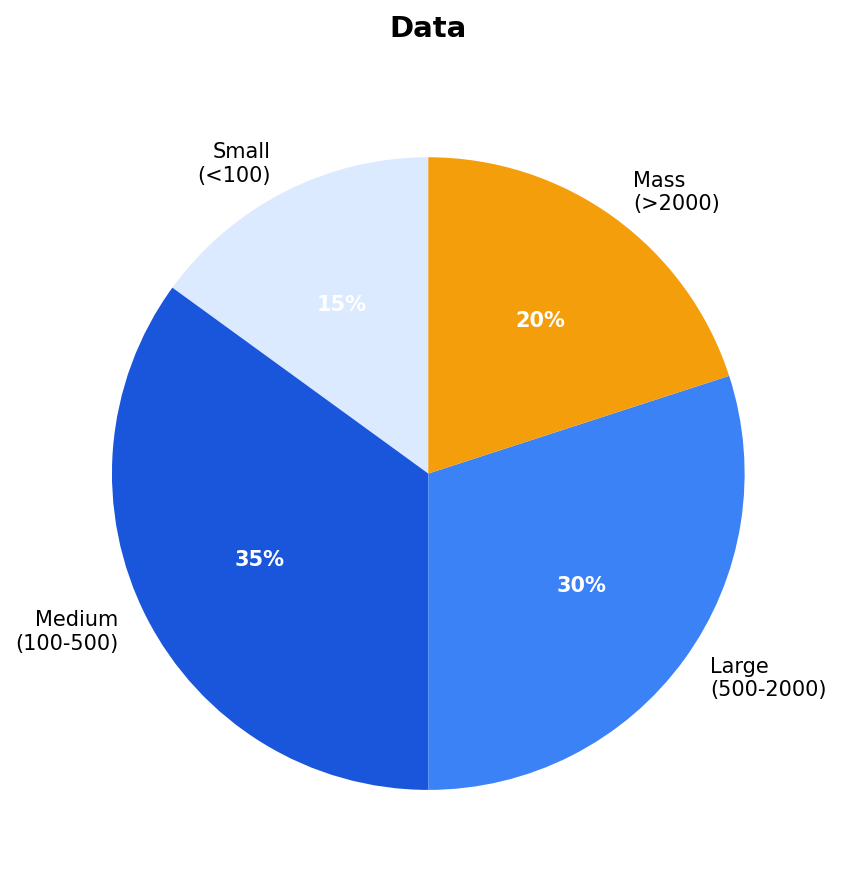
Realistic tooling costs
| Part complexity | Tooling cost (est.) | Lead time | Amortized over 2,000 pcs |
|---|---|---|---|
| Simple, no cores, symmetric | $2,500-5,000 | 18-25 days | $1.25-2.50/unit |
| Medium, 1-2 cores, machined faces | $6,000-14,000 | 25-35 days | $3.00-7.00/unit |
| Complex, 3+ cores, tight tolerances | $15,000-32,000 | 35-50 days | $7.50-16.00/unit |
That third column is the one to look at. If you're ordering 800 pieces of a complex part, tooling adds $19-40 per unit. Suddenly the $8/unit price advantage over a domestic supplier has evaporated on the first order — and only starts paying back on order three.
Run the break-even before you commit. Tooling cost divided by per-unit savings tells you how many pieces you need before you're ahead. If the answer is more than your realistic 24-month volume, either negotiate tooling amortization into the unit price or reconsider.
Tooling ownership: get the letter
Whoever pays for tooling should own tooling. In practice, foundries sometimes retain physical possession and, occasionally, argue about ownership when you try to move production.
Before the first PO, get a one-page tooling ownership letter stating: the buyer owns the tooling, the foundry holds it in custody, the foundry will release it on request at buyer's cost, and the foundry will maintain it in production condition. Have it signed by someone with authority.
This costs nothing and prevents a genuinely painful conversation two years later. It also gives you leverage on price at renewal, because the credible threat of moving production is worth more than any negotiation tactic.
MOQ reality
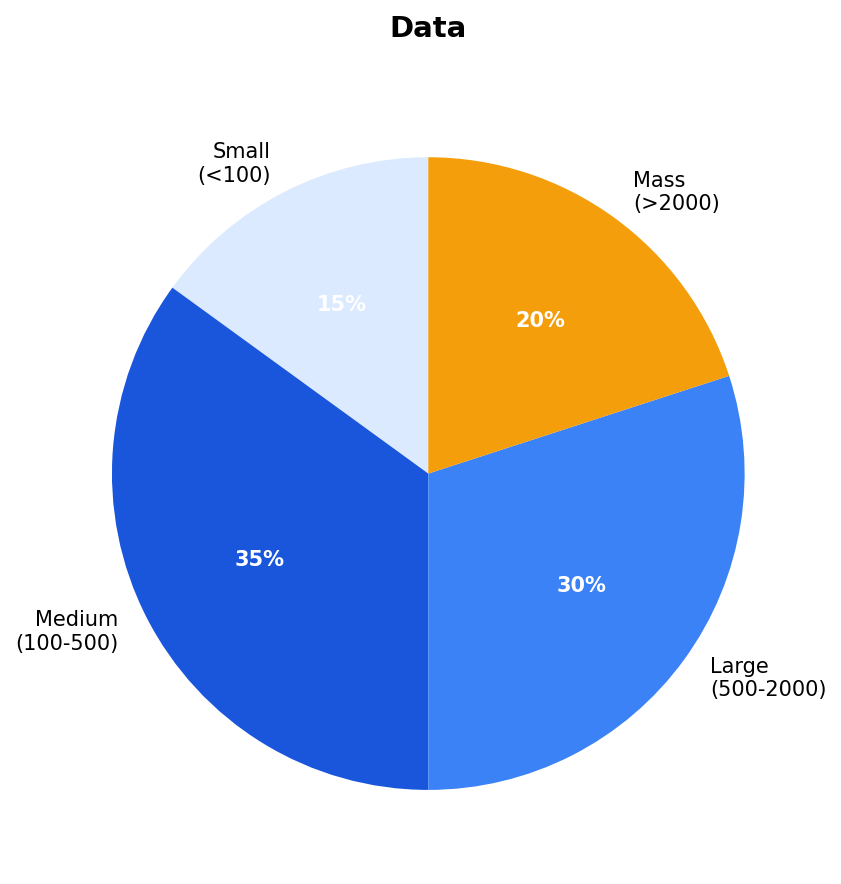
Quoted MOQs of 500-1,000 pieces are normal. Below that, foundries add surcharges or decline, because pattern changes on a molding line consume setup time that has to be recovered somewhere.
If you need 150-200 pieces to validate a new supplier, don't fight the MOQ. Ask for a separately priced pilot run. Most foundries will do it at a higher unit price — often 1.5-2× production pricing — and that's a fair trade. You get validation, they get compensated for the setup. Trying to squeeze a pilot run at production pricing just signals that you'll be difficult to work with, and that affects how your orders get scheduled later.
Landed Cost: The Number That Actually Decides It
FOB price is not your cost. Here's a full worked example on a realistic trailer coupler order.
| Line item | Per unit (2,000 pcs) | Notes |
|---|---|---|
| FOB China, 10 kg ductile iron coupler | $18.00 | As-cast plus machined bore, painted |
| Ocean freight, 20GP shared | $2.80-4.20 | Highly volatile; budget the high end |
| Marine insurance | $0.06 | ~0.3% of CIF value |
| Section 301 tariff (List 3 rate) | $4.50 | 25% on FOB; verify current rate before modeling |
| Customs brokerage and ISF | $0.35-0.55 | Allocated across the shipment |
| Port to warehouse drayage | $0.90-1.40 | West Coast vs East Coast varies widely |
| Incoming inspection and sorting | $0.30-0.80 | Depends on AQL level and whether you inspect in-house |
| Landed cost | $26.90-29.50 | Before any quality failure costs |
Compare to a US domestic landed cost of $45-70 per part delivered. The gap is real, but it's 35-50% rather than the 70% the FOB comparison suggested.
Two caveats worth building into your model. First, tariff treatment for steel and aluminum derivative products has changed repeatedly since 2018 and shifted again in 2025. Confirm the current rate against your specific HTS code before you commit to a 12-month cost plan — the HS heading for iron castings is 7325.99, but derivative-product classifications can pull parts into a different treatment. Second, model a failure scenario. One container of 2,000 couplers with a 6% field failure rate costs you the replacement plus the labor plus the reputational hit. That's often $15,000-25,000, or $7.50-12.50 per unit against the whole order. Suddenly the spread between a $18 supplier and a $21 supplier looks very different.
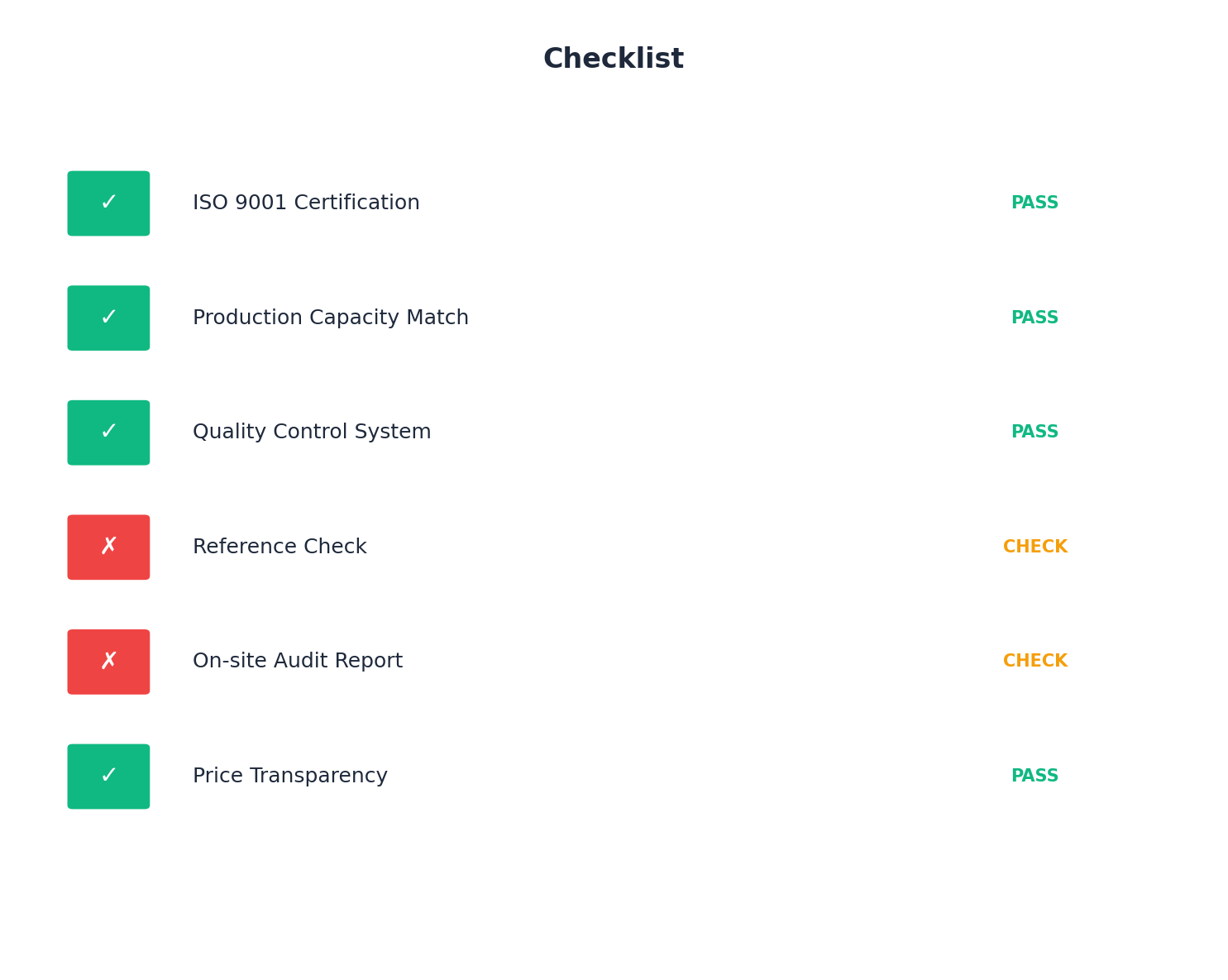
The 7-Point Factory Verification
You can learn more in one day at the plant than in six months of email. Here's what to look at, in order, and what a bad answer sounds like.
1. Melting — do they melt, or do they buy?
Look at the induction furnaces. Note the number and rated capacity in tonnes. Calculate whether that capacity matches their claimed monthly output — a foundry claiming 1,000 tonnes per month with two 1-tonne furnaces doesn't add up.
Bad sign: They buy liquid iron from a neighboring plant. It's not automatically disqualifying, but it means they don't control chemistry at the source, and the magnesium treatment window for ductile iron gets very tight when you're transferring molten metal between facilities.
2. Chemistry control — the spectrometer
There should be a direct-reading optical emission spectrometer on site, and it should be used on every heat. Ask to see the log from the past week. Not a sample log — the actual current log book or digital record.
Bad sign: The spectrometer exists but the log has three entries in two weeks. That means they're running by experience, and experience drifts.
3. Heat treatment — chart recorders, not memories
If your spec requires normalizing or annealing, there needs to be a furnace with continuous temperature recording. Ask to see the chart traces from the last batch. Look at the soak time and cooling curve.
Bad sign: "We control temperature by eye." Or a furnace with a manual pyrometer and no recording. You have no way to prove the heat treatment happened as specified, which means your material properties are unverifiable.
4. Machining — in-house or subcontracted?
Walk the machining floor. Count the CNC centers. If machining is subcontracted, your lead time now depends on a third party that has no contractual relationship with you.
Bad sign: Machining is outsourced and the foundry can't tell you the subcontractor's name or capacity. That's a scheduling black hole.
5. NDT capability — in-house radiography is a strong signal
Foundries with their own X-ray or ultrasonic equipment are typically operating at a different quality tier than those sending samples to a third-party lab. In-house NDT means they can check and adjust the process in hours, not weeks.
Acceptable: Partnering with an accredited third-party lab for routine NDT, as long as the turnaround is days not weeks.
6. Scrap rate — ask for data, not adjectives
Ask for the last six months of scrap rate data by part family, in writing. A foundry that tracks this can produce it in an hour. A foundry that doesn't will tell you "very low, under 2%," which is not a number you can build a cost model on.
What good looks like: 3-7% for complex ductile iron parts, tracked monthly, with a breakdown by defect type. If they can tell you the top three defect modes, they're actually measuring.
7. Export records — proof, not photos
Bill of lading records, or a customs export declaration summary, showing shipments to your region over the past 12 months. This is the single most reliable indicator that they can handle export documentation, packaging, and the timing pressures of international orders.
Bad sign: They have a beautiful booth photo from the Canton Fair and no export records to the US or EU. Trade show presence is a marketing expense. Export records are an operating capability. They are not the same thing.
If you can only do four of the seven in a one-day visit, prioritize melting, chemistry, NDT, and export records. Those four cover the failure modes that reach your customers. A structured third-party audit covers all seven, plus financial stability and capacity utilization, which matter if you're planning a multi-year program. For a worked example of what a real audit turns up, see the red-flags write-up from last quarter.
Common Mistakes That Cost Buyers Real Money
- Comparing FOB prices across suppliers with different specifications. A $16 coupler quoted against a $21 coupler is meaningless if one is gray iron and the other is A536 65-45-12 with -20°C impact testing. Normalize the spec first, then compare price.
- Not locking tooling ownership in writing. Covered above. It's a one-page document and its absence has ended otherwise good supplier relationships.
- Skipping the low-temperature impact requirement to save $0.20 per part. This is the mistake that produces the $80,000 incident.
- Accepting a certificate without checking the scope statement. Four minutes. Every time.
- Placing the first production order without a plant visit. You're making a multi-year decision based on a video call and a PDF.
- Paying 100% T/T in advance. Standard terms are 30% deposit with the balance against copy of bill of lading. Full prepayment to a new supplier removes every bit of leverage you have.
- Ignoring freight volatility in the landed cost model. Ocean rates on the transpacific have swung by a factor of three within a single year. Model the high case.
- Treating the first article approval as the finish line. It's the starting line. Require per-heat material certification on every subsequent shipment, and pull samples for independent dimensional verification on at least the second and fourth production runs.
FAQ
What does a Chinese trailer casting manufacturer charge per kilogram?
Ductile iron (A536 65-45-12) trailer components typically run $1.30-1.90 per kilogram FOB China for parts in the 5-30 kg range. Gray iron runs $0.95-1.40. Thin walls, complex coring, and low volumes push you toward the top; heavy parts at 10 tonnes per order push you toward the bottom. Add 15-25% if machining and painting are included in the scope.
Are Chinese trailer castings DOT approved?
DOT does not approve facilities, so no foundry is "DOT approved." For trailer assemblies, compliance runs through FMVSS 121 for air brake systems and voluntary standards like SAE J684 for couplers. The foundry's obligation is to produce castings meeting the material and dimensional specification your assembly is designed around. You carry the compliance obligation for the finished product. What you should collect from the foundry is per-heat material test reports, dimensional layout reports on first article and sampled production, and NDT records where specified.
How long does trailer casting tooling take?
Pattern and core box fabrication runs 20-30 days for a medium-complexity trailer component. First-article samples add 10-15 days, and dimensional layout plus material certification adds another 5-10. Budget 6-9 weeks from tooling PO to approved first article, then 35-50 days for the first production run, then 25-40 days of ocean transit. Realistically, from decision to parts in your warehouse is about four months.
What's a realistic MOQ for trailer castings?
Quoted MOQs usually land at 500-1,000 pieces per part number. Below 500, foundries either decline or add a surcharge because pattern changes consume line time. If you need 150-200 pieces to validate a supplier, ask for a separately priced pilot run at 1.5-2× production unit price rather than trying to negotiate the MOQ down. It's a fair trade and it keeps the relationship constructive.
How do I verify an ISO 9001 certificate from a Chinese foundry?
Four steps. Check the certification body against the IAF CertSearch database. Read the scope statement and confirm it names casting production, not trading or distribution. Confirm the certificate is within a valid surveillance cycle and not expired. Call the certification body at their published number — not the number printed on the certificate — and confirm the client is active. Total time: about four minutes.
How do I check nodularity and heat treatment on incoming castings?
Three checks, all done on separately cast coupons or coupon-adjacent samples. First, metallographic sample per ASTM A247 for nodularity percentage — 85% minimum for A536 65-45-12. Second, Charpy V-notch impact at -20°C per ASTM A370, minimum 12 J. Third, surface and subsurface NDT: MPI per ASTM E709 for surface-breaking indications, UT per ASTM A609 or RT per ASTM E505 for internal porosity on thick sections. If a supplier only offers visual inspection and a tensile certificate, you're missing the two tests that actually predict field failures.
Ductile iron or gray iron for a trailer coupler?
Ductile iron, at ASTM A536 65-45-12 minimum, with verified nodularity above 85%. Gray iron's flake graphite acts as internal stress risers under bending and impact, and it loses toughness sharply at low temperature. Gray iron is the correct choice for brake drums and compressive housings, where its damping and thermal properties are advantages. Anything that bends or takes impact in cold weather should be ductile. Where fatigue life dominates the design, austempered ductile iron per ASTM A897 is the next step up, at a meaningful cost premium.
Your Next Move
Three numbers opened this piece. Here's what to do with them.
The 51-million-tonne figure tells you the supply base is deep and competitive — which means you have options, and you should exercise them. Get quotes from at least four foundries across two provinces. Pricing varies more between regions than most buyers expect.
The 280,000-unit figure tells you the component market is large enough that foundries will invest in your tooling, but not so large that you're a rounding error. Use that. A 5,000-piece annual program is worth a foundry's attention.
The $14-22 FOB figure tells you where to start, and the landed cost table tells you where you'll actually end up. Model the full number before you commit, including tariffs at their current rate, freight at the high case, and a quality failure scenario at 5%.
Before you sign anything, run the seven-point verification. If you can't get to the plant, get someone who can. The cost of a proper audit is a rounding error against the cost of one bad container.
Ready to compare real quotes against a normalized specification? Submit your part drawings and annual volumes, and get indicative FOB and landed cost ranges from audited ductile and gray iron foundries — with the material grade, testing protocol, and tooling ownership terms spelled out before you talk price.