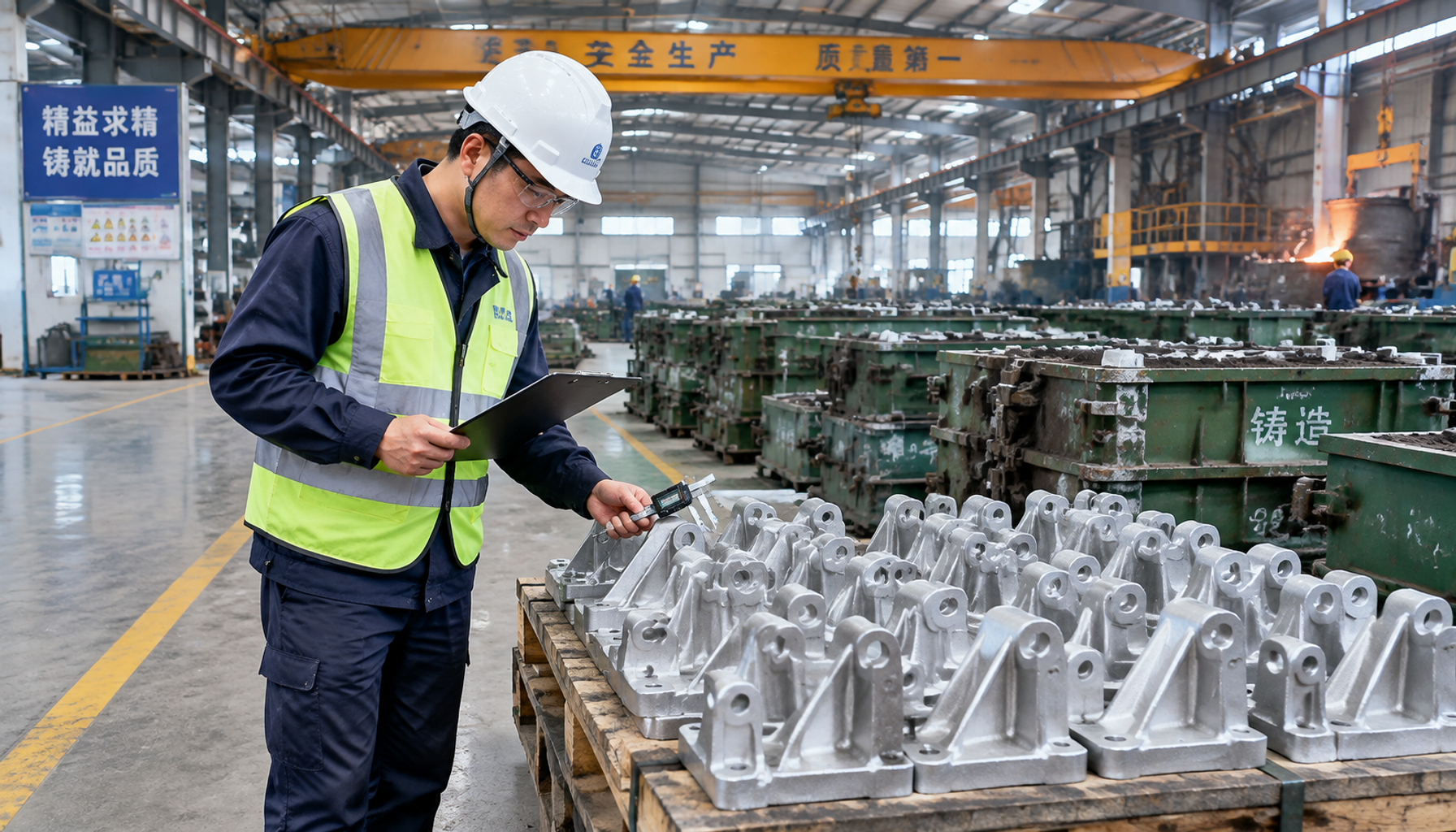
I still have the photo on my phone. Eight hundred brass door brackets, stacked on a pallet in my Norcross warehouse, each one with a hairline crack running through the mounting boss.
Six weeks earlier I'd signed off on the order without a pre-shipment inspection. The quote from the inspection company was $620. I remember thinking, that's 4% of my margin on this order, and I've used this factory three times.
The chargeback, the return freight, and the air-freight rush order to cover a contractor's schedule cost me $41,300. Plus a very uncomfortable phone call with a customer who had 200 door units sitting on a job site with nothing to hang them with.
That was 2019. Since then I've paid somewhere north of $30,000 in third party inspection fees across roughly 60 orders — factory audits, pre-shipment checks, container loading supervision, lab work. I've also spent a lot of that money badly. Here's what the numbers actually look like, and where you're most likely to get overcharged or under-served.
If you only read one paragraph: third party inspection cost for China castings runs about $250–$500 per man-day for a local Chinese agency, $350–$600 for a mid-tier international firm, and $500–$1,000 for SGS, BV, or TÜV. For a typical FCL castings shipment, budget 0.5%–2% of landed value. The rest of this page is the detail behind those numbers — what drives the spread, who should contract and pay, and how to tell a real report from a bought one.
What Third Party Inspection Actually Costs for China Castings
Let's kill the vague answers first. "It depends" is true but useless. Here are real ranges I've been quoted and paid between 2023 and 2026, for castings specifically — sand castings, die castings, investment castings, in aluminum, brass, ductile iron, and stainless.
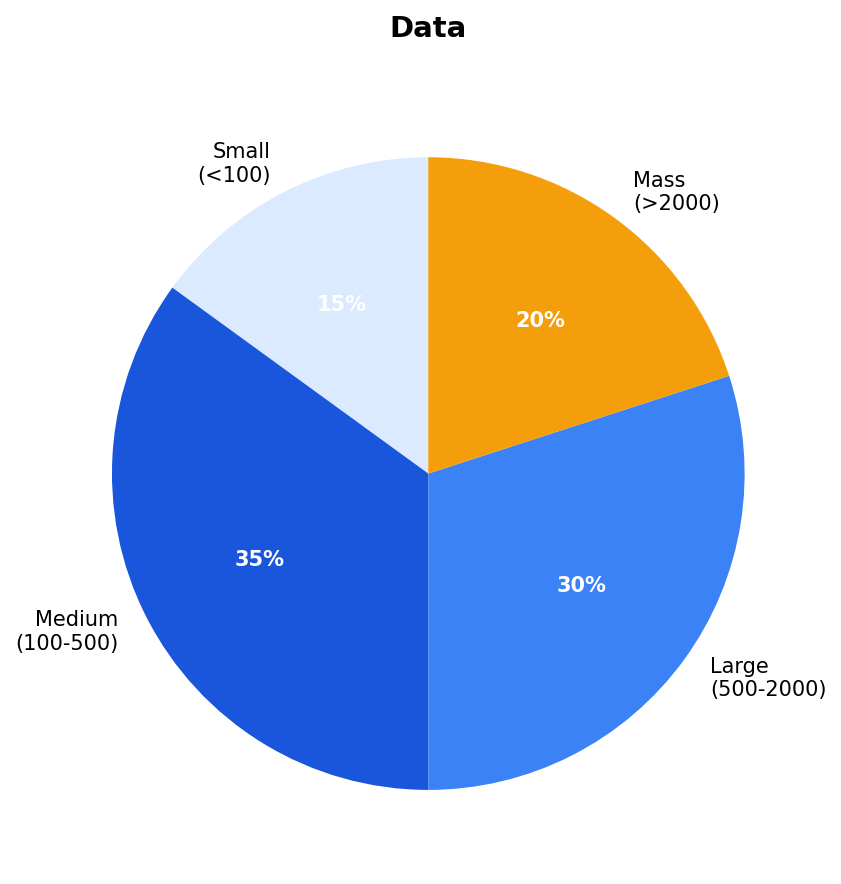
The unit that matters is the man-day. One inspector, up to 8 hours on site. Almost every quote you get will be expressed as a per-man-day rate plus travel expenses, and that's where the surprises live.
| Inspection type | When it happens | Local agency | SGS / BV / TÜV |
|---|---|---|---|
| Factory audit / supplier assessment | Before first order | $600 – $1,000 | $1,200 – $2,500 |
| First article / tooling sample | After mold completion | $250 – $400 | $450 – $800 |
| Pre-production (PPI) | Raw material received | $250 – $400 | $450 – $750 |
| During production (DUPRO) | 30–50% complete | $280 – $500 | $500 – $900 |
| Pre-shipment (PSI) | 100% packed, ready to load | $280 – $500 | $500 – $900 |
| Container loading supervision | At stuffing | $300 – $650 | $600 – $1,100 |
| Laboratory testing (per sample) | Any time | $80 – $1,200 | $150 – $2,000 |
How these numbers were derived: blended from 60+ quotations and invoices I've received across Zhejiang, Jiangsu, Shandong, Hebei, and Guangdong foundries, 2023–2026. Ranges reflect regional variation, not a formal survey — treat the medians as reliable and the extremes as real but outlier-heavy. Every quote I take now includes an itemized cost for travel, minimums and extra man-days, so the spread isn't guesswork.
Three things turn a $400 quote into a $700 invoice, and you should ask about all three before you approve anything:
- Travel and accommodation. Most agencies bill $120–$250 per man-day on top of the rate if your factory is outside their home city. A foundry in Hebei quoted from a Shanghai office means a flight, a hotel, and a per diem.
- Minimum charge. Plenty of companies won't send anyone out for less than $250, even if the job takes ninety minutes. A two-hour PSI on a small LCL shipment still bills as a full minimum.
- Extra man-days. If your shipment is 40 pallets and the inspector can't finish in 8 hours, you're paying for day two. Ask upfront how many man-days your shipment size requires — a good agency will tell you based on carton count and part complexity.
Cheaper Doesn't Mean Worse, and Brand Names Aren't Free
Here's where most buyers waste money in the other direction: paying a 100% premium for a logo on a PDF.
SGS, Bureau Veritas, and TÜV Rheinland are excellent. They're also charging you for a brand that your final customer, your insurer, and your bank recognize. If you're doing a $600,000 order for a Fortune 500 buyer who requires an SGS report in the contract, pay for SGS. That's not a quality decision, it's a contractual one.
If you're a distributor like me, buying $80K–$300K orders and doing your own QC, the logo buys you very little. What buys you something is the individual inspector who shows up — their experience with castings specifically, and how honestly they report what they see.
Rough tiers, based on what I've actually used:
Global brands (SGS, BV, Intertek, TÜV): $500–$1,000 per man-day. Deep bench, strong lab network, slow scheduling in peak season — I've waited 9 days for a slot in September. Reports are detailed and defensible.
Mid-tier international (QIMA, Asia Inspection): $350–$600 per man-day. Faster booking, decent digital reporting with timestamped and geotagged photos, good online portals. This is what I use for routine pre-shipment checks on established suppliers.
Local Chinese agencies and independent QC firms: $200–$400 per man-day. Wildly variable. Some are former SGS inspectors with 15 years in castings and they're fantastic. Some will send a kid with a clipboard who checks that the cartons have labels on them and calls it done. You have to vet them.
One warning about the bottom of that last tier: any agency that's introduced to you by the factory is not a third party. I don't care how cheap they are.
The Part Most Buyers Get Wrong: Who Pays
This is the single largest cost lever in third party inspection, and it has nothing to do with rates.
If your supplier books the inspection and bills you for it, you're paying a markup you can't see, and you've handed the conflict of interest to the wrong party.
I learned this the expensive way. In 2021 a Ningbo supplier quoted me "$1,450 for SGS pre-shipment inspection" as a line item on the PO. Seemed plausible — SGS is expensive, right? Six months later, on a different order, I booked an SGS PSI myself on the same size shipment for $780.
The factory wasn't necessarily pocketing $670. They may have been quoted a higher rate, or bundled in coordination time. But I had no way to know, and that's the point.
Three rules I now apply to every contract:
- You contract the inspection company directly. You pay them. You receive the report. The factory's only involvement is granting access on the agreed date.
- You own the report. The report goes to you, not through the supplier. If they want a copy for their own records, fine, but you're the client of record.
- The cost goes in the contract as a buyer-side line item, not buried in the unit price. If the factory insists on building inspection into their quoted piece price, that's a signal they want control over who inspects.
There's one legitimate exception: some buyers negotiate "supplier pays for failed inspections." That's a fair clause. You book it, you pay for it, and if the inspection fails, the supplier reimburses the fee along with the rework cost. It aligns incentives without giving up control of the inspection itself.
Which Inspection Do You Actually Need for Castings?
You don't need all seven types. Spending $2,800 on a full inspection ladder for an $18,000 repeat order is as much of a mistake as spending nothing. Here's how I think about it.
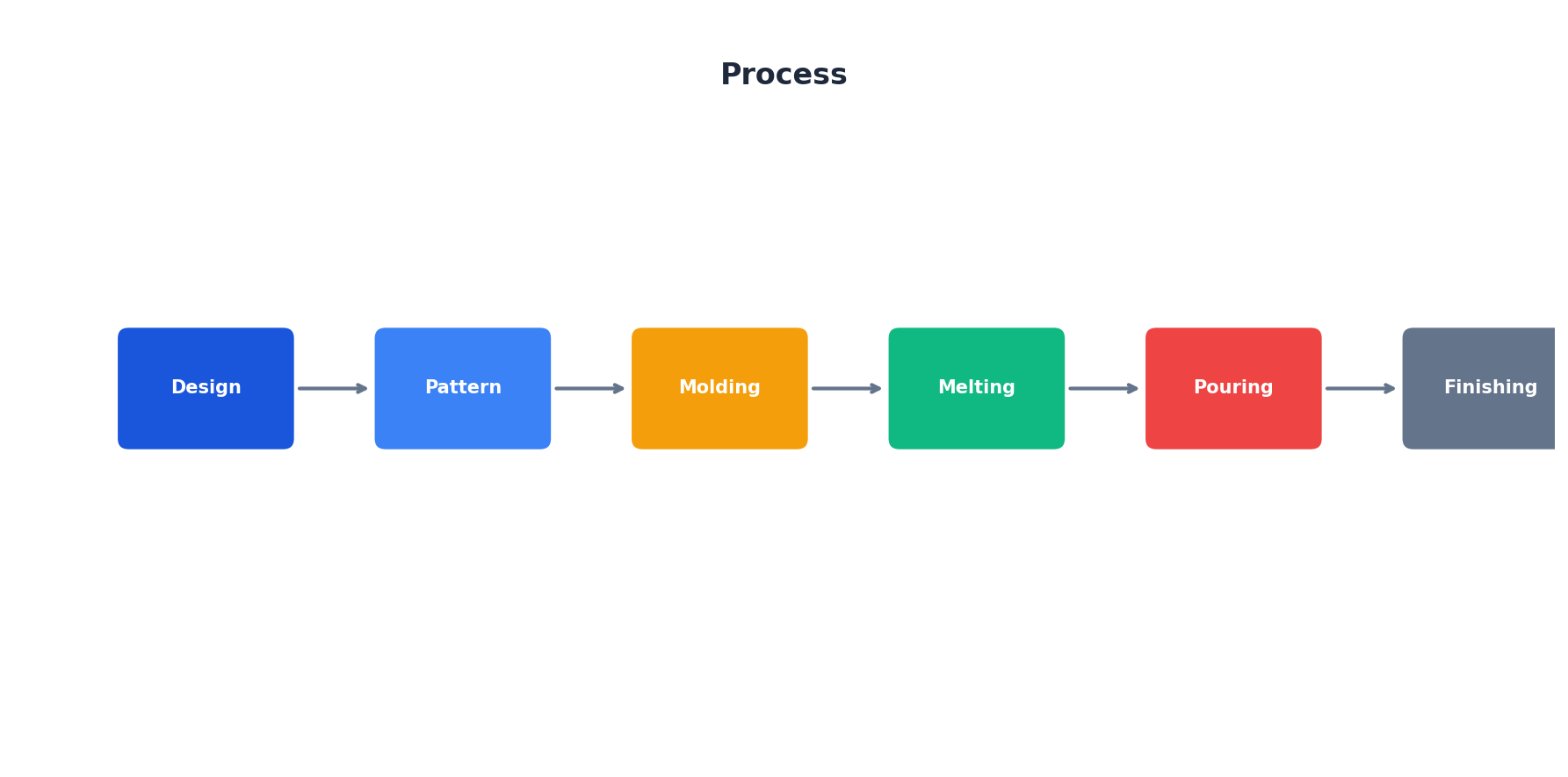
New factory, first order: Factory audit + pre-shipment inspection. Do not skip the audit. For castings this means someone walking the foundry floor, looking at furnace capacity, sand reclamation equipment, heat-treat ovens, and the scrap pile. Ask specifically about their process controls against the standard their part actually calls for — ASTM A48/A48M and GB/T 9439 for gray iron, ASTM A536 and GB/T 1348 for ductile iron, ASTM A27/A27M or A148/A148M for cast steel, ASTM B26/B26M or B108/B108M for aluminum, ASTM B584 for copper alloys. A foundry that can name those standards back to you without looking is worth paying more for than one that just says "we meet international quality." Budget $1,000–$2,000 combined. This is the one time the money is unambiguously worth it.
Established factory, repeat order: Pre-shipment inspection only. $300–$500 for most LCL and small FCL shipments. This is your standing cost of doing business.
New tooling or new part number: Add a first-article inspection on top. Catching a dimensional problem on the sample costs $300. Catching it after 7,000 units are cast costs you the tooling, the run, and six weeks.
Higher-risk parts — safety-critical, pressure-tight, or anything with a machined tolerance under ±0.05mm: add during-production inspection at the 30–50% mark. Once you're past 50%, fixing a process problem means scrapping what's already made.
High-value or theft-prone loads: Container loading supervision. Worth knowing that what's on the loading dock is what's in the container, and that the count matches. $400–$700.
"A quality system on paper is worth nothing. I've walked through forty-something foundries in Shandong and Jiangsu — half of them will sweep the floor the night before an audit. What you want to see is what's in the scrap bin at 3pm on a Thursday, not on the day they know you're coming."
— Brian Miller, oilfield equipment buyer, ~$4M annual casting spend
Brian's point matters more than it sounds. Factory audits have a shelf life. A clean audit from 2024 tells you nothing about a foundry in 2026, especially after they've added a customer and doubled output on the same furnaces. If you're running more than about $500K a year through one supplier, re-audit every 18–24 months, budget $900–$1,600 for it, and expect to catch something.
The ROI Math Nobody Does Before Saying No
Every buyer who skips an inspection does the same mental calculation, and it's almost always wrong in the same direction. They compare the inspection fee against the order value, see a small percentage, and decide it's not worth it.
That's the wrong comparison. The inspection fee should be compared against the cost of the failure it prevents, weighted by probability.
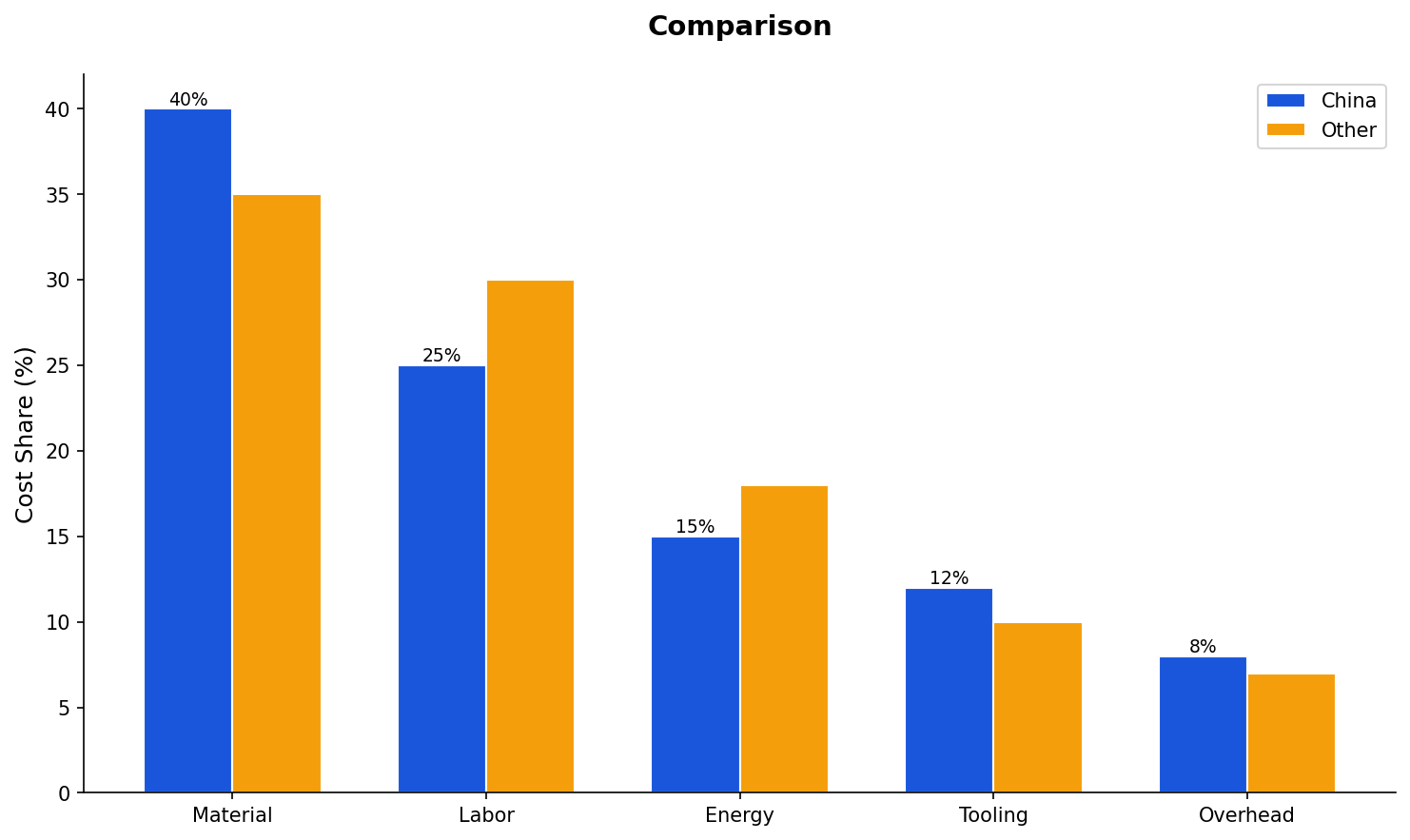
Let's use a real example from my own books. 8,000 hinge castings at $18 landed = $144,000 order. Factory's internal reject rate on this part had historically run around 5–6%, which they mostly caught — but not always, and the misses were the small dimensional issues that only show up on assembly.
If a 6% defect rate reaches my warehouse undetected, that's 480 bad units. My cost per bad unit isn't $18. It's the return, the inspection labor, the replacement shipment, and the customer credit — realistically around $85 each once everything's counted. That's $40,800.
A pre-shipment inspection at $750 doesn't eliminate that. It catches maybe 80–90% of what's detectable by visual and dimensional sampling, so it reduces your expected loss from $40,800 to somewhere around $5,000–$8,000. Net benefit: roughly $32,000–$35,000, for a $750 spend.
Where the 5–6% reject rate comes from: our own incoming inspection logs on this part across seven shipments, 2023–2025. The $85 landed cost per defective unit is my calculation, not a supplier figure — it stacks return freight, replacement cost, labor, and the credit I issued the customer. Your numbers will differ. The method transfers; the values don't.
"I don't budget inspection as a cost center. I budget it as the cheapest insurance I buy all year. On a $40,000 order, a $700 pre-shipment inspection is 1.7% — and that's the only 1.7% that tells me the other 98.3% isn't scrap."
— Brian Miller
Run that math on your own order sizes. You'll find the inspection pays for itself if it prevents defects on roughly 1–2% of a shipment. That's a low bar. Most factories I've worked with, on a bad run, miss by a lot more than that.
There's also the math you can't put in a spreadsheet: the customer who doesn't reorder, the contractor who badmouths you, the insurance claim that gets scrutinized. I'd rather spend $750.
The Certificate Problem: How to Tell a Real Report From a Bought One
Now the uncomfortable part. A meaningful share of "inspection reports" and "material test certificates" circulating in Chinese casting supply chains are not what they appear to be.
Not all of it is fraud. Some of it is laziness: the factory sends you the material cert from the heat they ran three months ago because it was easier to find. Some of it is genuine document reuse. And some of it is outright fabrication — a report number, a lab letterhead, and a signature, for a test that never happened.
I've hit all three. The worst one cost me a heat of ductile iron that showed 4.1% elongation on the cert and 2.3% when I tested it myself. The spec was ASTM A536 65-45-12 — 12% minimum elongation. The certificate said 4.1%, which the factory's own labeling claimed as "in spec." It was not. I caught it because I paid for an independent test.
What actually protects you:
Verify the lab, not the paper
A legitimate Chinese test report will carry one of these marks, and you can verify it independently:
- CNAS (China National Accreditation Service) — verify the accreditation number on the CNAS public database, not on the report itself. The lab's scope of accreditation matters: a lab accredited for water testing is not accredited for tensile testing of metals. Ask for the scope document, not just the certificate.
- CMA (China Metrology Accreditation) — required for reports with legal weight inside China. If a report claims CMA but the number doesn't resolve, treat the report as unaudited.
- ILAC-MRA — the international mutual recognition arrangement. A report with a valid ILAC-MRA mark from an accredited lab will generally be accepted by buyers and insurers in North America and Europe. This is the one you want if your customer is asking for third-party material verification.
Two minutes on the CNAS database has saved me from accepting a fraudulent report. Twice.
Then verify what the test actually proves. A chemistry-only report says nothing about mechanical properties. If your drawing calls out tensile, elongation, or hardness, you need a report that names the specific method — ASTM E8/E8M or ISO 6892-1 for tensile, ASTM E18 or ISO 6508 for Rockwell hardness, ASTM E415 for optical emission spectrometry on carbon and low-alloy steel. A report without a named method is a screenshot, not evidence.
Demand provenance on the photos
Any inspection photo that matters should be timestamped and geotagged. Free apps do this. If the photos in your report have no time or location data, you're looking at pictures of unknown parts, at an unknown place, at an unknown time. Ask for the raw files, not images pasted into a Word document.
Make the lab independent of the factory
This is the big one. If the factory arranges the material testing, the factory controls the sample. That's not testing, it's a formality.
What I do now: on any order with a material spec that matters — anything with a hardness, tensile, or chemistry requirement — I buy one set of test bars myself, pay $150–$400 for the testing, and send them to a lab I selected. If it matches the factory's cert, great, and I have independent confirmation. If it doesn't, I found out before the container left.
"We got a beautiful English report. Stamped, signed, everything looked right. I looked up the report number and the lab wasn't CNAS accredited at all. Somebody paid two hundred dollars and got a piece of paper."
— Brian Miller
Where the Money Actually Goes: A Line-by-Line Budget
Here's what a realistic inspection budget looks like for a mid-sized castings order, so you can sanity-check whatever you're quoted. This is based on a 12-pallet FCL shipment of machined castings out of Zhejiang, landed value around $95,000.
| Line item | Low | High | Notes |
|---|---|---|---|
| Pre-shipment inspection (1 man-day) | $320 | $520 | Mid-tier agency, factory in their home province |
| Travel / per diem | $0 | $220 | Zero if local; $180–$220 if inter-province |
| Independent material test (1 set) | $150 | $400 | Chemistry + tensile, buyer-arranged lab |
| Container loading supervision | $0 | $620 | Only on higher-value or theft-prone loads |
| Factory audit (amortized, once per 2 yrs) | $35 | $70 | $1,200–$1,600 ÷ 20+ orders |
| Total per order | $505 | $1,830 | 0.5% – 1.9% of landed value |
If you're spending more than 2% of landed value on inspection for a routine order from an established supplier, you're either buying brand names you don't need, or your supplier's quality is bad enough that you should be having a different conversation.
If you're spending under 0.4%, you're probably not inspecting anything, and the question isn't whether you'll eat a bad shipment — it's when.
Six Negotiation Points That Cut the Bill
Inspection fees are more negotiable than they look. What I've actually gotten to work:
- Annual retainer or volume agreement. If you're running 6+ inspections a year with the same agency, ask for a rate card with tiered pricing. I cut my per-inspection cost from $480 to $360 by committing to ten inspections annually. No downside — I'd have done ten anyway.
- Bundle the audit and the first PSI. Booking a factory audit and a pre-shipment inspection with the same agency on the same trip often knocks 20–30% off the second line item.
- Use video for the first pass. Remote video inspection runs $120–$300 and is genuinely useful for a first look at a factory's floor, equipment, and housekeeping. It is not a substitute for a physical PSI on a shipment you're paying for. Use it to screen, not to sign off.
- Sample, don't sort. If your inspection scope drifts into "inspect 100% of units," you're paying for the factory's quality failure. A PSI is sampling. If you need 100% inspection, that's a rework conversation with the supplier, and they should pay for it.
- Pay in RMB through a local entity if you can. Some agencies quote in USD at a worse rate than their RMB rate card. Ask for both.
- Get the quote itemized. A single lump sum hides travel, minimums, and extra man-days. A line-item quote lets you push back on each one, and the agencies that won't itemize are usually the ones with something to hide.
Common Mistakes to Avoid
Letting the supplier book the inspection. Covered above, but it's the number one mistake. You've just paid for a report written by someone whose client is the factory.
Inspecting the wrong thing. A pre-shipment inspection checks what's in the boxes. It does not verify that the correct grade of iron went into the furnace, that the heat treatment cycle ran the full duration, or that the chemistry matches the spec on your drawing. Those require material testing and, for critical parts, during-production observation. Buyers who run a PSI and assume they've covered everything are surprised later.
Approving inspection after the container is sealed. Once the doors are shut and the seal is on, your sample is gone. The inspection has to happen while goods are packed, accessible, and before loading. If a factory pushes back on timing, that's information.
Treating a passed inspection as a warranty. A PSI confirms the sample met your criteria on that day. It doesn't cover what's under the plating, invisible internal porosity, or the fact that your drawing's tolerance on a threaded hole was ambiguous and the factory read it differently. Inspection reduces risk; it doesn't transfer it.
Skipping it on the "good" factory. My $41,300 lesson was on a supplier I'd used three times. Good factories have bad runs. New operators, worn tooling, a rush to hit a ship date. The inspection is cheapest on the orders where you're most confident, because that's when you're least likely to be paying attention.
Never auditing, ever. If you've been buying from the same foundry for five years and you've never had a person stand on their floor, you don't actually know anything about your supply chain. You know its output, on the days it happened to be good.
Frequently Asked Questions
How much does a third party inspection cost in China for castings?
Expect $250–$500 per man-day for a local Chinese agency, $350–$600 for a mid-tier international firm, and $500–$1,000 for SGS, BV, or TÜV. Factory audits run higher, typically $600–$2,500 depending on scope. Add $120–$250 for travel if your foundry is outside the agency's home province. For a typical FCL castings shipment, the all-in inspection budget lands between 0.5% and 2% of landed value.
Who should pay for the inspection — me or the supplier?
You should. Contract the inspection company directly, pay them directly, and receive the report as their client. If the supplier books it, you lose control of the scope, the schedule, and the report's audience, and you'll usually pay a markup. The one useful variation is a contract clause where the supplier reimburses the fee if the inspection fails.
Is SGS better than a local Chinese inspection company?
Not inherently. SGS has a stronger brand, deeper lab networks, and more defensible reports — which matters if your customer or insurer requires a specific name. For routine pre-shipment checks on your own behalf, a well-vetted local agency at roughly half the price is often the better value. What matters most is the individual inspector's experience with castings, not the logo on the report.
How do I verify a Chinese inspection or test report is genuine?
Check the laboratory's accreditation on the CNAS public database using the number on the report, and confirm that metals testing is within their accredited scope. Look for CMA or ILAC-MRA marks. Confirm the report names the specific test method — ASTM E8/E8M or ISO 6892-1 for tensile, ASTM E18 for hardness, ASTM E415 for spectroscopy — because a report without a method can't be checked. Demand timestamped, geotagged photos, and ask for the raw image files. If the report matters, buy a second set of test bars and send them to a lab you selected yourself.
Can a Chinese supplier refuse a third party inspection?
They can, and a legitimate one almost never does. A good factory might negotiate the timing, the scope, or who pays — that's normal. A flat refusal to allow a third party on site, or repeated scheduling obstacles when you've proposed a specific date, is one of the clearest red flags in sourcing. Treat it as a reason to look at other suppliers rather than a reason to negotiate harder.
Does a passed pre-shipment inspection guarantee the castings are good?
No. It confirms that a sample drawn from your shipment met your stated criteria on the day of inspection. It doesn't verify material chemistry, heat treatment, internal soundness, or anything hidden under a coating. It also doesn't cover what happens after the container is sealed. Treat it as a meaningful risk reduction, not a warranty.
Next Steps
If you're about to place a castings order and you haven't priced the inspection yet, do it before you send the PO — not after. Two things to lock down this week:
- Get three quotes for a pre-shipment inspection on your actual shipment size. One global brand, one mid-tier, one local. Same scope, same man-days. The spread will tell you more than any article can.
- Decide who contracts and pays. Put it in the purchase order as a buyer-side line item, in writing, before the factory quotes you a piece price.
And run the ROI math on your own numbers once. Take your last order value, apply a 5% defect rate, multiply by your true cost per defective unit, and compare that to a $600 inspection fee. Most buyers who do this exercise stop thinking of inspection as a cost within about ten minutes.
I paid $41,300 to learn that. You don't have to.
Free Download: The 5-Point Castings Inspection Checklist
The exact scope I put in every inspection booking — sampling sizes, dimensional checks, the documentation items most buyers forget, and the photo requirements that make a report defensible.
Get the checklist