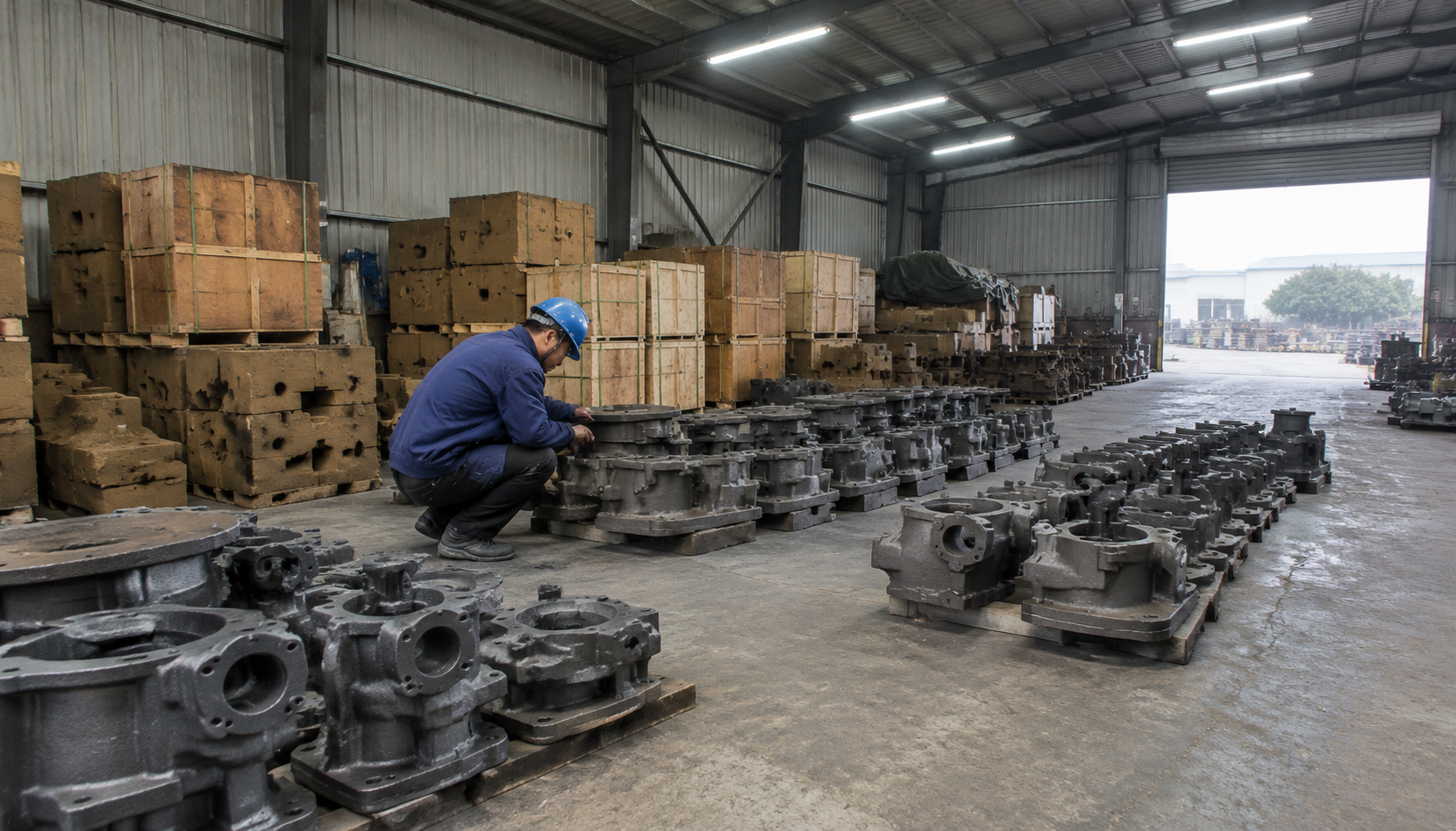
The container arrived on a Tuesday. Three of them, actually — castings out of Qingdao, crated in pine, unloaded into a warehouse outside Dallas.
The first two hundred valve bodies looked fine. Around number four hundred, the receiving inspector stopped and turned one over. The internal cavity looked like a sponge. Gas porosity, everywhere, right through the wall section. No way that part holds 300 psi.
What did the file say? A three-page inspection report, stamped by the supplier, with four photographs and a line that read "visual inspection: qualified." An ISO 9001 certificate that expired fourteen months earlier. And a wire transfer already confirmed by the bank.
That's the moment most buyers start searching for third party casting inspection in China. Not before. After.
You can do better than that. Not because independent inspection is magic — it isn't — but because the difference between a $400 inspection and a $40,000 sorting bill at your own dock is usually not luck. It's knowing what you bought, from whom, and what you told them to look at.
I've bought castings out of Ningbo, Qingdao, Dalian and a dozen places in between for nineteen years, and I've been on the wrong side of this twice. What follows is the version of the conversation I wish somebody had had with me in 2009.
Why castings fail at a distance (and why it's not always the foundry's fault)
Castings are not machined parts. You can't measure a casting into existence. The quality is baked in at the moment molten metal hits the mould cavity, and everything after that is either revealing what happened or hiding it.
Three failure modes account for most of the ugly surprises:
1. Process drift. A foundry runs your job on a Monday with fresh sand and a clean pattern. Six weeks later, same job, same drawing — but the sand binder ratio has drifted, the pour temperature is 30°C lower, and the pattern has worn. Nothing in the paperwork changes. Only the metal changes.
2. Sub-tier switching. Plenty of Chinese trading companies don't cast anything. They subcontract. Your first order came from a decent shop in Ningbo; your second came from a cheaper one in Hebei that nobody told you about. That's not fraud, technically. It's a purchase order with a vague enough factory clause.
3. Standard mismatch. You specified ASTM A536 Grade 65-45-12. The foundry cast to a domestic GB equivalent and wrote "ductile iron" on the shipping paperwork. Tensile elongation came in at 8% instead of 12%. On paper it's iron. In service it cracks.
China's foundry base is enormous — roughly 20,000 casting enterprises by the China Foundry Association's own count, with over 1,200 ISO-certified foundries in Shandong province alone. Roughly four in five are small to mid-sized shops with fewer than 300 employees. Capability varies enormously between them, and the certificate on the wall tells you almost nothing about which one you're actually dealing with.
None of this is an argument against sourcing from China. It's an argument for knowing what's in the box before the box moves.
What third party inspection actually does — and what it doesn't
Let's kill a few illusions first, because buyers walk in with the wrong expectations and then blame the inspector.
An inspection does not guarantee the next shipment will be good. It samples. It tells you what was true on the day the inspector stood on the floor, at the moment the samples were drawn, from the lot that was presented. If the foundry pulls from a different pallet tomorrow, that's a different story.
It does not fix a bad drawing. If your drawing has no acceptance criteria — no AQL, no critical dimension list, no porosity class — the inspector will apply their own judgement or default to a generic visual standard. Then you'll get a report that says "acceptable" and you'll argue about what acceptable meant. That argument costs more than the inspection ever saved.
It does not audit the foundry's management system. That's a different service with a different checklist, and shipping inspection can't substitute for it. More on that distinction further down.
What it does do, and does well:
- Catches the disaster before the freight bill. Scrapped lots discovered in China cost you rework and a few days. Scrapped lots discovered in Rotterdam cost you the ocean freight, the duty, the trucking, and the customer promise.
- Verifies the factory is the factory. An inspector standing at the gate sees whether the CNC machines and the heat-treat line exist, whether the melt shop is running, whether the address on the certificate matches the address on the sign.
- Creates a paper trail you can negotiate with. A signed report from an accredited body is ammunition. A supplier's own report is a courtesy.
- Changes supplier behaviour. This is underrated. Foundries know which buyers inspect and which don't. The ones that inspect get the sand changed on schedule.
What's the practical value? On structural and pressure-tight castings, a properly scoped pre-shipment inspection typically identifies 5–15% of lots with defects severe enough to justify rejection or rework. If your average lot value is $30,000 and you land in the middle of that range, you're looking at roughly $2,000 to $4,000 of rejected goods per lot caught at origin instead of at your dock. The inspection usually costs a fraction of that. The maths only breaks when you scope the inspection so narrowly it can't find anything.
How to tell a real inspection body from a photo studio
This is where most buyers get burned, and it has nothing to do with the inspector's competence. It's about who they work for.
Check the accreditation, not the logo
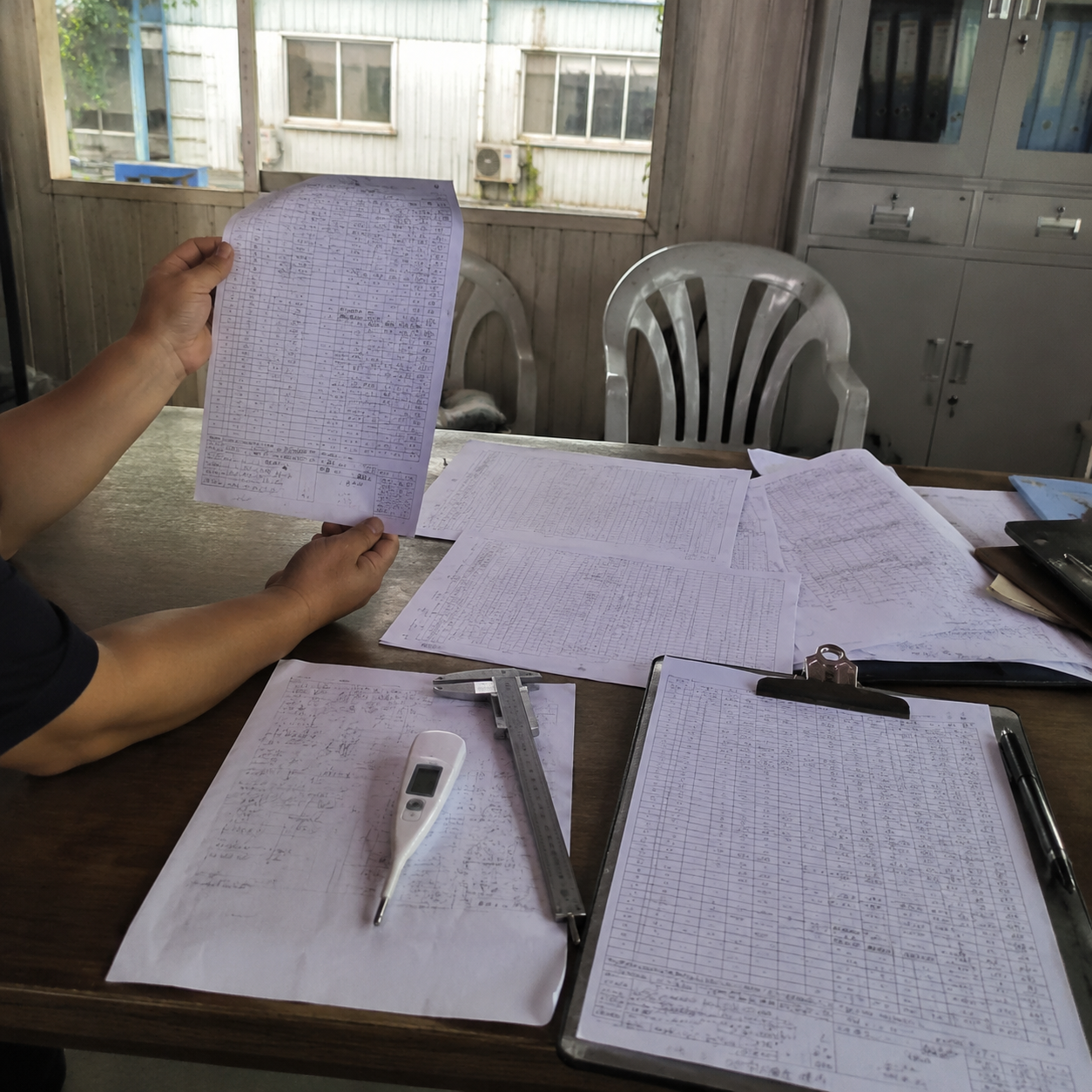
Inspection bodies are accredited under ISO/IEC 17020, which is the standard for bodies performing inspection. Testing labs are accredited under ISO/IEC 17025. These are different things, and a company claiming one while holding the other is already telling you something.
In China, the accreditation body is CNAS (China National Accreditation Service). Any legitimate inspection company will have a CNAS number you can search directly on the CNAS website — not on the company's own brochure. Takes ninety seconds. Do it.
Two more things to look for:
- CMA mark if you need test reports that carry legal weight inside China. The China Metrology Accreditation stamp is required for reports used in domestic regulatory or legal contexts.
- Scope of accreditation. This is the one people skip. An accredited body can still be accredited for a narrow list of activities — say, bulk cargo sampling and factory audits — and not for dimensional inspection of metal castings. Ask for the scope document and read the actual annex. If castings aren't in there, you're buying an unaccredited opinion with an accredited letterhead.
The independence question
Here's the scenario that should worry you most: the inspection company is owned by, affiliated with, or regularly referred by the same trading company that placed your order. Sometimes it's a sister company. Sometimes it's an "independent" firm that gets 80% of its revenue from three trading houses and knows exactly which side its bread is buttered.
Ask directly: who owns this company, and how much of your annual revenue comes from my supplier? You won't always get an honest answer, but the hesitation tells you something.
Robert Davis, a Georgia hardware wholesaler who spends about $1.5 million a year on castings, put it bluntly when we asked him about this: "I've had three 'independent' inspection reports land on my desk in five years that were all produced by the same two inspectors, for the same supplier, with the same photographs — different dates, same shots. Once you see that, you stop trusting the certificate and you start trusting who signed it."
His rule is worth stealing: he now insists that the inspector's employer has never been on a purchase order with that supplier, and he calls the inspector's mobile directly, not the sales office.
Ask what they physically own
A "full inspection" that consists of a guy with a torch and a camera is a visual check, not an inspection. Ask what equipment actually turns up on site or gets used at a lab:
- Optical emission spectrometer for chemistry (this is the one that proves your grade, not a mill certificate photocopy)
- Universal testing machine for tensile and yield
- Hardness tester (Brinell for most irons and steels, Rockwell for heat-treated parts)
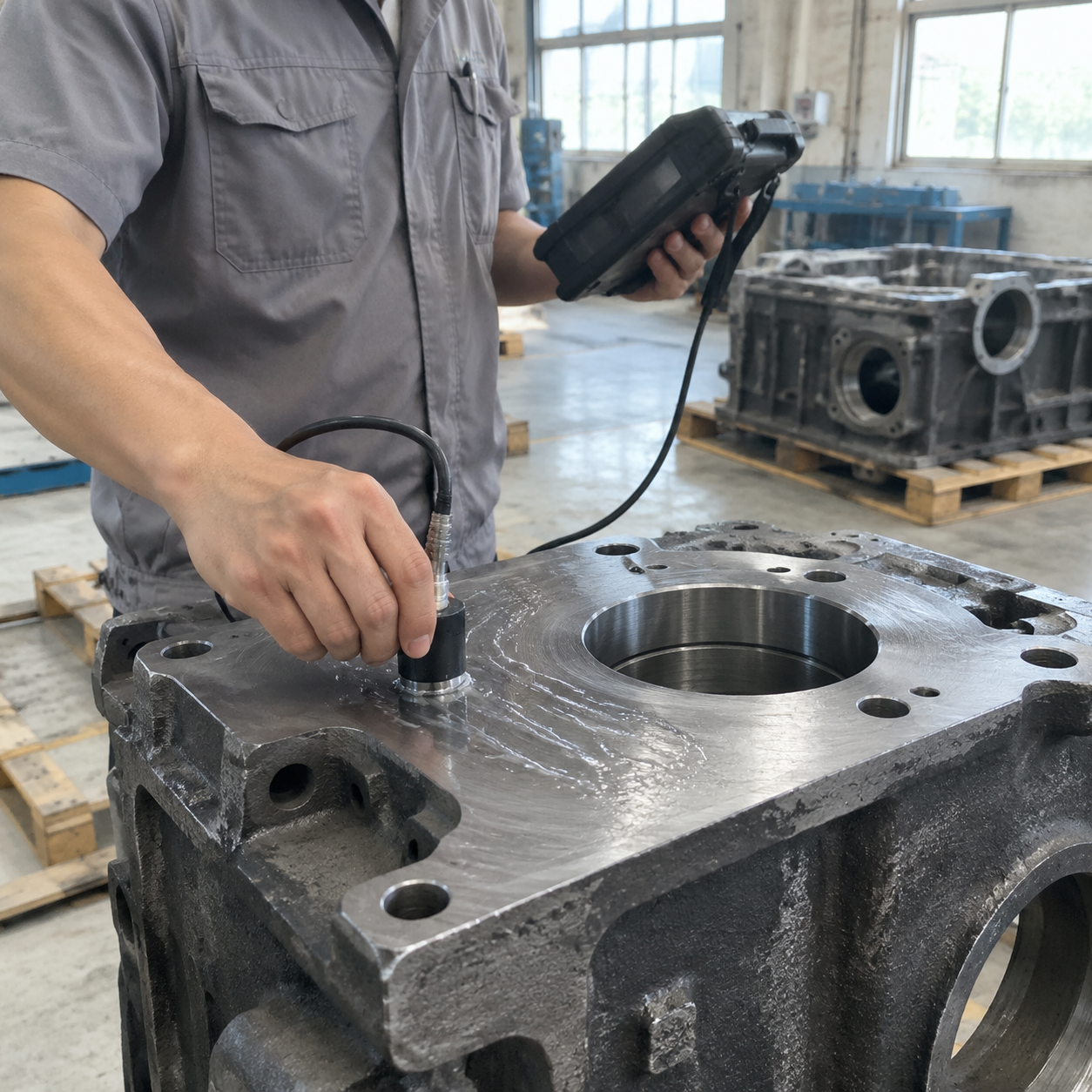
- Ultrasonic flaw detector with probes matched to your section thickness
- Radiography — and if they say yes, ask whether they have a licensed RT facility or subcontract it
- Magnetic particle and dye penetrant kits
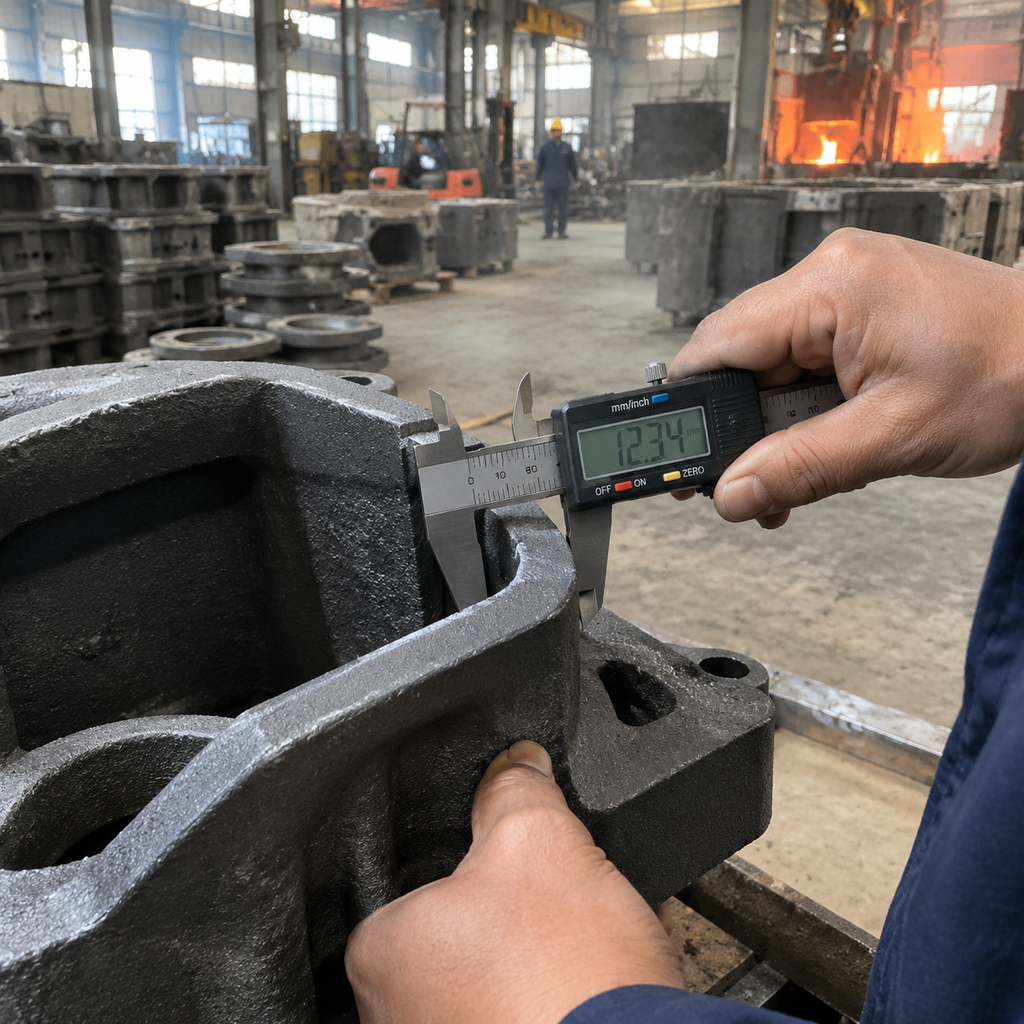
- Calibrated calipers, micrometers, height gauges, and a CMM if your critical dimensions are true-position toleranced
No spectrometer means no metallurgy. That's not negotiable for anything you're going to certify as a specific grade.
Ask who is actually coming
The quotation comes from a sales office in Shanghai. The person on the floor is usually a subcontractor or a regional inspector, and their experience is the only thing you're really buying. Ask for the inspector's name before the visit, ask how many years they spent inside a foundry, and ask what they've inspected in the last month. If the answers are vague, you're paying for a warm body with a clipboard.
The sampling plan comes before the scope
Most arguments about inspection quality are really arguments about sample size. If the inspector looks at twelve parts out of four thousand and signs the lot, you didn't buy a defect rate. You bought a coin flip with paperwork attached.
Use ISO 2859-1 (the same tables as ANSI/ASQ Z1.4) and write the numbers into the purchase order. General Inspection Level II is the normal default. AQL 1.0 for major defects, AQL 4.0 for minor, and zero acceptance on criticals — cracks, wrong grade, wrong dimensions on a safety-related feature.
Concretely: a 5,000-piece lot at Level II gives you code letter L, which is a sample size of 200. At AQL 1.0 that's an acceptance number of 5 and rejection at 6. A 300-piece lot gives code letter H, sample size 50, acceptance 1, rejection at 2 at the same AQL. Those two lots get very different levels of evidence for the same day rate. That's not a flaw in the system — it's what the tables are for.
Two caveats if you're going to use AQL on castings. First, AQL is built for countable defects, not for lot-wide properties. Chemistry and tensile strength are not sampled to AQL — one spectrometer result condemns or clears the whole heat. Treat those as special inspections with their own rule: one failure, whole lot on hold. Second, don't let anyone apply AQL 2.5 to a pressure boundary and call it tight. The acceptance number is a business decision about risk, and the person who owns that risk is you, not the inspector.
The inspection scope that actually works for castings
Most inspection orders fail at the order stage. Buyers write "pre-shipment inspection, standard" and get "standard" back, which is a visual walkthrough and a dozen photographs of pallets.
Here's the scope that catches real problems. Adapt it to your part, but don't cut whole categories without a reason.
1. Dimensional and drawing conformance
Not every dimension. Your critical-to-function list, plus any datum structure the drawing calls out, plus wall thickness at the sections that matter. Wall thickness is where castings quietly go wrong — a core shift of 2mm turns a 6mm wall into 4mm and nobody notices until it fails.
2. Chemistry by spectrometer
On the actual parts, drilled or cut from the lot, not from a separately cast test bar the foundry prepared weeks ago. Carbon equivalent matters for irons. Chrome and nickel content matters when you paid for stainless. If you're still choosing between grades, the materials reference here covers the common specifications and their equivalents.
3. Mechanical properties
Tensile, yield, elongation, hardness. If your drawing references ASTM A536, ASTM A48, ASTM A216, EN 1561, or a GB equivalent, the inspector should be testing against that specific standard's specimen geometry and acceptance values — not a generic "good iron" threshold.
4. Non-destructive testing
- UT (ultrasonic) for internal shrinkage and porosity in heavy sections — standard on pressure-retaining castings.
- RT (radiography) for critical internal soundness, typically with an acceptance level per ASTM E446, E186, or E280 depending on wall thickness.
- MT (magnetic particle) for surface and near-surface cracks in ferromagnetic castings.
- PT (dye penetrant) for non-magnetic grades and for machined surfaces.
Here's the thing buyers miss: NDT acceptance criteria are not universal. "No harmful defects" means nothing. Specify the severity level and the reference standard in the purchase order, or the inspector has no basis to reject anything.
5. Surface and geometry
Flash, fins, cold shuts, sand inclusion, veining, scabs, weld repair. Weld repair deserves its own line item — it's common, it's allowed by many standards under controlled conditions, and it's almost never documented unless you ask. Require a weld repair log with location, size, procedure, and post-repair NDT.
6. Witness and hold points
If the part matters, don't just inspect the finished goods. Ask for hold points during production: pour temperature records, inoculation records, mould hardness, first-article inspection sign-off. A hold point means the foundry can't move to the next stage until the inspector releases it. That costs more per day, but it's the only version that catches process drift in real time.
7. Marking, traceability, and documentation
Heat numbers stamped or cast into the part, matching the heat number on the material certificate, matching the heat number on the test report. That chain either closes or it doesn't. A lot of reports show a heat number on the certificate that appears nowhere on the casting — that's a paper trail with a hole in it, and it's the single most common documentation failure I see.
What to send the inspector three days out
The scope document is only half of what makes a visit useful. The other half is the pack you send ahead of time: the drawing at the revision you actually ordered, your critical-to-function list, the acceptance standard with its revision number, the NDT severity level, previous non-conformance reports on this part number, and the packing list with heat numbers.
If the inspector reads that pack and asks nothing, be suspicious. A good one comes back with two or three questions about datum callouts, test bar location, or how you want a weld repair treated. That reply is a free competence test, and it's the cheapest one you'll get.
Inspect where the parts are made, not where they are packed
Half the inspection failures I've seen had nothing to do with the inspector's skill. The goods were at the wrong address.
Trading companies consolidate. Your order gets cast at a shop in Hebei, machined at a second shop, then inspected at a warehouse in Ningbo where forty other orders are also sitting. The inspector walks in, finds your pallets, checks them, and writes "factory address: Ningbo" on the report. Technically true, practically useless — when a defect shows up, you have no idea which shop produced it and no leverage over either.
Three things to do about it. Confirm in writing that the inspection happens at the production site, with the address matching the business licence. Ask for heat numbers to be visible on the castings at the time of inspection, not just on the paperwork. And if the parts are consolidated, ask for a photograph of the cast-in foundry mark — most decent foundries put one on, and a lot of trading companies discover the real sub-tier at the same moment you do.
What it costs, and where the money actually goes
Pricing for third party casting inspection in China is usually quoted per inspector-day, not per part. Typical rates sit somewhere between USD 300 and 600 per day for a locally based inspector with standard equipment, plus travel and accommodation if the foundry is outside the inspector's home city. Lab work for chemistry, tensile, and radiography is charged per test, not per day.
A single-day pre-shipment inspection at a foundry near Ningbo or Qingdao, covering dimensional, visual, and documentation checks with a chemistry spot check, commonly lands in the USD 400–800 range all-in. Add UT or RT and you can double it. Add a full production witness programme across three days and you're into four figures.
Here's roughly how the quote breaks down, based on the last dozen I've reviewed:
| Line item | Typical range (USD) | Notes |
|---|---|---|
| Inspector day rate | 300–600 | 8-hour day, standard hand tools included |
| Travel and accommodation | 0–250 | Zero if the foundry is in the inspector's city |
| Chemistry by spectrometer | 30–80 per heat | Per test, not per day; covers all elements specified |
| Tensile test | 60–150 per set | Lab turnaround usually 3–7 days |
| UT or MT | 80–200 per hour | Driven by coverage area and probe count |
| Radiography (RT) | 25–60 per film | Licensed facility; film count drives the total |
| Formal stamped report | 0–150 | Some firms charge it separately. Ask. |
Where buyers get quietly overcharged:
- Man-day padding. "Two inspectors for three days" when one inspector for two days would do the job. Ask for the task list against the days.
- Sample quantity ambiguity. "Sampling per AQL" without stating the inspection level. Get the lot size, the sample size and the acceptance number in writing before the quote is final.
- Report as an extra. Some firms charge separately for the formal report, for photographs, or for a signed and stamped copy. Ask what's included in the day rate.
- Travel markups. Flights and hotels billed at a margin. Ask for receipts, or negotiate a fixed travel allowance.
Davis again, on cost: "Every dollar I've spent on inspection with a scope I actually wrote has paid for itself. Every dollar I've spent on a report somebody else wrote for me has been a waste. I don't haggle on the day rate. I haggle on the scope — I want the spectrometer used, and I want to know what the acceptance number is before they start."
That's the correct instinct. The cheapest lever isn't the inspector's daily rate. It's not paying for five tests on a part where two of them are decorative.
Reading the report without getting fooled
A credible inspection report has seven things in it. If any are missing, the report isn't complete, regardless of how thick it is.
- Scope statement — exactly what was inspected, against which standard, with which acceptance criteria.
- Sampling plan — lot size, sample size, inspection level, acceptance and rejection numbers.
- Identification — supplier name, factory address visited, PO number, part number, heat numbers, quantity presented.
- Measured values, not adjectives. "Wall thickness 5.8mm at section A-A, drawing nominal 6.0mm ±0.5" tells you something. "Dimensions satisfactory" tells you nothing.
- Instrument identification and calibration status for every gauge used. This is what separates a 17020 body from a freelancer.
- Photographs with context — dated, showing the defect in place with a scale reference. A close-up of a hole with no surrounding context is not evidence.
- Signature, stamp, accreditation number, and date. And the inspector's name, so you can call them and ask a question — which you should, on at least one report, just to see whether they remember standing there.
The result line usually reads one of three ways: pass, fail, or "pass with observations." That third one is where you need to read carefully. It means the inspector found something they don't consider grounds for rejection under your stated criteria, but which they want on record. Sometimes it's a minor surface blemish. Sometimes it's a weld repair that nobody documented. Read the observation notes and decide whether your acceptance criteria were written loosely enough to let a real problem through.
When the lot fails: the part nobody plans for
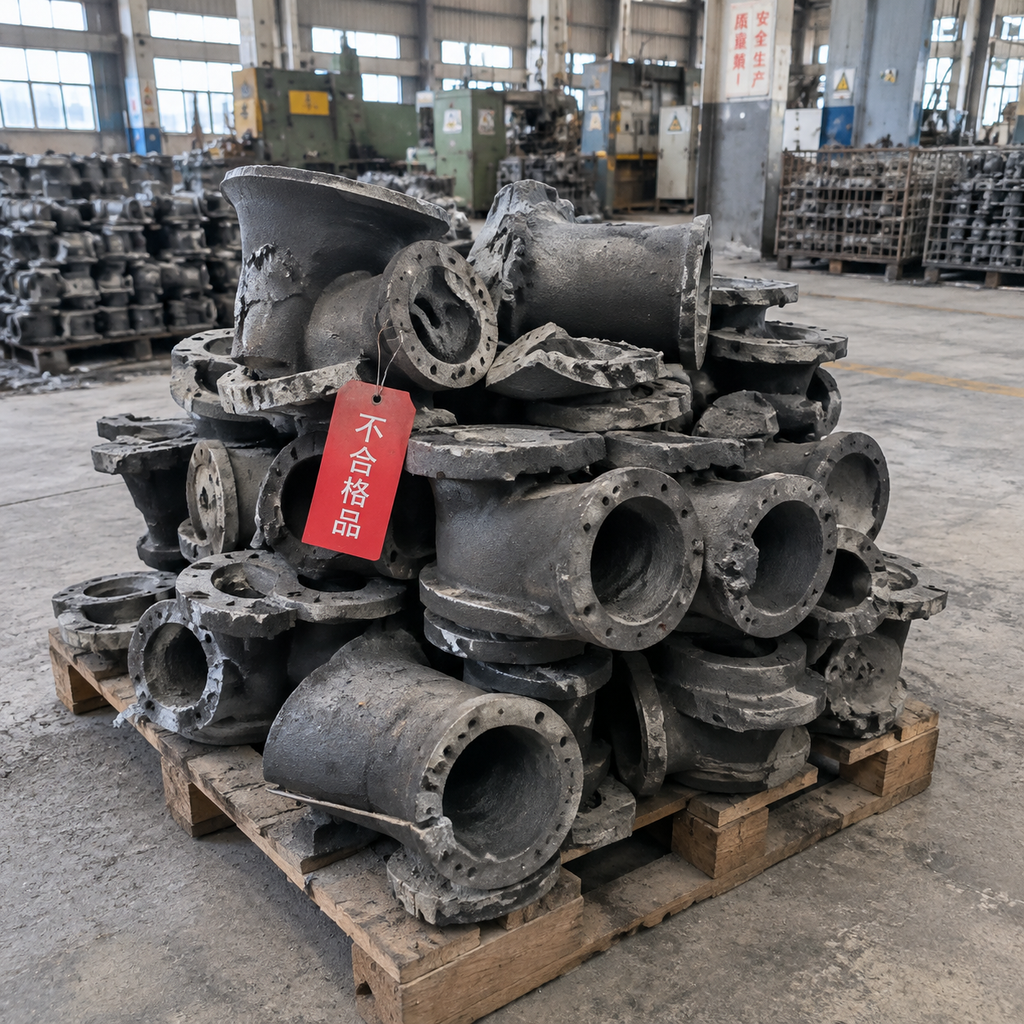
Your inspection fails. Now what? This is where the contract you signed in January pays for itself or doesn't.
Four things need to be true, and they need to be true before you place the order:
The deviation clause. Written into the PO: if third-party inspection fails, the supplier bears the cost of re-inspection, and the payment milestone does not release until a passing report is issued. Without this, you're negotiating from a position where the money already moved.
The retention lever. Hold 10–20% of the order value until final inspection acceptance. It's a small number that carries a lot of weight.
The rework versus reject decision framework. Sorting and reworking at the foundry is usually far cheaper than anything else. Agree in advance what the sorting labour rate is and who pays for it, and agree who signs off the rework. If the answer is "the foundry's QC," you don't have a decision framework, you have a hope.
The second inspection. If rework happens, get it re-inspected by the same body, with the same inspector if possible. A rework sign-off from the foundry's own QC doesn't close the loop.
One practical note: don't wait until the lot is finished before you find out it's wrong. If the failure mode is metallurgical — wrong chemistry, wrong grade, wrong heat treatment — catching it at pre-shipment means the entire lot is scrap and the whole production run is wasted. A first-article inspection at the start of the run, or a hold point after the first 50 pieces, is where that conversation should happen.
Common mistakes that waste your inspection budget
I've watched all of these happen, and I've made two of them myself.
Booking the inspection on the supplier's recommendation. Of course they recommended someone. Ask why, and check whether that company has ever worked for anyone else.
Inspecting after the goods are packed and waiting for the truck. At that point the only outcome is pass or delay. There's no room for rework. Give yourself a week of buffer between final inspection and vessel departure.
Letting the foundry choose which pallets get presented. Random selection by the inspector, from the full lot, is the entire point. If the foundry pre-selects the sample, you've bought a demonstration, not an inspection.
Skipping the drawing review before the inspection. Send the pack at least three working days before the visit. If they ask no questions, be a little suspicious.
Ignoring the factory address. Confirm in writing that the inspection will take place at the production site, and that the address matches the business licence. The number of times a "factory visit" turns out to be a trading office with a sample room is not small.
Not telling the inspector what the part does. An inspector who knows the casting is a valve body holding 300 psi looks harder at the wall section than one who's been told it's a bracket. One sentence about the service condition costs nothing and changes where they point the torch.
Choosing between an international inspection firm and a local one
The big international names — SGS, Bureau Veritas, Intertek, TÜV — carry brand recognition your own customers may recognise. They're also usually the most expensive per man-day, and their inspectors are often stretched across a wide region. That doesn't make them worse. It makes them a different product.
A good local Chinese inspection body with the right CNAS scope can be excellent on castings specifically, because the inspectors may have spent a decade in foundries. They'll notice core shift by looking at the parting line. They'll know which local labs can turn a tensile test around in three days instead of ten.
The decision usually comes down to who your end customer needs to see on the report. If your customer's quality department has a preferred list, use it. If not, choose on scope and independence, not on the size of the logo.
Frequently asked questions
How much does third party casting inspection in China cost?
Expect roughly USD 300–600 per inspector-day for a locally based inspector, plus travel if the factory is remote. A one-day pre-shipment inspection with dimensional, visual, and documentation checks typically comes in at USD 400–800 all-in. Non-destructive testing and laboratory work are charged separately per test and can push a full programme well past USD 2,000.
Can I arrange inspection if I've already paid the deposit?
Yes, and you should. The deposit is at risk, but the balance usually isn't. Hold the final payment against a passing inspection report — that's the single most effective clause you can add to a PO, and it's still negotiable mid-project if the relationship is otherwise fine.
What's the difference between a factory audit and a product inspection?
An audit assesses the capability and systems of the supplier — equipment, calibration, quality management, process control. A product inspection assesses a specific lot of specific parts against a specific specification. If you've never worked with a foundry before, you want the audit first, then inspection on every shipment until the process proves stable.
How far in advance should I book?
Five to seven working days is realistic for a standard pre-shipment inspection, and it gives you time to send documentation and let the inspector review it. During peak season — September through November, ahead of Chinese New Year — book two weeks out. Short-notice inspections are available but you'll pay a premium and sometimes get whoever's available, which is not always who you want.
Do I need an inspection on every shipment?
Not forever, but longer than you'd like. A reasonable pattern is inspection on every lot for the first three shipments, then every other lot, then random lots — and back to every lot the moment you change foundry, change drawing revision, or go more than six months without an order. Process drift doesn't announce itself.
Can I use the report in a dispute?
Sometimes, and it depends entirely on who wrote it. A stamped report from an ISO/IEC 17020 accredited body, with measured values, instrument calibration IDs, and dated photographs, is usable evidence in a commercial dispute or an arbitration filing. A supplier-generated report is not independent evidence and carries almost no weight. If you think a dispute is possible, tell the inspection body before the visit — they handle the evidence chain differently when they know it may be needed.
What if the foundry refuses to let an inspector on site?
Treat it as a red flag, not a scheduling problem. Put a site access clause in the purchase order before you pay anything. A foundry that won't allow an accredited inspector through the gate is usually protecting a sub-tier supplier, an expired certification, or a process that doesn't match the quotation. In fifteen years I've seen two legitimate refusals, both during government safety shutdowns, and both were resolved by rescheduling within a month.
What to do next
If you're about to release a balance payment on castings you haven't seen, stop and write three sentences into the PO: what the acceptance criteria are, which standard governs them, and that final payment releases only on a passing report from an accredited third party.
Those three sentences are worth more than any inspection report you'll ever buy.
If you're earlier in the process — selecting a foundry, or deciding whether the one you're talking to is actually the one that will cast your parts — start with the factory audit, not the product inspection. Our foundry audit checklist for China walks through that visit item by item, and the casting defect identification guide covers what an inspector should be pointing at when they say "porosity."
And if you want a second set of eyes on the inspection scope before you commission one, that's a conversation worth having.
Need Help with Third Party Casting Inspection in China: Buyer's Checklist?
Get matched with 3 verified foundries in 24 hours. No markup, transparent pricing.
Request Quotes →Email cfwc@163.com · WhatsApp +86 159 4126 7000 · or Request a Quote from verified foundries →