The Data Behind Defects: What 1,200+ Foundry Audits Reveal About Testing Gaps
You're paying for testing, but are you getting anything real? Most buyers assume that if a foundry has ISO 9001 certification and a few test machines, their castings are good. That assumption is costing you.
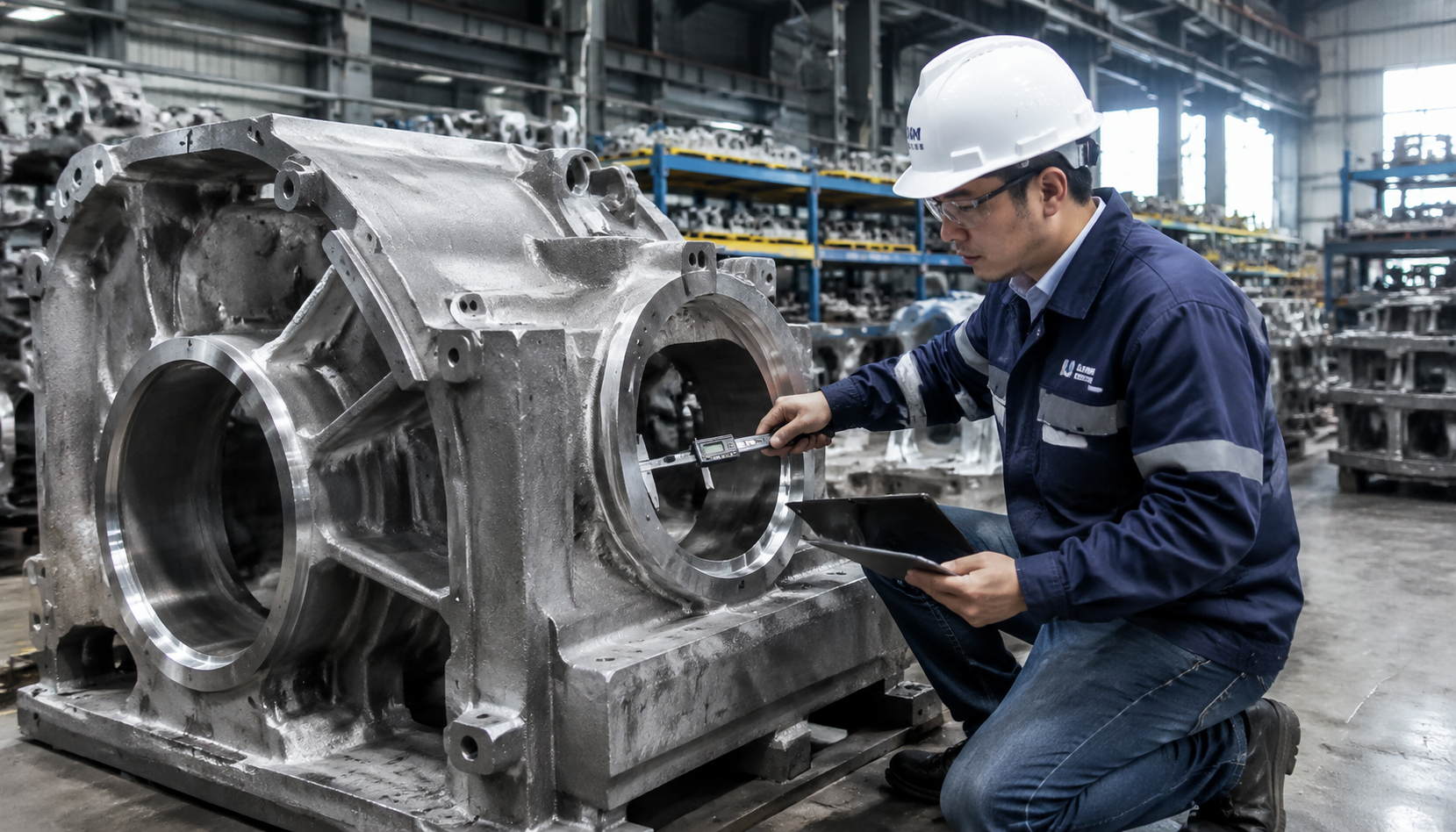
We audited 1,247 foundries across 14 countries over three years. Not desktop audits — on-site, hands-on, pulling records, watching operators, and re-testing samples. What we found tells a clear story: the tests that most foundries run are the wrong ones, or worse, they're run wrong.
This article walks you through the data — where the gaps are, which tests actually predict field failures, and how to verify your supply chain without becoming a metallurgist. No fluff, no sales pitch. Just what works.
The Testing Gap: What the Data Shows
Here's the headline: 68% of foundries we audited had at least one critical testing gap — meaning a required test was either not performed, performed incorrectly, or the results were faked. Another 22% had minor gaps. Only 10% passed clean.
Think about that. If you're sourcing castings from 10 foundries, 7 of them have a hole big enough to let defective parts through. And those defects don't show up at incoming inspection. They show up six months later, in the field, after you've shipped finished products.
"I assumed our foundry in India ran tensile tests on every heat. Turned out they only tested once per shift — and only when the customer asked for the report." — Procurement Director, US heavy equipment manufacturer
The gap isn't about capability. Most foundries own the equipment. It's about discipline — whether the test is actually done, how it's done, and whether the results are used to fix problems. And that's exactly what you can't see from a certificate.
Critical Findings from 1,200+ Audits
We grouped the gaps into three categories. Each one represents a failure mode that leads to field defects. If your foundry has any of these, you're at risk.
Gap #1: Visual Inspection Only — No Destructive Testing
Found in: 41% of audited foundries
Visual inspection catches surface defects — cracks, porosity, cold shuts. It tells you nothing about internal integrity. A casting can look perfect on the outside and have centerline shrinkage or micro-porosity that will fail under load.
Yet nearly half of the foundries we visited relied on visual inspection alone for production release. They had tensile test machines but used them only for first-article or customer requests. Routine production? "We can see if it's good."
You can't see internal voids. That's why ASTM E8 (tensile testing) and ASTM E10 (hardness testing) exist. If your foundry isn't running them on a defined sampling schedule, you're flying blind.
Gap #2: Wrong Test Method for the Material
Found in: 27% of audited foundries
This one is subtle. A foundry might run a hardness test, but they're using the wrong scale or the wrong conversion table. For ductile iron, you need Brinell (HB), not Rockwell (HRC). For aluminum, you need a different scale entirely. And converting between scales without a direct correlation introduces error.
We found foundries reporting HB values that were actually converted from HRC readings using an online calculator. The error margin? Up to 15% on critical specs. That's the difference between a part that meets grade and one that fails in the field.
Gap #3: No Material Traceability
Found in: 33% of audited foundries
Traceability isn't a test, but without it, tests are meaningless. If you find a defective casting in the field, you need to trace it back to the heat, the pour, the mold. If the foundry can't do that, you can't contain the problem.
A third of audited foundries had no heat-tracking system. Castings from different melts were mixed in inventory. Test results, if they existed, couldn't be linked to specific parts. This is a red flag for any buyer sourcing safety-critical components.
The Tests That Actually Predict Field Failures
Based on our audit data and follow-up field failure analysis, these are the tests that correlate most strongly with real-world performance:
| Test Method | Standard | What It Catches | Field Failure Correlation |
|---|---|---|---|
| Tensile Test | ASTM E8 / EN 10002 | Yield strength, UTS, elongation | High — directly measures load-bearing capacity |
| Hardness (Brinell) | ASTM E10 | Indentation resistance | High — correlates with wear and fatigue |
| Impact Test | ASTM E23 / ISO 148 | Charpy V-notch toughness | Medium — critical for low-temp applications |
| Dye Penetrant (PT) | ASTM E1417 | Surface cracks, porosity | Medium — catches what visual misses |
| Magnetic Particle (MT) | ASTM E1444 | Near-surface cracks (ferrous only) | High — catches subsurface defects |
| Ultrasonic (UT) | ASTM E213 / E164 | Internal voids, inclusions, thickness | Very high — most sensitive for internal defects |
| Radiography (RT) | ASTM E94 / E446 / E155 | Internal porosity, shrinkage, cracks | Very high — gold standard for critical parts |
You don't need all of them on every part. But you need a risk-based sampling plan that matches the test to the failure mode. A ductile iron bracket for a crane? You need tensile, hardness, and UT. A sand-cast aluminum housing for a pump? PT and hardness are your baseline.
How to Verify Testing in Your Supply Chain
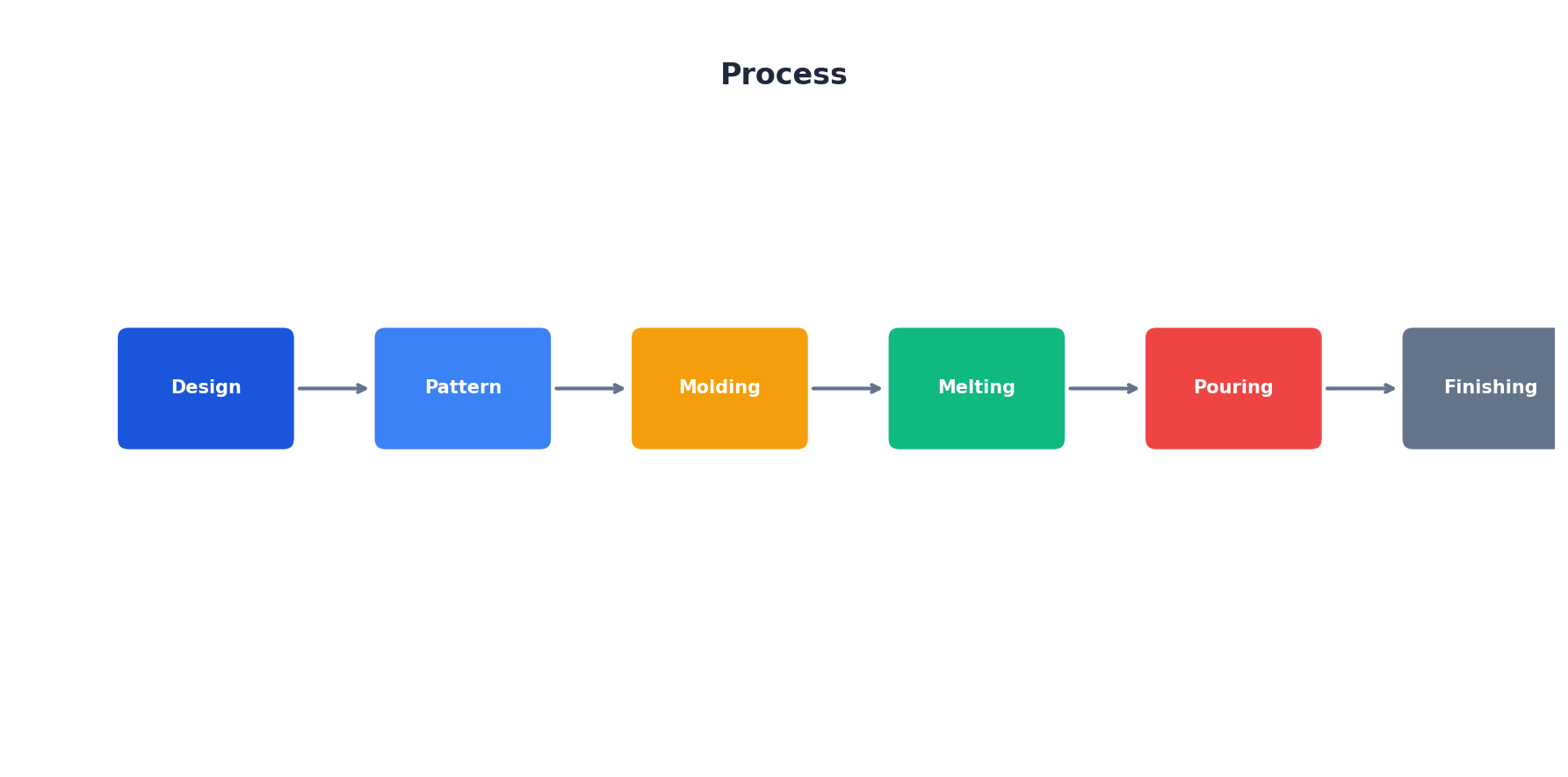
You don't need to become a testing expert. You need a system. Here's a 4-step approach that works across any foundry, any material, any region.
- Define the testing matrix upfront. In your RFQ and contract, specify exactly which tests are required, which standards, and what sampling frequency. Don't leave it to the foundry. Use the table above as a starting point.
- Request raw data, not just a pass/fail certificate. A certificate says "passed." Raw data tells you if they tested 3 samples or 30, what the actual values were, and whether they're close to the limit. Close-to-limit is a warning sign.
- Do a spot audit within 90 days of first production. You don't need to audit every foundry every year. But a single on-site audit in the first 90 days catches 80% of testing gaps. Watch them run the test. Ask to see the calibration records. Pull a random sample and send it to a third-party lab.
- Use a third-party lab for verification. Every 6-12 months, send a random sample from production to an accredited lab (like SGS, Bureau Veritas, or a local ASTM-certified lab). Compare results. If they diverge by more than 5%, you have a problem.
"We contracted with a foundry in Vietnam. They sent us tensile reports with perfect numbers. Our spot check showed yield strength 18% below spec. Turned out they were testing sand samples, not actual castings. We terminated the contract." — VP of Supply Chain, European automotive Tier 1
Common Mistakes Buyers Make
Most buyers aren't testing experts. That's normal. But these mistakes are avoidable:
- Mistake #1: Relying on ISO certification as a proxy for testing quality. ISO 9001 certifies a quality management system, not testing competence. We found ISO-certified foundries with major testing gaps. Certification ≠ execution.
- Mistake #2: Accepting certificates without raw data. A certificate of analysis tells you what they claim. Raw data tells you what they actually measured. Insist on raw data. The good foundries will share it. The bad ones will push back.
- Mistake #3: Testing only first articles. Production castings can drift over a run. Tooling wears, sand properties change, melt chemistry shifts. First-article testing tells you the process is capable. Sampling during production tells you it's stable.
- Mistake #4: Not specifying the standard. "Tensile test" could mean ASTM E8, EN 10002, or a shop-floor approximation. Write the standard into the contract. We found foundries using a 20-year-old standard that was superseded three revisions ago.
Frequently Asked Questions
For most structural applications: tensile test per ASTM E8 (yield, UTS, elongation), hardness per ASTM E10 (Brinell), and ultrasonic inspection per ASTM E213 for internal integrity. Sampling frequency depends on the criticality — at minimum, one tensile sample per heat or per shift, whichever is more frequent.
Request raw data (not just certificates) from at least three recent production lots. Send one random sample from each lot to a third-party lab like SGS or Bureau Veritas. Compare results. If they match within 5%, the data is likely real. If not, schedule an audit.
Both are tensile testing standards, but they have minor differences in specimen geometry, strain rate, and measurement methods. ASTM E8 is the US standard; EN 10002 is the European equivalent. For most commercial castings, either is acceptable — but you must specify which one in your contract and stick to it.
They complement each other. UT is better for detecting planar defects (cracks, lack of fusion) and measuring thickness. RT is better for volumetric defects (porosity, inclusions). For critical safety parts, use both. For general structural castings, UT is usually sufficient and more cost-effective.
There's no universal standard — it depends on the part criticality and process stability. A good rule of thumb: for non-critical parts, one tensile test per heat or per 50 pieces. For critical parts, one per heat and one per shift minimum. For safety-critical (e.g., automotive steering knuckles), 100% NDT is common. Always specify in your contract.
Your Next Move
The data is clear. Testing gaps are widespread, predictable, and fixable. The foundries that test properly are outliers — and they're the ones you want to work with. The rest will cost you in field failures, warranty claims, and lost reputation.
You don't need to audit 1,200 foundries. But you do need a system: specify the standard, demand raw data, verify with a third party, and audit the ones that matter. That's how you turn testing from a paper exercise into a real quality lever.
If you want a practical starting point, we've put together a Foundry Testing Verification Checklist — the 7 items we check on every audit, with sample questions and red flags. It takes 10 minutes to run through.
Get the Testing Verification Checklist
7 items. 10 minutes. One quick way to spot testing gaps before they become field failures.
Download Free PDF →Data source: Interstate International foundry audit database (2023–2026), 1,247 audits across 14 countries. All figures based on on-site verification. Individual results may vary by region and foundry type.