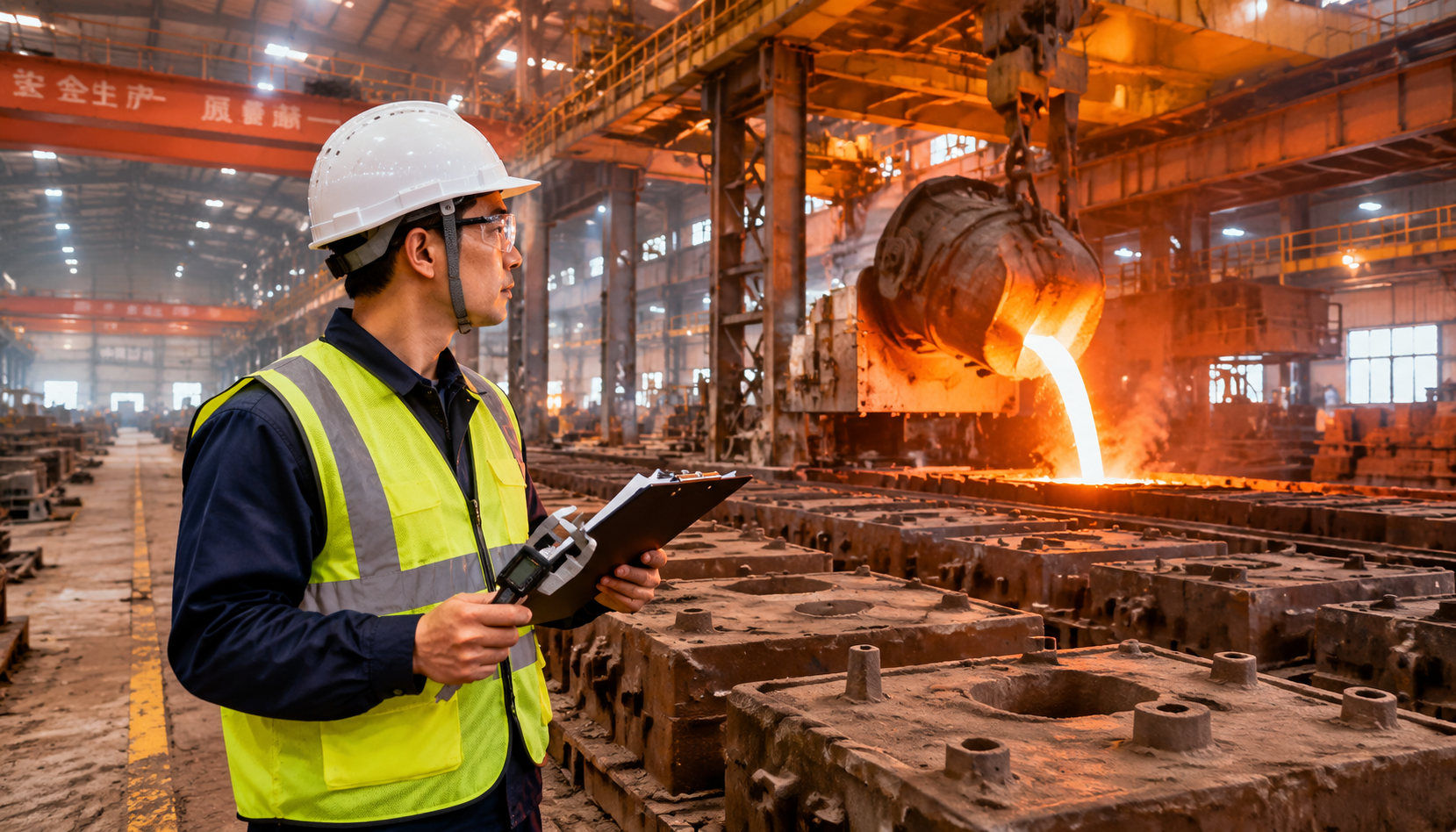
China pours somewhere around 50 million metric tons of castings a year. That's roughly 45% of global casting output, according to annual figures published by the American Foundry Society and Modern Casting. If you buy metal parts at any real volume, the odds are good that a chunk of your supply chain runs through a Chinese foundry.
Now the uncomfortable part. Industry estimates put the number of casting plants in China north of 20,000. Maybe 3,000 to 5,000 of them are big enough and organized enough to survive a serious audit from a Western buyer. The rest range from "surprisingly good" to "will ship you porosity you didn't ask for and a mill certificate that belongs to a different heat number."
That gap is the entire reason third-party inspection exists. And it's why you're searching for SGS and Bureau Veritas rather than just trusting the supplier's own QC stamp.
Here's the problem: most buyers pick an inspection agency the way they pick a hotel — by brand recognition, then by price. That's backwards. What matters is whether the specific inspector who shows up at that specific foundry knows the difference between a shrinkage cavity and a gas pore, and whether the report you get back tells you something you couldn't already guess.
This piece breaks down what SGS, Bureau Veritas, TÜV and Intertek actually do in a Chinese casting context, where their rates land, and — more importantly — how to verify the certifications your supplier keeps waving at you.
The Real Cost of Skipping Third-Party Inspection
Let's put numbers on it before we get into agency comparisons.
A rejected container of castings isn't just the value of the parts. It's:
- Freight both ways. A 40ft container from Shanghai to Houston runs $3,500–$6,500 depending on season. If it comes back, you pay twice.
- Line-down exposure. If those castings feed an assembly line, a two-week delay can cost more than the entire order.
- Rework or scrap. Machining a bad casting usually just converts a bad casting into a bad machined part with more labor sunk into it.
- The second order. Once you've found a defect, you're paying for re-inspection, and possibly for a new supplier qualification cycle.
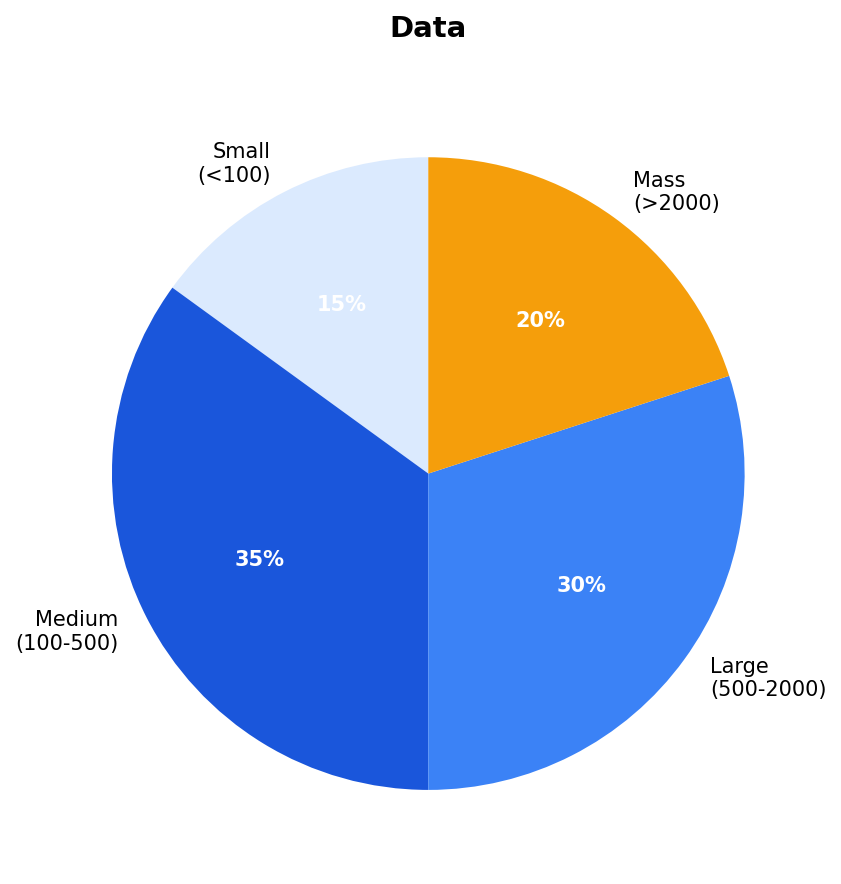
A pre-shipment inspection on a casting order typically runs $400–$1,200 per batch. A full foundry audit runs $1,500–$3,000. Compare that against one rejected shipment and the math stops being close.
Roughly 1 in 5 first-time orders from a new Chinese foundry fails some part of a pre-shipment inspection — usually dimensional or surface defects. That's an industry rule of thumb from buyers and inspection firms, not a published statistic. Treat it as a planning assumption, not gospel.
The point isn't that Chinese foundries are bad. Plenty of them are excellent. The point is that the variance is wide, and you can't tell which end of the distribution you're dealing with until someone qualified stands on the floor.
SGS vs Bureau Veritas vs TÜV vs Intertek: Who Actually Does What
All four are legitimate, globally recognized inspection bodies. All four have offices in Shanghai, Ningbo, Qingdao, Guangzhou and the main industrial corridors. All four will take your money.
The differences show up in three places: sector depth, inspector quality on the ground, and how their local branch is staffed.
The short version
| Agency | Founded | Strongest In | Where They're Weak for Castings |
|---|---|---|---|
| SGS | 1878 | Broad coverage, huge China footprint, strong consumer goods and industrial | Can feel like a generalist shop; inspector assignment is luck of the draw |
| Bureau Veritas | 1828 | Oil & gas, marine, pressure equipment, heavy industrial | Higher rates in specialized sectors; slower scheduling in inland provinces |
| TÜV Rheinland / TÜV SÜD | 1870s | European compliance, PED, machinery directive, functional safety | Fewer inspectors in China for foundry-specific work; premium pricing |
| Intertek | 1885 | North American retail supply chains, testing labs | Casting metallurgy depth varies by branch |
If you're buying valve bodies, pump housings, wellhead components or anything headed into a pressure application, Bureau Veritas tends to have the deepest bench. Their oil and gas practice dates back decades, and their inspectors in the Tianjin and Dalian corridors have seen a lot of heavy castings.
If you need a one-stop shop that can also handle your supplier's social compliance audit, packaging check and container loading supervision, SGS is usually the more practical pick. Their China network is enormous.
If your castings need to satisfy the EU Pressure Equipment Directive or you need a notified body signature, that narrows things fast. TÜV or Bureau Veritas under their notified body status, depending on the scope.
The part nobody tells you
The agency brand matters far less than the individual inspector. A senior BV metallurgist who's spent 12 years in foundries will outperform a junior SGS inspector on a first assignment, every single time. And both agencies will send you whoever's available if you book late.
What you can control:
- Request CVs before assignment. Ask for the inspector's name, years in casting, and relevant standards experience. Legitimate agencies will provide this.
- Specify the inspection scope in writing. Vague scopes get vague reports.
- Ask who signs the report. The signatory should be the person who was on site, not a supervisor in an office.
- Book early. Two to three weeks' lead time gets you a better inspector than a 48-hour rush job.
One more thing worth knowing: NDT inspectors should hold certification under a recognized scheme — ASNT Level II/III in the US, or ISO 9712 / PCN in Europe. Ask for the certificate. Someone who "does UT" and someone who holds a UT Level II ticket are not the same person, and the price difference between them tells you which one is showing up on your job.
What a Casting Inspection Actually Covers
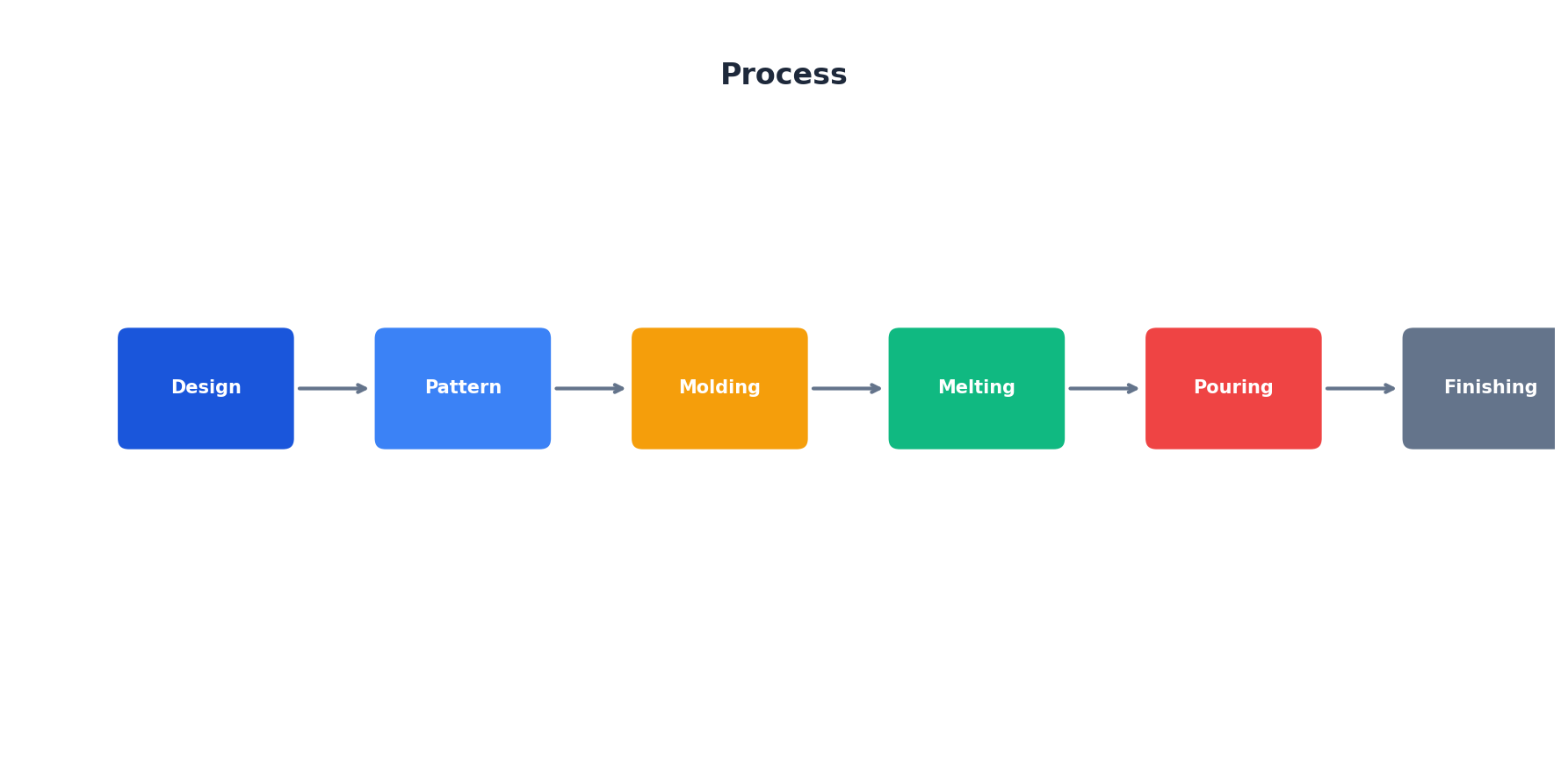
"Inspection" is a word that hides a lot. When you book a third-party inspection on castings, you need to know which of these you're buying, because they carry very different price tags and none of them is a substitute for the others.
1. Document and certification review
Before anything gets touched, the inspector checks the paperwork trail. This is where a shocking number of problems surface.
- Heat number traceability from melt to finished part
- Material certificates (EN 10204 3.1 or 3.2)
- Heat treatment records with time-temperature charts
- Qualification records for welders, if welding is involved
- Calibration certificates for the foundry's own measuring equipment
A 3.1 certificate is issued by the manufacturer based on their own testing. A 3.2 certificate requires an independent third party — either the inspector or the buyer's designated representative — to witness or perform the testing. If your supplier hands you a 3.1 and calls it "third-party certified," they're either confused or hoping you are.
2. Chemical analysis
Optical emission spectrometry on the actual part or a test coupon from the same heat. The inspector compares results against the specification — ASTM A216 WCB, A351 CF8M, A536 ductile iron, DIN 1691, whatever your drawing calls for.
Common failure: silicon or carbon slightly out of range, which changes mechanical properties just enough to matter in service.
3. Mechanical testing
Tensile strength, yield, elongation, hardness, and in some cases impact toughness at low temperature. These require machined test bars, either cast-on or cut from a sacrificial part.
For low-temperature service — think oilfield equipment in Alberta or the North Sea — the Charpy impact test at -46°C is the one that kills orders. Foundries that haven't dialed in their heat treatment routinely fail this.
4. Non-destructive testing
Four main methods, and you should specify which ones your drawing actually requires rather than accepting whatever the foundry does by default:
- RT (Radiographic Testing) — X-ray or gamma. Finds internal porosity, shrinkage, inclusions. Expensive, slow, but the most revealing for critical sections.
- UT (Ultrasonic Testing) — Finds internal discontinuities in heavier sections where RT can't penetrate. Needs a trained operator; results are operator-dependent.
- MT (Magnetic Particle Testing) — Surface and near-surface cracks in ferromagnetic materials only.
- PT (Penetrant Testing) — Surface-breaking defects in any material, including stainless and aluminum.
Acceptance criteria should follow a defined level — ASTM E446, E186, E280 for steel castings, or your own written spec. "No defects" is not an acceptance criterion; every casting has something.
5. Dimensional inspection
CMM for critical features, calipers and gauges for the rest. The inspector works from your drawing, and this is where a lot of arguments start — because drawings often have tolerances that aren't achievable in a sand casting without machining allowance.
Make sure your drawing specifies whether dimensions are as-cast or after machining. Third-party inspectors get blamed for rejecting parts that were never going to meet an as-cast tolerance.
6. Visual and surface defect check
This is where the foundry's process control shows. The inspector is looking for:
- Gas porosity — round, smooth-walled voids, usually from trapped gas
- Shrinkage cavities — irregular, rough-walled, dendritic, from inadequate feeding
- Sand inclusions — mold material cast into the surface
- Cold shuts — incomplete fusion where two metal fronts met
- Hot tears and cracks — from restrained contraction during cooling
- Flash, misruns, veining, scabs — cosmetic to structural depending on location
An inspector who can't tell porosity from shrinkage is useless to you, because the two have completely different root causes and completely different fixes.
7. Witness of critical processes
Sometimes the most valuable thing you can buy is having someone watch the pour. For a large or critical casting, an inspector present at melting, pouring and heat treatment catches problems no finished-part inspection can catch.
This is a separate line item, and it's usually worth every dollar on high-value parts.
How Much Should Third-Party Casting Inspection Cost?
This is where the buyer's instinct to shop on price gets dangerous. Let's break down the actual rate structure.
Man-day rates in China
All four major agencies bill by man-day, plus expenses (travel, accommodation, lab fees). Typical 2026 ranges for a qualified mechanical inspector working in China:
| Service Type | Typical Range (USD/man-day) | Notes |
|---|---|---|
| Pre-shipment visual + dimensional | $350 – $600 | Standard inspector, 1–2 days |
| Foundry process audit | $500 – $900 | Requires foundry-experienced auditor |
| NDT specialist (RT/UT Level II) | $600 – $1,100 | Certification-dependent |
| Witness of pour / heat treatment | $450 – $800 | May require odd hours |
On top of man-days, budget for lab work: chemical analysis runs $60–$150 per sample, tensile testing $80–$200 per specimen, and radiographic film $15–$40 per exposure depending on thickness and source.
Robert Davis, a Georgia hardware wholesaler who spends about $1.5M a year on castings, put it this way: "I always request a cost breakdown before I sign anything. Last year I spent around $47,000 on third-party inspection across four foundries. Most importers have no idea what they're actually paying for — they just see a number and approve it."
His next point is the one that matters more.
"The gap between the cheap option and the expensive one usually isn't the inspection itself. It's whether the report teaches you something. I'll pay $200 more per batch for an inspector who genuinely understands the difference between gas porosity and shrinkage — because that tells me whether I have a gating problem or a moisture problem, and that's worth real money."
What a batch actually costs, all in
For a mid-size order — say 500 castings, 40ft container:
- Document review + dimensional + visual: 1.5 man-days = $600–$900
- Chemical analysis on 3 heats: $180–$450
- Tensile testing on 2 heats: $160–$400
- Travel and expenses: $150–$400
- Total: roughly $1,100 – $2,150
That's on a shipment that might be worth $40,000–$150,000. You're spending 1–3% to protect the whole thing. If your supplier pushes back on that, pay attention — legitimate foundries rarely object to inspection.
The Certification Trap: How to Verify API, ASTM and EN Claims
This is the section that saves people the most money, so read it twice.
ASTM does not certify anyone
ASTM International writes standards. It does not audit foundries. It does not issue certificates. If a supplier tells you they're "ASTM certified," they've either been misled or they're misleading you.
What they mean — or should mean — is that their material conforms to an ASTM specification like A216, A351, A536 or A995. That's a material claim, and it's verified by chemical and mechanical testing, not by a certificate from ASTM.
API licenses are public record
The API Monogram is different. To stamp an API monogram on a product, a foundry or manufacturer must hold a valid API license for that specific product specification — API 6A for wellhead equipment, API 600 for gate valves, API 5CT for casing, and so on.
API maintains an online Composite List of licensed facilities. It takes ninety seconds to check. Search the company name, look at the license scope, and confirm the expiry date.
Common traps:
- Expired licenses. Foundries sometimes keep printing the monogram after a lapsed renewal.
- Scope mismatch. A license for API 600 doesn't cover API 6A. Check the specific spec.
- Trading companies claiming the license. The license belongs to the manufacturing facility, not the exporter. If your supplier is a trader, verify who actually holds the license and where the parts are made.
EN 10204 3.1 vs 3.2
Already mentioned, but worth restating because it's the most commonly misused piece of paperwork in metal sourcing:
- 3.1 — Inspection certificate issued by the manufacturer's own inspection department. Valid, but self-certified.
- 3.2 — Inspection certificate issued by an independent third party authorized by the buyer. This is what you want for critical applications.
If your purchase order says 3.2 and you receive a 3.1, the order doesn't meet spec. That's a contractual issue, not a paperwork nuisance.
ISO 9001 scope matters more than the certificate
Every foundry has an ISO 9001 certificate framed in the lobby. Almost none of them have a scope statement that matches what you're buying.
Pull the certificate. Look at the scope field. Does it say "production of gray and ductile iron castings" or does it say "trading of hardware products"? If a foundry is outsourcing your casting to a subcontractor and their ISO scope only covers trading, the certificate is decorative.
Common Mistakes to Avoid
Letting the supplier book the inspection
If the foundry chooses the inspector and pays the invoice, you don't have third-party inspection. You have a formality. Book and pay for it yourself, even if it means a wire transfer and a bit of extra paperwork.
Ordering inspection after production is finished
Pre-shipment inspection catches defects. It doesn't catch a process that was wrong from day one. If you're placing a large order with a new foundry, put an inspector on site during first article production. That's where you actually influence outcomes.
Accepting a scope that's thinner than your drawing
If your drawing specifies RT on critical sections and your inspection scope says "visual and dimensional," you haven't inspected the part. Match the scope to the requirements before you issue the PO, not after.
Skipping the factory audit because the price looked good
A pre-shipment inspection tells you about one batch. A foundry audit tells you whether the next five batches will be fine. If you're planning a multi-year relationship, audit first.
Not specifying the report format
Ask for photos of every defect, heat numbers tied to specific parts, and a clear pass/fail against each drawing requirement. A report that says "minor surface imperfections observed" is worthless. You need "3 of 20 parts showed gas porosity on the flange face, 2–4mm diameter, exceeding ASTM E446 Level II."
Ignoring the sampling plan
How many parts were actually checked? If the inspector examined 5 out of 500, that's a very different confidence level than 50 out of 500. Ask for the sampling plan up front.
Treating the report as the finish line
An inspection report is only useful if it drives action. If the inspector flags a non-conformance, the foundry needs a written corrective action plan with root cause and verification of the fix. Otherwise you'll see the same defect come back on the next order — with a fresh certificate attached.
FAQ
Is SGS or Bureau Veritas better for casting inspection in China?
For heavy industrial castings headed into oil and gas, pressure equipment or marine use, Bureau Veritas generally has deeper sector expertise and more experienced metallurgists. For broad coverage and faster scheduling across multiple product categories, SGS is usually more practical. Neither is universally better — the inspector assigned to your job matters more than the logo on the report.
How much does third-party casting inspection cost in China?
A pre-shipment inspection typically costs $400–$1,200 per batch including travel. A full foundry audit runs $1,500–$3,000. Man-day rates for qualified mechanical inspectors range from $350 to $900 depending on specialty and agency. Lab testing is billed separately.
How long does a casting inspection take?
Pre-shipment inspection on a standard batch: one to two man-days on site. A full foundry audit: two to four man-days. Radiographic testing adds time depending on the number of exposures. Budget a week from booking to final report for anything beyond a simple visual check.
Can I use my sourcing agent's inspection instead of SGS or BV?
Only if the agent is genuinely independent of the factory and you can verify that. If your sourcing agent is paid a commission by the foundry, their inspection isn't third-party — it's the foundry checking its own work with extra steps. For critical parts, pay for an accredited agency directly.
What's the difference between a 3.1 and 3.2 certificate?
3.1 is issued by the manufacturer based on their own testing. 3.2 requires an independent third party to witness or perform the testing. For pressure-retaining and safety-critical castings, specify 3.2 in your purchase order. If you receive a 3.1 instead, the shipment doesn't meet spec.
Do I need inspection on every order?
Not necessarily. Once a foundry has demonstrated consistent quality across several orders, you can shift to skip-lot inspection or reduce the sampling. But that trust should be earned over time and backed by data — not assumed after one good shipment.
Next Steps
Pick one thing off this list and do it this week:
- Verify every API license your suppliers claim, using the API Composite List. Ninety seconds each.
- Pull the ISO 9001 scope statement for your top three foundries. Check whether it covers manufacturing or just trading.
- Write a proper inspection scope for your next order — with NDT methods, acceptance criteria, sampling plan and report format spelled out.
- Get two quotes from accredited agencies rather than accepting whoever your supplier recommends.
And if you want a starting point, we've put together a casting inspection scope template you can drop straight into a purchase order, plus a foundry audit checklist covering the 40 items that matter most.
The difference between a good casting order and a bad one is rarely the foundry. It's whether someone qualified was paying attention.