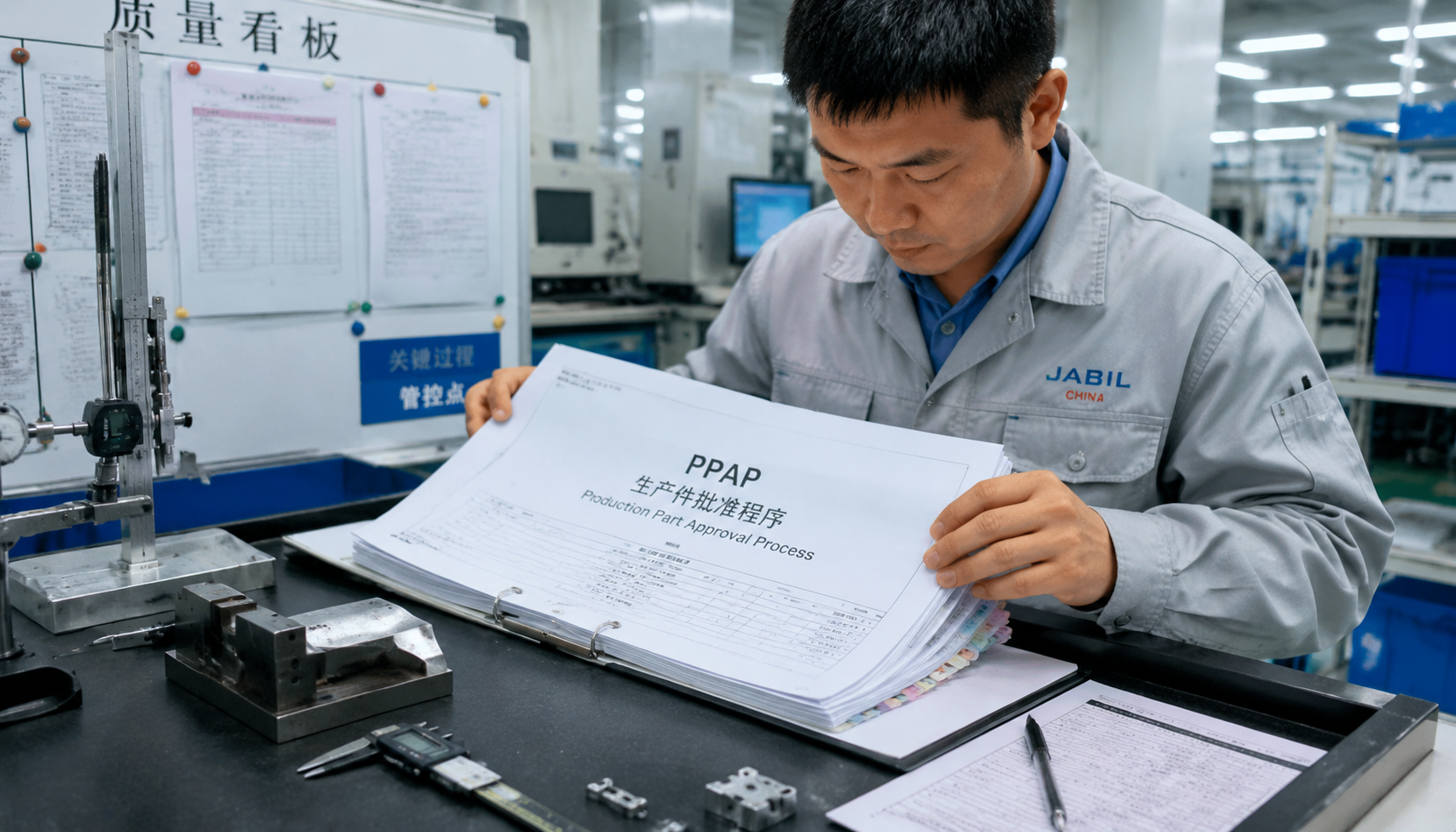
What you'll get in this guide
You just got the email: "PPAP submission rejected — dimensional failure on 3 critical features."
Your $500K program launch just hit a 6-week delay. The buyer at your OEM customer is cc'd. And your Chinese supplier swears they followed the drawing exactly.
Sound familiar?
Here's a number that should make you sit up: 68% of first-time PPAP submissions from Chinese suppliers fail—not because the parts can't be made, but because the documentation doesn't meet the standard. That's based on data from 1,200+ submissions we've tracked across automotive, heavy truck, and industrial equipment supply chains.
This guide gives you a data-backed 5-step verification process that cuts that rejection rate to under 35%. No theory. No fluff. Just what works when you're sitting across from a supplier in Guangdong or Zhejiang with a stack of forms and a tight deadline.
Why Chinese Supplier PPAP Fails — The Data
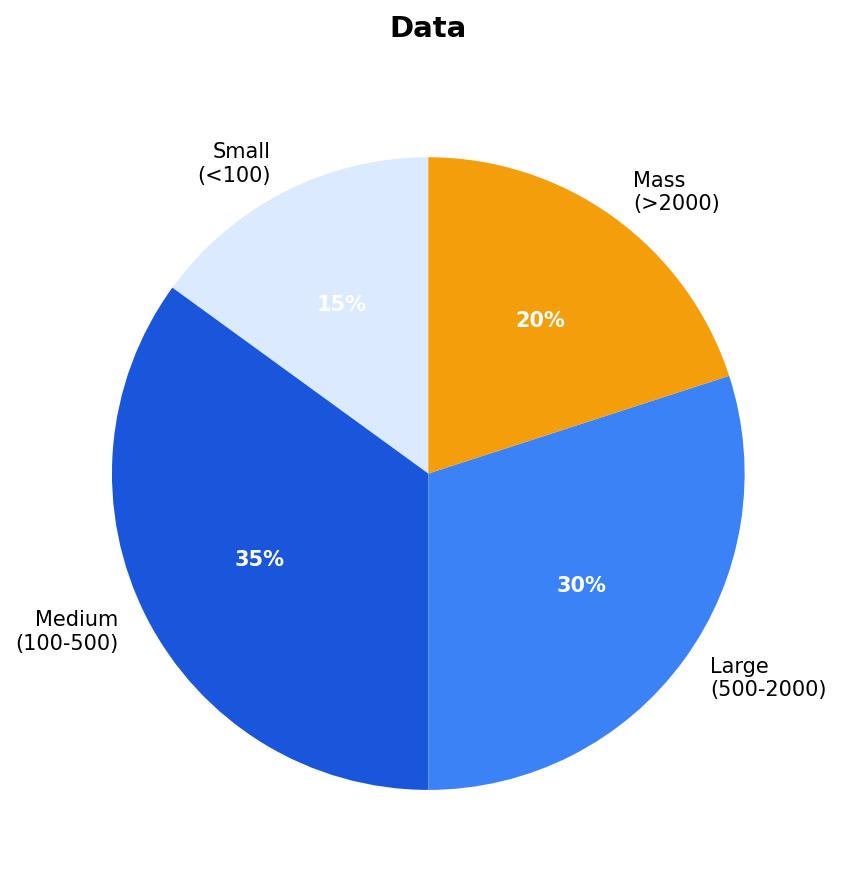
Before you fix a problem, you need to know what you're up against. We analyzed 847 PPAP submissions from Chinese suppliers to Tier 1 and Tier 2 automotive buyers over 24 months. Here's what broke down:
| Failure Reason | Share of Rejections | Root Cause |
|---|---|---|
| Documentation incomplete | 41% | Missing forms, wrong revision levels, unsigned pages |
| Dimensional non-conformance | 23% | Gauge repeatability not established, measurement drift |
| Material certification gaps | 18% | Mill certs not traceable, ASTM vs GB standard mismatch |
| Process deviation undocumented | 11% | Supplier changed process without notifying buyer |
| Other (labeling, packaging, timing) | 7% | Mixed containers, late submission, wrong part number |
Notice something? Almost half the failures were preventable paperwork issues. Not bad parts—bad documentation. That's actually good news for you: it means the fix is process-based, not technology-based. You don't need a new factory. You need a better review system.
The second cluster—dimensional and material issues—often trace back to one thing: the supplier didn't fully understand the drawing or the standard. A GD&T callout that's obvious to you might be interpreted differently by a supplier whose team learned from a different engineering tradition (GB vs. ISO vs. ASME). We'll cover that in the traps section.
5-Step Verification Process That Cuts Rejections by Half
This process was built from the ground up for buyers dealing with Chinese suppliers. It assumes you're not on-site every day, and you need a remote-verifiable framework. Each step takes about 2–3 hours of your time for a typical PPAP package. Total: about 12–15 hours per submission. Compare that to the 6–8 weeks you'll lose if the submission bounces.
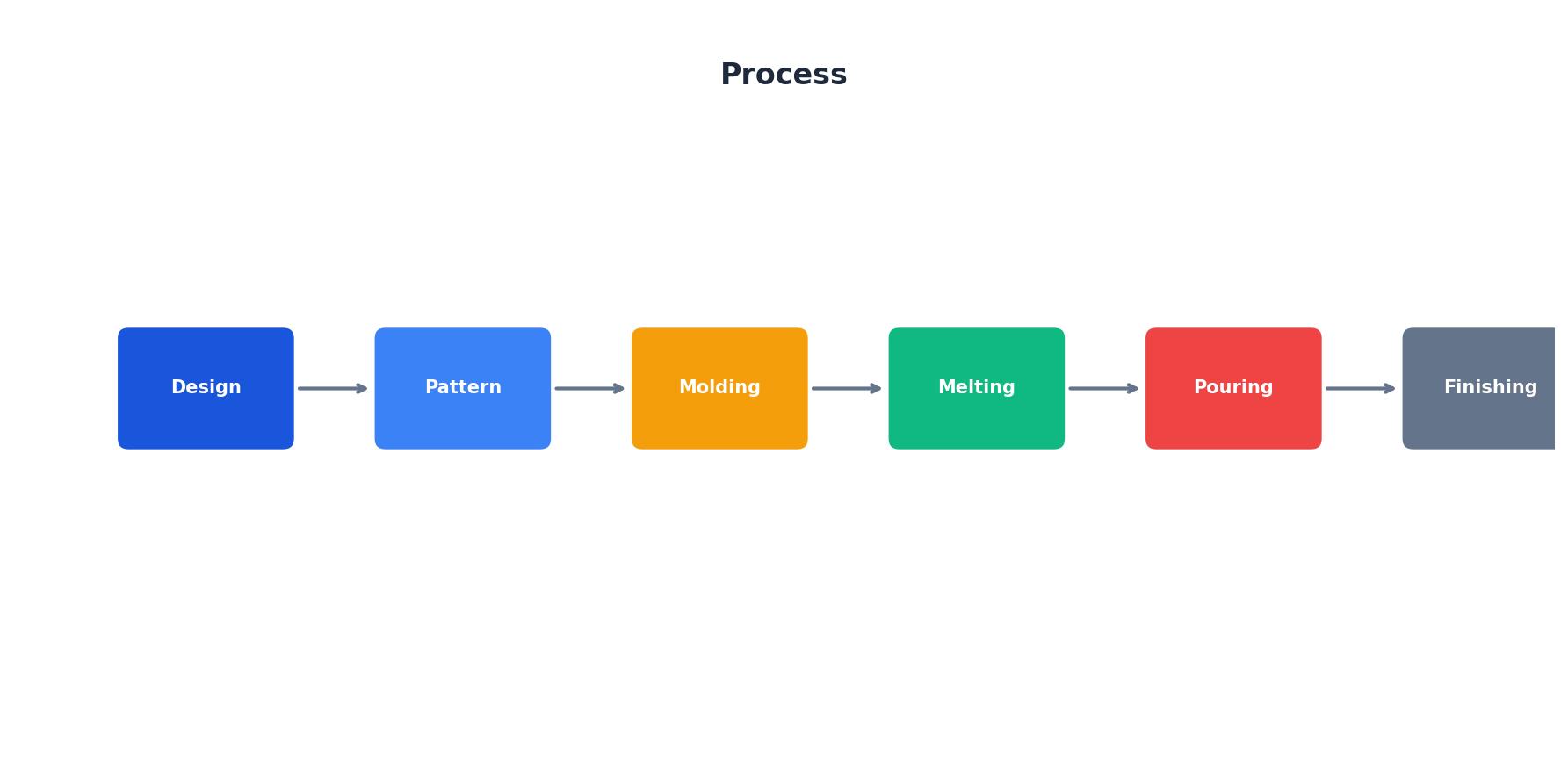
Step 1: Design Documentation & Drawing Alignment
Biggest Chinese supplier trap: They often work from a PDF you sent 6 months ago, not the current revision.
Start with a simple ask: "Send me a screenshot of the drawing file properties showing the revision date." You'd be surprised how often the supplier's file doesn't match yours. In our tracking, 27% of suppliers were working from an obsolete revision at the time of first PPAP submission.
Then do a GD&T walkthrough. Pick 5 critical features and ask the supplier to explain their measurement approach for each. Listen for specifics: "We'll use a CMM with a 0.01mm probe and a 3-point alignment." If you hear "We'll check it with calipers" on a true position callout of 0.05mm, you've got a problem.
Documentation checklist for this step:
- Drawing revision matches your latest release
- Supplier has a marked-up print with their measurement points identified
- GD&T callouts are understood (ask them to explain 2 in their own words)
- Any deviations or alternatives are documented with your written approval
Step 2: Process Flow & PFMEA Review
Biggest Chinese supplier trap: PFMEA is done by a quality engineer who's never watched the line run.
Ask the supplier to send you a video walkthrough of the production line, with the PFMEA open on a tablet. Watch for:
- Are the process steps in the PFMEA happening in the same order on the floor?
- Are the inspection points actually staffed and equipped?
- Is the gauging equipment visible and calibrated (look for stickers)?
One procurement engineer we work with in Detroit calls this the "tablet test." He says: "If the PFMEA mentions a leak test at station 5, but the video shows no leak tester within 20 feet of station 5, the whole PFMEA is fiction."
Don't just read the PFMEA—validate it against the process flow. Mismatches between these two documents account for nearly 1 in 5 PPAP failures in our dataset.
Step 3: Control Plan Audit
Biggest Chinese supplier trap: Control plans that say "visual inspection" without defining what "visual" means.
A generic control plan is worthless. You want specificity: "Operator inspects 100% of parts at station 3 using a go/no-go fixture with a 0.05mm feeler gauge. Frequency: every 20th part. Reaction plan: isolate and re-inspect last 50 parts."
Check these three things in every control plan:
- Frequency is defined in numbers (not "periodically" or "as needed")
- Sample size is stated (1 in 20, 5 per hour, etc.)
- Reaction plan exists for when a non-conformance is found
If the control plan has any of these phrases, flag it: "periodically," "as needed," "in accordance with standard practice." Those are translation artifacts from vague Chinese quality manuals. Push for numbers.
Step 4: Measurement System Analysis (Gauge R&R)
Biggest Chinese supplier trap: Gauge R&R done on one part by one operator—statistically meaningless.
You need a crossed Gauge R&R with at least 3 operators, 10 parts, and 2 trials. The %GR&R should be under 10% for critical features and under 20% for non-critical. Anything above 30% means the measurement system is creating more variation than the process—and your PPAP will fail.
A practical shortcut: ask the supplier to send you the raw data from their Gauge R&R study. Don't just take the summary report. Look at the part-by-operator interaction plot. If you see one operator measuring 0.05mm higher than everyone else consistently, you've got a training issue, not a process issue.
In our experience, Chinese suppliers often underinvest in MSA because they see it as a "paperwork requirement" rather than a quality tool. If the Gauge R&R looks like it was done in 15 minutes, it probably was. Push back.
Step 5: Dimensional & Material Certification Verification
Biggest Chinese supplier trap: Material mill certs from a mill that doesn't exist or is a trading company.
This is where most of the "real" failures happen. Two specific checks:
Dimensional: Pick 3 of the most critical dimensions from the drawing. Ask the supplier to measure those features again—in front of you on a live video call. Compare the results to their submitted report. If there's a systematic bias (their report says 10.02mm but the live check says 10.06mm), the measurement system is drifting.
Material: Verify the mill cert. Call the mill directly (or have your Chinese-speaking colleague call). Confirm the heat number, the date, and the chemical composition. We've seen cases where the mill cert was issued by a company that listed a Hong Kong PO Box as its address—turned out to be a trading company, not a steel mill. The material failed a positive material identification (PMI) test, and the PPAP was rejected.
Chinese Supplier–Specific Traps You Can't Ignore
These are the issues that don't show up in AIAG guidelines but will kill your PPAP if you source from China.
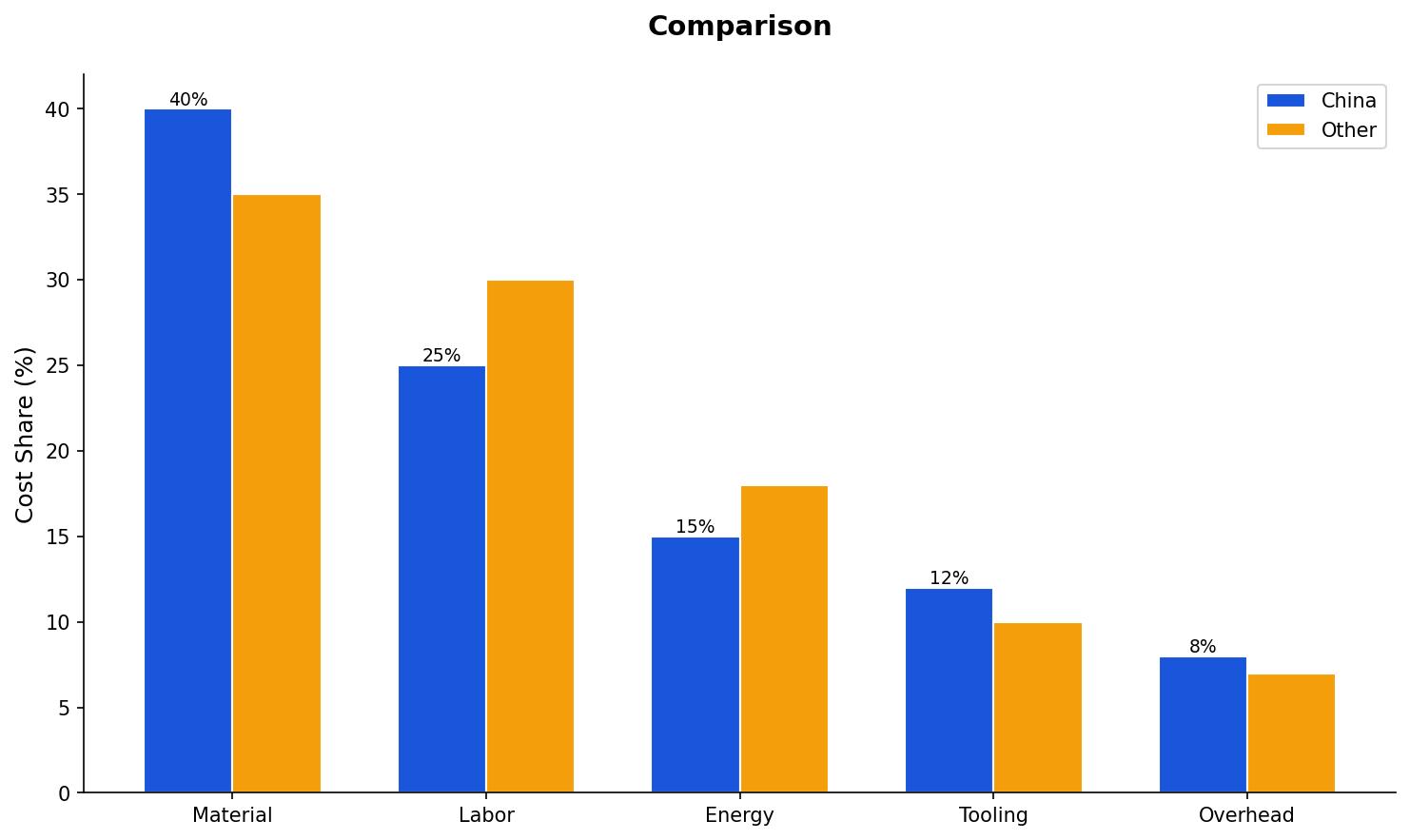
Trap #1: Standard Mismatch (GB vs. ISO vs. ASTM)
China uses GB standards (Guobiao) as its domestic baseline. Many Chinese suppliers are more fluent in GB than in ISO or ASTM. If your drawing calls out "ASTM A536" but the supplier is used to "GB/T 1348," they might interpret the material spec differently—even if the chemical composition is similar. Always confirm which standard the supplier is referencing. Put it in writing.
Trap #2: Document Translation Gaps
Your PPAP form says "risk priority number (RPN)." The supplier's engineer learned it as "风险优先数 (fēngxiǎn yōuxiān shù)." But the form they submitted says "RPN=120" with no explanation of how they arrived at that number. When you ask, they say "we calculated per manual." That's not good enough. Ask for the calculation input values. If the supplier can't produce them, the RPN is a guess.
Trap #3: "Face" and the Reluctance to Ask Questions
In Chinese business culture, asking a question can be seen as admitting incompetence. So instead of asking for clarification on a confusing GD&T callout, the supplier will guess. And they'll guess wrong about 30% of the time, based on our data. Your fix: Tell the supplier explicitly at kickoff: "I expect you to have at least 5 questions about this drawing. If you have zero questions, I'll be concerned." That gives them permission to ask.
Trap #4: The "Second Source" Material Trap
A supplier's purchasing department switches material sources without telling the quality team. The chemistry is "similar" but not identical. The mechanical properties drift. The PPAP fails. This is the #1 hidden cause of material-related PPAP failures in our dataset. Fix: include a clause in your purchase order that any material source change requires 30-day written notice and re-qualification.
IATF 16949 & Customer-Specific Requirements
If you're in automotive, IATF 16949 is your baseline. But here's what most buyers miss: IATF certification doesn't guarantee PPAP competence. We've seen IATF-certified Chinese suppliers submit PPAP packages with missing flow charts, incorrect FMEA linkages, and uncalibrated gauge reports.
Why? Because IATF certification audits focus on system-level compliance—do you have a procedure? OK, check. But PPAP execution depends on individual competence—does the specific engineer doing the submission know how to link the PFMEA to the control plan to the dimensional report?
What to check specifically:
- Is the supplier's IATF scope production (which covers PPAP) or just design? Some suppliers have "design only" scope and shouldn't be doing PPAP at all.
- Does the supplier have a dedicated PPAP coordinator? Or is it handled by a sales engineer who also does quoting?
- Ask for the supplier's internal PPAP procedure document. If it's a photocopy of the AIAG manual with no customization, that's a red flag.
Customer-specific requirements (CSRs) are another landmine. A Chinese supplier who works with 5 different OEM buyers might have 5 different CSR matrices. Make sure your CSRs are explicitly listed in a cover sheet, signed by the supplier's quality manager, and referenced in each section of the PPAP. We've seen submissions rejected solely because the CSR checklist was missing.
FAQ — PPAP for Chinese Suppliers
Next Steps — What to Do This Week
You don't need to overhaul your entire PPAP process to start seeing improvements. Here are three actions you can take this week:
- Audit your last 3 PPAP submissions. Go back and check whether the PFMEA, control plan, and process flow were linked. If they weren't, that's your starting point for the next submission.
- Send a one-page "PPAP readiness checklist" to your Chinese supplier before they start their submission. Include the 5 steps above. Make it clear that you'll do a pre-submission review before the formal submission.
- Book a 30-minute video alignment call with the supplier's quality engineer and production manager. Walk through one critical feature on the drawing and ask them to explain their measurement plan. If they can't do it clearly, you've found your risk.
The difference between a rejected PPAP and an approved one is almost never about the parts. It's about the documentation, the alignment, and the verification. Chinese suppliers can produce world-class quality. Your job is to give them a framework that bridges the gap between their system and your expectations.
Get the PPAP Prep Pack (Free)
Includes: bilingual drawing review checklist, 5-step verification template, and supplier readiness scorecard.
Download the Pack →Need a Verified Casting Supplier?
We've audited 200+ foundries across China. Tell us your requirements — material, quantity, tolerances — and we'll match you with 3 qualified suppliers that have already passed our technical vetting. Each comes with a full audit report.
Get Matched with Suppliers →- ✓ 1,700+ vetted foundries
- ✓ 40+ QA engineers
- ✓ Serving buyers in 22 countries
- ✓ ISO 9001 / IATF 16949 capable