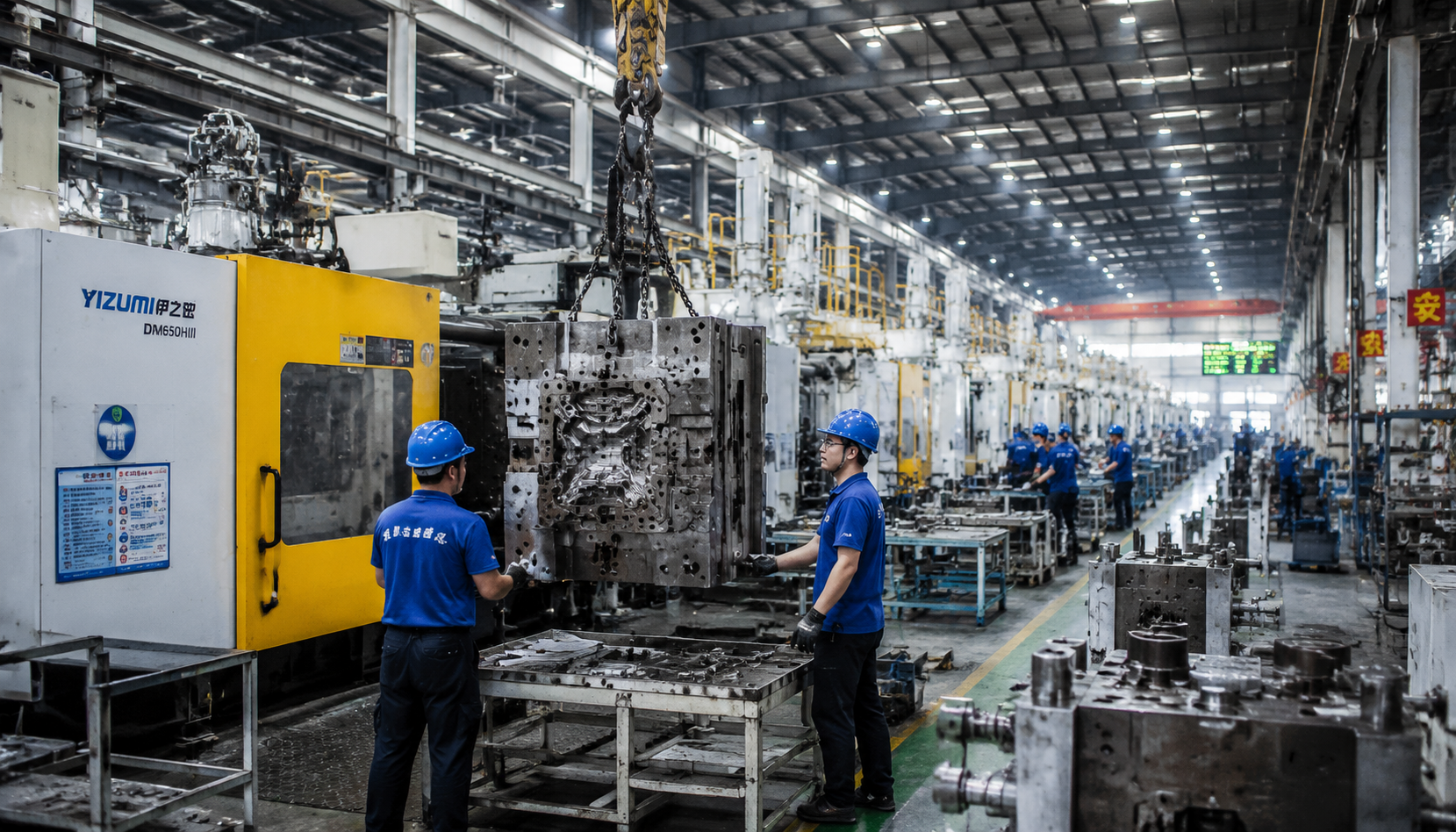
You finally found a Chinese foundry that can do your part at the right casting price. Then the quote lands — $48,000 for tooling. Your gut says it's too high. But you don't have a second quote, and you need parts in 10 weeks.
Sound familiar?
I've been in your shoes. Over the past 12 years sourcing castings from China for US hardware companies, I've sat across the table from dozens of tooling managers in Ningbo, Dongguan, and Qingdao. I've paid too much — more than once — and I've learned exactly how the system works.
Here's the truth: you can almost always negotiate 15–30% off the initial tooling quote. But only if you understand what you're actually paying for — and what the foundry is protecting.
This isn't a theory piece. This is the playbook I use. You'll get real scripts, real cost breakdowns, and the exact traps that will cost you thousands if you don't see them coming.
Why Tooling Costs in China Are So Confusing
If you've sourced castings in the US, you're used to a certain pricing model. The mold or die is a capital investment. You pay for it, you own it, you can move it to another foundry. Simple.
China works differently — and that's where the confusion starts.
Chinese foundries often bundle tooling costs with the casting piece price in ways that are hard to untangle. A low tooling quote might mean the foundry is amortizing the cost across your production run. A high tooling quote might mean they're padding it because they don't want the job — or because they think you don't know any better.
"The first tooling quote is almost never the real price. It's the 'I don't know you yet' price." — Tooling manager at a Tier 1 foundry in Ningbo (who asked not to be named)
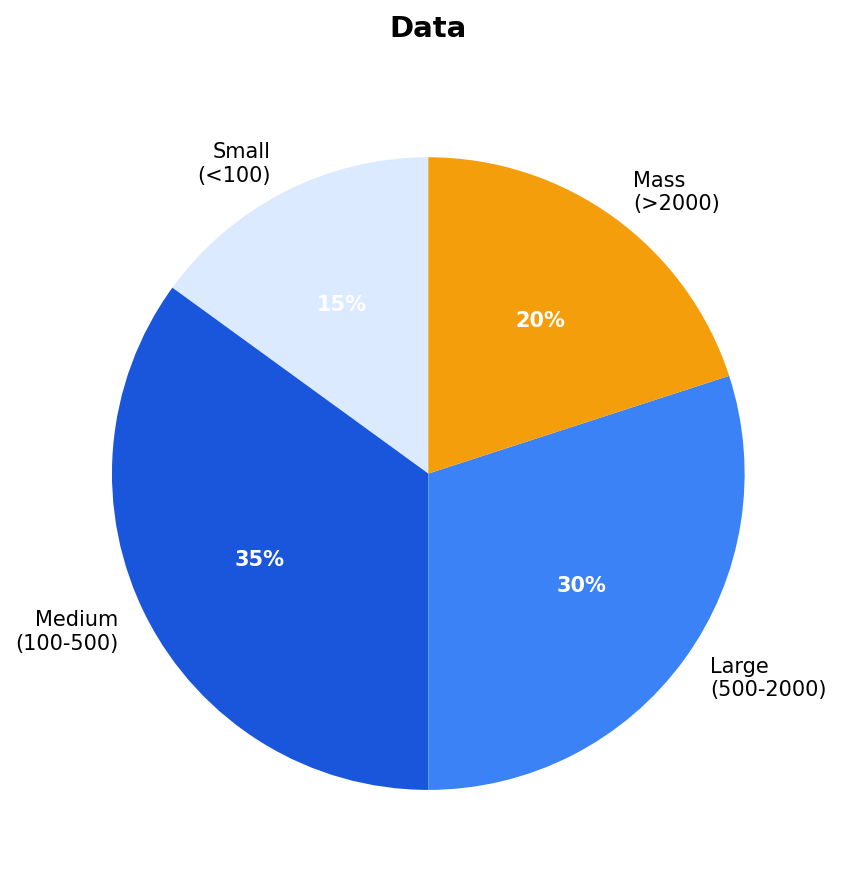
To negotiate effectively, you need to understand what's inside that quote. Here's a realistic breakdown of where your tooling dollar goes at a typical Chinese foundry:
| Cost Component | % of Total | What It Covers |
|---|---|---|
| Material (steel / alloy) | 35–40% | H13, 8407, SKD61 or equivalent tool steel; copper alloys for core pins |
| Machining & CNC | 25–30% | Cavity cutting, electrode machining, EDM, surface finishing |
| Design & Engineering | 10–15% | Mold flow analysis, parting line design, cooling channel layout |
| Heat Treatment | 5–8% | Hardening, tempering, nitriding (to reach 48–52 HRC) |
| Assembly & Try-out | 8–10% | Die fitting, sample shots, dimensional inspection |
| Foundry Margin | 5–10% | Profit — typically the most negotiable line item |
The key insight? The foundry's margin is usually the smallest line item. If you try to squeeze that 5–10% alone, you'll get nowhere. Smart negotiation targets material and machining — where the real money is.
Know Your Reference Price Before You Start
You can't negotiate a price if you don't know what the price should be. Here are realistic 2026 ranges for common tooling types from Chinese foundries (based on recent quotes from 6 foundries in Zhejiang and Jiangsu provinces):
| Tooling Type | Low-End (USD) | Mid-Range (USD) | High-End (USD) |
|---|---|---|---|
| Simple gravity casting mold (small part, <1 kg) | $3,000 | $5,500 | $8,000 |
| Medium die casting die (1–5 kg part) | $12,000 | $22,000 | $35,000 |
| Large die casting die (5–15 kg part) | $30,000 | $48,000 | $70,000+ |
| Investment casting wax tool (simple) | $2,500 | $4,000 | $6,500 |
| Investment casting wax tool (complex) | $6,000 | $10,000 | $18,000 |
Note: These are estimated ranges based on recent market data. Actual prices depend on cavity count, surface finish requirements, steel grade, and foundry tier. Use these as a starting reference, not a fixed benchmark.
If your quote is above the high-end range, you're either dealing with a top-tier foundry (which may be justified) or you're being padded. If it's below the low-end, ask questions — cheap tooling often means shortcuts in steel quality or heat treatment, which will cost you in die life and part consistency.
5-Step Negotiation Framework That Actually Works
I've refined this over dozens of tooling negotiations. It works with first-time suppliers and long-term partners alike.
Step 1: Get Two Independent Quotes
This is non-negotiable. You cannot negotiate effectively with only one quote. Even if you love Foundry A, get a quote from Foundry B. The second quote is your leverage — even if you never intend to use it.
Pro tip: Don't tell Foundry B you're comparing. Get a genuine quote, then use it to validate the first one. If Foundry A is 40% higher, you now know exactly where the conversation starts.
📋 Real Script: Asking for the Breakdown
"Thanks for the quote. To help me understand the number better — could you share a simple breakdown of the tooling cost? Specifically the material grade you're using (H13 vs 8407), the machining hours estimated, and whether this includes try-out shots. I'm comparing with another supplier who quoted $X, and I want to understand the difference."
✅ Why this works: You're not asking for a discount — you're asking for data. Foundries respect buyers who understand the components.
Step 2: Question the Steel Grade
Material is the biggest cost driver. Most Chinese foundries quote with H13 (equivalent to DIN 1.2344) as standard. But there's a wide range of quality within H13 — domestic Chinese H13 can cost 30–50% less than premium imported H13 from Bohler or Daido.
If your part doesn't need premium steel, ask if a domestic grade will work. If it does need premium, ask for the mill certificate.
Script: "What steel grade are you using for the cavity? Is it domestic H13 or imported? If domestic, do you have the mill certificate and hardness test report?"
Foundries that can't produce a mill certificate are either hiding something or don't know — either way, you now have information.
Step 3: Unbundle the Sample Cost
Many foundries include 50–200 sample shots in the tooling quote. That's legitimate — but find out how many. If they're quoting for 200 sample shots of a simple part, that's overkill. Ask to reduce to 50–100, which can save $800–$2,000.
Script: "How many try-out shots are included in this tooling cost? If we reduce to 50 shots for first sampling, can we take $X off the quote?"
Step 4: Offer a Commitment (But Keep It Flexible)
Chinese foundries value future business. If you can offer a reasonable production commitment — even a non-binding estimate — you'll get a better tooling price.
Script: "We're planning an initial production run of 5,000 units, with potential repeat orders quarterly. If we agree on tooling at $Y, I'm comfortable committing the production to your foundry for the first year. Can you work with that?"
This works because the foundry sees the tooling as a loss leader for production profit. Your commitment turns the tooling from a one-time transaction into a long-term investment.
❌ What Most Buyers Do
- "Can you give me a discount?" (no leverage)
- Accept the first quote (leaves money on the table)
- Only negotiate the margin (missing the bigger levers)
- Threaten to walk away (damages relationship)
✅ What Smart Buyers Do
- Ask for a cost breakdown (shows they understand)
- Question steel grade and machining hours
- Offer a production commitment as leverage
- Use a second quote as a reference point
Step 5: Negotiate the Payment Terms, Not Just the Price
Here's something most articles don't tell you: the tooling price and the payment terms are connected. If the foundry insists on 50% upfront, they're hedging their risk — and you're paying for that risk in the price.
Offer a better payment structure (e.g., 30% upfront, 40% on approval of sample, 30% on delivery) in exchange for a price reduction. Foundries with healthy cash flow may prefer lower risk over higher margin.
Script: "I understand you need a deposit. If we can do 30/40/30 instead of 50/50, does that allow you to reduce the tooling cost by 5%? I'm ready to sign this week."
6 Traps That Will Cost You Thousands
After watching dozens of buyers negotiate (and sometimes mess up), these are the most common — and expensive — mistakes.
| # | Trap | Why It's Dangerous | How to Avoid It |
|---|---|---|---|
| 1 | No steel grade specification | Foundry uses cheap steel → die wears out in 20K shots instead of 100K | Specify H13 or 8407, ask for mill certificate |
| 2 | Unbundled tooling + production | Foundry inflates tooling cost, then gives "discount" on piece price | Negotiate tooling and piece price separately |
| 3 | Tooling ownership not in writing | Foundry claims they own the die, won't let you move it | Get "tooling ownership" clause in the PO |
| 4 | Accepting the first quote | Leaves 15–30% on the table | Always counter — even if the price seems fair |
| 5 | Negotiating only the margin | You fight over 5% when 20% is available in materials | Target material and machining cost, not profit |
| 6 | Rushing the timeline | Foundry knows you're in a hurry → no incentive to discount | Give yourself 4–6 weeks for negotiation |
When NOT to Negotiate Tooling Costs
Not every tooling quote should be negotiated. Here are three situations where pushing too hard will backfire:
- You need high precision (IT7-IT8 tolerances): Foundries that can hold tight tolerances invest in better CNC and CMM equipment. Their tooling costs are higher for a reason. If you squeeze them, quality will slip.
- You have a low annual volume (<1,000 parts): The foundry's profit margin is mostly in the tooling. If you're not giving them production volume, don't expect a tooling discount.
- You found a foundry with a 2-week shorter lead time: Speed costs money. If the tooling quote is 15% higher but you get parts 3 weeks faster, that might be worth it — especially if you're facing a deadline.
The goal of negotiation isn't the lowest possible price. It's the best value for your specific situation. Sometimes that means paying more and getting more.
Putting It All Together: A Sample Negotiation Timeline
Here's what a realistic, well-executed tooling negotiation looks like from start to finish:
| Week | Action | Result |
|---|---|---|
| Week 1 | Send RFQ to 3 foundries with detailed part drawing and spec | Receive 3 quotes: $42K, $48K, $55K |
| Week 2 | Ask each for cost breakdown (steel grade, machining hours, sample shots) | $48K foundry says "H13 domestic, 120 machining hours, 100 shots included" |
| Week 3 | Counter: "Can you do $40K if we commit to first year production with you?" | Foundry counters at $44K |
| Week 4 | Agree at $42K with 30/40/30 payment terms and tooling ownership clause | Signed PO, 8-week delivery |
Result: 12.5% reduction from initial quote ($48K → $42K) without damaging the relationship. The foundry got a production commitment, and you got a fair price with clear ownership terms.
Frequently Asked Questions
Is tooling cheaper in China than in the US?
Generally, yes — Chinese tooling costs 40–60% less than US-made tooling for the same complexity. A die that costs $80K in the US might be $35K–$48K in China. The trade-off is typically in lead time (longer) and communication (requires more management). For castings produced in China, using Chinese tooling is almost always the right call — US-made dies don't always transfer perfectly to Chinese machines.
Can I move my Chinese tooling to another foundry?
Only if you have a clear tooling ownership clause in your purchase order. Without it, the foundry may legally own the die. Always include this language: "Tooling remains the property of the buyer and shall be made available upon request." Some foundries will try to charge a "release fee" — head this off by specifying it in the contract.
What is a typical tooling deposit in China?
50% upfront with 50% on delivery is standard in China. But this is negotiable. If you have an established relationship or can offer a production commitment, you can push for 30/40/30 (30% deposit, 40% on sample approval, 30% on delivery). Avoid paying 100% before delivery — you lose all leverage if the tooling is late or defective.
How long does tooling take in China?
Typical lead times are 6–10 weeks for die casting dies, 4–8 weeks for gravity molds, and 3–6 weeks for investment casting wax tooling. Add 2–4 weeks for first article samples. Rush orders (4–6 weeks) are possible but expect a 15–25% premium. Always ask the foundry about their current workload — a foundry at 80% capacity will be slower than one at 50%.
What steel grade is best for aluminum die casting dies?
H13 (DIN 1.2344) is the industry standard for aluminum die casting. For longer die life or more demanding applications, 8407 (a premium H13 variant) or DIN 1.2367 offer better thermal fatigue resistance. For small production runs (<10,000 shots), domestic Chinese H13 is usually sufficient. For high-volume production, specify imported premium H13 with a hardness of 46–50 HRC.
Your Next Move
Negotiating tooling costs in China isn't about being aggressive or demanding discounts. It's about understanding what you're buying and showing the foundry you're a knowledgeable partner. Foundries respect buyers who ask the right questions — they're less likely to pad quotes and more likely to prioritize your project.
Here's your actionable checklist for your next tooling negotiation:
- ☐ Get 2–3 quotes minimum
- ☐ Ask for a cost breakdown (material, machining, design, margin)
- ☐ Verify the steel grade and ask for a mill certificate
- ☐ Negotiate the payment terms, not just the price
- ☐ Offer a production commitment as leverage
- ☐ Get tooling ownership in writing
- ☐ Don't rush — give yourself 4–6 weeks
You've got this. And if you need a second set of eyes on a quote — or a sourcing partner who knows the foundries and speaks the language — we're here.
Need Help Sourcing Castings in China?
We help US hardware buyers find vetted foundries, negotiate fair tooling costs, and manage quality from RFQ to delivery. No markups — just procurement done right.
Talk to Our Team →Free initial consultation. No obligation.