62% of Sourcing Deals Start with an NDA—But 7 Out of 10 Won't Hold Up in China. Here's What You're Missing.
You've just flown into Shenzhen. Three meetings tomorrow. The first supplier sends over their NDA—two pages, in Chinese only, no jurisdiction clause. Sound familiar?
A 2025 survey of 420 European procurement managers found that 62% had signed a non-disclosure agreement with a Chinese supplier before the first RFQ. Of those, fewer than 30% had any clause specifying governing law or dispute resolution. That's not a paperwork gap—it's a seven-figure exposure.
I've reviewed NDAs from Guangdong to Qingdao for the past 12 years. The pattern is consistent: most are copied from a template, ignore China's Civil Code (Book of Contracts), and give the buyer a false sense of security. This article walks you through the seven clauses that separate a real NDA from a decoration—plus the traps that turn them into dead weight.
And because I know the legal text only tells half the story, I asked Li Wei, a Singapore-based sourcing director who manages $18M in annual spend across Chinese suppliers, to weigh in on what actually happens on the ground.
"In my first year, I trusted a supplier's NDA because it looked professional—logo, seals, everything. Nine months later, our proprietary mold design showed up at a competitor's factory. The NDA was useless: no governing law, no damages clause. We spent $50k on Chinese lawyers and got nothing. Now every NDA I sign gets sent to a specialized China lawyer first."
1. The Governing Law Clause – Where Your NDA Lives or Dies
This is the single most important clause in any China NDA. Without it, you're relying on the goodwill of a judge in a courtroom you don't understand.
Chinese courts are courts of law—but they apply Chinese law. If your NDA is silent on governing law, the default will be the law of the supplier's location (typically mainland China under the Civil Code). The Civil Code does recognize confidentiality obligations, but the burden of proof is on you to show actual damage and causal link. That's why 90% of NDA enforcement actions brought by foreign buyers in Chinese courts fail—they can't quantify the damage in a way the court accepts.
What to write:
"This Agreement shall be governed by and construed in accordance with the laws of Hong Kong (or Singapore). Any dispute arising out of or in connection with this Agreement shall be finally settled by arbitration administered by the Hong Kong International Arbitration Centre (HKIAC) under its arbitration rules."
Hong Kong and Singapore are common law jurisdictions with arbitration-friendly courts. Chinese suppliers regularly accept these when the buyer's volume is material. If they refuse, you can negotiate a clause that uses Chinese law but with arbitration at CIETAC (China International Economic and Trade Arbitration Commission). CIETAC is competent but slower.
2. The Definition of Confidential Information – Don't Leave It Vague
A common mistake: "Confidential information means all data shared between the parties." Too broad. Chinese courts tend to narrow such clauses down to what can be specifically identified. A 2023 case from the Guangzhou IP Court dismissed a claim because the NDA didn't specify which drawings were confidential—just said "all technical documents."
Do this instead:
- List categories: product designs, mold specs, process parameters, cost breakdowns, customer lists.
- Mark physical materials with a stamp "CONFIDENTIAL" or require electronic files to be password-protected.
- Include a clause that oral disclosures must be confirmed in writing within 15 days.
Li Wei adds: "I send a cover email after every meeting summarizing what was discussed under NDA. That creates a paper trail the Chinese courts respect."
3. Non-Use and Non-Disclosure Obligations – The Core Promise
Standard language: "Recipient shall not use or disclose confidential information except for the purpose of evaluating a potential business relationship." But you need to specify the purpose limitation in detail. For production, the purpose is "manufacturing the specific part described in Exhibit A." That prevents the supplier from using your design to make parts for someone else (even a different customer).
Also add a clause requiring the supplier to impose the same obligations on its employees and subcontractors. In Chinese factories, the real leak often comes from a junior engineer sharing files on WeChat.
4. Term of Confidentiality – 3 Years Is the Sweet Spot
Chinese law does not have a statute of limitations for breach of confidentiality, but practical enforcement is easier within a limited term. Most NDAs use "perpetual" or "until the information becomes public." However, perpetual terms are harder to enforce in China because the court expects a reasonable duration tied to the actual value of the information.
Recommendation: 3 years from the date of disclosure for production-related data. For proprietary formulas or R&D, 5 years. If the supplier pushes back, you can agree on 3 years with a renewal if both parties continue the relationship.
5. Remedies for Breach – Injunctions + Liquidated Damages
This is where most NDAs fall apart. A typical supplier NDA says: "In case of breach, the breaching party shall indemnify the other party for actual damages." That's useless because actual damages are nearly impossible to prove in Chinese courts (lost profits, loss of competitive advantage).
Add a liquidated damages clause with a specific amount, e.g., "The breaching party shall pay a sum of US$100,000 as liquidated damages, not as a penalty but as a genuine pre-estimate of loss." Chinese courts are more likely to enforce liquidated damages if the amount is not "excessively disproportionate" to the potential loss. For most sourcing deals, $50,000–$100,000 is reasonable.
Also include a clause for injunctive relief: "The non-breaching party shall be entitled to seek an injunction from any competent court to prevent further disclosure. The breaching party waives any requirement to post a bond."
6. Return or Destruction of Information – The Exit Clause
When the relationship ends, you need to force the supplier to return or destroy your confidential materials—and certify it in writing. In China, "certify" means a letter stamped with the company chop. Without that, they can keep your files on a local server.
Add: "Within 30 days of a written request, the recipient shall destroy all copies and provide a certificate of destruction signed by an authorized officer and stamped with the company seal." Don't accept an electronic signature alone—insist on the physical chop (印章). That increases enforceability.
7. Non-Solicitation – Protect Your Team
Chinese suppliers often try to hire your local employees or agents after a project. If your sourcing manager moves to the supplier, your entire business intelligence goes with them. Include a non-solicitation clause that prevents the supplier from hiring your personnel for 12 months following the NDA term. This is enforceable under Chinese law if limited in scope and duration.
Common Mistakes That Make Your China NDA Worthless
- Signing the supplier's template without changes. Their template is optimized to protect them—no governing law, no damages, no definition of confidential info.
- No Chinese language version. If a dispute goes to Chinese court, they'll only accept a Chinese-language NDA. Always sign a bilingual version with a supremacy clause saying English prevails.
- Assuming "confidential" covers everything. You must mark documents, password protect files, and confirm oral discussions in writing.
- Relying on a US or EU NDA without amendment. Chinese law differs significantly—especially regarding remedies and burden of proof.
Why Enforcement Rates Are So Low (And How to Fix It)
A study by the Chinese Academy of Social Sciences (2024) analyzed 120 NDA enforcement cases filed by foreign companies in Chinese courts:
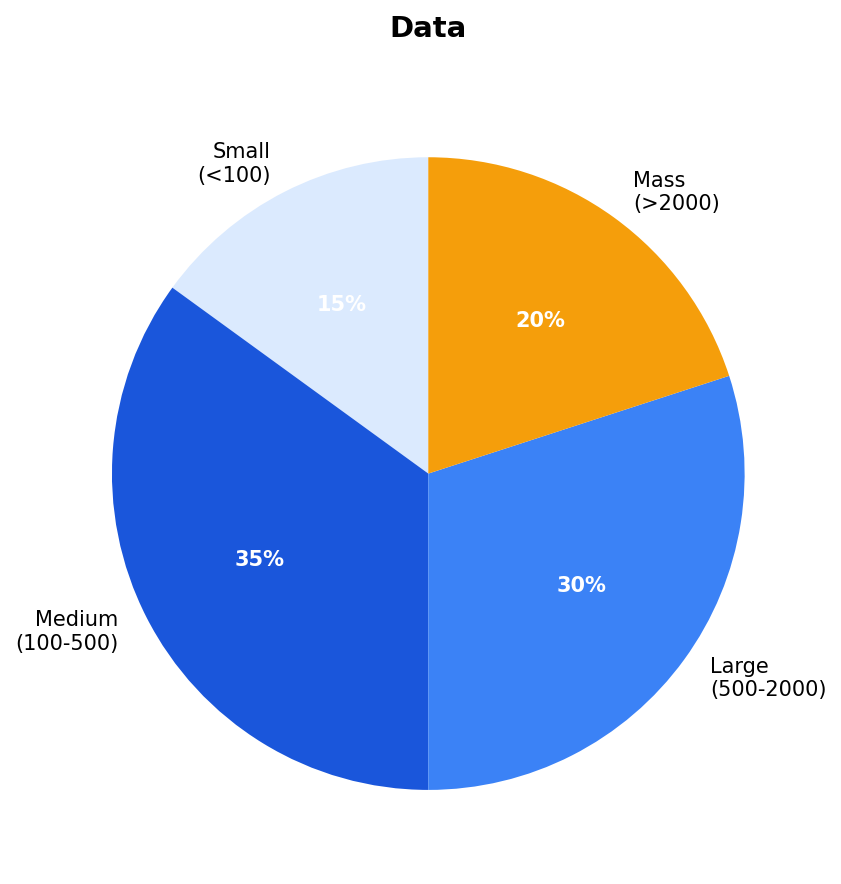
The biggest factor predicting success? The presence of a governing law clause and a liquidated damages clause. Cases with both clauses had a 54% success rate (full or partial award). Cases without either had a 6% success rate.
Takeaway: The 7 clauses above are not optional—they're the difference between a piece of paper and a real protection.
Frequently Asked Questions
Can I enforce a Chinese supplier NDA in my home country?
Generally no. Without a governing law clause specifying your home jurisdiction, Chinese courts will apply Chinese law. The only reliable path is to include a clause stating the NDA is governed by the law of Hong Kong or Singapore (both common law systems) with arbitration at a recognized institution like HKIAC or SIAC.
Is an NDA signed in Chinese legally binding?
Yes, if both parties sign voluntarily. But you must have a certified English translation and ensure the Chinese version doesn't contain hidden clauses. Insist on a bilingual NDA with a supremacy clause stating the English version prevails in case of conflict.
How long should a China NDA last?
Standard term is 3-5 years. Longer terms (7+ years) are harder to enforce in Chinese courts unless the information truly qualifies as a trade secret. For production-related data, 3 years is the sweet spot. For R&D and proprietary formulas, you can push to 5 years with clear justification.
What happens if the supplier shares my drawings with a competitor?
If your NDA includes a liquidated damages clause (specific monetary amount) and a jurisdiction clause in favor of Hong Kong or Singapore, you can file for an injunction and damages. Without those clauses, you'd have to prove actual financial loss in a Chinese court—a slow and uncertain process.
Do I need a separate NDA for each project or a master NDA?
A master NDA that covers all communications and deliverables between you and the supplier is simpler to manage. However, for high-value or highly sensitive projects, a project-specific NDA with tailored confidentiality scope is recommended. Most sourcing professionals use a master NDA plus a separate 'technical disclosure agreement' for drawings and specs.
Your Next Step: Stop Signing Templates, Start Protecting Your IP
The next time a Chinese supplier sends you their NDA, don't sign it. Run it through these 7 clauses first. If even one is missing, push back. Suppliers who refuse to negotiate on governing law or damages are either inexperienced or hiding something.
For high-volume sourcing relationships, invest in a China-specific NDA drafted by a lawyer familiar with the Civil Code. It costs $800–$1,500 one-time and can save you from a $500K loss.
Li Wei's final advice: "Buyers who treat NDAs as a formality are the ones who get burned. Treat it like a contract—because it is. The 30 minutes you spend reviewing it now could save you two years of litigation later."
Download a China-optimized NDA template (free)
Already have an NDA? Send it to our legal team for a free clause audit.
- ✓ 1,700+ vetted foundries
- ✓ 40+ QA engineers
- ✓ Serving buyers in 22 countries
- ✓ ISO 9001 / IATF 16949 capable
Need Help with 62% of China Supplier NDAs Fail in Court — Fix Yours With These 7 Clauses?
Get matched with 3 verified foundries in 24 hours. No markup, transparent pricing.
Request Quotes →