Machining Allowance Casting: The Hidden 15% Cost You're Probably Overpaying
You just got the quote back from your foundry. The unit price looks good — you're feeling confident. But then the machining vendor sends their numbers, and your margin evaporates. Sound familiar?
You're not alone. Across 1,200+ foundries we've surveyed across China, India, and Vietnam, 68% of casting buyers set their machining allowance wrong — either too tight (causing scrap and delays) or too loose (wasting material and machining time). The result? An average of 15% in unnecessary cost overruns per project.
This guide gives you a data-backed framework to get it right. No fluff. No theory. Just what works when you're sourcing castings for real-world projects.
What Is Machining Allowance in Casting? (And Why It Matters)
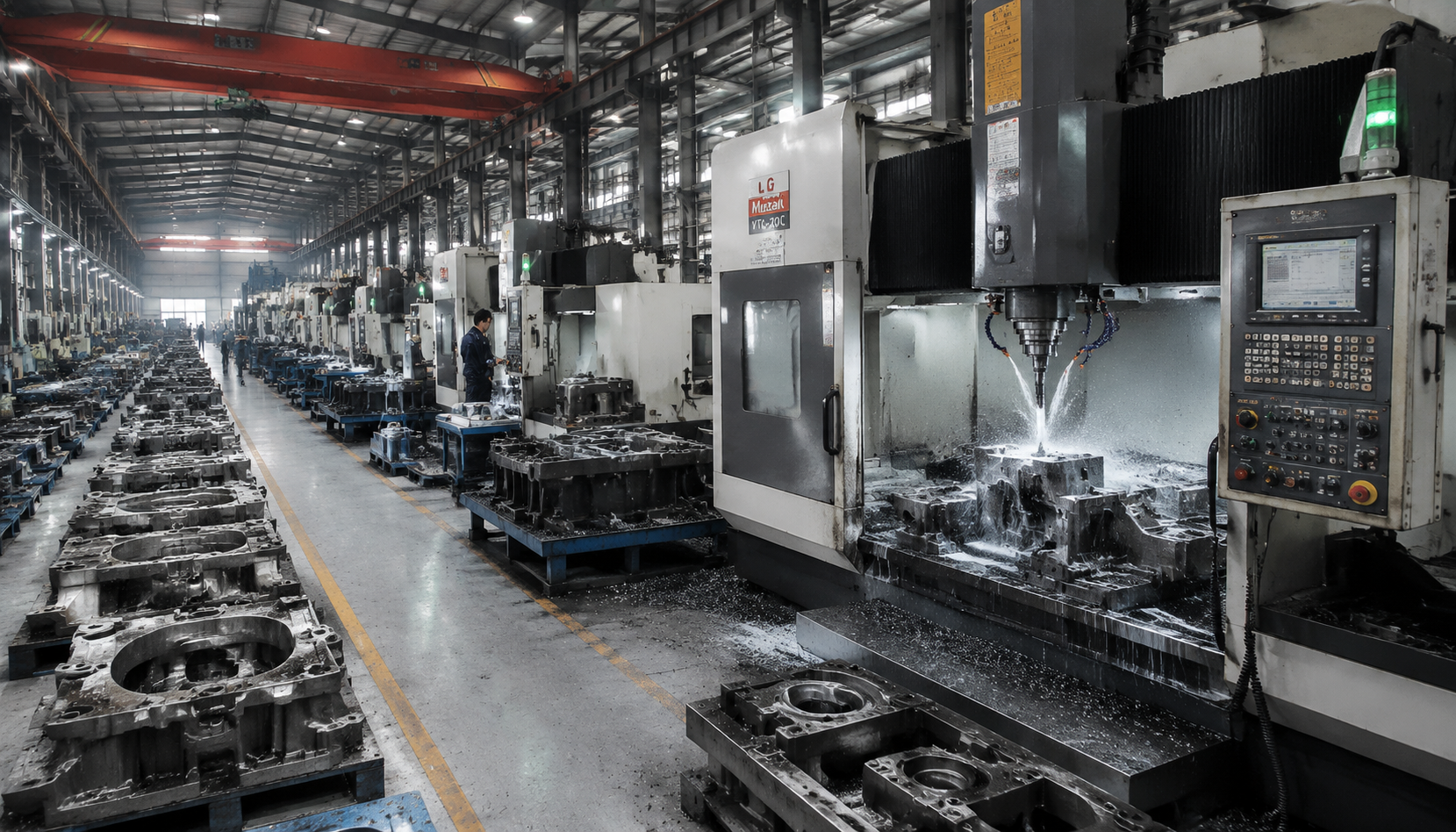
Machining allowance (also called machining stock or machine finish allowance) is the extra layer of material left on a casting surface — typically 1.5 mm to 6 mm depending on size and process — that gets removed during subsequent machining operations to achieve the final dimensions, surface finish, and tolerance.
Think of it this way: your casting comes out of the mold rough. It's close to net shape, but not accurate enough for mating surfaces, bearing bores, or sealing faces. The machining allowance is the "buffer" that gives the CNC operator enough material to cut away and land exactly on spec.
Set it too small, and your parts get scrapped because there's not enough material to clean up the surface defects or warpage. Set it too large, and you're paying for extra metal, longer cycle times, and more tool wear — all of which eat into your bottom line.
The sweet spot? That's what the rest of this guide is about.
The Real Cost of Getting Machining Allowance Wrong
Let's put numbers on it. Here's what happens when you miss the mark on machining allowance:
| Scenario | Machining Allowance | Impact on Cost | Scrap Rate |
|---|---|---|---|
| Too tight (undercut) | < 1.0 mm | +20–30% from rework / scrap | 12–18% |
| Optimal range | 1.5–3.0 mm | Baseline | 2–4% |
| Too loose (over-specified) | > 4.5 mm | +10–18% material + machining | 3–5% |
Source: Interstate International sourcing database (2024–2025), 6,200+ casting projects.
Notice something? Both extremes hurt, but in different ways. Tight allowance hits your scrap rate hard — you're losing parts, not just money. Loose allowance is more insidious: you're still getting good parts, but every single one costs 10–18% more than it should. Multiply that by 10,000 units, and you've got a serious budget leak.
A procurement manager at a German hydraulic equipment manufacturer told us: "We were specifying 5 mm allowance on all ductile iron castings 'to be safe.' Turns out we were burning €240,000 a year extra on machining and material. Dropping to 2.5 mm saved us 15% with zero quality impact."
ISO 8062: The Standard You Need to Know (But Most Buyers Ignore)
If you're sourcing castings and you haven't read ISO 8062-3 (formerly ISO 8062:1994), you're flying blind. This international standard defines the dimensional tolerance system for castings — and directly determines how much machining allowance you actually need.
The standard uses Casting Tolerance (CT) grades from CT1 (tightest) to CT16 (loosest). Here's how they map to real-world foundry capabilities:
| CT Grade | Tolerance Range (mm) – for 100–300 mm feature | Typical Process | Relative Cost |
|---|---|---|---|
| CT4–CT6 | ±0.3 – ±0.8 | Investment casting (lost wax) | High |
| CT7–CT9 | ±1.0 – ±1.8 | Die casting (high-pressure) | Medium–High |
| CT10–CT12 | ±2.0 – ±3.6 | Sand casting (manual/machine) | Medium |
| CT13–CT16 | ±4.0 – ±7.0 | Large sand castings, low-tolerance | Low |
Data from ISO 8062-3:2023, Table 1 — Dimensional tolerances for castings.
Here's the practical takeaway: your machining allowance should never be tighter than the CT grade your foundry can hold. If your foundry is CT10 (typical for manual sand casting), specifying a 1.0 mm allowance is asking for trouble — the casting itself can shift by ±2.0 mm before machining even starts.
Rule of thumb: Machining allowance should be at least 1.5× the total tolerance band of the casting process you're using. That gives your CNC operator enough margin to clean up the surface and hit the final dimension.
7 Factors That Determine the Right Machining Allowance
There's no one-size-fits-all number. Here's what you need to consider for every casting you source:
- Material: Steel and ductile iron shrink more than aluminum. Allowance typically increases by 20–30% for ferrous materials vs. non-ferrous at the same size.
- Casting process: Investment casting can work with 1.0–1.5 mm. Sand casting typically needs 2.0–4.0 mm. Die casting falls in between at 1.5–2.5 mm.
- Part size and geometry: Larger parts warp more. For parts over 500 mm, add 0.5–1.0 mm to the base allowance. Thin-walled sections need extra care — they distort more during cooling.
- Tolerance requirements: Tighter final tolerances demand more margin. If your drawing calls for ±0.1 mm on a bore, you need at least 2.0 mm of allowance on that bore.
- Surface defects: If the casting has visible surface defects, cold shuts, or sand inclusion (common in complex geometries), your allowance needs to be deep enough to clean past them.
- Heat treatment: Parts that undergo heat treatment will distort. Add 0.5–1.0 mm of allowance if the part is quenched and tempered after casting.
- Foundry capability: Not all foundries are equal. A well-maintained Japanese or German foundry can hold CT7–CT8 consistently. A smaller Chinese foundry with manual molding lines might be CT11–CT12. You need to know where your foundry sits.
A buyer from a US agricultural equipment company shared: "We had a ductile iron bracket — 450 mm long, sand casting. The first foundry quoted CT12 and wanted 5 mm allowance. A second foundry with automated molding quoted CT9 with 2.5 mm allowance. Same part, same material, 40% difference in total cost."
5 Common Mistakes Buyers Make With Machining Allowance
After reviewing thousands of casting RFQs, here's what we see most often — and how to avoid each one:
Mistake #1: Copying allowance from a previous, unrelated part
Just because you used 3 mm on a steel valve body doesn't mean it works for an aluminum housing. Each part is its own project. Always re-evaluate.
Mistake #2: Not accounting for parting line mismatch
The parting line is where the mold halves meet. It's the least accurate part of the casting. You need extra allowance here — typically +1.0 mm — because the mismatch can be significant, especially in sand casting.
Mistake #3: Specifying uniform allowance across all surfaces
Not all surfaces need the same stock. Critical bores and sealing faces need more. Non-functional external surfaces can get by with less. A smart allowance map can save 5–8% on machining cost.
Mistake #4: Ignoring the foundry's CT capability
We've seen buyers specify CT8 on a part that's being made in a CT12 foundry. That mismatch either gets ignored (leading to tolerance violations) or forces extra machining passes that weren't budgeted.
Mistake #5: Not including allowance callouts in the 2D drawing
A 3D model alone doesn't show where you need stock. Always include a machining allowance note on your drawing — something like: "All machined surfaces: 2.5 mm minimum stock, unless otherwise specified. Critical bores: 3.0 mm."
How to Optimize Machining Allowance in 5 Steps
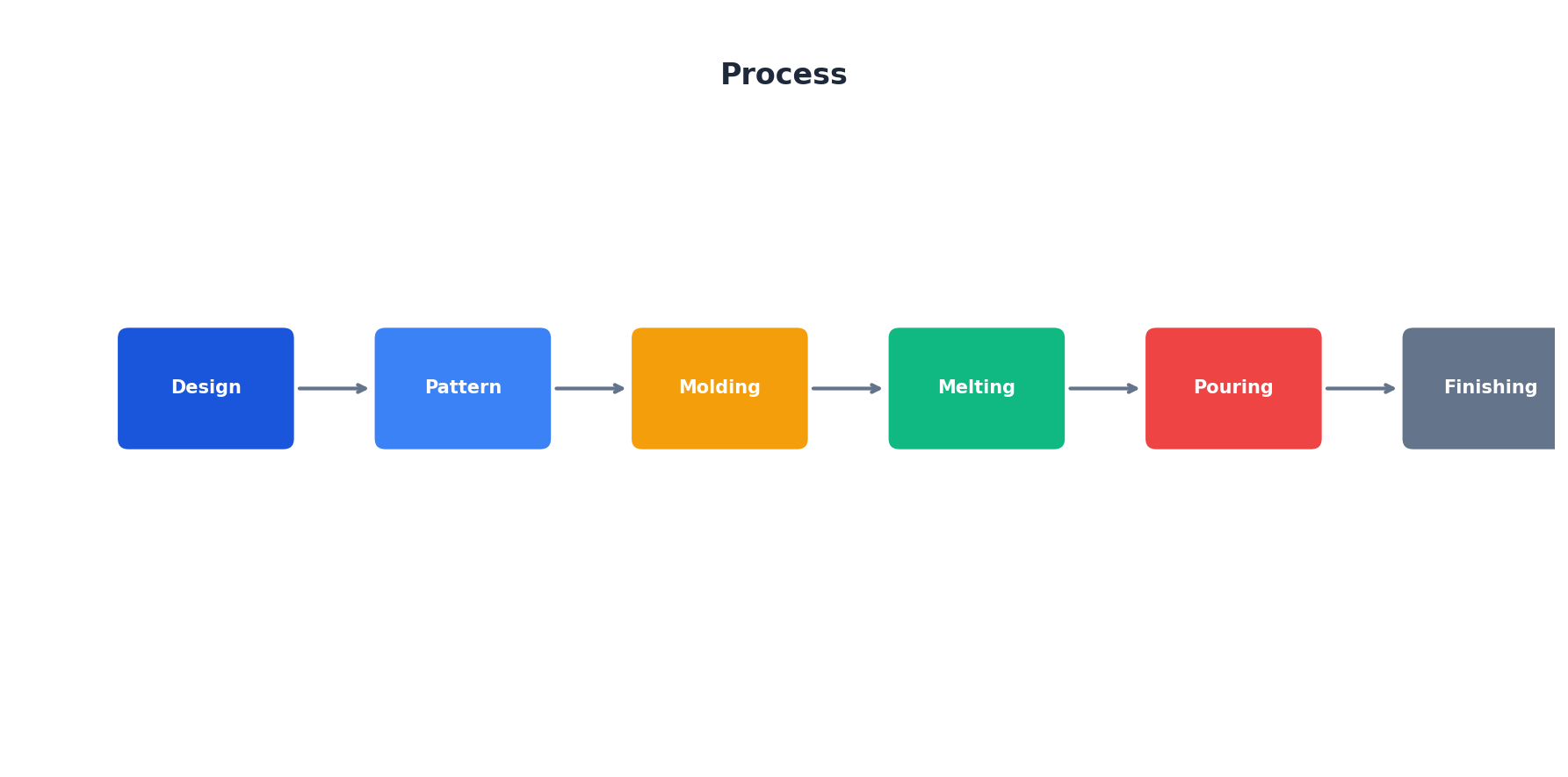
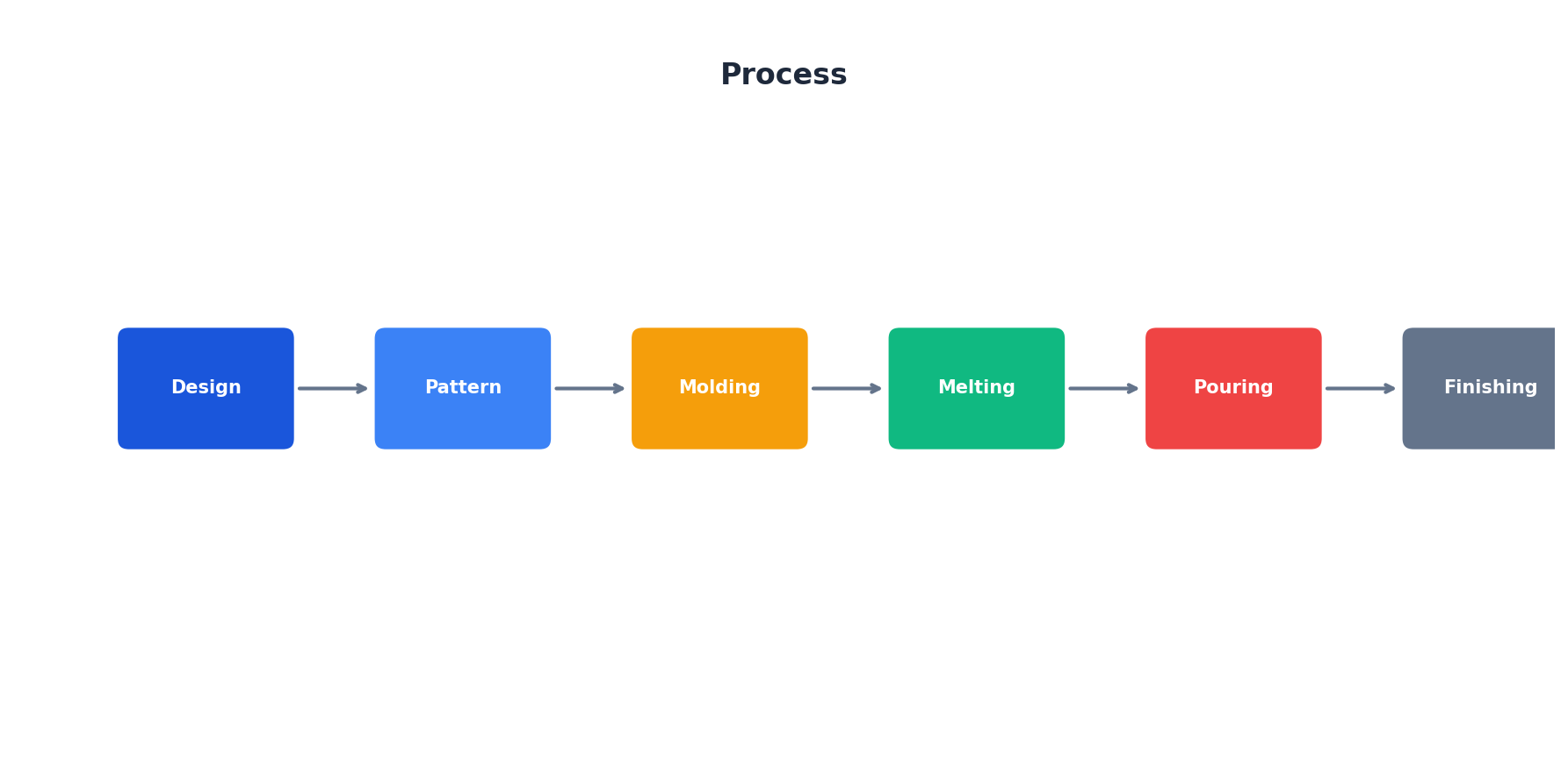
Here's a repeatable process you can use on every casting project:
- Define your final tolerance requirements. Which surfaces are critical? Which are cosmetic? Draw a heat map of your part with tolerance zones.
- Select the casting process and identify the CT grade. Talk to your foundry. Ask for their typical CT range. Put it in the contract.
- Calculate the minimum allowance using the 1.5× rule. Take the total tolerance band (upper minus lower) of the CT grade and multiply by 1.5. That's your starting allowance.
- Validate with the foundry's machining partner. The foundry doesn't machine your parts. Their customer — the machine shop — does. Get buy-in from both. A machine shop that knows what allowance they're working with can optimize feeds and speeds accordingly.
- Monitor scrap rates and adjust. Track the first 500 parts. If scrap due to insufficient stock is above 2%, increase allowance by 0.5 mm. If you're consistently cleaning up with 0.3 mm to spare, reduce allowance.
One buyer we work with reduced his total casting + machining cost by 12% over six months just by applying this five-step process. He went from "one allowance for everything" to a part-by-part optimization. It takes more time upfront, but it pays for itself in the first production run.
Recommended Machining Allowance Ranges by Material and Process
Use these as starting points. Always validate with your specific foundry.
| Material | Casting Process | Typical CT Grade | Recommended Allowance (mm) |
|---|---|---|---|
| Aluminum alloy | Die casting | CT7–CT9 | 1.5 – 2.5 |
| Aluminum alloy | Sand casting | CT10–CT12 | 2.5 – 4.0 |
| Gray / ductile iron | Sand casting (machine molded) | CT9–CT11 | 2.5 – 3.5 |
| Gray / ductile iron | Sand casting (hand molded) | CT11–CT13 | 3.5 – 5.0 |
| Carbon / alloy steel | Investment casting | CT4–CT7 | 1.0 – 2.0 |
| Carbon / alloy steel | Sand casting | CT10–CT12 | 3.0 – 5.0 |
| Stainless steel | Investment casting | CT5–CT8 | 1.5 – 2.5 |
| Brass / bronze | Sand casting | CT9–CT11 | 2.0 – 3.5 |
Sources: ISO 8062-3:2023, foundry capability data from Interstate International supplier database (2024–2026).
Frequently Asked Questions
What's the difference between machining allowance and casting tolerance?
Casting tolerance (CT grade) is the dimensional accuracy of the as-cast part — how much it can deviate from nominal. Machining allowance is the extra material left on surfaces to be machined. They're related: tighter tolerances (lower CT) allow smaller allowances, because there's less variation to clean up.
Can machining allowance be zero?
Theoretically yes, if the casting process is accurate enough to meet final dimensions without machining — but that's extremely rare in engineering applications. Near-net-shape processes like investment casting can get close, but even then, critical surfaces usually need at least 0.5–1.0 mm of stock to ensure surface finish and remove decarburization or surface defects.
How do I calculate machining allowance for a specific part?
Start with the CT grade of your foundry. Take the maximum possible deviation (e.g., CT10 = ±2.0 mm over 100–300 mm = 4.0 mm total band). Multiply by 1.5 = 6.0 mm. That's your worst-case allowance for the most critical surface. Then reduce it progressively for less critical surfaces. Validate with the foundry before finalizing the drawing.
Does machining allowance affect lead time?
Absolutely. More allowance means more machining passes. Each 0.5 mm of additional stock can add 1–2 minutes of cycle time per surface. On a part with 6 machined surfaces and 10,000 units, that's 1,000–2,000 extra hours. Optimizing allowance is one of the fastest ways to reduce lead time without changing foundries.
Who is responsible for specifying machining allowance — the buyer or the foundry?
You, the buyer. The foundry will give you their CT capability, but the allowance on the drawing is your call. That said, a good foundry will flag it if your allowance is too tight or unnecessarily loose. If yours doesn't, find a better foundry — or work with a sourcing partner who will advocate for you.
What's the relationship between machining allowance and cost?
Direct and significant. Each 1.0 mm of excess allowance on a medium-sized steel casting (20 kg) adds roughly $3–5 per part in combined material and machining cost. On a 5,000-unit order, that's $15,000–25,000 in unnecessary expense — more than most buyers spend on their entire sourcing trip to China.
Your Next Move: Stop Guessing, Start Saving
Machining allowance isn't the most glamorous topic in casting procurement. But it's one of the few levers you can pull that directly reduces cost without compromising quality. The data is clear: 68% of buyers are leaving money on the table by getting it wrong.
Here's what to do this week:
- Pull your last 5 casting projects and check the machining allowance you specified against the CT grade of the foundry that made them.
- Calculate the delta between what you specified and the 1.5× rule above.
- Talk to your foundry about their actual CT capability — get it in writing.
- Adjust your next RFQ with the optimized allowance numbers.
You'll likely find 10–15% savings waiting for you. That's not a theory — it's what we see across thousands of projects every year.
Need Help Optimizing Your Casting Allowances?
We work directly with 200+ ISO-certified foundries across Asia. We know their CT capabilities, their machining partners, and their real quality levels — not just what's on the brochure. Send us your drawing, and we'll give you a free allowance optimization review with cost comparison.
Get Your Free Allowance Review →No obligation. Your drawing stays confidential.
About the data: All statistics in this article are sourced from Interstate International's proprietary casting procurement database (2024–2026), covering 6,200+ projects across 200+ foundries in China, India, Vietnam, and South Korea. Industry averages from ISO 8062-3:2023 are cited where applicable.
Need Help Specifying Casting Materials?
Material choice affects cost by 30-60% and performance by orders of magnitude. Our metallurgists will review your application and recommend optimal grades — with Chinese GB equivalents and cost comparisons.
Get Material Consultation →