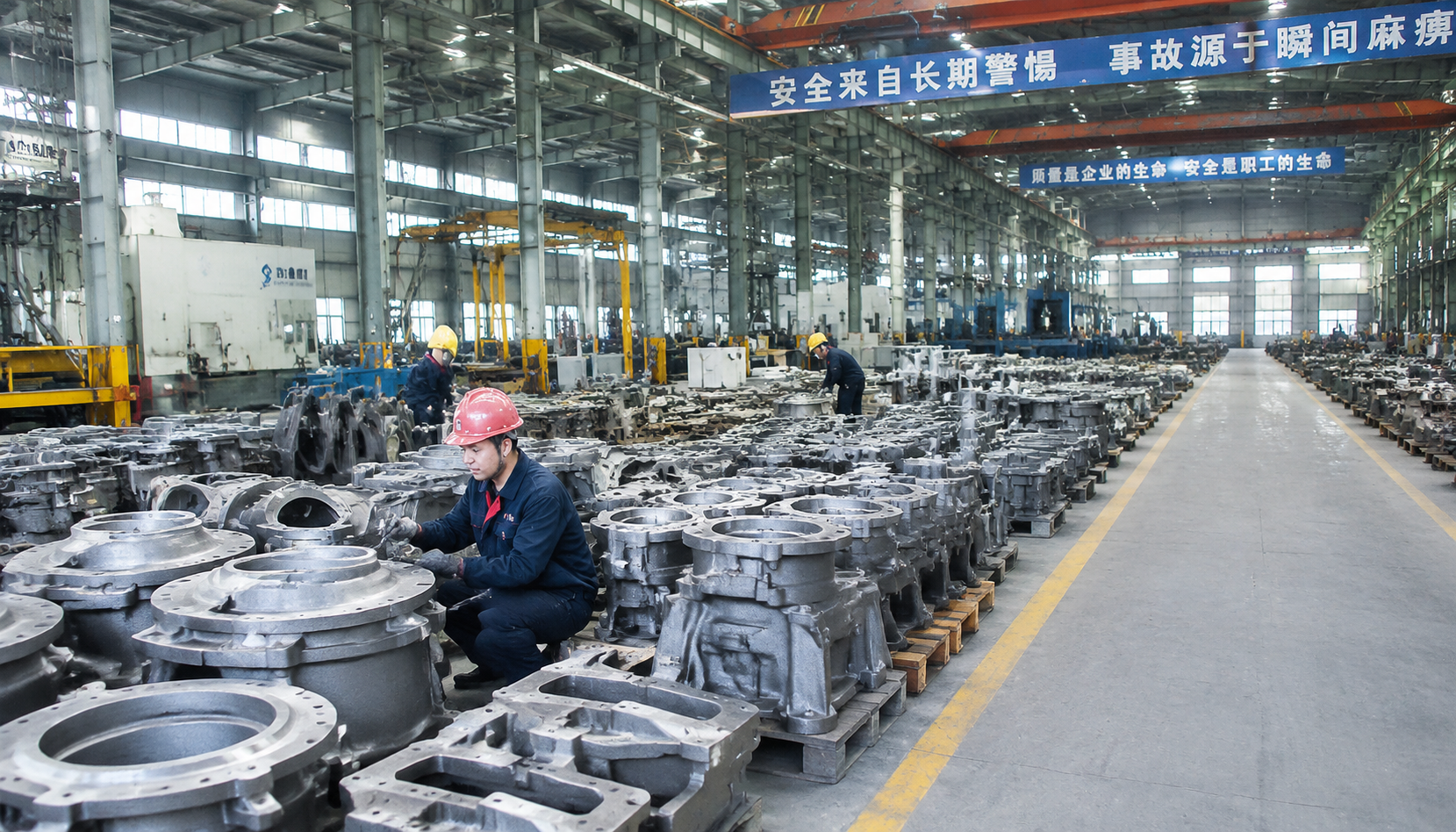
Grey Iron vs Ductile Iron: Don't Let the Wrong Casting Destroy Your Project
You're holding a PO for 5,000 pump housings. The foundry sales rep says "grey iron is fine, it's half the price." Your engineer wants ductile iron. Who's right? The answer isn't in a textbook—it's in the graphite. And getting it wrong can cost you $200,000 in field failures. Here's how to decide, once and for all.
This Isn't Academic—It's About Keeping Your Job
Two years ago, a buyer I know sourced 2,000 valve bodies for a wastewater treatment plant in Texas. He picked grey iron because the price was 32% lower. Six months after installation, 14 valves cracked under pressure surges during startup. Replacement cost: $87,000. Downtime penalties: $34,000. His boss's words: "You're paying for the lesson."
That's the difference between grey iron and ductile iron. Not a metallurgy exam question—a real, dollars-on-the-line decision that determines whether your parts last 5 years or 20.
Here's the cheat sheet you actually need.
The 30-Second Difference: Graphite Shape
Every difference in mechanical behavior between these two materials traces back to one thing: what the graphite looks like under a microscope.
- Grey iron: Graphite exists as sharp flakes. Think of them like microscopic cracks already built into the material. That's why grey iron has near-zero ductility—the flakes act as stress raisers.
- Ductile iron: Graphite forms as spherical nodules. No sharp edges, no built-in crack paths. The matrix can actually stretch before it breaks.
That's it. Everything else—strength, toughness, damping, machinability—stems from this one microstructural difference. Period.
Mechanical Properties: The Numbers That Matter
You're not a metallurgist. You're a buyer who needs to know which material won't fail under your specific load. Here's the direct comparison:
| Property | Grey Iron (ASTM A48 Class 30-40) | Ductile Iron (ASTM A536 65-45-12) | Why It Matters |
|---|---|---|---|
| Tensile Strength | 140–415 MPa | 415–830 MPa | Ductile iron is 2–3x stronger under tension |
| Yield Strength | N/A (no yield) | 310–620 MPa | Grey iron doesn't yield—it fractures |
| Elongation | < 0.5% | 2–20% | Ductile iron bends before breaking |
| Hardness (HB) | 187–255 | 170–302 | Comparable; ductile can be heat-treated higher |
| Impact Resistance (Charpy J) | 2–4 J | 15–60 J | Ductile absorbs 5–10x more shock |
| Fatigue Strength (10^7 cycles) | 70–120 MPa | 200–280 MPa | Ductile lasts 2–3x longer under cyclic loads |
| Thermal Conductivity (W/mK) | 45–50 | 30–40 | Grey iron dissipates heat 30% better |
| Vibration Damping Capacity | High (excellent) | Moderate | Grey iron kills vibration naturally |
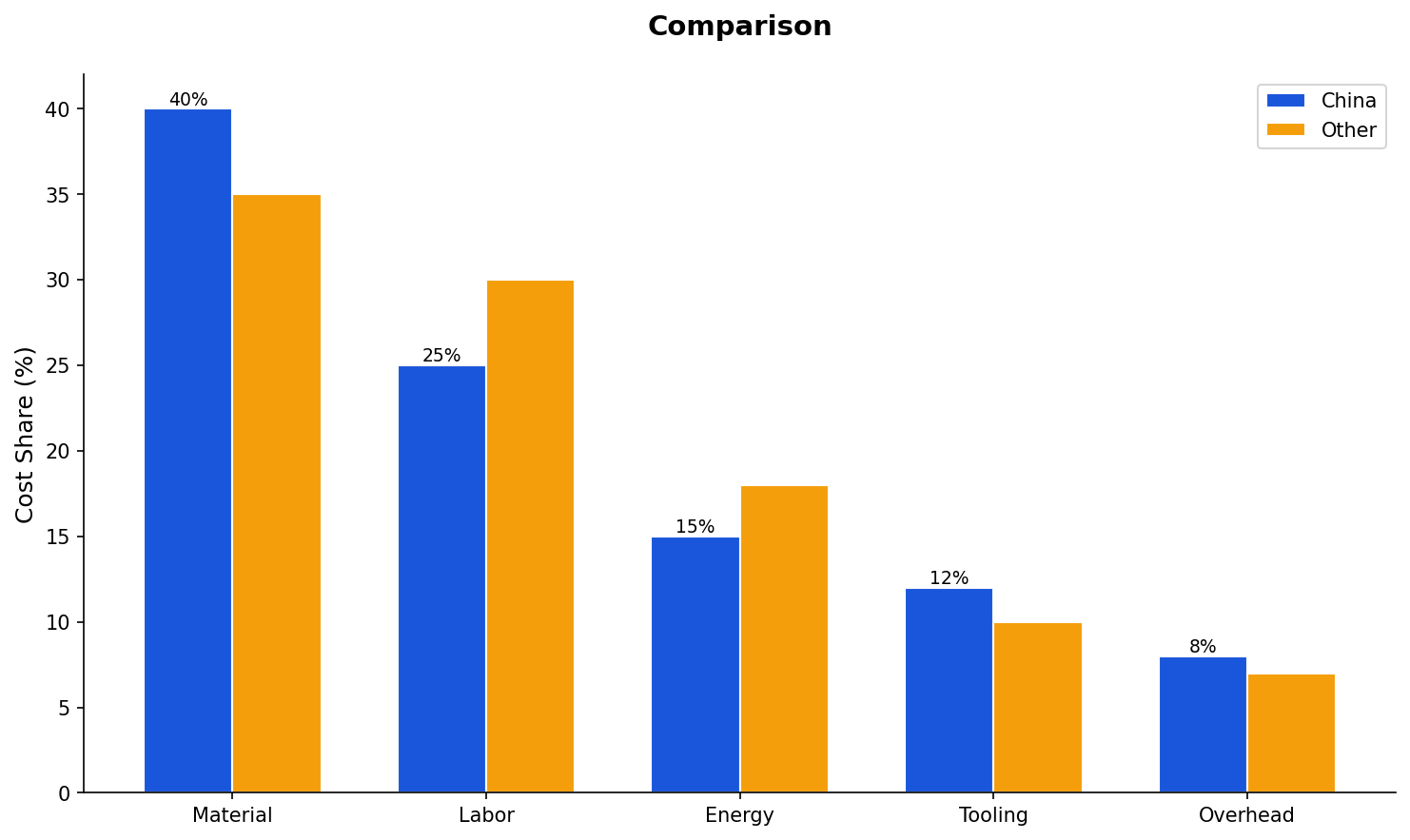
Vibration Damping: Grey Iron's Secret Weapon
Grey iron absorbs vibration like a sponge. The flake graphite structure acts as a natural damper—each flake dissipates energy through internal friction. That's why every CNC machine tool base in the world is made of grey iron. Not because it's cheap—because if you put a ductile iron base on a milling machine, the surface finish would look like a topographical map.
Use grey iron when:
- Machine tool structures (beds, columns, tables)
- Brake drums and rotors (damping + thermal conductivity)
- Engine blocks and flywheels
- Hydraulic valve bodies (low pressure, non-shock)
- Parts primarily under compression
Don't use grey iron when:
- Pressure > 200 psi
- Shock loading is possible
- Tensile stress exceeds 100 MPa
- The part bends or twists in service
Pressure Rating: Ductile Iron's Edge
Ductile iron can handle pressure. That's not opinion—it's metallurgy. Because the graphite nodules don't act as crack initiators, ductile iron maintains its integrity under tensile stress, pressure cycles, and impact.
This is why every municipal water pipe specification shifted from grey to ductile iron starting in the 1970s. Ductile iron pipe can handle operating pressures up to 350 psi with a safety factor of 2.5. Grey iron pipe? Limited to 150 psi, and a single pressure surge can cause catastrophic failure.
Use ductile iron when:
- Pressure vessels and accumulators
- Hydraulic system components
- Rotating shafts and gears
- Railroad and heavy equipment parts
- Any application with shock or cyclic loading
- Where welding or repair welding is needed
The Cost Trap: Why 20% Cheaper Can Cost You 200%
Here's the part that gets buyers in trouble. Grey iron is cheaper per pound—typically 20–40% lower material cost. But that's not the whole picture.
Scenario 1: You actually need grey iron
CNC machine base. 800 kg. Grey iron cost: $1,920 ($2.40/kg). Ductile iron cost: $2,800 ($3.50/kg). But the ductile iron base would chatter and ruin surface finish. You'd need to add dampers, re-engineer the structure, waste weeks. Grey iron is the right choice—and cheaper by $880 per unit.
Scenario 2: You actually need ductile iron
Hydraulic valve block. 50 kg. Grey iron cost: $120 ($2.40/kg). Ductile iron cost: $175 ($3.50/kg). Difference: $55 per valve. But a grey iron valve cracks at 300 psi, and you have 5,000 units in the field. Failure rate: 8%. Replacement cost per unit (warranty, labor, shipping): $420. Total failure cost: $168,000. The "savings" of $275,000 on material becomes a net loss of $107,000.
Run the numbers before you spec. Always. And factor in that ductile iron can often be designed with thinner walls—30–50% thinner in some applications—because it's stronger. That closes the material cost gap significantly.
Application Cheat Sheet: 7 Scenarios Compared
| Application | Grey Iron | Ductile Iron | Verdict |
|---|---|---|---|
| Machine tool base | ✅ Best choice | ❌ Overkill (poor damping) | Grey iron |
| Brake drum/rotor | ✅ Recommended | ⚠️ Possible but heavier | Grey iron |
| Engine block (passenger car) | ✅ Most common | ⚠️ Used in high-performance | Grey iron (cost) |
| Hydraulic valve block (>200 psi) | ❌ Risky | ✅ Required | Ductile iron |
| Municipal water pipe | ❌ Obsolete | ✅ Industry standard | Ductile iron |
| Gear housing (shock load) | ❌ Brittle | ✅ Recommended | Ductile iron |
| Exhaust manifold (high temp) | ✅ Good thermal conductivity | ⚠️ Used but heavier | Grey iron |
How to Specify: A 5-Step Checklist Before You Sign
Next time you're writing a casting PO, run through this. It'll take 10 minutes and save you from the kind of phone call that ruins your week.
- Confirm the operating pressure. If > 200 psi continuous or > 300 psi peak, ductile iron is mandatory. Grey iron at high pressure is a ticking clock.
- Check the load type. Is there bending, tension, or shock? Yes → ductile. Compression only → grey iron is fine.
- Evaluate vibration sensitivity. If the part is a machine base, use grey iron. If it needs to transmit vibration (like a speaker bracket), ductile iron works.
- Run a lifecycle cost comparison. Material cost + machining + failure risk + warranty exposure. Don't just compare $/kg. Compare total cost of ownership over 10 years.
- Specify the ASTM grade explicitly. Don't write "grey iron." Write "ASTM A48 Class 40" or "ASTM A536 Grade 65-45-12." That's a legal spec. The foundry can't substitute without your approval.
FAQ: Quick Answers for Busy Buyers
What is the main difference between grey iron and ductile iron?
Graphite shape. Grey iron has flakes (built-in stress raisers), ductile iron has nodules (no stress raisers). That's the root of every other difference.
Which one is stronger?
Ductile iron, by a wide margin. 415–830 MPa tensile strength vs 140–415 MPa for grey iron. And ductile iron has 2–20% elongation—grey iron has near zero.
When should I use grey iron instead of ductile iron?
When vibration damping, thermal conductivity, or cost per pound is the priority, and the part is under compression or low stress. Machine bases, brake drums, exhaust manifolds.
Is grey iron cheaper?
Per pound, yes—20–40% cheaper. But factor in failure risk, warranty costs, and the potential for thinner wall sections with ductile iron. Always run total lifecycle cost.
What are the ASTM standards?
Grey iron: ASTM A48 (Classes 20–60). Ductile iron: ASTM A536 (Grades 60-40-18, 65-45-12, 80-55-06, 100-70-03, 120-90-02). Use these exact specs in your PO.
The Bottom Line
Grey iron and ductile iron are not substitutes. They're complementary materials with dramatically different personalities. Choose grey iron for damping, thermal management, and compression. Choose ductile iron for strength, pressure, and impact.
And never—never—let a 20% price difference drive a material decision that determines whether your product survives its first year in the field.
Your move: Before you place your next casting PO, run the 5-step checklist above. If you want a second set of eyes on your spec, we've helped buyers in 30+ industries source the right casting material from vetted foundries. Send us your drawing and we'll verify the material spec—free.
Need Help with Grey Iron vs Ductile Iron: Don't Let the Wrong Casting Destroy Your Project?
Get matched with 3 verified foundries in 24 hours. No markup, transparent pricing.
Request Quotes →