Casting Procurement
Gray Iron vs Ductile Iron Cost Difference: The Part That Cracks, the Quote That Lies
You send the same RFQ to four foundries. Two quote gray iron. One quotes ductile iron. The price difference is 18 percent. You're not an engineer—you run procurement, and your boss just said, "find savings." So you sign the lower bid.
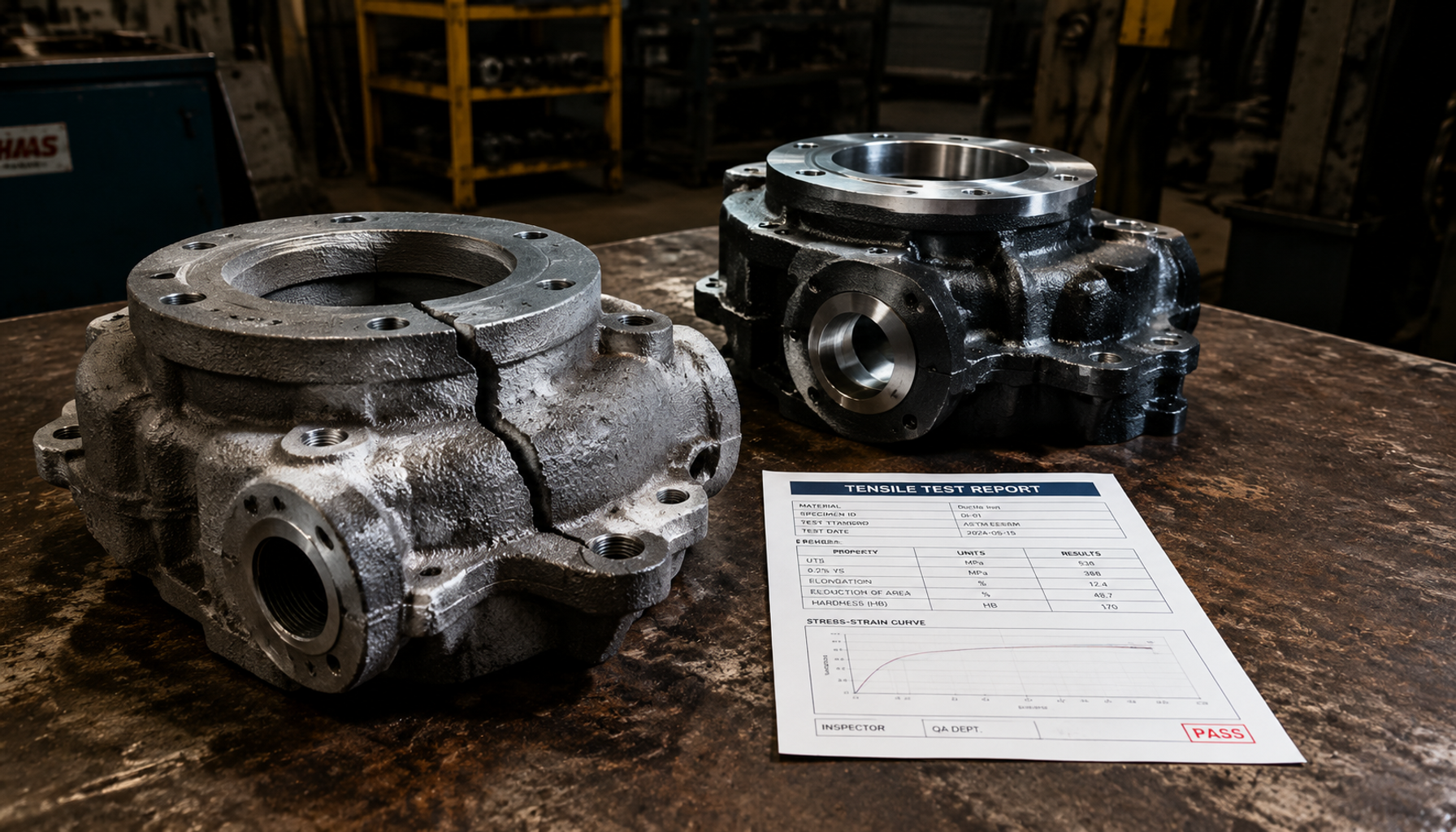
Twelve weeks later, the first part fails on the pressure bench. A crack runs from the bolt hole straight through the flange. The money you saved on that PO: $1,840. The cost to sort, rework, re-test, and apologize to a customer who watched your part break: $14,000.
Then somebody says the words you already know: "That's what you get for buying gray iron."
Sound familiar? It should. That scene plays out in machine shops, pump plants, and agricultural equipment facilities every quarter. And the frustrating part is that gray iron wasn't the wrong material for every part in that plant. It was wrong for your part.
So let's settle the gray iron vs ductile iron cost difference properly. Not with a price list that forgets failure, but with the cost math that actually hits your P&L.
Here's the honest short answer
Gray iron is usually 15–30% cheaper on the quote. It also machines faster, dampens vibration better, and costs less per pound. Ductile iron costs more because it can bend instead of snap. That one property—ductility—is worth more than any casting buyer initially believes.
If your part needs to survive pressure, shock, bending, fatigue, or any kind of dynamic load, ductile iron is probably the correct call.
If your part sits still and absorbs vibration—like a machine base, a brake drum, or a compressor body—gray iron is the money-saver.
The gray iron vs ductile iron cost difference isn't a trick question. It's a physics question. And the physics decide the real cost.
What you're actually comparing
Gray iron and ductile iron are both iron-carbon alloys. The difference is what the carbon does after the molten metal solidifies.
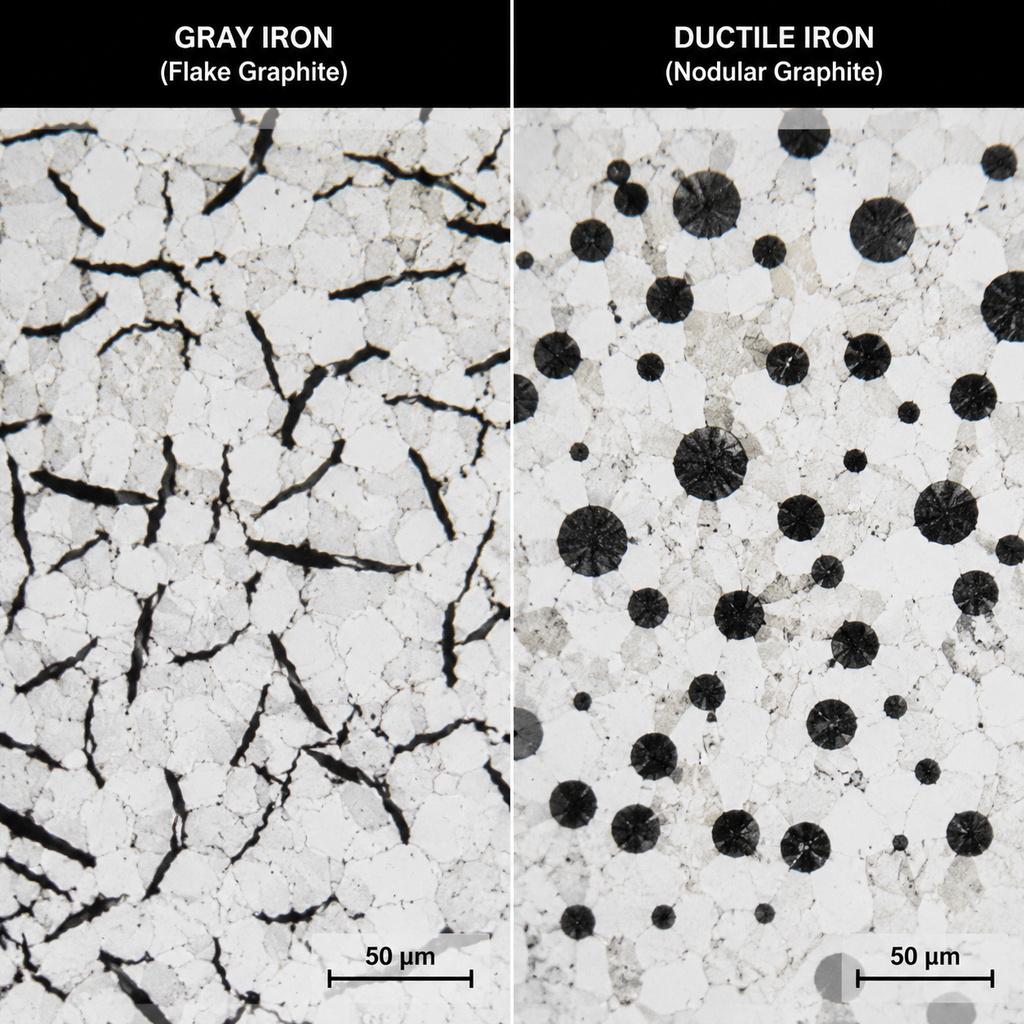
In gray iron, the carbon forms graphite flakes. Those flakes act like internal notches, which is why gray iron has almost zero elongation. It doesn't flex; it cracks.
In ductile iron, the carbon forms spherical graphite nodules. The foundry gets those nodules by adding magnesium to the melt, which changes the graphite shape. That change gives the material real ductility.
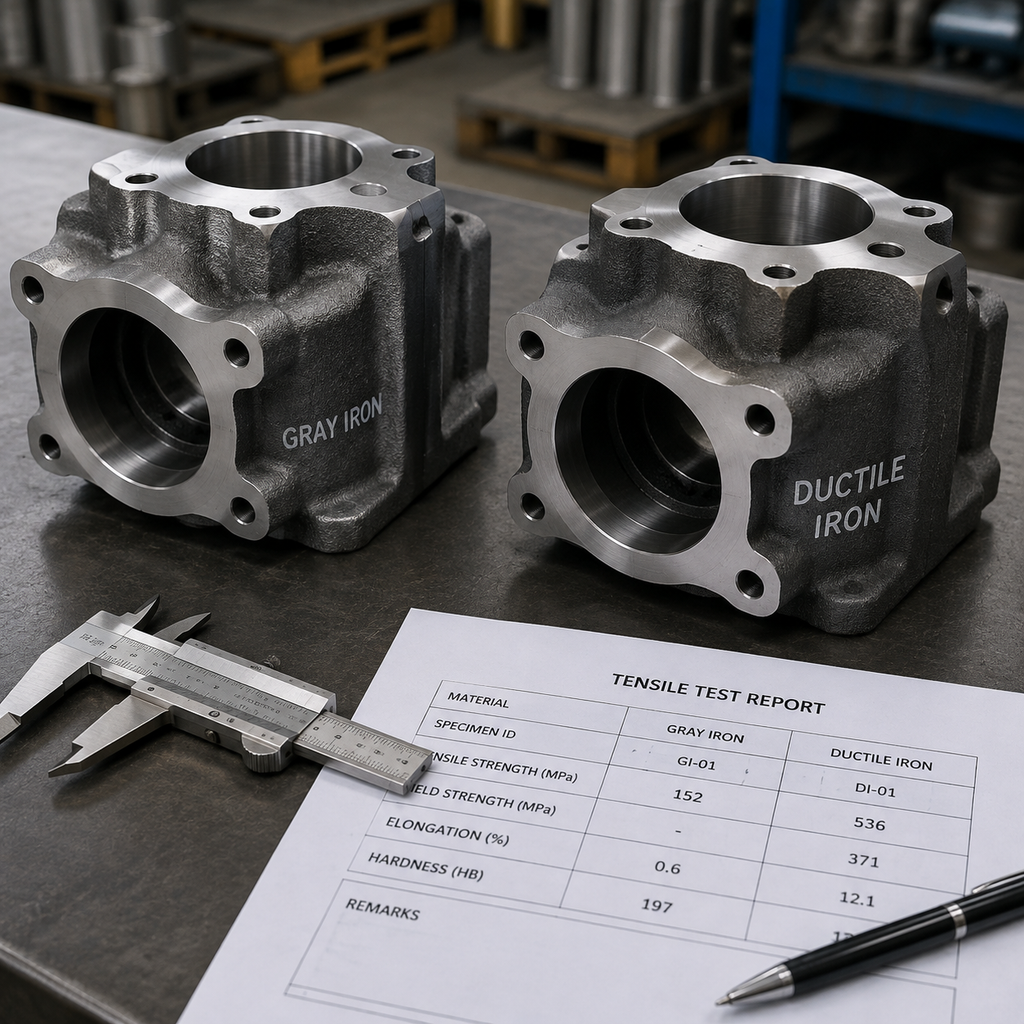
Gray iron: tensile strength around 20,000–40,000 psi, elongation below 0.5%.
Ductile iron: tensile strength 60,000–80,000 psi, elongation up to 18%.
Graphite flakes are stress raisers. Nodules are not. That's the one-sentence metallurgy course.
Those numbers are why a ductile iron casting can survive a hydraulic surge that would crack a gray iron casting.
The material price difference, however, is not enough to explain the quote gap. Most of the cost difference shows up in foundry process, machining, and testing—not in the metal itself.
The real cost difference, in numbers you can use
I've reviewed quotes from low-cost-country foundries for years. Below are typical finished part ranges for production quantities of 100–500 pieces. Your part, finish, tolerances, and freight will move these numbers.
| Specification | As-Cast | Machined | Testing |
|---|---|---|---|
| Gray iron, ASTM A48 Class 30B | $0.80–$1.10 / lb | $1.20–$1.80 / lb | Hardness check, rarely tensile |
| Ductile iron, ASTM A536 65-45-12 | $1.00–$1.45 / lb | $1.55–$2.60 / lb | Tensile bars, microstructure, hardness |
Those are estimates, not a price list. But the pattern is consistent: ductile iron costs more on the quote, and the machining margin widens the gap even further. The table also excludes freight, duties, and the cost of a failure—the biggest line item that never appears on a quote.
If you're ordering 50,000 pieces, setup and tooling get spread thin and material cost becomes a bigger slice. If you're ordering 10 pieces, the foundry's setup time might dominate and the material difference shrinks almost to nothing.
So don't ask "how much per pound?" Ask "what's the finished, tested, risk-adjusted price for one good part?"
Why ductile iron costs more: seven drivers
1. Magnesium treatment and inoculation
To make ductile iron, the foundry adds a magnesium-containing alloy to the molten iron. That reaction is violent, it burns, and it has to happen at the right temperature with tight timing. Magnesium also wants to disappear, so the foundry adds inoculants afterward to control the graphite shape.
Gray iron doesn't need that step. That alone adds a measurable alloy cost before the casting is even poured.
2. Process control is stricter
Ductile iron has a narrower processing window. The melt must be at the right temperature before treatment, the treatment must hit the right residual magnesium, and sections that cool too fast can form chunky or exploded graphite. Foundries build reject risk into the quote.
Gray iron is more forgiving in the mold. That makes it cheaper to produce and cheaper to estimate.
3. Feeding system and yield
Ductile iron often needs a more generous feeding system because of its solidification behavior. More risers mean more metal to melt, more to cut off, more to remelt. Yield drops, and the foundry charges you for it.
4. Heat treatment
Many ductile iron specifications demand ferritic or normalized structures. Heat treatment takes furnace time, labor, and energy. Some grades, like 60-40-18, are typically annealed to hit the elongation number.
Gray iron is usually shipped as-cast. No furnace time, no extra handling, no added cost.
5. Machining is the hidden multiplier
Gray iron is a machinist's best friend. The graphite flakes break the chip, lubricate the cutting edge, and allow higher speeds. Tool life is long, and cycle times are short.
Ductile iron is tougher. It wears inserts faster, pushes cycle times longer, and on complex bores or blind holes it can add 10–20% to the machining quote. If the part includes tight tolerances, that gap gets bigger.
6. Testing and documentation
Ductile iron purchase orders usually require tensile test results from separately cast test bars. Some buyers want microstructure photos, hardness mapping, or even fracture evidence. Those tests cost money, and the foundry prices the whole lot to cover them.
Gray iron can be sold with a hardness range and a mill certificate. That's simpler, faster, and cheaper.
7. Rejection risk
Ductile iron can hide defects like dross, pinholes, or degenerate graphite, and they aren't always visible until machining or testing. The foundry knows this. A serious ductile iron foundry prices in the cost of scrapped material and rework.
A cheap gray iron foundry doesn't have that same risk profile. So it can quote aggressively.
The honest buyer's shortcut
Compare the grade, the test requirement, and the machining scope. And ask the sales engineer to confirm all three in writing. If he can't explain what the material certificate actually proves—not just what it says—then the cheap quote is a guess with your name on it.
Gray iron is not "bad." It's a tool. Ductile iron is another tool. The mistake is using the wrong tool because it comes with a lower number on the invoice.
Real-world cost example: the pump housing math
Let's make this concrete.
A 5.2-pound pump housing, 500 pieces per year, machined and powder coated.
- Quote A, gray iron: $9.20 per piece, no tensile test, 12-week lead time.
- Quote B, ductile iron: $11.80 per piece, tensile certificates included, 14-week lead time.
Part price difference per piece: $2.60.
Annual extra cost if you buy ductile: $1,300.
Now imagine one field failure. A cracked gray iron housing creates a leak, the customer's production line stops, and your team replaces the part. Service call, replacement part, shipping, labor, and lost goodwill: $6,000 is a conservative estimate.
Five failures later, you've spent $30,000 to save $1,300.
It takes one failure to flip that math. Five just makes the point impossible to ignore.
That's the gray iron vs ductile iron cost difference that never shows up on the quote.
When gray iron is genuinely the right call
Gray iron earns its keep in a few places:
- Vibration damping. Graphite flakes soak up vibrational energy through internal friction—that's the physics, not a marketing line. It's why gray iron kills vibration better than ductile iron. Machine tool bases, analyzer frames, and compressor bodies are classic gray iron parts.
- Compressive loads. Gray iron has good compressive strength. If the stress is mostly compression and nothing is bending, gray iron can save real money.
- Brake drums and discs. The graphite flakes contribute to friction behavior and heat stability. Gray iron remains the default for many braking components.
- Large, simple structural castings. If the part is essentially a heavy block that doesn't flex, gray iron is hard to beat on cost.
Don't let a design engineer automatically upgrade everything to ductile. That raises cost on parts that never needed it.
When ductile iron is non-negotiable
Choose ductile iron when the part has to survive:
- Pressure — hydraulic manifolds, pump bodies, valve bodies.
- Impact — gearbox housings, agricultural equipment, truck brackets.
- Bending — anything that a worker will lift, hammer, or over-torque.
- Fatigue — connecting rods, crankshafts, walking beam parts.
If the part pulls, twists, surges, or flexes, ductile iron is the minimum answer.
There's also a structural argument: ductile iron can be stronger than gray iron at thinner wall sections. An engineer who designs a ductile iron housing with 15% less weight can wipe out half the cost gap before the first pour.
What about steel replacements?
Ductile iron often replaces steel castings and steel weldments. A complex steel weldment might need multiple plates, weld prep, stress relieving, and inspection. A ductile iron casting can consolidate all of that into one part.
In those cases, ductile iron is usually cheaper and more consistent. The comparison isn't gray vs ductile; it's casting vs fabrication. And casting often wins.
A 7-point quote comparison checklist
Use this list before you accept any quote, gray or ductile.
- Write the exact grade on the drawing. Not "cast iron." Not "ductile." Write ASTM A48 Class 30B or ASTM A536 65-45-12. For European buyers, write ISO 185 or ISO 1083 in the same way. Nobody gets to interpret later.
- Define the test requirement. "Tensile cert required" changes the foundry's cost structure. Decide whether you need it and state it in the RFQ.
- Compare machining scope line by line. One quote may include all drilled holes; another may quote only cored holes. Check the fringes.
- Check surface finish and painting. Many "cheap" quotes come as-cast, bare, with sharp flash. The next quote includes shot blast and primer. That's not apples to apples.
- Clarify tooling and amortization. Is the pattern included in the piece price? If yes, how many pieces amortize it? If one quote includes tooling separate, add it back before comparing.
- Ask about rejection policy. Who pays when a casting fails at your machining shop? A cheap foundry that won't stand behind its pouring is a bad deal at any price.
- Put a number on failure. Estimate the total cost of one field failure. Divide by the number of good parts. That failure cost is part of the purchase price, even if it isn't on the invoice.
That last step is the one most buyers skip. That's why they sign the gray iron PO, get the cracked housing, and then tell everyone that gray iron is junk.
Gray iron isn't junk. It's just being used for a job it was never designed to do.
Common mistakes buyers make
Mistake 1: Letting the foundry pick the grade
If you send a drawing that says only material "CI," you've given the foundry freedom. The sales engineer will quote gray iron because it wins the bid. When the part fails, he'll point to the spec you signed.
You write the standard. Not the foundry.
Mistake 2: Comparing quotes without testing scope
A gray iron quote without tensile testing is not comparable to a ductile iron quote with full certificates. One is a product with documentation; the other is an assumable risk.
Mistake 3: Ignoring machining costs
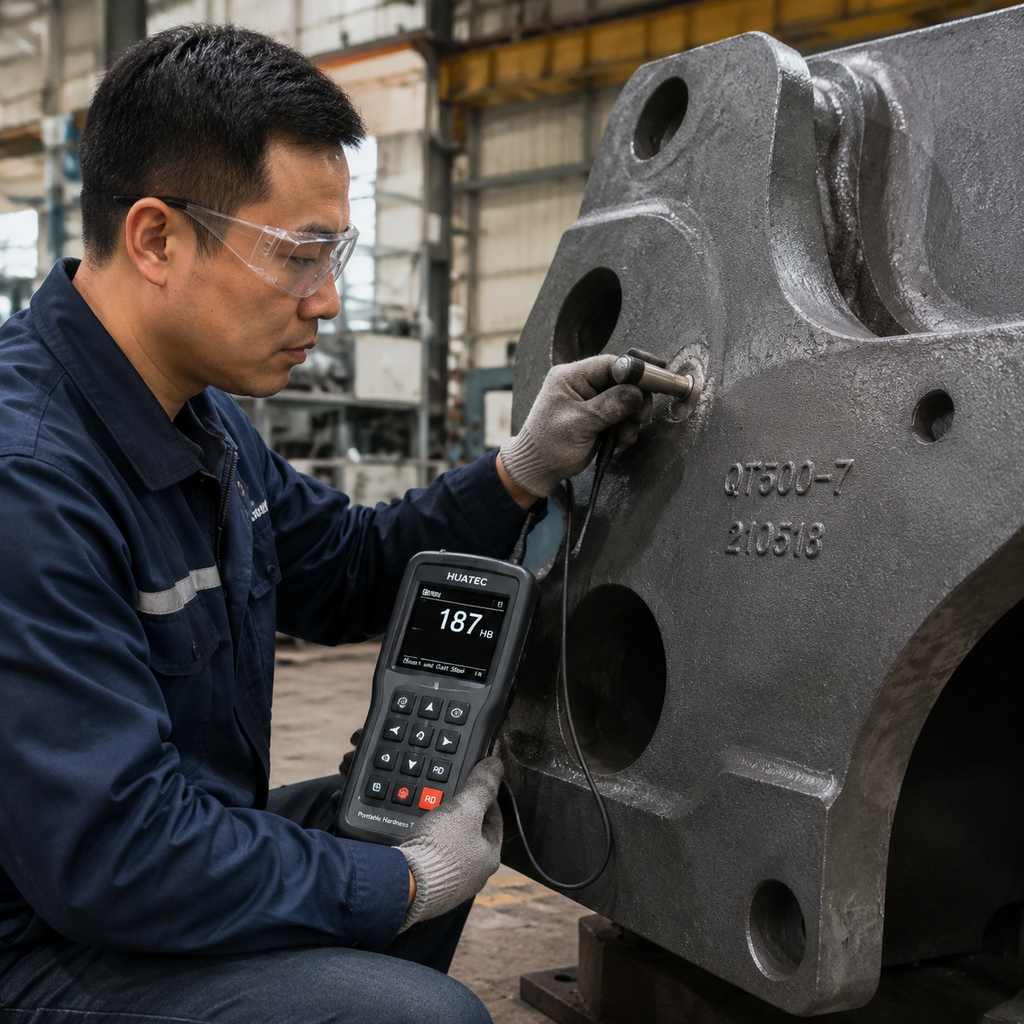
Buyers often assume gray iron's savings stop at the casting price and disappear in machining. If anything, it's the reverse: gray iron machines faster and tooling lasts longer, which widens the gap. The hidden machining issue belongs to ductile iron. If you only compare the casting price and ignore tooling wear, you'll understate the true cost of ductile iron.
Mistake 4: Paying for over-specification
Putting ductile iron on a simple, static, non-structural cover is a waste of money. If the part doesn't move, doesn't see pressure, and doesn't need to bend, gray iron gets the job done for less.
Mistake 5: Not asking for a failure history
Ask the foundry what their quality rejection rate is and whether they track field failures. A supplier who can't answer that question is a commodity trader, not a manufacturing partner.
FAQ
Is ductile iron always more expensive than gray iron?
No. The raw material premium is real, but the quote depends on quantity, geometry, machining, testing, and finish. In optimized designs with thinner walls, ductile iron can come close to gray iron price per part.
Why does gray iron machine cheaper than ductile iron?
Gray iron's graphite flakes break chips cleanly and act as a solid lubricant. Ductile iron is tougher, so it resists cutting, generates more heat, and wears tools faster. This shows up in higher machining quotes.
Can I substitute ductile iron for gray iron?
In strength and toughness, yes. But ductile iron has different damping, thermal conductivity, and wear characteristics. If the part is designed to use gray iron's vibration damping, switching to ductile iron can make it noisier. Check the full engineering requirement first.
Is ductile iron cheaper than steel?
For complex cast shapes, usually yes. A ductile iron casting can replace a welded steel assembly and cut machining time by eliminating seams and fixtures. Compare the finished part cost, not the metal price.
What standards should I use?
For gray iron, ASTM A48 or ISO 185. For ductile iron, ASTM A536 or ISO 1083. America and Europe both have equivalent grades, and a good foundry can provide cross-reference tables.
The bottom line
The gray iron vs ductile iron cost difference is not a fixed percentage. It's a trade-off between what you save on the invoice and what you risk in the field.
Gray iron is right when the part is heavy, static, and vibration-sensitive. Ductile iron is right when the part has to survive real loading without pretending to be a structural member.
Before your next RFQ, do three things:
- Write the grade and test requirement on the drawing.
- Send the same RFQ to at least three foundries with the machining scope defined.
- Run the failure math. Estimate one field failure and compare it to the annual savings on the cheaper quote.
Take a screenshot of the checklist I gave you and attach it to your next purchase order. If a foundry pushes back and says the testing isn't necessary, that's not the cheapest quote anymore. That's the most expensive risk you haven't paid for yet.
The lowest quote on castings is only a bargain if the part survives the job you bought it for. Gray iron will save you money every time it doesn't have to be ductile. Ductile iron will save you money every time the gray iron would have cracked.
Know the difference. Write it down. And let the supplier prove they can hit it.