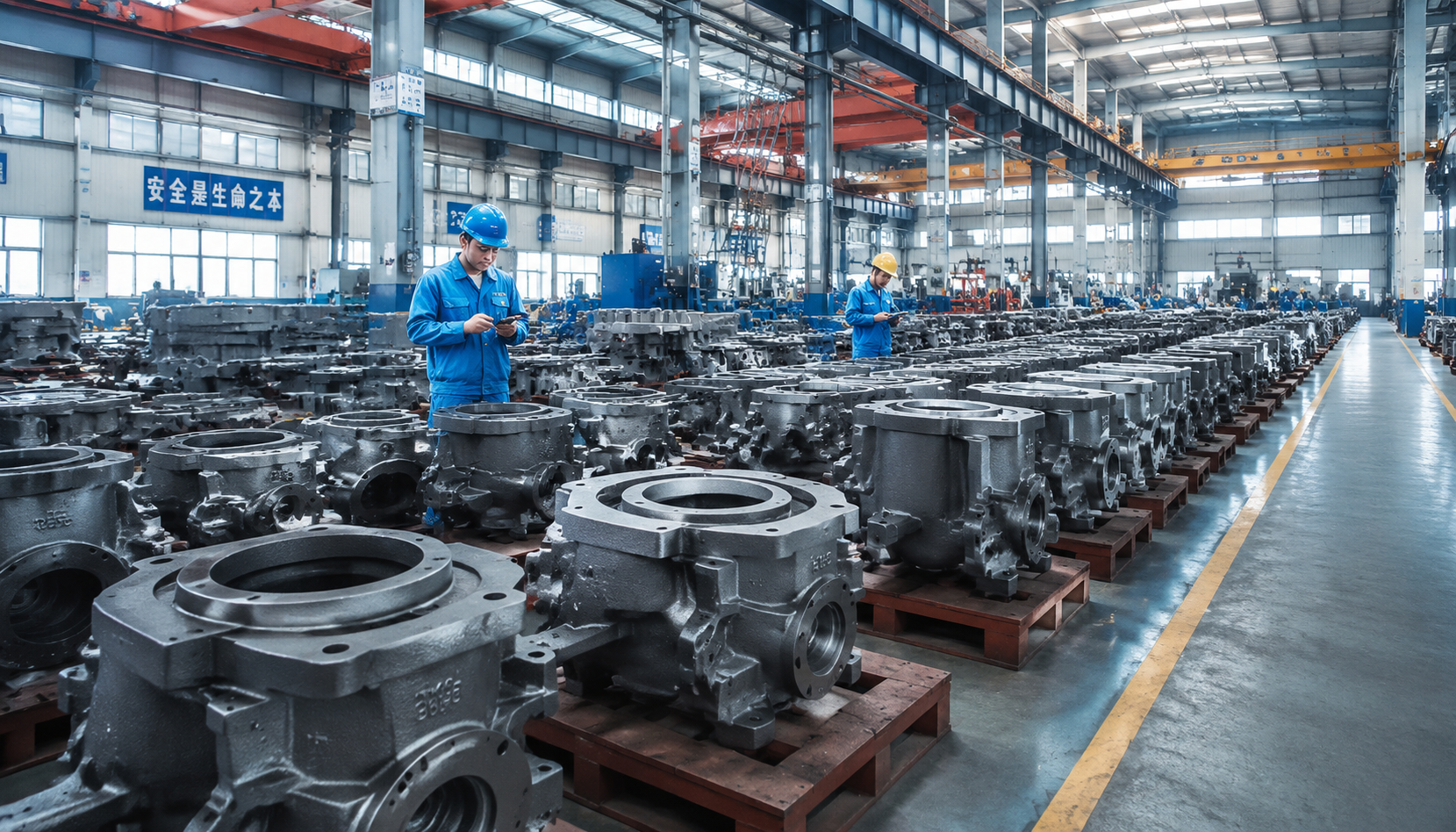
GB Casting Standards China: The 2026 Buyer's Guide to Compliance
You open the container. The castings look right—good surface finish, clean edges. But when your QC team runs dimensional inspection, half of them fall outside tolerance. You call the supplier. "We made them to GB standard," they say. Which GB standard? What does that actually mean? And why can't you find a copy online?
Welcome to the black box of GB casting standards. China produces 48% of the world's castings—over 45 million tons in 2025 alone. But for most importers, the Chinese standards system is a maze of mandatory vs. voluntary designations, outdated versions, and opaque enforcement. Get it wrong, and you're looking at rejected shipments, delayed projects, and pissed-off customers.
This guide is built for one purpose: to give you a practical, step-by-step system for verifying GB compliance—so you can buy Chinese castings with confidence.
What you'll find in this guide
GB vs. GB/T: The Distinction That Could Cost You Thousands
Here's the single most important thing to understand about Chinese standards: not all "GB" standards are mandatory.
GB standards (without the T) are 强制性国家标准—mandatory national standards. They're legally enforceable and cover safety, health, environmental protection, and product safety. If a foundry doesn't comply with a mandatory GB standard, they can be shut down.
GB/T standards (the T stands for 推荐, or "recommended") are voluntary. Most casting material and dimensional standards are GB/T. That includes GB/T 9439 for gray iron, GB/T 11352 for carbon steel castings, and GB/T 6414 for dimensional tolerances.
Real-world example: A German importer ordered ductile iron castings to "GB standard" without specifying the number. The supplier used a 1998 version of GB/T 1348 that had been superseded for six years. The castings failed tensile testing. The importer lost €28,000 on the batch and had to airfreight replacements.
Why does this matter to you? Because when a Chinese factory says "we follow GB standards," they could mean anything—or nothing. You need to pin them down to a specific standard number and version year, and you need to understand whether that standard is mandatory or voluntary.
Your move: In every purchase contract, specify the exact GB/T standard number and year of issue. Don't accept "GB standard" or "national standard" as a spec. Write it like this: "Material and testing shall conform to GB/T 9439-2010 (Gray Iron Castings), including all mandatory annexes."
The GB Casting Standards That Actually Matter
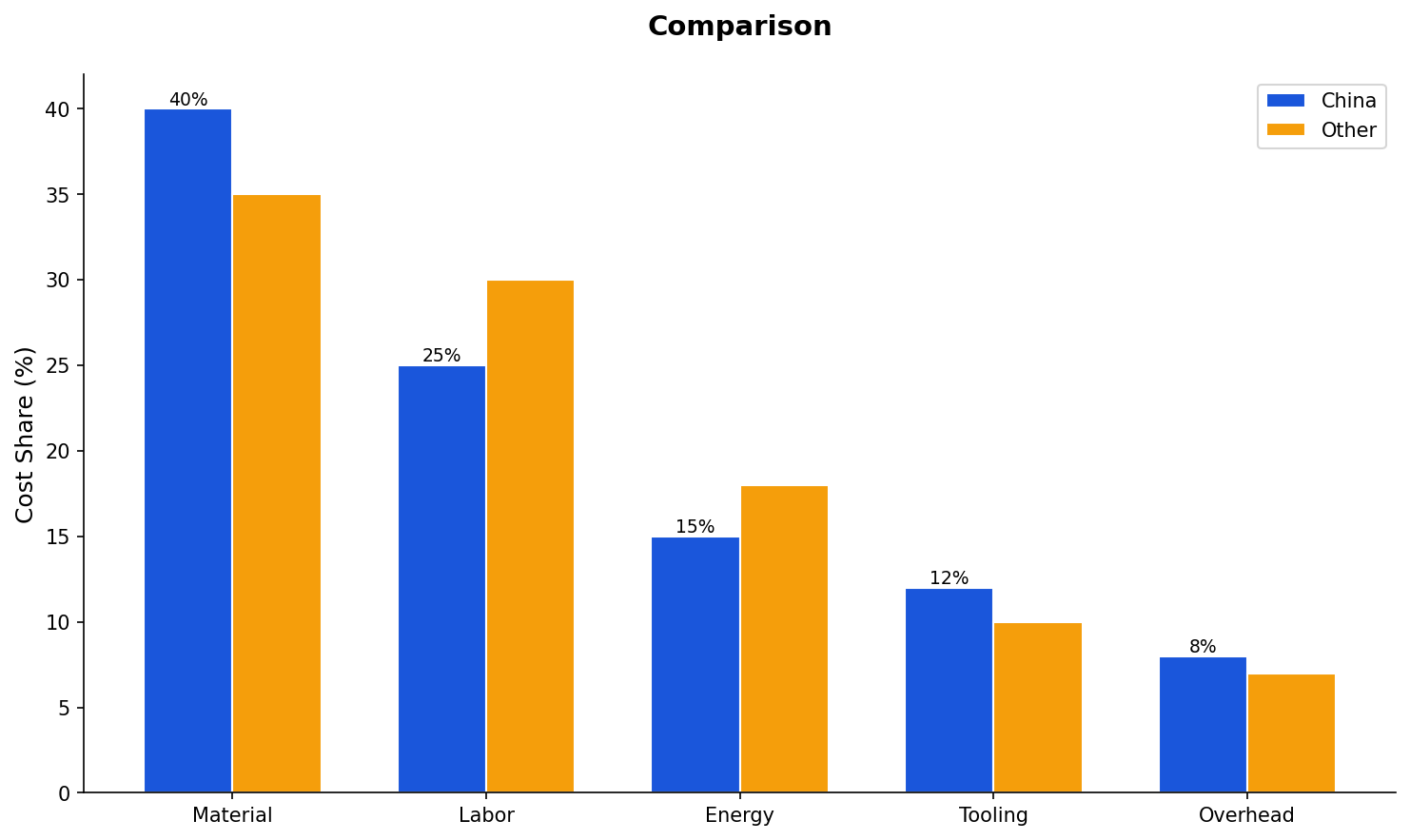
There are hundreds of GB standards related to castings. But in day-to-day sourcing, you'll encounter maybe a dozen. Here are the ones you need to know—with their international equivalents, so you can speak your supplier's language.
| GB Standard | Title | ISO Equivalent | ASTM Equivalent |
|---|---|---|---|
| GB/T 9439-2010 | Gray Iron Castings | ISO 185:2005 | ASTM A48 / A48M |
| GB/T 11352-2009 | Carbon Steel Castings for General Engineering | ISO 3755:1991 | ASTM A27 / A27M |
| GB/T 15115-2009 | Die Casting Aluminum Alloys | ISO 3522:2007 | ASTM B85 / B85M |
| GB/T 6414-2017 | Castings—Dimensional Tolerances and Machining Allowances | ISO 8062:2013 | ASTM A997 |
| GB/T 9444-2007 | Magnetic Particle Testing for Steel Castings | ISO 9934-1:2015 | ASTM E709 |
| GB/T 7233-2009 | Ultrasonic Testing for Steel Castings | ISO 16810:2012 | ASTM E114 |
| GB/T 1348-2019 | Ductile Iron Castings | ISO 1083:2018 | ASTM A536 |
A few things to notice here. First, the GB/T standards map reasonably well to ISO standards—in most cases, the technical content is 90–95% aligned. But they are not legally interchangeable. If your engineering drawing calls out ASTM A48 Class 30, and your supplier casts to GB/T 9439 HT200, you need to verify that the properties actually match for your specific design.
Second, note the version years. GB/T 9439-2010 is from 2010. ISO 185 was updated in 2005. The Chinese standard is actually newer in this case. But some Chinese factories still reference old versions—especially if they bought their test equipment decades ago and haven't recalibrated.
Third, GB/T 6414-2017 (dimensional tolerances) is the one that trips up most buyers. It defines CT (Critical Tolerance) grades from CT1 to CT16. If you don't specify a CT grade in your drawing, Chinese foundries will default to the coarsest end of the range—which may not meet your requirements. More on this in the failures section below.
How to Verify GB Compliance: A 5-Step Process
You don't need to become a Chinese standards expert. You just need a repeatable system. Here's the 5-step process I use with every supplier, and it has never let me down.
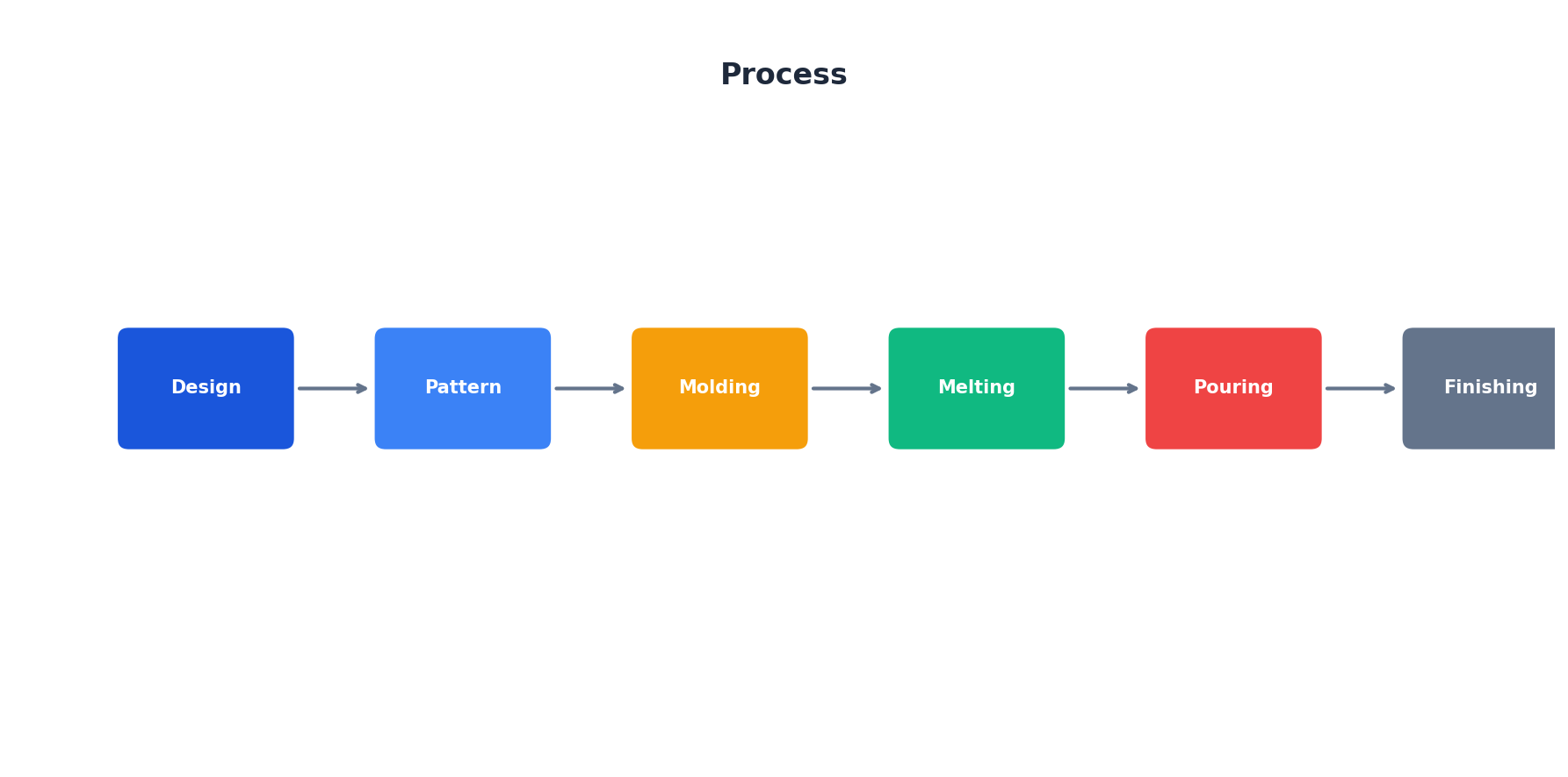
Step 1: Get the Standard Number in Writing
Before you place a PO, ask your supplier: "Which specific GB standard and year will you use for this casting?" If they say "GB standard" without a number, that's a red flag. Push until you get a complete designation like GB/T 9439-2010. Then go find that standard (you can purchase it from the Chinese Standard Publishing House or access summaries through resources like chinesestandard.net).
Step 2: Request Internal Test Reports
Every ISO-certified Chinese foundry has in-house testing equipment—spectrometers for chemistry, tensile testers for mechanical properties, and hardness testers. Ask for the actual test reports from the last three batches of similar castings. Look for:
- The standard number and year printed on the report
- Chemical composition within the specified range
- Tensile strength, yield strength, and elongation meeting minimum values
- Hardness readings (if applicable)
- Date of testing and signature of QC manager
Step 3: Commission Third-Party Testing
For first batches or critical components, don't rely on the supplier's own reports. Hire a third-party lab with a China presence. The big three—SGS, Bureau Veritas, and TÜV Rheinland—all have labs in Shanghai, Guangzhou, and Tianjin that are familiar with GB standards. Cost: typically $500–$1,500 per batch for a full chemical + mechanical + dimensional test suite.
Make sure the lab knows which GB standard to test against. Send them the standard number in advance. A good lab will quote you based on the specific tests required.
Step 4: Audit the Foundry's QC System
You don't need to audit every supplier every time. But for strategic suppliers—the ones you're building a long-term relationship with—spend half a day in their QC department. Bring a checklist:
- Do they have up-to-date copies of the GB/T standards they claim to follow?
- Are their testing instruments calibrated? (Check the calibration stickers and dates)
- Do they keep batch-level records for at least 3 years?
- Can their QC manager explain the key requirements of GB/T 6414 dimensional tolerances?
- Do they have a process for handling non-conforming material?
You'll be surprised how many "GB-compliant" factories can't produce a current copy of the standard they're supposedly using.
Step 5: Certify the Batch Before Shipment
This is the final gate. Before the container leaves China, require a Certificate of Compliance that explicitly states the batch meets the specified GB standard. The certificate should include:
- Batch number and quantity
- Standard designation (e.g., GB/T 9439-2010)
- Actual test results (chemistry, mechanical properties)
- Dimensional inspection report with CT grade specified
- Authorized signature and company stamp
Keep this certificate with your import records. If you ever have a liability issue downstream, this document is your first line of defense.
GB vs. ISO vs. ASTM vs. EN: A Practical Comparison
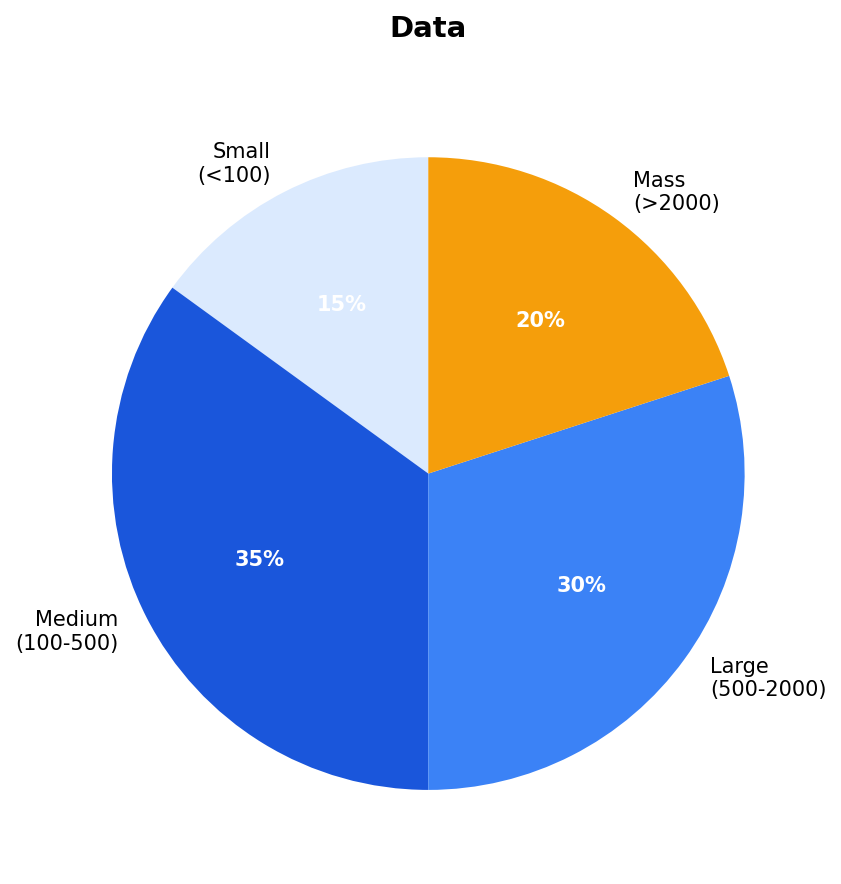
Every month, I talk to a buyer who says: "GB/T 9439 is basically the same as ISO 185, so we'll just use the Chinese standard." Is that true? Mostly. But "mostly" is not "always." Here's where the differences actually bite.
Chemical Composition Limits
GB/T standards and ISO standards often have slightly different allowable ranges for elements like phosphorus, sulfur, and silicon. For example, GB/T 9439-2010 allows up to 0.15% phosphorus for HT200, while ISO 185 caps it at 0.12% for the equivalent grade. If your application is sensitive to phosphorus (e.g., for wear resistance), this difference matters.
Mechanical Property Testing
The testing methods are virtually identical—tensile testing per GB/T 228.1 (which is equivalent to ISO 6892-1). But the sampling frequency can differ. Chinese standards typically require one tensile test per heat, while ASTM may require one per batch or per 500 pieces. If your quality plan expects more frequent testing, you need to specify it separately.
Dimensional Tolerances (The Big One)
GB/T 6414-2017 and ISO 8062:2013 are technically equivalent—they use the same CT grades and basic tolerance tables. But here's the catch: Chinese foundries often default to CT12–CT14 for sand castings unless you specify otherwise. European buyers typically expect CT9–CT11. If you don't put the CT grade on your drawing, you'll get what you get.
Real-world example: A UK buyer ordered pump housings from a Chinese foundry. The drawing said "tolerances per ISO 8062." The foundry, being more familiar with GB/T 6414, assumed CT12 (coarse). The buyer expected CT9 (medium). Result: 40% of the castings were rejected. Cost of rework: £18,000. The fix: add "CT9 per GB/T 6414-2017" to every drawing.
Certification and Traceability
This is where GB/T systems are weakest. ISO and ASTM standards usually require full traceability—heat numbers, test certificates, and inspection records that follow each batch. GB/T standards have traceability requirements, but enforcement is inconsistent. A Chinese foundry with ISO 9001 certification will usually maintain good records. A foundry that's only certified to GB/T 19001 (the Chinese adoption of ISO 9001) may not.
Your move: When you're sourcing to a GB standard, treat it as a baseline, not a ceiling. Add your own requirements for testing frequency, traceability, and third-party verification in the contract. The GB standard tells you the minimum. Your job is to define the actual quality bar.
5 Common GB Compliance Failures (And How to Avoid Them)
I've collected these from real importers over the past three years. Each one cost someone time, money, or both. Learn from their mistakes.
Failure #1: Outdated Standard Versions
Chinese foundries sometimes use old versions of standards—either because they're unaware of updates or because their test equipment is calibrated to the old limits. Example: GB/T 1348 (ductile iron) was updated in 2019, but some factories still reference the 2009 version. The differences are minor, but if your contract specifies the 2019 version and the factory uses 2009, you have a compliance gap.
Avoid it: Always include the full standard number and year in your PO. Check the current version on the Chinese Standardization Administration website before you sign.
Failure #2: Confusing GB and GB/T
We covered this above, but it's worth repeating. A supplier tells you "we comply with GB standards," and you assume that's enough. Later you find out the relevant standard was GB/T (voluntary), and the factory was never actually required to follow it. This happens more often than you'd think.
Avoid it: Ask directly: "Is this standard GB or GB/T? What is the exact number and year?" If they can't answer, that's a red flag.
Failure #3: Dimensional Tolerance Misalignment
The most common technical failure I see. GB/T 6414 defines CT grades, but if you don't specify one, the foundry will default to the coarsest allowable range. Your engineer designed for CT9. The foundry cast to CT13. The difference can be several millimeters on a 300 mm feature.
Avoid it: Put the CT grade on every drawing, in a prominent location. Train your engineers to include it. For critical dimensions, add a note: "This dimension shall be verified per GB/T 6414-2017, CT9."
Failure #4: Material Grade Confusion
Chinese material designations look different from Western ones. HT200 (GB/T 9439) is often mapped to "Class 30" (ASTM A48), but the mapping isn't exact. The tensile minimums are the same (200 MPa for HT200, 30 ksi for Class 30), but the composition ranges and test methods have subtle differences. If your design relies on specific material properties beyond tensile strength—like fatigue life or wear resistance—you need to verify directly.
Avoid it: Request a full material test report from an accredited lab. Don't rely on grade name mapping alone.
Failure #5: Missing or Incomplete Test Reports
Your supplier sends you a "test report" that's a single page with a few numbers handwritten on it. No heat number, no standard reference, no signature. This is not a valid certificate of compliance. But many importers accept it because they don't know what to ask for.
Avoid it: Use the checklist in Step 5 above. Require a formal Certificate of Compliance with all the elements listed. If the supplier pushes back, find another supplier.
Frequently Asked Questions
Are GB casting standards mandatory in China?
Not all of them. GB standards (without the 'T') are mandatory and legally enforceable—they cover safety, health, and environmental protection. GB/T standards (the 'T' stands for 'tui jian,' meaning recommended) are voluntary. Most casting material and dimensional standards—like GB/T 9439 for gray iron or GB/T 6414 for dimensional tolerances—are GB/T. This means a Chinese factory can technically choose not to follow them unless you specify them in your contract.
Can I use GB standards instead of ASTM or ISO for my castings?
Technically, yes—if your design and application allow it. Many GB/T casting standards are technically aligned with ISO standards (e.g., GB/T 9439 is similar to ISO 185). But in practice, most Western engineers specify ASTM, ISO, or EN standards. The safest approach is to have your supplier test to both GB and your required international standard, and verify equivalence with a third-party lab.
How do I verify my Chinese supplier is using the correct GB standard?
Start by asking for the specific standard number and year in writing. Request the supplier's internal test reports and compare values against the standard's published tables. Then commission a third-party inspection (SGS, Bureau Veritas, or TÜV Rheinland in China) to verify chemical composition, mechanical properties, and dimensional tolerances against the claimed standard. Always keep a copy of the relevant standard for reference.
What is the difference between GB/T 9439 and ISO 185?
GB/T 9439-2010 (Gray Iron Castings) and ISO 185:2005 (Gray cast irons—Classification) are technically very similar—about 95% overlap in chemical composition limits and mechanical property grades. The main differences are in grade designation (HT200 in GB vs. 200 in ISO), some minor dimensional tolerance variations, and the certification framework. In practice, a foundry certified to GB/T 9439 can usually meet ISO 185 requirements, but you should verify with actual test data.
Do I need third-party testing for GB compliance verification?
If the casting is for a non-critical application and you trust your supplier, their in-house test report may suffice. But for safety-critical components—automotive, construction, pressure vessels, or medical devices—third-party testing is strongly recommended. Chinese foundries are required to have their own testing equipment, but third-party labs provide an unbiased verification. Budget $500–$1,500 per batch for third-party GB compliance testing, depending on the number of tests required.
Your Next Move
GB casting standards don't have to be a black box. The system is different from what you're used to, but it's not irrational. Once you understand the GB vs. GB/T distinction, know which standards matter, and have a repeatable verification process, you can source from China with the same confidence you'd have buying domestically.
Here's a quick recap of the action items:
- In your next PO: Specify the exact GB/T standard number and year. Don't accept "GB standard."
- On your drawings: Add the CT grade from GB/T 6414 for every critical dimension.
- Before shipment: Require a Certificate of Compliance with actual test data.
- For first batches: Commission third-party testing through SGS, Bureau Veritas, or TÜV Rheinland.
And if you want a shortcut? We've put together a GB Compliance Verification Checklist that covers all 5 steps—with the exact questions to ask, documents to request, and red flags to watch for. It's the same checklist our sourcing managers use for every client project.
Get the GB Compliance Checklist
Download the 5-step verification checklist used by professional casting buyers. Includes standard reference tables, sample test report template, and audit questions.
Download Free Checklist →No sign-up required. Instant download.
About the author: Hans Weber is a senior sourcing engineer at Interstate Castings with 14 years of experience in cross-border casting procurement. He has audited over 200 foundries across China, India, and Southeast Asia, and specializes in quality systems and standards compliance.
ASTM vs. ISO vs. GB: A Global Casting Standards Comparison
The China Foundry Audit Checklist: 27 Things to Inspect
Casting Tolerances: How to Specify CT Grades That Save You Money
Ready to Source Castings from China?
We help engineers and buyers source precision castings from verified Chinese foundries. No middleman markup — we charge a fixed service fee. 200+ audited factories, 40+ quality engineers, full PPAP documentation support.
Submit Your Inquiry →