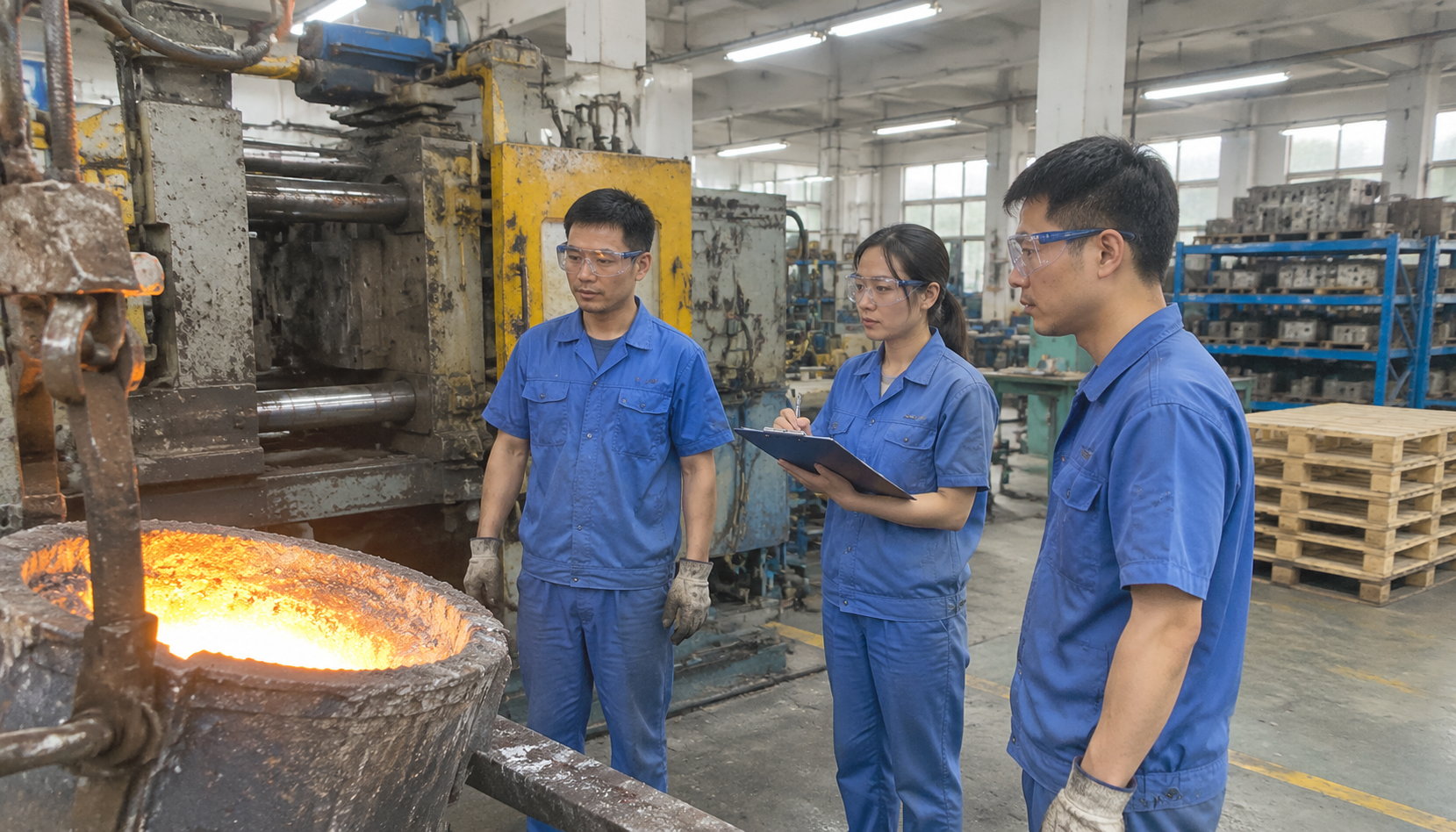
Start with two numbers that don't agree with each other.
The first: a battery-electric car carries roughly 250 to 350 kg of aluminum. A combustion vehicle in the same class carries 150 to 200 kg. Some of that jump is body structure, some is the battery enclosure, some is the e-drive housing — but the direction is one-way.
The second: more than 40,000 manufacturing sites in China hold a valid IATF 16949 certificate, and the country pours close to 60% of the world's primary aluminum (per the International Aluminium Institute data). By any spreadsheet logic, finding an EV aluminum casting supplier should be a short afternoon.
It isn't. Ask anyone who has actually run a PPAP on a structural casting in Asia and you hear the same sentence: the certificate count is enormous, the number of plants that can hold a Cpk above 1.33 on a 2.2 mm wall for twelve straight months is not. Industry estimates put the Chinese die casters genuinely qualified for EV structural or leak-tight battery housing work in the low hundreds. That's my own reading of public certification and audit data, not a published statistic — treat it as a direction, not a decimal.
The gap between those two facts is where your project either lands or stalls. This is what a PPAP submission actually tells you, if you read it properly.
What "EV-grade" changes in a die casting
A casting is not graded by the material spec. It's graded by what the part has to do after it leaves the machine.
An engine bracket from 2015 had one job: don't crack. A battery enclosure lid today has five: hold stiffness, seal against water, sit inside a tolerance stack with a pack that weighs 400 kg, conduct or insulate heat as specified, and survive a 10-year corrosion cycle. That changes the process window, not just the drawing.
Wall thickness and the mold matters more than the machine
Structural EV parts run thin — commonly 2.0 to 2.5 mm in AlSi10MnMg, the as-cast (non-heat-treated) alloy that lets you skip the quench distortion that older T6 parts had to fight. Thin walls at 4,000 mm of flow length is where vacuum assistance stops being optional. Ask what cavity pressure the plant pulls. Below 100 mbar is a working number for high-vacuum. If the answer is "we run vacuum on some parts," you've found a plant that doesn't control it per die.
Porosity, and how it's actually proven
Nobody sells you a casting without porosity. What you're buying is a defined limit and proof that the plant can hold it.
- Structural and safety-relevant parts usually reference ASTM E505 Level 2 as the radiograph acceptance, or a customer-specific equivalent drawing zone map.
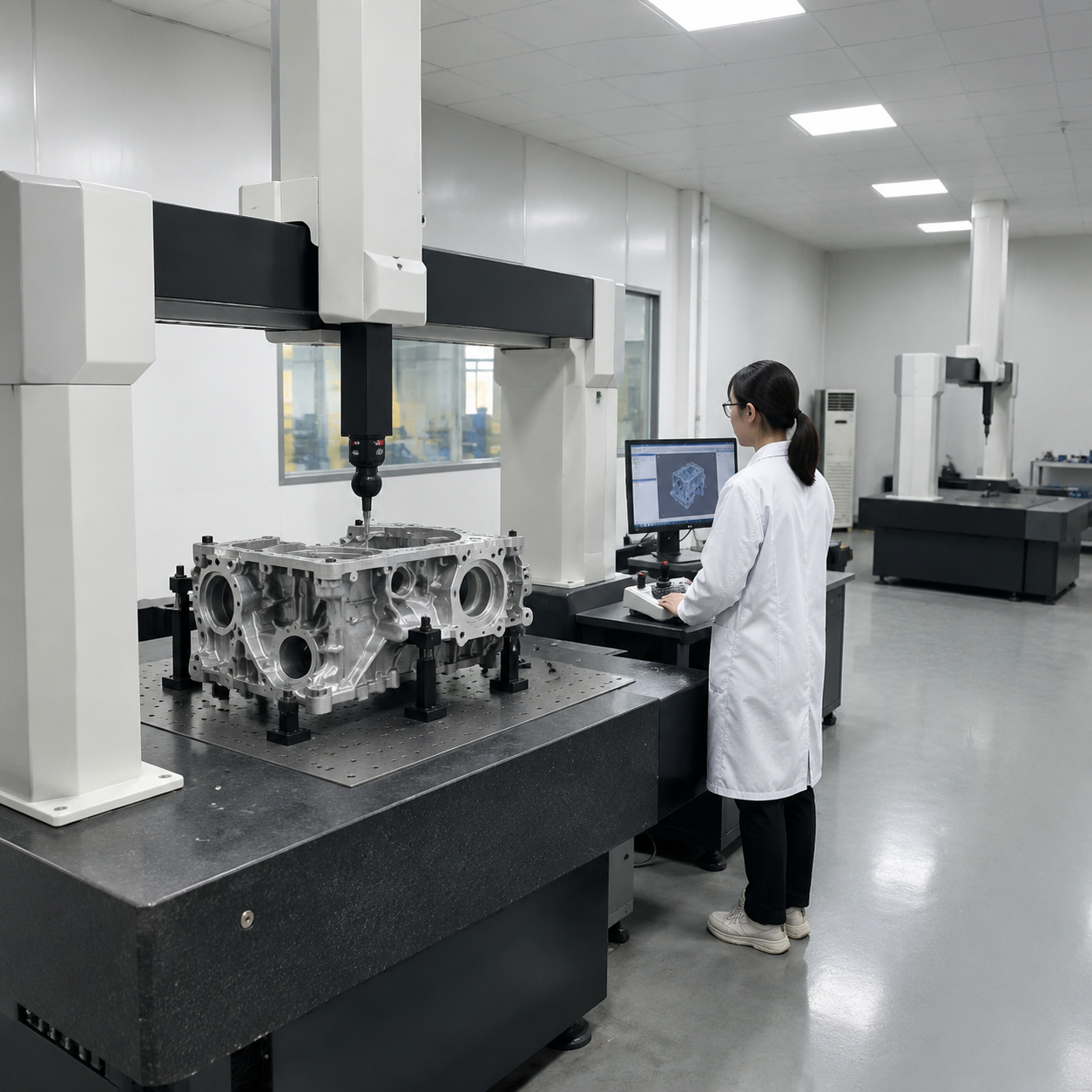
- Seal-critical sections on battery housings go further: CT scanning on first-off samples, then a fixed sampling rate in series production.
- Leak test on housings is typically a pressure-decay check, not a bubble test. Get the actual acceptance: test pressure, stabilisation time, allowed pressure drop, and the part of the part it applies to.
A plant that names the standard and the level without hesitating has done this before. A plant that says "we accept per drawing" is telling you the customer does the thinking.
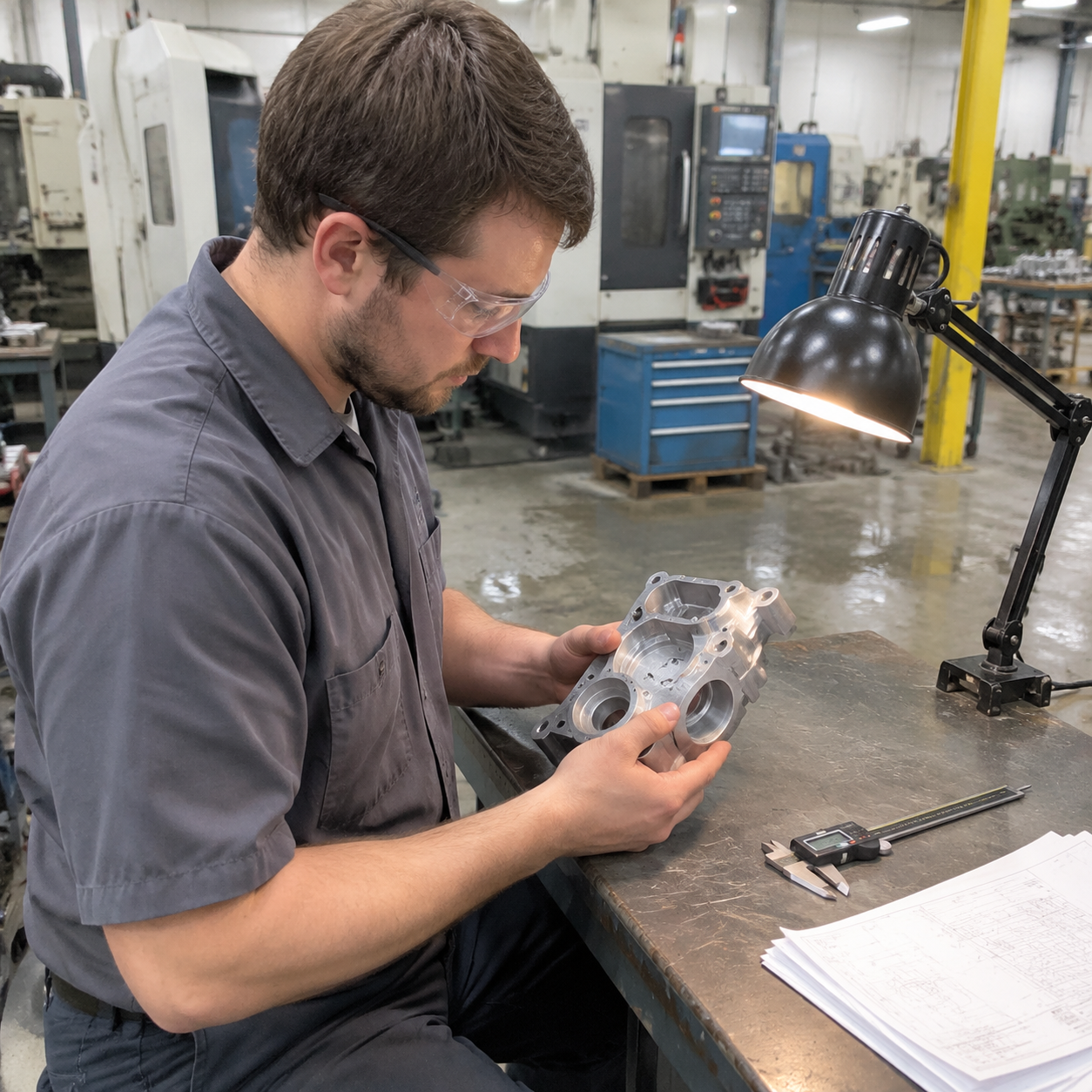
The document set that separates real suppliers from listings
PPAP Level 3 is eighteen elements. Most buyers check four of them and sign. The four that usually get skipped are the four that predict failure eighteen months out.
| PPAP element | What it proves | What buyers skip |
|---|---|---|
| IATF 16949 certificate | The QMS exists and was audited | Reading the scope wording |
| Process flow + PFMEA | The plant has mapped its own risks | Checking them against the actual floor |
| MSA / GR&R studies | Their gauge agrees with itself | Whether the gauges are the ones on the line |
| Initial process study | Ppk ≥ 1.67 at PPAP | Whether it was 30 parts or 300, over what time |
| Material certification | Alloy chemistry per EN 10204 3.1 | Matching heat numbers to delivered lots |
| IMDS submission | REACH / ELV compliance | Whether it covers the coatings and sealants |
The certificate scope is the first trap. A plant can hold a perfectly valid IATF 16949 certificate that covers "machining of aluminum components" — and the die casting is bought in from a neighbouring shop nobody audited. Pull the certificate, read the scope line, and confirm that "aluminum die casting" appears in the exact words. If it doesn't, you're not buying from the plant you think you're buying from.
Traceability that survives a real recall
Ask them to take a random finished part off the rack and walk it back to the melt. You want: part laser mark or QR → production date and shift → machine and die number → heat/lot of aluminum ingot → supplier of that ingot with a composition certificate.
If that walk takes under ten minutes, the plant has a system. If it takes a phone call and a spreadsheet, the system is a person. Persons change jobs.
The sub-tier nobody audits
Impregnation, heat treatment, shot blasting, anodising, machining, leak testing — at least two of these are usually outsourced. Each is a place where a good casting becomes a non-conforming part. Get the sub-tier list inside the PPAP, not appended to a mail six weeks later. For battery housings, impregnation is the one that bites: the sealer chemistry and cure schedule decide whether your leak rate holds through thermal cycling.

What a VDA 6.3 process audit looks like on the floor
Paper is a two-day exercise. The floor takes two hours and tells you more.
The last line of defence is the night shift. Walk it. Check four things:
- The X-ray or CT unit. Is it running, and is there a part in it? A machine under a dust sheet in the corner means radiography is a PPAP-only activity — which means serial production runs blind.
- Die maintenance records. Dies for large EV housings run 80,000 to 150,000 shots before rebuild. Look at the last three maintenance entries. Dates and shot counts should be logged per die, not per department.
- The scrap board. What's the real internal scrap rate this month, and what's the top defect? A plant quoting 2% scrap on a structural housing is either exceptional or not counting trimming rejects.
- The gauge shelf. Are the gauges on the line the same serial numbers as in the MSA study? This is boring and it is the single most common finding.
Red flags that repeat across plants: SPC charts filled in at the end of the shift rather than in real time; a Cpk number that only exists for the PPAP run; a corrective action log where every entry closes in under 48 hours regardless of root cause; and a scrap figure that never moves, month to month, which means nobody is measuring it.
VDA 6.3 grading helps structure the conversation — 90% and above is an A result, 80 to 89% is B with conditions. But the score is less useful than the question behind it: can this plant explain, unprompted, what it changed after the last major non-conformance? If they can't, the audit found paperwork, not a system.
Where the quote hides its money
Aluminum die casting pricing is not complicated once you break it apart. Most buyers never do.
A quote should arrive in at least four pieces: the per-piece conversion cost, the alloy cost with a named index basis, the tooling cost with an amortisation assumption, and the secondary operations priced separately. When it arrives as one number per kilogram, you have been given a wall, not a price.
"I always ask for the breakdown before I sign. The first quote on a housing was 4.10 a piece, and by the time we separated the alloy from the conversion, we found the alloy was indexed to a higher grade than the drawing called for. That was 40 cents a part, on 90,000 parts a year, for a spec we never needed." — James Parker, a Michigan aftermarket auto parts distributor who sources castings from three Chinese foundries, told us.
Three cost items that never appear in a first quote:
- Scrap risk allocation. If the supplier prices at 2% internal scrap and actually runs 6%, you get a price revision request in month seven, usually mid-program.
- Tooling ownership and rework. State in writing that the die is your property, that you receive the die drawings and maintenance log, and what happens to the die if the relationship ends. A die you don't own is negotiating power you don't have.
- Engineering changes. A die modification on a 3,000-tonne housing can run five figures plus four to six weeks of line downtime. Put a rate card for ECRs in the contract while everyone is still friendly.
Alloy indexing deserves its own line. Aluminum ingot moves. If the price is fixed for twelve months with no index clause, the supplier has priced in a risk buffer you're paying for — usually 8 to 12%. If it's indexed to LME with no cap, you carry the volatility. Either is fine. Not knowing which one you signed is not.
Lead time, capacity, and the machine you're actually booked on
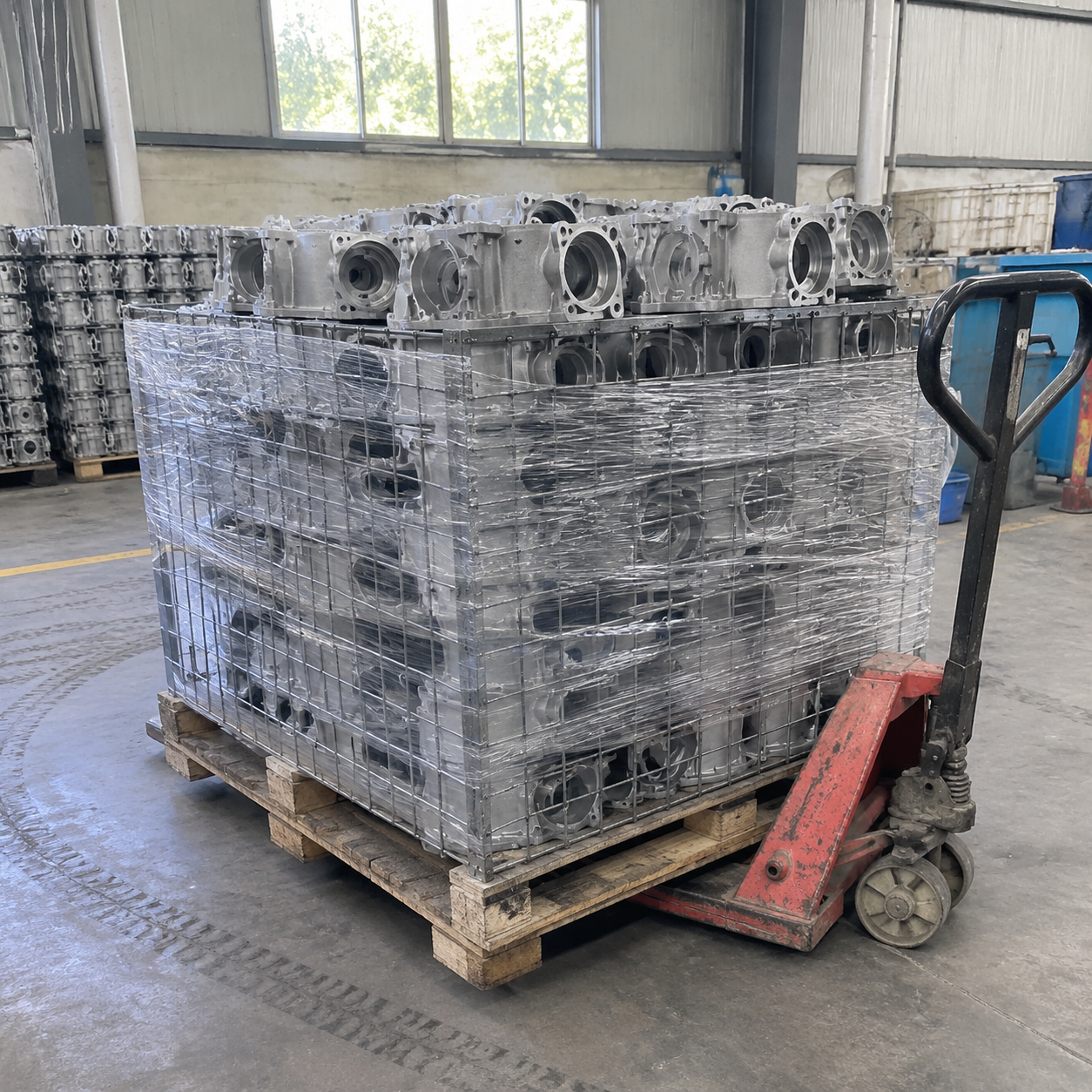
For large EV housings, capacity is a machine question. The part needs a 2,500 to 4,500-tonne machine for many battery enclosure designs, and the number of those machines in any given plant is small — often four to eight. You are not booking the plant. You are booking a slot on one machine, in one die, on a schedule that also serves three other customers.
Ask directly: how many machines above 2,000 tonnes, what's the current loading, and what percentage of that loading is already EV work. A plant at 85% loading on structural work in a good quarter will deprioritise your 3,000-piece-per-month order the moment a 30,000-piece program walks in. That's not dishonesty. That's arithmetic.
"The thing that kills you isn't the first shipment, it's month five. You plan a launch around a quoted 45-day lead time, and then Chinese New Year lands, or there's a power restriction in the province, and you're air-freighting castings at four times the sea rate to keep a line running. I now add 20% to every quoted lead time and build a buffer into the launch plan." — James Parker.
Two structural protections. First, get a capacity commitment in writing — pieces per month, per machine, with a stated escalation path if they can't hold it. Second, ask what their backup plan is for the die. If the press goes down for a week, can they move the die to another machine of the same tonnage in the same building, or does your program stop? The answer separates a plant from a broker.
The seasonal calendar nobody puts in the contract
Chinese manufacturing has two predictable capacity crunches: Chinese New Year, when a large share of the workforce travels for two to four weeks, and the summer power-restriction season in some provinces, where industrial users are curtailed on a published schedule. Neither is a secret. Both are routinely left out of launch plans. Build your first-article and PPAP timing around them, not into them.
Common mistakes to avoid
These are the ones that recur in almost every post-mortem I've sat through.
- Treating the IATF certificate as a capability statement. It's a QMS certificate. Read the scope. It says nothing about whether they can hold a 2.2 mm wall.
- Auditing the assembly hall and skipping the die shop. Die quality and maintenance discipline drive more dimensional variation than the machine does. Walk the tool room.
- Not auditing the sub-tier. Impregnation and heat treatment are where leak failures are born. If they're outsourced, they're still on your PPAP.
- Accepting a 30-piece Ppk study as a capability proof. Thirty consecutive good parts off a warm die proves the die works today. Ask for a 300-piece study across shifts.
- Leaving alloy grade unconfirmed against the drawing. A higher grade than specified is not a free upgrade; it's a cost you're paying and a process window somebody guessed at.
- Skipping the reverse traceability walk. Ten minutes at the rack tells you whether you have a system or a person.
FAQ
Is IATF 16949 mandatory for an EV aluminum casting supplier?
For any part that goes into a vehicle, in practice yes — every OEM and Tier-1 I've worked with requires it, and PPAP Level 3 assumes a compliant QMS underneath. The part people miss is the scope. A certificate covering "machining" does not cover the die casting, and you need to see that the casting process itself sits inside the certified scope.
What Cpk should I require at PPAP?
AIAG guidance puts the initial process study at Ppk ≥ 1.67 for the PPAP submission, stepping to Cpk ≥ 1.33 for ongoing production on key characteristics. On EV structural and seal-critical features, I'd argue for 1.67 in series production as well, and I'd want to see the study spread over at least three shifts — not thirty parts off one warm die on a Tuesday morning.
How do I verify porosity limits without a CT scanner in-house?
You don't need one. Require the supplier's radiography and CT results per ASTM E505 acceptance levels, with the images and the evaluation report included in the PPAP package. Then ask for the sample rate in series production in writing. If they can't state the rate, the CT scan was a launch event, not a control.
What's a realistic lead time for a new EV housing die?
From drawing freeze to PPAP-approved parts, plan on 6 to 9 months for a large structural or battery housing die: 8 to 14 weeks for die design and build, 4 to 8 weeks for trial and correction cycles, and 6 to 10 weeks for dimensional and leak-test validation. Quoted numbers that come in far below that usually mean the die build and the trial loop are being compressed, and someone will pay for it later.
Next steps before you sign the LOI
Do this in order. It takes about three weeks and it saves quarters.
- Pull every candidate's IATF certificate and read the scope line. Eliminate anyone whose certificate doesn't name aluminum die casting.
- Request the full PPAP Level 3 file as a package, including sub-tier names. Watch how long it takes them to assemble it — that speed is a proxy for how organised the plant is.
- Book the plant visit. Walk the night shift. Check the X-ray, the die maintenance log, the scrap board, and the gauge shelf.
- Run the reverse traceability walk on a finished part. Time it.
- Re-quote with the cost broken into conversion, alloy with a named index, tooling, and secondary operations. Compare on total landed cost, not on the headline per-kilogram number.
- Write the capacity commitment, the die ownership clause, and the ECR rate card into the agreement before the program kicks off.
The plants worth your time will handle that list without flinching. The ones that push back on the traceability walk or get vague on the certificate scope have just told you what month nine will feel like.
Get the audit checklist
Forty-seven checkpoints across PPAP documents, floor audit, pricing structure, and capacity commitments — formatted to print and take to the plant visit.