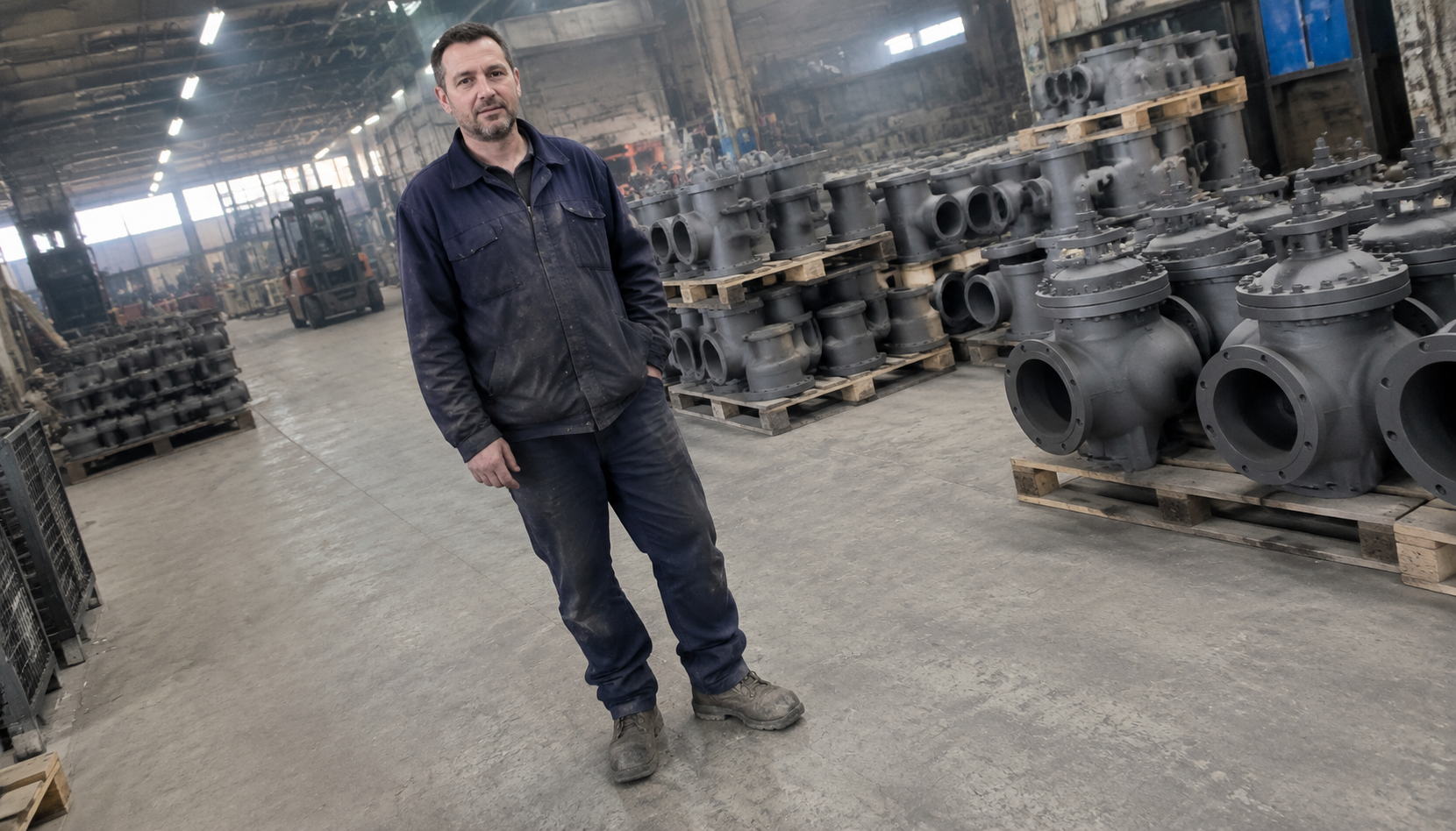
Here's a number that should bother you. Between July and September of 2026, I logged 41 quotations for the same part: an 8 kg ductile iron valve body, EN-GJS-500-7, sand cast, machined flange faces, AQL 1.0. Same drawing. Same testing. Same packaging spec.
The quotes ran from $1.09 to $4.35 per kilogram.
Four times the spread. Same metal. Same process. If you're using "price per kg" as your main comparison tool, that spread is telling you something brutal: the number is almost meaningless on its own. What matters is what sits behind it — the grade, the testing regime, the volume tier, the tooling arrangement, and about nine line items nobody puts on the first page of a quotation.
I buy around $1.5 million a year in castings for a hardware wholesale business outside Atlanta — valve bodies, flanges, manhole covers, pump housings, counterweights. I've been burned by a $1.19/kg quote that turned into $2.40/kg by the time the container landed. So this is the guide I wish someone had handed me eight years ago.
The 2026 numbers: what ductile iron actually costs per kg
Start with the honest ranges. These are FOB prices for sand-cast ductile iron, medium complexity, order quantities of 5 tonnes or more, no machining, standard chemical and tensile testing only. Collected from live quotations and supplier cost sheets, July–September 2026.
| Origin | Typical FOB range (USD/kg) | What drives the position |
|---|---|---|
| China — Ningbo, Qingdao, Hebei | 1.10 – 1.85 | Scrap and pig iron access, scale, dense supplier base |
| India — Coimbatore, Pune, Rajkot | 1.25 – 2.00 | Strong on pump and valve castings, smaller runs accepted |
| Vietnam | 1.40 – 2.20 | Narrower supplier pool, growing fast, good for tariff reasons |
| Turkey | 1.60 – 2.40 | Short transit to Europe, tighter capacity |
| Brazil | 1.75 – 2.65 | Freight heavy, duty exposure into the US |
| Mexico | 1.85 – 2.80 | USMCA duty-free into the US, near-shore lead times |
| Germany / Italy | 3.00 – 5.40 | Documentation, traceability, low-volume flexibility |
| USA domestic | 3.40 – 6.20 | Labour, energy, environmental compliance |
Two warnings about this table. First, the low end is not a promise — it's the bottom of the range for a simple part: no cores, wall thickness above 8 mm, 10 tonne batch, loose dimensional tolerance per ISO 8062 DCTG 9. Add three cores, a 4 mm wall, a machining allowance and a -40 °C impact test, and the same supplier will quote 60–90% higher.
Second, if someone quotes you $1.05/kg for a machined ductile iron part in 2026, they are not the cheapest supplier. They are quoting a different product, or they are buying the order and planning to renegotiate later. I've watched both happen, and both burn the buyer, not the foundry.
Rule of thumb I use: the per-kg figure is only comparable once grade, cores, machining, testing and Incoterm are pinned down. Strip any one of those away and you're comparing apples to shipping containers.
Where the money actually goes
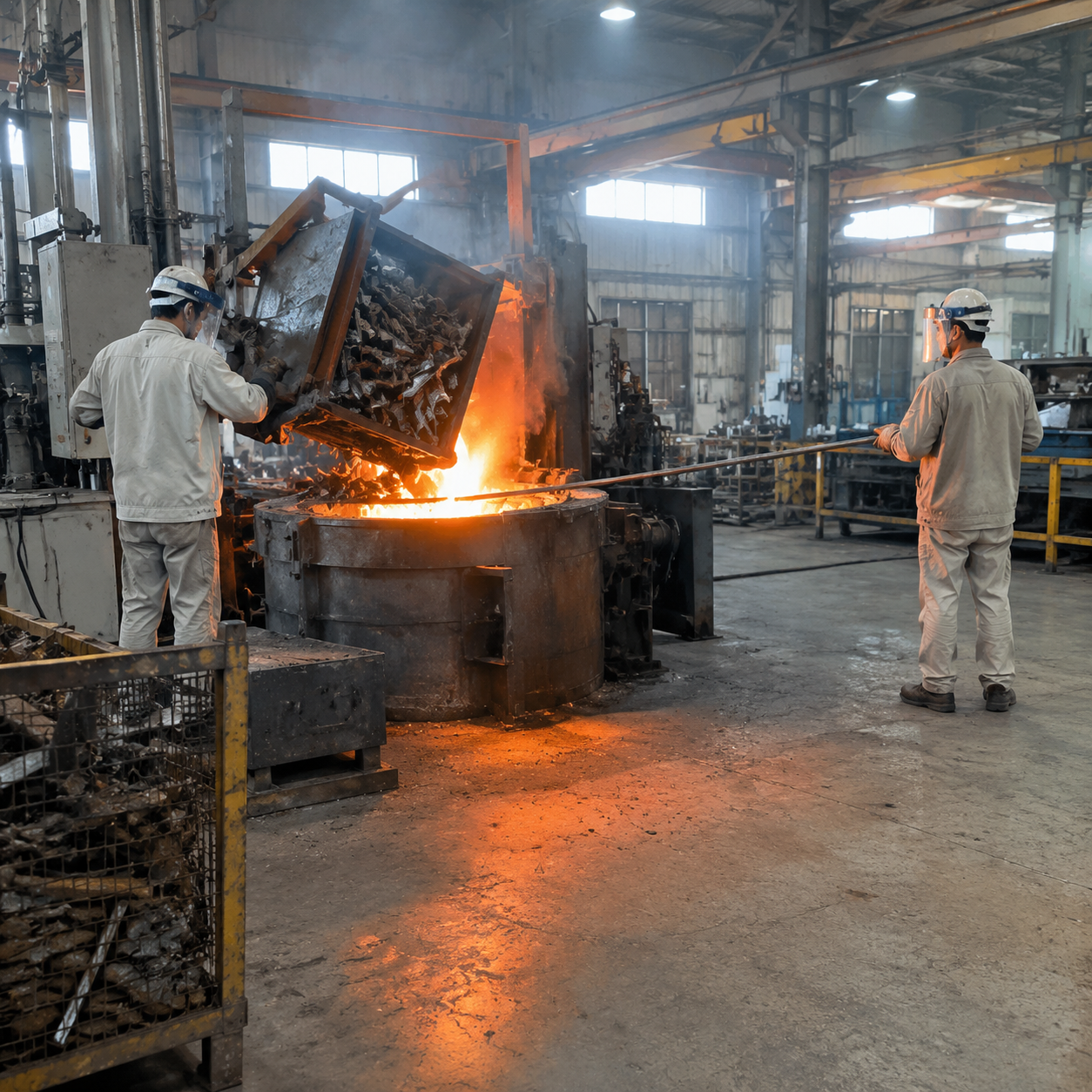
If you want to negotiate, you need to know what a foundry's cost sheet looks like. This is a real-shaped breakdown for a Chinese foundry quoting EN-GJS-500-7 valve bodies at 8 kg, 5 tonne batch. Percentages are of the quoted piece price, before tooling.
| Cost element | Share of piece price | Comment |
|---|---|---|
| Metallic charge (scrap + pig iron) | 32 – 38% | 1.05–1.10 t charged per tonne of good castings |
| Nodularizer and inoculant | 4 – 6% | FeSiMg at 0.9–1.4% addition, ferrosilicon inoculant |
| Melting energy | 8 – 11% | 550–700 kWh per tonne melted |
| Molding sand and cores | 7 – 11% | Resin-bonded; every core adds cost |
| Direct labour | 12 – 16% | Melting, molding, pouring, knockout, cleaning |
| Heat treatment | 0 – 4% | Zero for as-cast grades, real money for ferritizing anneals |
| Grinding, shot blasting, priming | 4 – 7% | Scales with how fussy your surface spec is |
| Packaging | 2 – 4% | Wooden crates and VCI film are not free |
| Overhead, profit, tax | 14 – 18% | Thin margins, high fixed cost base |
Read that table again and notice something. The metal itself is only about a third of what you pay. Which means when scrap steel moves 10%, your price shouldn't move 10% — it should move about 3.5%. A supplier who sends you a "raw material surcharge" equal to double the actual index movement is not passing through cost. He's repricing.
Same logic on magnesium. Ferrosilicon-magnesium is the single most volatile line in the nodularizer bucket, and 2026 has been choppy. If a foundry tells you the magnesium price forces a 15% increase, ask for the purchase invoice for the alloy lot and the addition rate they use. Two numbers, both easy to check, and the conversation changes immediately.
The three cost drivers buyers consistently underestimate
Wall thickness. A 4 mm wall in a 30 kg part needs higher pouring temperature and better gating design than a 12 mm wall. Yield drops. Scrap rises. Expect 15–30% over the quoted simple-part rate, and don't argue about it — argue about the yield number instead.
Core count. Every sand core is a separate box, a separate setting operation, and a separate place for a gas defect to start. Three-core parts quote meaningfully higher than one-core parts of the same weight. If your design has five cores, ask whether the foundry can collapse it to three. Sometimes the answer saves you $0.20/kg.
Machining allowance. Casting 3 mm oversize so the customer can machine it costs the foundry almost nothing. Actually machining it costs a lot. Keep those two things separate in your head — it's the most common source of quotation confusion I see.
Grade and testing: where the price really moves
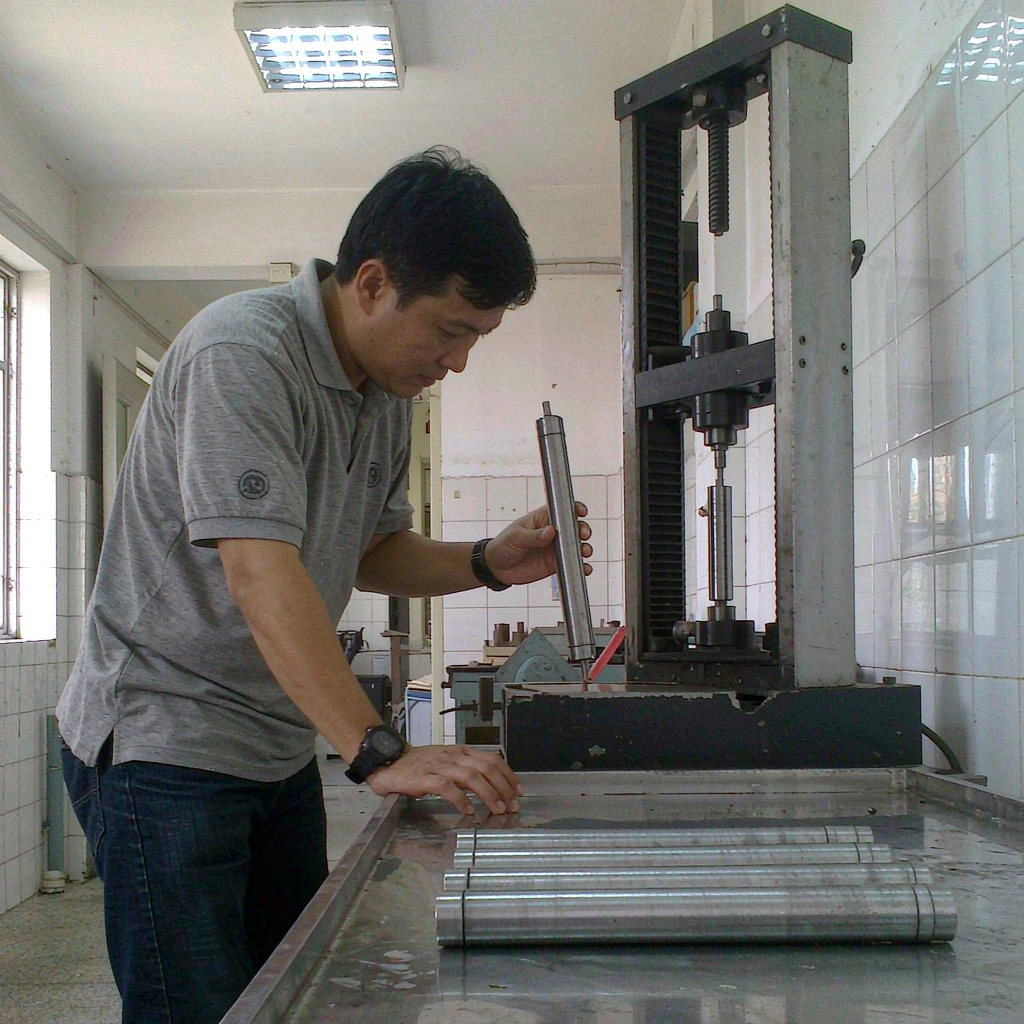
Grade rarely doubles your price, but it moves it more than most buyers plan for.
As-cast EN-GJS-500-7 (roughly ASTM A536 80-55-06) is the workhorse. If your drawing says that, you're at the baseline number in the table above. Move to EN-GJS-400-18 — the low-temperature ferritic grade — and you're asking for a controlled ferritizing anneal, tighter chemistry, and impact testing at -40 °C. In my quote logs that's a 15–25% premium, and closer to 30% if the part is thick-sectioned and prone to pearlite formation.
Go to ADI (austempered ductile iron) and pricing stops being a per-kg conversation at all. Austempering is a batch heat treat with its own cycle, and small orders get punished.
| Test / requirement | Typical add-on cost | Charged per |
|---|---|---|
| Chemical analysis (optical emission) | $5 – $15 | Heat / lot |
| Tensile test (one specimen set) | $20 – $40 | Set |
| Charpy impact at -40 °C | $30 – $60 | Set of three |
| Metallography, nodularity per ISO 945 | $15 – $30 | Sample |
| Ultrasonic inspection | $8 – $20 | Part |
| Magnetic particle inspection | $5 – $12 | Part |
| Radiography | $30 – $80 | Part |
| Third-party witness (SGS / BV / TÜV) | $300 – $800 | Day, plus travel |
Here's what nobody tells you: on a 5 tonne order of 8 kg parts, that's about 625 pieces. Full ultrasonic inspection at $12 a piece adds $7,500 to a job that might only be worth $9,000 in castings. Testing can cost more than the metal.
So specify testing by risk, not by habit. Critical pressure boundary? Then yes, sample UT per lot and pay for it. Decorative counterweight? A dimensional check and a chemical cert is enough. I've seen buyers burn 20% of their budget on inspection protocols copied from a different product line.
Sarah Chen, who sources industrial pump and valve castings out of Suzhou, put it bluntly when I asked her about this: "The cheapest quote we ever accepted failed dimensional on three of twelve samples. The rework and the air freight cost us more than two years of paying a normal price. Now I pay for first-article reports and I sleep."
Her point lands on something a per-kg comparison will never show you: consistency between lots. A foundry that hits 500 MPa on one heat and 430 on the next is not cheaper. It's a warranty claim in transit. Ask for the last six months of tensile results for the same grade and look at the spread, not the average.
Volume, tooling and part weight: the three levers you can actually pull
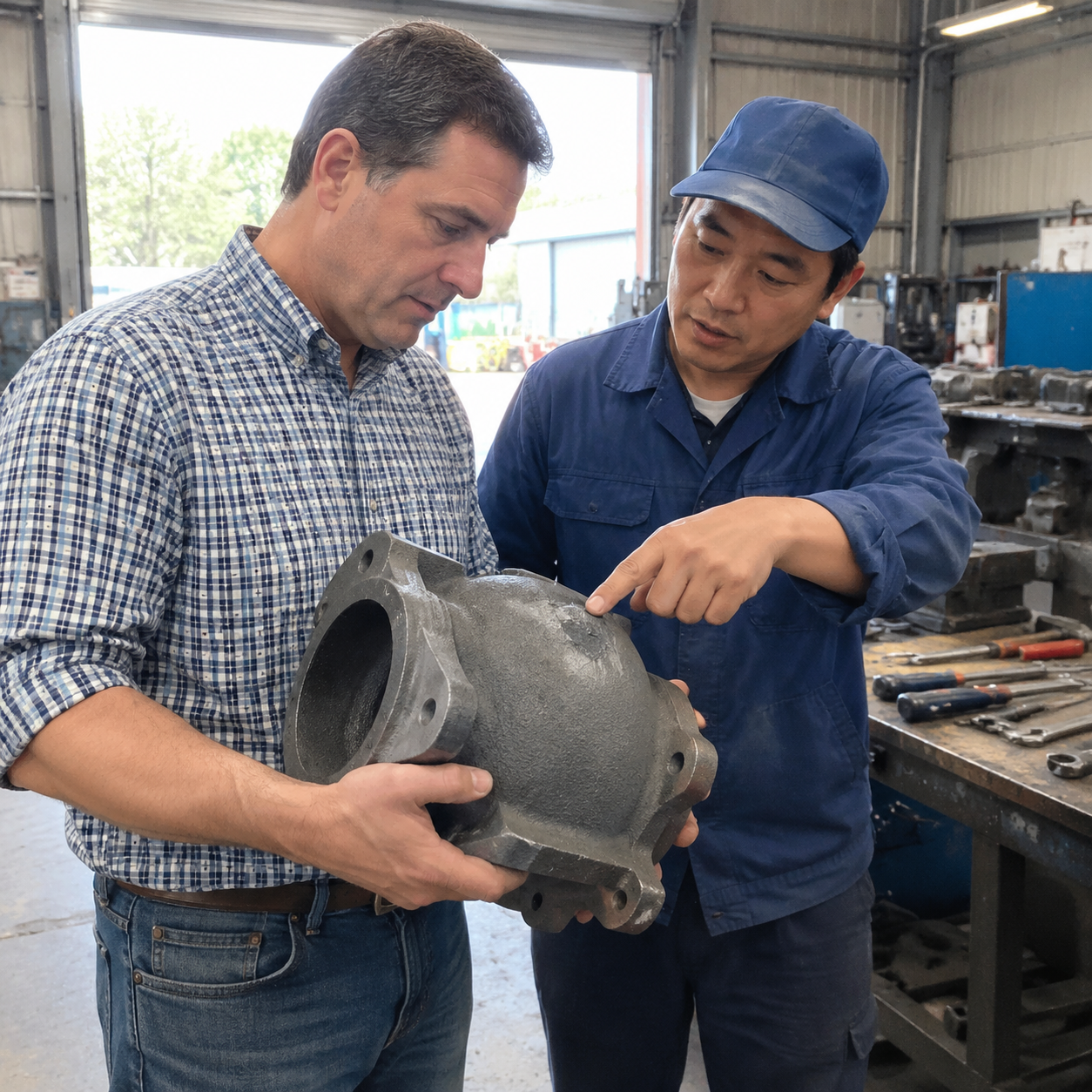
Foundries price in tiers, and the tiers are steeper than most buyers expect.
| Order quantity | Typical adjustment vs 1 t reference | What changes on their side |
|---|---|---|
| Under 500 kg | +25% to +45% | Setup dominates, they may batch with other work |
| 500 kg – 2 t | +10% to +20% | One shift, pattern changeover absorbed |
| 2 – 5 t | Baseline | Normal production run |
| 5 – 20 t | -8% to -15% | Continuous scheduling, better melt utilisation |
| Over 20 t | -12% to -22% | Annual contract territory, raw material buying improves |
Tooling is the other lever. A wooden pattern for a medium part runs $300–$1,500. Aluminium pattern equipment for higher volumes runs $1,500–$6,000. A core box adds $500–$2,500 on top.
Do the arithmetic before you negotiate: $3,000 of tooling spread over 5 tonnes is $0.60/kg. Spread over 20 tonnes it's $0.15/kg. That's a 45-cent-per-kilo difference on the same part, same foundry, same drawing — purely from how you structured the order. If your annual demand is 20 tonnes, buy 20 tonnes at once or sign a 12-month call-off. Don't place four separate 5-tonne orders and then complain about the tooling charge.
Part weight cuts both ways. Below about 1 kg, labour and handling dominate and per-kg prices climb steeply — a 200 g fitting might quote at $3.50/kg while a 10 kg fitting off the same line quotes $1.40. Above roughly 150 kg, the risk of a scrapped casting carries so much value that foundries either add contingency or decline the job.
Reading a quotation line by line: a seven-point check
This is the part that saved me the most money. Before you compare numbers, put every quote onto the same sheet and confirm seven things.
- Grade designation and standard. "Ductile iron" is not a grade. You want EN-GJS-500-7 per EN 1563, or 80-55-06 per ASTM A536, written out. If the quote just says "ductile", assume grey iron until proven otherwise.
- Unit price basis. Per piece or per kg? Quoted at theoretical weight or actual weighed weight? Foundries that quote per piece have already absorbed weight variation — that's not automatically bad, but you need to know which basis you're comparing.
- Incoterm and port. FOB Ningbo and FOB Shanghai are not the same number. DDP Atlanta and FOB Ningbo are worlds apart. Normalise everything to FOB before you talk price.
- Tooling: cost, ownership, and exit. Who owns the pattern? Can you take it to another foundry if things go wrong? Get it in writing that tooling is your property and will be released on request. I've seen a buyer lose access to $9,000 of tooling over a $400 dispute.
- Testing scope and who pays. Which tests, how many per lot, and is the third-party inspection inside or outside the quoted price? This is the single most common hidden add-on.
- Machining, coating, packaging. Each as a separate line. If it's bundled, ask them to unbundle it. A supplier who can't break out machining probably isn't doing it in-house — which means a middleman margin you can't see.
- Validity period and price-adjustment clause. Thirty days is normal. Anything linked to a raw material index needs the index and the formula written down, not "subject to market changes."
Run that check on ten quotes and the field usually narrows to two or three. The ones that drop out are rarely the expensive ones — they're the ones that couldn't explain their own numbers.
The costs that show up after you sign
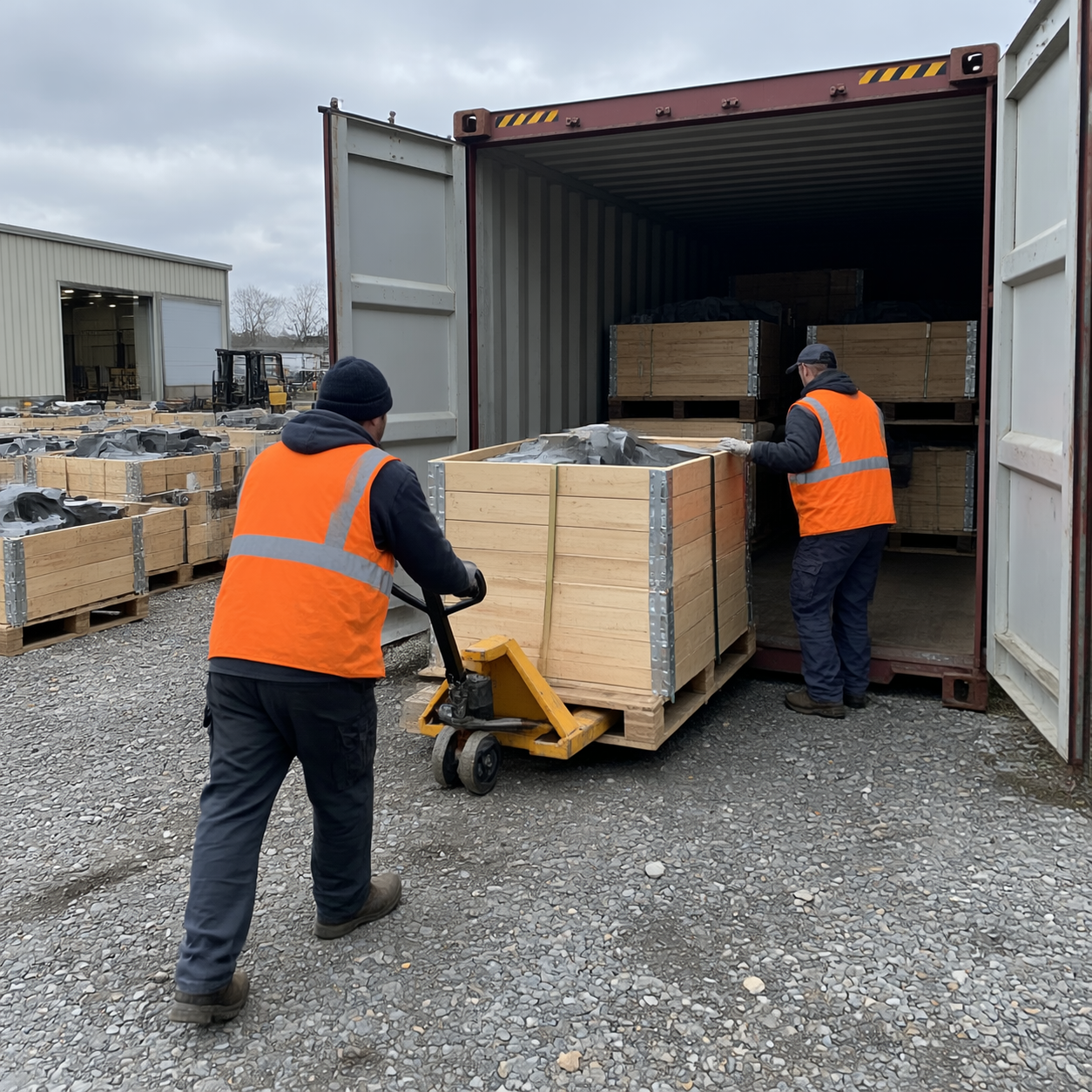
Every experienced buyer has a story about the gap between the quoted price and the landed cost. These are the usual suspects.
Weight tolerance on the shipping documents. Castings vary. If you agreed per-kg pricing at theoretical weight and the container weighs 4% heavier, you pay for it. Sometimes that's fair and sometimes it's sand left in a core. Agree on a tolerance band — typically ±3% — and who absorbs the excess.
Scrap replacement terms. What happens when 6% of the lot fails your incoming inspection? Good suppliers replace free, FOB your port, within 30 days. Weak contracts make you prove the defect was theirs, which means an $800 third-party report to argue over $300 of castings. Most buyers just eat it. Decide in advance that you won't.
Freight and duty volatility. Ocean rates moved enough in 2025–2026 that a quote with freight baked in is a quote with someone's guess baked in. Get FOB, get a separate freight quote, and keep the ability to switch forwarders.
Change orders. Any drawing revision after tooling is cut triggers a change fee. Budget it rather than fight it — but insist on a written rate card for pattern modification before you place the first order.
Payment terms. 30% deposit and 70% against the bill of lading copy is the standard. If a supplier demands 100% up front on a first order, that's a working-capital problem on their side, and it usually shows up as a delivery delay later.
Documentation. Mill certificates, dimensional reports, heat traceability, and packing lists cost the foundry office time. Some charge for them. Get it sorted before the order, not after.
Chen again: "I stopped chasing the last five cents. What I chase now is the defect rate. A foundry at $1.55 with 1% scrap beats a foundry at $1.35 with 6% scrap every single month, and nobody puts that in a spreadsheet until it's too late."
How to negotiate without gambling on quality
You have five levers that don't touch the per-kg rate directly but move the effective cost more than a 3% price cut ever will.
Raise the volume, not the pressure. Ask what the price becomes at 10 tonnes instead of 5. Often the answer is a 10% drop — better than anything you'll get from haggling, and it costs the supplier nothing because he's already got the furnace hot.
Trade payment terms for price. A 20% deposit instead of 30%, or a letter of credit, has real value to a small foundry's cash flow. Sometimes worth 2–3% on price.
Split the tooling cost, not the price. Offer to pay tooling in full up front in exchange for a lower per-kg rate — and keep ownership of the pattern. You get a better unit cost, they get cash, and you get portability if the relationship sours.
Ask for a cost breakdown and actually read it. Not to argue every line, but to spot the padding. If the metallic charge line is 50% of the price, their cost sheet is fantasy, and their pricing will be arbitrary too.
Get a second source before you need one. The most powerful negotiating position is a qualified backup supplier who has already passed your sample order. It costs you a $400 trial order once a year and pays for itself the first time a shipment slips.
What not to do: don't push a foundry below their metallic charge plus energy floor and expect quality to hold. At that point they're either cutting the nodularizer addition or shipping the borderline heats. You will find out in the field, eighteen months later, with a cracked hub and an angry customer.
Common mistakes worth avoiding
Comparing machined to unmachined prices. The gap runs 40–90% on the same part. Read the scope line first, always.
Assuming a lower per-kg price means a cheaper part. A heavier casting at a lower rate can cost more per piece. Compare cost per functional part, not per kilogram.
Skipping the first-article inspection to save $300. On a 5 tonne order that's 5% of your budget spent on making sure the other 95% is what you ordered.
Letting the quote expire without noticing. A 30-day validity is normal, and material moves. If your approval chain takes six weeks, ask for a 60-day quote in writing before the clock starts.
Ignoring dimensional tolerance class. ISO 8062 DCTG 9 and DCTG 7 look similar in a drawing header and differ by real money, because tighter tolerances mean more inspection and more rejects. Confirm the class, then confirm the price was quoted to it.
Frequently asked questions
Why is ductile iron more expensive than grey iron?
Magnesium treatment and tighter process control typically add 12–25% over grey iron for the same weight and complexity. You're paying for the nodularizer, for closer melting discipline, and for the scrap rate that comes with a fussier process.
Is a $1.05/kg ductile iron quote realistic in 2026?
Almost never at the grade you specified. At that level a supplier is either quoting grey iron chemistry, pricing an unmachined raw casting with no testing, or planning to recover the difference on tooling, freight and change orders. Ask for the chemistry spec and the testing scope in writing and watch what happens.
Does the price per kg include machining?
No, unless the quotation says so. Raw and machined castings can differ by 40–90% on the same part. Have machining broken out as its own line, including fixture and CNC setup amortization.
How much does tooling add to the per kg price?
Pattern and core box costs of $800–$6,000 spread across a 5 tonne order add roughly $0.10–$0.60 per kg. On 20 tonnes the same tooling adds under $0.15 per kg. Volume is the lever, not negotiation.
Should I buy FOB or DDP?
FOB gives you a clean, comparable number and control over freight. DDP buries margin inside the unit price and makes supplier comparison nearly impossible. Start FOB, then convert everything to landed cost yourself — you'll spot the outliers fast.
What's a reasonable first order size?
Enough to amortize tooling sensibly. For most 5–10 kg castings that means 2–3 tonnes for a first order, with a trial sample run of 20–50 pieces before that. Below 500 kg you'll pay a setup premium of 25–45%, which is fine for validation and painful as a habit.
What to do next
Take the quotation you're holding right now and run it through three checks. First, is the grade written out as a standard designation, or just the word "ductile"? Second, is the testing scope and Incoterm pinned to FOB? Third, is tooling ownership written down?
If any of those is missing, you don't have a comparable price yet — you have a starting number. Fix the scope, then compare. The 41 quotes in my log narrowed to four real contenders once I normalised all three, and the cheapest of those four was not the cheapest on the first page.
And keep one thing in your head the whole way through: the per-kg figure is a starting point for a conversation about grade, consistency and risk. Treat it as the answer and you'll win the negotiation and lose the shipment.