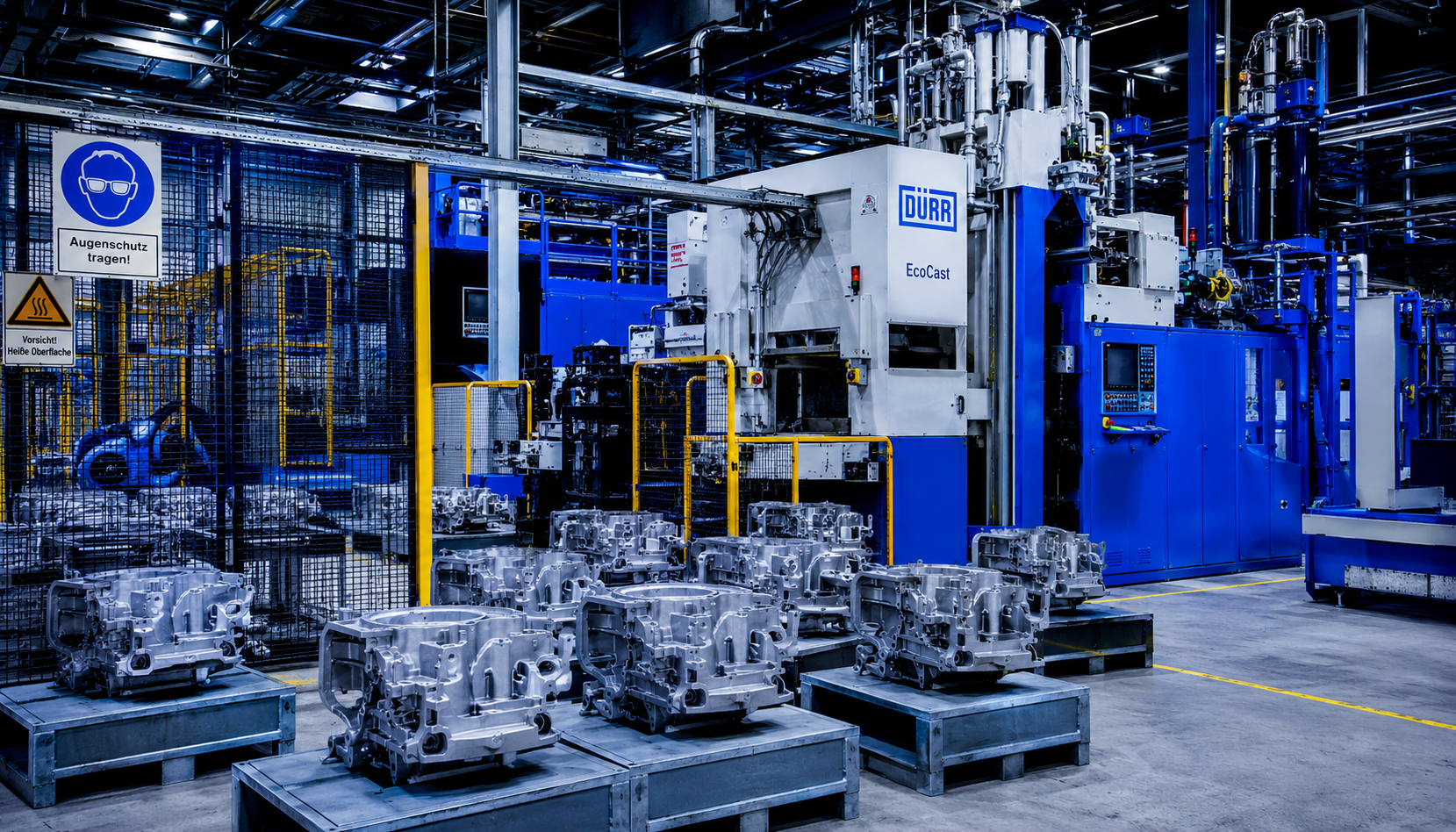
If you're buying castings from Europe or supplying into European supply chains, DIN casting standards aren't optional. They're the difference between a smooth handshake and a 73-page non-conformance report.
I've spent 14 years sourcing ductile iron, grey iron, and steel castings for German automotive OEMs. In that time I've watched buyers lose six-figure sums over a single misunderstanding: they assumed "ISO" was close enough to "DIN." It's not. The gap between ISO 8062 and DIN 1690 looks small on paper—0.3 mm here, 0.5 mm there—but in a high-volume machining line, those fractions stack into scrap bins fast.
This article walks you through the five DIN standards you need in every European casting contract, the specific tolerances that trip up buyers, and a verification protocol that doesn't require you to board a flight to Stuttgart.
The 5 DIN Standards That Belong in Every European Casting Contract
You don't need to memorize the entire DIN catalog. But these five standards cover 90% of the compliance issues I've seen in automotive, industrial, and hydraulic casting supply chains. If they're not explicitly referenced in your purchase order, you're exposed.
1. DIN EN 1563 – Spheroidal Graphite Cast Iron (Ductile Iron)
This is the governing standard for ductile iron castings in Europe. It defines the grades—from EN-GJS-400-15 (ferritic, good elongation) to EN-GJS-700-2 (pearlitic, high strength)—and specifies the mechanical properties you're paying for.
The risk: I've seen foundries deliver material labeled "GJS-500-7" that actually tested at 450 MPa tensile and 6% elongation. The supplier argued the chemistry was "within range." They weren't wrong on chemistry, but they were wrong on performance. DIN EN 1563 requires both chemistry and mechanical testing on separately cast test bars. If your contract doesn't call out the standard by name and year, you're relying on the foundry's internal interpretation.
What to specify: "Material per DIN EN 1563:2021, grade EN-GJS-500-7, tensile test per DIN 50113 on separately cast test bars, minimum 3 bars per batch." Adding the year blocks the supplier from falling back on an older, looser revision.
2. DIN 1690 – General Tolerances for Castings
This is the standard that cost that buyer €47,000. DIN 1690 sets dimensional tolerances for ferrous castings, and it is not the same as ISO 8062, even though both use similar CT (casting tolerance) grade designations.
Here's the hard data:
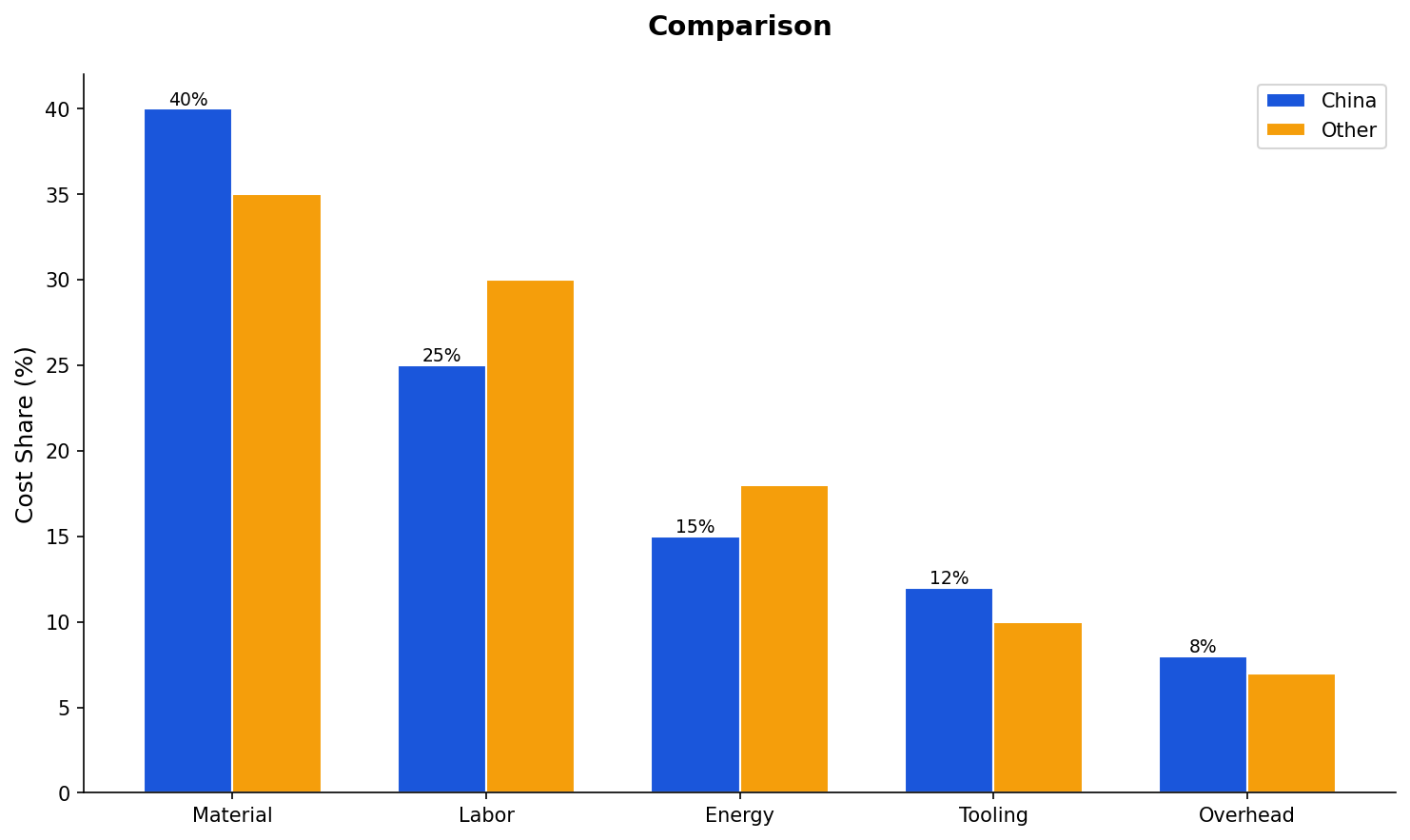
For a nominal dimension of 200 mm, DIN 1690 grade DCTG 12 allows a tolerance of ±1.2 mm. ISO 8062 CT12 allows ±2.0 mm. That 0.8 mm difference per side means the casting is 1.6 mm wider overall. In a machined housing assembly, that 1.6 mm can shift the bolt pattern out of spec.
The trick: Some casting suppliers list "DIN 1690 compliant" but actually manufacture to ISO 8062, banking on the fact that the buyer won't check. The two standards are structurally similar enough that a casual review of the certificate won't catch the difference. You need to compare the actual tolerance values for your critical dimensions.
3. DIN EN 10293 – Steel Castings
For carbon steel and low-alloy steel castings used in heavy machinery, valves, and pressure-containing components, DIN EN 10293 is the reference. It covers material grades, heat treatment requirements, mechanical properties, and testing frequency.
The risk: Steel castings often require impact testing at low temperatures (e.g., -20°C for hydraulic components). DIN EN 10293 specifies the sampling rate and acceptance criteria. I've audited foundries that performed impact testing only on the first batch—then stopped. When a batch failed at -20°C, the buyer had no recourse because the contract referenced "EN 10293" without specifying the testing frequency.
What to specify: "Testing per DIN EN 10293:2020, including tensile test (DIN 50113), impact test (DIN EN ISO 148-1) at -20°C, and hardness test (DIN EN ISO 6506-1) on each heat. Minimum one test set per 5 tons."
4. DIN EN 1371-1 – Penetrant Testing (PT)
Surface defect detection is critical for castings that will be pressurized or highly stressed. DIN EN 1371-1 specifies the penetrant testing method, sensitivity levels, and acceptance criteria for ferrous castings.
The risk: Many foundries offer "dye penetrant inspection" as a line item, but the standard they follow internally may be a simplified version passed down from a senior technician. Without specifying DIN EN 1371-1, you have no guarantee on sensitivity level, dwell time, or operator qualification. I've seen a foundry use a 5-minute dwell time for a casting that required 15 minutes per the standard—they missed a linear indication that later became a leak path.
What to specify: "100% penetrant testing per DIN EN 1371-1:2020, sensitivity level 2 (high sensitivity), acceptance level 1 (no linear indications > 1 mm). Operator certification to DIN EN ISO 9712 Level 2 minimum. Report all indications."
5. DIN 50113 – Tensile Testing of Metallic Materials
This is the test method standard that underpins the mechanical property verification for all the material standards above. It specifies the test piece geometry, strain rate, temperature, and reporting format.
The risk: A test report that says "tensile test: 500 MPa" is meaningless if you don't know the test piece diameter, the gauge length, or the strain rate. DIN 50113 standardizes these parameters so that results are comparable across labs. Without it, you're comparing apples to oranges.
What to specify: "Tensile testing per DIN 50113:2021, test piece form B (proportional, diameter 10 mm), strain rate 0.25/s, temperature 23°C ± 2°C. Report Rp0.2, Rm, A%, and Z%."
The Tolerance Trap: Why 0.3 mm Wrecks Your Assembly Line
You might be thinking: "0.3 mm is the width of a human hair. How does that stop a production line?"
It doesn't stop one line. It stops every line that touches that casting.
Consider a hydraulic valve housing machined in a transfer line. The line has 12 stations. Each station clamps the casting, machines a feature, then releases. The clamps are set up for a specific envelope dimension—say 200 mm ± 1.0 mm. If your casting comes in at 201.5 mm (within ISO 8062 CT12 but outside DIN 1690 DCTG 12), the clamp force at station 3 exceeds the design limit. The housing shifts by 0.2 mm during milling. The bore is now 0.2 mm off-center. The valve spool doesn't seat. The entire batch is suspect.
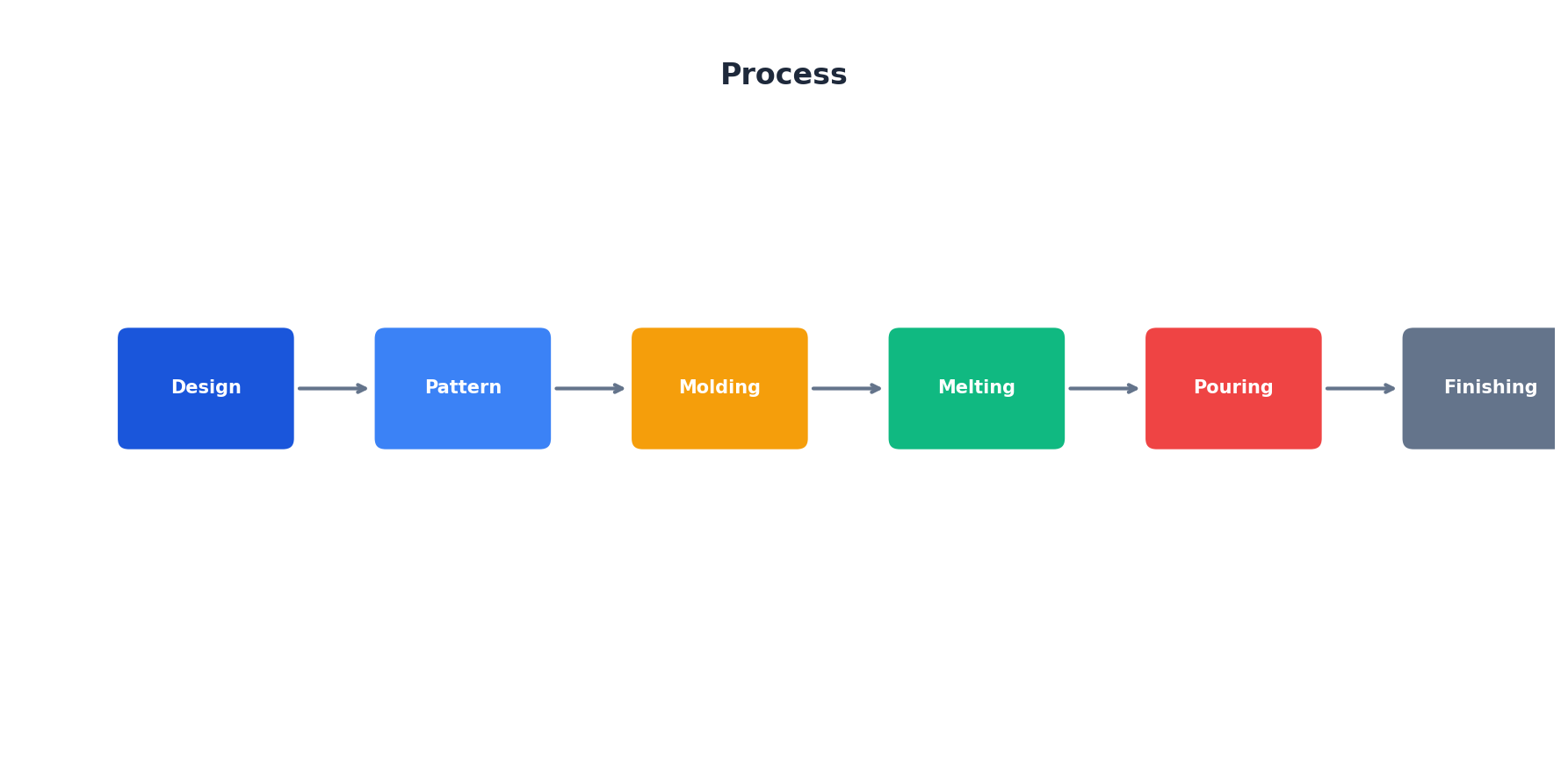
This isn't hypothetical. I worked with a hydraulics manufacturer in Baden-Württemberg that rejected 4,200 ductile iron housings in Q3 2025 because the dimensional variation exceeded their machining allowance. The foundry—a well-respected Indian supplier—had used ISO 8062 CT12 "as equivalent" to DIN 1690 DCTG 12. The buyer had written "DIN 1690 compliance required" in the contract but didn't specify the grade. The foundry chose the loosest interpretation. The result: €187,000 in scrapped castings, 6 weeks of line downtime, and a supplier that was permanently delisted.
The lesson: Don't just write "DIN 1690." Write "DIN 1690:2021, grade DCTG 12 for all dimensions ≤ 400 mm, grade DCTG 10 for dimensions > 400 mm." Specify the grade for each critical dimension on your drawing. The supplier needs to know exactly what you're measuring against.
How to Verify DIN Compliance (Without Flying to Germany)
You don't need to be on-site for every batch. But you do need a systematic verification protocol. Here's a 5-step process that works across time zones and languages.
Step 1: Standardize Your PO Language
Every purchase order should include a "Standards Compliance" section that lists the applicable DIN standards with full designations and years. No exceptions. If a PO doesn't have this, your quality team is negotiating blind.
Template: "All castings supplied under this PO shall comply with the following standards, as amended on the date of this PO: [list standards with years]. Any deviation requires written approval from the buyer's quality engineer."
Step 2: Require Certified MTRs Per DIN EN 10204
DIN EN 10204 defines types of inspection documents. Type 3.1 (certificate by the manufacturer, not independent) is the minimum for production batches. Type 3.2 (certificate by an independent third party) is what you want for first articles or critical components.
Do not accept a "Certificate of Conformance" (CoC) that simply says "material meets DIN standard." That's not a test report—it's a promise. You need actual numbers: tensile values, chemical composition, hardness readings, and the test methods used.
Step 3: Independent First-Article Inspection
Before mass production starts, have an independent lab—preferably in Europe or your home market—run a full dimensional inspection per DIN 1690 on 5 to 10 sample castings. Compare every critical dimension to the drawing tolerances. Measure material properties per DIN 50113 (tensile) and DIN EN ISO 6506-1 (hardness).
The cost for a full first-article inspection is typically €800–1,500 per part number. That's cheap insurance against a €47,000 rejection.
Step 4: In-Process Surveillance (Third-Party or Agent)
For high-volume or high-criticality programs, have a qualified third-party inspector or your own sourcing agent conduct mid-production inspections. The focus areas: dimensional checks on a random sample per DIN 1690, penetrant testing per DIN EN 1371-1 on a defined sample, and material identification verification (PMI) for alloy grades.
I recommend one inspection per 10 tons of castings or per month, whichever comes first. The inspector should report directly to you, not to the foundry.
Step 5: Pre-Shipment Quality Gate
Before any batch leaves the foundry, require a pre-shipment inspection report that includes: dimensional conformity per DIN 1690 for 100% of critical dimensions on a statistical sample, material test reports for each heat, and a statement of compliance signed by the foundry's quality manager. If any of these are missing, the shipment stays at the port.
This five-step process adds 2–4% to your procurement cost. It also cuts your non-conformance rate by 80% or more. I've seen it work across foundries in China, India, Turkey, and Eastern Europe.
3 Common Mistakes European Buyers Make with DIN Standards
Mistake #1: Assuming "EU-Made" Means DIN-Compliant
I've audited foundries in Poland, Romania, and Italy that produced castings labeled "EN-GJS-500-7" but had never run a tensile test per DIN 50113. They used internal methods—sometimes accurate, sometimes not. "EU-made" doesn't guarantee compliance with any specific standard. You still need to specify and verify.
Mistake #2: Confusing DIN with EN (and Not Specifying Either)
DIN and EN standards overlap but are not identical. DIN EN 1563 is the German adoption of EN 1563, and they are technically harmonized. But DIN 1690 is a stand-alone German standard—there is no EN equivalent with the same tolerance values. When you write "DIN casting standards" in your contract, you need to be precise about which of these categories you mean. A phrase like "all castings shall comply with applicable DIN standards" is too vague to enforce.
Mistake #3: Not Updating the Standard Year
Standards get revised. DIN 1690 was last updated in 2021. DIN EN 1563 was updated in 2021 as well. If your contract references "DIN 1690:1990," you're locking in tolerance values from three decades ago—which may be looser or tighter than current practice. Always specify the current year. If you want stability across a multi-year program, specify the year and agree on a revision protocol (e.g., "standard shall be the current version as of the date of this PO").
Frequently Asked Questions
What is the difference between DIN 1690 and ISO 8062?
DIN 1690 specifies tighter dimensional tolerances than ISO 8062 for ferrous castings. For a 200 mm dimension, DIN 1690 grade DCTG 12 allows ±1.2 mm, while ISO 8062 CT12 allows ±2.0 mm. The 0.8 mm difference can determine whether a machined housing fits an assembly line.
Which DIN standard applies to ductile iron castings?
DIN EN 1563 (the German adoption of EN 1563) covers spheroidal graphite cast iron. It specifies grades EN-GJS-400-15 through EN-GJS-700-2, with corresponding tensile strength, yield strength, and elongation requirements. Always specify the grade and the year of the standard in your contract.
Do Chinese foundries follow DIN standards?
Some do, but verification is critical. Foundries exporting to Europe often have DIN compliance experience, but you cannot rely on "EU-standard" claims. You must specify the exact DIN standard with year, require certified material test reports, and conduct independent third-party testing on the first batch.
What is the penalty for non-compliance with DIN standards in a European contract?
Typical consequences include full rejection of non-conforming batches (as seen in the €47,000 case), mandatory expedited re-procurement at the supplier's cost, and potential blacklisting from OEM supply chains. German automotive Tier-1 suppliers rarely offer a second chance on DIN compliance.
How do I verify DIN compliance without visiting the foundry?
Request certified Material Test Reports (MTRs) per DIN EN 10204 type 3.1 or 3.2, conduct independent dimensional inspection per DIN 1690 using a third-party lab, and run mechanical testing (tensile, hardness, impact) on first-article samples. A pre-shipment inspection by a qualified agent adds another layer of protection.
Your Next Move: Lock Down Your Standards Language
The difference between a smooth sourcing relationship and a catastrophic rejection often comes down to three lines in your purchase order. Here's what to do this week:
- Audit your current PO template. Does it reference specific DIN standards with years? If not, update it before the next order goes out.
- Identify your critical casting dimensions. For each part number, list the 3-5 dimensions that matter most for fit and function. Specify the DIN 1690 tolerance grade for each on your drawing.
- Set up a first-article inspection protocol. Whether you use an independent lab or your own quality team, have a written procedure that covers dimensional inspection per DIN 1690, material testing per DIN 50113, and surface inspection per DIN EN 1371-1.
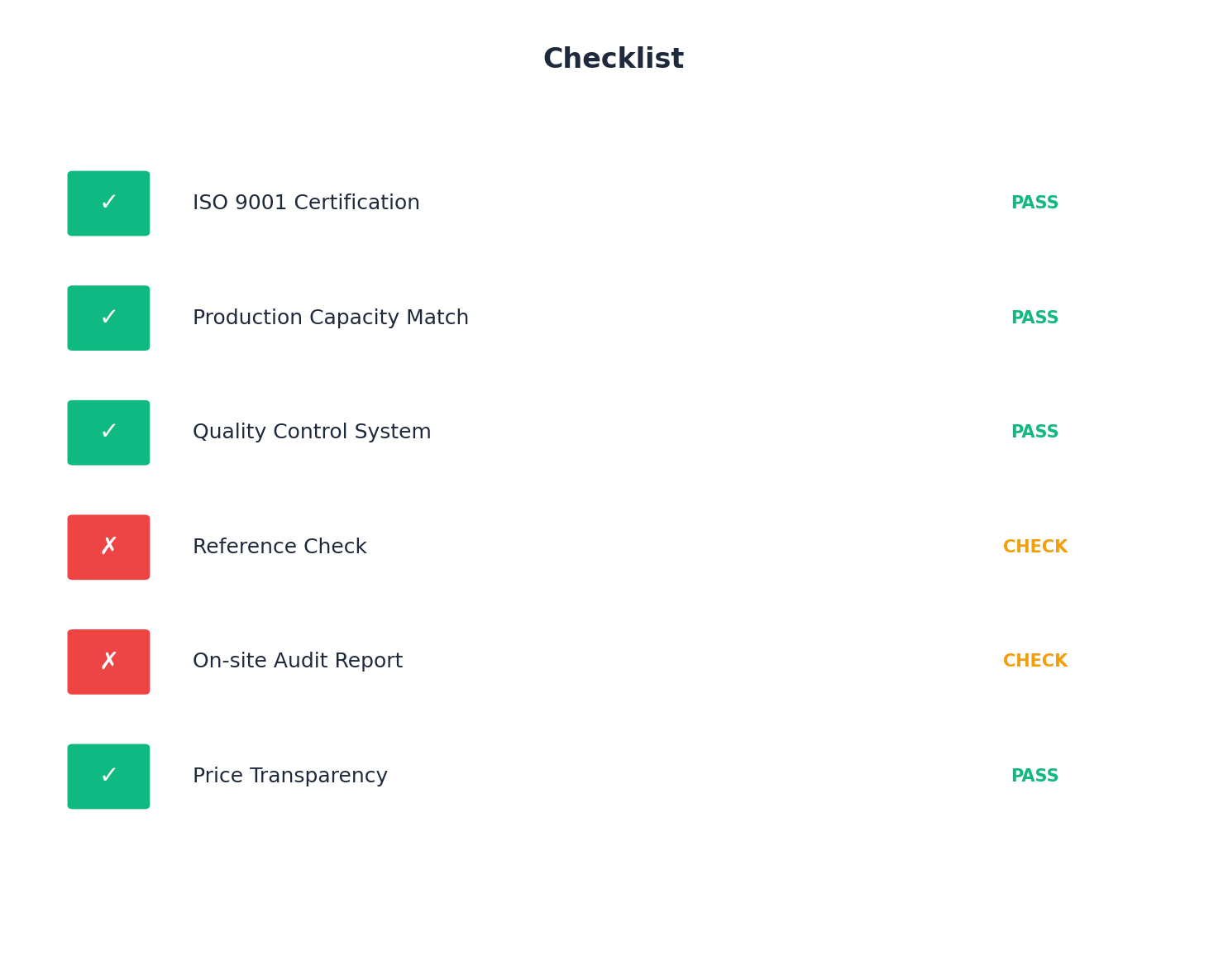
If you're currently sourcing castings for European markets and want a second pair of eyes on your contract language or a supplier's quality documentation, our team has 30+ combined years in European casting standards. We can review your PO, audit your supplier's compliance, or set up a verification protocol that fits your budget.
Download our free DIN Compliance Checklist — a one-page reference you can attach to every PO. It lists the 5 standards, the key clauses to specify, and the acceptance criteria. No fluff, just what you need to keep your supply chain moving.
Get the Checklist →