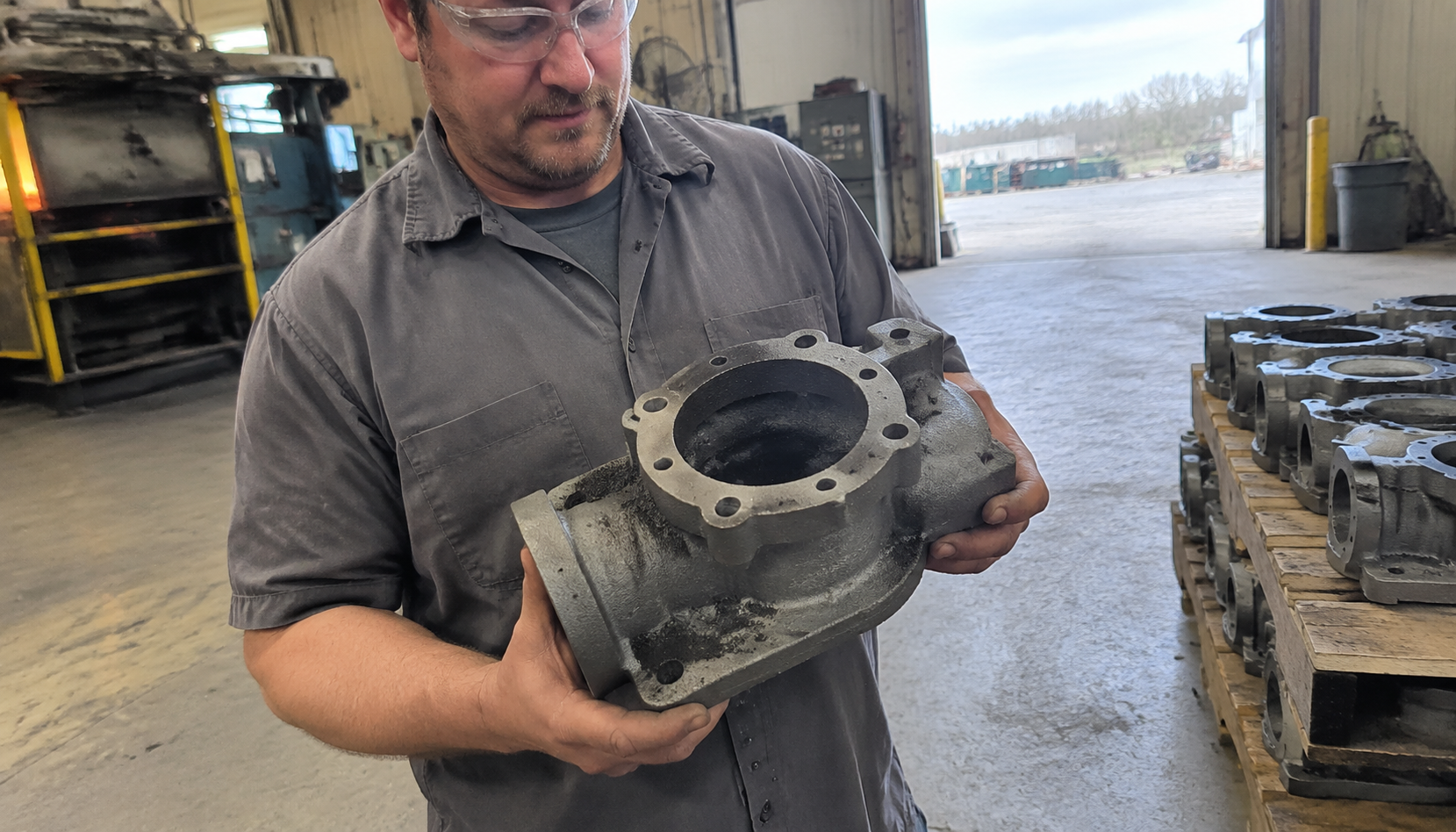
Two quotes land in your inbox the same afternoon. Same drawing: a 4.2 kg gray iron pump housing, ASTM A48 Class 35, 1,000 pieces. One foundry quotes $1.68 per kg. The other quotes $3.05.
Neither shop is lying, and neither is trying to cheat you. They priced two different objects and both of them called the result "the price."
Here's the context that makes the gap make sense. Around 110 million tonnes of castings get poured worldwide every year, and gray iron still accounts for roughly a third of that tonnage. China alone pours close to half the global total.
In the first half of 2026, foundry-grade pig iron ran about $480–540 per tonne and steel scrap about $320–390 per tonne. Which means the raw metal inside a cored 4.2 kg housing costs somewhere near $2.30. The finished part sells for anywhere between $7 and $13. Everything in between is conversion cost, and conversion cost is where quotes drift apart.
This article gives you the benchmark bands, the cost anatomy behind them, and the seven lines in a quotation you need to audit before you sign anything.
Where you see a range, it comes from quotations collected between June and October 2026. Where you see a single figure, it's an estimate ±15%. Treat all of it as a benchmark, not an offer.
Why nobody publishes a real gray iron casting pricelist
Search "custom gray iron casting pricelist" and you'll find a hundred pages promising a downloadable PDF. Almost none of them contain a number you can use, because a gray iron casting has no list price. It has a calculated price, and that calculation depends on at least eight variables that change shop to shop:
- Finished weight and, separately, poured weight (the two are not the same — see the yield section below)
- Iron grade and the chemistry window it requires
- Number of cores and how many core boxes the job needs
- Tolerance class and the inspection scope that goes with it
- Annual volume and how the shop schedules it
- Machining, coating, and testing scope
- Pattern ownership and whether tooling is amortized into the unit price
- Packaging and Incoterm
Change any one of those and the per-kilo number moves. So the honest answer to "what's your pricelist" is a table like the one below, plus a quote on your actual drawing.
2026 benchmark bands for custom gray iron castings
These bands are for as-cast, shot-blasted parts with a standard dimensional report, no machining, no coating, FOB China or India, quantity 500 pieces or more, pattern billed separately. They're the closest thing you'll get to a public pricelist.
| Finished weight per part | Simple (plates, covers, counterweights) | Moderate (housings, pulleys, brackets) | Complex (cored, pressure-tight, tight tolerance) |
|---|---|---|---|
| 0.5–2 kg | $1.60–2.40 | $2.20–3.20 | $3.00–4.50 |
| 2–10 kg | $1.30–1.90 | $1.70–2.60 | $2.40–3.60 |
| 10–50 kg | $1.15–1.60 | $1.45–2.10 | $2.00–3.10 |
| 50–200 kg | $1.05–1.45 | $1.30–1.85 | $1.80–2.70 |
| 200–1,000 kg | $0.95–1.30 | $1.20–1.65 | $1.60–2.40 |
Two things to notice. First, price per kilo falls as parts get heavier, because labor and molding cost get spread over more metal. Second, complexity costs more than size. A 3 kg cored valve body can easily beat a 40 kg solid counterweight on price per kilo.
So when a supplier sends you a flat "$1.75/kg for gray iron," they're either describing a narrow slice of the table above or they're guessing. Ask which slice.
Where the per-kilo number actually goes
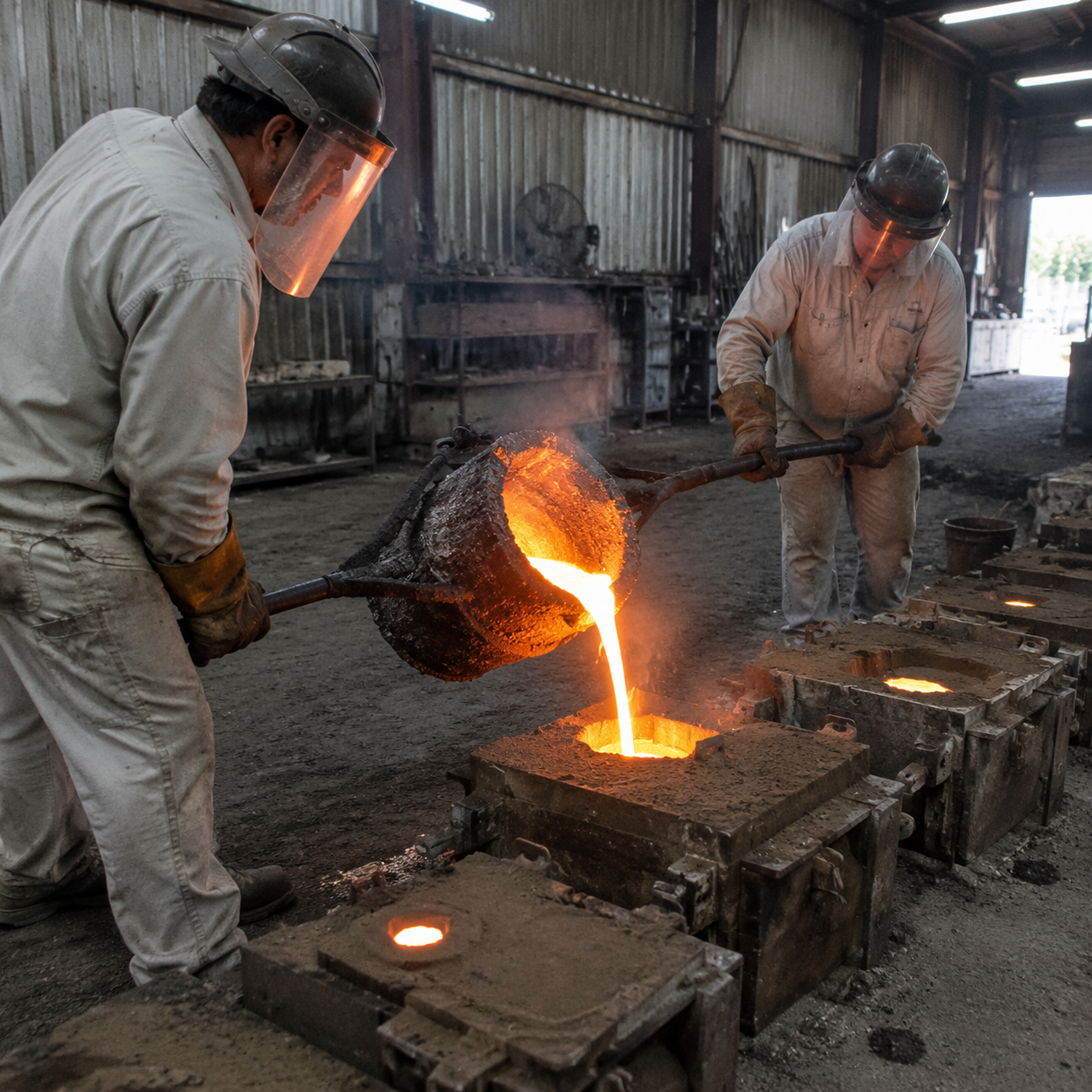
Take a $1.90/kg quote for a moderate-complexity 5 kg housing. Here's how a typical Chinese foundry builds that number, and roughly what share each block takes:
| Cost block | Share of unit price | What it covers |
|---|---|---|
| Metal charge | 28–33% | Pig iron and scrap, net of internal returns, adjusted for melt yield |
| Melting energy | 3–5% | Induction furnace, 520–620 kWh per tonne of liquid iron |
| Sand and consumables | 5–8% | Silica sand, bentonite, resin, cores, coatings, refractory |
| Direct labor | 18–25% | Molding, core setting, pouring, shakeout, fettling, grinding |
| Stress relief | 2–3% | Heat treatment when the drawing calls for it |
| Inspection and testing | 2–4% | Chemistry, tensile bars, dimensional checks, documentation |
| Overhead and depreciation | 8–12% | Building, equipment, maintenance, management |
| Packaging | 2–3% | Pallets, film, edge protection, marking |
| Margin | 8–12% | What the shop keeps |
Look at the metal charge line: under a third. That's the single most useful fact in this whole article. Buyers spend weeks negotiating the iron price and overlook the fact that labor, molding, and fettling together make up twice as much of the unit cost.
It also explains why a foundry running a manual molding line can't match a shop with an automated flaskless line on volume work, and why the automated shop won't touch your 80-piece order. Different cost structures, different pricelists.
Grade and chemistry: what each step up costs
"Gray iron" describes a family, not a specification. Your drawing should name one of these, and the name changes the price:
- ASTM A48 Class 30 — roughly 207 MPa tensile. The default for general machinery parts.
- ASTM A48 Class 35 — around 241 MPa. Broadly equivalent to EN GJL-250, GB/T 9439 HT250, and JIS FC250.
- ASTM A48 Class 40 — around 276 MPa. Equivalent to GJL-300 or HT300.
- Class 45 and above — usually alloyed and often heat treated.
Moving from Class 30 to Class 35 costs roughly $0.04–0.10/kg extra. Tighter chemistry, better inoculation, more consistent charge control. Class 40 adds another $0.08–0.18/kg, and at that point you're usually paying for alloy additions as well.
Alloying is where costs can run away if nobody checks. Approximate adders per kilo of finished casting, at 2026 alloy prices:
| Addition | Typical level | Cost adder per kg | Why you'd pay it |
|---|---|---|---|
| Copper | 0.3–0.5% | $0.03–0.06 | Hardness, pearlite stability, machinability |
| Chromium | 0.2–0.4% | $0.02–0.05 | Wear resistance, elevated-temperature strength |
| Molybdenum | 0.3–0.6% | $0.15–0.30 | Thermal cycling resistance, brake drums and exhaust parts |
| Nickel | 0.5–1.5% | $0.09–0.26 | Toughness, machinability, some corrosion resistance |
If your drawing says "gray iron, 200 HB, heat resistant" without a grade, expect three different interpretations and three different prices. Write the grade and the chemistry window into the RFQ. Ambiguity always gets priced as worst case.
Tooling: the line item that decides your true unit cost
Pattern cost is where first-time buyers get surprised, and where an apparently cheap quote turns expensive at the 200-piece mark.
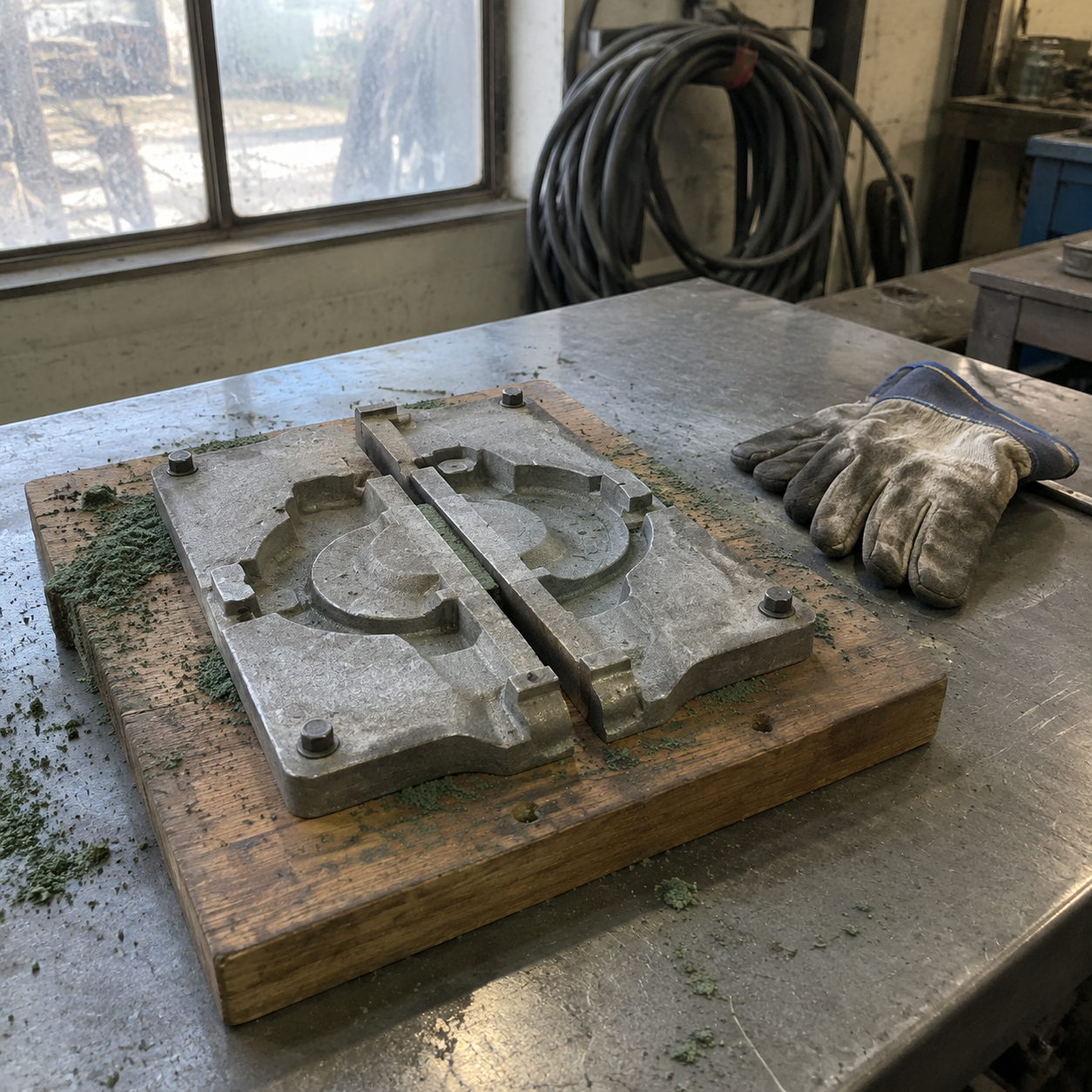
For sand cast gray iron you're paying for a pattern plate, plus a core box for every internal cavity:
| Tooling item | Typical cost (China) | Service life |
|---|---|---|
| Small pattern, single cavity, wood | $400–900 | 3,000–8,000 molds |
| Small pattern, aluminum plate | $900–1,800 | 30,000–60,000 molds |
| Medium pattern, aluminum, 5 kg class part | $1,200–2,800 | 30,000–60,000 molds |
| Large pattern, 50–200 kg part | $3,000–9,000 | 15,000–40,000 molds |
| Core box, simple | $350–900 each | 10,000–30,000 cores |
| Core box, complex multi-piece | $1,200–3,500 each | 10,000–30,000 cores |
Now watch what tooling does to a $2,000 pattern at different order sizes:
At 100 pieces: $20.00 per part in tooling, on top of $2.10/kg for the casting itself. Total unit cost roughly doubles.
At 500 pieces: $4.00 per part.
At 2,000 pieces: $1.00 per part.
At 10,000 pieces: $0.20 per part.
This is why a "cheap" quote with expensive tooling often loses to a slightly higher per-kilo quote with cheaper tooling, once you do the math across your real order quantity. Run the total, not the unit rate.
One more thing about tooling: agree in writing who owns the pattern. If the foundry builds it and keeps it, you can't move the job later without paying again. Buyers who plan to dual-source should buy the tooling outright and have the pattern delivered to a shop of their choosing, or held in escrow. It costs nothing extra up front and saves a lot of leverage later.
The volume curve
Volume is the biggest single lever you control, bigger than country of origin and bigger than grade. For a 4–6 kg moderate-complexity housing in China, here's the shape of the curve:
| Order quantity | Realistic price per kg | What's driving it |
|---|---|---|
| 50 pcs | $3.40–4.60 | Setup and pattern amortization dominate; often hand-molded |
| 200 pcs | $2.40–3.20 | Short run on an automatic line, frequent pattern changes |
| 500 pcs | $1.95–2.55 | Entry point for efficient scheduling |
| 2,000 pcs | $1.65–2.10 | Full shift runs, better melt utilization |
| 10,000 pcs | $1.50–1.85 | Dedicated pattern, optimized gating, low changeover |
| Annual blanket, 50,000 pcs | $1.40–1.70 | Capacity reservation, indexed metal pass-through |
The jump from 200 to 2,000 pieces is worth 25–30%. The jump from 2,000 to 10,000 is worth another 10%. If you can consolidate two part numbers into one blanket order, do it — foundries discount scheduling predictability more than they discount metal.
Machining, coating, and testing adders
Most published casting prices stop at "as-cast," which means nothing until you define it. Here's what the adders actually cost in 2026:
- Shot blasting: usually included. Confirm it, because "as-cast" can mean sand still on the part.
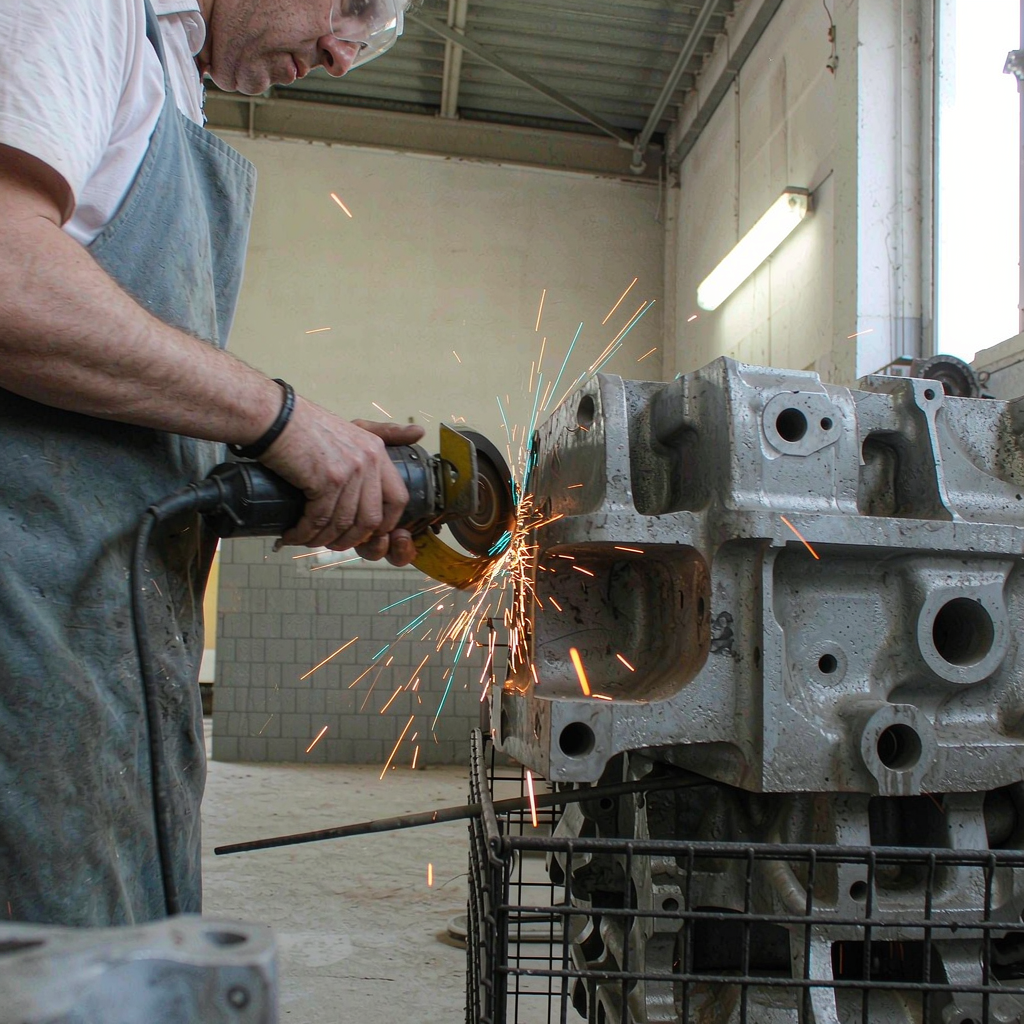
- Fettling and gate removal: usually included. Grinding to a cosmetic finish may not be.
- CNC machining, China: $18–30 per machine hour. A housing with a face, two bores, and six drilled holes runs 6–12 minutes: $2–5 per part.
- CNC machining, US or EU: $70–120 per hour. Same operation, $9–22 per part.
- Machining fixtures: $800–3,000 one-time, and you should own them.
- Primer or powder coat: $0.15–0.40 per kg, plus racking labor.
- Pressure tightness test: $0.50–2.00 per part for air-under-water or helium leak test.
- First article CMM report: $150–400 one-time per drawing revision.
- Per-heat chemistry and tensile: $60–120 per test, usually per heat rather than per part.
A part that costs $1.90/kg as-cast can easily land at $3.10/kg machined and painted. That's not the foundry inflating anything. It's a second operation with its own machine time, labor, and scrap risk. The mistake is comparing an as-cast quote against a machined quote and concluding one shop is expensive.
Country by country: FOB is not your cost
Here's how the main sourcing regions compare on as-cast gray iron in 2026, before freight and duty:
| Source | As-cast $/kg | Practical MOQ | Ocean transit |
|---|---|---|---|
| China (Ningbo, Qingdao) | $1.45–2.30 | 300–500 pcs | 30–40 days to US |
| India (Coimbatore, Rajkot) | $1.70–2.60 | 500 pcs | 35–45 days to US |
| Vietnam | $1.85–2.80 | 500 pcs | 30–38 days to US |
| Poland / Czechia | $2.20–3.20 | 200 pcs | 3–6 days by road in EU |
| Mexico (Monterrey) | $2.40–3.60 | 200 pcs | 5–10 days by road to US |
| United States | $4.00–7.50 | 50 pcs | 2–7 days |
But FOB is only the start. Castings are heavy and cheap per kilo, which makes freight and duty a larger share of landed cost than they are for most products.
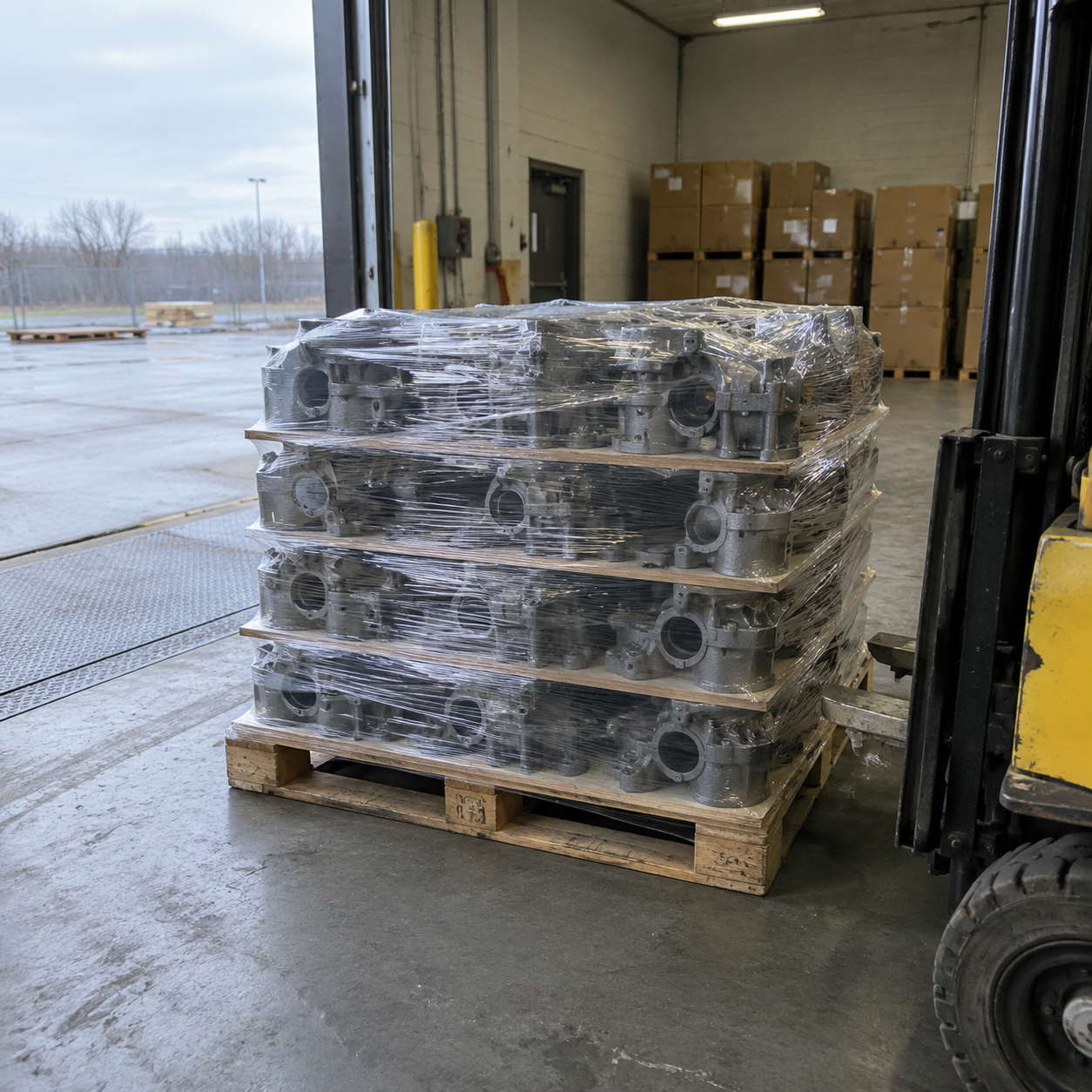
Figure roughly $0.09–0.18 per kilo for ocean freight from China to the US West Coast, assuming you fill a 20ft container — which you only will if you get to about 20 tonnes, since road weight limits cap you well before the container is volume-full. Add $0.03–0.06/kg for drayage and inland delivery.
Duty is the variable nobody can afford to guess. The MFN rate on HTS 7325.10 (gray iron castings, not elsewhere specified) has historically been free, but the Section 301 layers and the newer tariff actions applied since 2025 have pushed the effective rate on Chinese-origin castings well past 25%. Rates have moved repeatedly, so check the exact HTS code and current stack with a customs broker before you compare a Chinese FOB number to a Mexican DDP number. Doing it the other way round is how buyers end up 20% over budget after the PO is placed.
Seven lines to audit in every quotation
Before you compare two numbers, check that both quotes contain these seven items. If a quote is missing one, ask for it — the answer often changes the ranking.
- Iron grade and chemistry window. Not "gray iron." A named standard — A48 Class 35, GJL-250, HT250 — plus carbon and silicon ranges.
- Quantity basis and tooling treatment. Is the $1.90/kg based on 500 or 5,000? Is the pattern inside the unit price or invoiced separately?
- Net versus poured weight. You should pay for finished casting weight plus a stated yield allowance. If gating and risers are billed back to you as product, you're paying twice for recycled metal.
- Declared yield rate. A good shop will state 60–70% for a cored housing. If it's unstated, you're absorbing their inefficiency.
- Scope of "as-cast." Shot blasted? Fettled? Gate stubs removed? Written dimension report included?
- Inspection package. Material certificates, per-heat tensile results, dimensional report, first article CMM. Each has a cost, and each should be listed.
- Incoterm, packaging spec, and quote validity. FOB, CIF, or DDP. Pallet type and max stack height. And a validity period — with metal prices moving, 30 days is normal, 90 days deserves a question.
Red flags worth walking away from: a single number with no breakdown, a price quoted without asking your annual volume, a refusal to state the iron grade in writing, a pattern ownership clause that leaves tooling with the foundry, and any quote where "machining extra" appears without a rate.
Want these seven lines on a single sheet? The quotation audit checklist lays them out with one column per supplier — so you rank quotes side by side instead of chasing line items through email threads.
Where the real negotiating room sits
Buyers tend to attack the metal line. That's the wrong target — it's 30% of the price and the foundry has almost no control over it. The room is elsewhere:
- Order size. Going from 500 to 2,000 pieces is worth 20–30%. Nothing else comes close.
- Blanket orders with call-offs. A 12-month commitment with quarterly releases often buys 5–8% because it lets the shop schedule you into gaps.
- Gating yield. Ask them to re-quote with an improved rigging design. Two points of yield on a 5 kg part is a real number.
- Tolerance class. If your drawing demands ISO 8062 CT8 when the function only needs CT10, you're paying for scrapped parts you didn't need to make.
- Machining split. Sometimes the foundry's machining rate beats your domestic shop, sometimes it doesn't. Get both.
- Packaging. Returnable racks instead of disposable pallets can move $0.03–0.08/kg and improve damage rates.
- Payment terms. 30/70 telegraphic transfer is standard. An LC adds cost on both sides that somebody eventually pays.
A word on the metal pass-through. If a foundry offers you a quarterly metal index adjustment tied to published pig iron and scrap prices, take it. Fighting over a 3% metal swing burns goodwill you'll want when you need a favor on lead time.
Frequently asked questions
Is there a standard pricelist for custom gray iron castings?
No. Custom castings are quoted per drawing because price depends on weight, core count, grade, tolerance class, and volume. What exists is a benchmark range — roughly $1.30–2.60/kg for moderate-complexity parts from Asian foundries at 500+ pieces — and you should use that range to sanity-check quotes, not to negotiate against.
What does gray iron cost per kg in 2026?
As-cast, shot-blasted, FOB China at 500 pieces: $1.30–1.90/kg for simple parts in the 2–10 kg range, $1.70–2.60/kg for cored housings of the same weight, and up to $4.50/kg for small complex parts under 2 kg. US domestic production runs roughly 2.5 to 3 times those figures.
Why is one quote double another for the same drawing?
Usually one of five things: tooling is folded into one unit price and not the other, one quote includes machining, one is based on 200 pieces and the other on 2,000, one specifies a tighter grade or tolerance class, or one shop is quoting a manual line against an automated one. Ask for the seven-line breakdown and the gap normally explains itself.
How much does the pattern cost, and who owns it?
For a 5 kg class part, expect $1,200–2,800 for an aluminum pattern plate plus $350–900 per core box. On tooling ownership: buy it if you can. A pattern you own is a pattern you can move, and the ability to move it is worth more in year three than the 5% discount you might get for letting the foundry keep it.
Does a higher tensile class cost much more?
Class 30 to Class 35 adds about $0.04–0.10/kg. Class 40 adds another $0.08–0.18/kg and often brings alloying or heat treatment with it. That's rarely a reason to specify a lower grade — but it is a reason to make sure the drawing actually needs the higher one.
How long should a quotation stay valid?
Thirty days is standard and fair. Longer than that, expect the shop to build a buffer into the price. If you need certainty over six months, negotiate a metal index clause instead of asking for a fixed price — you'll usually get a better base number.
What to do next
Build a one-page comparison sheet before you send another RFQ. Columns: iron grade, finished weight, poured weight, yield, order quantity, tooling cost and ownership, machining scope, inspection package, Incoterm, unit price, total landed cost for your real annual volume. Fill it in for three shops.
The ranking will surprise you. It almost always does, because the shop with the lowest per-kilo number is rarely the one with the lowest total.
Before the next RFQ, walk the candidates through the foundry audit checklist — the spreadsheet and the floor are not the same thing.
If you want a starting point for the comparison, send one drawing and one quantity and ask for a line-item quote split along the seven audit points above. Put it next to the quotes you already have. That's the fastest way to find out whether the pricelist you're being offered reflects your part, or reflects a guess.
Need Help with Custom Gray Iron Casting Pricelist: 2026 Buyer's Guide?
Get matched with 3 verified foundries in 24 hours. No markup, transparent pricing.
Request Quotes →