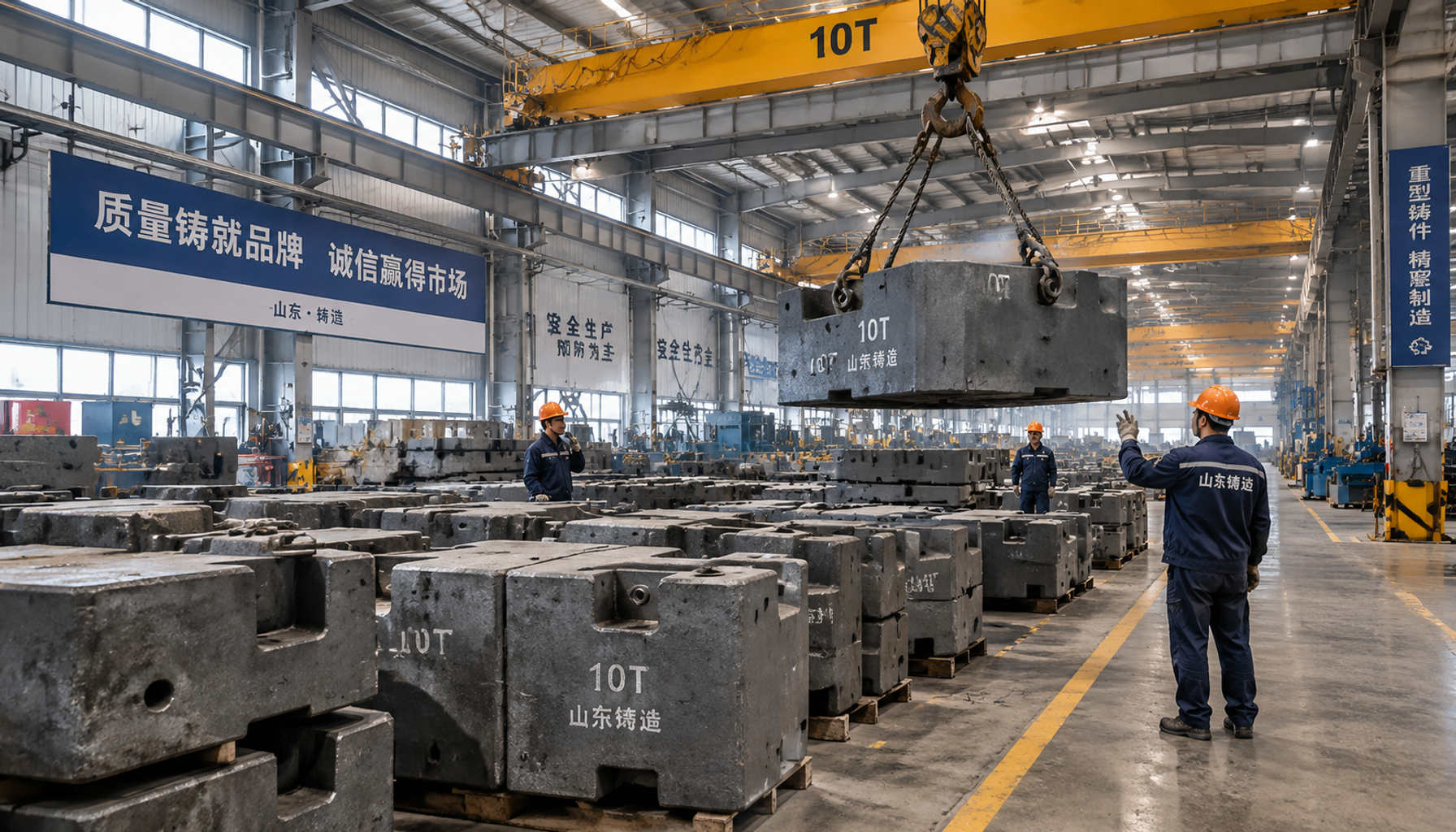
China poured roughly half of the world's casting tonnage last year — somewhere north of 50 million metric tons, depending on whose numbers you trust. Of that, counterweight castings sit in a strange niche: high-volume by weight, low-margin per kilogram, and almost entirely invisible in the marketing material you'll find online.
Search for "counterweight casting manufacturer China" and you'll get a wall of near-identical factory profiles all claiming ISO 9001 and "20 years experience."
None of that tells you what you actually need to know. Can they pour a 12-ton single-piece counterweight without a lap joint? Do they own the pattern shop, or do they subcontract it? Will the freight forwarder they use handle a 6-meter flat rack, or will your crane counterweight sit at the port for three weeks because nobody ordered the right lashing gear?
Here's the buyer's guide that the factory profiles skip. Real regional data, real pricing ranges, and the specific checks that separate an actual foundry from a trading company with a WeChat account.
Why China Dominates Counterweight Casting — and What That Means for You
The numbers are not subtle. China accounts for roughly 45–50% of global casting production by tonnage, and for counterweights specifically the share is even higher. There are three reasons, and only one of them is labor cost.
First: pattern and mold infrastructure. Counterweights are large, simple shapes. That sounds easy, but a 5-ton counterweight requires a flask that can handle 8 tons of sand, a crane rated for the pour, and a heat-treatment furnace big enough to stress-relieve it. China has thousands of foundries in exactly this size band — the 2,000 to 20,000 ton-per-year range — that were built for mining and construction equipment demand during the 2005–2015 boom.
Second: raw material supply. Pig iron, scrap steel, and ferroalloys are all domestically sourced. A Shandong foundry buying pig iron on the local spot market pays less than a European foundry pays for imported scrap, and that gap shows up directly in your landed cost.
Third: downstream demand. China builds the excavators, cranes, and forklifts that use counterweights in the first place. That means domestic OEM demand keeps the production lines warm, and your order rides on capacity that already exists.
The practical takeaway: you're not choosing China because it's cheap. You're choosing China because the entire supply chain — pattern making, pouring, machining, painting, and heavy-lift logistics — is co-located within a few hundred kilometers. That matters when your counterweight needs to be re-machined because a bolt hole is 3mm off.
The Four Regional Clusters (and Why It Matters)
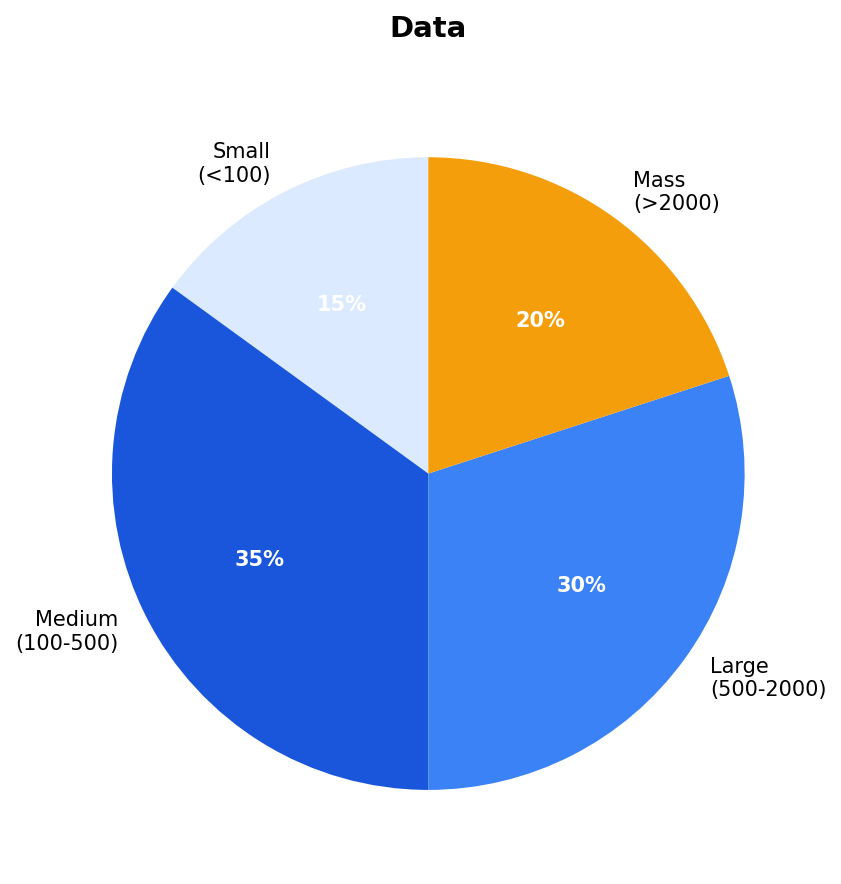
Not all "China" is the same. Counterweight casting concentrates in four provinces, and each has a different cost structure and capability profile. Picking the wrong region costs you either 10–15% on price or a machining round-trip that adds weeks.
| Region | Est. Foundries | Sweet Spot Tonnage | Typical Price (gray iron, FOB) | Best For |
|---|---|---|---|---|
| Shandong | 1,200+ | 500 kg – 20 t | $0.65–0.95 / kg | Large single-piece, mining equipment |
| Hebei | 900+ | 100 kg – 8 t | $0.58–0.85 / kg | Cost-driven, high volume, simple shapes |
| Jiangsu | 800+ | 200 kg – 12 t | $0.72–1.05 / kg | Machined features, tight tolerances |
| Guangdong | 600+ | 50 kg – 6 t | $0.78–1.15 / kg | Export-ready, small-to-mid counterweights |
Price ranges above reflect FOB port quotes for gray iron (ASTM A48 Class 30 equivalent) counterweights in the 1–5 ton range, based on 2025–2026 market observations. Your actual quote will move with pig iron spot price, order tonnage, and whether machining is included. Treat these as ballparks, not quotes.
Shandong is where most large counterweight work happens. The foundries there are clustered around Qingdao, Weifang, and Linyi, which means the port of Qingdao is within a two-hour truck drive for most of them. That last detail saves you money on inland freight and reduces the risk of transit damage on oversize loads.
Hebei is cheaper, but the capability ceiling is lower. If your counterweight is under 3 tons and doesn't need precision machining, Hebei will save you 10–15% per kilogram. If you need a 10-ton single-piece pour with stress relief, Hebei foundries will either decline or subcontract to Shandong anyway.
Jiangsu sits in the middle on price but wins on machining. If your counterweight has bolt patterns, dowel holes, or a machined mounting face, the Jiangsu foundries tend to have better in-house CNC capacity. That matters because sending a 4-ton casting out for machining is expensive and slow.
Guangdong exports more but makes smaller parts. It's the right call for forklift counterweights or small crane ballast, less so for mining truck ballast.
What You Can Actually Order: Capability Ranges
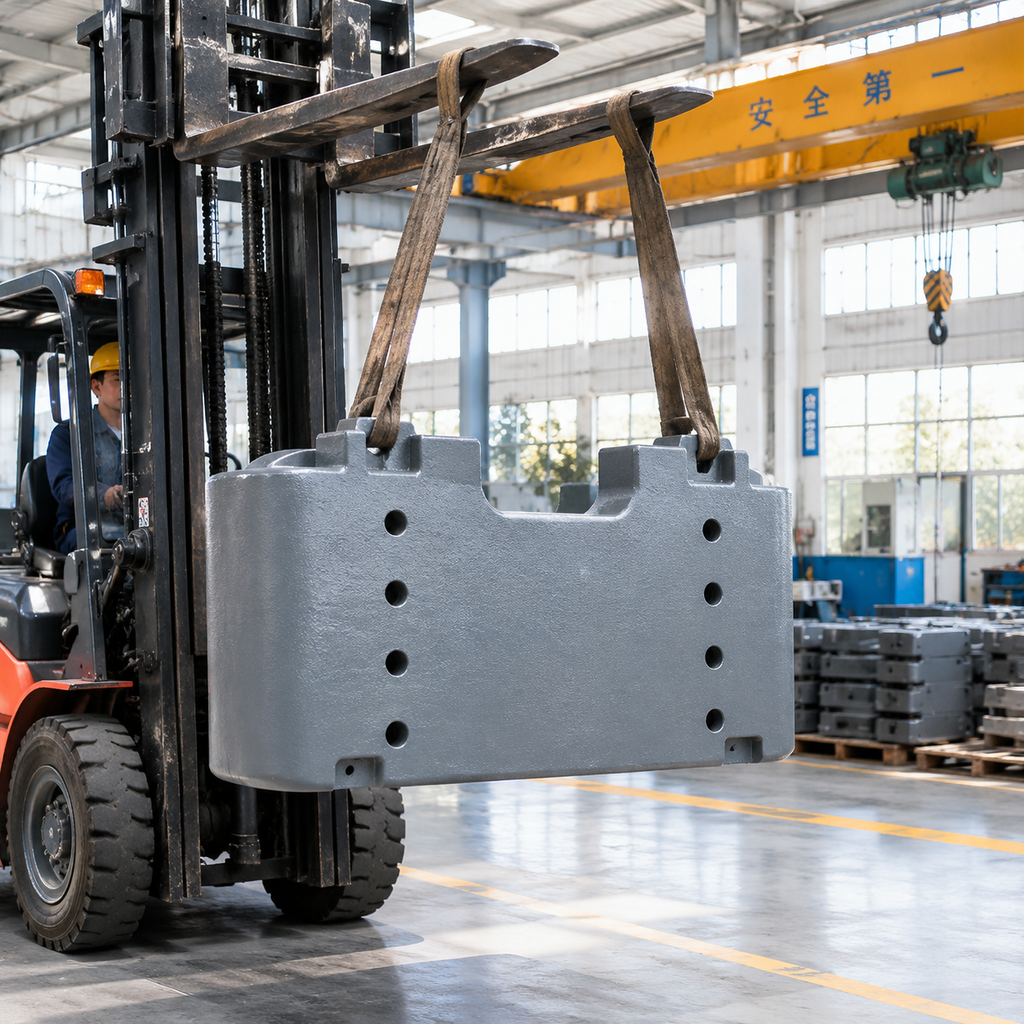
Let's get concrete about what a mid-tier Chinese counterweight foundry can and can't do. The honest answer, based on what buyers report across the sector:
| Parameter | Typical Range | Notes |
|---|---|---|
| Single-piece weight | 20 kg – 25 t | Above 15 t, only ~50 foundries in China can do it |
| Dimensional tolerance | ISO 8062 DCTG 10–12 | As-cast; tighter requires machining |
| Surface finish | Ra 25–100 µm as-cast | Painted counterweights: cosmetic only |
| Material options | Gray iron, ductile iron, steel | Gray iron (HT250/GJL-250) is standard for counterweights |
| MOQ | 1–5 pieces (pattern cost applies) | Real MOQ is usually 1 ton, not 1 piece |
| Lead time | 35–70 days after pattern approval | Add 15–25 days for pattern making if new |
The weight ceiling is the number that trips people up. Anything over 15 tons goes into a very small club of foundries, and the price stops being negotiable in the usual way — you're paying for crane capacity and furnace time that only a handful of shops have.
If your design calls for a 20-ton counterweight, plan for at least a two-month production window and expect to pay 20–40% more per kilogram than you would for a 5-ton part. That's not a markup. That's the physics of moving 20 tons of liquid metal safely.
Material and Standard: Getting the Spec Right
Most counterweights are gray iron, and the standard you'll see on Chinese quotes is either GB/T 9439 (Chinese) or its rough equivalent, ASTM A48. The grades map like this:
| ASTM A48 Class | GB/T 9439 Grade | Tensile Strength (min) | Typical Use |
|---|---|---|---|
| Class 30 | HT250 | 207 MPa | Standard counterweight, most common |
| Class 35 | HT300 | 241 MPa | Counterweights with stress concentration |
| Class 40 | HT350 | 276 MPa | Rare; used where weight-to-strength matters |
"Density is the spec that actually matters for a counterweight, not tensile strength. A casting that's 2% porous weighs less than the drawing says, and if you're stacking counterweights to hit a target mass, that 2% compounds across a hundred units. I always request a sectioned sample or at least a density calculation from the pour." — Robert Davis, hardware wholesale buyer, Georgia
That's a real point worth pausing on. Counterweights are almost always bought by mass, not by mechanical property. A 3,000 kg counterweight that comes in at 2,950 kg is a 50 kg shortfall per unit. On a 200-unit order, that's 10 tons of missing ballast — and a bucket of arguments with your customer.
So when you review a quote, ask for two things: the specified density (gray iron should be 7.0–7.3 g/cm³), and the tolerance on finished weight. A good foundry will quote you ±2%. A foundry that doesn't quote a weight tolerance is telling you they don't measure it.
Pricing: What Actually Drives the Number
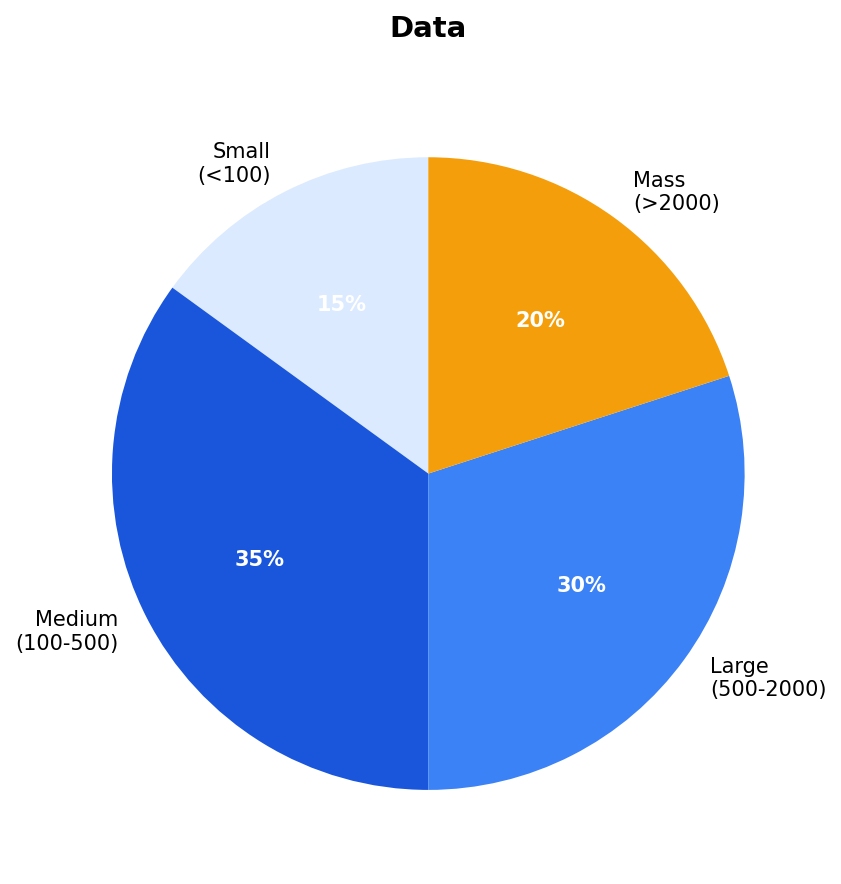
Counterweight pricing in China is not mysterious once you know the components. Roughly:
- Raw material (pig iron + scrap): 45–60% of the FOB price
- Melting and pouring energy: 10–15%
- Molding and labor: 8–12%
- Heat treatment and finishing: 5–10%
- Pattern amortization: 3–8% (higher on small orders)
- Factory margin: 8–15%
When a quote comes in 25% below the others, one of these line items is being cut. Usually it's material grade (cheaper scrap with higher sulfur), or heat treatment (skipped entirely), or pattern amortization (they're reusing a pattern that isn't quite your drawing).
"Ask for the material composition certificate before you ask for the price. The moment they send you a mill cert for the pig iron and the charge mix, you know whether you're dealing with a foundry or a reseller. Resellers can't produce those documents. And if you're buying more than 20 tons a year, get the certificate of origin for the pig iron — that's how you avoid the low-grade scrap problem." — Robert Davis
One more pricing reality: counterweights are commodity-priced, so negotiation room is thin — 3–7% at most on repeat orders. The leverage you do have is on the two things that aren't the per-kg rate: pattern ownership and freight terms. Those two line items are where a bad deal gets fixed, and where a good deal goes wrong.
Pattern ownership matters. If you're paying for the pattern (typically $800–$4,000 depending on size and complexity), you should own it. Ask for the pattern to be tagged with your part number and stored at the foundry, with a clause that it transfers to you if you move suppliers. Foundries that resist this clause are usually planning to sell your part to someone else.
Lead Time and the Heavy Logistics Reality
Counterweight lead times are longer than most casting categories because the parts are heavy and the logistics are awkward. A realistic breakdown:
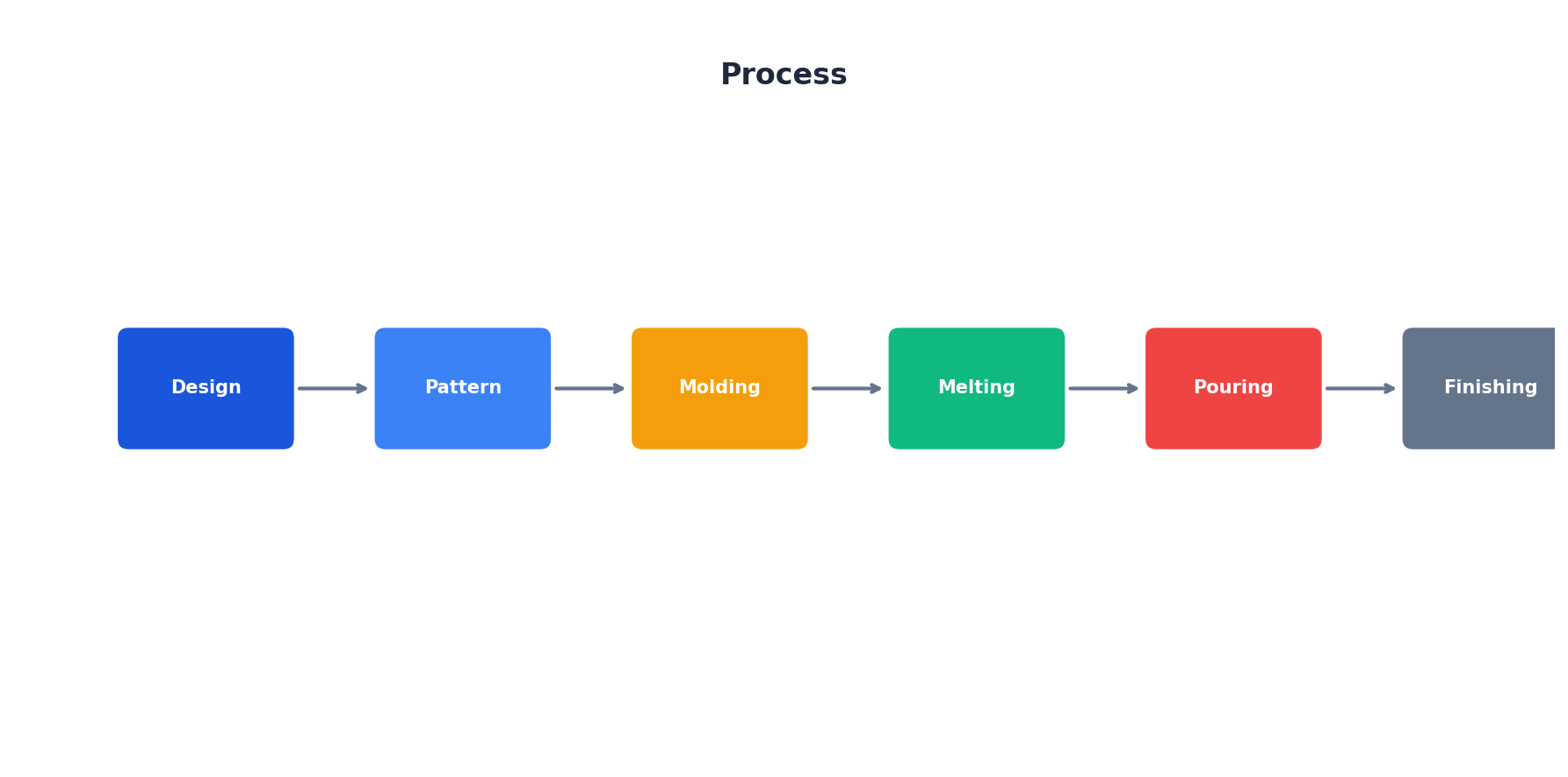
What nobody tells you upfront: the ocean freight leg is where the schedule usually breaks. Counterweights above about 4 tons don't fit in a standard container. They ship as break-bulk, on flat racks, or as project cargo. Each of those has different booking lead times and different port handling requirements.
Flat rack: book 3–4 weeks ahead. Break-bulk: 4–6 weeks. Project cargo with a chartered heavy-lift vessel: 8–12 weeks.
If you're sourcing a 12-ton counterweight and you haven't thought about the lashing plan, the port handling at both ends, and the receiving crane capacity, add two weeks and $1,500–$4,000 in surprises. Ask your supplier for the freight forwarder's contact before you sign the PO, not after.
The 7-Point Verification Before You Sign
This is the part that saves money. Run these checks on any new counterweight casting supplier in China. No exceptions on the first order.
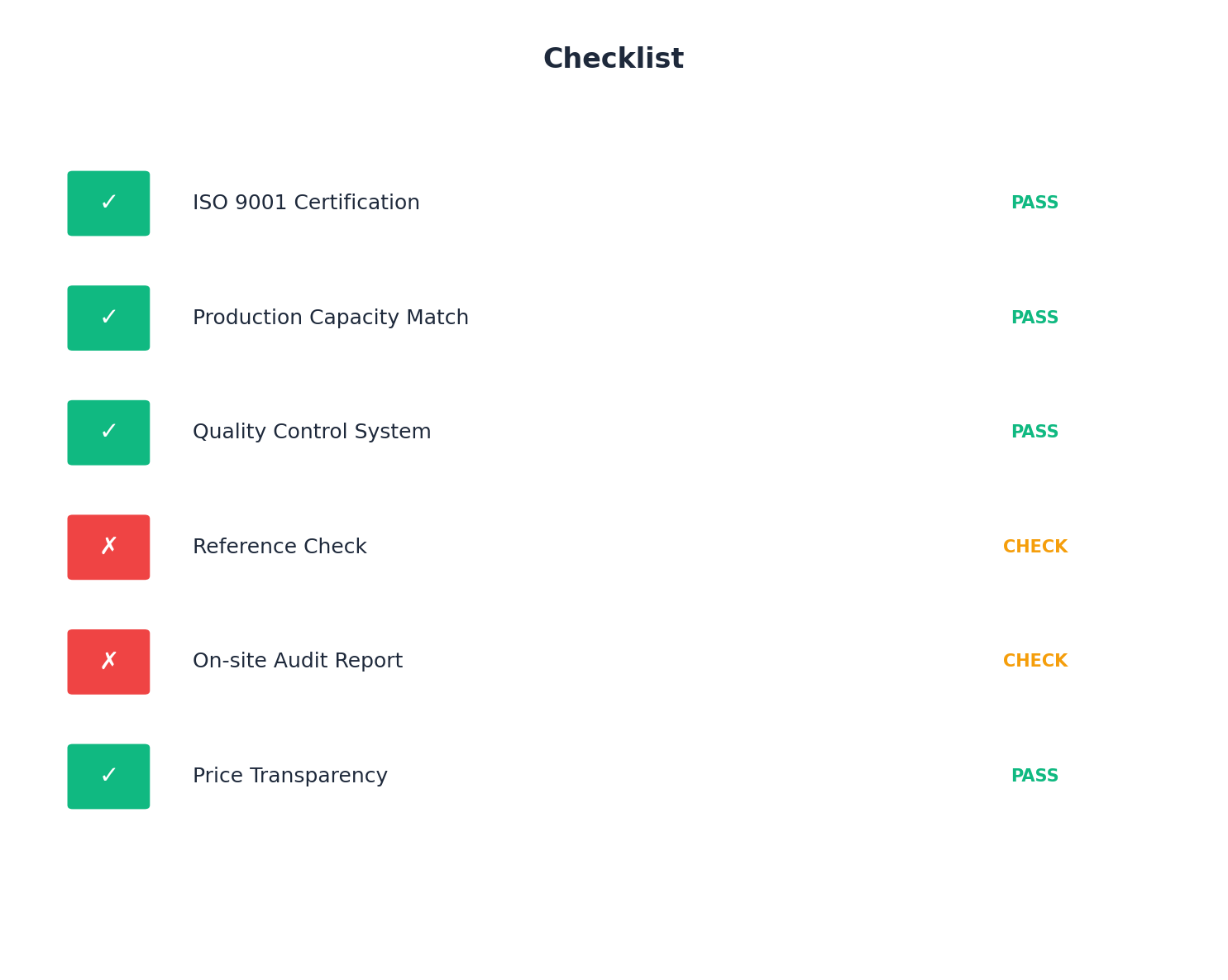
- Business license scope. The license must list "foundry" or "casting production" — not "trading" or "machinery export." A trading company is fine if you know that's what you're buying, but the price should reflect it.
- Foundry license and environmental permit. Since 2017, Chinese foundries need a valid pollutant discharge permit. Ask for the permit number and verify it. Foundries without one are running on borrowed time and may be shut down mid-order.
- Live video walkthrough. Not a photo gallery. A live call where you direct the camera at the molding floor, the furnace, the heat treatment area, and the finished goods yard. If they can't do a live call, that's your answer.
- Material certificates. Mill cert for the pig iron, charge mix record, and a spectrometer result for the poured metal. Three documents, all standard, all easy for a real foundry to produce.
- Pattern ownership clause. Written into the contract. Your pattern, tagged with your part number, transferable on request.
- Inspection report sample. Ask for a dimensional and weight report from a previous order. If they can't show one, they're not measuring their output.
- Reference customer. Not a logo wall. An actual contact at a buyer who's ordered in the last 12 months and will take a five-minute call.
The single highest-value check is number three. A live video walkthrough kills more bad suppliers than any document review, because it's hard to fake a working foundry on camera. You'll see the sand piles, the noise, the workers, the quality of the housekeeping. If the floor is clean and organized, the castings probably are too.
Common Mistakes Buyers Make
Six patterns show up again and again when buyers get burned on Chinese counterweight sourcing.
Specifying by drawing only. Your drawing says 3,000 kg. The foundry pours to 2,950 kg as-cast because that's what the pattern gives them. If your drawing doesn't specify a weight tolerance, you've given them permission to be 50 kg light. Put ±2% on the drawing.
Treating the quote as the price. FOB Shanghai is not your cost. Add ocean freight, port charges, lashing, insurance, and the inland transport at both ends. On a 10-ton counterweight, those add-ons can be 25–35% of the FOB value. Get a landed cost estimate before comparing suppliers.
Skipping the pre-production sample. For a new pattern, always order one sample piece before the production run. It costs more per unit, but it catches pattern errors, dimensional issues, and material problems while there's still time to fix them. On a 5-ton casting, a bad pattern runs into six figures of scrap.
Ignoring the environmental compliance question. A foundry operating without a valid permit can be shut down with little warning. Your order gets stranded mid-production, and your deposit is gone. Verify the permit before the first payment.
Not asking about heat treatment. Large gray iron counterweights need stress relief to avoid cracking during machining or in service. Some foundries skip it to save furnace time. Ask for the heat treatment record — time, temperature, and cooling curve — on the first order.
Assuming the pattern shop is in-house. Many smaller foundries subcontract pattern making. That adds a layer of coordination and a potential point of failure. If it's subcontracted, ask who does it and whether you can visit them.
Frequently Asked Questions
What's the typical MOQ for counterweight castings from China?
Real MOQ is usually expressed in weight, not pieces — most foundries will quote from 1 ton up, provided you cover the pattern cost. For a new pattern, expect to pay $800–$4,000 depending on size and complexity, plus a higher per-kg rate on the first order while the pattern is amortized. For repeat orders, MOQ often drops to a single piece because the pattern already exists.
How long does it take to get a counterweight casting from China?
Total lead time runs 75–130 days for the first order: 15–25 days for pattern making, 20–40 days for casting and heat treatment, 7–15 days for machining if required, and 35–60 days for ocean freight and port handling. Repeat orders with an existing pattern cut 15–25 days off the front end. Counterweights over 4 tons usually ship as break-bulk or flat rack, which adds booking lead time.
Can Chinese foundries produce counterweights over 10 tons?
Yes, but the pool is smaller than the marketing suggests. Roughly 50–80 foundries in China have the crane capacity and furnace size for single-piece counterweights over 15 tons, concentrated in Shandong and parts of Jiangsu. Above 20 tons, you're looking at a handful of shops. Expect 20–40% higher per-kg pricing and longer lead times in this range.
What material should I specify for a counterweight?
Gray iron to ASTM A48 Class 30 (GB/T 9439 HT250) is the standard choice for most counterweights. It's cheap, dense (7.0–7.3 g/cm³), casts well in large sections, and has good vibration damping. Specify ductile iron or cast steel only if your counterweight also carries structural load. Always put a weight tolerance on the drawing — ±2% is reasonable, and anything looser means you're accepting short-weight castings.
How do I know if a supplier is a real foundry or a trading company?
Three quick tests. Ask for the pollutant discharge permit number — trading companies can't produce one. Ask for a live video walkthrough of the molding floor — traders will deflect or send a pre-recorded video. Ask for a spectrometer result from a specific previous pour — foundries keep these; traders don't. Any two of these three failing is a strong signal you're talking to a middleman.
Next Step
If you're sourcing counterweight castings from China and want a second set of eyes on a supplier before you commit, that's the part where an experienced sourcing partner earns their fee. Not by finding you a factory — by telling you which ones to walk away from.
Send over your drawing, target weight, and annual volume, and you'll get back a short list of foundries that match the tonnage and machining requirements, plus the specific verification points to raise with each. No markup on the casting itself — you pay the foundry directly.