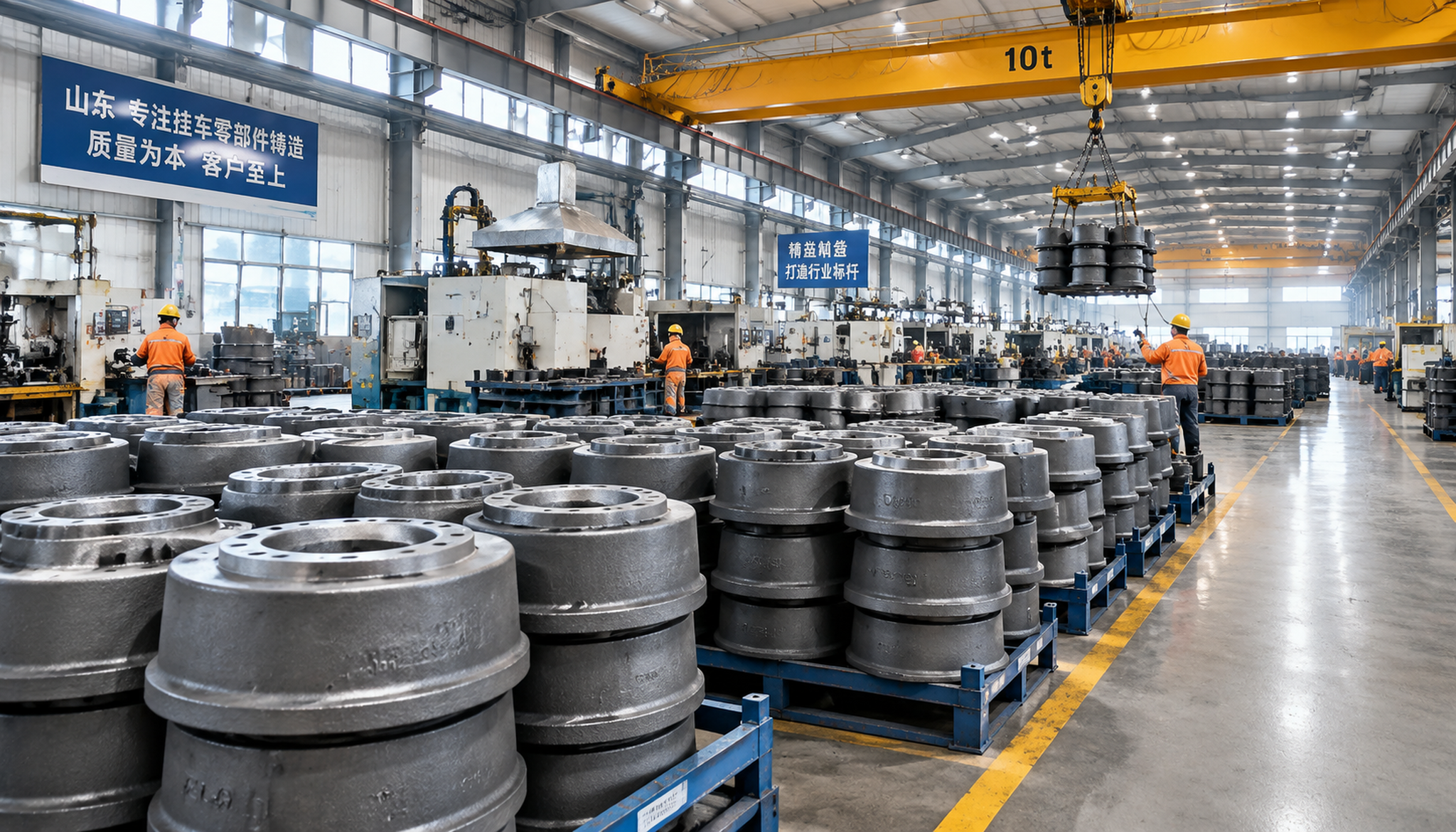
Your first container of trailer brake drums from China looks perfect. The foundry sent a WhatsApp video panning over neatly stacked pallets. Dimensional checks pass. Paint is clean. Your warehouse manager signs off. Six months later, 60 drums come back cracked around the hub flange, and the supplier replies that it was "a different production batch." That reply is the most expensive sentence in importing.
You don't get a second chance on a warranty claim that hits an Amazon listing with 1,200 reviews. You get the review. You get the return shipping bill. You get the slow bleed of a customer who never orders from you again.
This is the seven-step walk-through I would insist on before wiring a deposit to any trailer casting factory in China — brake drums, hubs, suspension brackets, coupler bodies, and the rest of the chassis hardware that has to survive 80,000 miles of salt and potholes. Not because I'm paranoid. Because I've watched buyers skip exactly these seven steps and pay for it in the exact same order.
Why China Still Supplied 4 Out of 5 Trailer Castings Sold in North America Last Year
Let's not pretend this is a mystery. A gray iron trailer brake drum that sells for $55–$65 wholesale in the US can be landed from China for $22–$28 including freight, duty, and brokerage. Grey iron G3000 — the go-to spec for truck and trailer drums under SAE J431, or ASTM A48 Class 35 if your drawing is written that way — is a mature casting. Chinese foundries have been pouring it for forty years. The physics and the chemistry haven't moved.
Two numbers worth knowing before you talk to anyone: G3000 brake drums should land in the 187–241 HB hardness window, and the carbon equivalent for a drum that has to resist thermal cracking typically sits around 3.9–4.2. Ask for those two numbers on a heat report and you've already filtered out half the factories that would have quoted you.
The China Foundry Association counted just over 20,000 registered foundries nationwide — down from roughly 30,000 a decade earlier as environmental enforcement closed the small, unpermitted shops. That consolidation is good news for you. It killed the bottom 30% of capacity. The remaining 20,000 are the ones competing on process control, not just price.
Shandong province alone has over 1,200 foundries holding ISO 9001 certification — that figure is an industry estimate rather than a registry count, but the order of magnitude holds. Add Hebei, Zhejiang, and Jiangsu and you're staring at a supply base that can produce any trailer casting spec you can draw. What that same stat does not tell you is which of those 1,200 will pack your third shipment the same way they packed your first. That is a factory problem. It's also a you problem.
The 7-Point Factory Walk-Through — Do This Before the Deposit
Most buyers audit a factory by looking at the finished parts and asking for the ISO certificate. That checks two things: whether the parts look right today, and whether a piece of paper exists. It tells you nothing about whether the third batch will match the first.
The audit below is the sequence I now run on every new Chinese trailer casting supplier. Bring a phone. Photograph everything. If the sales rep tries to shortcut you past step 2, that's already your answer.
1. Start at the melting furnace, not the showroom
Every trailer casting factory in China will walk you through a clean showroom first. Smile, then ask to go to the melt shop. What you want to see: an induction furnace with a working spectrometer, and a metallurgist (or at least a trained operator) who can pull a sample report on a heat from the last 48 hours. If they can't produce a chemistry report for a batch poured this week, the foundry is either buying ingot from a trader, or the report exists but nobody tracks it.
Two questions while you're standing there. Has the spectrometer been calibrated in the last 12 months, and by whom? And can they show you a graphite structure report — under ASTM A247 — for the drum you're ordering? Flake size and distribution is what separates a drum that survives 200,000 miles from one that heat-checks at 60,000. Very few buyers ask. The factories that answer without flinching are the ones worth your deposit.
2. Check the pattern shop — this is where your defect rate lives
Trailer brake drums are sand-cast. The pattern (the tool that shapes the sand mold) determines everything downstream: dimensional consistency, surface finish, whether the core seats properly. Ask how old the current pattern is, and whether there's an active maintenance schedule. A worn pattern, not bad iron, is the number one cause of hub-flange cracks that show up 12 to 18 months later. If they can't show you the pattern for the drum you're ordering, walk.
Also ask for the dimensional tolerance grade they run to. If they answer in millimetres with a vague "plus or minus a bit," that's a red flag. A competent foundry answers in ISO 8062 CT grades — CT8 to CT10 is normal for a machined trailer drum, with the machining allowance called out separately. An answer in CT grades tells you they've had a customer who cared about tolerances before you.
3. Find the heat-treat furnace and ask for its calibration log
Ductile iron components — coupler heads, suspension brackets — go through a normalizing or annealing cycle. If that furnace is out of calibration, your mechanical properties (yield, elongation) drift outside the ASTM A536 Grade 65-45-12 spec without anyone noticing. For reference, that grade means 65,000 psi tensile, 45,000 psi yield, and 12% elongation in 2 inches — tested to ASTM E8/E8M, not to a number somebody typed into a spreadsheet.
Ask for the last 3 months of calibration records from an accredited third-party lab. Not internal records. Third-party. The difference between those two pieces of paper is roughly the difference between a supplier you keep and a supplier you sue.
4. Walk the machining line — count CNCs, count operators
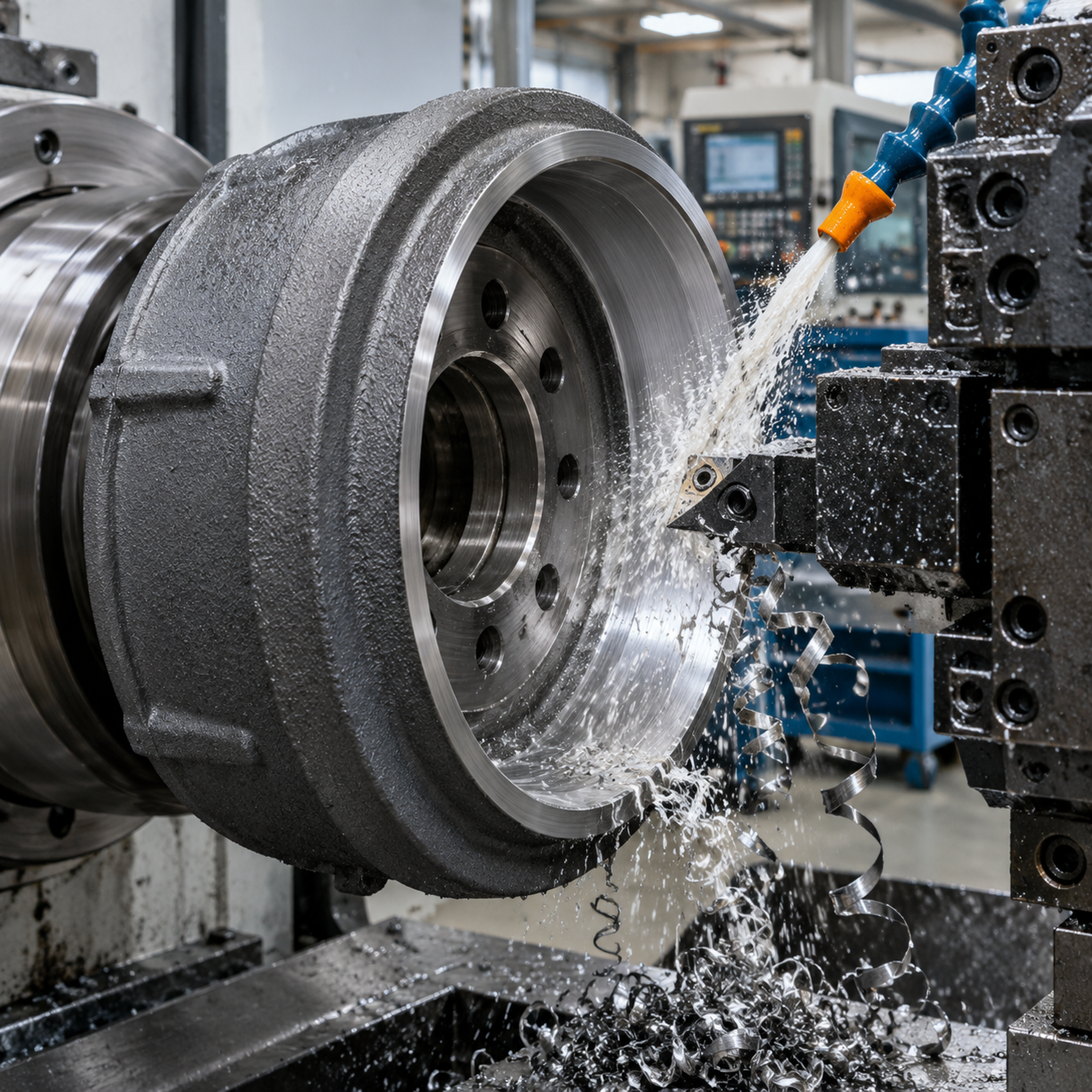
Trailer castings ship machined (drum turned, hub bored, bolt holes drilled). A foundry running 4 CNC lathes with one operator can produce, realistically, 3,000–4,000 drums per month. If they quote you 20,000/month, they're either farming it out (bad — you lose process control) or lying (worse). Count the machines. Count the guys running them. Multiply.
Then check what the machines are doing to your tolerance stack. Hub bore concentricity and drum wall thickness variation are the two dimensions that fail on a brake lathe at the installer, not at your warehouse. If they can't show you a first-article inspection sheet with those two dimensions circled, the machining line is running on habit rather than on a control plan.
5. Look at the inspection lab and the defect photo book
Ask for the day's rejection log. Ask how many castings were scrapped in the last week, and why. Any half-decent factory tracks this. A factory that "doesn't have that number" doesn't track defects — which means they don't control them, which means your defect rate is whatever God decides.
While you're in the lab: is there magnetic particle inspection (MPI) equipment, and is the operator certified to run it to ASTM E709? For safety-critical trailer castings, MPI catches surface and near-surface cracks before they ship. Many small Chinese foundries skip this and rely entirely on visual inspection. Visual inspection catches roughly nothing on a painted gray drum.
If MPI isn't in-house, ask which third-party lab does it and how often. A factory that sends 5% of production to an outside lab for MPI is still ahead of one that says "we check by eye." For a printable version of this whole sequence, see our factory audit checklist.
6. Check the coating line, then check last week's humidity
Paint adhesion is the single most common cause of warranty claims on trailer castings shipped to North America. If the foundry paints in a humid ambient environment without a controlled booth, the coating will bubble under salt spray, and your customer will return the part with a photo of rust inside 6 months. Ask when the paint booth was last serviced. Ask what coating spec they use for a salt-spray requirement of 240 hours (ASTM B117). If the answer is "standard paint," push back.
Push for the dry film thickness range too. Most trailer drum coatings should land somewhere between 60 and 90 microns, measured on cured parts, logged per batch. A factory that measures DFT and writes it down is a factory that has already lost a customer over rust — which means they fixed it.
7. Walk the packing line and ask for a traceability test
The last 30 seconds of the audit is the most revealing. Pick a boxed drum off a completed pallet. Ask them to trace it back: which heat of iron, which pour date, which machining operator, which inspection batch. If they can produce all four within 15 minutes, you're dealing with a factory that maintains real records. If they scramble, you've just discovered exactly how your warranty claim will be handled.
Documentation: How to Tell a Real Certificate from a Wall Decoration
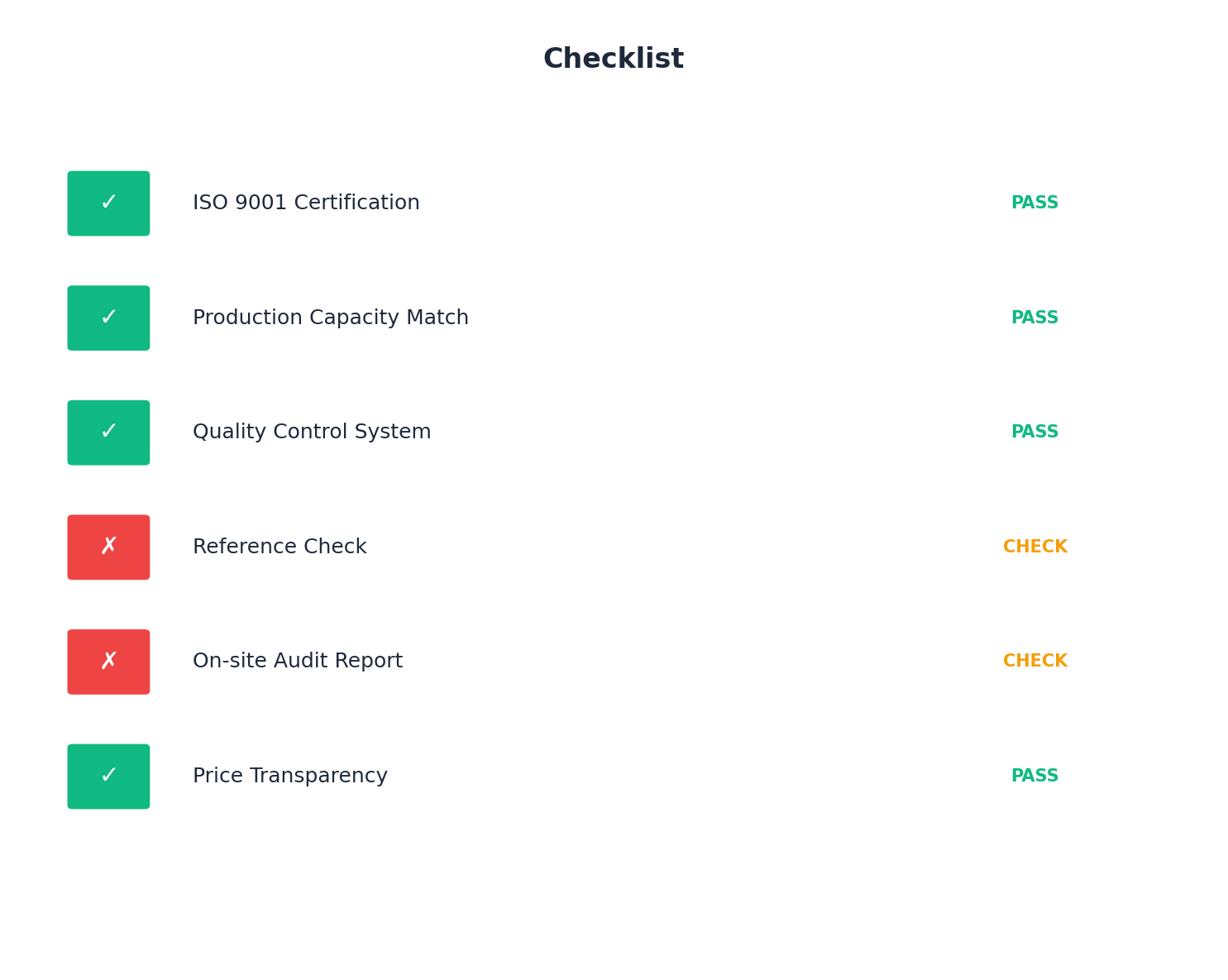
Every Chinese casting factory you'll talk to has an ISO 9001 certificate framed in the meeting room. That's fine. ISO 9001 means a quality management system exists — it does not mean the factory runs it well, and it definitely does not tell you anything specific about your trailer casting.
The documents that actually matter are narrower than most buyers realize. Here's the tier list I use:
Tier 1 — the ones that catch real problems
- Heat-treat lot trace. For every shipment, a document that ties the castings to a specific furnace cycle with recorded time and temperature. No exceptions.
- Heat chemistry report per pour. Carbon, silicon, manganese, chromium, and any inoculation chemistry (for ductile iron). Signed by a QC engineer, not a salesperson.
- Mechanical test report. Tensile, yield, elongation, and hardness — pulled from the actual heat that produced your castings, tested to ASTM E8/E8M. ASTM A536 Grade 65-45-12 for ductile, SAE J431 grade G3000 or ASTM A48 Class 35 for gray iron, depending on what your drawing calls out.
Hans Weber, a Stuttgart Tier-1 supplier quality engineer who has run VDA 6.3 audits on 40+ Chinese foundries, put it bluntly: "Ask for the heat-treat lot trace, not the ISO certificate. The ISO certificate tells you the factory exists. The trace tells you the part exists in the factory's system."
Tier 2 — worth having, worth double-checking
- IATF 16949. Applies only to automotive supply chains. A trailer casting factory can claim it, but the certificate must list the scope — and if the scope doesn't name castings, it's for their warehousing or packaging, not their metallurgy. Verify on the certifier's website, not on the wall.
- Third-party lab calibration report. For spectrometer, hardness tester, and tensile machine. If any of these is more than 12 months past calibration, the whole quality function is operating on trust.
- ASTM B117 salt-spray test report. For coating. Ask for the last test on the actual coating your part uses. Not a generic report from 3 years ago.
- ASTM A247 graphite structure report. The microstructure document most buyers never request, and the one that predicts thermal cracking on brake drums better than any certificate.
Tier 3 — the marketing fiction
"DOT certified." You'll hear this on nearly every Chinese trailer casting factory quote. Here's the reality: DOT marking applies to complete brake systems (FMVSS 121 for air-braked trailers). A single cast iron brake drum is not "DOT certified." It has no DOT marking, because FMVSS 121 tests the assembly. If your supplier sends you a "DOT certificate" for a bare drum, that document is decorative. Ask them to show you the actual FMVSS 121 assembly test report — most won't have one, because they don't build assemblies.
"When a factory tells you their drums are DOT certified," Weber added, "ask to see the FMVSS 121 report. You'll usually get a blank look. That's not fraud — it's confusion. But it also means the certification they're selling you doesn't exist, and you should stop paying a premium for it."
Which spec applies to which part
| Trailer part | Typical material | Governing spec | What to verify on the report |
|---|---|---|---|
| Brake drum | Gray iron G3000 | SAE J431 / ASTM A48 Class 35 | Hardness 187–241 HB, CE 3.9–4.2, ASTM A247 flake size |
| Hub | Gray or ductile iron | ASTM A48 Class 35 / ASTM A536 65-45-12 | Bore tolerance to ISO 8062 CT grade, MPI on fillets |
| Coupler body | Ductile iron | ASTM A536 65-45-12 | Tensile 65 ksi, yield 45 ksi, elongation 12%, heat-treat lot trace |
| Suspension bracket | Ductile iron | ASTM A536 65-45-12 | Yield 45 ksi, MPI coverage on radius transitions |
Landed Cost: The Number That Actually Matters
Most first-time trailer casting buyers negotiate down to the unit price and stop. Then they get an invoice from the freight forwarder that puts them 18% over budget for the year. Landed cost is the only number that survives a quarterly review.
As of Q4 2026, realistic landed cost ranges (US destination, port of Los Angeles, FOB Ningbo base) for a standard 12.25 x 7.5 gray iron trailer brake drum:
- China: $22–$28 per drum landed, including 25% Section 301 duty, ocean freight, and brokerage
- India: $26–$32 landed — competitive on price, weaker on pattern quality and salt-spray performance in my experience
- Vietnam: $28–$34 landed — best used as a secondary source, not primary, for trailer brake drums
- US domestic: $55–$65 landed — three times the cost, but 5-day lead time and immediate warranty response
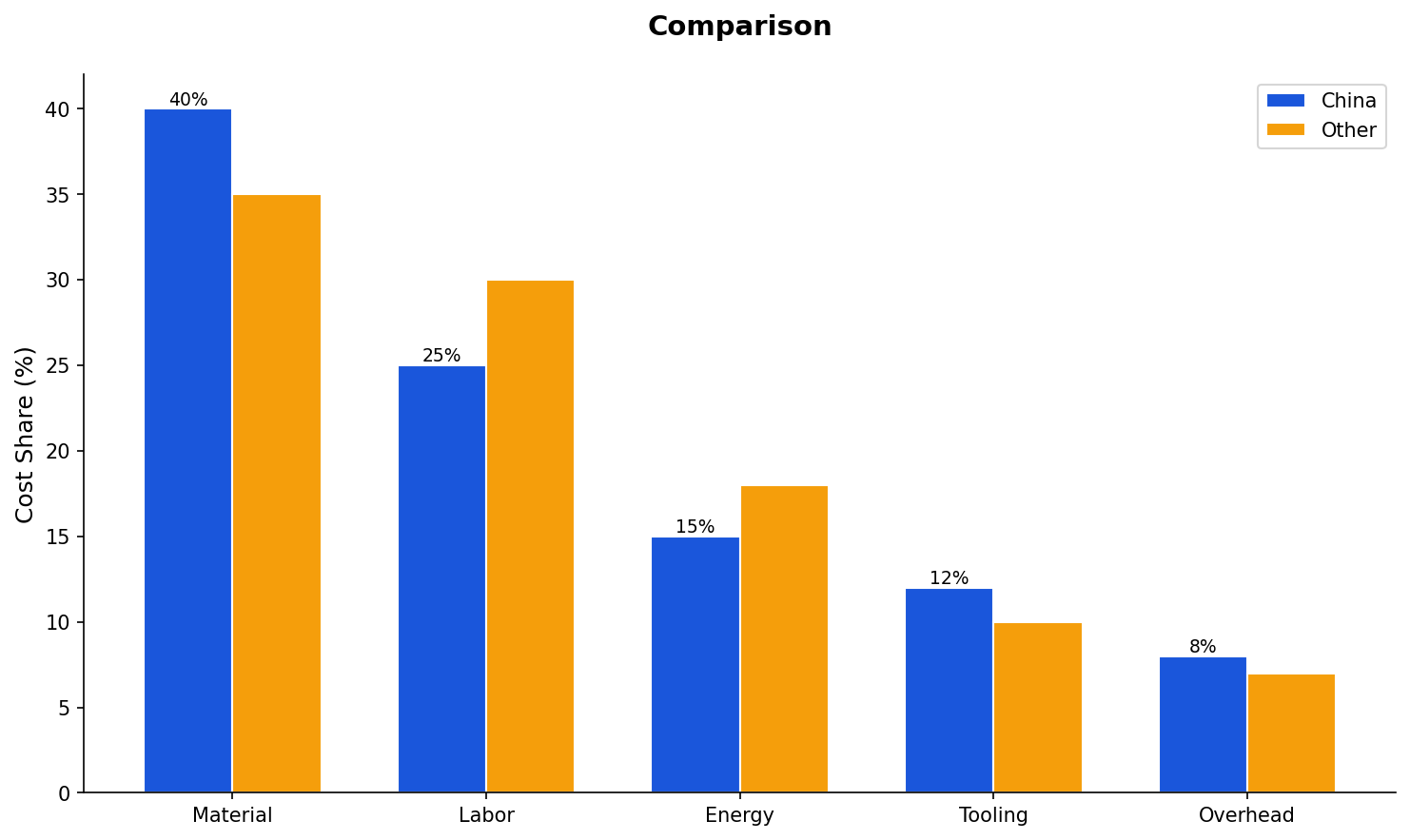
The gap between China and US domestic is $30+ per drum. On a 500-drum order, that's $15,000 — enough to justify serious effort on sourcing, and small enough that a single quality incident wipes it out. That's the whole reason this article exists. The margin is real, but it lives on a knife edge, and it stays only if your factory audit is real.
Two cost lines buyers routinely miss:
1. Dimensional non-conformance cost. If a drum's hub bore is out of tolerance by 0.3mm, it either gets reworked (adds 8–12 days and $2–$4 per unit) or scrapped (you eat it). A foundry that "quotes $24 and delivers 5% out of tolerance" costs you more than one that quotes $26 and ships 0.4% out of spec. Negotiate on defect rate, not on unit price.
2. Second-source setup cost. The first time you swap suppliers in a hurry, you'll spend $4,000–$8,000 on new pattern tooling, PPAP-style sample batches, and inspection. A buyer who sources from three factories to save $1/unit usually loses that savings in the first emergency reship.
"The cheapest quote I ever accepted cost me $37,000 in replacement freight and a customer," a trailer-parts distributor in Ohio told me last year. "The second-cheapest quote has been my supplier for six years."
Lead Time and Supply Stability: The Boring Numbers That Kill Orders
Trailer casting lead time from China breaks down like this — write these down, because most factories only quote you the middle number:
- Casting: 25–35 days (dependent on mold availability; custom patterns add 15–20 days the first run)
- Machining: 8–12 days
- Coating and final inspection: 4–6 days
- Inland transport to port: 2–4 days
- Ocean freight to US West Coast: 30–45 days (transpacific schedule variability)
- Port dwell and inland to warehouse: 7–14 days
Total realistic cycle: 76–116 days door to door. Not 45 days. If a supplier quotes you 45 days, they're quoting the ocean leg and pretending the rest doesn't exist. Every buyer I know who got burned on delivery time was burned because they planned around the 45-day number and ignored the 30 days of production on either side.
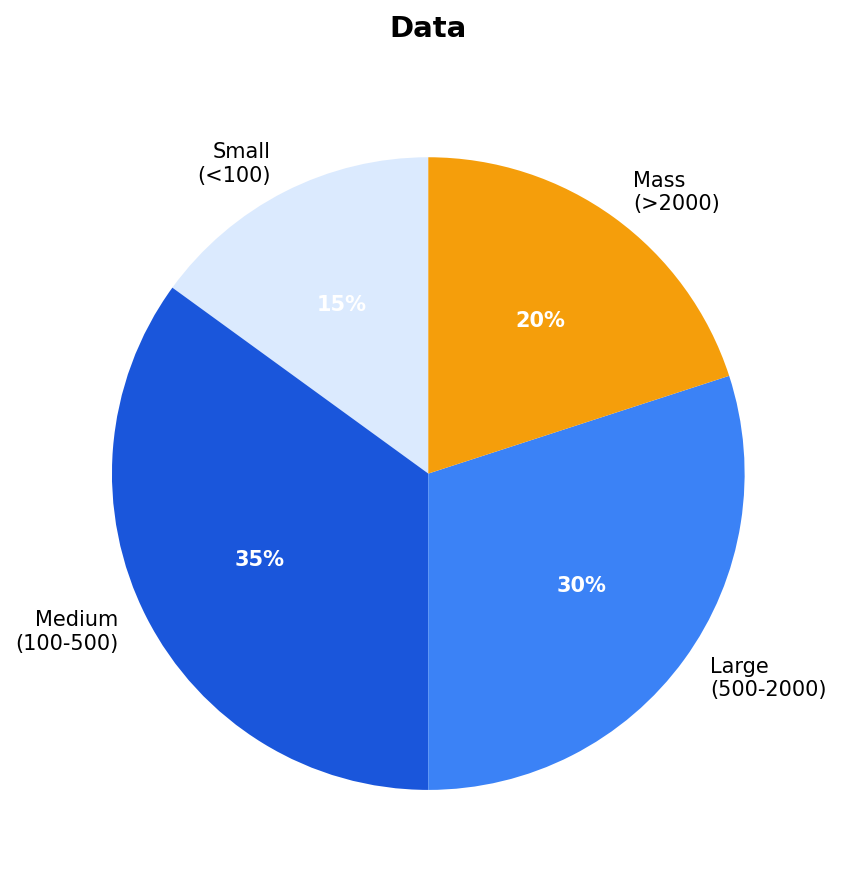
Two numbers that predict supply stability better than any factory promise:
Their domestic order book. A Chinese trailer casting factory that sells 80% to domestic trailer OEMs has a stable revenue base and treats export orders as a bonus. A factory that sells 90% to export is exposed to every tariff change and shipping disruption. Guess which one pays more attention to your account when the market gets tight?
Their raw material hedging. Pig iron and scrap prices swing 15–25% year to year. A factory that quotes you a fixed price for 12 months and then delivers 3 months late has been caught on a metal price move. Ask how they hedge — futures, inventory, or pass-through clauses. The answer tells you whether they'll honor your Q2 price in Q4.
Common Mistakes That Cost Buyers Real Money
Mistake 1: Auditing once and never again. A factory that passed in 2023 has had two years to change pattern suppliers, lose their metallurgist, and buy cheaper sand. Run the 7-point walk-through every 18 months minimum.
Mistake 2: Skipping the pattern shop. It's the least photogenic room in the factory and the most important one. If the pattern is older than four years and hasn't been reworked, your defect rate is already drifting.
Mistake 3: Accepting a unit price without a defect cap. Your PO should specify a maximum non-conformance rate (typically 1.5–3% for gray iron trailer castings) and the remedy if it's exceeded. Suppliers who won't sign that clause don't track their defect rate.
Mistake 4: Paying a "DOT certification" premium. As covered above, that premium buys you a document that has no regulatory standing. Redirect that budget toward MPI inspection or third-party lab testing — both of which actually prevent failures.
Mistake 5: Letting the first order be the model order. Your first shipment is the one the factory pays attention to. Your third shipment is where the shortcuts creep in. Build the audit rhythm around shipment 3, not shipment 1.
Mistake 6: Accepting a chemistry report that isn't tied to your heat number. A chemistry report with no heat number on it is a brochure. It proves the factory can melt iron at spec. It proves nothing about the iron in the box you're paying for.
FAQ: What Buyers Actually Ask Before Wiring the Deposit
How do I verify a Chinese trailer casting factory is real, not a trading company?
Ask for the business license (营业执照) and the "Unified Social Credit Code." Look up the code on the National Enterprise Credit Information Publicity System (gsxt.gov.cn). If the registered scope is "trading" or "import/export" rather than "casting production," you're dealing with a middleman. Trading companies aren't always bad — some are excellent supply-chain partners — but the price, the lead time, and the audit answers change completely when you're buying direct vs. through a trader.
What's a reasonable defect rate for trailer brake drums from China?
1.5–3% total non-conformance is realistic for a good factory running a mature pattern. Below 1% is exceptional and usually means either a great factory or an under-inspected one. Above 4% suggests either a worn pattern or a QC process that has stopped tracking. Get the number in writing before the PO.
What casting tolerances should I expect on a sand-cast trailer drum?
Ask for the ISO 8062 grade and be suspicious of anyone who can't name one. CT8 to CT10 is normal for a machined gray iron drum, with machining allowance quoted separately. The dimensions that matter most in practice aren't the overall cast envelope — they're hub bore concentricity and drum wall thickness variation, because those are what fail on the installer's brake lathe. Request a first-article inspection sheet with both circled before you approve a production run.
Should I use a sourcing agent or go direct?
Direct is cheaper per unit and gives you everything above. Agents are worth it if you don't have someone who can fly to Shandong, run the 7-point audit, and read a chemistry report. The correct answer depends entirely on whether you have that person on your team. If you don't, the agent's markup (typically 3–7%) is usually cheaper than the mistake you'd make without them.
Is a Section 301 tariff refund possible?
Not usually for trailer castings — the classification falls under Chapter 73 HTS codes, which were excluded from the 2024–2025 exclusion rounds. Budget the 25% duty into your landed cost and check CBP rulings each quarter, because the list does shift.
What's the minimum order quantity for a custom trailer casting?
Realistic floor for a custom pattern: 300–500 units for a small part (bracket, coupler body), 1,000–1,500 units for a medium casting (hub, drum). Below those numbers, pattern setup cost per unit kills the price. Standard patterns (12.25 x 7.5 drums, common hub specs) are available from stock at much lower MOQs — 100–300 units.
Next Step: Build the Audit Rhythm, Not the Discount
The math on China-sourced trailer castings is real. The savings are real. The risk is also real, and it lives in the gap between shipment one and shipment four.
If you take one thing from this article: audit like a buyer who plans to be in business in five years, not like a buyer who needs to hit this quarter's margin. Run the 7 points. Ask for the heat-treat trace and the ASTM A247 report. Stop paying for DOT stickers. Build a defect-rate clause into the PO. Then — and only then — wire the deposit.
If you want a second set of eyes on the audit before you fly, that's exactly the kind of walk-through worth doing with someone who has already seen the shortcut. The $40,000 mistake is almost always a $400 audit you skipped. Start with the brake drum sourcing guide if drums are your first order — the failure modes are slightly different from brackets and couplers.
Need Help with China Trailer Casting Factory: 7 Checks Before Deposit?
Get matched with 3 verified foundries in 24 hours. No markup, transparent pricing.
Request Quotes →