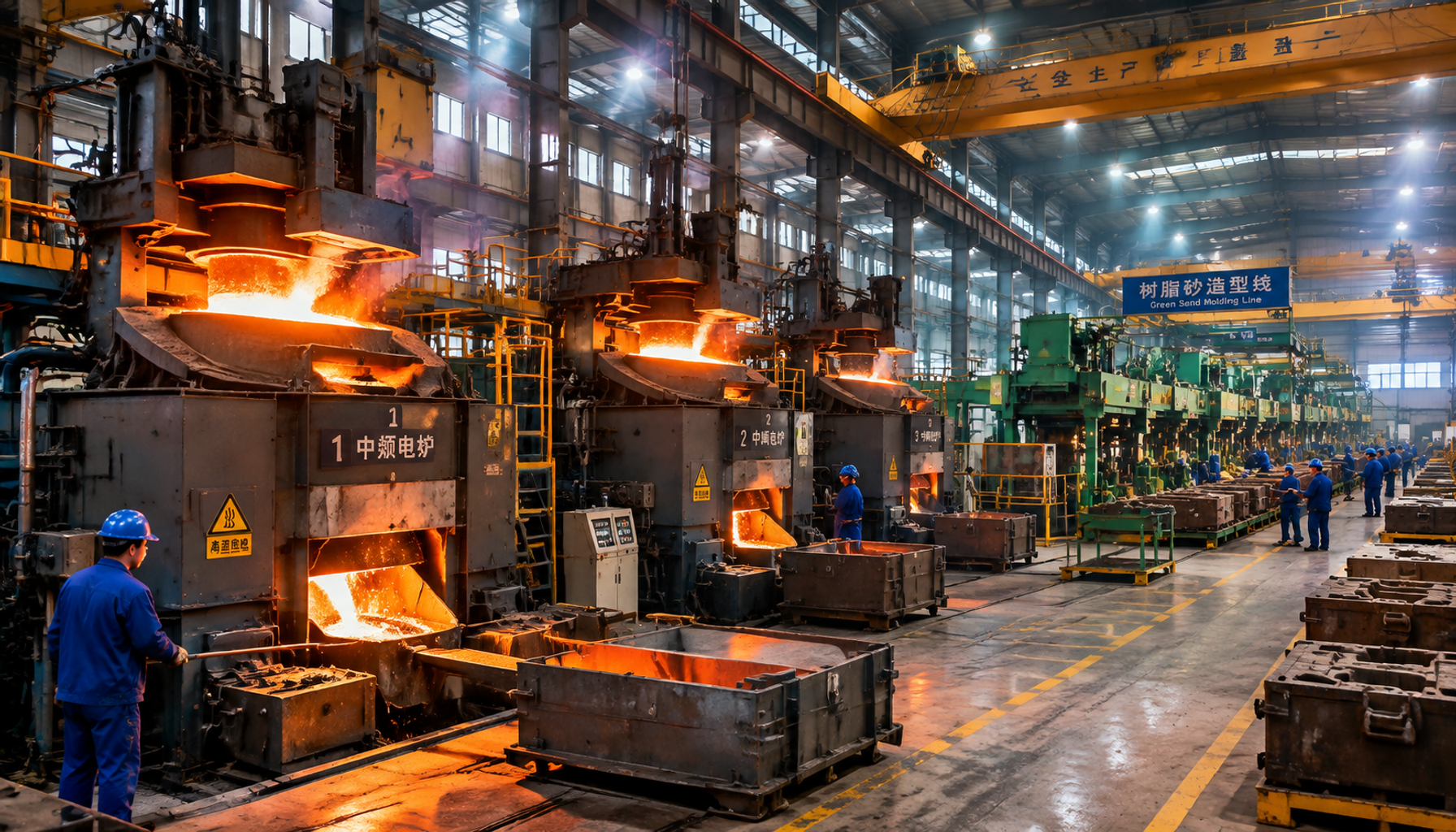
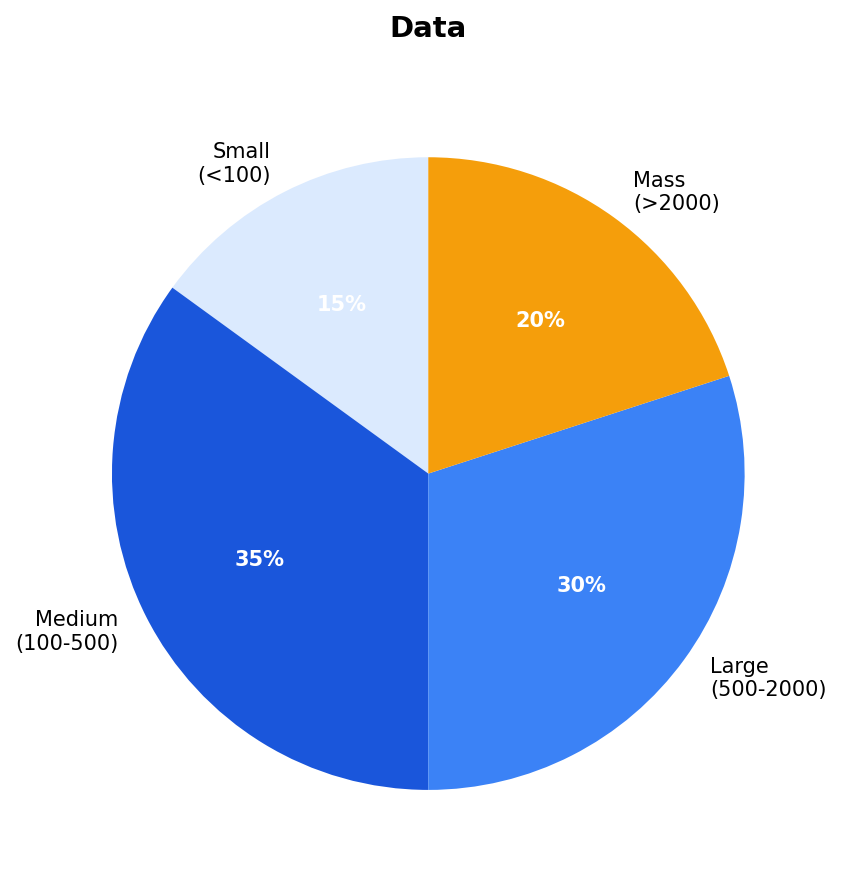
China pours roughly 51 million metric tons of castings a year. That's somewhere between 45 and 49 percent of world output, depending on whose census you trust. The tonnage comes out of an estimated 20,000 to 24,000 foundries. Barely 2,000 of them are large enough to register as "above-scale" enterprises with reported annual output past RMB 20 million.
Now the number that actually matters to you: how many of those factories a Western buyer has ever walked through. It's small. Very small. For most importers placing a first order under $200,000, the "factory visit" never happens. You get a certificate, a few glossy photos, a WeChat video of a shiny finished part rotating on a desk, and a proforma invoice.
That gap is where bad orders are born. A video audit closes most of it — but only if you run it right. A supplier-led video tour is worse than no audit at all, because it hands you confidence you didn't earn.
Here's the script. Shot by shot, question by question, with the specific signals that tell you to walk.
Why most video audits fail before the call even starts
Three failure modes, and you've probably experienced at least two.
The guided tour. You ask for a video audit. You get 12 minutes of a sales manager walking briskly past clean equipment, narrating in English over background noise, pointing the phone at things you didn't ask about. You never see a furnace tap, a spectrometer reading, or a calibration sticker. The route was rehearsed.
The screenshot audit. You receive 40 WhatsApp clips of finished parts, packed cartons, and a certificate on a wall. Zero process. Zero traceability. You have learned that the factory can photograph objects.
The walk-and-talk. Live call, decent length, but you're improvising questions while the camera swings around. You forget to ask about sand testing. You never see the heat treat log. You hang up feeling good about a factory you still can't describe in writing.
The fix for all three is the same: you write the shot list, you own the sequence, and the camera does not stop for 90 minutes. No editing. No cuts. One continuous live call, recorded on your end.
A foundry that only agrees to a "prepared" video audit is telling you something. Believe it the first time.
Before the call: 8 documents you need 48 hours ahead
You cannot audit a factory you haven't pre-read. Push these over 48 hours before the call so you can cross-check what you're about to see against what they claim on paper. If you're still shortlisting candidates, a foundry directory filtered by casting process and region will trim the list before you waste a pre-read on the wrong shop.
| Document | What you're actually checking |
|---|---|
| Business licence (营业执照) | Legal name matches the PO name. Scope of business includes manufacturing, not just "trading" or "import/export". |
| ISO 9001 certificate + scope annex | The scope says "production of iron castings" — not "sales of metal products". Verify the certificate number on the issuing body's site. |
| Melting capacity sheet | Number, type and tonnage of furnaces. You'll verify this on camera. |
| Equipment list with quantities | Molding lines, heat treat furnaces, CMM, spectrometers. Vague lists hide gaps. |
| Recent shipment records (12 months) | Where the parts actually go. A factory with no EU or US shipments has no idea what a PPAP is. |
| Heat-number traceability sample | One full traceability record: charge materials → chemistry → pouring → heat treat → test → shipment. |
| Calibration register | Which instruments are calibrated, by whom, and when they're next due. |
| Customer reference list | At least two contacts you can actually email without going through the supplier first. |
One thing to watch on the ISO 9001 scope, because it catches people constantly. A trading company can hold ISO 9001 for "distribution of metal components." That certificate is real. It is also useless to you. If the scope language doesn't say "manufacturing" or "production" of castings, the audit you're about to run is an audit of a middleman's office. Check it before you book the call — it saves 90 minutes and a lot of hope.
The 90-minute script, section by section
Ask the supplier to charge a phone or handheld camera and walk. Tell them in writing: no cuts, no switching devices, no stopping the recording. If they object, that's your answer.
0–10 min: The gate, the yard, and the charge materials
Start the camera outside the gate and walk in. You want to see the real entrance, not a reception room.
Look for: how many trucks are loading or waiting, whether there's a weighbridge, and where the scrap and pig iron sit. Then go straight to the charge material pile and ask them to hold the camera steady on the labels.
The single most informative thing in any ferrous foundry is the raw material yard. Segregated, labelled bins mean someone is controlling chemistry. A mixed heap of rusty scrap with painted and galvanised pieces in it means your QT450-10 ductile iron will come out somewhere in the neighbourhood of "greyish metal."
Ask, on camera:
- "Show me the tag on that pig iron. What's the grade?"
- "Which pile is your own return scrap, and which is purchased steel?"
- "Is your charge weighed, or is it loaded by bucket count?"
Red flag: a yard with 40 tonnes of scrap and no visible inbound truck activity, or an almost-empty yard with a busy pouring schedule. Both suggest the pile is theatre.
10–25 min: Melting — where the chemistry is decided
Get them to the furnaces. Count them. Match against the capacity sheet you were sent.
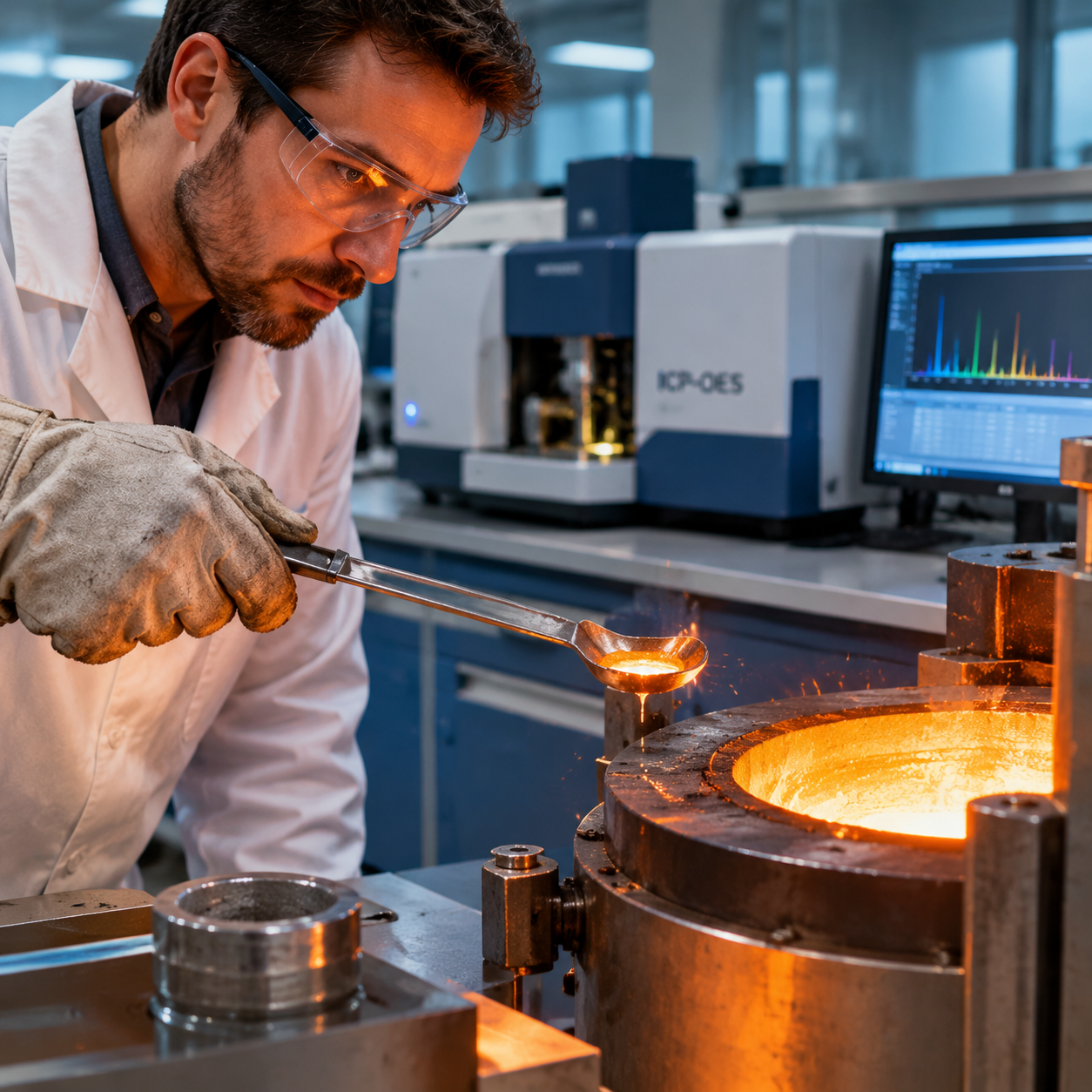
Ask for the furnace control panel on camera. You want to see actual power draw and bath temperature, not the operator's hand over the display. Then ask the question that separates real foundries from assemblers:
"Run a chemistry sample now, on camera. Show me the readout."
If the answer is "the spectrometer is under maintenance," or "the technician is off today," or "we do that at a partner lab," that's a hard stop for anything with a specified chemistry. A foundry that cannot verify its own melt in real time on a normal working day is not controlling its process. It's reacting to it.
Also watch for the refractory lining condition on the furnace you can see. Fresh, well-maintained lining suggests a maintenance budget. Chunks missing and slag running down the side suggests a factory running to failure.
25–45 min: The molding line
Which process are you looking at? Green sand, no-bake (furan resin), shell, or lost foam. Each has different tolerance and surface expectations, and each has a different failure mode. If the sales team can't tell you which line would run your part, and why, they haven't thought about it.
Ask to see the sand lab. This is where most remote audits get lazy, and it's one of the best tells in the building. A working green sand lab runs moisture, compactability, green compressive strength, permeability, and loss on ignition — daily, on every shift. Ask to see today's sheet. Ask to see the log for last Tuesday. If the last entry is from three weeks ago, the sand is being managed by feel.
Then look at the pattern and core storage. Rows of patterns with identification tags, stored off the floor and dry, tell you this shop has run the same parts for years and expects to keep running them. Patterns heaped on a dusty pallet tell you the shop chases whatever walks in the door.
One question worth asking while the camera rolls: "How many patterns are running on this line today?" You want to hear a number and see the molds to match. You also want to confirm your part type is actually in the current mix, not a one-off they ran in 2023.
45–60 min: Pouring
Pouring is short, hot, and full of information.
Ask for the pyrometer reading, on camera, at the ladle. For grey iron, you'll typically see pouring temperatures in the 1,350–1,450°C band depending on section thickness and grade. For ductile iron, higher, and the magnesium treatment adds a whole layer you need to see.
If you're buying ductile iron, ask to be shown the nodularisation station. You want to see the Mg treatment alloy, the reaction ladle or cored wire setup, and the time between treatment and pour. This is the part of the process that determines whether you get spheroidal graphite or a very expensive pile of grey iron with a ductile iron label on it.
Watch, too, for ladle preheat. Cold ladles drop pouring temperature fast. And watch the crew — gloves, face shields, spats. A foundry that skips PPE on the pour line is a foundry that skips steps elsewhere.
Red flag: pouring temperatures run low to save energy. You'll see short-poured molds and cold shuts in the scrap bin. Ask them to show you the scrap bin. Take them up on it.
60–75 min: Cleaning, finishing, heat treatment
Shot blasting, gate and riser removal, grinding, and — if your part needs it — heat treatment.
The heat treat furnace is worth ten minutes on its own. Ask for the temperature chart from the last cycle, and ask to see the actual recorder or controller screen, not a folder of printouts. For aluminum T6 work, ask about solution temperature, quench delay, and aging temperature. For ferrous normalising or annealing, ask about soak time and cooling rate.
Then ask how heat-treated and non-heat-treated parts are kept apart. If the answer is "we remember," you have a problem. Good shops use physical segregation, coloured tags, or dedicated bins per heat number.
75–90 min: Inspection lab and documents
Save the last fifteen minutes for the most important room.
Look at the equipment: CMM, hardness tester, tensile machine, ultrasonic and magnetic particle sets if your part requires them. And look at the calibration stickers. Every instrument you'll rely on should have a legible sticker with a calibration date that hasn't expired. Ask to see the register you were sent and match two entries to two physical stickers. It takes three minutes and it tells you whether the register is a living document or a PDF someone made for you.
Then the traceability test. Pick a heat number from a shipment within the last 60 days — ideally one they don't know you're going to ask about. Say:
"Pull the full file for heat 2409-118. Start with the charge materials and walk me to the shipping record."
A foundry with real traceability will produce the chain in under ten minutes: charge weights, chemistry printout, pouring record, heat treat log, mechanical test results, dimensional report, and the shipping documents. A foundry without it will produce a chemistry printout and then start making phone calls.
Last question of the call: "Show me a part you rejected last month, and the non-conformance report that goes with it."
Every foundry has scrap. The question is whether they document it. A shop that shows you a rejected casting and a written NCR with a root cause is a shop that will tell you when something goes wrong on your order. A shop that claims zero scrap is either lying or measuring nothing.
The 7 documents you should see on camera
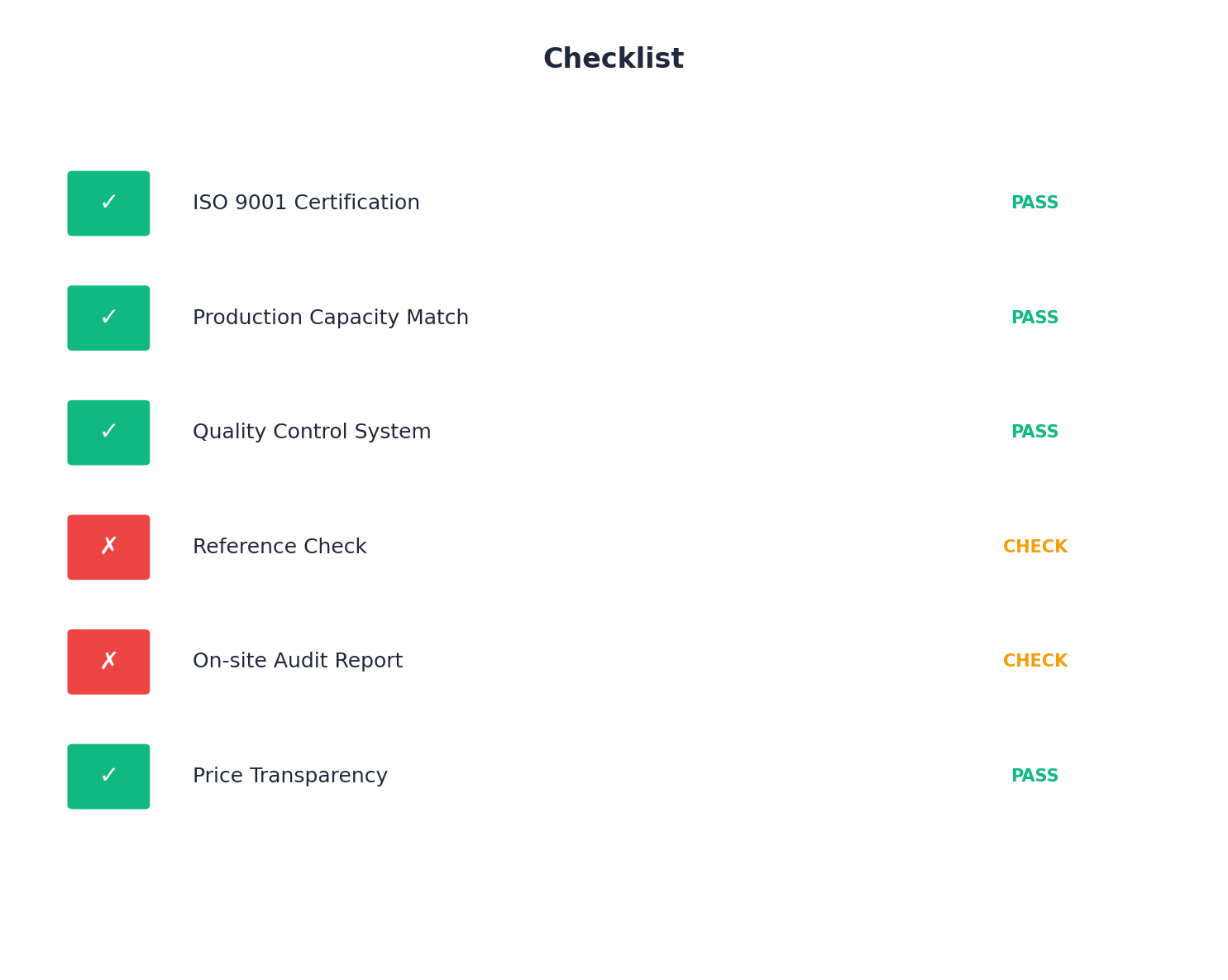
- Charge material certificates — pig iron grade, steel scrap source. If they can't produce these, the chemistry starts as a guess.
- Spectrometer printout for the current heat — not a sample from three months ago. Today's.
- Full heat-number traceability record — the chain you tested in the last section.
- Heat treatment chart recorder output — the actual curve with time and temperature, not a certificate of compliance.
- Calibration stickers on the instruments you'll rely on — matched against the register.
- A non-conformance report with a real root cause — "operator error, retrained" is acceptable. "No issues found" is not.
- Shipment log for the last 12 months — destination countries, volumes, and at least two references you can contact independently.
Red flags that only show up on video
Some things don't appear in any certificate. They only surface when a camera walks the floor on a normal working day.
- Everything is stopped. Machines idle, lines empty, lights half off. Either the factory is underloaded or you're being shown a shift break on purpose. Ask what the current utilisation rate is and when the next shift starts.
- Uniforms don't match. Two or three different workwear colours on one floor often means subcontracted labour or, worse, another company's workers on a shared site. Ask who employs the people in the grey shirts.
- Half-finished parts with no tags. WIP stacked without heat-number identification is WIP that will be mixed up later. It's the root of most mixed-heat complaints.
- The "sample room" is suspiciously perfect. If a spotless display area sits next to a grimy production floor, you're being shown a showroom. Ask to walk back to where the parts actually come off the line.
- The spectrometer lives in a locked room and isn't switched on. You'll hear "we only run it when the customer asks." That's the same as not having one.
- Calibration stickers are missing or expired. Small thing, huge signal. A shop that forgets its instruments will forget your drawing revision.
- Nobody can answer a process question without fetching a manager. The melter should know the pouring temperature range. The inspector should know the acceptance criteria. If every question triggers a walkie-talkie call, the knowledge isn't on the floor.
- The same person answers every question. Especially the chemistry, the dimensional report, and the heat treat log. One person producing every record is a sign the records are produced, not recorded.
How to score what you saw
Don't end the call with a feeling. End it with a number.
Score each of the six sections on a simple 1–5 scale, then weight them. Melting, pouring and inspection carry the most weight for any part with a chemistry or tolerance specification. The yard and gate carry the least, but they're the fastest way to catch a fabricated setup.
| Section | Weight | What a 5 looks like |
|---|---|---|
| Melting & charge control | 25% | Labelled segregated charge, live spectrometer run, weighed charge, maintained refractory |
| Inspection & QA | 25% | Calibrated instruments, full traceability in under 10 minutes, documented NCRs |
| Molding & sand control | 20% | Daily sand lab sheets, tagged pattern storage, your part type actually running |
| Pouring & metal treatment | 15% | Logged pouring temperature, visible Mg treatment setup, PPE discipline |
| Finishing & heat treat | 10% | Chart recorder output, physical segregation of treated and untreated parts |
| Facility & material flow | 5% | Active loading, organised WIP, no unexplained idle lines |
Below 3.5 weighted average: don't place a production order. Above 4.0: move to a paid trial run. Between: build a corrective action list and re-audit in 60 days, because a supplier that fixes things between audits is worth more than one that was perfect on day one.
What a video audit still can't tell you
Be honest about the limits. Ninety minutes of footage will show you equipment, process discipline, and document habits. It will not show you:
Real capacity utilisation over time. You see today. You don't see whether the line runs six days a week or two. Ask for three months of production records by line — and cross-check the numbers against their shipment log.
Financial stability. A foundry can look excellent and be 90 days from a cash crunch. If your order is large, request a simple credit reference from their bank or a trading partner, or buy credit insurance.
Second-shift quality. Most audits happen during the day, when the A-team is on. Ask for a short follow-up call during the night shift. The difference is often startling.
Mold ownership and tooling custody. Who holds your pattern, under what agreement, and what stops them running your part for someone else at night? Get this in writing, separately from the audit.
The right structure for a first order is layered: video audit as the filter, a small paid trial run as the proof, and third-party pre-shipment inspection as the backstop. Each layer costs a fraction of a bad container.
Questions to ask while the camera is still rolling
Keep these on a single sheet next to you. They're designed to be answerable on the floor, not in a conference room.
- "What grade is that pig iron, and what's your spec range for carbon and silicon?"
- "When was your last spectrometer calibration, and who did it?"
- "Show me today's sand test sheet."
- "What's your pouring temperature window for this grade, and who logs it?"
- "For ductile iron, what's your Mg recovery target and reaction time?"
- "Pull the file for this heat number — start to finish."
- "Show me a rejected part and the NCR."
- "How many people are on the night shift, and who does the final inspection?"
- "If I send a third-party inspector next month, what will they find that I didn't see today?"
That last one is the real test. A straight answer tells you more about a supplier than the preceding eighty-five minutes combined.
FAQ
How long should a remote foundry video audit take?
Ninety minutes of unedited, live footage is the practical minimum for a single-site ferrous or aluminum foundry. Anything under an hour and the supplier will steer you down the cleanest path in the building. Split it into two 45-minute calls if the time zone makes one block painful — but keep the sequence intact.
Can a video audit replace an on-site inspection?
No. Video verifies equipment, process flow and document discipline. It cannot verify financial health, sustained capacity utilisation, or what happens on the second shift. Use video as a filter, then commission a physical audit or a third-party pre-shipment inspection before your first large payment.
What if the supplier refuses to film the melting furnace or the lab?
Treat it as a hard stop for any order where chemistry matters. Melting and inspection are the two areas that decide whether the parts you receive match the drawing. A refusal there usually means the equipment doesn't exist, isn't running, or isn't theirs.
Should I run the video audit myself or hire someone?
If you speak the process language and can read a spectrometer printout, run it yourself. If you're a distributor buying a mixed basket of castings across three processes, someone who has stood on hundreds of foundry floors will spot more in 90 minutes than you will in a week of reading certificates.
How soon after a video audit should I place the first order?
Same week, with a small trial quantity and a third-party inspection clause in the PO. Foundries prioritise buyers who move. Wait three months and you'll be re-auditing a factory that has since changed its sand supplier and hired two new melters.
Do I need to record the call?
Yes, with permission. A recording lets you re-watch the furnace panel, check a calibration date you missed, and — most usefully — compare what you saw in month one against the re-audit in month seven. Suppliers behave differently when they know the footage is being archived.
The short version
You don't need a plane ticket to find out whether a Chinese foundry can make your part. You need 90 minutes, a written shot list, and the discipline to ask for the spectrometer reading while the camera is still on.
Suppliers who can walk you through their own melt, their own traceability, and their own scrap records in real time are the ones worth a trial order. The ones who steer you to the finished-goods rack and keep the furnace door closed have already answered your question.
Run the audit. Score it. Then decide with numbers instead of a feeling.